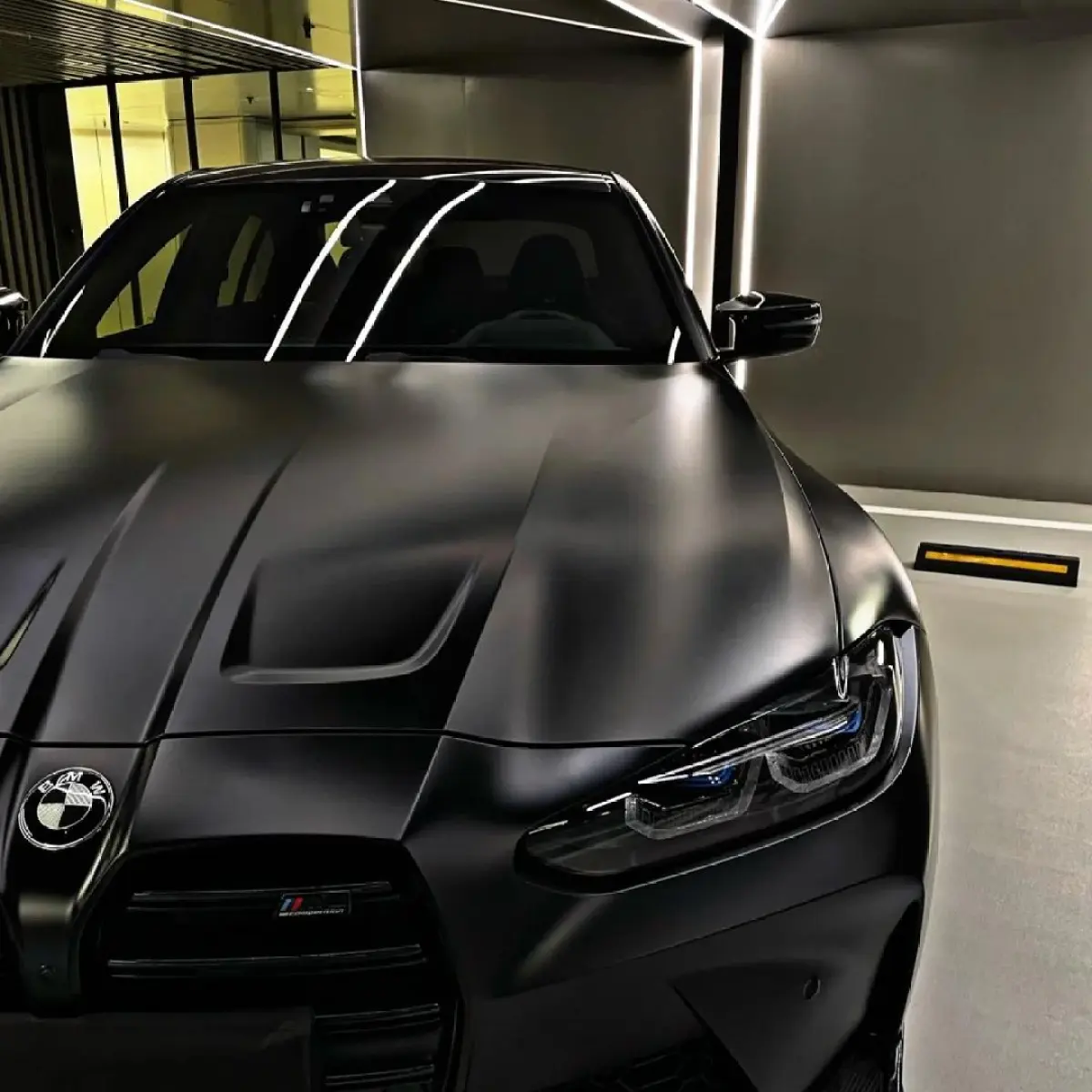
Want the muted elegance of a satin respray without losing factory paint protection? A clear matte PPF wrap gives you both: a uniform flat sheen and a tough, self-healing barrier against chips, swirl marks, and UV fade. Below is a data-driven guide—materials, lab standards, installer setup, and a step-by-step process—to help you get that flawless matte look with pro-level durability.
Matte PPF vs. Matte Vinyl: Why TPU Matters
Matte PPF is built on an aliphatic thermoplastic polyurethane (TPU) base with a hydrophobic, self-healing topcoat and optical-clear adhesive. It’s engineered to absorb impacts and resist yellowing, whereas decorative matte vinyl is primarily for color/finish changes and is not designed to take stone-chip abuse or self-heal micro-scratches. Premium PPF films typically measure about 7–8 mil (≈180–200 μm) in total thickness and use elastomeric clearcoats that “flow” under heat to remove fine marring—capabilities documented by leading brands’ technical data sheets.
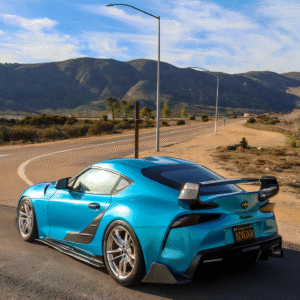
If you want to audition styles beyond satin black or chalky neutrals, remember that modern TPU platforms support colored ppf options too—so you can get color, texture, and protection in one stack.
How the Self-Healing Topcoat Works
Matte PPF’s “magic” is the elastomeric clearcoat. When warmed by sunlight, warm water, or gentle air-heat, the polymer chains relax and re-set, causing light swirls to disappear. This is well documented across industry literature and installer education resources, which explain heat-activated recovery on TPU-based films.
Weathering & Lab Standards to Look For
Instead of marketing claims, ask for independent or internal test references. Common benchmarks for exterior polymers include:
- ASTM G154 / G155 – Accelerated UV/weathering practices using fluorescent (G154) or xenon-arc (G155) sources to simulate years of sun, heat, and moisture. Xenon-arc is often favored for full-spectrum sunlight simulation.
- SAE J2527 – Performance-based accelerated exposure for automotive exterior materials (xenon-arc), an update over older J1960 methods.
You don’t need to become a lab tech—but when a film references these protocols (or publishes ΔE color shift and gloss retention after exposure), it’s a sign you’re dealing with a serious car ppf film rather than a cosmetic wrap. Leading brands publish data for nominal thickness (often ~190 μm), elongation, and chemical resistance—use these numbers to compare products.
Installer Environment & Tools for a Satin-Smooth Result
Prep the Bay
Aim for 60–90 °F (15–32 °C), clean, and dust-controlled. Avoid direct sun. This temperature band keeps TPU pliable and the acrylic adhesive consistent—guidance echoed in professional installation manuals.
Slip & Tack Solutions
Use a mild slip (distilled water + baby shampoo) to position, and an IPA-based tack mix at edges and deep recesses. The goal is uniform wet-out without diluting adhesive too much in high-stress zones.
Squeegee Strokes
Work from the anchor line outward with low-angle, overlapping strokes. Matte topcoats can telegraph pressure marks; use firm but even passes with a soft buffer.
Step-by-Step: Achieving a Uniform Satin Finish
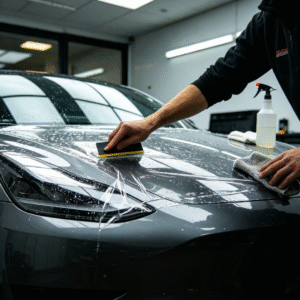
- Decontaminate. Wash, iron-remover, clay, and panel-wipe. Matte highlights everything, so remove waxes/fillers that could create blotching.
- Panel map. Pre-fit and mark anchor points and relief cuts. For large panels, consider bulk install over precuts to minimize seams on sightlines.
- Float & anchor. Flood surface with slip, float the film, then set a straight, central anchor. Lock edges in low-stretch zones first.
- Heat-form (lightly). TPU stretches readily, but over-stretch can gloss the matte texture. Use measured heat only to relieve tension and compound curves.
- Edge discipline. Switch to tack solution at edges, recessed channels, and around badges. Post-heat edges to manufacturer spec to set memory.
- Self-healing check. After install, warm the surface (sun or warm water) to allow micro-marring from handling to relax.
Finish Quality: Avoiding “Patchy Matte” & Orange Peel
Matte PPF’s micro-texture diffuses light. Uneven pressure, dirt underfilm, or inconsistent wet-out will appear as darker/light patches. Control variables—bay cleanliness, wet-out uniformity, and balanced squeegee pressure—and avoid overheating which can “polish” spots glossier than surrounding areas. Choose films with documented gloss/texture stability and self-healing clearcoats.
Care & Maintenance for Matte PPF
- Wash weekly with pH-neutral shampoo; avoid waxes or dressings that add shine.
- Remove bug acids and bird droppings promptly; many premium films list stain resistance and easy-clean topcoats on their datasheets.
- To refresh the surface, use warm water or park in sunlight—the heat encourages self-healing of light swirls without changing the matte effect.
Spec Checklist When Comparing Clear Matte PPF
Quick compare: keep this list handy when you evaluate products.
- Construction: Aliphatic TPU base + elastomeric self-healing topcoat + optical-clear acrylic adhesive.
- Nominal thickness: ~7–8 mil (≈180–200 μm) total.
- Elongation & conformability: High stretch for single-piece installs on complex panels.
- Weathering data: Xenon-arc (ASTM G155 / SAE J2527) or equivalent, with ΔE color shift reported after exposure cycles.
- Finish options: True matte/satin topcoats that preserve body color without adding “grayness,” supported by brand literature.
When Matte Isn’t the Goal: Gloss & Color Pathways
If you prefer a high-gloss “wet” look or want to add color while keeping impact resistance, a colored TPU PPF line may be the better fit. These retain the same protective stack (TPU + self-healing clearcoat) but add pigments for on-trend hues—useful when you want color plus the functional gains of PPF rather than a decorative film alone.
FAQ
Will matte PPF yellow over time?
Premium aliphatic TPU with stabilized topcoats is engineered to resist yellowing and maintain clarity/texture through accelerated UV exposure (xenon-arc) testing. Ask for SAE J2527/ASTM G155 references in spec sheets.
Can I polish matte PPF?
Avoid traditional polishing—it adds gloss. To remove light marring, rely on heat-assisted self-healing (sunlight or warm-water rinse) per manufacturer guidance.
How long does installation take?
A full front can be a day; full body more. Time varies with panel complexity, cleanliness, and cure conditions (60–90 °F recommended).