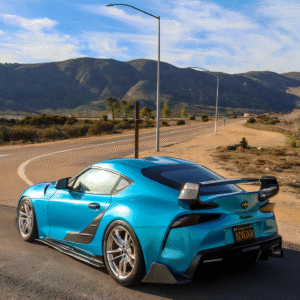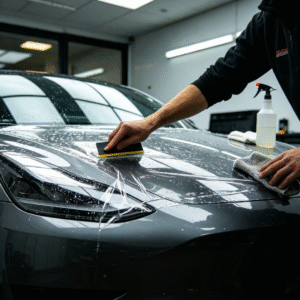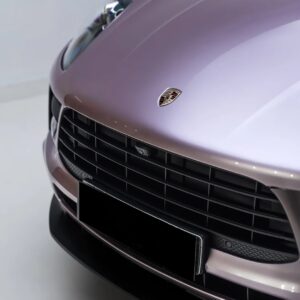

From stealth satin to disruptive camo, a custom Cybertruck wrap lets you turn Tesla’s stainless-steel icon into a one-of-one—while adding surface protection and day-to-day usability.
Why Wrap a Cybertruck?
The Cybertruck’s exoskeleton is bare stainless steel—distinctive, durable, and unforgiving. A high-quality wrap adds three things most owners want: (1) design freedom that paint can’t match, (2) a controllable finish that hides fingerprints and water spots, and (3) a sacrificial layer you can replace down the road. For shoppers comparing options, start with a foundational car wrap to change color/texture, then layer protection where needed.
Design Directions That Work on Flat Panels
The Cybertruck’s planar body rewards bold, graphic ideas. Below are proven concepts that balance aesthetics with install practicality:
1) Stealth & Minimalism
Matte black, satin dark gray, or charcoal metallics create a “stealth” profile that emphasizes the truck’s geometry and hides touch marks. Add low-contrast logos or etched-look decals to maintain the monochrome vibe.
2) Technical Textures
Brushed, forged-carbon, or brushed-metal textures accentuate the truck’s angles without busy pattern alignment. Use them as full wraps or as accent panels (rockers, lower doors, bed sides) for easier maintenance.
3) Camo With Purpose
Camo suits the slab sides especially well, because large shapes read cleanly from a distance. See our custom Cybertruck wrap ideas for scale-correct patterns and colorways tuned to stainless-steel edges.
4) Color-Shift & Pearlescents
Chameleon and pearlescent films add motion to flat planes. On the Cybertruck, these films “flip” dramatically as light rakes across the facets—great for owners who want an unmistakable presence without graphics.
5) Panel Blocking & Two-Tone
Use satin body with gloss accent blocks (or vice versa) to break up the mass. Typical placements: A-pillar to sail panel, upper doors, and top rails. Two-tone schemes also simplify future spot repairs.
Material Choices: Vinyl Wrap vs. PPF (or Both)
Color & Texture Wrap (PVC/Cast Vinyl): Ideal for design. Premium cast films conform to edges and are thin enough (~0.09 mm) to look like a factory finish. Choose air-release liners for fewer bubbles, and avoid economy calendared films on large, flat stainless panels.
Paint Protection Film (TPU/PU): Transparent, self-healing PPF is thicker (typically ~8–10 mil) and absorbs road rash. You can run PPF under a color wrap on high-impact zones (front end, rockers) or use colored PPF for a one-layer solution with protection and color combined.
Hybrid Strategy: Many owners combine color wrap on the body with PPF on the nose, rocker panels, and bed edges—the parts that see the most abrasion.
Installation Realities on Stainless Steel
Stainless panels demand meticulous prep. Thorough decontamination, residue-free cleaning, and controlled install temperatures prevent lift and edge failure. Where edges are short or exposed (sail panel tips, door edges), consider edge-sealing techniques and post-heat per film specs. For complex seams, design with the body lines: the Cybertruck’s crisp breaks are natural transition points.
Because the panels are large, pre-planning panel sizes and overlap orientation reduces tension. If you’re new to premium films, work with a shop that has Cybertruck experience and can provide a written warranty for both material and labor.
Design & Project Workflow (What We Recommend)
- Goal & Use Case: Daily driver or showcase build? Off-road trips or urban commuting? Your usage determines how much protective film you need.
- Finish Selection: Start with a moodboard—stealth, camo, color-shift, or mixed textures—then identify high-impact zones for protection.
- Digital Mockups: Ask for scaled side/front/three-quarter mockups so shapes align with body breaks and the camber of panels.
- Material Proofs: Approve real swatches in daylight. The Cybertruck’s facets change how films read in sun vs. shade.
- Install Plan: Confirm panelization, seam placements, and post-heat specs. Ensure you receive aftercare instructions tailored to stainless and film type.
Need help turning a concept into an executable file set? Our studio team can translate your idea into production-ready vector panels—start here: custom vinyl wrap support.
Aftercare on Wrapped Stainless
Use pH-neutral wash soaps, microfiber towels, and avoid aggressive solvents. For matte and satin films, dedicated wrap detailers prevent glossing. Inspect high-exposure edges seasonally; periodic edge sealing or spot replacement can keep the truck looking new for years. If you opted for a camo design, replacement of a single panel section is often invisible when patterns are designed with logical “breaks.”
Build Your One-of-One Cybertruck
Whether you want a minimalist stealth build or a disruptive camo statement, a custom Cybertruck wrap unlocks design and durability. Explore inspiration, request design support, and spec materials that fit your driving profile. When you’re ready, tap our curated custom Cybertruck wrap options or reach out for a studio-designed original.