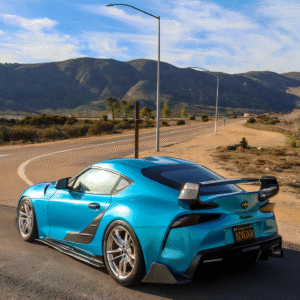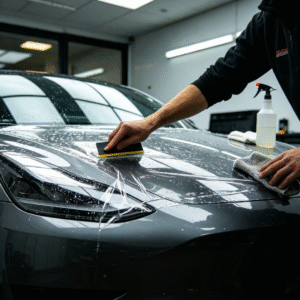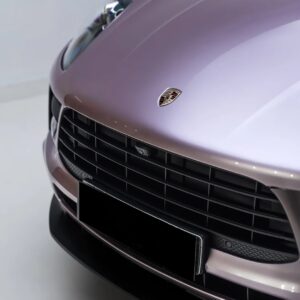

Over the last few years, ppf paint protection film has evolved from a simple “clear bra” into a technically advanced system that combines impact resistance, self-healing top coats, hydrophobic chemistry, and even full-color styling. For everyday drivers, track cars, and high-end builds alike, next-generation PPF is now a core part of any serious wrap for cars strategy.
Behind the scenes, this evolution is driven by new TPU (thermoplastic polyurethane) constructions, better adhesives, and tighter quality standards. Market research shows that TPU-based films now dominate the global paint protection film segment because they offer superior elasticity, anti-yellowing performance, and long-term optical clarity compared with older PVC-style films.
1. What Makes Modern PPF Paint Protection Film Different?
At its core, paint protection film is a multi-layer urethane or TPU stack: a self-healing top coat, a shock-absorbing base film, and a pressure-sensitive adhesive layer. The goal is simple—let the film take the abuse from stone chips, road salt, bug acids, and micro-scratches so your clear coat doesn’t have to.
The biggest shift is material science. TPU has become the preferred base for premium PPF because it offers a rare combination of flexibility, impact resistance, and optical clarity. Typical high-end TPU films are designed to stretch 250–400% before breaking, with tensile strengths above 20–25 MPa, while still maintaining excellent transparency and gloss.That elasticity helps the film conform over complex body lines without lifting or lifting at edges.
1.1 TPU vs. PVC and TPH: Why TPU Wins
Older PVC-based films were more rigid and more prone to cracking and yellowing over time, especially in harsh UV climates. TPH hybrids improved flexibility but still struggled with long-term clarity compared to pure TPU. Recent comparison studies consistently show TPU offering better self-healing, anti-yellowing stability, and impact resistance than PVC or TPH alternatives, which is why most premium brands have moved fully to TPU.
For installers and detailers, this means that choosing a high-quality TPU-based film is now the baseline—not a luxury. When you evaluate any tpu wrap designed for PPF applications, it’s worth checking published specs for tensile strength, elongation, and UV stability, rather than only judging by price or brand name.
1.2 How Self-Healing Top Coats Actually Work
Today’s self-healing PPF relies on an elastomeric top coat that can flow microscopically when warmed. Light swirls from washing or dust can relax and “fill in” when exposed to heat from the sun, hot water, or a gentle heat gun. Manufacturers pair this with stain-resistant and UV-stable chemistries so the surface resists water spots, chemical etching, and fading for years.
2. Advanced Top Coats: Hydrophobic, Stain-Resistant and UV-Stable
Modern PPF is defined as much by its top coat as by its base film. Many premium systems now integrate nano-ceramic or fluoropolymer top layers to repel water, oils, and road grime. Independent product data sheets commonly show contact angles and stain-resistance tests designed to prove resistance to bug splatter, bird droppings, road salts, and industrial fallout.
2.1 Hydrophobic & Oleophobic Behavior
Hydrophobic PPF sheds water in tight beads, reducing the chance of mineral spotting and making it easier to wash the car. Oleophobic behavior helps oils and tar release more easily, which is especially valuable on highway-driven or performance vehicles. Some top-coat technologies marketed today specifically highlight improved protection against water spots and chemical stains compared with earlier-generation films.
2.2 UV and Yellowing Resistance
UV stability is another area where innovation is happening quickly. High-end PPF constructed from aliphatic TPU, combined with UV-absorbing additives in the top coat, is tested against yellowing using accelerated weathering methods and “Yellowness Index” metrics. Industry guidance for premium TPU PPF often calls for gloss levels of ≥90 GU (60°), low haze values (≤1.5%), and yellowing kept within strict ΔYI limits after extended UV exposure.
In practice, that means well-formulated films stay optically clear for 5–7 years or more under real-world use, while many older PVC-based products might show visible color shift or embrittlement much sooner.
3. From Clear Bra to Design Film: Colored and Textured PPF
Perhaps the most visible innovation in ppf paint protection film is the growth of color and finish options. Instead of only transparent films, installers can now specify gloss, satin, or matte clear, plus an expanding palette of “fashion” PPFs—solid colors, metallics, pearls, and even textured surfaces like carbon fiber or forged patterns.
Colored TPU PPF typically builds the pigment layer into the film stack while preserving the self-healing, hydrophobic, and UV-resistance properties of clear PPF. Technical sheets for modern color PPF frequently list gloss around the mid-90 GU range, UV blocking in the high 90% range, and durability ratings of roughly 5–7 years for exterior use—all while delivering a strong color punch.
3.1 Clear PPF for Invisible Protection
Clear gloss PPF remains the default choice for owners who want an “OEM+” look. It preserves factory color and metallic flake while adding a sacrificial layer against rock chips and wash-induced marring. Understanding coverage options—front bumper only, full front, rocker panels, or full-body—helps match cost to risk. If you want an invisible shield for daily use, exploring a dedicated clear ppf line is the natural starting point.
3.2 Colored PPF for Style + Protection
Colored PPF brings together the worlds of paint protection and full-body styling. You can achieve a color-change effect similar to vinyl wrap, but with the thickness and self-healing properties of TPU. This is ideal for performance builds that need chip resistance but also want a distinctive finish. To explore color and finish options, it’s worth browsing a dedicated colored ppf catalog that includes gloss, satin, metallic, and special-effect films.
4. Performance Standards Behind Premium PPF
Behind every good PPF install is good data. Manufacturers and serious installers increasingly reference international test methods—especially ASTM and similar standards—to quantify film performance. These tests cover gloss, haze, tensile strength, elongation, peel strength, and weathering behavior.
4.1 Key Numbers to Look For
- Thickness: Common automotive PPF thicknesses are roughly 6.5–10 mil. Thicker films generally offer more impact resistance but can be slightly harder to install on extremely tight curves.
- Tensile Strength: Premium TPU PPFs often list tensile strengths above 20–25 MPa, indicating strong resistance to tearing and stretching under load.
- Elongation at Break: Values of 250–400% or higher are common for high-quality TPU films, which helps them wrap smoothly around complex panels.:
- Gloss & Haze: Gloss at 60° above ~85–90% with haze below ~1.5–2% keeps the film visually “invisible” over factory paint.
- Yellowing / UV Resistance: Robust films show low ΔYI values after accelerated UV exposure, confirming real-world resistance to yellowing.
When you evaluate spec sheets, don’t just look at marketing claims. Look for explicit reference to standards like ASTM D412 (tensile/elongation), ASTM D1003 (haze/light transmission), and ASTM D2457 (gloss) or similar regional equivalents. These references signal that the film has been validated against widely accepted benchmarks rather than only in-house tests.
5. Smarter Installation: Pre-Cut Kits and Digital Pattern Software
Another major innovation around ppf paint protection film isn’t in the film itself, but in how it’s installed. Professional shops increasingly rely on pre-cut pattern software connected to plotters. Instead of hand-cutting film on the car, installers use a digital pattern library for specific models and trim levels, reducing risk and speeding up the process.
Modern PPF cutting platforms typically:
- Maintain cloud-based databases with thousands of vehicle templates, updated as new models are released.
- Include editing tools to tweak edges, relief cuts, and wrap-ins for custom fitment.
- Support multiple plotter brands so shops can standardize workflows across locations.
- Reduce on-car blade work, lowering the risk of cutting into paint and improving repeatability for fleets or multi-car clients.
For vehicle owners, this means cleaner edges, more consistent coverage, and better compatibility with complex shapes like modern headlights, bumpers, and aero components.
6. How to Choose the Right PPF Paint Protection Film for Your Vehicle
With so many options on the market, choosing the right PPF can feel overwhelming. A simple framework is to think about protection level, appearance, and ownership horizon.
6.1 Match Film Type to Your Goals
- Daily drivers on rough roads: Prioritize TPU films in the 7.5–10 mil range with strong self-healing, high tensile strength, and verified UV stability. Front-end and rocker coverage delivers the best cost-to-benefit ratio.:
- Show cars & weekend toys: Consider a combination of high-clarity clear ppf on high-impact areas and fashion-focused color PPF on panels where you want a unique look.
- Color change with protection: If you want to transform the vehicle’s appearance and still keep OEM paint safe, a dedicated colored ppf line lets you combine styling and impact resistance in a single install.
6.2 Verify Data, Not Just Branding
No matter which supplier you choose, ask to see data sheets and, where available, references to ASTM or equivalent performance testing. Many high-quality films now publish gloss levels, haze, tensile strength, elongation, and UV performance so you can make apples-to-apples comparisons. Independent market and material reports underline how quickly PPF technology is improving and how strongly TPU is favored for long-term durability.
6.3 Why Source from a Specialist PPF & Wrap Provider
Choosing a supplier that focuses on both wraps and PPF has clear advantages. A brand that offers integrated lines of paint protection film, tpu wrap, and design films can help you plan the whole build—whether you’re aiming for invisible protection, a stealth matte OEM look, or a bold color-change concept. When these lines are engineered to work together, installers can layer or combine them in ways that maximize both aesthetics and protection.
If you’re building a full protection plan—front-end PPF, rocker panels, and a style-forward color wrap—it’s worth collaborating with a supplier and installer who live and breathe film technology. They’ll help you select the right ppf paint protection film thickness, finish, and coverage pattern for your car, climate, and driving style, so your vehicle looks better for longer with less maintenance.