If you’re pricing a color-change wrap or branding graphics in 2025, you’ll quickly find that the cost to wrap a car depends on vehicle size, film type, surface prep, and who does the work. Below is a concise, up-to-date comparison of DIY vs professional pricing, plus tips to choose the best value for your use case. For shopping film colors and finishes, start at our car wrap collection, then use this guide to estimate total project cost.
What actually drives wrap pricing?
- Vehicle size & complexity: Coupes cost less than SUVs/vans; deep bumpers, spoilers, and complex curves add labor time.
- Film type & finish: Standard gloss/matte/satin cost less than chrome, color-flip, textured, or printed designs.
- Surface condition: Paint correction, adhesive removal, and de-badging increase prep time and cost.
- Coverage choices: Full body vs partial (hood/roof/mirrors) and options like door-jamb wraps affect hours and material.
- Shop expertise & warranty: Certified installers, clean rooms, and longer warranty support add value (and price).
Typical 2025 price ranges (U.S.)
These ballpark ranges help you sanity-check quotes. Actual pricing varies by market and film brand.
| Vehicle / Coverage | Pro Install — Typical Range | Notes |
|---|---|---|
| Compact / Sedan (full wrap) | $2,500 – $3,500+ | Standard gloss/matte/satin. Premium finishes add cost. |
| SUV / Crossover (full wrap) | $3,000 – $4,500+ | More square footage and complex panels. |
| Pickup / Van (full wrap) | $3,500 – $5,500+ | Cargo and Sprinter vans trend higher. |
| Exotics / Luxury (full wrap) | $5,000 – $10,000+ | Complex curves; premium films; show-quality standards. |
| Partial wraps (hood/roof/mirrors/stripes) | $500 – $2,000+ | Quick refresh and branding options. |
Add-ons like chrome or color-flip films, printed designs, and door-jamb wrapping can push totals higher. Wrap removal (later) typically runs a few hundred dollars depending on age/condition.
DIY wrap: what will you actually spend?
DIY can save money, but it’s not just the film roll. Budget for:
- Vinyl film: Most cars need ~250–320 sq ft (including waste). Quality film commonly prices around a per-square-foot rate; premium finishes cost more.
- Tools & supplies: Squeegees, magnets, knifeless tape, blades, isopropyl, heat gun, gloves, and a clean working area.
- Learning curve & waste: Expect 10–20% material overage for mistakes; complex bumpers can require re-tries.
A realistic DIY materials budget for a sedan is often $600–$1,200+ (film + tools). The trade-off is time (often several days) and risk: lifts, disassembly, and finish quality. If a panel needs re-do or the film is mis-stretched, costs rise quickly. By contrast, a pro quote includes prep, controlled environment, skilled labor, and warranty support.
Professional installation: why it costs more
For shops, the majority of price is labor and overhead—surface prep, safe disassembly/reassembly, dust-controlled bays, certified techniques, and post-install support. That’s also why pro wraps tend to look cleaner at panel edges and last longer when properly cared for.
DIY vs Pro: which is cheaper over 3–5 years?
Good vinyl wraps typically last around 3–5+ years depending on film, climate, and care. If you value a flawless finish, warranty, and minimal downtime, professional install often delivers the best total cost of ownership. If you have the space, tools, and patience to learn—and you’re okay with a “good from 5 feet” standard—DIY can be cost-effective for standard finishes on simpler vehicles.
When a PPF or hybrid approach makes more sense
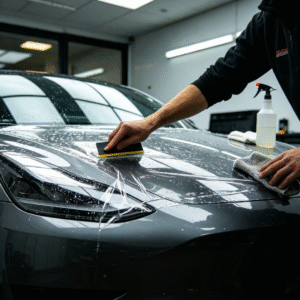
If your goal is stone-chip resistance and long-term paint preservation, consider Paint Protection Film (PPF). A popular strategy is a color wrap for style plus a full-front PPF kit on high-impact zones (hood, bumper, fenders, mirrors) for durability. To explore protective options and colors, see our TPU colored PPF and Clear Paint Protection Film.
How to get an accurate quote (and avoid surprises)
- Decide coverage & finish: Full vs partial; gloss/matte/satin vs specialty (chrome, color-shift, textured).
- Share clear photos: Include bumpers, mirrors, door handles, roof, spoilers, and any prior paint damage.
- Ask what’s included: Prep level, panel removal, door-jambs, de-chrome, post-heat, and aftercare.
- Confirm film brand & warranty: Film warranty (UV/adhesion) and installer workmanship coverage.
- Request timelines: Shop lead time, install hours/days, and vehicle downtime.
- Plan for removal: Quote removal now so you know the long-term budget.
Bottom line
For most owners in 2025, a professional full wrap runs in the mid-$2,000s to mid-$4,000s for common vehicles, with specialty films and complex bodies going higher. DIY can save on labor if you have the skills, space, and time—just remember to factor in tools, waste, and re-work.