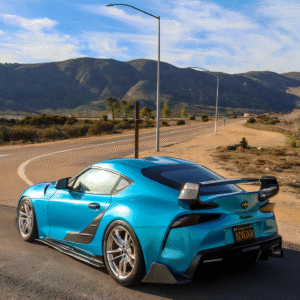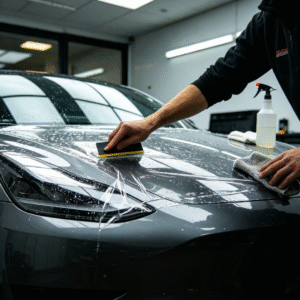
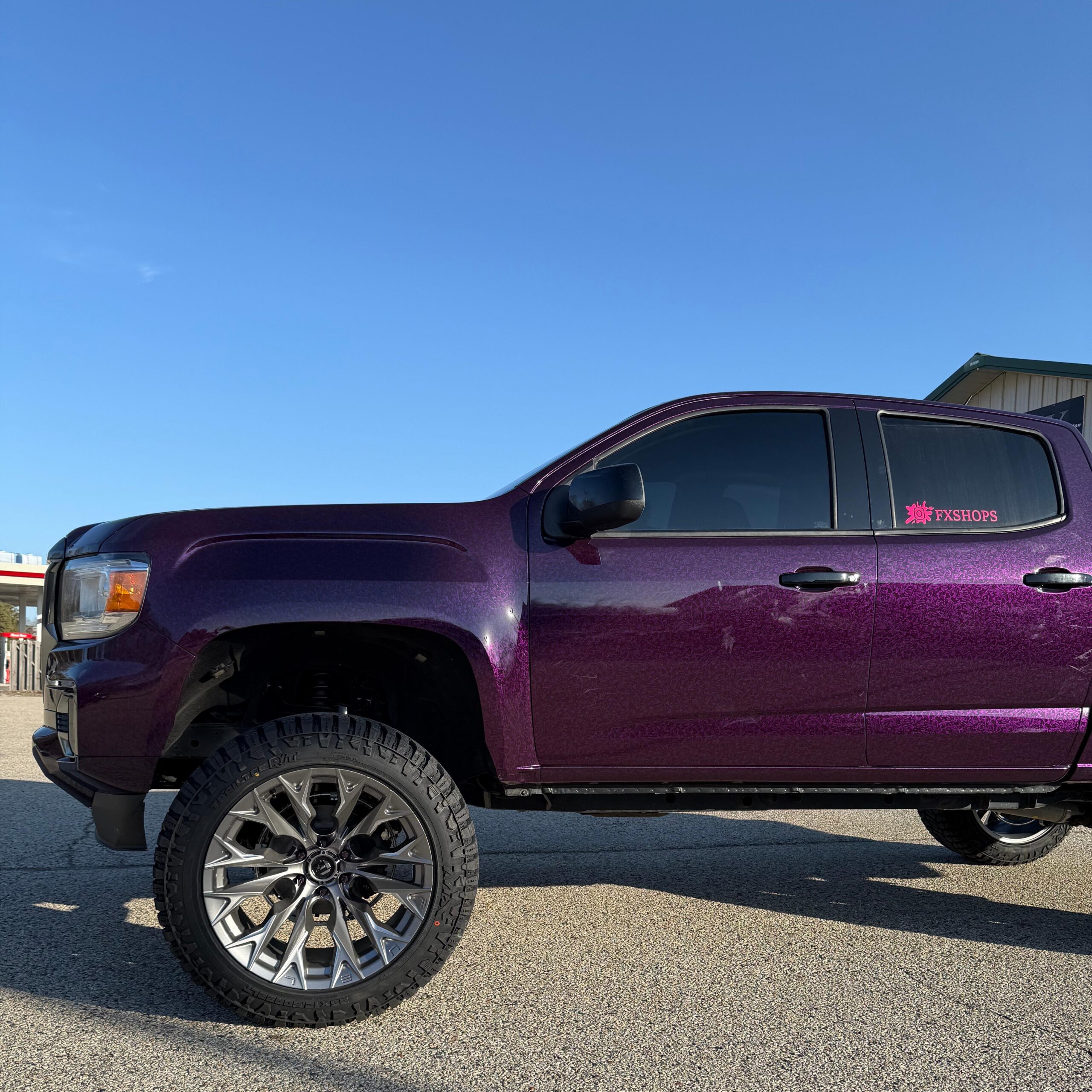
Looking to combine motorsport texture with a bold color statement? A purple carbon fiber wrap delivers the woven or “forged” carbon aesthetic in a vivid hue that stands out at meets and on social. This guide covers where the finish works best, how to plan material and tools, installation fundamentals (including post-heating), and the care habits that keep it looking new for years.
Why choose a purple carbon fiber finish?
- Visual impact: You get the technical carbon weave or forged “marble” look, elevated with a purple tone that reads premium and custom.
- Reversible customization: Unlike paint, vinyl is removable—handy for resale or seasonal style changes.
- Panel protection: Quality films add a sacrificial layer against light abrasions and UV.
- Finish flexibility: Options include gloss (high pop), satin (subtle sheen), and specialty forged patterns.
Applications that make sense
- Full color change: A complete wrap transforms the vehicle with cohesive color and texture.
- Accent zones: Roof, hood, mirrors, splitters, spoilers, interior trims, and engine plastics (non-porous surfaces only).
- Branding & show cars: The purple tone photographs well under warm and cool lighting, ideal for events and social content.
Material types & what to look for
For color-change projects, most installers favor cast vinyl with air-release adhesive for conformability and clean finishes around curves. Typical wrap thickness is ~3–4 mil (≈75–100 μm) excluding liner; forged-pattern films and PET-faced gloss variants can feel slightly stiffer but deliver crisper reflections and higher scratch resistance. Expect repositionable, bubble-free adhesives and a rated lifespan commonly in the 3–5+ year range on vertical panels when properly maintained.
Tip: Planning a “forged” look? Compare swatches in natural daylight; forged patterns vary in chip size and density. If you want a more twill-like weave, choose a traditional 2×2 pattern instead.
How much film do you need?
| Vehicle type | Typical film needed (60″ wide) | Notes |
|---|---|---|
| Coupes / compact sedans | ~55–65 linear ft (≈250–300 sq ft) incl. waste | Assumes standard bumpers and mirrors |
| Mid sedans / crossovers | ~60–70 linear ft (≈280–320 sq ft) | Roof rails and spoilers add footage |
| SUVs / trucks / vans | ~70–90 linear ft (≈330–420 sq ft) | Boxy panels can use more despite fewer curves |
Installation essentials (DIY or shop)
Environment & prep
- Work indoors at ~60–75°F (16–24°C) with low dust and good lighting.
- Wash, decontaminate, and wipe panels with 70% isopropyl alcohol. Remove waxes, silicone, tar, and oxidation.
- De-badge if needed; map panels and pre-cut with 10–20% overage for complex zones.
Tools you’ll actually use
- Quality squeegees with felt edge, magnets, knifeless tape, fresh blades.
- Heat gun or IR heater, IR thermometer, wrap gloves, and edge-sealing tape for high-stress areas.
Key techniques for purple carbon fiber wrap
- Minimal stretch: Aim for ≤10% stretch on textured carbon patterns to avoid distorting the weave or forged “chip” pattern.
- Work from center out: Tension the film evenly, squeegee in small channels to keep air paths open.
- Post-heat edges: After conforming corners and deep recesses, post-heat to ~194–212°F (90–100°C) and hold briefly to set memory.
- Edge quality: Tuck and seal edges; avoid cutting on paint by using knifeless tape where feasible.
Curing, care & longevity
- Initial cure: Let the vehicle sit 12–24 hours before washing or highway speeds in heavy rain.
- Washing: Hand wash with pH-neutral shampoo; avoid automatic brushes. If pressure washing, keep the nozzle ≥12–16 in (30–40 cm) away and below ~1,900 psi.
- Protection: Use vinyl-safe detail sprays or sealants formulated for wraps. Park under cover when possible to reduce UV load.
- Expected life: On vertical panels, 3–5+ years is common with good care; horizontal surfaces age faster due to sun and heat.
Common pitfalls (and easy fixes)
- Lifted corners: Usually insufficient post-heat or contamination—reclean, re-tack, and post-heat correctly.
- Texture distortion: Over-stretching a carbon pattern—repanel with better layout and less tension.
- Silvering/bubbles: Squeegee too aggressively or in cold conditions—reheat lightly and re-squeegee with shorter strokes.
Where to start
If you’re still exploring finishes, browse our full wrap for cars selection, compare weave textures in the dedicated carbon fiber car wrap category, and review forged-pattern options here: forged carbon fiber wrap. Ready to go bold? See the product details and swatches for our gloss forged purple here: purple carbon fiber wrap.
Bottom line
A purple carbon fiber wrap blends technical motorsport texture with a distinctive hue that elevates any build. Plan your material carefully, control temperature and stretch during install, and follow wrap-safe maintenance. Do it right and you’ll enjoy a deep, photo-ready finish that protects paint and turns heads for seasons to come.