Carbon fiber paint protection film (PPF) blends the impact resistance of modern TPU clear bras with a woven carbon aesthetic. This guide distills lab-grade specs (thickness, adhesion, tensile strength), installation best practices, and warranty differences across leading brands—then ties it back to how a quality car wrap strategy should be planned across panels and accents.
Aliphatic TPU (self-healing topcoat)
~200 µm (≈8 mil)
Gloss or Matte Carbon Pattern
10–12 years (brand dependent)
We reference standardized tests—ASTM D523 gloss, ASTM D1003 haze, ISO 4892-2 xenon-arc weathering, and SAE J400/ASTM D3170 chip resistance—so spec comparisons are meaningful across brands. [A1–A4]
What Carbon Fiber PPF Is (and Isn’t)
Unlike printed PVC vinyl, carbon-fiber PPF uses a TPU base with a patterned topcoat. TPU’s chemistry supports elastic recovery and self-healing under heat, which reduces swirl marks and minor marring over the lifespan of the film. Independent reviews and materials research on self-healing polyurethane coatings show repeatable healing at room temperature or mild heat when the topcoat is properly engineered. [1]
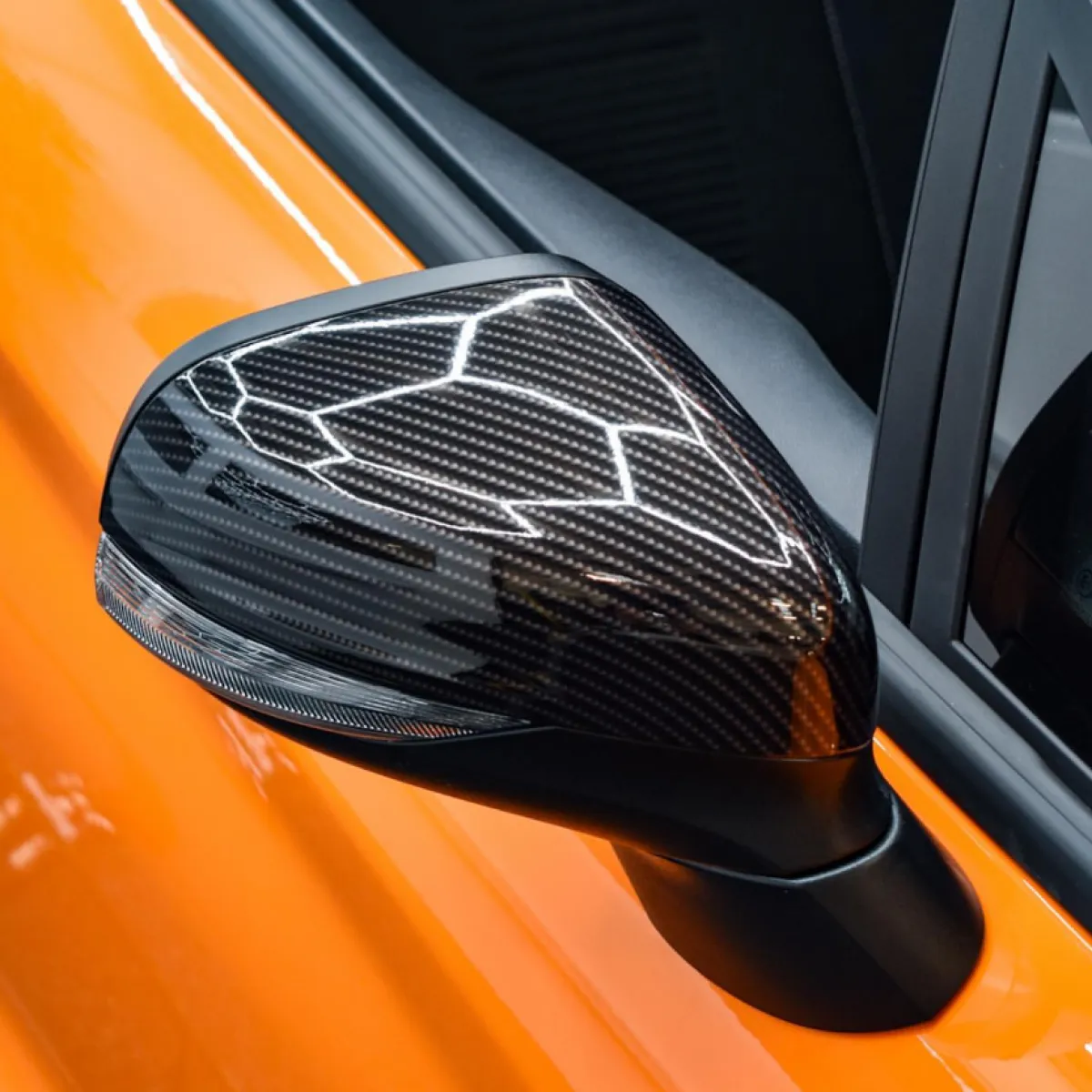
If your goal is both protection and a carbon look—on hoods, roofs, spoilers, or interior trims—carbon PPF is a more durable alternative to decorative vinyl. You can still combine it with transparent ppf wrap on high-impact zones to balance aesthetics with maximum chip resistance.
Measured Specs from Leading Brands
To ground the decision, here are representative numbers from recent technical data sheets (TDS). Thickness and adhesion affect installation behavior; tensile and elongation influence edge stretch and complex curves; warranty signals expected durability under UV and contaminants.

| Brand / Film | Thickness (μm) | Peel Adhesion (24–72 h) | Tensile @ Break | Elongation @ Break | Weathering / Gloss | Warranty |
|---|---|---|---|---|---|---|
| XPEL ULTIMATE PLUS (reference for TPU stack) | 192 (w/o liner) [2] | ≥7 N/cm (72 h) [2] | >15 MPa [2] | >200% [2] | ΔE<2 after xenon; gloss >90 GU (60°) [2] | 10 years (limited) [5] |
| 3M Scotchgard Pro Series 4.0 | 200 (with adhesive) [3] | ~8 N/cm (24 h) [3] | 16 MPa [3] | 280% [3] | — | 10 years (consumer) [3] |
| STEK DYNOcarbon (Carbon Pattern) | 200 ± 10 [4] | — | — | — | Gloss >14 GU; no change after 1000 h xenon-arc (65 °C) [4] | 10–12 years (region/program dependent) [6] |
Why these tests matter: gloss (ASTM D523) ensures the carbon pattern doesn’t dull; haze (ASTM D1003) preserves optical clarity on clear zones; xenon-arc weathering (ISO 4892-2) approximates long-term UV exposure; gravel/chip resistance (SAE J400 / ASTM D3170) indicates resilience on leading edges. [A1–A4]
Key Benefits of Carbon Fiber PPF
1) Dual Outcome: Protection + Aesthetic Upgrade
Fashion-series carbon PPF gives the dry-carbon look while maintaining an 8-mil protective stack. STEK’s DYNOcarbon, for example, lists a 200 ± 10 μm construction with hydrophobic and anti-contamination properties, plus xenon-arc stability at 1000 hours. [4]
2) Self-Healing and Stain Resistance
Modern TPU topcoats incorporate elastomeric polymers that “flow” under heat to minimize micro-scratches. XPEL’s TDS documents self-healing behavior and no detrimental effect after immersion-stain tests (gasoline, diesel, oil, acetone, etc.) with 24-hour checks. [2] Academic reviews of self-healing polyurethanes corroborate the underlying mechanisms and durability benefits. [1]
3) Long-Horizon Value
Market analysts estimate the global PPF category at roughly USD 500+ million (2024) with mid-single-digit CAGR through 2030, led by TPU-based films. [7][8] That broader adoption means easier access to trained installers and consistent warranty support across regions.
Installation Playbook (Carbon Pattern Specifics)
- Panel selection: Carbon looks best on contrast panels (hood/roof/spoiler/mirror caps). For the rest of the vehicle, pair with a transparent color ppf (matte or gloss) to lock in uniform protection without visual overload.
- Template choice: Prefer pre-cut kits with scaled pattern alignment. Uniform weave direction across adjacent panels avoids visual seams.
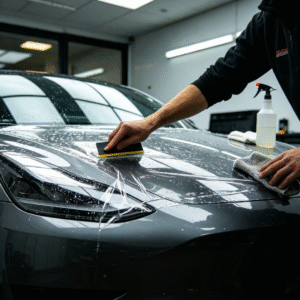
- Surface prep: Degrease → clay → IPA wipe; remove old waxes. Carbon patterns reveal surface contaminants more readily than clear films.
- Slip/Tack balance: Use a slip solution for initial placement; switch to a mild tack solution at edges and recesses to secure the pattern without stretching the weave out of alignment.
- Heat management: Controlled heat sets edges and can trigger topcoat self-healing for minor squeegee marks. Avoid over-stretch that distorts the carbon lattice.
- Post-cure & inspection: 24-hour cure, recheck edges and pattern continuity in cross-lighting. Document batch and lot numbers for warranty claims.
For full-body designs, many shops mix carbon accents with transparent protection on high-impact areas—see carbon fiber ppf film for accent pieces, and pair with clear ppf wrap on rockers and bumpers.
Brand-to-Brand Notes (Balanced View)
- XPEL: Comprehensive TDS with quantitative data: 192 μm stack, ≥7 N/cm peel (72 h), >15 MPa tensile, >200% elongation; chip resistance by ASTM D3170/SAE J400; 10-year limited warranty. [2][5]
- 3M: Pro Series 4.0 lists 200 μm thickness (with adhesive), ~8 N/cm adhesion (24 h), 16 MPa tensile, 280% elongation, 10-year consumer warranty. [3]
- STEK: DYNOcarbon technical sheet indicates 200 ± 10 μm, hydrophobic topcoat, gloss >14 GU (ASTM D523), and “no change” after 1000 h xenon-arc at 65 °C; fashion-series warranty ranges from 10 to 12 years depending on program. [4][6]
On balance, the flagship films from these brands cluster tightly around the ~8-mil class. If you’re optimizing for maximum durability on track-use cars, also consider chip test details (SAE J400 / ASTM D3170) and whether your installer recommends supplementary clear PPF on leading edges where debris impact is highest. [2][A4]
FAQ: Is Carbon PPF Right for My Build?
Q: Will the pattern fade or yellow faster than clear PPF?
A: Properly formulated TPU carbon films undergo xenon-arc weathering (ISO 4892-2). STEK lists “no change” after 1000 hours at 65 °C on DYNOcarbon; clear-film benchmarks (XPEL, 3M) also document color and gloss retention after accelerated weathering. [2][3][4][A3]
Q: Can I mix carbon PPF and clear PPF on one vehicle?
A: Yes—use carbon on accent panels, then clear PPF (gloss or matte) elsewhere to match the finish you want. Start your plan at the car wrap level and decide where you want pattern vs. transparency.