
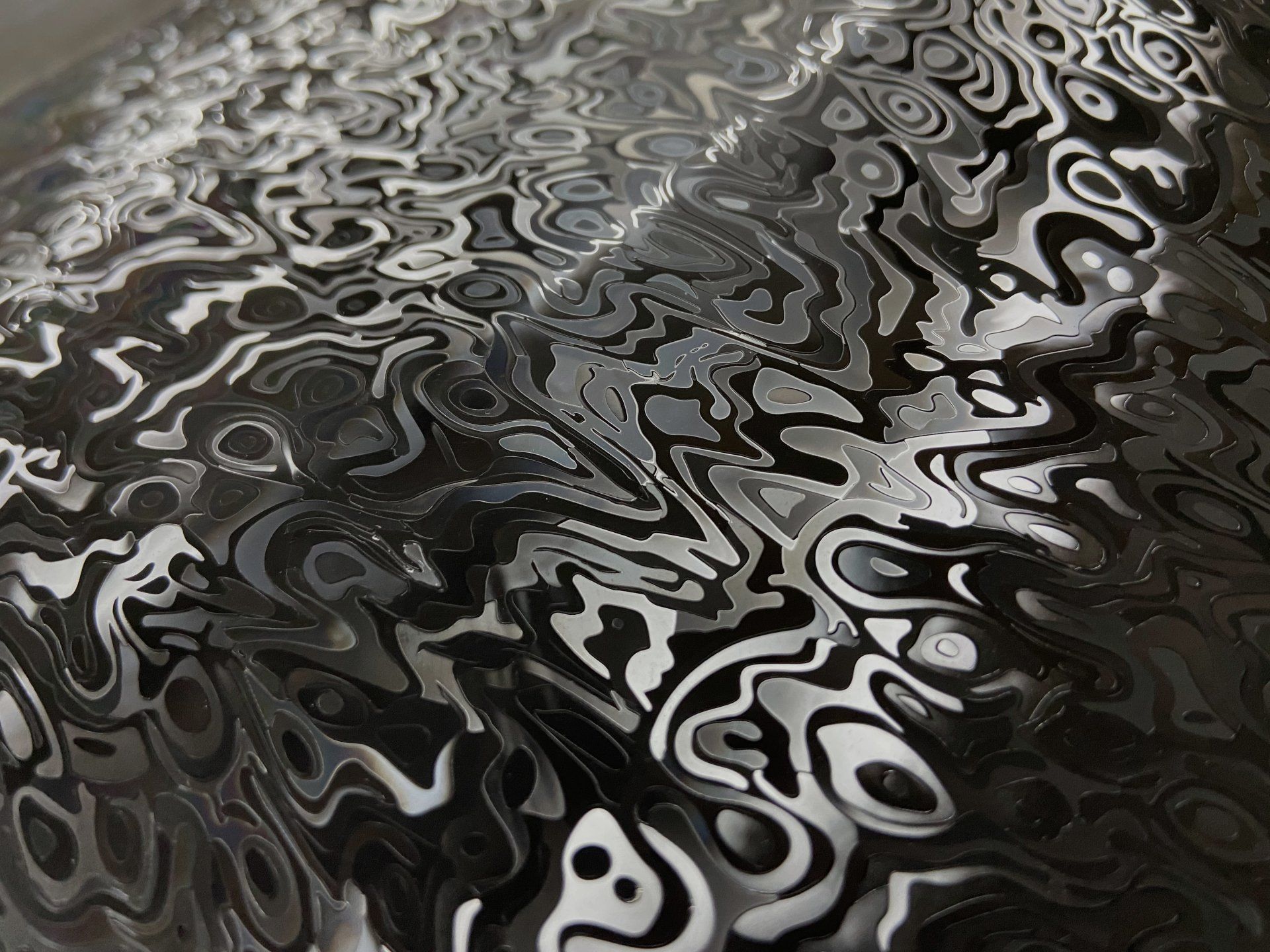
Printed and textured films have exploded in popularity as enthusiasts look beyond solid colors to patterns that shape a car’s identity. Among these, damascus vinyl wrap brings the mesmerizing, layered “water-like” motif of forged steel to modern bodywork—an aesthetic very different from the high-contrast disruption of classic camo. Below, we break down what makes each approach special, how they photograph and age, and which scenarios they’re best suited for.
What “Damascus” Means in Automotive Wraps
In metalworking, “Damascus” refers to flowing bands and mottled waves created by layered steels; when translated to film graphics, it becomes a tight, micro-scale pattern with ripples that read like topographic lines. On vehicles, this yields a refined, premium mood—especially in black, gunmetal, and charcoal—where the lines subtly catch light across hoods, fenders, and door swells. If you’re already comparing finish families or looking for a broader introduction to wraps, start with a general overview of vinyl wrap.
Camo, By Contrast, Is Built to Break Up Shape
Traditional camouflage patterns are designed with macro-scale, high-contrast blocks (woodland, desert, digital, urban, etc.) that visually fracture a silhouette. On a vehicle, that means bolder, louder composition—great for off-road builds, utility rigs, or anyone who wants an unmistakable graphic statement. In studio lighting, camo reads graphic and punchy; in outdoor scenes, it creates depth but remains intentionally conspicuous. Damascus, by comparison, stays elegant and continuous, emphasizing form rather than hiding it.
Why Damascus Patterns Photograph So Well
Because the linework in a damascus vinyl wrap is closely spaced and directional, it accentuates body curvature under raking light. The effect is cinematic: at distance you see a rich, uniform tone; up close, you discover waves and banding that reward detail shots. This makes Damascus a favorite for premium builds, show coverage, and social content where micro-textures convey quality without visual noise.
Film Technology: What to Look For
Regardless of pattern, the best results come from high-grade cast films with repositionable, air-release adhesives. These technologies help installers slide, snap-up, and squeegee large panels with fewer bubbles, cleaner edges, and better conformance in channels and compound curves. If your project mixes textures—say, Damascus body panels with a forged-weave hood—consider pairing with a high-quality carbon fiber car wrap for contrast.
Damascus vs. Camo: Side-by-Side
- Design intent: Damascus celebrates form and craftsmanship; camo disrupts outlines with bold shapes.
- Visual scale: Damascus = micro patterning (elegant, close-up interest). Camo = macro blocks (graphic punch at distance).
- Use cases: Damascus suits premium daily drivers, luxury sedans, EVs, and show builds; camo suits off-road, motorsport themes, fleets, and outdoor lifestyle branding.
- Pairing: Damascus loves monochrome palettes (black/grey/smoke) and low-gloss trims; camo thrives with contrasting accents, bead-locks, and utility accessories.
- Branding space: Damascus offers calmer backdrops for logos; camo may require careful logo placement to avoid legibility issues.
Finish Choices & Panel Strategy
Damascus graphics are typically printed onto wrap-grade film and laminated in gloss, satin, or matte. Gloss sharpens highlights and “depth,” satin balances reflection control with richness, and matte amplifies the engraved-metal vibe. For full vehicles, align pattern flow from hood to roof to decklid; for partials, consider a hood/roof/trunk trio or a motorsport-style beltline to frame the car’s core volume. Camo, by comparison, benefits from thoughtful panel staggering so large blocks don’t create obvious seams at the A-pillars or fuel doors.
Care & Longevity Tips
- First 48 hours: Avoid washing while the adhesive finishes wet-out after installation.
- Routine cleaning: Hand-wash with pH-neutral shampoo; keep a wrap-safe quick detailer or sealant on hand to reduce dirt adhesion.
- Hot spots: Remove bug residue, sap, and bird droppings promptly to prevent staining on light areas of printed camo or the lighter bands of Damascus art.
When to Choose Damascus
Pick damascus vinyl wrap if you want a refined, artisan impression that looks expensive without screaming for attention. It’s the “tailored suit” of pattern wraps—subtle from afar, captivating up close. If you want loud, adventure-coded energy or a functional, utilitarian vibe, classic camo will always deliver.
Bottom Line
Damascus and camo aren’t rivals—they’re tools. Damascus turns bodywork into a sculptural canvas with elegant micro-texture; camo makes a bold, high-impact statement with big-block geometry. Choose the one that matches your brand, your driving environment, and the way you want photos and video to feel. With quality materials and proper maintenance, either path will transform your car as dramatically as a paint job—minus the permanence.