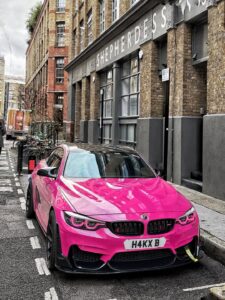

If you want the “just-detailed” mirror depth without living in the wash bay, high gloss black ppf delivers a deep, liquid appearance and serious impact resistance in one layer. Unlike a simple cosmetic film, premium color PPF combines an aliphatic TPU base, optically clear adhesive, and a heat-reactive topcoat to gloss up panels while shielding them from rock chips, swirls, and UV fade.
What actually creates the “wet look”?
The effect comes from surface smoothness at the microscopic level. Installers and QC teams often verify finish with a glossmeter using the 20°/60°/85° geometries: mid-gloss is read at 60°, while very glossy surfaces are corroborated at 20°. In practice, a high-gloss black surface will read high at 60° and even higher at 20°, confirming that the topcoat is properly leveled. For customers, this simply means your black stays black—and shiny—in full sun or showroom lighting.
Protection that earns its keep
Beyond aesthetics, color PPF is typically 6–8 mil thick, giving it far more impact and abrasion resistance than standard vinyl. The elastomeric topcoat self-heals light wash marring when warmed (engine heat, sun, or gentle heat gun), and aliphatic TPU chemistry resists yellowing so the black tone stays true over time. Hydrophobic behavior makes maintenance easier: water beads, road film releases faster, and the “wet look” lasts longer between washes.
PPF vs. Vinyl: which should you choose?
If your priority is cost and color variety, a quality car vinyl wrap can be a smart cosmetic option. If you want real paint protection for daily driving, track debris, or winter grit, go PPF—especially on front bumpers, hoods, rockers, and door edges. For owners who want both depth and defense, black color PPF is the sweet spot: the gloss and depth of a show finish with the durability of a protective film.
How to spec a high-performing black color PPF
- Thickness: Look for ~6–8 mil overall film thickness.
- Topcoat: Heat-activated self-healing to clear wash marring.
- Optical clarity & depth: Smooth, distortion-free reflections; verify gloss at 60° and 20°.
- UV stability: Aliphatic TPU to resist yellowing; long-term gloss retention.
- Hydrophobicity: Durable beading for easier, safer washes.
- Adhesive system: Repositionable, low-orange-peel adhesive for clean installs.
- Warranty & aftercare: Clear terms covering yellowing, cracking, and delamination.
Installation notes for a flawless black finish
Prep is everything with black. Perform a thorough decon (wash, iron remover, clay), correct heavy defects, and finish-polish to minimize RIDS that could telegraph. Use fresh slip and tack solutions, squeegee in overlapping strokes, and “set” the self-healing topcoat with controlled warmth after install. Wrap edges where possible for a factory-level look; on complex panels, pre-stretch minimally and let the film relax before final squeegee passes.
Care & maintenance to preserve the wet look
Wash weekly with a pH-neutral shampoo, use plush mitts, and blow-dry where possible. Avoid aggressive compounds; if you pick up light swirls, a gentle heat cycle often restores the surface. Ceramic toppers made for PPF can add slickness and extend beading without muting gloss—always follow the film maker’s guidance.
Where to start
Explore our black color PPF options and broader protection range:
• Learn about full-body and partial car wrap strategies.
• Compare cosmetic films on our car vinyl wrap page.
• Review TPU-based protective solutions and finishes in color ppf lines.
• Go straight to the product: our ultra-deep high gloss black ppf.
Quick FAQ
Will black color PPF hide existing defects?
It can mask very fine haze, but it won’t fill deep scratches. Finish-polish before install for best results.
Does self-healing work in winter?
Yes—light warmth (garage heater, warm water, or a careful heat-gun pass) helps the topcoat relax and clear minor marring.
Can I top it with a ceramic coating?
Yes, provided the coating is PPF-safe. It adds slickness and contamination resistance without dulling gloss.