
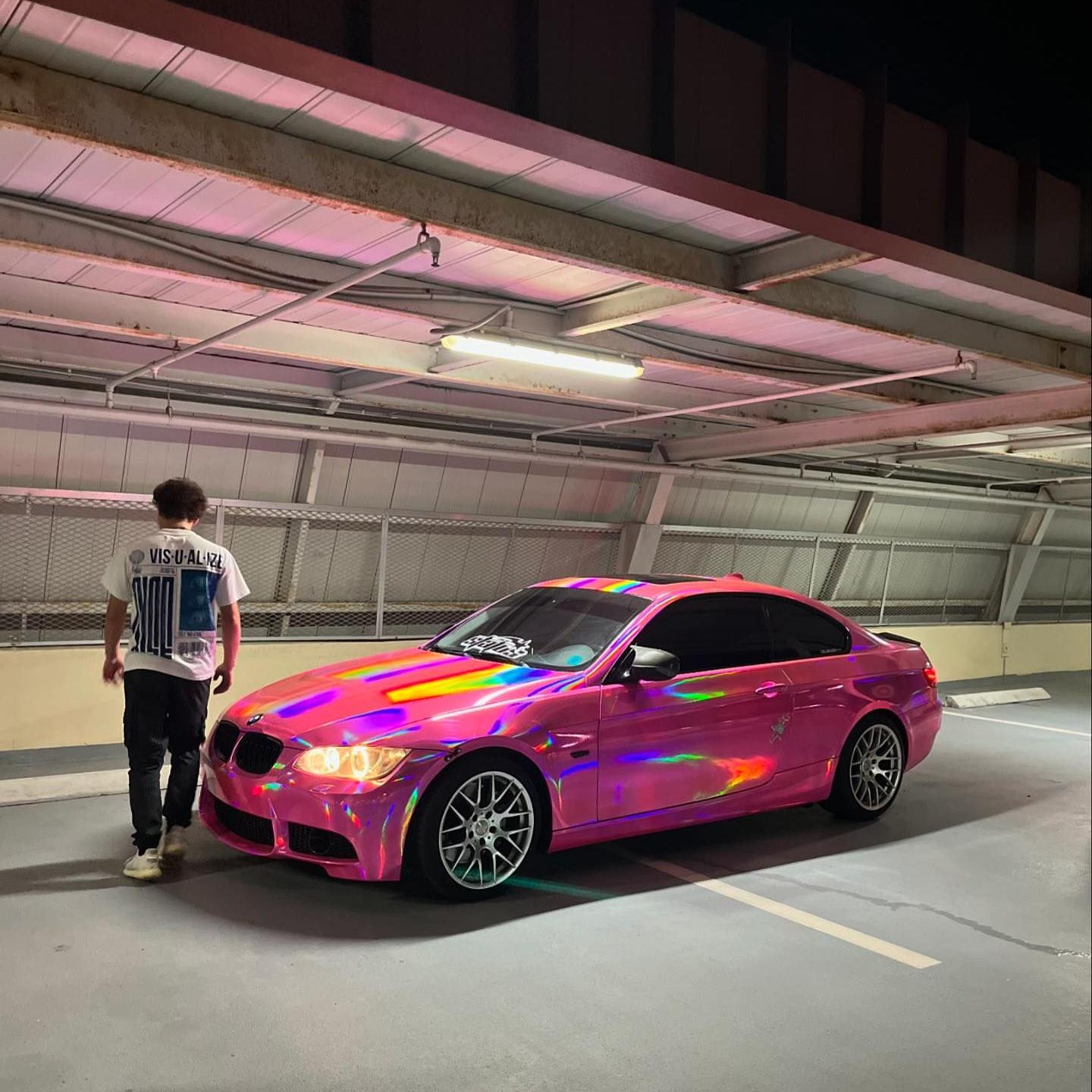
If you want a finish that stops people in their tracks, holographic chrome vinyl is hard to beat. It delivers a rainbow, prismatic sheen that dances under sunlight and streetlights, turning even subtle body lines into rolling light shows. This guide breaks down how it works, what to expect during installation and daily use, and how to choose the right variant for your project.
What Is Holographic Chrome Vinyl?
In simple terms, it’s a specialty vinyl wrap with a mirror-like metalized layer and a holographic (diffractive) pattern embedded in the film. When light hits the surface, microscopic grooves scatter white light into spectral colors, producing the signature “rainbow” effect. Compared with standard gloss or metallic films, holographic chrome is much more reflective and visually dynamic.
Holographic vs. “Neo-Chrome” vs. Color-Flip
You’ll see terms like holographic, neo-chrome, oil-slick, color-shift, or color-flip used online. In practice, these categories overlap: all leverage layered chemistry and surface structures to bend and split light. Holographic chrome emphasizes a rainbow diffraction pattern; color-flip finishes lean on pigments that change hue by viewing angle; neo-chrome often describes iridescent, chrome-like looks. For buyers, the key difference is aesthetic: do you want a structured rainbow sparkle (holographic) or a smooth two-tone/three-tone flip (color-shift)?
Where Holographic Chrome Shines
- Show and social: The finish photographs and videos exceptionally well, ideal for show builds, brand fleets, influencers, and promotional vehicles.
- Accents or full wraps: Many owners start with roofs, hoods, mirrors, or striping, then graduate to full panels once they fall in love with the look.
- Brand differentiation: Retail displays, demo cars, and sponsorship vehicles gain instant visual hierarchy in crowded spaces.
Pros and Cons vs. Standard Films
Advantages. Beyond the visual drama, quality holographic chrome films use modern adhesives with air-release channels for cleaner installs and repositionability, making complex projects more manageable. The metalized layer also heightens depth and clarity, giving even simple bodywork a premium edge.
Trade-offs. Chrome-type specialty films are typically stiffer and less conformable than conventional cast wraps, so deep recesses, tight compound curves, and bumper inlets require advanced technique (relief cuts, paneling, knifeless tape) and careful heat management. Durability ratings for specialty chromes are often shorter than for standard solid colors; expect more attentive aftercare and periodic inspection of high-stress edges and seams.
Installer Tips (That Protect Your Finish)
- Prep like a pro: Thorough decontamination is non-negotiable. Remove waxes, silicones, and embedded iron particulates to reduce adhesive lift and edge failures.
- Manage stretch: Treat holographic chrome like a specialty film—minimize stretch on edges and in recesses, and avoid overheating the metalized layer.
- Use the right tools: Soft buffers, knifeless tape for safe cuts on paint, selective use of adhesion promoter on critical edges, and methodical post-heating per manufacturer guidance.
- Panel strategy: Complex bumpers and quarters may need multi-piece layouts to preserve grain direction and optical uniformity.
Daily Care and Maintenance
Hand-wash with a pH-neutral shampoo, microfiber mitt, and low-pressure rinse. Avoid abrasive polishes and harsh solvents that could cloud the mirror layer. Use wrap-safe sealants to make cleanup easier and improve hydrophobicity. Remove contaminants (bird droppings, sap, tar) promptly. If you frequent brush washes or road salt zones, consider a sacrificial film-safe spray sealant after each deep clean.
Safety and Legal Considerations
Because holographic chrome is highly reflective, local regulations may limit its use on full vehicles or specific areas (e.g., front/rear, mirrors). Before booking an installation, check state and municipal rules regarding reflective or mirror-like wraps. Responsible choices—like accents, partial wraps, or toned-down sections—can deliver the look you want while staying compliant.
Choosing Your Look: From Silver to Pink Holographic
Silver holographic chrome is the classic “rainbow” look, but color-tinted versions are increasingly popular. If your build needs a playful, fashion-forward twist, explore a pink holographic wrap—it keeps the prismatic glow while layering a distinctive base hue. For broader iridescent options and effect films that skew more toward “oil-slick,” check ALUKOVINYL’s holographic car wrap collection and compare surface textures (rainbow, glitter, cracked-ice) before you decide.
When to Go Full Holographic vs. Accent Only
Full wraps maximize drama and brand visibility, especially for show or campaign vehicles. Daily drivers might favor accents—roofs, hoods, mirrors, sill stripes—to balance boldness with practicality. If you’re wrapping a complex bumper or a vehicle with aggressive sculpting, ask your installer about panel seams that preserve optical direction and minimize visible distortions in the holographic pattern.
Why Buy from ALUKOVINYL
You’re not just buying a film—you’re buying an outcome. ALUKOVINYL curates effect films that balance vivid optics with installer-friendly handling and paint-safe adhesives. Whether you’re building a full-show look or subtle accents, we help you select the thickness, adhesive tech, and surface texture that align with your project goals and skill level. Start your research with our main hub for vinyl wrap, compare holographic and neo-chrome categories, and preview pink variants side-by-side before you order.
Bottom Line
Holographic chrome vinyl is the ultimate “look at me” finish—expressive, modern, and unforgettable. Respect its specialty nature (installation and care), check local rules on reflective wraps, and choose a reputable supplier. Do that, and you’ll enjoy a finish that turns everyday drives into moving light shows.