
Which carbon fiber vinyl wrap actually looks like real carbon fiber? If you’re comparing 3D, 4D, 5D, 6D, and 9D carbon fiber wraps, the answer may surprise you: a higher number doesn’t necessarily mean a more realistic finish.
Some carbon fiber wraps use deep gloss to create a dramatic wet-look effect. Others rely on textured surfaces, satin reflections, and carefully printed weave patterns to imitate the appearance of genuine carbon fiber components.
For car enthusiasts, choosing the most realistic carbon fiber wrap isn’t simply about selecting the shiniest material. It’s about finding the right balance of weave definition, surface depth, light reflection, and compatibility with your vehicle’s design.
In this guide, we’ll compare five popular carbon fiber wrap styles, explain their strengths and limitations, and help you decide which finish works best for your car.
What Is the Most Realistic Carbon Fiber Wrap?
The most realistic carbon fiber wrap is one that closely reproduces the woven pattern, visual depth, and surface finish of genuine carbon fiber composite parts. A well-made 6D gloss carbon fiber wrap can offer a convincing clear-coated carbon fiber appearance, while textured 3D or 4D wraps may better imitate matte or satin carbon fiber. Although 9D wraps are often marketed as more realistic, their appearance depends on the manufacturer, weave accuracy, lighting, and material quality rather than the D rating alone.
For most buyers, the best choice depends on the desired look:
- 3D: Textured carbon fiber appearance with a relatively subdued finish.
- 4D: More pronounced visual weave and a typically smoother surface.
- 5D: Glossy, visually deeper carbon fiber styling.
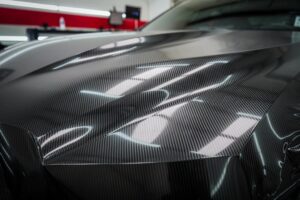
- 6D: High-gloss, layered-looking finish often suited to clear-coated carbon fiber aesthetics.
- 9D: Usually marketed as an ultra-glossy or enhanced-depth carbon fiber effect, with characteristics varying by supplier.
Key takeaway: Realism is determined by the actual film construction and appearance, not by the highest D number.
3D vs 4D vs 5D vs 6D vs 9D Carbon Fiber Wrap: Complete Comparison
Carbon fiber wrap classifications can be confusing because different manufacturers use the same numbers to describe different surface treatments.
The following comparison reflects common market positioning rather than certified performance grades.
| Wrap Type | Typical Finish | Visual Effect | Best Application |
|---|---|---|---|
| 3D | Matte / textured | Tactile woven appearance | Interior trim, mirror caps |
| 4D | Satin / semi-gloss or gloss | Defined weave, moderate depth | Hoods, spoilers, roofs |
| 5D | Gloss | Wet-look carbon pattern | Exterior accents |
| 6D | High gloss | Strong optical depth | Hoods, roofs, show builds |
| 9D | Ultra-gloss, supplier-dependent | Dramatic reflections | Custom styling, display cars |
These descriptions are not universal. For example, VViViD identifies the D classifications as non-standardized naming conventions, while 3M sells carbon fiber wrap using specific product codes and technical specifications rather than relying on these numerical grades.
1. 3D Carbon Fiber Wrap: Best for a Subtle, Textured Look
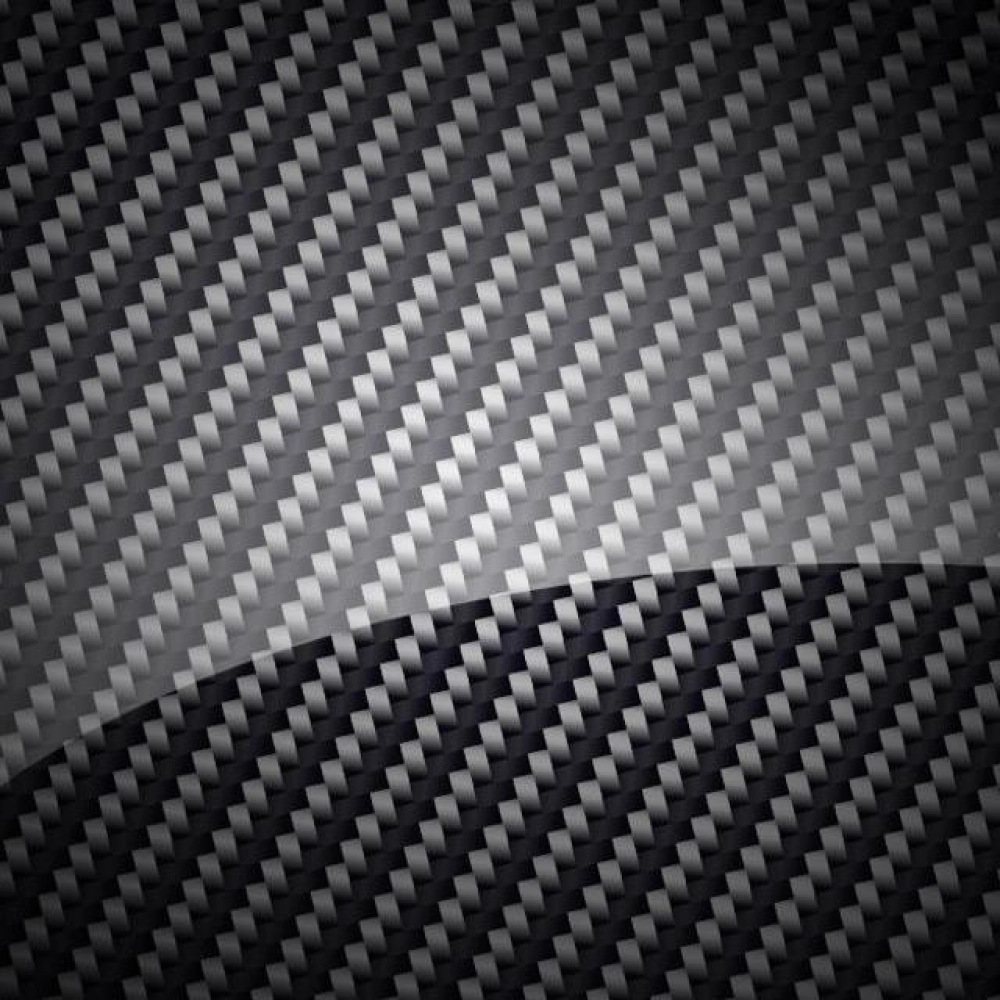
A 3D carbon fiber wrap typically features an embossed weave pattern that creates a tactile surface.
Instead of relying on intense reflections, this finish produces a more understated appearance resembling dry or satin carbon fiber.
Advantages
- Tactile texture helps imitate a woven material.
- Low glare suits performance-inspired interiors.
- Subtle finish complements OEM-style modifications.
- Small scratches and fingerprints may be less noticeable than on high-gloss surfaces.
Disadvantages
- Less visual depth than many high-gloss alternatives.
- Some inexpensive patterns look repetitive or artificial.
- Textured grooves may retain dirt and require careful cleaning.
Best for: BMW dashboard trims, Subaru WRX interior panels, Toyota GR86 mirror caps, and Volkswagen Golf GTI accents.
Expert insight: If your goal is to reproduce the appearance of dry carbon fiber rather than glossy resin-coated carbon, a well-executed 3D texture may look more authentic than a reflective 9D wrap.
2. 4D Carbon Fiber Wrap: Best for Balanced Realism

A 4D carbon fiber wrap is often positioned between textured 3D finishes and the more reflective 5D or 6D styles.
Depending on the manufacturer, it may feature a smooth or lightly textured surface with stronger weave contrast.
Advantages
- Balanced carbon fiber styling without excessive shine.
- Defined weave can complement factory sport packages.
- Suitable for both interior and exterior accents when the film is rated for the intended application.
- Less visually aggressive than some ultra-gloss films.
Disadvantages
- Finish definitions vary significantly between brands.
- Lower-quality products may have flat-looking printed patterns.
- Weave distortion can become noticeable around complex curves.
Best for: Audi S4 roof accents, BMW M340i spoilers, Honda Civic Type R trim, and Ford Mustang hood details.
Expert insight: 4D can be a practical middle ground for drivers who want a recognizable carbon fiber effect without turning every wrapped panel into a high-gloss focal point.
3. 5D Carbon Fiber Wrap: Best for Glossy Carbon Styling
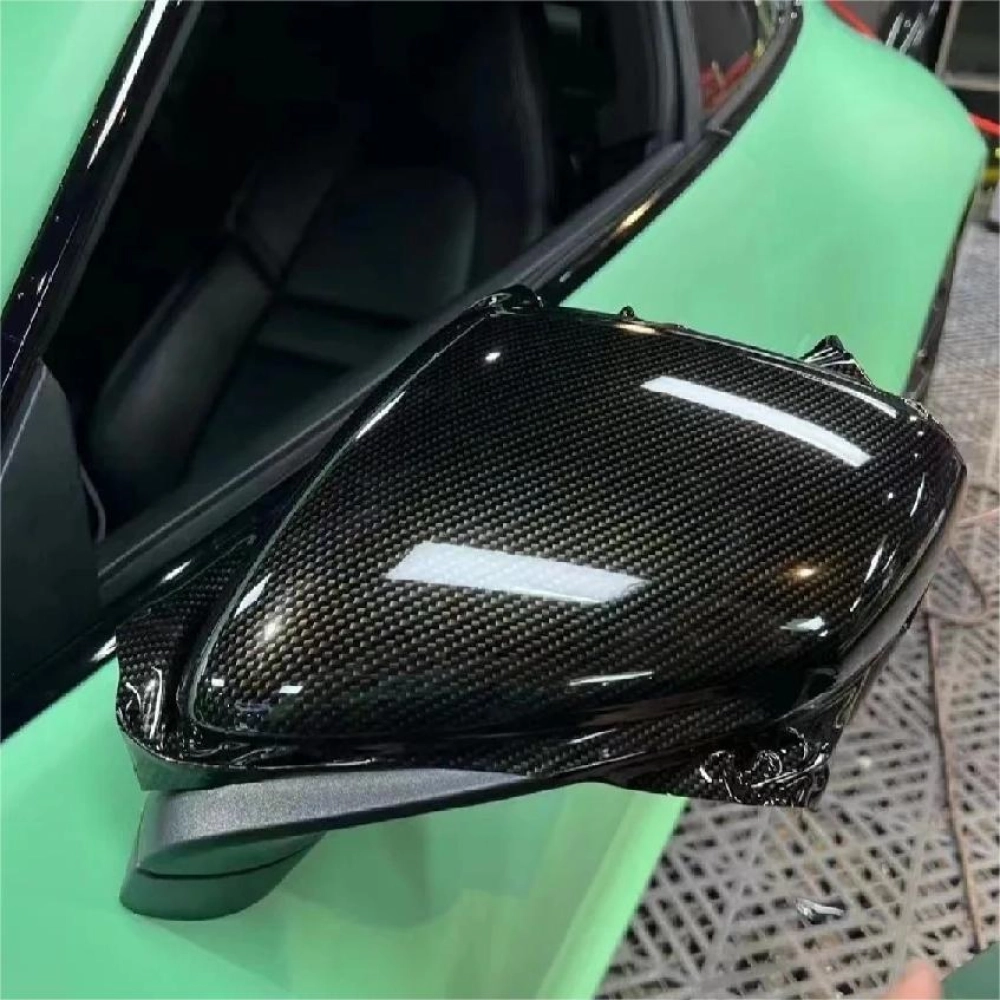
A 5D carbon fiber wrap typically emphasizes a glossy surface and visually enhanced weave pattern.
It is especially appealing to drivers who want their carbon accents to stand out against solid paint colors.
Advantages
- Gloss finish gives the weave greater visual contrast.
- Strong visual impact on black, white, red, and metallic body colors.
- Attractive for smaller exterior panels and decorative details.
- Can resemble clear-coated carbon from certain viewing distances.
Disadvantages
- Reflections may conceal the weave in bright sunlight.
- Surface imperfections can be noticeable.
- Some products prioritize shine over realistic weave geometry.
Best for: Tesla Model 3 mirror caps, Chevrolet Camaro hood accents, Nissan 370Z roof sections, and Dodge Challenger spoilers.
Expert insight: Gloss alone does not create realism. A 5D film with accurate weave proportions may look more convincing than a shinier film with oversized or distorted carbon graphics.
4. 6D Carbon Fiber Wrap: Best for Clear-Coated Carbon Appearance
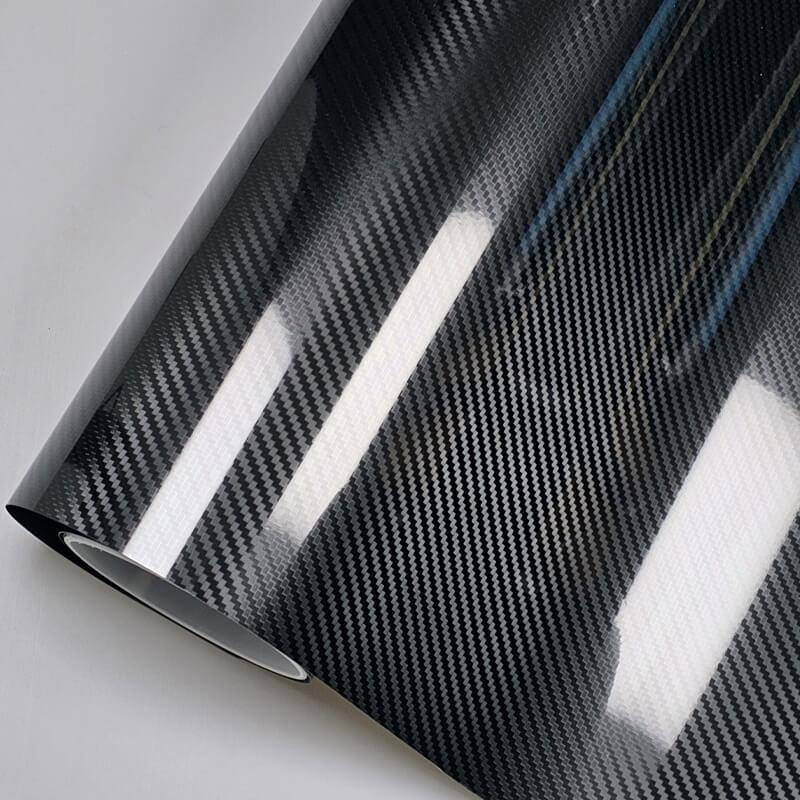
For drivers seeking the appearance of polished carbon fiber automotive parts, 6D carbon fiber wrap is often one of the strongest candidates.
Its appeal comes from the visual separation between the carbon pattern and reflective top surface, creating an impression of depth similar to carbon fiber covered with glossy clear coat.
Advantages
- Deep, glossy carbon appearance.
- Strong visual impact on large panels.
- Suitable for premium motorsport-inspired styling.
- Can create a convincing illusion of resin-coated carbon under favorable lighting.
Disadvantages
- Glossy surfaces can reveal scratches and installation marks.
- High reflectivity can overpower the carbon weave.
- Quality varies between products labeled 6D.
- Film does not reproduce the structural characteristics of real carbon fiber.
Best for: Porsche 911 hood accents, BMW M4 roofs, Toyota GR Supra exterior details, and Nissan GT-R spoilers.
Expert insight: ALUKOVINYL’s existing 6D Carbon Fiber Wrap Guide explores the glossy carbon appearance in greater detail. For this comparison, the more important question is whether that level of gloss matches the specific real carbon fiber part you want to imitate.
5. 9D Carbon Fiber Wrap: Is It Really More Realistic Than 6D?
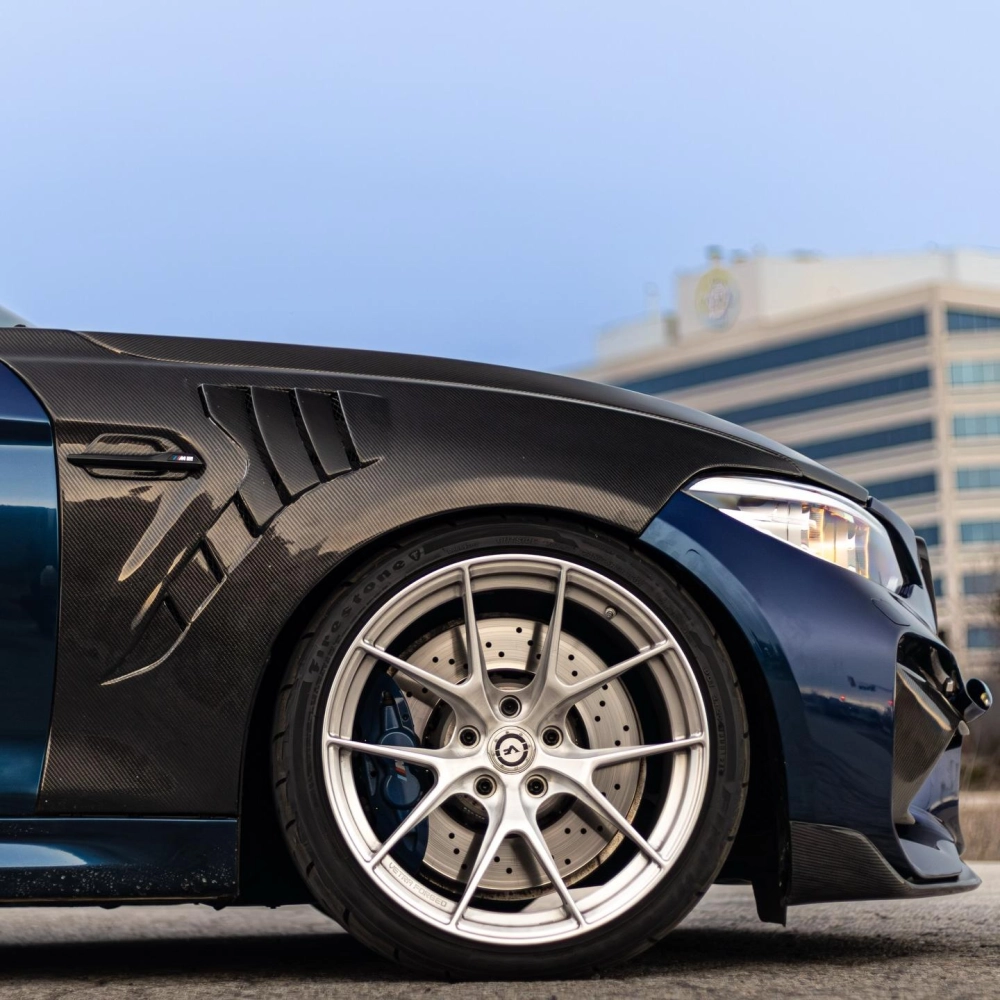
The term 9D carbon fiber wrap is often used to market highly reflective carbon-pattern vinyl with pronounced optical depth.
However, 9D does not represent a universally recognized manufacturing standard or independently verified realism rating.
Advantages
- Eye-catching, glossy appearance.
- Can produce dramatic reflections under controlled lighting.
- Attractive for custom builds where visual impact matters most.
- May complement other gloss-black styling elements.
Disadvantages
- Higher D numbers do not guarantee better materials.
- Extreme reflections can make the weave appear less natural.
- Some 9D products offer little practical improvement over quality 6D films.
- Marketing terminology makes direct comparisons difficult.
Best for: Lamborghini Huracán styling accents, Chevrolet Corvette C8 details, BMW M8 roof accents, and customized Mercedes-AMG vehicles.
Expert insight: Before paying more for 9D, compare it with 6D under the same lighting conditions. Look at the weave pattern, reflected highlights, and appearance from different distances.
If the 9D film simply appears shinier without improving the carbon weave illusion, it may not offer meaningful additional realism.
What Makes a Carbon Fiber Wrap Look Real?
The most realistic carbon fiber wrap should be evaluated using five criteria rather than a single D rating.
1. Accurate Carbon Weave Geometry
Genuine woven carbon fiber composites commonly feature recognizable weave structures, including plain and twill patterns.
For example, a 2×2 twill weave produces the familiar diagonal carbon fiber appearance found on many performance-car components.
A convincing vinyl imitation should reproduce that visual rhythm without obvious printing defects or exaggerated pattern spacing.
2. Realistic Optical Depth
Many genuine carbon fiber automotive parts have a clear resin or coating above the reinforcement.
This creates a sense of depth between the surface reflection and the woven material underneath.
High-gloss vinyl can imitate this effect, but the apparent depth varies with film construction, lighting, and viewing angle.
3. Appropriate Gloss Level
Not all genuine carbon fiber parts are glossy.
Some use matte or satin finishes, particularly in motorsport-inspired applications.
A realistic carbon wrap should match the type of carbon component being imitated, rather than automatically maximizing reflectivity.
4. Consistent Weave Direction
Carbon fiber patterns are directional.
When wrapping adjacent panels, inconsistent orientation can make the finish look unnatural.
3M specifically advises maintaining consistent film orientation because textured and other directional finishes can appear different when installed in opposing directions.
5. Minimal Pattern Distortion
Stretching carbon fiber vinyl around tight curves can alter the weave pattern.
A stretched diagonal weave may become wider, narrower, or irregular, immediately reducing realism.
For high-visibility areas such as hoods and roofs, careful material positioning is often more important than choosing a higher D classification.
Real Carbon Fiber vs Carbon Fiber Vinyl Wrap: Which Is Better?
Carbon fiber wrap and genuine carbon fiber composite parts serve different purposes.
Real carbon fiber composites can provide structural advantages when properly engineered, while carbon fiber vinyl is primarily a decorative surface material.
| Feature | Carbon Fiber Vinyl Wrap | Genuine Carbon Fiber Composite |
|---|---|---|
| Main purpose | Cosmetic styling | Structural or cosmetic component |
| Carbon appearance | Simulated weave | Actual carbon reinforcement |
| Weight reduction | No meaningful vehicle weight reduction | Possible when replacing heavier parts |
| Cost | Generally lower | Generally higher |
| Reversibility | Usually removable with proper methods | Often requires replacing components |
| Installation | Applied to existing surfaces | Requires component installation or fabrication |
| Customization | Multiple textures and finishes | Depends on manufacturing and finishing |
| Impact protection | Limited, product-dependent | Depends on part design and construction |
A carbon fiber wrap does not provide the strength, stiffness, or weight-saving benefits of genuine carbon fiber composite components.
How Do Major Wrap Brands Approach Carbon Fiber Realism?
3M: The 3M Wrap Film Series 2080 Carbon Fiber Black is a useful reference for professionally specified carbon-texture film. 3M publishes information about film construction, adhesive technology, conformability, and application characteristics.
VViViD: Its carbon fiber guidance emphasizes differences in texture, gloss, and weave design rather than treating D numbers as standardized technical classifications.
ALUKOVINYL: Its existing carbon wrap guides discuss the visual distinctions between matte, satin, gloss, and 6D finishes, making finish selection a useful starting point for customers comparing carbon effects.
The important distinction is that a manufacturer’s published film specifications provide stronger purchasing evidence than a label such as 6D or 9D alone.
For buyers, the most useful questions are:
- Is the film suitable for exterior automotive use?
- What are its construction, thickness, and adhesive specifications?
- Does the weave remain consistent when installed?
- What maintenance and durability guidance does the supplier provide?
- Can you inspect a physical sample before purchasing?
Buying advice: A well-documented carbon fiber film from a reliable supplier may be a better investment than a generic product advertised as 9D without meaningful technical information.
Which Carbon Fiber Wrap Looks Best on Different Cars?
Choosing the most realistic carbon fiber wrap also depends on vehicle proportions, body color, and the area being wrapped.
The following examples are styling recommendations based on vehicle design, not claims of completed installations.
| Vehicle | Recommended Finish | Suggested Areas | Styling Goal |
|---|---|---|---|
| BMW M3 / M4 | 6D gloss | Roof, spoiler, mirror caps | Motorsport-inspired |
| Tesla Model 3 / Y | 4D or 5D | Dashboard, mirrors, rear spoiler | Modern, understated |
| Porsche 911 | 4D satin or 6D gloss | Hood accents, mirrors | OEM-inspired performance |
| Toyota GR Supra | 6D gloss | Roof, hood accents | Aggressive sports styling |
| Ford Mustang | 5D or 6D | Hood, roof, spoiler | Muscle-car styling |
| Honda Civic Type R | 3D or 4D | Interior, mirror caps | Functional racing aesthetic |
| Nissan GT-R | 6D gloss | Hood, roof, rear wing | Track-inspired appearance |
| Mercedes-AMG C63 | 4D or 5D | Interior trim, mirrors | Refined carbon detailing |
| Chevrolet Corvette C8 | 6D or selected 9D | Roof accents, splitter details | Exotic-car appearance |
BMW M4: Why 6D Carbon Fiber Works
The BMW M4 is an excellent candidate for high-gloss carbon styling because its performance-oriented design already incorporates sharp body lines and aggressive exterior elements.
A 6D gloss carbon fiber wrap can create a convincing visual contrast against Alpine White, black, or gray bodywork.
For a cohesive result, consider using the same carbon pattern on the roof and mirror caps rather than mixing different weave sizes.
Tesla Model 3: Why 4D or 5D May Be Better
Tesla vehicles have relatively clean, minimalist designs.
A highly reflective carbon fiber finish can look visually overwhelming when used across too many panels.
For a Model 3, 4D or 5D carbon fiber accents can provide a more restrained effect, particularly on the dashboard trim, mirror caps, or rear spoiler.
Porsche 911: Matching the Finish to the Build
A Porsche 911 with a subtle OEM-inspired design may benefit from satin or semi-gloss carbon accents.
For a more aggressive GT-style appearance, 6D gloss can be appropriate.
The key is matching the wrap’s weave scale and surface reflection to the surrounding factory components.
Toyota GR Supra: Creating a Performance Look
The GR Supra’s sculpted bodywork can make glossy carbon accents particularly noticeable.
A 6D finish can complement a contrasting roof or selected exterior details.
However, highly curved panels require careful installation to prevent weave distortion.
Practical recommendation: For most vehicles, wrapping two or three carefully chosen components can create a more believable carbon fiber appearance than covering every exterior panel.
Is 6D or 9D Carbon Fiber Wrap More Realistic?
For buyers comparing these two finishes, the decision should be based on the intended carbon appearance.
6D Carbon Fiber Wrap
Preferred starting point
A strong candidate for imitating glossy, clear-coated carbon fiber, provided the film has accurate weave definition and controlled reflections.
9D Carbon Fiber Wrap
Worth considering when dramatic gloss and visual impact are the priority, but its actual realism must be assessed from the specific product sample.
A useful way to compare both finishes is to place equal-sized samples next to a genuine clear-coated carbon fiber component.
Examine them under three conditions:
- Direct sunlight: Check whether the weave remains visible or disappears beneath reflections.
- Indoor lighting: Compare perceived depth, weave accuracy, and surface clarity.
- Oblique viewing angles: Look for unnatural pattern changes, glare, or a flat printed appearance.
The better-looking film under these conditions is likely the more suitable choice, regardless of whether it is labeled 6D or 9D.
How to Install Carbon Fiber Wrap Without Ruining the Pattern
Even the most realistic carbon fiber wrap can look artificial if installed incorrectly.
Step 1: Prepare the Surface
Wash the vehicle thoroughly and remove wax, grease, and contaminants using cleaning products appropriate for the paint and film.
The surface should be clean, dry, and free from loose coatings or damaged paint.
Step 2: Plan the Weave Direction
Before removing the backing liner, position the film and inspect its pattern.
Keep the weave direction consistent between adjacent components, especially when wrapping mirror caps, roof panels, and hood sections.
Step 3: Apply With Controlled Tension
Use an appropriate felt-edged squeegee and follow the film manufacturer’s application instructions.
Avoid excessive stretching because it can distort the carbon pattern and reduce visual realism.
Step 4: Work Carefully Around Curves
Use controlled heat only within the film manufacturer’s recommended temperature range.
Complex recesses and compound curves may require relief techniques or carefully planned seams.
Step 5: Finish the Edges
Follow the specified post-heating and edge-finishing procedure for the selected film.
Incorrect post-heating can lead to lifting or shrinkage, while excessive heat can damage the finish.
For highly visible panels or complex bodywork, professional installation is recommended.
How Long Does Carbon Fiber Vinyl Wrap Last?
Carbon fiber wrap lifespan depends on the specific film, installation quality, climate, exposure, and maintenance.
There is no reliable universal lifespan that applies to every 3D, 4D, 5D, 6D, or 9D product.
In particular, a higher D rating does not automatically mean better UV resistance or longer durability.
When evaluating a product, check its published outdoor durability information, warranty limitations, and installation requirements.
Maintenance Tips for Carbon Fiber Wrap
- Wash regularly using a mild, film-compatible automotive cleaner.
- Avoid abrasive brushes and harsh polishing compounds.
- Remove bird droppings and other contaminants promptly.
- Keep pressure-washer nozzles at a safe distance from edges.
- Avoid prolonged exposure to unnecessary heat when possible.
- Use only manufacturer-approved care products on matte, satin, or textured finishes.
High-gloss carbon fiber wraps may require more careful handling because visible scratches and swirl marks can reduce the illusion of polished carbon.
Is Carbon Fiber Wrap Worth It? Pros and Cons
Advantages
1. Carbon styling without replacing body panels
Vinyl can reproduce the appearance of carbon fiber on existing components without purchasing genuine carbon fiber replacement parts.
2. Greater styling flexibility
Drivers can choose matte, satin, textured, or glossy carbon effects according to their preferred aesthetic.
3. Reversible customization
When properly installed and removed under suitable conditions, automotive vinyl can provide a reversible styling option.
4. Suitable for partial modifications
Mirror caps, roofs, spoilers, and interior trims can be customized individually.
5. Lower entry cost
Decorative carbon vinyl generally costs less than replacing comparable components with genuine carbon fiber parts.
Disadvantages
1. No structural performance improvement
Vinyl cannot deliver the stiffness or weight reduction associated with properly engineered carbon fiber composite components.
2. Realism varies
Some carbon wraps have oversized weave patterns, excessive gloss, or visibly printed textures.
3. Installation affects appearance
Poor alignment and overstretching can make even premium materials look artificial.
4. Durability is product-dependent
Not every carbon-pattern vinyl is designed for prolonged exterior exposure.
5. Large-area applications can be visually excessive
Covering too much of a vehicle in carbon pattern may create a less convincing result than carefully selected accents.
Frequently Asked Questions About the Most Realistic Carbon Fiber Wrap
1. What is the most realistic carbon fiber wrap?
For glossy, clear-coated carbon fiber styling, a high-quality 6D carbon fiber wrap is often a strong option. For matte or dry carbon aesthetics, textured 3D or satin carbon film may be more convincing. The best choice depends on weave accuracy, gloss, and the appearance being replicated.
2. Is 9D carbon fiber wrap better than 6D?
Not necessarily. 9D is not a standardized quality or realism rating. Some 9D products may have stronger reflections, but a well-made 6D film can look more realistic if its weave and optical depth better match genuine carbon fiber.
3. What is the difference between 3D and 6D carbon fiber wrap?
3D carbon fiber wrap generally emphasizes tactile texture and lower gloss. 6D carbon fiber wrap is typically marketed for high-gloss visual depth and a clear-coated carbon appearance.
4. Does carbon fiber wrap feel like real carbon fiber?
Some textured wraps imitate the feel of woven material. However, genuine finished carbon fiber components can have smooth, clear-coated surfaces. Carbon vinyl does not have the same underlying composite structure.
5. Can carbon fiber vinyl wrap be applied to a car hood?
Yes, provided the film is rated for exterior automotive applications and the hood’s surface is suitable. Large panels require careful alignment and controlled installation to preserve the weave pattern.
6. Is carbon fiber wrap better than real carbon fiber?
Carbon fiber wrap is generally better for affordable cosmetic customization. Genuine carbon fiber composite parts are more appropriate when engineered structural properties or weight savings are required.
7. Can you put carbon fiber wrap on a Tesla?
Yes. Carbon-pattern automotive vinyl can be used on suitable Tesla exterior and interior surfaces. Mirror caps, spoilers, and dashboard accents are popular styling locations. Check material compatibility before installation.
8. Does carbon fiber wrap protect car paint?
A suitable automotive vinyl film can provide a limited barrier against minor surface contact and environmental exposure. However, decorative carbon vinyl should not be treated as equivalent to dedicated paint protection film.
9. Is matte or gloss carbon fiber wrap more realistic?
Both can be realistic. Matte and satin finishes may resemble dry carbon or low-gloss composite parts, while glossy finishes can imitate resin-coated carbon fiber. The correct finish depends on the reference component.
10. Should I choose 5D, 6D, or 9D carbon fiber wrap?
Choose based on physical samples rather than the number alone. Compare weave clarity, surface reflection, film specifications, and suitability for your intended application. A premium 5D or 6D film may be preferable to a poorly documented 9D product.
Final Verdict: Which Carbon Fiber Wrap Should You Choose?
The most realistic carbon fiber wrap is not necessarily the one with the highest D rating.
For a subtle motorsport-inspired finish, 3D or selected 4D carbon fiber wraps can deliver a convincing textured appearance.
For drivers who want the visual depth of glossy, clear-coated carbon fiber components, 5D and especially well-made 6D wraps deserve consideration.
Meanwhile, 9D products may appeal to customers seeking maximum shine, but their quality and realism must be evaluated individually.
Ultimately, three factors matter most: weave accuracy, appropriate gloss, and installation quality.
A properly installed carbon fiber wrap that complements the vehicle’s design will often look more convincing than an excessively glossy film chosen solely because of its marketing label.
Upgrade Your Car With ALUKOVINYL Carbon Fiber Wrap
Want the aggressive appearance of carbon fiber without replacing expensive vehicle components?
At ALUKOVINYL, explore automotive styling options designed to help you personalize your vehicle with distinctive colors, textures, and finishes.
Whether you’re planning a subtle interior upgrade or a performance-inspired exterior transformation, selecting the right vinyl wrap can make a noticeable difference.
Before purchasing, consider your vehicle model, installation area, preferred carbon texture, and the film’s technical specifications.
Explore ALUKOVINYL’s wrap collection and find a finish that suits your next build.