Few sky colors stop traffic like a purple sunset. That luminous violet band—hovering above the red-orange horizon—feels cinematic and rare. In 2025, we understand more than ever about the optics behind it: how sunlight interacts with air molecules, aerosols, and even your own eyes. Below, we break down the science in plain English—and show how to translate that look to your build with a matching car wrap.
Step 1: Rayleigh Scattering Sets the Stage
At sunset the Sun’s rays travel a longer path through the atmosphere. Short wavelengths (violet/blue) scatter strongly in all directions, while longer wavelengths (red/orange) pass through. That’s why the horizon glows warm. But a classic purple sunset needs one extra ingredient: a way to bring some blue back into the scene above that red horizon. Enter aerosols and multiple scattering.
Step 2: Aerosols Add Blue Back—Creating Purple
Tiny particles (sea salt, dust, volcanic or urban aerosols) scatter light differently from molecules. When particle sizes are comparable to visible wavelengths, they forward-scatter a broader mix of colors. In twilight geometry, that scattered bluish light can mingle with the red glow from the horizon, producing a violet band higher in the sky. The most vivid purples often occur after volcanic injections of fine aerosols into the stratosphere, which amplify scattering while keeping the color separation intact.
But more haze ≠ always better
Heavy, dirty haze can wash out the contrast and mute colors. The most eye-catching purples tend to appear when particles are fine and well-distributed (think post-volcanic or clean marine air), not during thick smog events.
Step 3: Ozone Quietly Edits the Palette
Ozone in the atmosphere absorbs some yellow-green light in broad “Chappuis” bands during twilight. That subtle subtraction boosts the relative dominance of reds on the horizon and helps the juxtaposed blue-scattered light above read as a more saturated purple. It’s a quiet, science-class detail with big visual impact.
Step 4: Your Eyes Finish the Mix
As the scene dims, human vision shifts toward greater sensitivity to blues (the Purkinje effect). Reds seem to fade faster than blues at low light, which nudges the perception of the red-plus-blue mixture toward “purple.” Translation: the sky is doing physics, and your eyes are doing psychology—together creating that violet impression.
When and Where Purple Peaks
- Clean, dry air aloft: Desert or post-frontal evenings can pop with color.
- Fine aerosols: Marine haze or high-altitude volcanic dust can enhance the violet band.
- Low Sun angles: The window after sunset (or before sunrise) is prime time for the purple arc.
- Look opposite the Sun: The purple band often arcs above the Earth’s shadow and Belt of Venus.
Design Note: Bringing a Purple Sunset to Your Build
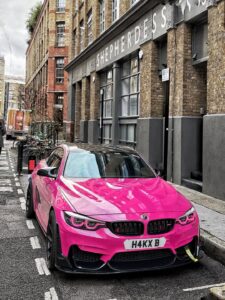
Love the dusk-violet vibe? You can echo it on your vehicle with finish and tone choices. Start by browsing ALUKOVINYL’s curated purple car wrap selection, then decide whether you want a deep, paint-like gloss or a color-shift that mimics the “red-meets-blue” interplay in the sky.
Finish playbook
- Paint-like depth: Go with a premium gloss purple wrap to mirror the crisp reflections you see when the Sun is just below the horizon.
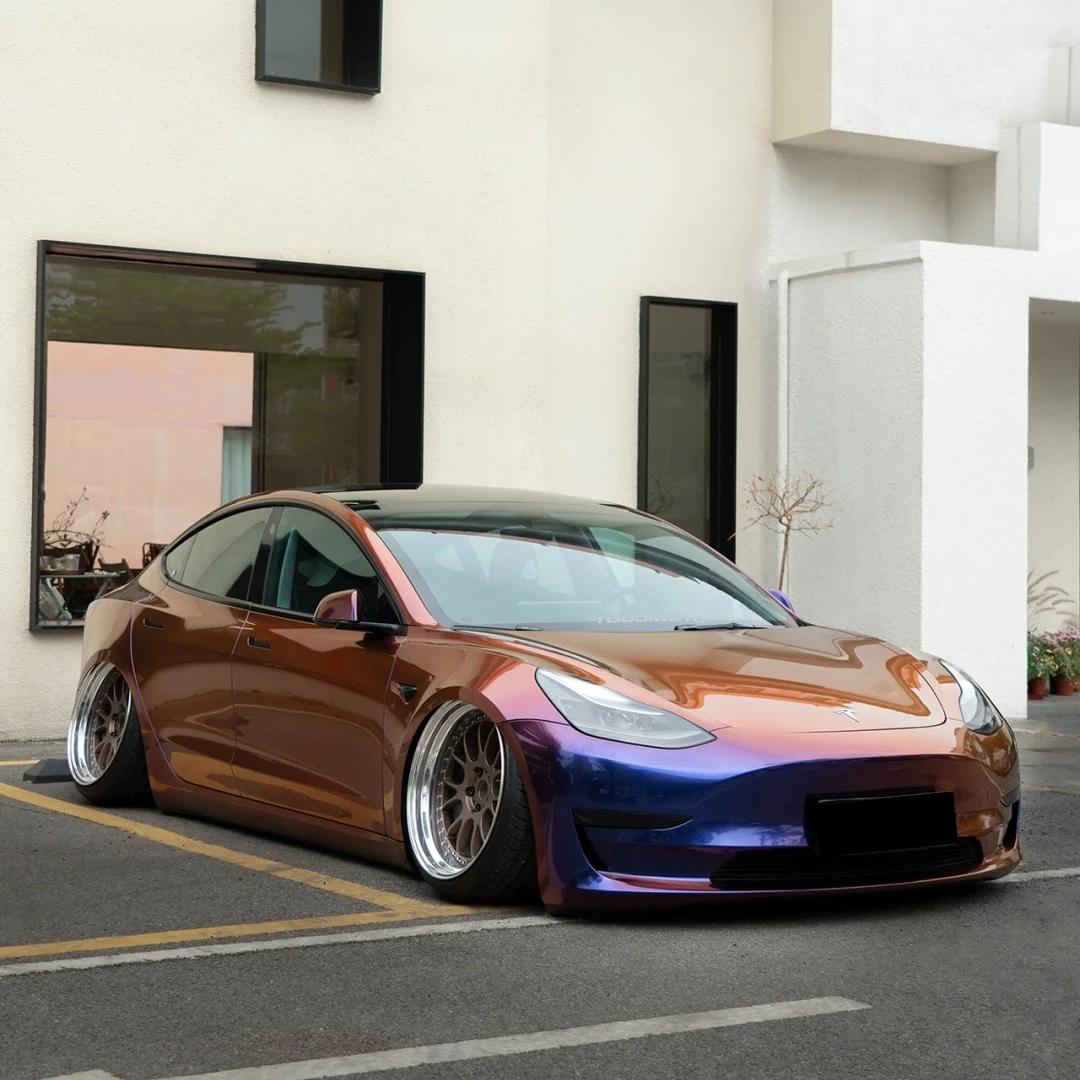
- Sunset color-shift: For a dynamic, angle-dependent sheen that hints at both cool and warm notes, try a chameleon-style film—our flowing phantom option channels the violet-at-dusk mood (purple sunset inspiration).
Care Tips to Keep Purple Looking “Twilight-Fresh”
- Wash by hand with pH-neutral shampoo and a soft mitt; avoid abrasive brushes that can dull gloss.
- Top with a wrap-safe sealant to enrich color and make cleanup easier after bugs or road film.
- Mind the Sun: UV exposure fades all colors eventually; shaded parking preserves saturation.
- Choose cast films for better conformability on bumpers and longevity on complex curves.
Quick FAQ
Are purple sunsets rare? They’re less common than red/orange sunsets because they need the right mix of aerosol size, clean air, and viewing geometry. After major volcanic events, reports of violet twilights increase.
Can pollution cause purple sunsets? Very heavy smog generally dulls colors; the most striking purples usually occur with fine, well-distributed aerosols—not thick, dirty haze.
From Sky to Street
The magic of a purple sunset is a perfect blend of physics and perception—Rayleigh and Mie scattering, ozone’s selective absorption, and the way your eyes adapt at dusk. If you want that feeling on your next build, explore our full lineup of finishes and textures, from paint-like gloss to subtle color-shifts. Start with a hero color from our purple collection and build the look with black deletes, smoked lights, or bronze wheels for a dusk-worthy contrast—then let the angles and reflections do the rest.
Shop related styles: car wrap · purple car wrap · gloss purple wrap · purple sunset