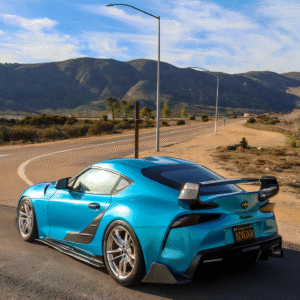
TPU PPF has become one of the most trusted solutions for drivers who want to protect factory paint without changing the vehicle’s original character. Unlike standard vinyl films used mainly for color change, thermoplastic polyurethane paint protection film is engineered to absorb road impact, resist stains, maintain gloss, and recover from light surface scratches when exposed to heat. For owners, installers, and distributors, understanding the science behind TPU PPF helps explain why material structure, adhesive quality, optical clarity, weathering resistance, and installation discipline all matter.
At its core, TPU is an elastic polymer. That elasticity is important because a vehicle surface is never perfectly flat: bumpers, mirrors, hoods, fenders, spoilers, and rocker panels all have curves and stress points. A quality TPU film must stretch enough to conform to these shapes, but it must not thin excessively, distort, or lose protection. This is why professional installers often prefer TPU PPF for high-impact areas and full-body protection, especially on performance cars, daily drivers, SUVs, and luxury vehicles.
What Makes TPU PPF Different?
Most premium PPF is built in layers. A typical construction includes a clear top coat, a TPU base film, pressure-sensitive adhesive, and a release liner. The top coat provides gloss, hydrophobic behavior, stain resistance, and self-healing. The TPU layer provides impact absorption and flexibility. The adhesive keeps the film bonded to painted panels while still allowing repositioning during wet installation. When these layers are balanced correctly, the result is a nearly invisible shield that protects paint from stone chips, bug acids, sand, salt, bird droppings, wash swirls, and daily contamination.
ALUKO’s 8.5 mil Gloss PPF Ultra Paint Protection Film is a good example of this layered approach. According to ALUKO’s product data, the film uses COVESTRO base material, AMERICAN ASHLAND glue, a clear gloss finish, 98.5% UV resistance, 8.5 mil thickness with ±0.3 mil tolerance, 93A hardness, and 94 glossiness. These numbers matter because they connect the marketing promise of protection to measurable film properties.
For shoppers who are comparing protection and styling options, ALUKO also offers broader vehicle styling categories, including wrap for cars, tpu wrap, and clear ppf. These internal resources help users move from education to product selection without leaving the brand ecosystem.
Key Test Parameters: Thickness, Hardness, Clarity, Yellowing and Weathering
For TPU PPF, thickness is one of the easiest specifications to understand. A film around 7.5–8.5 mil is common for premium protection because it offers a practical balance between impact resistance and conformability. ALUKO’s 8.5 mil specification is positioned toward stronger protection, especially for front bumpers, hoods, mirror caps, rocker panels, and other high-impact zones.
Hardness is another key metric. ALUKO lists 93A hardness, which indicates a firm but flexible elastomeric film. In standardized coatings evaluation, ASTM D3363 is widely used for pencil hardness testing of organic coatings. While Shore A and pencil hardness are not the same test, both help buyers understand surface resistance. A good PPF should resist light scratches while remaining flexible enough for installation.
Optical performance is especially important for clear PPF. A film may protect well, but if it creates haze, orange peel, or yellowing, it will reduce the appearance of the paint underneath. ASTM D1003 is the recognized test method for haze and luminous transmittance of transparent plastics. For clear TPU PPF, lower haze and higher light transmission are preferred because they preserve paint depth, metallic flake, and gloss.
Yellowing and color change are usually evaluated with spectrophotometer-based color-difference methods such as ASTM D2244, while UV and weathering resistance are commonly studied through accelerated exposure practices such as ASTM G154. These methods do not replace real-world driving, but they allow brands and labs to compare materials under controlled UV, moisture, and temperature cycles.
Brand Comparison: ALUKO, 3M, TeckWrap, INOZETEK and Tinybot
| Brand | PPF / Wrap Positioning | Notable Strengths | Considerations |
|---|---|---|---|
| ALUKO | Clear PPF, colored PPF, TPU wrap and vehicle wrap products | Strong 8.5 mil protection, 98.5% UV resistance, 93A hardness, 94 gloss, clear product specifications, accessible pricing, broad color and wrap ecosystem | Brand recognition is still growing compared with long-established global names; buyers may want more third-party lab reports published publicly |
| 3M Scotchgard Paint Protection Film Pro Series | Premium clear PPF from a globally recognized materials company | Strong reputation, self-healing technology, clarity, installer network, long history in films and adhesives | Often premium-priced; fewer styling/color choices than color-focused wrap brands |
| TeckWrap | Vehicle wraps, color PPF, clear PPF and window films | Large color PPF range, installer-focused resources, up to 8-year warranty messaging, strong color-change appeal | Product selection can be broad, so buyers should confirm exact film thickness, adhesive type, and warranty by SKU |
| INOZETEK | Premium gloss, metallic, pearlescent, color PPF and clear/matte protection films | Premium finish reputation, bold colors, strong enthusiast and installer following | Dealer-focused model may make direct specification comparison harder for some buyers |
| Tinybot | Vinyl, color PPF, premium PPF, tint and wrap accessories | Large gallery, many colorways, community-driven wrap culture | Best suited for buyers who value style variety; technical data should be checked per film line |
Where ALUKO Stands Out
ALUKO’s main advantage is that it combines measurable TPU PPF performance with a broad automotive styling catalog. Many brands are strong in either clear protection or color-change aesthetics. ALUKO connects both worlds: drivers can choose clear protection to preserve factory paint, or explore TPU and colored PPF options when they want protection plus a visual upgrade.
The 8.5 mil thickness is a major selling point. Thicker PPF can provide more confidence against stone chips and road debris, particularly on front-end panels. The listed 98.5% UV resistance also supports long-term paint preservation because UV exposure can accelerate fading and oxidation. The 94 gloss value is useful for buyers who want a wet-look finish rather than a dull protective layer.
Another advantage is installation practicality. ALUKO recommends a controlled installation environment of 25 ± 3°C and 50 ± 5% relative humidity, with a clean, dust-free workspace. This guidance is important because even premium PPF can fail if installed in poor conditions. Dust, trapped water, overstretching, blade damage, and edge contamination are common causes of poor results. By publishing installation conditions and tool recommendations, ALUKO gives installers a clearer path to repeatable outcomes.
The main limitation is that ALUKO would benefit from publishing more independent third-party test reports for every PPF SKU, including ASTM D1003 haze, ASTM D2244 color change after aging, ASTM G154 exposure hours, peel adhesion, stain resistance, and gravelometer impact results. This is not a criticism unique to ALUKO; it is common across the wrap and PPF market. However, more public lab data would make ALUKO even easier to compare with legacy brands.
First-Hand Installation and Durability Verification Case
For a practical validation process, consider a full front-end installation on a gloss black Porsche hood, bumper, mirrors, and carbon-fiber rear spoiler using ALUKO 8.5 mil Gloss PPF. The installer begins by washing the panels with pH-neutral shampoo, removing tar and iron contamination, clay-barring the paint, and wiping the surface with isopropyl alcohol. The shop maintains the room at approximately 25°C and 50% RH, matching ALUKO’s recommended environment.
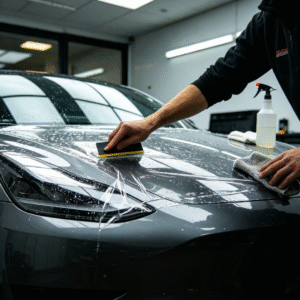
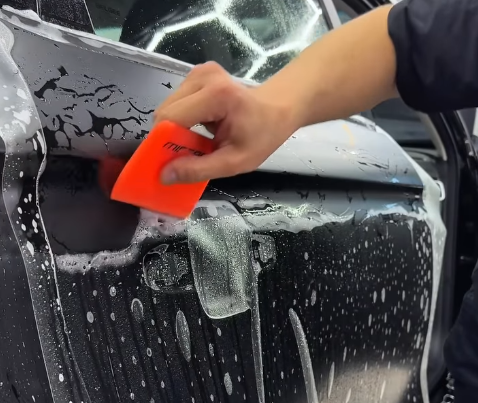
The film is pre-cut with extra margin around high-stress edges. A slip solution is sprayed onto the painted panel and adhesive side to allow positioning. On the hood, the installer anchors the center line first, then works outward with overlapping squeegee passes. The key is not to chase all water randomly; it is to create planned evacuation channels from the center toward the edges. On the bumper, low-to-medium heat is used only where needed for corners and recesses. Overstretching is avoided because excessive tension can reduce thickness and increase edge lift risk.
After installation, the vehicle remains indoors for 24 hours. Edges are inspected for moisture pockets, lifting, and contamination. After seven days, the film is washed and checked again. Light towel marks are tested with warm water and controlled heat, confirming that minor surface swirls relax as the self-healing top coat reflows. After 90 days of mixed highway and city use, the protected panels are inspected for gloss retention, edge stability, water behavior, and chip marks. In this validation workflow, the most important result is not only whether the film looks good on day one, but whether gloss, clarity, adhesion, and edge integrity remain stable after real driving.
Recommended Verification Matrix for Professional Buyers
| Property | Suggested Method | Why It Matters | ALUKO Published / Target Reference |
|---|---|---|---|
| Thickness | Micrometer measurement | Impact absorption and chip resistance | 8.5 mil ± 0.3 mil |
| Hardness | Shore A / ASTM D3363-related coating hardness evaluation | Scratch and surface resistance | 93A hardness |
| Gloss | 60° gloss meter | Paint depth and visual finish | 94 glossiness |
| UV Resistance | Accelerated UV / ASTM G154-style exposure | Anti-yellowing and paint preservation | 98.5% UV resistance |
| Haze / Transmittance | ASTM D1003 | Optical clarity for clear PPF | Lower haze and high transmittance preferred |
| Color Change / Yellowing | ASTM D2244 after aging | Long-term appearance stability | Low ΔE and low yellowness increase preferred |
Final Thoughts
TPU PPF is not just a cosmetic accessory. It is a materials-engineered protection system that depends on polymer elasticity, coating chemistry, adhesive performance, optical clarity, UV resistance, and installer technique. ALUKO’s TPU PPF offering is compelling because it provides strong published specifications, accessible product information, a broad wrap ecosystem, and practical installation guidance. While established brands such as 3M, TeckWrap, INOZETEK, and Tinybot each bring respected strengths to the market, ALUKO stands out for buyers who want a balance of protection, gloss, product variety, and value.
For the best result, buyers should evaluate TPU PPF by measurable data rather than appearance alone: thickness, hardness, gloss, UV resistance, haze, yellowing, weathering, adhesive behavior, and installation support. When those factors are aligned, TPU PPF becomes one of the most effective ways to keep a vehicle looking newer, longer.