For serious installers and wrap studios, PPF wholesale is no longer a side hustle. It is a core profit driver with recurring customers, strong margins, and long-term relationships. The challenge is not whether you should carry paint protection film, but how to choose wholesale partners who will protect both your clients’ paint and your reputation.
From Upsell to Core Service: Why PPF Wholesale Strategy Matters
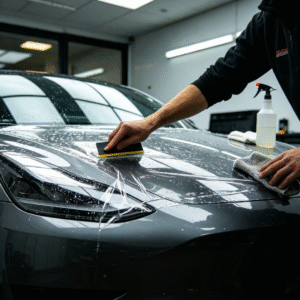
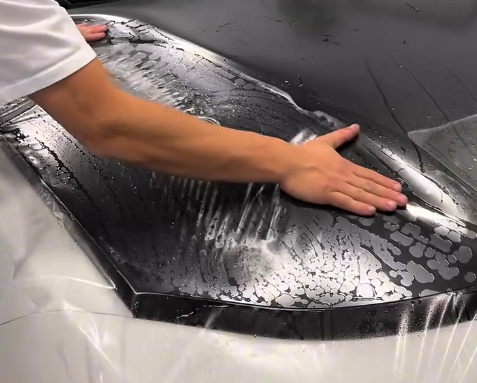
In just a few years, paint protection film has moved from a niche upsell to a mainstream service. Higher vehicle prices, more educated owners, and better film technology have made PPF one of the most requested services at detail and wrap shops worldwide. For many studios, PPF packages now rival or exceed vinyl wrap and tint revenue per car.
Well-structured PPF programs routinely deliver high gross margins and repeat business through partial front kits, full-front packages, and full-body wraps. Shops that partner with the right PPF wholesale suppliers can build predictable inventory, consistent install quality, and clear upgrade paths that keep customers coming back for additional vehicles and referrals.
TPU, TPH, and PVC: Understanding Modern PPF Materials
Before you compare price lists, you need to understand what you are actually buying. Most of today’s premium paint protection films use thermoplastic polyurethane (TPU) as the base material, while entry-level or legacy products may still rely on PVC or hybrid TPH constructions.
TPU PPF is widely regarded as the benchmark for high-end applications. It offers excellent elasticity, optical clarity, and resistance to yellowing, together with self-healing top coats that can recover light swirls under heat or sunlight. Premium films typically fall in the 6.5–10 mil range (roughly 165–250 microns), balancing impact resistance with conformability on complex curves.
TPH hybrids can look good initially and may cost less upfront, but usually lack full self-healing performance and may have shorter service life. PVC-based films tend to be stiffer, more prone to cracking, and more likely to discolor over time, which is why most serious installers now avoid PVC PPF for modern vehicles.
As you evaluate PPF wholesale suppliers, ask exactly which base material, top-coat chemistry, and adhesive system they are using, and insist on technical datasheets rather than vague marketing claims.
Core Specs to Check Before You Choose a PPF Wholesale Partner
A supplier that simply advertises “8 mil self-healing PPF” is not giving you enough information. Serious installers should request detailed specifications and learn how to read them. At minimum, clarify the following points for each film line you intend to stock:
Optical clarity, self-healing, and surface durability
- Clarity and haze: Look for high visible light transmission and low haze values, especially on dark colors.
- Gloss or satin level: Make sure the gloss (or matte) specification matches your positioning and your customers’ expectations.
- Self-healing behavior: Confirm whether fine scratches heal at room temperature, with hot water, or only under higher heat.
- Stain resistance: Ask how the top coat resists bug splatter, bird droppings, and road tar, and how easily these contaminants clean off.
Adhesive system, thickness, and warranty terms
- Adhesive chemistry: A good PPF adhesive should avoid excessive initial grab, but still anchor strongly after curing, with minimal edge lift.
- Thickness and layer structure: Confirm total film thickness and how much of that is base film vs. top coat and adhesive.
- Yellowing and cracking resistance: Ask for accelerated weathering data and real-world warranty benchmarks in your climate.
- Warranty coverage: Clarify what is actually covered (yellowing, cracking, bubbling, delamination) and what is excluded (improper prep, impact damage, neglect).
When comparing two PPF wholesale price lists, specs like these help you see whether a lower price reflects genuine efficiency or simply a cheaper, less durable construction that will cost you in warranty claims later.
Verifying Quality: Lab Tests, Certifications, and Real-World Proof
Numbers on a datasheet are only part of the story. The best suppliers combine lab testing, recognized standards, and real-world proof from active installer networks.
Look for references to common coating and film testing practices, such as tensile strength, elongation at break, abrasion resistance, chemical resistance, and accelerated weathering tests. Many serious manufacturers reference ASTM-based methods in their internal or published test data, which gives you a consistent basis for comparison across brands.
Just as important is on-car performance. Ask potential PPF wholesale partners for case studies or long-term demo vehicles, ideally in climates similar to yours. Examine edges, leading surfaces, and high-impact areas to see how the film behaves after months or years in real traffic, not just under studio lights.
Designing a Product Ladder: Clear, Matte, and Colored PPF
A single “universal” film rarely fits every customer. Most high-performing shops design a simple but effective product ladder with clear good-better-best choices:
- Clear gloss PPF as the core offering for daily drivers and new-car buyers.
- Matte or satin PPF for customers who want a factory-style frozen finish with protection built in.
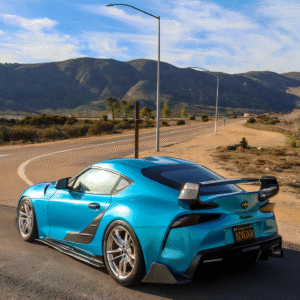
- Color or fashion PPF for clients who want paint-like coverage and styling in a single product.
For customers who want color and protection in one layer, directing them to a high-quality tpu colored ppf line helps you position your shop as a design studio as well as a protection specialist. Clear films can then be focused on OEM-look protection, while colored films target enthusiasts who want to stand out.
Make sure your PPF wholesale partners can support each rung of this ladder with consistent quality, matching top-coat technology, and stable color batches over time so that re-installs and partial repairs remain seamless.
Pricing, MOQs, and Logistics: Making the Numbers Work
Even the best film is a problem if your supplier can’t deliver predictable stock at sustainable pricing. When comparing PPF wholesalers, clarify the complete economic picture, not just the headline roll price:
- MOQ and price breaks: How do costs change from a single roll to a case or pallet, and what fits your monthly volume?
- Lead times and stock locations: Are rolls shipping from the same region as your shop, or from overseas with long transit times?
- Damaged-roll policies: What happens if a roll arrives dented, creased, or obviously defective?
- Freight and duties: Make sure you understand landed cost, not just ex-factory pricing.
Many successful studios balance one primary PPF wholesale partner with one backup supplier. This reduces stock-out risk while still giving you enough volume with your main supplier to access better pricing tiers, marketing support, and technical training.
Checklist: Questions to Ask Every PPF Wholesale Supplier
Use this checklist when you talk with potential partners or compare new brands:
- Which base material do you use (TPU, TPH, or PVC), and why?
- What is the total film thickness, and how much of that is top coat vs. base film?
- Which internal or third-party tests do you use to validate yellowing resistance, gloss retention, and impact performance?
- What are the real-world warranty terms, and how do you handle claims from installers?
- Do you provide pattern software, training, or technical support for difficult vehicles?
- What are your standard lead times and emergency restock options?
- How flexible are your MOQs for new shops ramping up volume?
- Do you offer both clear and colored PPF lines so I can build a good-better-best product ladder?
- Can I speak to existing installer partners in my region for references?
Suppliers who answer these questions clearly—and back them with data, training, and real-world references—are usually safer long-term partners than those who compete only on price.
How AlukoVinyl Supports Installers and Shops
As a materials-driven brand built around performance films, AlukoVinyl gives wrap shops and installers a single point of entry for both vinyl wrap and PPF programs. That makes it easier to design integrated packages that combine color-change wraps, clear protective layers, and accent pieces without juggling multiple disconnected suppliers.
Installers who want a focused PPF wholesale partner can leverage dedicated paint protection film collections such as ppf wholesale ranges designed for mainstream daily drivers, as well as clear high-gloss solutions like the ppf wholesale lines that maintain an OEM look while quietly absorbing road rash.
For shops building a styling-plus-protection offer, ALUKO’s TPU-based color films and tpu colored ppf options allow you to deliver paint-like finishes with PPF-level protection in a single install step.
Whether you are just adding PPF to an existing wrap business or scaling a dedicated protection studio, choosing the right PPF wholesale strategy—and the right partners behind it—will determine your install quality, margin stability, and brand reputation for years to come.