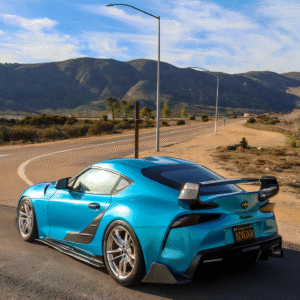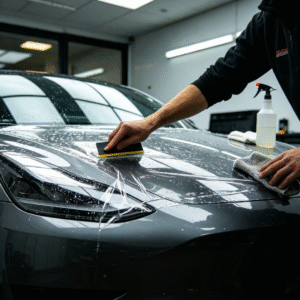
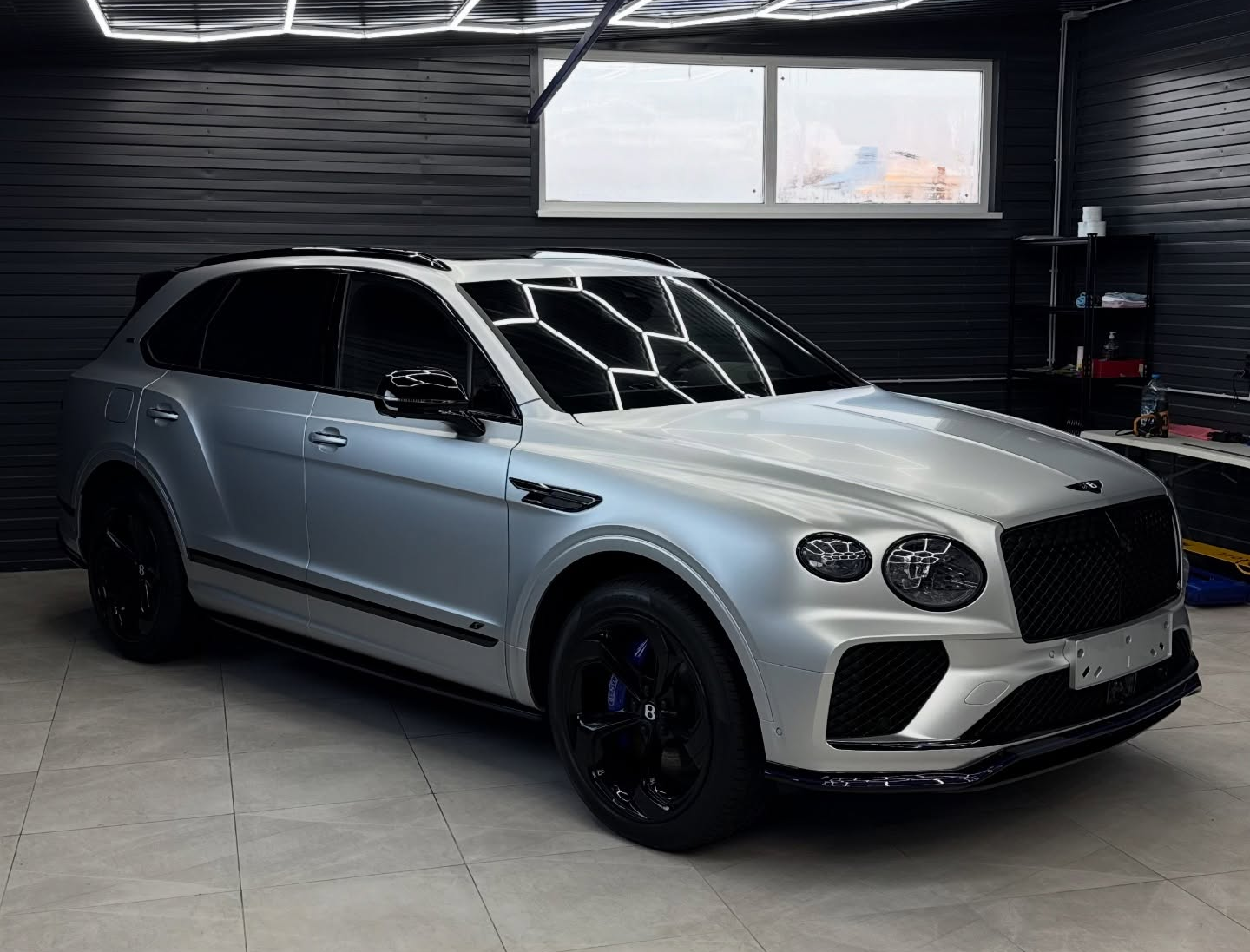
Color paint protection film has become one of the most practical upgrades for drivers who want both style and paint defense. Unlike traditional vinyl, TPU color PPF combines a pigmented or finished appearance with the impact resistance, elasticity, and self-healing behavior expected from premium protection films. For buyers searching for a ppf matte wrap, the key question is not only “Which color looks best?” but also “Which film can survive real road use, washing, sunlight, and installation stress?”
At ALUKO, TPU color PPF is positioned for installers, wholesalers, and vehicle owners who want a balanced mix of material performance, visual options, and accessible pricing. If you are comparing a cheap car wrap with true protection film, TPU PPF is the better long-term category to understand: it is thicker, more elastic, more impact-resistant, and usually more durable than standard decorative vinyl.
What Makes TPU Important in Color PPF?
TPU stands for thermoplastic polyurethane. In PPF, it acts as the core protective layer. TPU is valued because it can stretch around curved vehicle panels, absorb small impacts from road debris, and recover from light surface marks when heat is applied. This is why premium clear and colored PPF products commonly use polyurethane rather than ordinary PVC.
A TPU color film normally includes several layers: a surface clearcoat, a TPU body layer, a color or finish layer, pressure-sensitive adhesive, and a release liner. The clearcoat helps resist staining, water spotting, and fine scratches. The TPU layer provides flexibility and impact absorption. The adhesive determines how cleanly the film installs, lifts, and repositions during application.
For matte finishes, TPU is especially valuable. A ppf matte wrap must maintain a smooth low-gloss appearance without turning patchy after washing, polishing mistakes, or UV exposure. High-quality TPU helps the film stay flexible while the surface coating controls sheen and contamination resistance.
How ALUKO TPU Color PPF Supports Protection and Style
ALUKO’s advantage is its value-focused product strategy. The brand offers color, gloss, matte, and clear PPF options for customers who need professional-looking results without moving immediately into the highest-cost tier. For installers, this matters because a film must be profitable, predictable, and easy to work with on bumpers, hoods, mirrors, rocker panels, and compound curves.
ALUKO’s ppf wrap range is useful for shops that want both protection and appearance customization. The color ppf film category gives buyers the ability to change the look of a vehicle while still receiving a thicker protective structure than ordinary vinyl wrap. For customers who prefer an invisible finish, ALUKO also offers clear ppf options suitable for paint preservation.
Industry Parameters That Matter
When evaluating color PPF, buyers should look beyond color charts. Professional comparison should include thickness, adhesive quality, self-healing behavior, stain resistance, weathering performance, optical stability, and warranty conditions.
- Thickness: Many automotive PPF products are around 7.5–8.5 mil. Thicker films may improve impact absorption, but must still remain installable on curves.
- Hardness and self-healing: Surface coatings are often evaluated by pencil hardness or similar scratch-resistance checks, while self-healing is verified by heat recovery from light marks.
- Optical performance: Clear films may reference haze and luminous transmittance testing, commonly associated with ASTM D1003.
- Weathering: UV, heat, and moisture resistance may be evaluated using accelerated weathering methods such as ASTM G154.
- Yellowing and color stability: TPU quality, UV absorbers, pigments, and topcoat chemistry all affect long-term appearance.
Brand Comparison: ALUKO, TeckWrap, Tinybot, Inozetek, and 3M
| Brand | Main Strength | Typical Buyer Fit | Notes |
|---|---|---|---|
| ALUKO | Strong value, wide color/PPF choices, installer-friendly positioning | Shops, wholesalers, and owners seeking protection plus visual change | Best advantage is cost-performance balance; buyers should confirm the exact warranty and specification for each series. |
| TeckWrap | Large wrap community, strong color-change recognition | Drivers focused on expressive color styling | Good brand awareness; product durability varies by film type and climate exposure. |
| Tinybot | Color PPF styling and consumer-friendly presentation | Owners wanting bold color PPF options | Strong lifestyle appeal; installers should still verify roll handling and adhesive behavior before large jobs. |
| Inozetek | Premium color-change reputation and high-end finish appeal | Customers prioritizing visual depth and luxury styling | Known for appearance-focused wrap films; compare product category carefully when choosing between vinyl and PPF. |
| 3M Scotchgard PPF | Established global brand, strong technical documentation, clear PPF credibility | Customers prioritizing proven brand history and authorized installation networks | Excellent benchmark for clear protection; color and styling choices may differ from color-focused brands. |
ALUKO Advantages and Practical Trade-Offs
ALUKO’s biggest advantage is accessibility. Many buyers want the look of a custom color wrap but also want the protection of TPU. ALUKO answers that need with color PPF and clear PPF options that are easier for dealers to position at competitive prices. For B2B customers, this can make it easier to build service packages: full front protection, full-body matte conversion, gloss color PPF, or mixed clear-and-color installations.
Another advantage is category flexibility. A shop can use ALUKO clear PPF for high-impact areas and ALUKO color PPF for full-body transformation. This allows installers to match customer budgets without leaving the ALUKO ecosystem. The brand is especially attractive for growing shops that need films with good workability, modern finishes, and a lower barrier to inventory expansion.
The trade-off is that ALUKO should be evaluated series by series. As with any PPF brand, warranty length, thickness, finish, adhesive behavior, and maintenance requirements may vary by product line. Professional installers should test a sample on complex curves, edges, and high-stretch areas before committing to fleet or exotic-car jobs. This is not a weakness unique to ALUKO; it is standard best practice for every film brand.
Installer Field Validation Case: Matte TPU Color PPF
For a practical durability check, an installer can validate ALUKO matte TPU color PPF on a daily-driven sedan before offering it as a premium package. The process begins with paint inspection under LED lighting. The installer records existing chips, repainted panels, ceramic coating history, and edge condition. Any wax, silicone, or coating residue is removed before installation.
The hood and front bumper are selected as the main test zones because they face the most road debris, UV exposure, bug acids, and washing abrasion. The installer measures film thickness with a calibrated film gauge, photographs gloss level under consistent lighting, and applies the film using a controlled slip solution. On the bumper, stretch is limited and distributed evenly to avoid over-tension at corners. Edges are wrapped where possible, then post-heated and checked after cooling.
After installation, the vehicle is kept dry for 24–48 hours. At day 7, the installer checks edge lift, trapped moisture, adhesive marks, and matte uniformity. At day 30, the test adds a wash cycle, bug-removal cleaning, and heat self-healing check using warm water or controlled heat. At month 3 and month 6, the installer documents color shift, staining, gloss change, edge condition, and chip resistance. A successful result should show stable color, clean edges, no major adhesive failure, and only normal wear on the highest-impact zones.
Care Tips for TPU Color PPF
To maximize performance, customers should avoid washing the vehicle during the first week after installation. Use pH-neutral shampoo, soft microfiber towels, and non-abrasive drying methods. Avoid aggressive compounds, dyed waxes, petroleum solvents, and automatic brushes. For matte PPF, do not polish the surface because polishing can create uneven gloss patches.
Heat self-healing is best understood as recovery from light swirl marks, not repair for deep cuts. If the topcoat is damaged through the film, replacement of that panel section is usually the proper solution. Customers should also understand that horizontal panels experience more UV and heat stress than vertical panels, so real-world durability depends on climate, parking conditions, maintenance, and installation quality.
Final Recommendation
TPU color PPF is the right choice for drivers who want the appearance of a wrap with the added confidence of paint protection. Compared with ordinary vinyl, it offers stronger impact resistance, better thickness, and more advanced surface performance. Compared with clear-only PPF, it adds color transformation and finish control.
ALUKO is a strong option for customers who want a practical balance of protection, style, and value. It may not always have the same legacy recognition as global giants such as 3M, but it gives installers and buyers an attractive path into TPU color PPF, especially when budget, finish variety, and wholesale flexibility matter. For a ppf matte wrap, ALUKO deserves serious consideration—especially when paired with professional installation, proper curing, and documented maintenance.