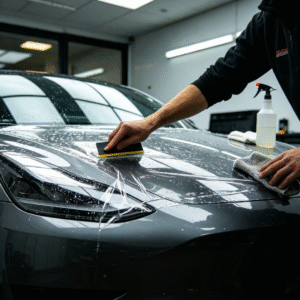

This practical guide walks you through everything you need to install a silver wrap for car at home—from planning and surface prep to panel application, post-heating, and aftercare. If you’re still choosing a finish, compare standard options on our car wraps, explore classic tones in our silver car wrap collection, consider low-gloss aesthetics via matte silver wrap, or go bold with the mirror-like depth of a satin chrome silver wrap.
Tools & Materials
- Vinyl wrap (enough for your vehicle plus 10–20% overage for practice and mistakes)
- Heat gun (or controlled heat source) and optional IR thermometer
- Felt-edge squeegee, hard squeegee, wrap gloves
- Knifeless tape (for seams/accents), precision blades for trimming
- Isopropyl alcohol (70%+) and lint-free microfiber towels
- Panel magnets/tape, masking tape, measuring tape
- Clay bar or mild decontamination products (optional but helpful)
- Plastic trim tools for safe badge/trim removal
1) Plan Your Project & Panel Layout
- Inspect the paint. Chips, deep scratches, or failing clearcoat will telegraph through vinyl. Address these first.
- Decide coverage. Full body, partial (hood/roof/mirrors), or accents. Identify natural seams to hide overlaps.
- Measure twice. Measure each panel’s longest dimension and add margins (typically 3–5 inches / 8–12 cm per edge) for tacking and tension relief.
- Pre-cut sheets. Label pieces (hood, roof, doors, bumpers). Store flat to avoid creases.
2) Prepare the Surface
- Deep clean. Wash thoroughly. Remove tar, sap, and old adhesive. Dry with clean microfiber.
- Decontaminate. Clay bar to remove embedded particles, especially on horizontal panels (hood/roof/trunk).
- Degrease. Wipe with isopropyl alcohol, paying attention to edges, door handles, and recesses.
- Remove or loosen trim. Badges, mirror caps, plate frames, diffuser pieces—anything that blocks a clean wrap line.
- Mask edges. Use low-tack tape to protect rubber seals and paint edges during cutting.
3) Set Up the Workspace
- Work indoors, dust-controlled, with bright, even lighting.
- Room-temperature panels and vinyl perform best; avoid cold, damp, or windy conditions.
- Position the car so you can move freely around each side without dragging film on the floor.
4) Apply Large, Flat Panels First (Hood & Roof)
- Float the film. With a helper, hover the sheet over the panel, anchor lightly with magnets/tape, and ensure even slack on all sides.
- Tack the center. Light pressure squeegee from the center outward in overlapping strokes to push air to the edges.
- Manage tension. If the film bridges a curve, lift and “air-release reset” rather than forcing it; add gentle heat to relax memory.
- Finish edges. Wrap 3–5 mm around the underside where possible. Post-heat edges to the spec in your TDS to lock them in.
5) Doors, Fenders & Quarter Panels
- Hinge method. Tape a straight “hinge” line, fold back half the liner, tack and squeegee, then repeat for the other half.
- Recesses & handles. Warm slightly, stretch minimally, and “glass” the film (smooth without tension) into recesses. Excess stretch causes silver to lighten; reset and re-glass if you see distortion.
- Seams with knifeless tape. Lay the tape where two pieces meet (e.g., between door and quarter). Apply film, then pull the filament for a clean cut—no blade on paint.
6) Bumpers & Complex Curves
- Break into sections. It’s often cleaner to do upper bumper, lower valance, and corners as separate pieces with hidden overlaps.
- Heat, then relax. Warm just enough to make the film conform; avoid over-stretch. Use palm pressure and short strokes to chase air out of deep curves.
- Relief cuts (with care). In extreme curves, make small relief cuts in waste areas only, then hide the overlap on an underside or seam.
7) Trimming, Edges & Post-Heat
- Soft edges first. Tuck film under trim and around panel edges. Maintain at least a few millimeters of wrap-under for hold.
- Blade control. Use fresh blades and light pressure; angle away from paint. Where possible, substitute knifeless tape.
- Post-heat. Heat all stretched areas and edges to the temperature recommended by your film maker to set memory and reduce edge-lift.
8) Reassembly, Quality Check & Aftercare
- Reinstall trim/badges carefully to avoid scratching edges.
- Final inspection. Under bright light, look for tiny bubbles; most will dissipate, but you can gently warm and squeegee if needed.
- Cure time. Avoid high-pressure washing for a few days. Hand wash with pH-neutral soap. Avoid aggressive waxes on specialty finishes.
- Maintenance. Use recommended sealants for your finish (matte, satin, chrome-like) and clean bug/tar promptly to preserve color.
Finish & Color Considerations for Silver
| Finish | Look & Use Case | Install Notes |
|---|---|---|
| Standard Silver | Factory-like color change; versatile for daily drivers or fleets. | Forgiving on flat panels; avoid overstretch to prevent tone shift. |
| Matte / Satin Silver | Low-gloss, modern aesthetic; hides light swirls. | Keep surfaces ultra-clean; matte shows oils—use gloves. |
| Satin Chrome-Style Silver | Mirror-like depth and high visual impact. | Work dust-free; tiny specks are more visible in reflective films. |
Common Mistakes to Avoid
- Over-stretching silver. Excess tension can lighten the color on edges or recesses—reset and re-glass instead.
- Skipping post-heat. Edges and complex shapes are likely to lift if not locked in at the recommended temperature.
- Dirty edges. Contaminated seams cause adhesion issues. Degrease thoroughly before wrapping edges.
- Cutting on paint. Use knifeless tape for seams and accents to avoid risk.
Wrap-Up
With patient prep, smart panel planning, and careful heat management, a DIY silver wrap can look impressively professional and last for years. Ready to choose your film? Browse our curated silver car wrap shades, keep it stealth with a matte silver wrap, or go show-stopping with a satin chrome silver wrap. For more colors and textures across the full lineup, explore our complete car wraps catalog.