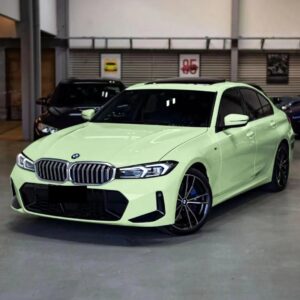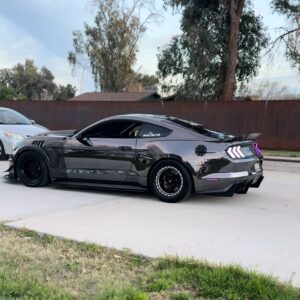
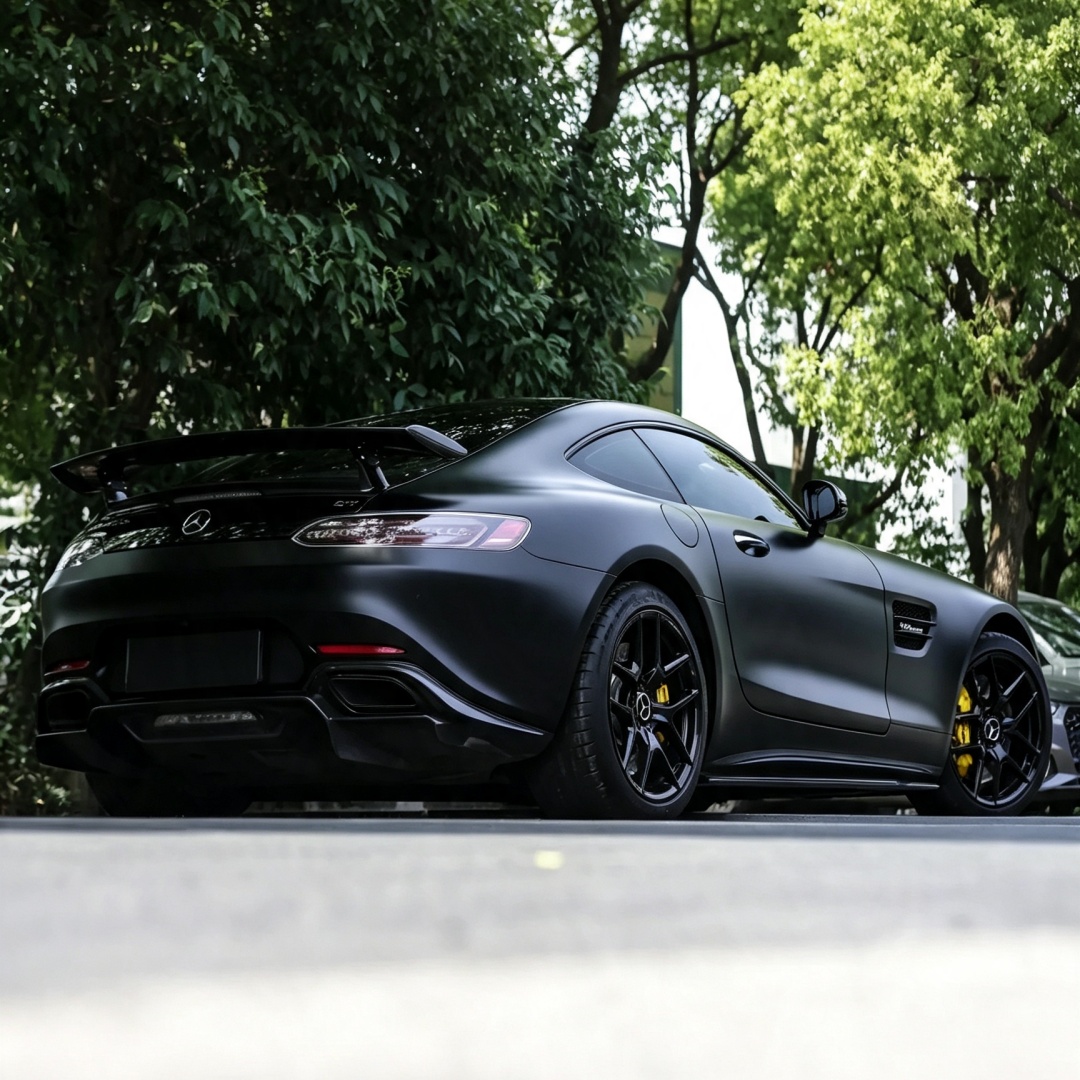
Satin black has become one of the most recognizable finishes in modern vehicle customization. It is darker and more understated than gloss black, but has more visual depth than a completely flat matte finish.
Traditionally, getting that look meant either repainting a vehicle or installing a satin black vinyl wrap. Satin black PPF adds a third option: changing the visible color and finish while adding a thicker protective TPU layer over the original paint.
That difference matters.
What Is Satin Black PPF?
Satin black PPF is a colored paint protection film, typically based on thermoplastic polyurethane (TPU), that gives a vehicle a low-reflection black finish while protecting the original paint from minor scratches, road debris, stains and environmental exposure. Unlike conventional satin black vinyl, quality color PPF can also incorporate a self-healing protective topcoat.
In practical terms, it sits between two familiar products:
Vinyl wrap → primarily styling
Clear PPF → primarily protection
Satin black color PPF → styling + protection
That combination makes satin black PPF particularly interesting for owners who want a stealth-style color change without giving up the protective function normally associated with paint protection film.
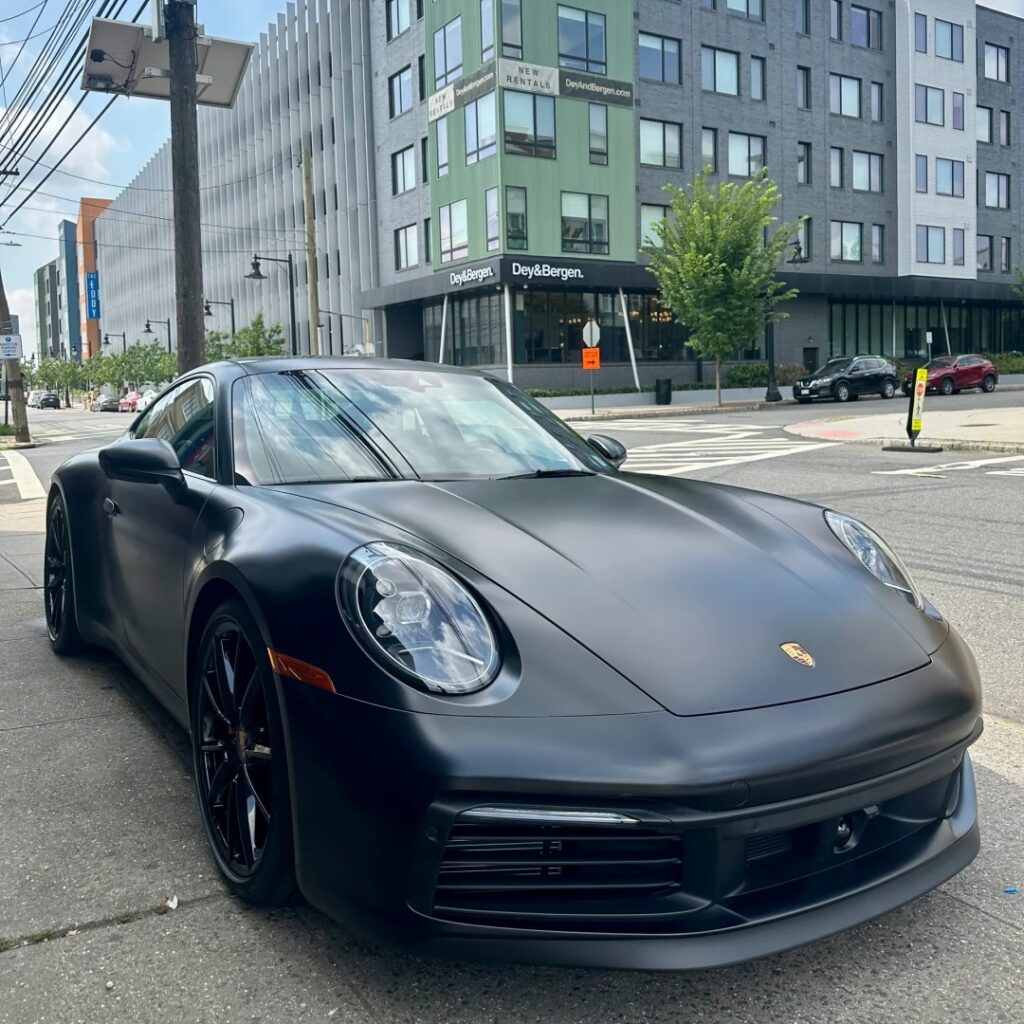
Why Satin Black PPF Is Different From Simply Putting Matte PPF Over Black Paint
This distinction is easy to miss.
There are actually two different ways to create a satin-black PPF appearance.
Method 1: Matte or Satin Clear PPF Over Black Paint
Products such as XPEL STEALTH and LLumar Platinum Matte are designed to alter the surface appearance of the paint underneath. If the vehicle is already gloss black, installing matte PPF can create a satin/matte black appearance.
The advantage is that the vehicle’s original color remains the color source.
XPEL describes STEALTH as a satin-finish film that transforms glossy paint into a matte appearance, while retaining PPF protection.
LLumar similarly states that its matte PPF can transform glossy paint into a flat finish while maintaining protection. Its Platinum Matte product also incorporates a hydrophobic topcoat and heat-assisted self-healing behavior.
But there is an obvious limitation:
If the original vehicle is white, blue, red or silver, clear matte PPF will not turn it black.
Method 2: Colored Satin Black PPF
Colored PPF contains the visual color within the film system itself.
That means a white Tesla, silver Porsche or blue BMW can be transformed into satin black while simultaneously receiving a PPF protective layer.
This is the category in which ALUKOVINYL’s satin black PPF sits.
This distinction is important when comparing products: a transparent satin PPF and a true black colored PPF may produce a superficially similar finish on a black vehicle, but they solve different problems.
What Is Satin Black PPF Made Of?
The exact construction differs among manufacturers, but modern premium PPF commonly uses thermoplastic polyurethane (TPU) as the functional film substrate.
A simplified color-PPF structure can be understood as:
Protective topcoat
↓
Colored / optical layer
↓
TPU film
↓
Pressure-sensitive adhesive
↓
Factory clear coat and paint
Some manufacturers use more complex constructions.
For example, FlexiShield publicly describes one of its current color-PPF architectures as using two TPU layers around an embedded automotive-paint-resin layer, plus a self-healing topcoat and adhesive. That architecture should not be assumed to represent every color PPF on the market, but it demonstrates how far color PPF has evolved beyond simply making a transparent PPF darker.
Why TPU Matters
TPU combines flexibility, elasticity and mechanical toughness in a way that makes it useful for automotive protection films.
The material needs to perform several competing jobs:
- conform around curved body panels;
- absorb or distribute some energy from small road impacts;
- stretch during installation;
- maintain dimensional stability after installation;
- support the protective topcoat;
- remain removable from suitable automotive paint.
That is why comparing a TPU-based color ppf with ordinary PVC styling vinyl only by color or finish misses much of the engineering difference.
Satin vs Matte vs Gloss Black: What Actually Changes?
“Satin” and “matte” are sometimes used interchangeably in casual product descriptions, but visually they are not necessarily identical.
| Finish | Light Reflection | Visual Character | Shows Body Lines | Typical Look |
|---|---|---|---|---|
| Gloss Black | High | Deep, reflective | Very strong | Factory-painted / piano black |
| Satin Black | Low–medium | Smooth, soft sheen | Strong | Stealth but refined |
| Matte Black | Very low | Flat, diffuse | Softer | Aggressive / utilitarian |
Satin is often the useful middle ground.
It suppresses sharp reflections but retains enough reflected light to show shoulders, fender arches, hood contours and aerodynamic surfaces.
An overlooked advantage of satin black
A completely flat black finish can visually suppress subtle panel geometry.
High-gloss black does the opposite: reflections can become so dominant that the viewer notices the environment reflected in the body before noticing the body itself.
Satin black sits between these extremes.
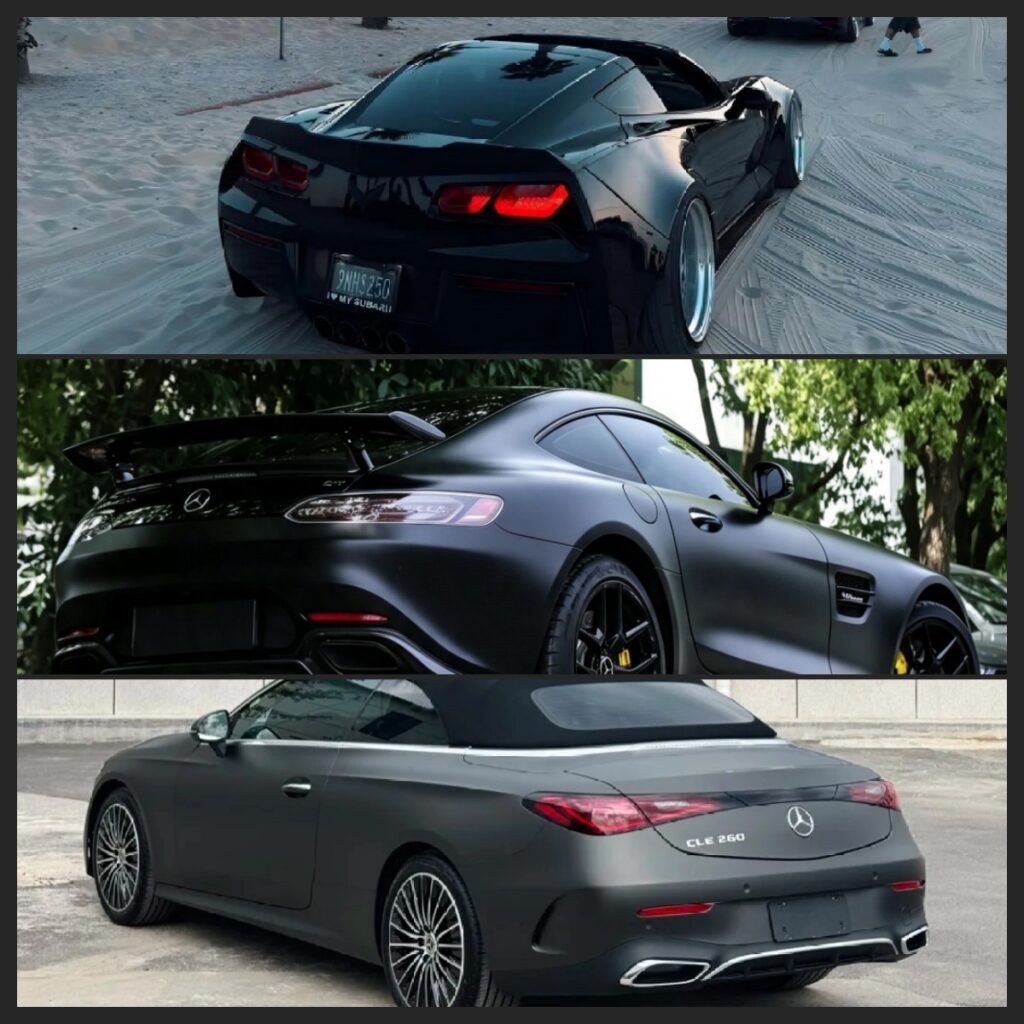
Our design interpretation: satin black works especially well on vehicles whose visual identity depends on sculpted body surfaces rather than bright color.
That is not a laboratory performance claim. It is a design observation that helps explain why satin black frequently suits performance sedans, angular EVs, SUVs and sports cars.
Does Satin Black PPF Really Protect Paint?
Yes—but “protect” needs to be defined carefully.
PPF should not be described as an invisible shield that makes paint impossible to damage.
Its practical role is to provide a sacrificial layer between the environment and the factory clear coat.
Established manufacturers describe PPF as protection against hazards such as:
- minor stone chips;
- scratches;
- bug contamination;
- road debris;
- stains;
- weather exposure.
For example, 3M describes its Scotchgard Pro Series 200 PPF as designed to protect vehicle paint from rock chips, scratches and environmental exposure. The product incorporates a hydrophobic surface and heat-assisted self-healing technology.
LLumar lists hazards including flying rocks, road salt, sand, bugs and oil for its Platinum Matte PPF.
These established products provide useful independent evidence for the general protective functions expected from the PPF category.
They do not, however, independently validate every performance claim made for every other PPF brand.
That distinction matters.
What Does “Self-Healing PPF” Actually Mean?
Self-healing is one of the most misunderstood PPF terms.
It does not mean a damaged film regenerates indefinitely.
In a self-healing PPF system, heat-responsive surface chemistry can allow certain fine marks in the topcoat to diminish as the surface returns toward its original state.
Heat may come from:
- warm water;
- sunlight;
- ambient heat;
- controlled heat during detailing.
3M specifically describes minor scratches or marks being removed through heat applied to the film surface, while LLumar describes surface scratches healing with heat from the engine or sunlight.
What self-healing cannot do
Do not expect it to repair:
- deep cuts through the film;
- torn TPU;
- severe rock impacts;
- punctures;
- damaged edges;
- adhesive contamination;
- permanent chemical attack.
A better description is therefore:
Self-healing PPF can recover from certain superficial topcoat marks; it cannot reconstruct physically damaged film.
ALUKOVINYL Satin Black PPF: What the Published Specifications Say
ALUKOVINYL currently lists its TPU Satin Black Colored PPF as a black TPU satin product using a Covestro base material and Ashland/Bostik-listed adhesive. The product page also publishes hydrophobic, scratch- and stain-resistance claims and an expected durability of 5–7 years.
Additional manufacturer-reported specifications include:
| Specification | ALUKOVINYL Published Value |
| Base material | Covestro |
| Adhesive | Ashland (Bostik) |
| Expected durability | 5–7 years |
| TPU hardness | 93A |
| Tensile strength | 22.32 MPa |
| Elongation at break | 370.23% |
| Tearing strength | 68.52 kN/m |
| Claimed UV resistance | 98.5% |
| Finish | TPU Satin Black |
Satin Black PPF Brand Comparison: ALUKOVINYL vs UPPF vs XPEL vs 3M vs LLumar
A fair comparison requires an important qualification: these products are not all direct equivalents.
UPPF and ALUKOVINYL publish true satin-black colored PPF options. XPEL STEALTH, 3M Pro Series 200 Matte and LLumar Platinum Matte are primarily matte/satin transparent PPF systems designed to alter the appearance of the paint beneath them.
| Product | True Black Color Change? | Finish | Self-Healing | Published Warranty / Durability* | Best Use |
| ALUKOVINYL Satin Black Color PPF | Yes | Satin black | Manufacturer claims thermal self-healing | 5–7 yr expected durability | Color change + protection |
| UPPF Satin Black | Yes | Satin black | Yes | 10 yr warranty, regional conditions apply | Color change + protection |
| XPEL STEALTH | No—underlying paint remains relevant | Satin | Yes | See current regional warranty | Converting existing paint to satin |
| 3M Pro Series 200 Matte | No | Matte | Yes | 10 yr consumer warranty | Established matte PPF system |
| LLumar Platinum Matte | No | Matte | Yes | 10 yr limited warranty | Matte conversion + protection |
*Warranty and expected durability are not the same measurement and should not be treated as directly interchangeable. Warranty conditions vary by product, installer, geography and maintenance.
UPPF’s Satin Black Color PPF currently publishes an 8-mil construction, 320% elongation at break, 20 GU 60° surface gloss and a 10-year warranty, while noting that warranty conditions vary by country and environment.
3M publishes a 10-year consumer warranty for professionally installed Pro Series 200, alongside self-healing, hydrophobic and matte-finish claims.
LLumar Platinum Matte currently publishes a 10-year manufacturer’s limited warranty.
Avery Dennison offers another useful benchmark: its published North American warranty documentation lists five years for Supreme Defense Matte and excludes issues associated with improper installation or inappropriate substrates.
What this comparison actually tells us
There is no defensible basis here for saying ALUKOVINYL, XPEL, 3M, UPPF or LLumar is universally “best.”
Instead, the market separates into different priorities.
If you want to retain your existing paint color but make it satin, transparent matte PPF from established PPF systems makes sense.
If you want to turn a non-black car into satin black, true colored PPF is the relevant comparison.
If warranty network and installer ecosystem dominate your decision, established dealer-based brands may justify their positioning.
If color choice, material cost or access to full rolls matters strongly to an installer or enthusiast, the evaluation may be different.
That is a more meaningful comparison than ranking brands on a single specification.
Satin Black PPF vs Satin Black Vinyl Wrap
This is arguably the most important buying decision.
A satin black car wrap and satin black PPF can look similar in photographs. Functionally, they are different products.
| Factor | Satin Black Color PPF | Satin Black Vinyl |
| Primary purpose | Protection + styling | Styling |
| Common substrate | TPU | PVC vinyl |
| Color change | Yes | Yes |
| Stone-chip resistance | Higher protective intent | Limited |
| Self-healing topcoat | Available on quality PPF | Generally not equivalent |
| Material thickness | Generally thicker | Generally thinner |
| Installation | More demanding | Typically easier |
| Material cost | Higher | Lower |
| Complex curves | Requires careful stretch management | Often easier to conform |
| Best for | Owners wanting color + protection | Cost-conscious cosmetic changes |
This does not make vinyl obsolete.
In fact, vinyl may be the smarter choice when:
- the owner changes colors frequently;
- the budget prioritizes appearance over impact protection;
- the car is primarily a show or promotional vehicle;
- highly complex printed graphics are required.
Color PPF becomes more compelling when the owner would otherwise consider both a vinyl color change and separate paint protection.
Where Satin Black PPF Makes the Most Sense
1. Daily-Driven Performance Cars
Cars such as the Porsche 911, BMW M3/M4, Chevrolet Corvette and Mercedes-AMG models combine highly visible bodywork with significant road exposure.
Satin black emphasizes their geometry while PPF addresses a real use case: protecting forward-facing areas from routine road debris.
2. Tesla Model 3 and Model Y
EVs are particularly interesting candidates from a design perspective.
The Model 3 and Model Y have relatively clean surfacing with limited decorative elements. Satin black can therefore create a strong monochromatic appearance without visually competing with complex body detailing.
For a highway-driven Model Y, the practical protection zones include:
- front bumper;
- hood;
- mirror caps;
- rocker areas;
- lower doors.
3. Large SUVs
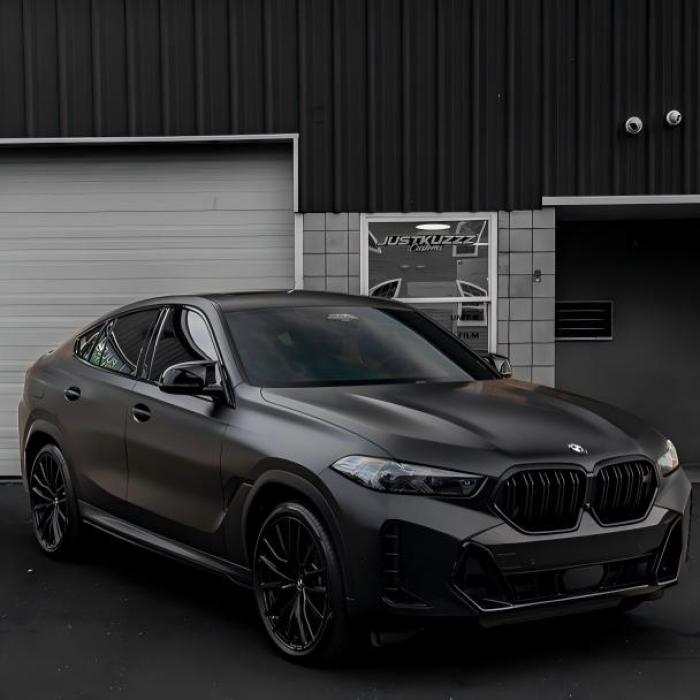
Range Rover, Mercedes G-Class and similar SUVs carry large visual masses.
Gloss black can create strong reflections across these large panels. Satin reduces reflection intensity while preserving enough light response to keep the body from looking completely flat.
4. Cars That Are Not Already Black
This is where colored satin black PPF has its clearest advantage over transparent satin PPF.
A white, red or silver vehicle cannot become genuinely satin black through transparent matte PPF alone.
Real-World Scenario #1: Highway-Driven Tesla Model Y
Consider a Model Y driven approximately 15,000 miles per year with frequent highway use.
The owner wants a stealth-black appearance but is also concerned about road wear.
Option A: Satin black vinyl
Good choice if appearance and lower initial cost dominate.
However, the film’s primary role remains cosmetic.
Option B: Clear/matte PPF
Strong protection option, but it cannot turn a non-black Model Y black.
Option C: Satin black color PPF
The vehicle receives both a black color transformation and a protective TPU surface.
For this particular use case, color PPF has a stronger functional argument because the same surface responsible for the visual transformation is also the sacrificial protection layer.
That conclusion changes if the car is leased for a short period or the owner wants a different color every year. Then vinyl may make more economic sense.
Real-World Scenario #2: Weekend Porsche 911
Now consider a garage-kept Porsche 911 driven 3,000 miles annually.
Its owner wants satin black but rarely drives in poor weather.
Does full-body color PPF still make sense?
Possibly—but the justification shifts.
High-mileage road protection is less important. The owner is paying more for:
- finish quality;
- protection against incidental scratches;
- preservation of the underlying finish;
- the ability to change appearance without repainting.
If protection is required primarily on the front end, another rational strategy is a conventional styling wrap plus targeted PPF where compatible and professionally planned.
The most expensive solution is not automatically the most appropriate solution.
That kind of use-case analysis should come before choosing material.
Installation Reality: Satin Black PPF Is Not Just “Thicker Vinyl”
This is where installer experience matters.
Color PPF can be less forgiving than ordinary wrap film.
Bumpers
Bumpers combine recesses, compound curves, air intakes and multiple stretch directions.
Excessive stretch can alter:
- surface texture;
- color uniformity;
- film thickness;
- topcoat behavior.
Mirrors
Mirror housings are small but geometrically difficult. Trying to force a single piece around an extreme three-dimensional surface can create excessive tension.
Panel Edges
Good edge preparation matters because contamination, insufficient adhesion and residual tension can contribute to lifting.
Edges should not simply be stretched into submission.
Body Lines
Stretch concentrated along one body line can create local tension. A skilled installer distributes deformation across a wider area.
This is particularly important with satin material because uneven stretch may become visually noticeable as inconsistent sheen.
Why Overstretching Satin PPF Can Change Its Appearance
This deserves more attention than it usually receives.
Imagine a colored film as a controlled optical structure.
When the material is heavily stretched, the same amount of pigment and surface structure is distributed across a larger area.
That can potentially alter:
- apparent color density;
- texture;
- gloss level;
- surface uniformity.
Therefore, the installation goal should not be:
“How far can this film stretch?”
It should be:
“How little stretch can we use while achieving stable conformity?”
A high elongation-at-break number is a mechanical limit—not a recommended installation stretch percentage.
This distinction is particularly important when reading technical data sheets.
Wet vs Dry Installation: Which Is Better?
There is no universal answer across all color PPF products.
Traditional PPF commonly uses wet installation because slip solution allows the installer to position and squeegee the film.
Some newer color PPF systems are specifically engineered for dry installation.
For example, FlexiShield describes a proprietary dry-apply air-channel system for its current Color PPF.
ALUKOVINYL’s current Satin Black product page presents wet-application specifications while also describing dry-application-friendly technology elsewhere on the page. Because product generations and installation configurations can differ, installers should confirm the instructions supplied with the specific roll rather than assume one universal method.
That is a good rule for any brand:
Follow the installation system engineered for the specific adhesive—not the method you happen to prefer from another film.
How to Maintain Satin Black PPF
Satin surfaces require slightly different thinking from gloss finishes.
Do
Wash contamination before it becomes heavily embedded.
Use clean microfiber towels.
Use PPF-compatible, non-abrasive cleaners.
Remove bird droppings, insects and organic contamination promptly.
Wash from the center of panels toward edges when using pressure equipment.
Follow the manufacturer’s curing instructions after installation.
Avoid
Abrasive polishing compounds.
Traditional gloss-enhancing waxes unless specifically approved.
Aggressive solvents.
Holding a pressure washer extremely close to exposed edges.
Automatic brushes capable of mechanically abrading the film.
Uncontrolled high heat.
Can Satin Black PPF Be Ceramic Coated?
Potentially, yes—provided the coating is compatible with the specific film.
The key concern is preserving the satin appearance.
XPEL, for example, states that an appropriate ceramic coating on its STEALTH film does not make the film shiny and can add protective qualities while maintaining the matte finish.
That does not mean every coating behaves identically on every satin PPF.
Always verify compatibility with both the PPF and coating manufacturer.
Pros and Cons of Satin Black PPF
Pros
One-step visual transformation
Colored PPF can turn almost any compatible painted vehicle satin black without repainting it.
More protective intent than vinyl
TPU PPF is engineered specifically around paint protection.
Self-healing surface technology
Quality products can reduce the visibility of minor surface marks through heat-responsive topcoat technology.
Refined stealth appearance
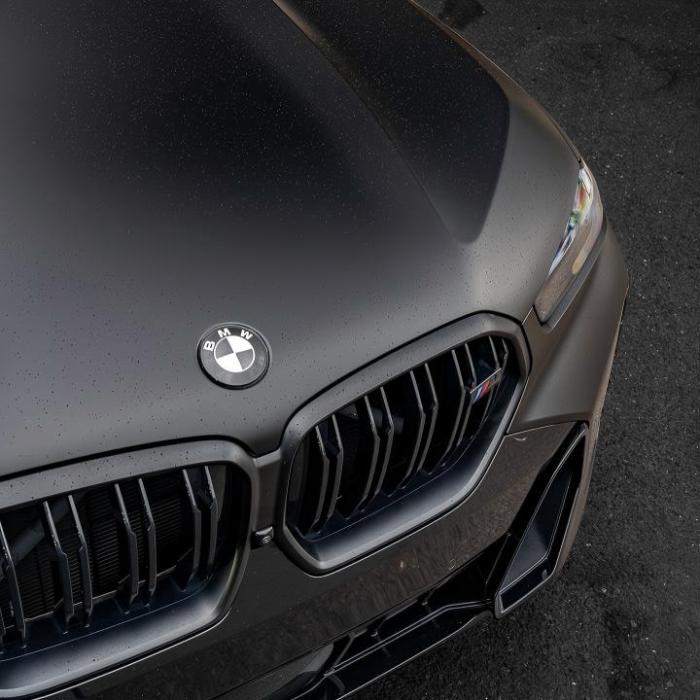
Satin black retains enough sheen to show body contours without producing mirror-like gloss reflections.
Potentially simplifies a color-change + protection project
One layer can address two goals that might otherwise require separate purchasing decisions.
Cons
Higher material and installation cost
Color PPF generally carries a premium over cosmetic vinyl.
Installation is skill-sensitive
Poor stretch management can affect texture, color consistency and edge stability.
Satin surfaces cannot simply be polished like conventional gloss paint
Aggressive polishing may permanently change localized sheen.
PPF is not damage-proof
Severe impacts can still penetrate the film.
Film still ages
UV exposure, climate, washing habits, contamination, installation quality and storage conditions all affect real-world service life.
Warranty does not equal lifespan
A ten-year warranty does not guarantee that every film will look identical to day one after ten years.
Read coverage conditions rather than comparing warranty numbers alone.
Satin Black PPF vs Clear PPF vs Vinyl Wrap: Final Decision Matrix
| Your Priority | Best Starting Point |
| Keep factory color + maximum visual transparency | Clear PPF |
| Keep factory color but make it satin | Matte/Satin Clear PPF |
| Turn any compatible paint satin black + add PPF protection | Satin Black Color PPF |
| Lowest-cost satin black transformation | Satin Black Vinyl |
| Change color frequently | Vinyl Wrap |
| Highway-driven vehicle + color change | Color PPF |
| Printed graphics / commercial design | Vinyl |
| Protection without visible styling change | Clear PPF |
This is why asking “Is PPF better than vinyl?” is too broad.
The better question is:
What job do you need the film to perform?
What Should You Check Before Buying Satin Black PPF?
Instead of choosing on marketing language alone, ask six questions:
- Is it genuinely colored TPU PPF, or transparent matte PPF?
- What is the film construction and thickness?
- What does the warranty actually cover?
- Is the installation system wet or dry?
- Are self-healing, stain-resistance and UV claims supported by published technical information?
- Can your installer handle complex color PPF installations and wrapped edges?
For professional installers, another useful question is:
How does the film behave after stretching, heating and cooling—not just when it comes off the liner?
That is where installation quality and long-term appearance are often decided.
Is Satin Black PPF Worth It?
Satin black PPF is most compelling when you genuinely value both sides of the product: the satin-black transformation and the protective TPU layer.
If all you want is an inexpensive temporary black color change, vinyl remains difficult to beat.
If all you want is protection and you already love the factory color, clear or transparent matte PPF may be more logical.
But if you were already considering changing your vehicle to satin black and protecting its original paint, colored PPF eliminates that compromise.
That is the real value proposition—not that satin black PPF is universally “better,” but that it can accomplish two objectives with one film system.
Frequently Asked Questions About Satin Black PPF
Is satin black PPF better than a satin black vinyl wrap?
It is better for paint-protection-focused applications, but not automatically better for every owner. Satin black PPF combines color change with a thicker protective TPU system, whereas vinyl is generally less expensive and better suited to frequent cosmetic changes.
How long does satin black PPF last?
There is no universal lifespan. Manufacturer warranty periods and expected durability vary significantly. ALUKOVINYL currently publishes an expected durability of 5–7 years for its Satin Black TPU PPF, while UPPF publishes a 10-year warranty for its Satin Black product subject to regional conditions.
Sun exposure, climate, mileage, storage, installation and maintenance all affect real-world longevity.
Does satin black PPF self-heal?
Quality TPU PPF can use a heat-responsive topcoat that reduces certain fine surface marks. Self-healing should not be interpreted as repair of cuts, punctures or deep physical damage. Established manufacturers including 3M and LLumar independently document heat-assisted self-healing behavior in their PPF systems.
Can I put satin PPF on a white car and make it black?
Only if you use colored satin black PPF. Transparent satin or matte PPF changes the sheen of the paint underneath but does not replace its underlying color.
Will satin black PPF damage factory paint?
A properly selected and professionally installed PPF is intended for compatible automotive painted surfaces, but substrate condition matters. Repainted panels, poorly cured paint and existing paint failure require special caution. Avery Dennison’s warranty documentation, for example, limits its specified PPF coverage to fully cured OEM-painted surfaces and excludes various unsuitable substrates.
Can you polish satin black PPF?
Conventional abrasive polishing is generally inappropriate because it may create a glossy patch that no longer matches the surrounding satin texture. Use cleaning and maintenance products approved for the specific satin PPF.
Can you ceramic coat satin black PPF?
Yes, when the coating is specifically compatible with matte or satin PPF. The coating should preserve rather than significantly alter the intended sheen. Always verify compatibility before full application.
Is satin black PPF good for a daily driver?
It can be particularly logical for a daily-driven vehicle when the owner wants both a satin-black appearance and protection against routine road exposure. A garage-kept low-mileage car may place more value on the aesthetic side of the equation.
Final Verdict: Satin Black PPF Is More Than a Matte-Black Styling Trend
The most useful way to understand satin black PPF is not as a more expensive version of black vinyl.
It belongs to a different product category.
Vinyl begins with a styling problem and adds a thin sacrificial surface.
Traditional PPF begins with a protection problem and attempts to remain visually unobtrusive.
Colored satin black PPF merges those two objectives.
The technology is not without compromises. It costs more than conventional wrap film, requires disciplined installation, still ages with environmental exposure and cannot prevent every form of paint damage.
But for the right owner, its advantage is unusually clear: you do not have to choose between a stealth-black transformation and meaningful paint protection.
If protection is your main objective, explore ALUKOVINYL’s color PPF range to compare protective finishes and colors.
If you want a color-changing TPU alternative, browse the tpu wrap collection.
For owners focused primarily on cosmetic customization and broader finish choice, a conventional car wrap may remain the more appropriate solution.
And if the goal is specifically a stealth-black finish with TPU protection, compare the specifications and available sizes of ALUKOVINYL satin black ppf before deciding which film system best matches your vehicle, installation method and ownership plans.
Sources & Independent References
Technical and comparative statements in this guide were cross-checked against current manufacturer documentation from 3M, XPEL, LLumar/Eastman, Avery Dennison, UPPF and FlexiShield. Product-specific ALUKOVINYL figures are identified as manufacturer-published specifications rather than independent laboratory verification.
- 3M — Scotchgard Paint Protection Film Pro Series 200 / Pro Series 200 Matte
- XPEL — STEALTH Paint Protection Film technical and care information
- LLumar / Eastman — Platinum Matte Paint Protection Film
- Avery Dennison — Paint Protection Film Limited Warranty documentation
- UPPF — Satin Black Color PPF technical specifications
- FlexiShield — Color Paint Protection Film construction and technical information
- ALUKOVINYL — TPU Satin Black Colored PPF product specifications