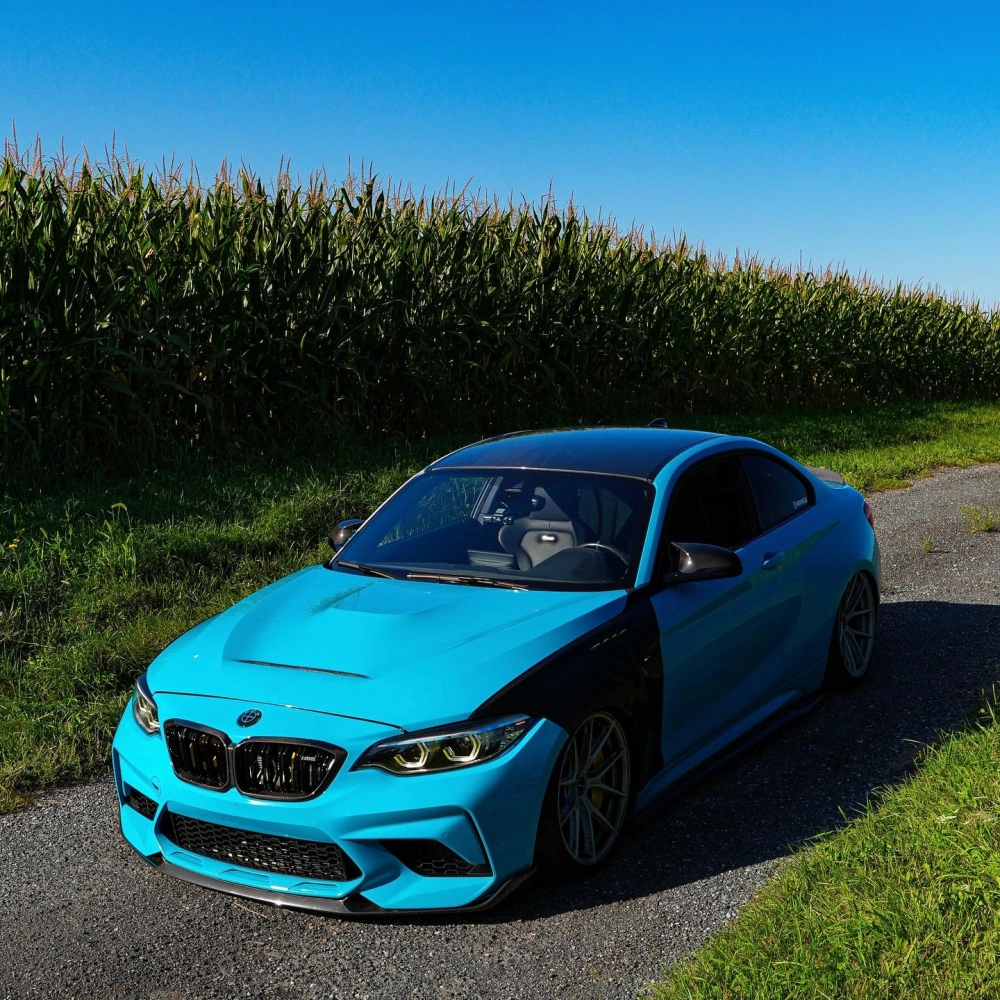
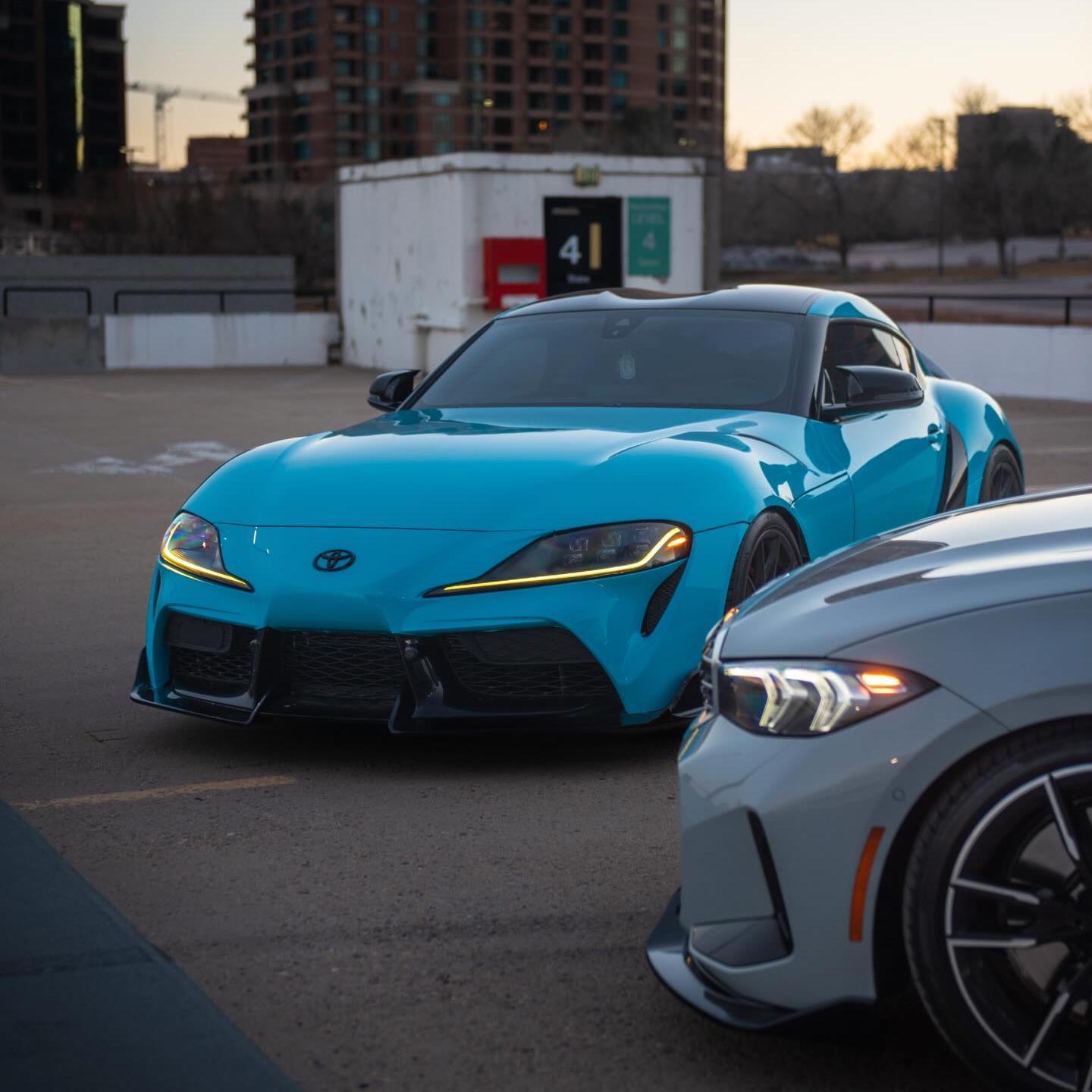
Miami Blue is more than a bright automotive color. Its distinctive balance of turquoise and blue creates a sporty, energetic appearance that has become closely associated with Porsche styling. But how does a Miami Blue car wrap look on different vehicles, and is it the right choice for your next color change?
From the Porsche 911 to the BMW M4 and Tesla Model 3, this guide explores the color’s personality, finish options, vehicle compatibility, advantages, limitations, and practical installation considerations.
What Is Miami Blue?
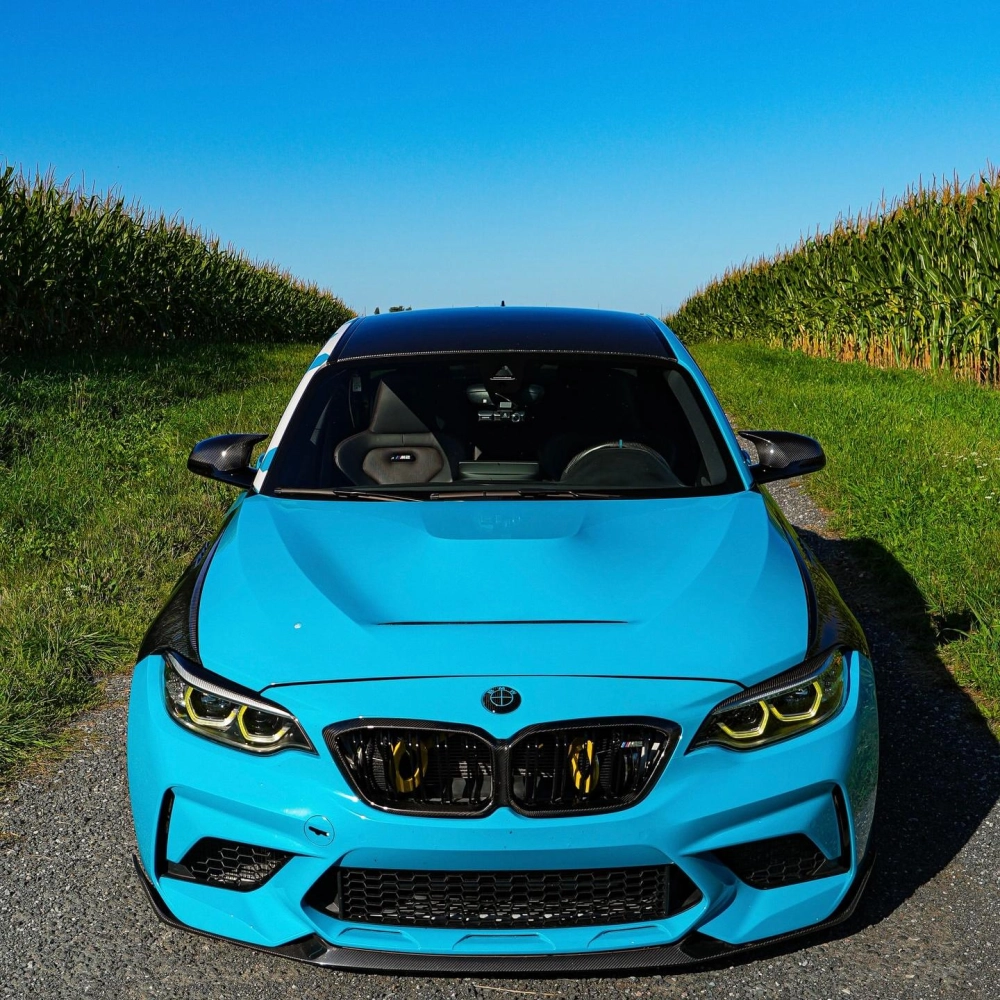
Miami Blue is a vibrant automotive blue with noticeable cyan and turquoise undertones, best known for its association with Porsche sports cars. A Miami Blue car wrap recreates this distinctive color using automotive vinyl film, allowing drivers to achieve a bright, sporty appearance without permanently repainting their vehicles. Gloss finishes are especially popular because they emphasize the color’s clean reflections and saturated appearance.
Unlike conventional navy or royal blue, Miami Blue has a brighter, more tropical character that changes visually with lighting conditions.
What Makes Miami Blue Different?
Miami Blue occupies an interesting position between traditional blue and turquoise.
Its appearance can be described through four characteristics:
- High color saturation: Creates a bold visual presence, particularly under direct sunlight.
- Cyan undertones: Adds a refreshing turquoise influence without becoming a conventional green.
- Strong contrast: Pairs naturally with black wheels, dark trim, and carbon fiber accessories.
- Modern sports-car identity: Offers a distinctive alternative to conventional blue, grey, and black paint colors.
An important distinction is that Miami Blue is not simply another name for light blue. Its visual identity depends on the balance between blue saturation, cyan undertones, and surface gloss.
Why Is Porsche Miami Blue So Popular?
Miami Blue became recognizable through its association with Porsche sports cars, particularly modern generations of the 911.
Unlike traditional Porsche colors such as Guards Red or Racing Yellow, Miami Blue creates a contemporary aesthetic that feels both playful and performance-oriented.
The color complements Porsche’s flowing bodywork because its brightness highlights the curvature of the front fenders, sculpted doors, and rear shoulders.
What Makes the Porsche Miami Blue Look Special?
Three design elements contribute to its appeal.
1. Sculpted body reflections
A glossy Miami Blue surface emphasizes curved body panels. On a Porsche 911, the color helps visually define the transition between the front fenders, doors, and rear wheel arches.
2. Contrast with black exterior components
Black wheels, window surrounds, aerodynamic details, and rear diffusers create strong contrast against the vibrant blue body.
3. A balance between exclusivity and everyday usability
Miami Blue stands out more than conventional metallic blue but is generally less visually aggressive than fluorescent green or neon yellow.
For drivers who appreciate Porsche-inspired styling, a Miami Blue vinyl wrap offers a way to explore a similar aesthetic on vehicles from other manufacturers.
Important: A vinyl wrap described as Miami Blue is not automatically an exact match for Porsche factory paint. Pigment formulation, surface texture, lighting, and gloss level can all affect the final appearance.
How Does Miami Blue Look in Different Lighting Conditions?
One of the most overlooked considerations when selecting a car wrap is how its color changes under different lighting environments.
Miami Blue can appear noticeably different depending on the light source, surrounding colors, and viewing angle.
| Lighting condition | Typical visual appearance |
|---|---|
| Direct midday sunlight | Bright cyan-blue with strong saturation |
| Cloudy daylight | Cooler, slightly deeper blue |
| Golden-hour sunlight | Warmer turquoise influence |
| Indoor white LED lighting | Clean, vivid blue with sharp reflections |
| Underground parking | Darker and less saturated appearance |
These are qualitative visual expectations, not laboratory color measurements. Different Miami Blue films can respond differently.
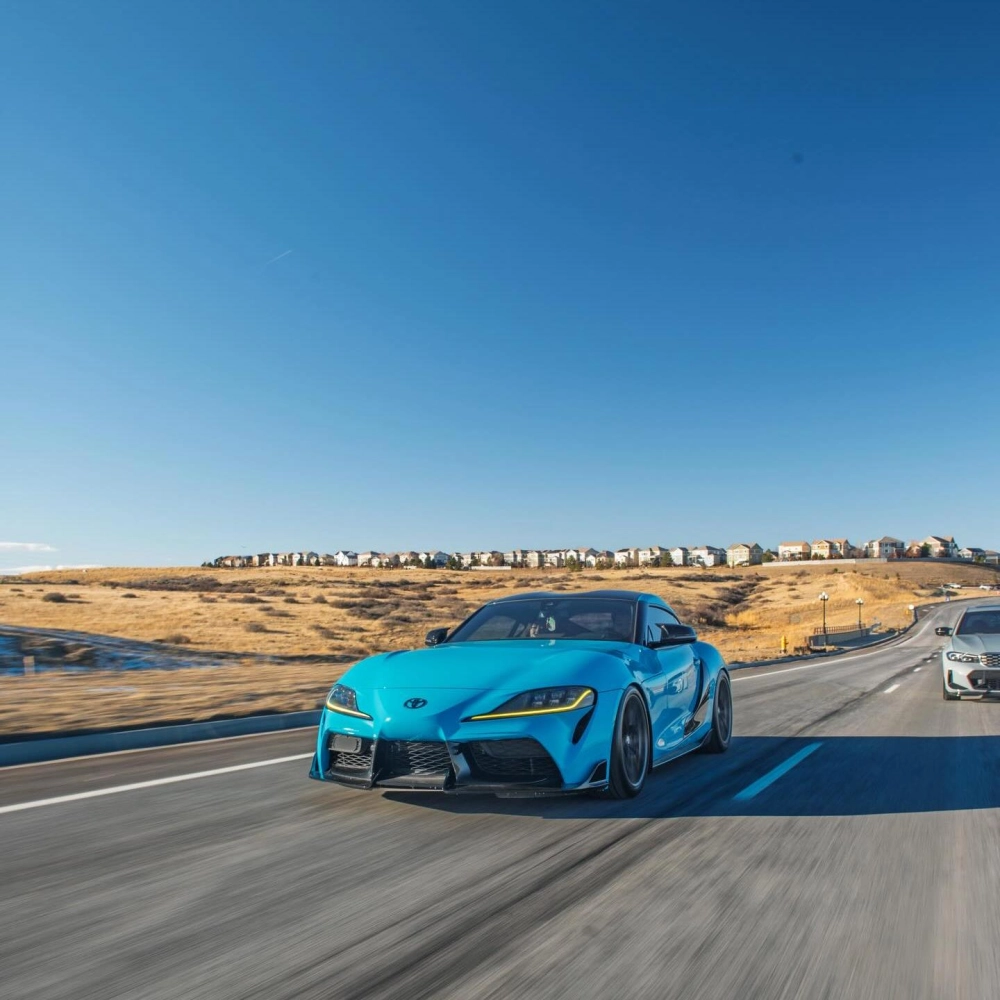
Why Online Photos Can Be Misleading
Digital photographs do not always represent the actual film accurately.
Camera white balance, exposure, editing, display calibration, and surrounding reflections can influence the apparent color.
For example, a Miami Blue wrap photographed under warm lighting may appear more turquoise than the same material photographed under neutral daylight.
Expert recommendation: Examine a physical film sample outdoors, in shade, and under artificial lighting before ordering a full vehicle wrap.
For customers seeking a particularly close Porsche-inspired appearance, comparing a physical wrap sample with an actual painted reference panel is more reliable than comparing website photographs.
Best Cars for a Miami Blue Wrap
Miami Blue is not limited to Porsche vehicles. Its combination of brightness and saturation can complement sports cars, performance sedans, electric vehicles, and selected SUVs.
The key is understanding how the color interacts with vehicle proportions and exterior trim.
1. Porsche 911 — The Iconic Miami Blue Look
The Porsche 911 is arguably the most recognizable inspiration for a Miami Blue wrap.
Its rounded front fenders, sloping roofline, and muscular rear proportions provide an ideal canvas for this vivid blue.
Recommended styling:
- Gloss Miami Blue body
- Satin black or gloss black wheels
- Black exterior trim
- Optional carbon fiber aerodynamic accents
A high-gloss finish is particularly effective on the 911 because it enhances the visual flow of the bodywork.
Best for: Porsche owners seeking a factory-inspired sports-car appearance.
2. BMW M3 and M4 — Aggressive Performance Styling
The BMW M3 and M4 have more angular body designs than the Porsche 911.
Miami Blue creates an interesting contrast with their aggressive front bumpers, pronounced side skirts, and muscular rear fenders.
On a BMW M4, gloss Miami Blue can highlight the long hood and wide rear shoulders.
For a more cohesive appearance, consider black kidney grilles, dark wheels, and carbon fiber exterior details.
Best for: Drivers who want a distinctive performance-car aesthetic without choosing an extremely dark or fluorescent color.
3. Tesla Model 3 — Clean, Futuristic Appearance
Tesla’s minimalist exterior styling makes the Model 3 a strong candidate for a Miami Blue car wrap.
The uninterrupted body panels allow the color to become the central visual feature.
A gloss finish creates a modern, polished appearance, while a satin interpretation can produce a softer, more understated result.
Recommended combination: Miami Blue body, black window trim, and dark aerodynamic wheels.
Best for: EV owners seeking a brighter, more personalized appearance.
4. Toyota GR Supra — Compact and Sporty
The Toyota GR Supra features deeply sculpted side panels, pronounced rear fenders, and a distinctive double-bubble roof.
Miami Blue can accentuate these features, especially when paired with contrasting black trim.
A glossy surface also helps highlight the complex reflections around the doors and rear wheel arches.
Best for: Sports-car enthusiasts who prefer bright colors with a premium finish.
5. Audi RS5 — Refined Performance
The Audi RS5 provides a different interpretation of Miami Blue.
Rather than emphasizing playful sports-car styling, the color introduces visual energy to Audi’s relatively restrained design language.
Its wide front grille, defined shoulder line, and balanced proportions help the blue appear sophisticated without becoming overly aggressive.
Best for: Drivers seeking a combination of executive styling and individual expression.
6. Ford Mustang — Bold American Muscle
Miami Blue offers an alternative to the traditional red, black, and dark blue colors frequently associated with muscle cars.
On a Mustang, the bright blue emphasizes the long hood, broad rear quarters, and athletic stance.
Black wheels and subtle carbon fiber accents can prevent the overall appearance from becoming excessively colorful.
Best for: Mustang owners interested in a contemporary custom look.
Which Vehicle Works Best?
| Vehicle | Visual character | Recommended finish |
|---|---|---|
| Porsche 911 | Iconic, sporty | High gloss |
| BMW M4 | Aggressive, modern | Gloss |
| Tesla Model 3 | Minimalist, futuristic | Gloss or satin |
| Toyota GR Supra | Athletic, expressive | Gloss |
| Audi RS5 | Refined performance | Gloss |
| Ford Mustang | Bold, muscular | Gloss or satin |
ALUKOVINYL styling insight: Miami Blue tends to work particularly well on vehicles with pronounced body contours, dark exterior details, and relatively simple color combinations.
However, its suitability ultimately depends on the owner’s styling preferences rather than the vehicle brand alone.
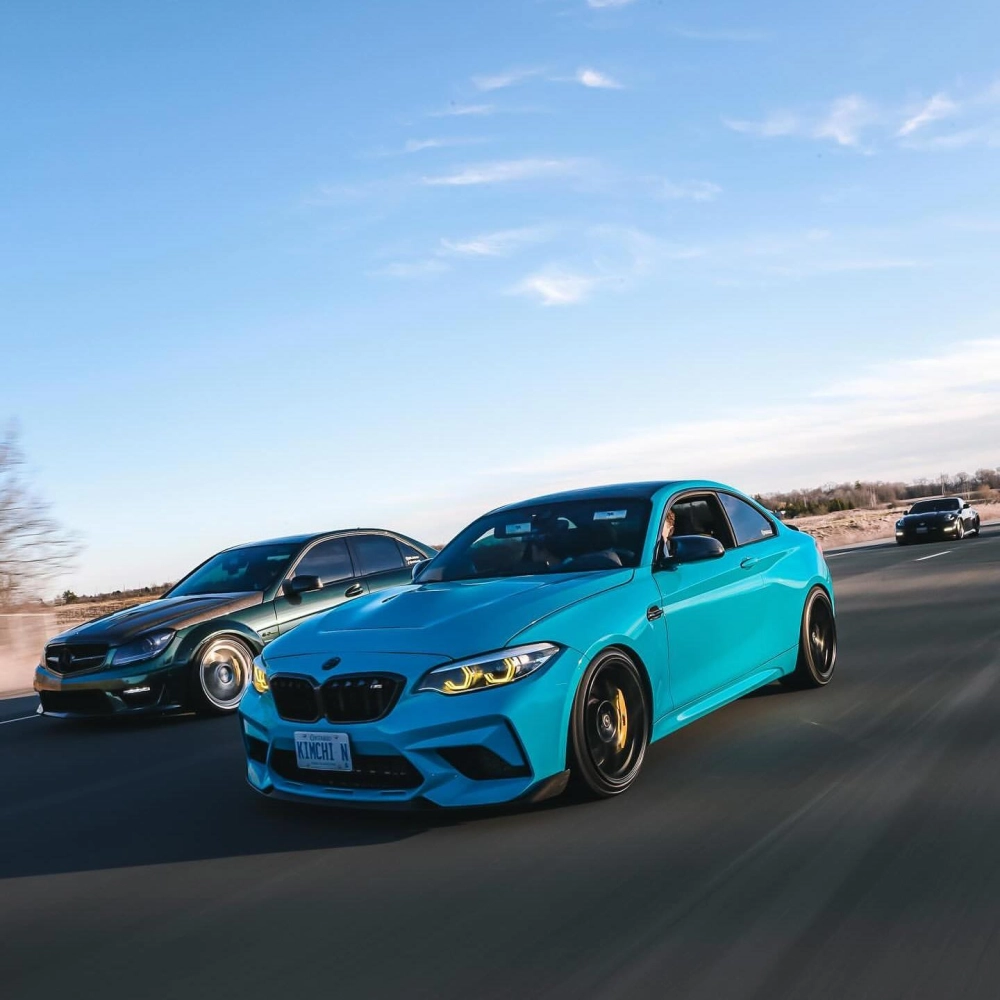
Gloss vs Satin vs Matte Miami Blue: Which Finish Should You Choose?
The same blue color can create dramatically different impressions depending on its surface finish.
For customers exploring vinyl wrap options, selecting the right finish is almost as important as selecting the color itself.
Gloss Miami Blue
Gloss is the most natural choice for recreating the vibrant Porsche-inspired appearance.
Its reflective surface emphasizes saturation and body contours.
Advantages:
- Closest visual direction to conventional glossy automotive paint
- Strong reflections and vibrant color
- Excellent match for sports cars
- Creates a clean, polished appearance
Limitations:
- Swirl marks and surface contamination may be more visible
- Requires careful washing to preserve appearance
- Strong reflections can make installation imperfections easier to notice
Satin Miami Blue
Satin finishes create a softer reflection than gloss without completely eliminating sheen.
This can make Miami Blue appear slightly more restrained.
Advantages:
- Contemporary custom appearance
- Reduced sharp reflections
- Complements modern sedans and SUVs
Limitations:
- Less faithful to the familiar glossy Porsche-inspired appearance
- Surface sheen can change if inappropriate polishing products are used
Matte Miami Blue
Matte finishes reduce reflections and emphasize a flatter visual texture.
However, reducing gloss can also change the perceived intensity of Miami Blue.
Advantages:
- Distinctive custom appearance
- Less reflective surface
- Suitable for unconventional styling projects
Limitations:
- May look less vivid than gloss
- Requires finish-specific cleaning products
- Glossy stains or polished patches may be difficult to correct
Finish Comparison
| Feature | Gloss | Satin | Matte |
|---|---|---|---|
| Color vibrancy | Very high | High | Moderate |
| Surface reflection | Strong | Soft | Minimal |
| Porsche-inspired look | Excellent | Moderate | Limited |
| Visual emphasis on body curves | Strong | Balanced | Subtle |
| Styling character | Sporty | Contemporary | Custom |
These ratings are editorial assessments of appearance, not measured performance rankings.
Our recommendation: If your primary goal is achieving the recognizable Miami Blue sports-car aesthetic, start with a gloss finish.
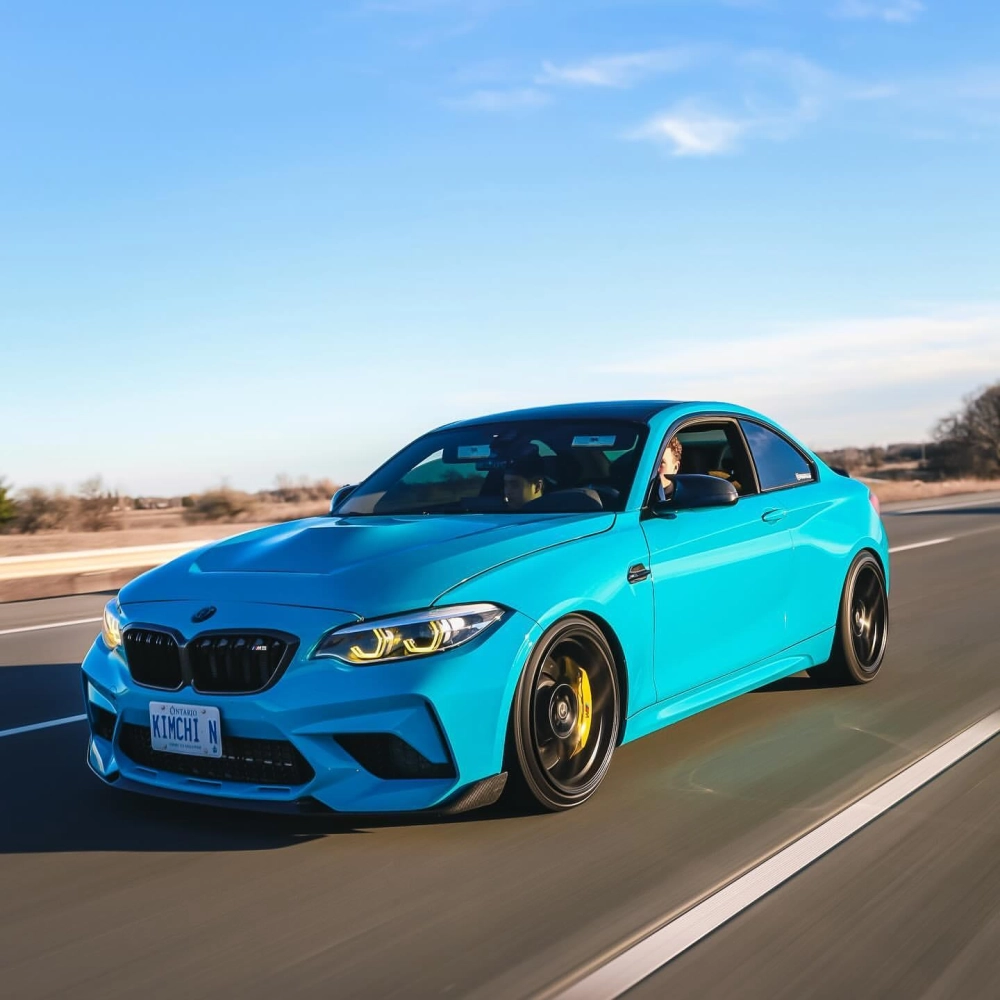
Miami Blue vs Other Popular Blue Car Wrap Colors
Miami Blue is frequently confused with other bright blue automotive colors.
However, several alternatives create distinctly different visual effects.
| Color | Color characteristics | Styling personality |
|---|---|---|
| Miami Blue | Saturated cyan-blue with turquoise influence | Vibrant, sporty |
| Tiffany Blue | Lighter, softer blue-green | Playful, elegant |
| Riviera Blue | Strong, vivid blue with a less turquoise appearance | Classic performance |
| Nardo-style blue-grey | Muted, grey-influenced blue | Understated, modern |
| Royal Blue | Deeper, more traditional blue | Refined, bold |
Miami Blue vs Tiffany Blue
Tiffany Blue generally appears lighter and softer, with a more noticeable pastel or green-blue character.
Miami Blue is typically more saturated and sportier.
Miami Blue vs Riviera Blue
Riviera Blue and Miami Blue share a connection to Porsche-inspired styling.
Riviera Blue generally presents a stronger conventional blue character, while Miami Blue leans further toward cyan.
Miami Blue vs Royal Blue
Royal Blue offers a deeper and more traditional appearance.
Miami Blue is brighter and more expressive, particularly under direct sunlight.
Buying tip: Color names are not universal color standards across vinyl manufacturers. Compare actual samples rather than assuming that identically named films will look identical.
Pros and Cons of Miami Blue Car Wrap
A Miami Blue wrap offers several practical and aesthetic advantages, but it is not the ideal choice for every driver.
Pros
Distinctive visual identity
Miami Blue creates an instantly recognizable look that stands apart from conventional automotive blues.
Excellent compatibility with black accents
Black wheels, carbon fiber trim, and dark exterior details can create a balanced, sporty combination.
Non-permanent color customization
A professionally installed vinyl wrap can change a vehicle’s appearance without requiring a permanent repaint.
Flexible styling options
Miami Blue can be applied to full vehicles or selected components, including mirrors, hoods, and accent panels.
Potential protection against minor surface wear
Automotive vinyl can act as a sacrificial layer against some light abrasion and environmental contamination, although it does not provide the same impact protection as dedicated paint protection film.
Cons
Bright color may not suit every preference
Drivers who prefer understated luxury styling may find Miami Blue too attention-grabbing.
Color matching can be difficult
Different brands may interpret Miami Blue differently, making exact matching between film and factory paint challenging.
Maintenance is important
Gloss finishes can show dirt, swirl marks, and improper cleaning more readily than some less reflective surfaces.
Wrap longevity varies
Exposure to sunlight, heat, washing chemicals, and installation quality can influence service life.
Existing paint condition matters
Damaged, poorly repaired, or peeling paint can affect adhesion and increase the risk of paint damage during removal.
Who Should Choose Miami Blue?
Miami Blue is particularly suitable for drivers who enjoy vibrant automotive styling, Porsche-inspired colors, and strong contrast between body panels and exterior trim.
It may be less suitable for owners seeking a discreet appearance, an exact factory paint match without sample verification, or a maintenance-free exterior finish.
Miami Blue Vinyl Wrap vs Automotive Repainting
A common question is whether it makes more sense to wrap a car in Miami Blue or repaint it.
The answer depends on budget, ownership plans, paint condition, and the desired result.
| Factor | Miami Blue vinyl wrap | Miami Blue repaint |
|---|---|---|
| Color change | Reversible under suitable conditions | Permanent |
| Original paint | Generally retained beneath film | May require surface preparation or repainting |
| Finish options | Gloss, satin, matte where available | Depends on paint system |
| Installation | Usually less invasive | More extensive preparation |
| Exact factory color matching | Requires sample verification | Possible with appropriate paint formulation |
| Maintenance | Film-specific care | Paint-specific care |
| Removal | Professional removal possible | Requires refinishing to change |
A wrap can be particularly appealing for owners who want to explore a bright color without permanently altering the vehicle.
However, wrapping is not a substitute for repairing damaged paint.
A high-quality repaint may be more appropriate when the original finish is severely deteriorated or when exact paint-system restoration is the priority.
How Much Miami Blue Vinyl Wrap Do You Need?
Ordering the correct amount of film is essential for avoiding unnecessary waste and unexpected installation delays.
At ALUKOVINYL, a standard full roll measures approximately 59 ft × 5 ft (18 m × 1.52 m).
The actual material requirement depends on the vehicle’s dimensions, panel complexity, installation method, and whether the roof is included.
Estimated Material Requirements
| Vehicle category | Illustrative film length |
|---|---|
| Compact coupe | 49–59 ft |
| Standard sedan | 59–69 ft |
| Sports coupe | 59–69 ft |
| Midsize SUV | 69–79 ft |
| Large SUV or pickup | 79–89+ ft |
These are planning estimates, not verified cut plans for specific vehicles. Large bumpers, wide fenders, spoilers, installation errors, and directional film layouts may require additional material.
Three Factors That Affect Wrap Consumption
1. Panel geometry
Complex bumpers, wide rear quarters, and deep recesses may require larger pieces and additional material.
2. Installation experience
Beginners may need extra film for practice and replacement panels.
3. Wrapping coverage
A full color change involving door jambs and other hidden areas requires more material than a standard exterior-only wrap.
For consistent results, plan the cutting layout before ordering and use material from the same production batch whenever possible.
What Should You Look for in a Miami Blue Vinyl Wrap?
Not all Miami Blue wraps are manufactured with identical materials or adhesive systems.
Before purchasing, consider the following characteristics.
1. Color Consistency
Large panels should maintain a uniform appearance.
Color differences between batches can become noticeable on adjacent doors, fenders, and bumpers.
2. Surface Quality
Gloss films should be inspected for unwanted texture, haze, and visible defects.
A smoother surface generally helps create cleaner reflections.
3. Adhesive Performance
A repositionable adhesive can make alignment easier during installation.
Air-release channels may also help installers manage trapped air, although proper application technique remains essential.
4. Conformability
Vehicle wraps must accommodate curves, edges, and complex body contours.
Material construction, heat management, and adhesive design all influence installation behavior.
5. Verified Durability
Evaluate product-specific technical specifications, warranty conditions, and maintenance instructions rather than relying solely on broad longevity claims.
How Does ALUKOVINYL Miami Blue Compare With Premium Wrap Brands?
Established manufacturers such as 3M and Avery Dennison provide useful technical benchmarks for evaluating automotive wrapping materials.
For example, 3M’s Wrap Film Series 2080 uses Controltac and Comply adhesive technologies, while Avery Dennison publishes technical instructions covering application conditions and surface preparation.
ALUKOVINYL offers a dedicated Gloss Miami Blue product with a repositionable acrylic adhesive and air-release design.
Technical Comparison
| Attribute | ALUKOVINYL Gloss Miami Blue | 3M 2080 | Avery Dennison Supreme Wrapping Film |
|---|---|---|---|
| Product type | Color-change vinyl | Cast vehicle wrapping film | Cast vehicle wrapping film |
| Miami Blue color | Listed product | Exact shade requires catalog verification | Exact shade requires catalog verification |
| Air-release system | Product-listed air-release design | Comply technology | Easy Apply technology on applicable products |
| Repositioning | Product-listed repositionable adhesive | Controltac technology | Product-dependent adhesive system |
| Application | Dry application | Product-specific instructions | Product-specific instructions |
| Durability | Product lists 5–7 years expected | Up to 8-year vertical warranty under applicable conditions | Depends on film and region |
Important comparison note: These specifications are manufacturer-published information, not results from independent side-by-side laboratory testing. The products also differ in construction and warranty terms, so the figures should not be treated as directly equivalent.
ALUKOVINYL’s published Miami Blue specifications list a recommended application temperature of +15°C to +40°C and a 5–7-year expected durability range. Actual performance depends on exposure, installation, maintenance, and film conditions.
3M’s warranty figures apply to qualifying 2080 products and installation conditions; they are not warranties for ALUKOVINYL products.
For customers choosing primarily by color, obtaining physical samples and evaluating their appearance under real-world lighting remains one of the most valuable steps.
Miami Blue Car Wrap Installation and Care Tips
Even a visually attractive vinyl film can perform poorly when installed incorrectly.
Proper surface preparation, temperature management, and maintenance are essential.
Before Installation
Inspect the vehicle’s paint for scratches, peeling clear coat, corrosion, and previous repairs.
Wash and decontaminate the surface thoroughly.
Remove wax, grease, and other substances that may interfere with adhesion using cleaning methods approved for the specific film and paint.
During Installation
Work in a clean, temperature-controlled environment.
Use appropriate installation tools and follow the film manufacturer’s heating and post-heating instructions.
Avoid excessive stretching around sharp corners and deep recesses.
For complex bumpers and aerodynamic components, professional installation is recommended.
After Installation
Allow the adhesive to stabilize according to the manufacturer’s instructions before washing.
Use gentle cleaning methods and avoid abrasive brushes.
Remove bird droppings, insects, and other contaminants promptly.
Whenever practical, park in a garage or shaded location to reduce prolonged UV and heat exposure.
Industry reference: Avery Dennison’s vehicle-wrap maintenance bulletin recommends avoiding washing during the first 48 hours for its specified films and cleaning regularly afterward. Always follow the instructions for the actual material installed.
How Long Does a Miami Blue Car Wrap Last?
The lifespan of a Miami Blue vinyl wrap depends on film construction, installation quality, climate, vehicle storage, and maintenance.
ALUKOVINYL’s Gloss Miami Blue product lists an expected durability of 5–7 years.
However, this should not be interpreted as a guarantee that every installation will retain its original appearance for that entire period.
Horizontal panels such as roofs and hoods generally receive more direct sunlight than vertical doors, which can contribute to differences in aging.
3M’s technical documentation similarly distinguishes between horizontal and vertical exposure when discussing wrap performance and warranty coverage.
For owners in particularly hot or sunny climates, careful maintenance and covered parking can help reduce environmental stress.
Frequently Asked Questions About Miami Blue Car Wrap
Is Miami Blue more blue or turquoise?
Miami Blue is primarily a vivid cyan-blue with turquoise undertones. Its exact appearance depends on the material formulation, surface finish, and lighting conditions.
Is Miami Blue a Porsche color?
Yes. Miami Blue is strongly associated with Porsche and has appeared as a factory paint color on Porsche models. Vinyl manufacturers also offer Porsche-inspired versions of the shade.
Can I wrap a BMW in Miami Blue?
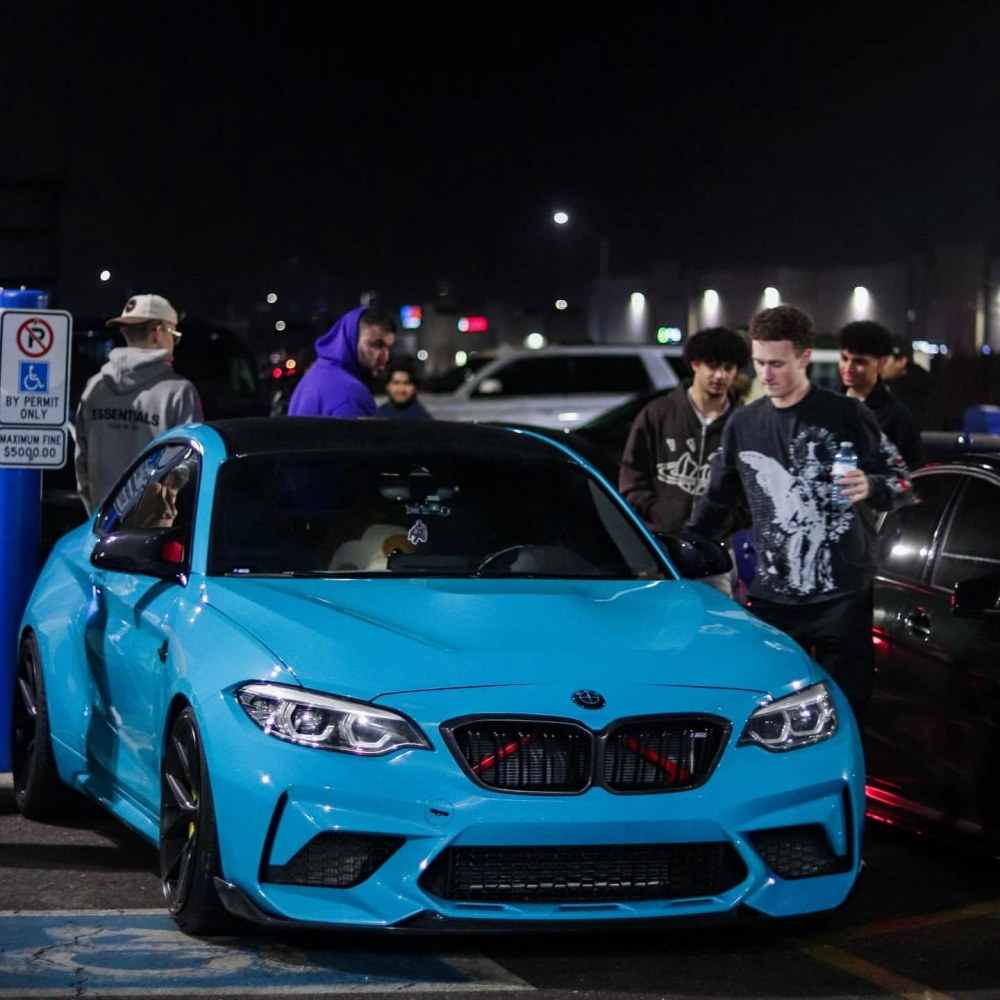
Absolutely. Miami Blue can complement BMW models such as the M2, M3, M4, and other sporty vehicles. Dark wheels and black exterior accents are particularly effective combinations.
Does Miami Blue look good on a Tesla?
Yes. The color works well with the minimalist styling of Tesla vehicles, especially the Model 3 and Model Y. Gloss Miami Blue can create a clean, vibrant appearance.
Is Miami Blue the same as Tiffany Blue?
No. Tiffany Blue generally has a lighter, softer blue-green character, while Miami Blue is more saturated and visually sporty.
Is gloss or matte better for Miami Blue?
Gloss is generally the preferred finish for recreating the familiar Porsche-inspired Miami Blue appearance. Matte offers a different custom aesthetic but can reduce the perceived vibrancy of the color.
Will Miami Blue vinyl wrap damage my original paint?
A properly installed and removed wrap is generally suitable for sound, fully cured OEM paint. However, damaged, poorly repaired, or previously repainted surfaces can present additional risks. Professional inspection is recommended.
Can Miami Blue vinyl wrap protect against rock chips?
Vinyl wrap may provide limited resistance to minor surface abrasion, but it is not designed to offer the same impact protection as dedicated TPU paint protection film.
How much vinyl do I need to wrap my entire car?
Many standard sedans require approximately 59–69 ft of 5-ft-wide material, while larger vehicles may require more. Exact requirements depend on panel dimensions, coverage, and installation complexity.
Can I remove Miami Blue vinyl wrap later?
Automotive vinyl wraps are designed to be removable under appropriate conditions. Removal difficulty depends on film age, adhesive condition, paint quality, and environmental exposure.
Final Verdict: Is Miami Blue Worth Choosing?
Miami Blue remains a compelling choice for drivers who want a vibrant, Porsche-inspired automotive appearance without committing to a permanent repaint.
Its combination of cyan undertones, strong saturation, and compatibility with dark exterior accents makes it particularly effective on sports cars, performance sedans, and modern electric vehicles.
For most buyers seeking the recognizable Miami Blue aesthetic, a gloss finish is the strongest starting point.
However, selecting the right film requires more than choosing a color name. Evaluate the actual shade, material specifications, paint condition, installation requirements, and long-term maintenance expectations before purchasing.
Transform Your Car With ALUKOVINYL Miami Blue
Ready to give your vehicle a distinctive new look?
At ALUKOVINYL, we offer a wide selection of automotive color-change films designed for different styling preferences and vehicle applications.
Explore our Gloss Miami Blue Car Vinyl Wrap for a vibrant, Porsche-inspired finish, or browse our wider blue car wrap options to discover additional shades and styles.
Whether you’re customizing a Porsche 911, BMW M4, Tesla Model 3, or another vehicle, choosing the right shade and finish can completely transform its visual identity.
Explore Miami Blue at ALUKOVINYL and find the color that matches your vision.