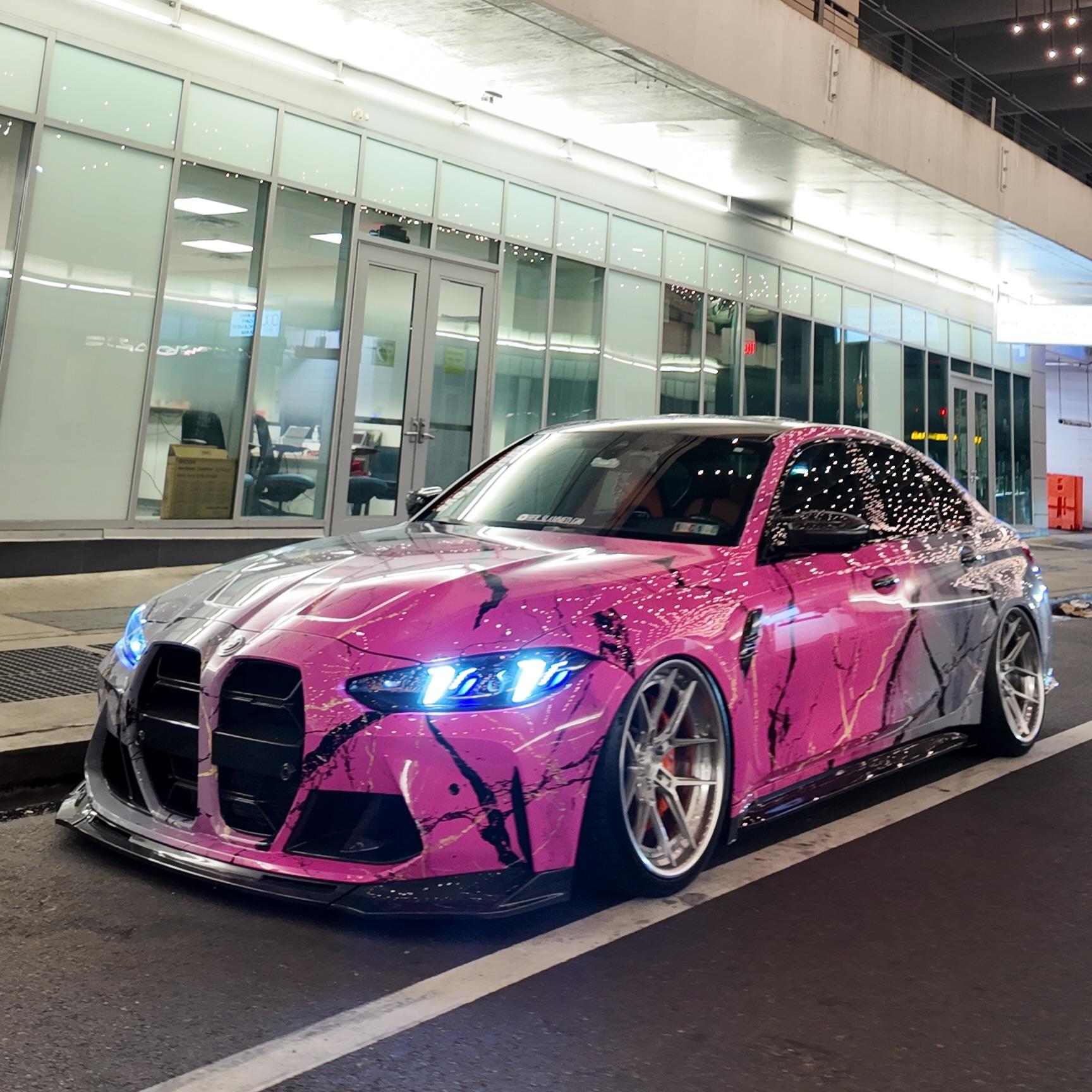
A marble car wrap can transform an ordinary vehicle into a rolling piece of art. Inspired by natural stone, marble-pattern vinyl combines flowing veins, contrasting colors, and organic textures to create a distinctive finish that traditional solid-color paint rarely achieves.
From elegant white marble designs on a Tesla Model 3 to dramatic black-and-gold marble patterns on a Dodge Challenger, this custom vehicle styling trend offers opportunities for personal expression.
But is a marble car wrap practical for everyday driving? How does it compare with a conventional vinyl wrap, and which vehicles showcase marble patterns best?
In this guide, ALUKOVINYL explores the design possibilities, benefits, limitations, installation considerations, and ownership costs of marble-inspired vehicle wraps.
What Is a Marble Car Wrap?
A marble car wrap is an automotive vinyl film featuring a printed or specially designed pattern that imitates the veining, color variations, and visual texture of natural marble. It is applied over a vehicle’s painted exterior to create a customized appearance without permanently repainting the body.
Unlike conventional solid-color wraps, marble designs typically incorporate multiple shades and irregular patterns to reproduce the natural movement of stone.
Popular variations include:
- White marble car wrap: White or light gray backgrounds with subtle gray veining.
- Black marble car wrap: Dark surfaces with white, silver, or gold veins.
- Gold marble car wrap: Cream, black, or white foundations with metallic-looking gold accents.
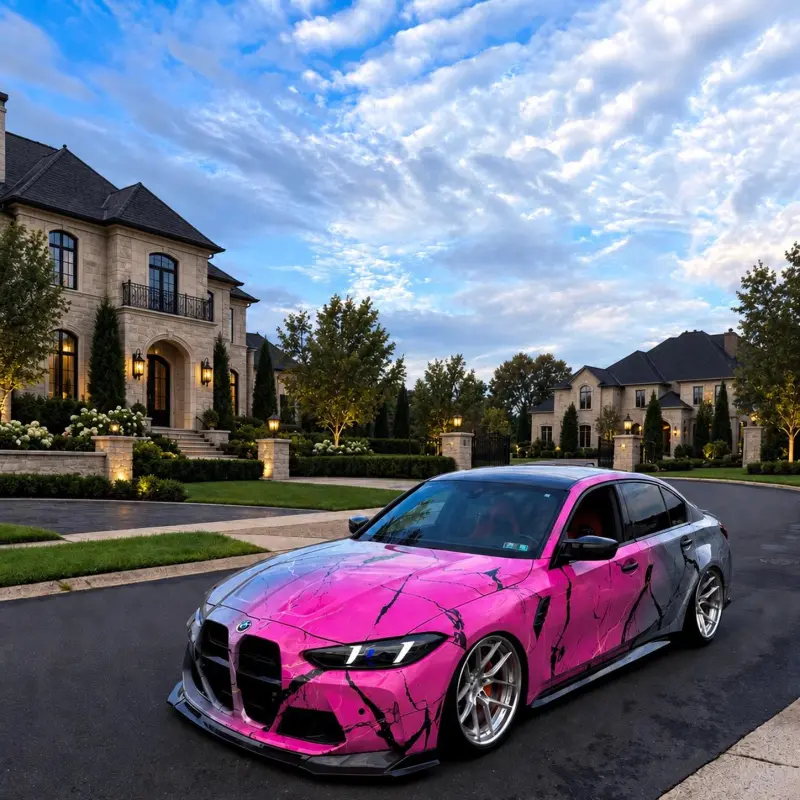
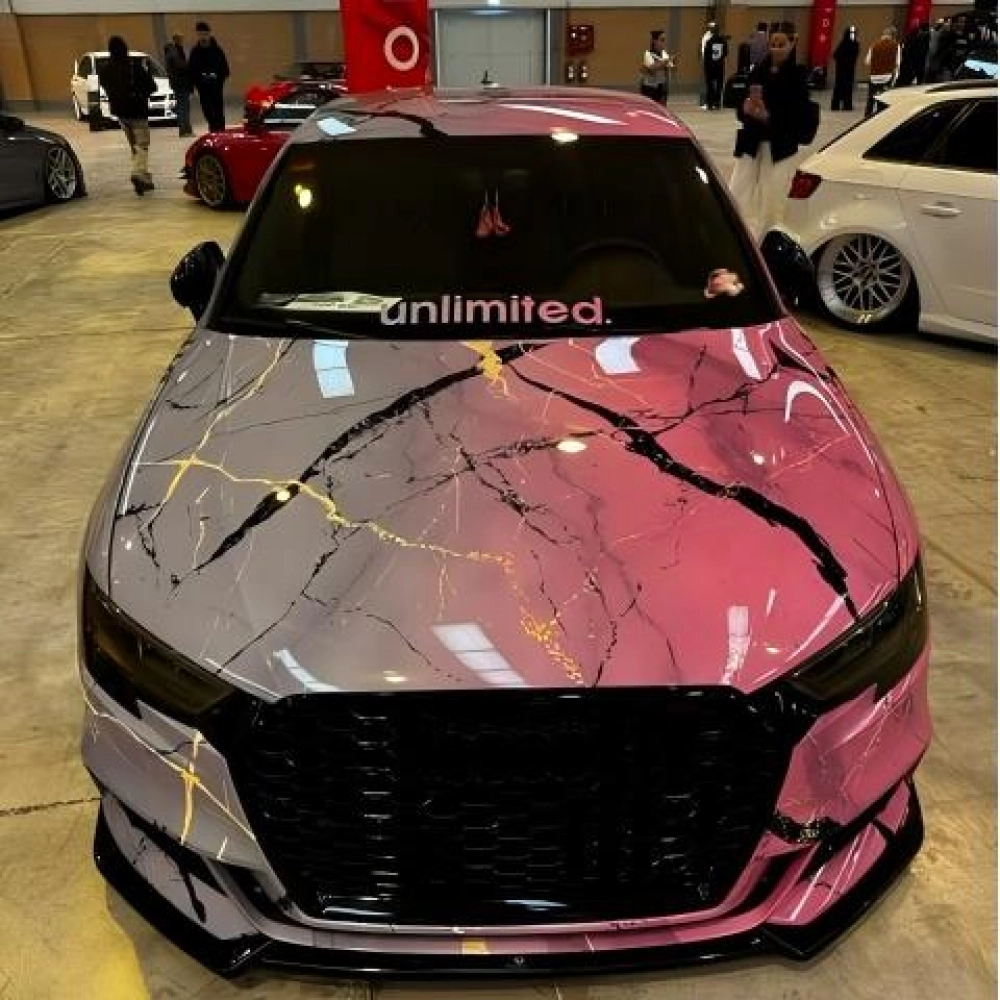
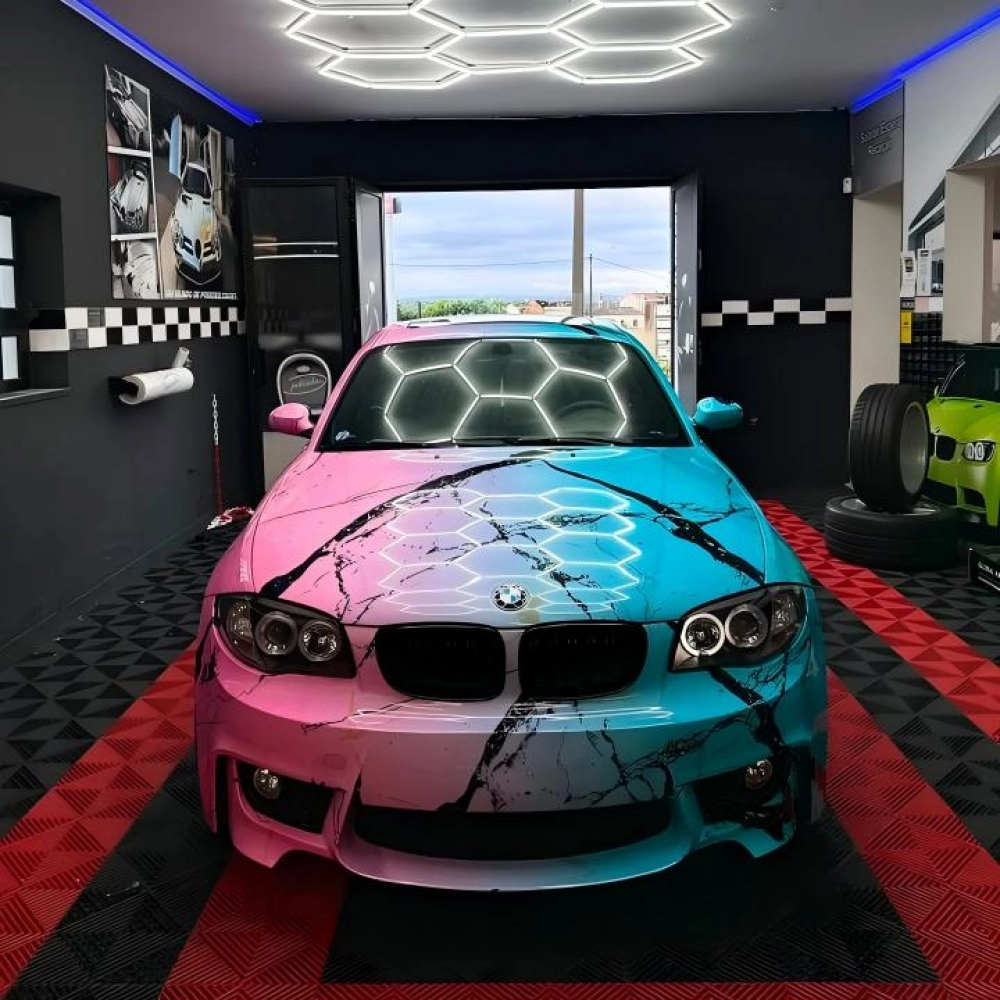
- Pink marble car wrap: Soft pink tones with white or rose-gold-inspired details.
- Blue marble car wrap: Ocean-inspired blue backgrounds with flowing white veins.
- Purple marble car wrap: Rich violet shades with contrasting stone-like patterns.
Most marble designs are created using printed automotive wrap film rather than naturally patterned solid-color vinyl.
The final appearance depends on the artwork, printing technology, laminate, surface finish, and installation quality.
Why Are Marble Car Wraps Different From Traditional Vinyl Wraps?
A standard car wrap usually emphasizes one color or finish, such as gloss black, satin gray, or metallic purple.
A marble vinyl wrap emphasizes pattern, movement, and visual contrast.
This distinction matters because marble designs interact with vehicle body lines differently from uniform colors.
For example, a black marble wrap with gold veining can visually emphasize the long hood of a Ford Mustang, while a white marble design can soften the angular styling of a Tesla Model Y.
Three characteristics make marble wraps particularly distinctive.
1. Every Design Can Have a Different Pattern
Natural marble rarely contains perfectly repeated lines. A convincing marble car wrap should reflect that irregularity.
Custom graphics allow vehicle owners to choose:
- Fine, subtle veining or bold stone patterns.
- High-contrast or understated color combinations.
- Vein direction and placement.
- Glossy, satin, or matte surface treatments, where compatible with the chosen film and laminate.
For premium-looking results, avoid repeating the same small marble pattern across every body panel.
2. Marble Patterns Can Complement Vehicle Geometry
Vehicle body shape influences how marble designs appear.
Large, uninterrupted surfaces allow broad veins to flow naturally, while complex bumpers and sharply curved panels may interrupt the pattern.
A successful marble car wrap therefore requires more than choosing an attractive design. It also requires planning how the artwork moves across the vehicle.
3. Marble Designs Offer Greater Personalization
Unlike many factory paint colors, custom marble wraps can combine unusual tones and graphic effects.
A customer might request white marble with delicate gold veins, while another might prefer black marble with bold purple streaks.
This flexibility makes marble-inspired wraps especially attractive to enthusiasts who want a distinctive appearance.
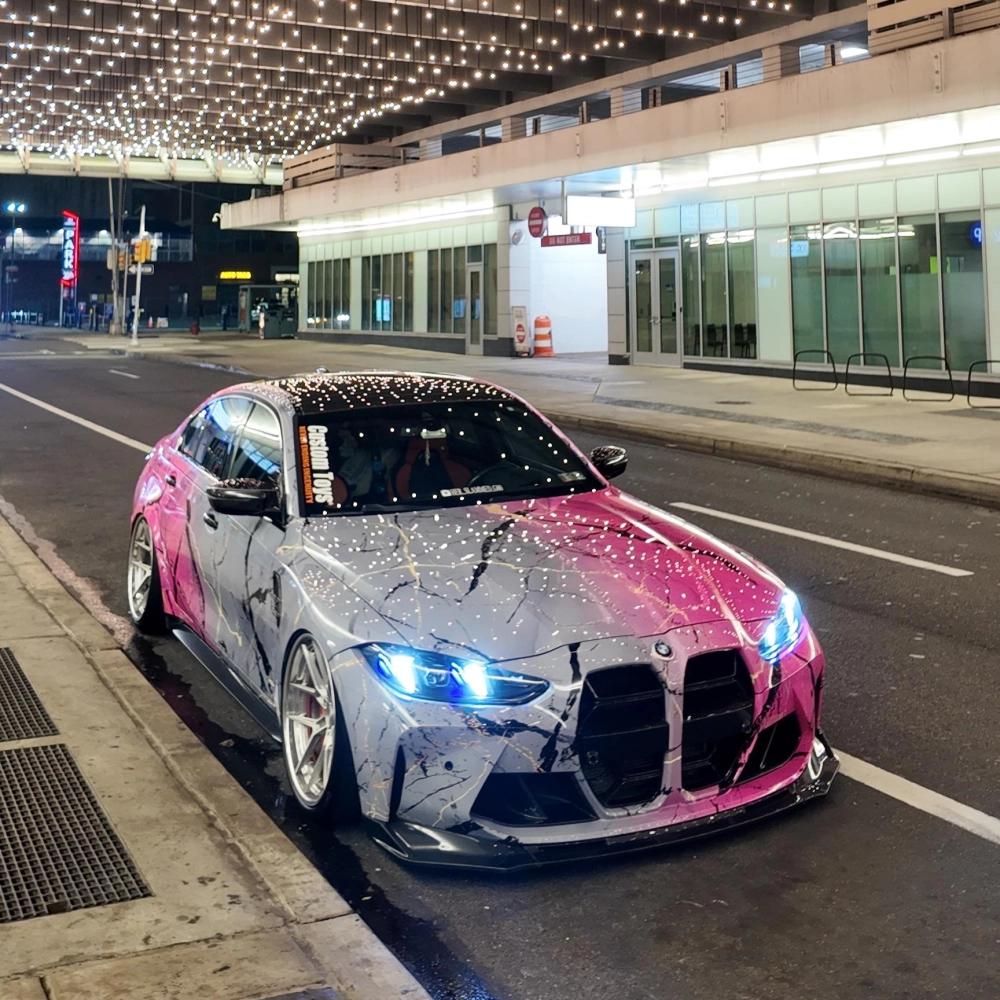
Marble Car Wrap Pros and Cons: Is It Worth It?
Before choosing a marble design, consider both the visual advantages and practical limitations.
Advantages of a Marble Car Wrap
Unique visual identity
Marble patterns are less conventional than common solid-color wraps, making them suitable for show cars, promotional vehicles, and personalized builds.
Customization flexibility
Customers can adjust colors, vein density, pattern scale, and placement to suit their vehicles.
Reversible appearance change
Professionally installed automotive vinyl can generally be removed, allowing owners to return to the original painted appearance, provided the underlying paint is sound and removal is performed correctly.
Protection against minor surface exposure
A vinyl wrap provides a physical covering over the painted surface and may help reduce some superficial wear. However, it should not be treated as equivalent to dedicated paint protection film.
Potentially less permanent than repainting
For owners who want complex custom graphics without permanently changing the vehicle’s paint, vinyl wrapping can be an attractive alternative.
Disadvantages of a Marble Car Wrap
More demanding pattern alignment
Marble veins may need to continue across doors, fenders, and other adjacent panels. Poor alignment can make the design appear fragmented.
Complex printing requirements
Custom designs require suitable artwork resolution, accurate color management, and careful print preparation.
Possible pattern distortion
Excessive stretching during installation can distort marble veins, particularly around mirrors, bumpers, and recessed areas.
Visible damage may require reprinting
A replacement panel must match the existing pattern and color. This can be more complicated than replacing a plain-color wrap.
Maintenance still matters
Marble wraps remain vulnerable to scratches, staining, UV exposure, and improper cleaning. Printed designs and their laminates may age differently depending on material quality and environmental conditions.
Verdict: A marble car wrap is worth considering when customization and visual individuality matter more than having the simplest possible installation or repair process.
Marble Car Wrap vs. Solid Color Wrap vs. Custom Paint
Choosing between marble vinyl, traditional vinyl, and custom paint requires balancing design freedom, maintenance, installation complexity, and long-term ownership goals.
| Feature | Marble Car Wrap | Solid Color Vinyl Wrap | Custom Paint |
|---|---|---|---|
| Appearance | Stone-inspired graphic patterns | Uniform or specialty color finish | Solid colors or painted custom graphics |
| Customization | High with printed artwork | Depends on available colors | High, depending on painter |
| Installation | Requires print and pattern planning | Generally more straightforward | Requires paint preparation and refinishing |
| Reversibility | Usually removable | Usually removable | Not readily reversible |
| Panel replacement | Pattern matching may be necessary | Color and batch matching | Paint blending may be required |
| Paint preservation | Covers original paint | Covers original paint | Changes the painted finish |
| Best for | Personalized artistic styling | Clean color transformations | Permanent custom finishes |
Is Marble Vinyl Better Than Custom Paint?
Neither option is universally better.
A marble car wrap is particularly attractive when a driver wants to experiment with a distinctive pattern without committing to a permanent paint finish.
Custom paint may be more appropriate for owners seeking a long-term, integrated finish and willing to invest in professional refinishing.
The better choice depends on budget, expected ownership duration, surface condition, and the complexity of the desired artwork.
Best Marble Car Wrap Colors for Different Styles
Marble designs can create dramatically different impressions depending on the chosen color combination.
White Marble Car Wrap: Clean and Sophisticated
White marble with gray veining creates a restrained, architectural appearance.
It works particularly well on modern sedans and electric vehicles with smooth exterior surfaces.
Recommended vehicles include the Tesla Model 3, BMW 5 Series, and Mercedes-Benz E-Class.
For a refined look, choose fine gray veins and a controlled pattern density rather than oversized contrasting graphics.
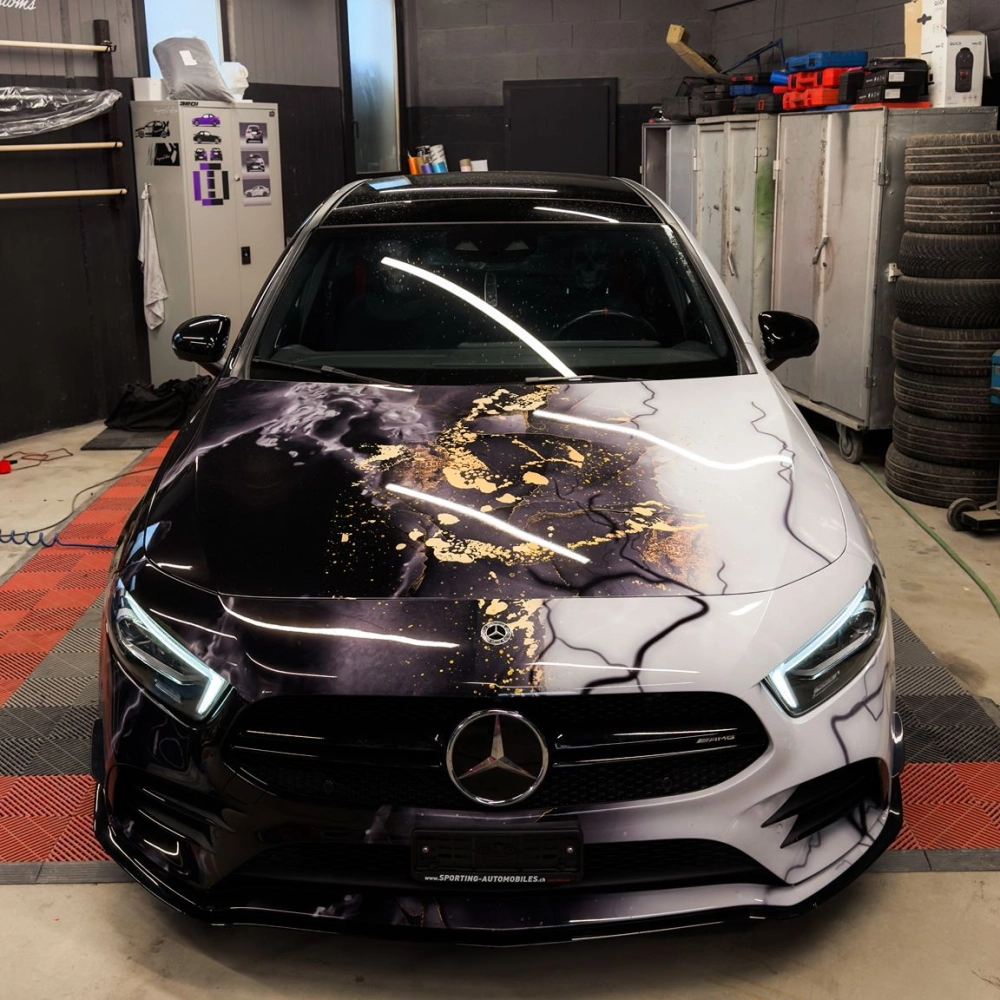
Black and Gold Marble Car Wrap: Dramatic Luxury
Black marble with gold-colored veining creates a striking, high-contrast aesthetic.
This combination can complement performance coupes, muscle cars, and large luxury vehicles.
Recommended vehicles include the Dodge Challenger, Ford Mustang GT, and Mercedes-AMG GT.
A gloss finish can emphasize the contrast, while a compatible satin laminate may create a more understated appearance.
Gold-colored printed veins should not be confused with genuine reflective metallic foil or chrome.
Pink Marble Car Wrap: Artistic and Contemporary
Pink marble designs combine softer colors with expressive graphic details.
They can range from pale blush pink with white veins to stronger rose tones with dark accents.
Recommended vehicles include the Porsche 718 Cayman, Mini Cooper, and BMW 4 Series Coupe.
A restrained vein pattern often creates a more polished result than excessively dense graphics.
Blue Marble Car Wrap: Fluid and Sporty
Blue marble designs can resemble ocean currents, mineral formations, or abstract flowing stone.
Recommended vehicles include the Nissan Z, Toyota GR Supra, and Chevrolet Corvette.
Larger sweeping veins can complement long hoods and sculpted body panels.
Purple Marble Car Wrap: Bold and Individual
Purple marble combines rich color with organic pattern movement.
A dark purple foundation with silver or pale lavender veining can create a distinctive appearance without relying on extremely bright colors.
Recommended vehicles include the Dodge Charger, BMW M4, and Nissan GT-R.
For these vehicles, consider orienting major veins along the hood and side panels to complement their performance-oriented proportions.
Which Cars Look Best With a Marble Car Wrap?
The best vehicle for a marble car wrap is not necessarily the most expensive one.
What matters most is the relationship between the marble pattern, body shape, panel dimensions, and overall design concept.
Tesla Model 3 and Model Y: Minimalist Marble Styling
Tesla vehicles provide relatively clean exterior surfaces that can showcase subtle marble patterns.
A white marble car wrap with fine gray veining can create a sophisticated finish without overwhelming the vehicle’s minimalist styling.
Recommended approach: Use a restrained marble pattern with consistent visual scale across the hood, doors, and rear quarter panels.
BMW M3 and M4: Sporty Marble Graphics
BMW performance models combine prominent body contours with strong visual proportions.
Black marble with silver veining or white marble with dark gray veins can complement these shapes.
Recommended approach: Position the major marble veins to flow across the hood and side panels, while keeping highly distorted graphics away from complex bumper recesses.
Dodge Challenger and Charger: Bold Black Marble
Muscle cars provide broad body surfaces and visually assertive styling.
Black-and-gold marble or purple-and-black marble can produce a dramatic result.
Recommended approach: Use larger marble veins rather than very small repeating textures, especially across the hood and doors.
Porsche 911: Refined Marble Design
The Porsche 911 has a recognizable curved silhouette that benefits from careful graphic planning.
Fine white-and-gray marble or dark marble with subtle contrasting veins may complement the car without overpowering its shape.
Recommended approach: Prioritize balanced vein placement around the front fenders, curved hood, and rear bodywork.
Jeep Wrangler and Ford Bronco: Adventure-Inspired Marble
SUVs can also carry marble-inspired graphics effectively.
A gray stone-style wrap with darker mineral veins can create an unconventional rugged appearance.
Recommended approach: Consider panel-specific artwork to manage the vehicle’s removable doors, pronounced hinges, and complex body details.
These are design recommendations rather than claims about completed customer installations. The final result should always be evaluated using a vehicle-specific digital mockup.
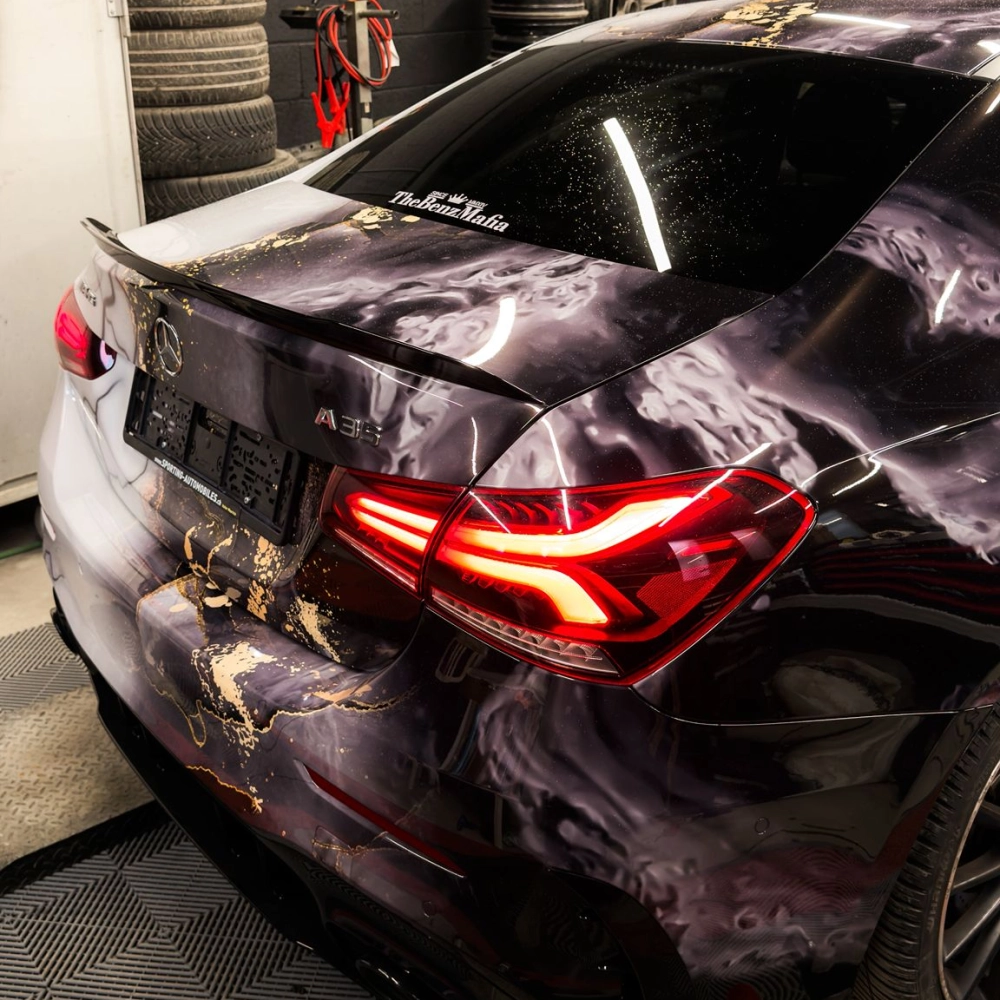
How to Design a Marble Car Wrap That Looks Premium
A visually convincing marble wrap requires attention to several details that are often overlooked.
1. Match the Vein Scale to the Vehicle
Small, tightly packed veins may look attractive on a sample but appear visually busy when enlarged across a full vehicle.
Conversely, oversized veins can lose their natural stone appearance.
A useful approach is to evaluate the artwork at both sample scale and actual vehicle scale before printing.
2. Plan the Vein Direction
Vein direction influences the perceived movement of the vehicle.
Horizontal patterns can emphasize length, while diagonal patterns may add visual energy.
For example, a long diagonal vein crossing a Mustang hood can create a more dynamic effect than a randomly repeated pattern.
3. Avoid Unnecessary Repetition
Repeated patterns can make printed marble look artificial.
When possible, use larger continuous artwork or vary the pattern across adjacent panels.
4. Choose the Surface Finish Carefully
Gloss laminates can increase perceived color depth and contrast.
Matte finishes can produce a softer stone-inspired look, while satin finishes offer a balance between low-gloss and reflective appearances.
Not every laminate is suitable for every printed film. Confirm compatibility with the wrap supplier before production.
5. Preview the Design Before Printing
A digital mockup helps identify potential problems with vein placement, panel transitions, and color balance.
For especially complex projects, printing a physical sample is useful because screen colors do not always reproduce accurately on film.
Marble Car Wrap Installation: What Makes It More Challenging?
Installing a marble car wrap requires many of the same techniques used for conventional automotive vinyl, but printed patterns introduce additional considerations.
Step 1: Inspect the Original Paint
Before installation, inspect the vehicle for:
- Peeling clear coat.
- Repainted or poorly bonded panels.
- Rust or corrosion.
- Existing paint damage.
- Contamination around edges and trim.
Vinyl wraps are not a reliable solution for damaged paint, and removal may worsen existing defects.
Step 2: Clean and Prepare the Surface
Thoroughly wash and decontaminate the vehicle using methods compatible with the paint and film manufacturer’s instructions.
Remove wax, grease, and installation contaminants before applying the film.
Step 3: Plan the Printed Panels
For marble graphics, identify the intended position of each major vein.
This is particularly important where patterns cross doors, fenders, and quarter panels.
Allow for suitable trimming and overlap margins according to the film and installation plan.
Step 4: Apply the Film Carefully
Use controlled tension and manufacturer-approved application methods.
Avoid excessive stretching, particularly where printed veins may become visibly distorted.
Heat should be applied only within the film manufacturer’s specified temperature limits.
Step 5: Inspect Edges and Pattern Continuity
After installation, check:
- Panel-to-panel vein alignment.
- Wrinkles and lifting.
- Trapped air.
- Edge adhesion.
- Graphic distortion.
- Trim and sensor clearance.
A high-quality marble car wrap should look intentional across the entire vehicle, not like unrelated printed sections placed together.
Professional installation is strongly recommended for full-body marble designs, especially on vehicles with complex curves or intricate artwork.
How Much Does a Marble Car Wrap Cost?
The cost of a marble car wrap depends on the vehicle, material, artwork preparation, printing, and installation complexity.
A custom marble wrap can involve more production work than a standard solid-color vinyl wrap because it may require custom graphic design, print proofing, lamination, and pattern alignment.
Key pricing factors include:
- Vehicle size: SUVs and large trucks generally require more material than compact cars.
- Design complexity: Custom vein placement and original artwork increase preparation time.
- Material selection: Cast films, compatible laminates, and specialty finishes have different costs.
- Installation difficulty: Complex bumpers, mirrors, and recessed panels increase labor.
- Coverage: Full wraps require more material and labor than partial wraps.
For reference, ALUKOVINYL’s standard wrap roll format is approximately 5 ft × 59 ft, equivalent to 1.52 m × 18 m.
However, custom printed wrap availability, print widths, and order quantities should be confirmed before purchasing.
A complete cost estimate should include design, materials, printing, installation, and potential future panel replacement—not just the price of the film.
How Long Does a Marble Car Wrap Last?
A marble car wrap does not have one universal lifespan.
Its durability depends on the printable film, ink system, laminate, installation quality, climate, storage conditions, and maintenance.
Vehicles exposed to intense sunlight, frequent high temperatures, road contamination, or harsh cleaning may experience faster visual degradation.
Horizontal surfaces such as roofs and hoods can also receive greater UV exposure than vertical panels.
For custom printed wraps, always request the specific film and laminate manufacturer’s durability information rather than assuming that all marble wraps last as long as solid-color products.
How to Maintain a Marble Vinyl Wrap
Proper maintenance can help preserve the appearance of the printed pattern.
- Hand wash regularly using a mild, wrap-compatible automotive cleaner.
- Remove bird droppings, insect residue, and other contaminants promptly.
- Avoid abrasive brushes, aggressive polishing compounds, and harsh solvents.
- Keep high-pressure spray away from vulnerable edges and seams, following manufacturer guidance.
- Use wrap-compatible protection products only when approved for the film and laminate.
- Park in shade or covered parking when practical.
Avoid applying conventional paint polishing techniques to matte or satin wrap finishes unless specifically approved by the film manufacturer.
Marble Car Wrap vs. Carbon Fiber Wrap: Which Should You Choose?
Marble and carbon fiber wraps serve different styling goals.
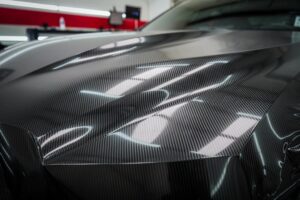
A marble car wrap emphasizes artistic individuality and stone-inspired luxury, while carbon fiber wrap emphasizes a woven composite appearance associated with motorsport and performance styling.
| Consideration | Marble Car Wrap | Carbon Fiber Wrap |
|---|---|---|
| Visual identity | Organic stone patterns | Repeating woven texture |
| Styling direction | Artistic, luxury, custom | Sporty, technical, performance |
| Color flexibility | Highly customizable | Often black, gray, or specialty colors |
| Best applications | Full wraps and custom accents | Hoods, roofs, trim, and full wraps |
| Pattern planning | Vein continuity is important | Weave direction is important |
| Customization | High with printed graphics | Depends on film type |
Choose marble if you want an unconventional, expressive appearance.
Choose carbon fiber if you prefer a more technical or motorsport-inspired design.
For owners interested in both, selective carbon fiber accents may complement a marble body wrap, provided the combination is visually balanced.
What Do Professional Wrap Standards Tell Us About Marble Wraps?
A marble pattern does not change the fundamental requirements for automotive wrap film.
Professional results still depend on appropriate film selection, paint condition, preparation, installation, and maintenance.
Established manufacturers such as 3M and Avery Dennison publish technical information for vehicle wrapping materials, including application requirements and product limitations.
Their documentation provides useful reference points when evaluating custom printed wrap systems.
For example:
- 3M: Product bulletins for printable wrap films, including IJ180mC-series products, discuss application suitability and performance considerations.
- Avery Dennison: Supreme Wrapping Film technical literature provides reference information about automotive color-change films, although those products are not automatically equivalent to printable marble graphics.
- ALUKOVINYL: Offers vehicle styling and customization options for customers seeking distinctive color and design concepts.
These are different product categories, not the results of an independent side-by-side durability test.
A credible comparison should use the exact film, ink, laminate, and installation specifications rather than assuming that all wraps from a brand perform identically.
For technical reference, consult the official resources from 3M and Avery Dennison Graphics Solutions.
Frequently Asked Questions About Marble Car Wraps
Can you wrap an entire car in marble vinyl?
Yes. A full marble car wrap can cover the hood, roof, doors, fenders, bumpers, and other suitable painted exterior panels. Complex surfaces require careful planning to maintain pattern continuity.
Is a marble car wrap more expensive than a regular wrap?
It can be. Custom artwork, printing, lamination, and pattern alignment may increase production and installation costs compared with a straightforward solid-color wrap.
Can a marble car wrap damage the original paint?
Properly installed and removed vinyl is generally intended for sound, compatible automotive paint. However, damaged, poorly repaired, or improperly cured paint may lift during removal.
Is a marble car wrap waterproof?
Automotive wrap films are designed for exterior exposure, including rain, when properly installed. However, they do not waterproof the vehicle or guarantee that moisture cannot reach seams and edges.
Can I customize the marble colors?
Yes. Printed marble designs can incorporate different backgrounds, veins, and color combinations, subject to printing capabilities and material availability.
Can I choose a matte marble car wrap?
Yes, if the selected printable film and compatible matte laminate support the desired application. Matte finishes create a softer, less reflective stone-inspired appearance.
Is a marble wrap suitable for a Tesla?
Yes. Tesla Model 3 and Model Y vehicles are strong design candidates because their relatively clean exterior surfaces can showcase continuous marble patterns. Installation complexity still varies by panel.
Can I install a marble car wrap myself?
Experienced installers may be able to apply custom printed wraps, but full-body marble designs are more challenging for beginners because pattern alignment and distortion control are important.
Can a marble wrap be removed?
Most automotive vinyl wraps are designed to be removable under appropriate conditions. Ease of removal depends on the film, adhesive, installation history, age, and underlying paint condition.
Does marble vinyl protect against rock chips?
A vinyl wrap may provide limited resistance to superficial contact, but it is not a substitute for purpose-designed paint protection film when impact protection is the main objective.
Create Your Own Marble Car Wrap With ALUKOVINYL
A marble car wrap is more than a color change. It offers an opportunity to combine organic stone patterns with modern automotive design.
Whether you prefer understated white marble, dramatic black-and-gold veining, or a personalized purple marble concept, the best result starts with thoughtful artwork and suitable materials.
At ALUKOVINYL, we help vehicle owners explore distinctive finishes and custom wrap designs for different styling preferences.
Explore our car wrap collection or discover the possibilities of a custom marble-inspired vinyl design.
When planning your wrap, consider sharing your vehicle’s make, model, year, preferred marble colors, and desired design style so the project can be evaluated more accurately.