Grey used to be the safe choice. Today, it can be one of the most distinctive colours on a modified car.
Two shades in particular have helped transform the image of grey: Destroyer Grey, strongly associated with Dodge muscle cars, and Nardo Grey, the clean solid-grey look made famous by Audi performance models.
At first glance, they can look surprisingly similar. Put them under direct sunlight, on different body shapes, or next to black trim, however, and their personalities begin to separate.
For drivers considering a vinyl colour change, that raises an important question:
Destroyer Grey vs Nardo Grey—which one should you wrap your car?
This comparison goes beyond simply calling one darker than the other. We will look at colour character, lighting behaviour, body-line definition, vehicle compatibility, maintenance and the practical differences between recreating these OEM-inspired colours with vinyl.
Disclosure: ALUKOVINYL manufactures and sells vehicle wrap films, including the two grey films discussed in this article. Product observations are therefore supplemented with independent manufacturer guidance and automotive references. A vinyl wrap should also be understood as an OEM-inspired colour interpretation rather than a guaranteed spectrophotometric match to factory paint.
Destroyer Grey vs Nardo Grey — What’s the Difference?
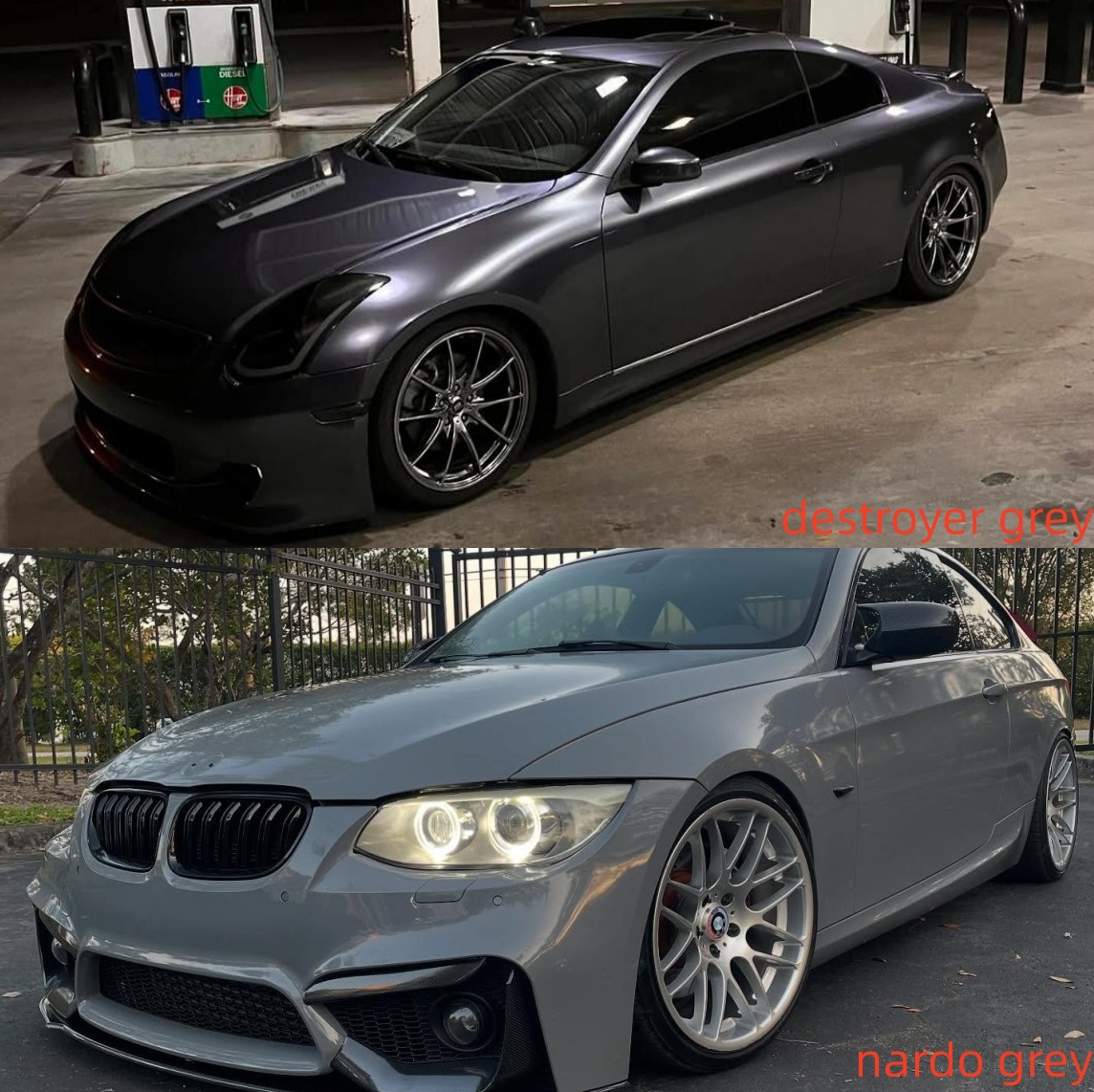
Destroyer Grey generally has a darker, heavier and more aggressive visual character, while Nardo Grey is typically perceived as a cleaner, lighter neutral grey.
Destroyer Grey works especially well on muscular vehicles with large surfaces and aggressive proportions. Nardo Grey tends to emphasize sharp creases, modern lighting and black exterior details, which explains its strong association with European performance cars.
| Feature | Destroyer Grey | Nardo Grey |
|---|---|---|
| Overall character | Darker, tougher | Cleaner, more technical |
| Visual weight | Heavy | Medium |
| Best-known association | Dodge performance cars | Audi performance cars |
| Body style strength | Muscle cars, SUVs, trucks | Sedans, coupes, sports cars |
| Black trim pairing | Excellent | Excellent |
| Bright sunlight | Strong, solid appearance | Crisp and more revealing |
| Low light | More dramatic | More understated |
| Styling personality | Industrial / muscular | European / minimalist |
Short answer: Choose the Destroyer Grey look when you want visual mass and aggression. Consider Nardo Grey when you want a cleaner, sharper OEM-performance appearance.
But there is much more happening than simply “dark grey versus light grey.”
Where Did Destroyer Grey Come From?
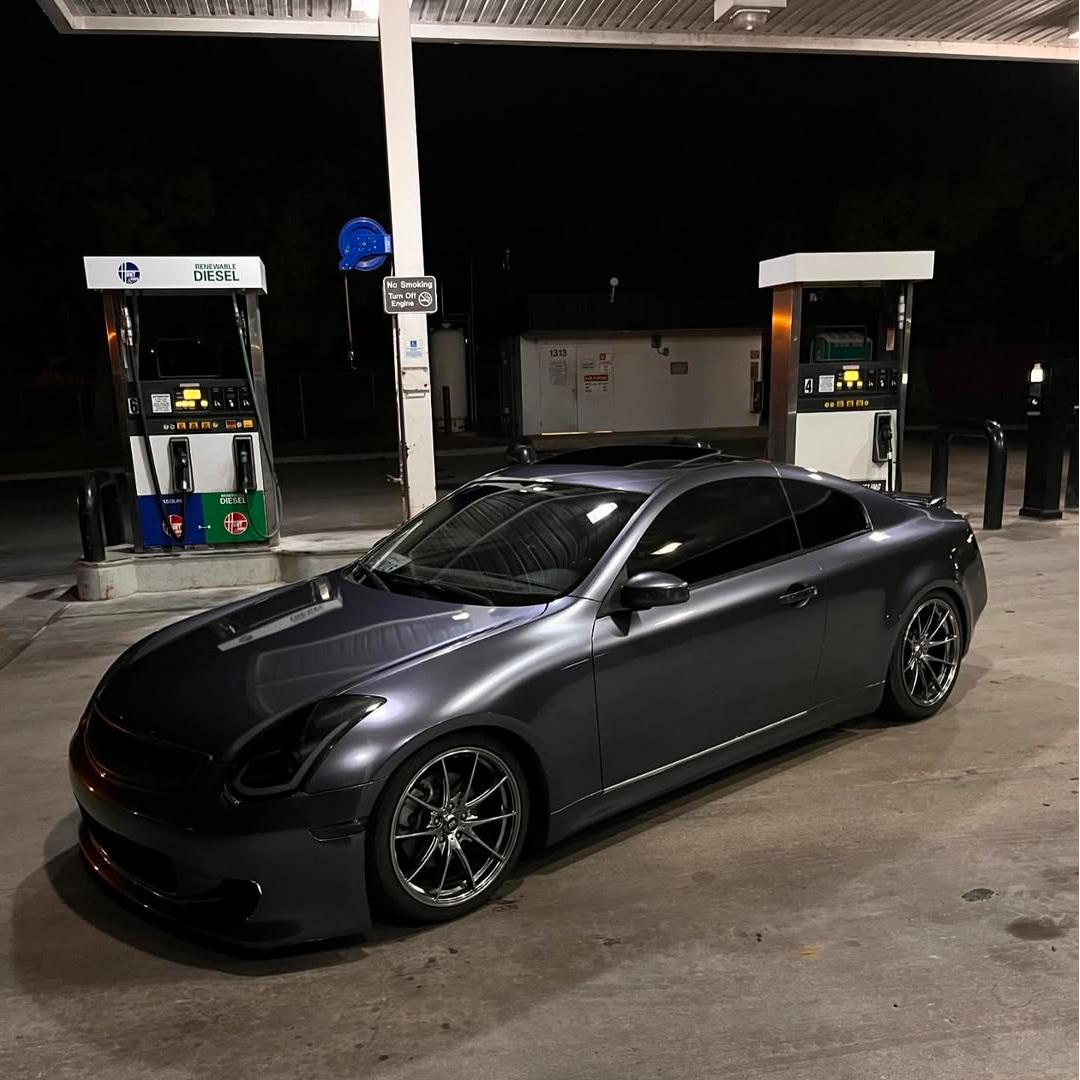
Destroyer Grey became particularly recognizable through Dodge’s performance lineup.
The shade appeared as Destroyer Gray Clearcoat among the exterior colours of the 2017 Dodge Challenger and Charger. Historical model information shows it appearing on the Challenger, Charger and Durango, while 2023 Dodge colour documentation lists Destroyer Grey under paint code PDN.
Its name is appropriate.
Rather than behaving like a conventional metallic silver-grey, Destroyer Grey belongs to the family of solid-looking automotive greys that reduce visual sparkle and let the vehicle’s physical proportions do most of the talking.
That makes the colour especially interesting on a Dodge Challenger.
The Challenger already has:
- a high beltline,
- broad quarter panels,
- a relatively long hood,
- large uninterrupted body surfaces,
- and strong horizontal proportions.
A restrained grey doesn’t compete with those features. Instead, it makes the shape itself the focal point.
ALUKOVINYL interpretation
The ALUKOVINYL Destroyer Grey / Metal Space Grey vinyl wrap is intended for owners who want this darker, industrial grey direction without repainting the vehicle.
What Is Nardo Grey?
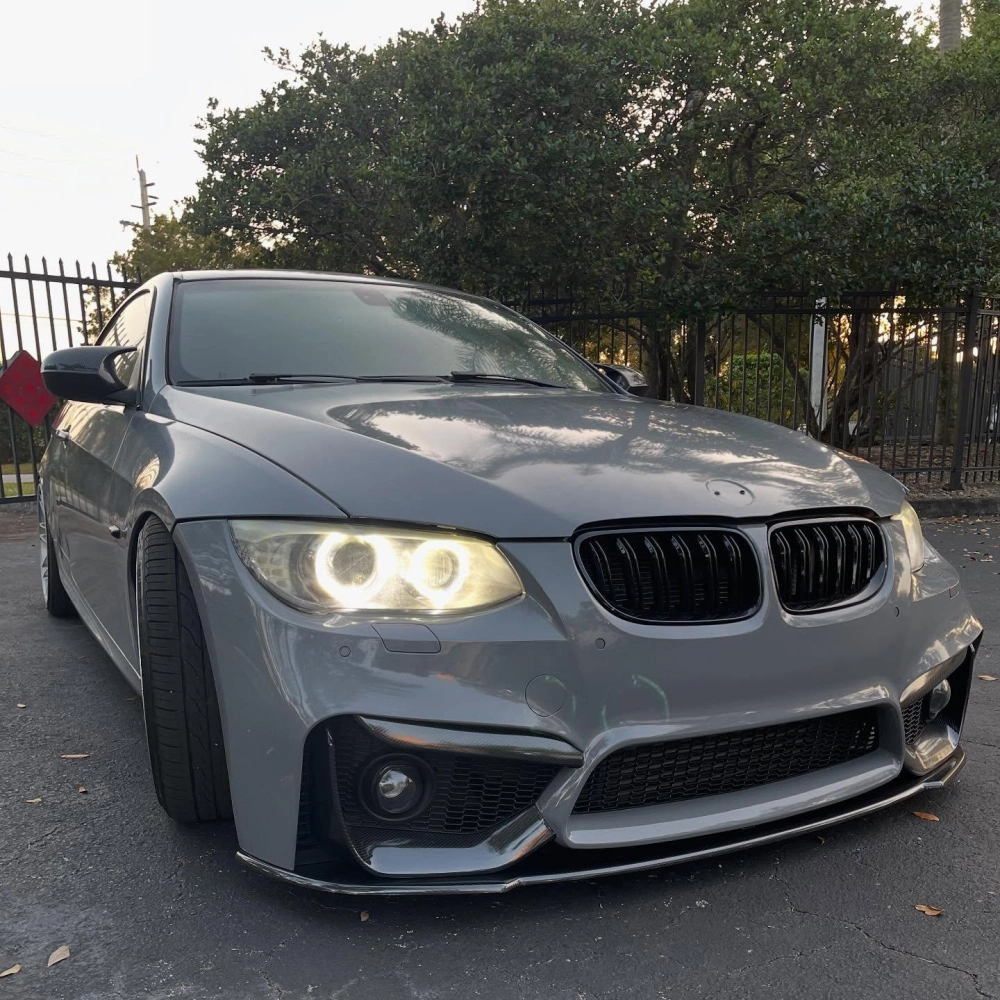
Nardo Grey occupies a slightly different place in automotive culture.
It is closely associated with Audi performance vehicles and became one of the most recognizable examples of the modern solid-grey trend.
Unlike traditional metallic silver, the classic Nardo aesthetic relies heavily on a smooth, relatively uniform grey surface rather than obvious metallic flake.
That distinction matters.
Without heavy metallic sparkle distracting the eye, details such as a fender crease, door contour or bumper opening become easier to read.
This is one reason Nardo-style grey became so effective on modern performance vehicles.
The ALUKOVINYL Gloss Nardo Grey vinyl wrap recreates this design language as a removable colour-change film.
Destroyer Grey vs Nardo Grey: The Real Visual Difference
Searching photos online can make the two colours look almost identical.
That’s partly because photographs are unreliable for fine colour comparison.
Camera white balance, HDR processing, screen calibration, surrounding objects and sunlight can all change the apparent grey considerably.
The better comparison is therefore based on how each colour interacts with the car.
1. Destroyer Grey Has More Visual Weight
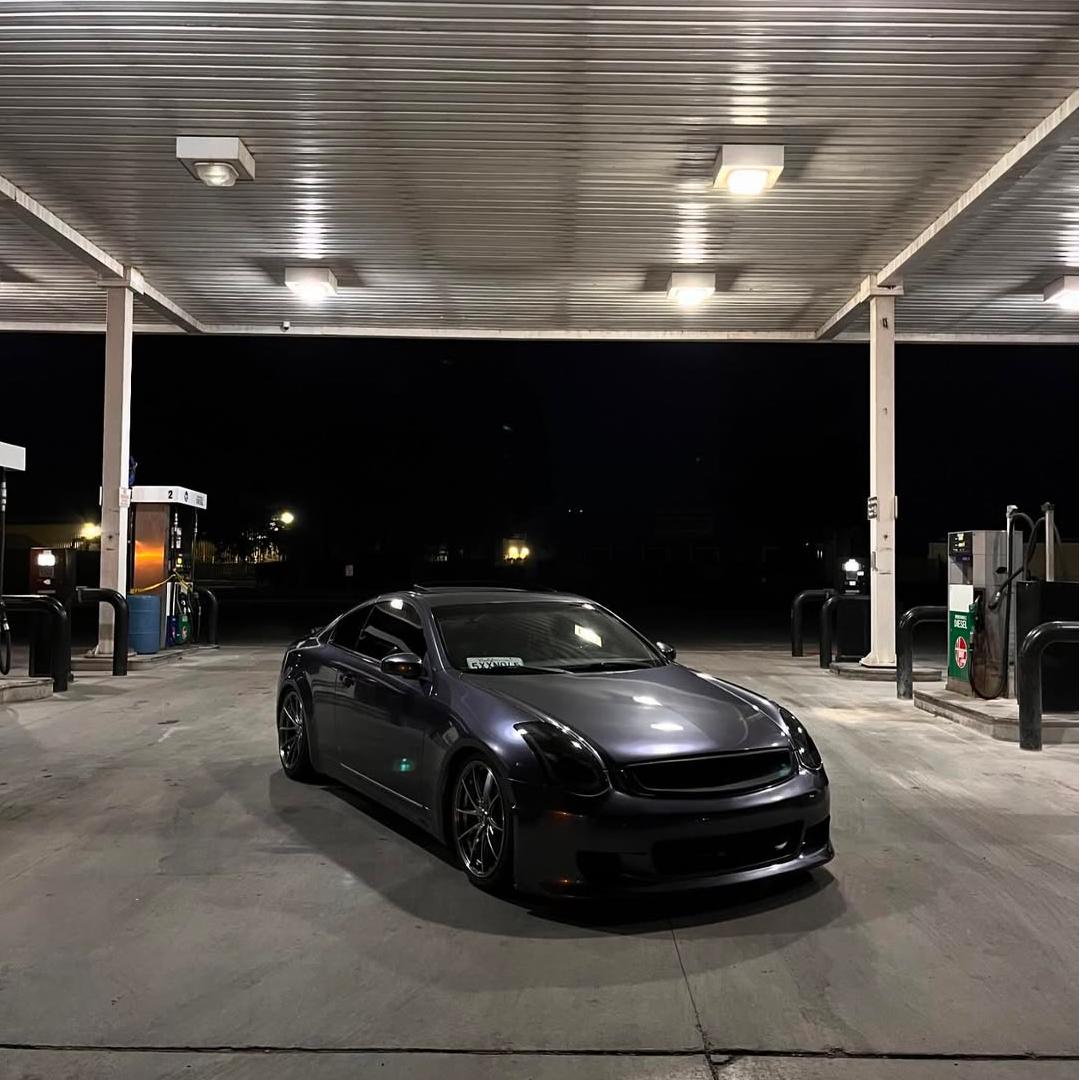
Think of visual weight as how “heavy” a colour makes an object appear.
Darker grey generally reduces reflected brightness and visually increases mass.
That’s particularly effective on:
Dodge Challenger → Chevrolet Camaro → Ford Mustang → Dodge Charger → performance SUVs → trucks
On these vehicles, Destroyer Grey can make wide fenders and large body panels appear even more substantial.
It communicates:
solid → muscular → industrial → aggressive
Nardo Grey communicates something slightly different:
clean → precise → technical → modern
This is arguably the biggest difference between the two colours.
2. Nardo Grey Can Reveal Body Lines More Clearly
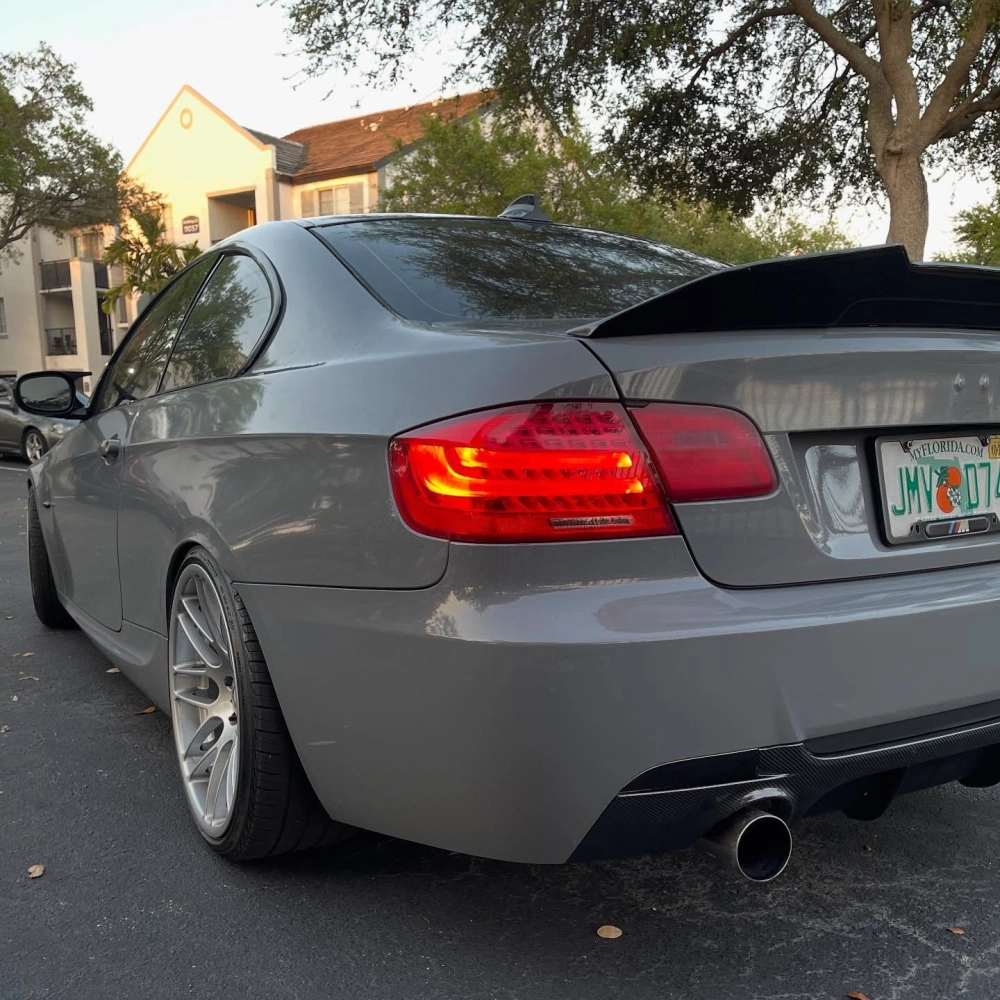
Imagine the same grey applied to an Audi RS model and a Dodge Challenger.
The Audi may have numerous tight character lines and transitions across relatively small surfaces. The Challenger relies much more heavily on large masses.
A lighter Nardo-style grey tends to create enough contrast between illuminated and shadowed surfaces to make those subtle lines easier to see.
This is why Nardo Grey can work particularly well on cars such as:
Audi RS3 / RS5 / RS6 / RS7
BMW M2 / M3 / M4
Porsche 911 / Taycan
Tesla Model 3 / Model Y
Destroyer Grey often becomes more convincing as the panels become larger and the vehicle visually heavier.
The Sunlight Test: Why These Greys Can Look Completely Different Outdoors
This is one of the most overlooked parts of choosing a grey wrap.
A wrap colour should never be evaluated from one studio photograph.
Consider three environments.
Midday sunlight
Strong overhead sunlight increases surface reflections.
Nardo Grey tends to look lighter and particularly clean in this environment. Sharp panel transitions become obvious.
Destroyer Grey remains comparatively deeper and preserves more visual mass.
Overcast weather
Clouds create a huge natural softbox.
Under diffuse light, the difference between the two can become less dramatic.
Both may appear relatively flat and uniform, which explains why internet photos sometimes make them difficult to distinguish.
Night / parking-garage lighting
Artificial lighting changes the equation again.
Destroyer Grey can appear significantly deeper, approaching a charcoal-like visual impression in shadowed areas.
Nardo Grey usually retains more visible grey.
ALUKOVINYL colour-selection tip
Before committing to an entire roll, evaluate a physical sample:
sun → shade → garage → LED shop lighting → evening
A grey that looks perfect under showroom LEDs may feel completely different on a full vehicle outdoors.
Destroyer Grey vs Nardo Grey on Different Cars
This is where choosing between them becomes more interesting.
Dodge Challenger — Destroyer Grey
This is probably the most natural pairing.
Destroyer Grey complements the Challenger’s broad shoulders and long hood without introducing another strong visual element.
Try combining it with:
- gloss black wheels,
- black badges,
- tinted windows,
- black rear spoiler,
- dark brake hardware.
The result is deliberately understated rather than colourful.
Design principle: let proportion replace colour as the source of aggression.
Audi RS6 — Nardo Grey
The RS6 demonstrates the opposite principle.
Its design contains numerous creases, vents, lighting signatures and trim details.
A clean Nardo Grey body surrounded by gloss-black trim produces strong separation between those elements.
Instead of making the vehicle look heavier, the colour helps expose its architecture.
BMW M3 / M4 — Nardo Grey
Modern BMW M cars have highly sculpted surfaces.
A lighter solid grey can help show those transitions without the visual complexity introduced by metallic flake.
Black wheels or carbon-fibre exterior pieces increase contrast further.
Ford Mustang — Either Works
The Mustang is where the comparison becomes less obvious.
For an aggressive build with:
- black wheels,
- lowered suspension,
- dark lighting,
- black roof,
- large aero components,
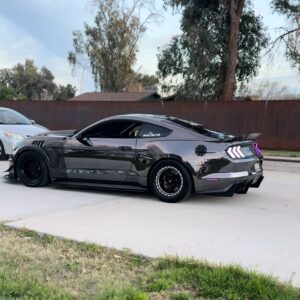
Destroyer Grey is a natural direction.
For a cleaner OEM+ Mustang with subtle modifications, Nardo Grey can create a more contemporary look.
The correct answer therefore depends less on the badge and more on the design objective of the build.
Tesla Model 3 / Model Y — Nardo Grey
Tesla’s simplified surfaces make Nardo-style grey interesting.
There are fewer decorative elements competing with the body colour, while the black glass roof and window area naturally contrast with grey.
Nardo Grey therefore creates a minimalist two-tone effect without requiring additional graphics.
Trucks and Large SUVs — Destroyer Grey
Large vehicles change how colour is perceived because there is simply more surface area.
On a truck, a lighter grey can dominate visually.
A deeper Destroyer Grey reduces that brightness while reinforcing the vehicle’s scale.
For this reason, we would consider the Destroyer direction particularly interesting for:
Ford F-150, RAM 1500, Chevrolet Silverado, Jeep Grand Cherokee and Dodge Durango.
A Designer’s Way to Choose: Look at Surface-to-Detail Ratio
Instead of asking:
“Which grey is more popular?”
ask:
“How much uninterrupted sheet metal does my vehicle have?”
This gives us a useful concept we call the surface-to-detail ratio.
A vehicle with large doors, broad fenders and relatively few creases has a high surface-to-detail ratio.
A vehicle with complicated vents, sharp creases and many transitions has a lower one.
Our practical design hypothesis is:
Higher surface-to-detail ratio → darker grey often becomes more visually effective.
Lower surface-to-detail ratio → lighter grey can make details easier to read.
This isn’t a universal rule, but it explains why Destroyer Grey feels so natural on American muscle cars while Nardo Grey became iconic on highly sculpted European performance cars.
That distinction is much more useful than asking which shade is “better.”
Pros and Cons of Destroyer Grey Wrap
Pros
Destroyer Grey can make large vehicles appear muscular without using a bright colour. It pairs exceptionally well with black trim, wheels and aero components, and its restrained appearance works well for owners who want something distinctive without the visual intensity of red, yellow or green.
It also has strong historical associations with Dodge performance vehicles. Destroyer Grey appeared on production Challengers and Chargers, so the colour does not feel artificially created for the aftermarket.
Cons
The darker appearance can conceal subtle body contours, particularly in low light.
It may also make a small vehicle visually heavier.
And because photographs reproduce grey inconsistently, customers should not assume a vinyl colour will be an exact match for Dodge PDN paint without comparing physical samples.
Pros and Cons of Nardo Grey Wrap
Pros
Nardo Grey offers an extremely clean appearance without relying on metallic sparkle.
It works especially well with black trim, carbon fibre and modern LED lighting, and its lighter appearance can reveal complex body surfacing particularly effectively.
It is also versatile across European performance cars, EVs, sports sedans and coupes.
Cons
Popularity has a downside.
Nardo-inspired grey has been reproduced extensively throughout the aftermarket, so it may no longer feel as unusual as it once did.
The lighter surface may also show dirt and road contamination differently from a darker grey, while the actual colour can vary noticeably with lighting and camera processing.
Again, a Nardo-style vinyl should not automatically be considered an exact reproduction of Audi OEM paint.
Destroyer Grey vs Nardo Grey vs Traditional Metallic Grey
There is another comparison worth making.
Many buyers assume all greys behave similarly.
They don’t.
A traditional metallic grey contains reflective particles that create changing highlights across the vehicle.
A solid-style grey puts greater emphasis on shape rather than sparkle.
That produces three different visual languages:
| Colour Type | Main Visual Feature | Overall Impression |
|---|---|---|
| Destroyer-style grey | Depth and mass | Aggressive |
| Nardo-style grey | Clean uniform colour | Technical |
| Metallic grey | Reflective particles | Premium / dynamic |
For an angular sports car, metallic grey can create dramatic reflections.
For an OEM+ or minimalist build, Nardo Grey may make more sense.
For a muscular build, Destroyer Grey can deliver greater visual weight.
Wrap vs Repaint: Why Vinyl Makes Sense for Testing Grey
One major advantage of wrapping a vehicle is reversibility.
A colour such as Destroyer Grey can dramatically change the personality of a white, red or blue car without permanently replacing its original finish.
Professional vehicle-wrap films are engineered around conformability and removable adhesive systems. For example, Avery Dennison describes Easy Apply RS technology as providing air-egress, repositionability and slideability, while its cast wrapping products are designed to conform around irregular automotive surfaces.
That does not mean wrapping is risk-free.
Existing paint condition matters.
Damaged, poorly repaired or non-OEM paint may behave differently during eventual removal.
How Long Does a Grey Vinyl Wrap Last?
There is no responsible single-number answer.
Longevity depends on:
- film construction,
- UV exposure,
- vehicle orientation,
- climate,
- installation quality,
- maintenance,
- storage,
- horizontal versus vertical panel exposure.
Avery Dennison notes that its Supreme Wrapping Film can be rated up to 10 years on vertical surfaces but around three years on horizontal surfaces, depending on the specific film and conditions. The manufacturer also emphasizes that real-world longevity depends on environmental exposure and maintenance.
That difference is important.
Your roof and hood generally receive considerably more solar exposure than your doors.
Therefore:
“How long does a car wrap last?”
is less useful than:
“How long will this specific film last on this panel in my climate?”
Maintenance Matters More Than Many Buyers Realize
Colour choice gets most of the attention, but maintenance can determine whether a wrap still looks premium several years later.
Avery Dennison recommends cleaning wrapped vehicles regularly and notes that dirt and contaminants combined with UV exposure and heat can accelerate degradation. Its maintenance guidance recommends parking under cover when practical and dealing with contaminants such as bugs, bird droppings, tree sap and tar promptly.
3M similarly recommends hand washing where possible, using touchless washing rather than brush-style automatic washes, and storing wrapped vehicles indoors, shaded or covered when practical to reduce heat and UV exposure.
That advice applies whether your vehicle is Destroyer Grey, Nardo Grey or bright yellow.
ALUKOVINYL vs 3M vs Avery Dennison: What Should Buyers Actually Compare?
Brand comparisons often become oversimplified.
A more useful approach is to compare the specific film, not just the logo on its box.
For example, Avery Dennison’s professional wrapping products emphasize conformability and air-egress/repositioning technology.
3M’s professional vehicle-wrap guidance similarly emphasizes installation, proper care and environmental protection.
When evaluating ALUKOVINYL against established manufacturers such as 3M or Avery Dennison, buyers should therefore compare measurable and practical factors:
film construction → adhesive behaviour → conformability → finish → colour accuracy → installation requirements → warranty → expected exposure → price
Colour availability matters too.
This is where specialist colour-change suppliers can provide value: a buyer may be searching for a very specific Destroyer-, Nardo-, battleship-, cement- or metallic-grey aesthetic rather than simply “grey.”
ALUKOVINYL currently offers hundreds of colour and finish options through its broader car vinyl wrap collection.
Which Grey Should You Choose?
Instead of declaring one winner, use the vehicle itself to make the decision.
Choose the Destroyer Grey direction when your build emphasizes large body surfaces, black trim, visual mass and an aggressive muscle-car or truck aesthetic.
Consider Nardo Grey when the goal is clean OEM+ styling, sharp body-line definition, black/carbon contrast and a modern European-performance aesthetic.
And if neither quite works, don’t force the decision.
There are dozens of greys between these extremes.
Sometimes the right answer is a darker metallic grey, satin grey, cement grey or silver-grey rather than either of the famous OEM-inspired colours.
Before Ordering: Get a Sample
Grey is unusually sensitive to its surroundings.
A warm building, blue sky, green landscape or cool LED workshop can all affect how your eyes interpret a neutral colour.
For that reason, physical sampling is more reliable than choosing from a phone or computer screen.
Place your sample directly against the vehicle and inspect it:
- outdoors in direct sunlight,
- outdoors in shade,
- inside a garage,
- under workshop LEDs,
- and at night under street lighting.
Also compare it against your wheels, window tint, grille, headlights and carbon-fibre pieces.
The body colour never exists in isolation.
FAQ: Destroyer Grey vs Nardo Grey
Is Destroyer Grey the same as Nardo Grey?
No. They belong to a similar family of modern solid-looking automotive greys, but they are distinct colour concepts associated with different OEM styling traditions. Destroyer Grey is closely associated with Dodge, while Nardo Grey is closely associated with Audi.
Is Destroyer Grey darker than Nardo Grey?
In typical visual comparisons, Destroyer-style grey tends to present a deeper and heavier appearance, while Nardo-style grey tends to appear cleaner and somewhat lighter. Exact perception changes with the film, finish and lighting.
What is the Dodge Destroyer Grey paint code?
2023 Dodge colour documentation identifies PDN as the code for Destroyer Grey.
Is Nardo Grey metallic?
The classic Nardo Grey aesthetic is known for its relatively solid, non-metallic appearance rather than obvious metallic sparkle. However, aftermarket products using “Nardo Grey” in their names may use different constructions and finishes.
Which grey looks better with black wheels?
Both can work exceptionally well. Destroyer Grey creates a darker, more aggressive monochromatic combination, while Nardo Grey creates stronger visual contrast between the grey body and black wheels.
Does grey vinyl wrap fade?
All exterior wrap films weather eventually. UV exposure, heat, contamination, horizontal-panel exposure and maintenance affect the rate. Manufacturers such as Avery Dennison specifically identify UV and environmental exposure as factors affecting colour-wrap longevity.
Should I choose a wrap colour from online photos?
Ideally, no. Online photos are useful for narrowing choices, but camera processing, displays and lighting make precise grey comparisons unreliable. A physical swatch viewed beside the actual vehicle provides a better basis for choosing.
Final Perspective: Two Greys, Two Different Design Philosophies
Destroyer Grey vs Nardo Grey isn’t really a battle between two nearly identical grey colours.
It is a choice between two approaches to vehicle design.
Destroyer Grey uses darkness and visual mass to make a vehicle feel more muscular. That character explains why the colour feels so natural on cars such as the Challenger and Charger.
Nardo Grey uses a cleaner, brighter grey surface to reveal geometry. That’s particularly effective on vehicles with sharp creases, black trim and complex modern bodywork.
Neither principle belongs exclusively to American or European cars.
A Nardo Grey Mustang can work beautifully.
A Destroyer Grey BMW M4 can work beautifully.
The important question is:
Do you want the colour to emphasize the mass of the car—or its lines?
Once you answer that, choosing between these two greys becomes much easier.