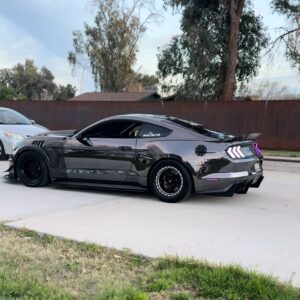
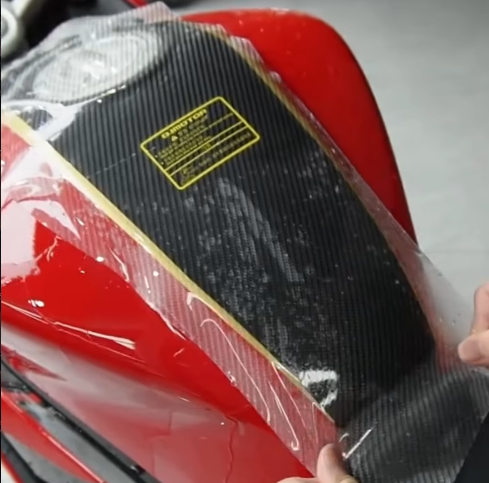
Transparent carbon fiber PPF is a relatively new niche within the paint protection film market. It combines a visible carbon-fiber pattern with transparent TPU film, allowing the vehicle’s original paint color to remain visible while adding a protective layer.
But it also raises an important question:
How much does transparent carbon fiber PPF actually cost—and is the higher price justified compared with clear PPF, color PPF or carbon-fiber vinyl?
This guide takes an evidence-based approach. Instead of relying only on ALUKO’s product claims, we compare its published specifications with technical information from established manufacturers including 3M and Avery Dennison, use recognized PPF testing criteria where available, and clearly identify which specifications have—and have not—been independently verified.
Quick Answer: How Much Does Transparent Carbon Fiber PPF Cost?
As of 2026, ALUKO lists a 5 ft × 59 ft roll of Transparent Carbon Fiber PPF at $1,239. The roll contains approximately 295 square feet of film, giving a raw material cost of about $4.20 per square foot before waste, shipping and installation. Professional full-body PPF installation can add several thousand dollars, with the final price depending heavily on vehicle size, panel complexity, installer rates and preparation requirements.
The calculation is straightforward:
5 ft × 59 ft = 295 sq. ft.
$1,239 ÷ 295 sq. ft. = approximately $4.20/sq. ft.
This is a more useful figure than simply comparing roll prices because manufacturers may sell different roll dimensions.
However, $4.20 per square foot should not be interpreted as the installed cost per square foot. Real installations involve waste, trimming margins, pattern alignment, failed pieces, surface preparation and labor.
ALUKO’s current transparent carbon fiber ppf is therefore best evaluated on two levels: material cost and total installed cost.
What Exactly Is Transparent Carbon Fiber PPF?
Transparent carbon fiber PPF sits between conventional clear paint protection film and decorative carbon-fiber wrap.
A traditional clear PPF is designed to preserve the factory appearance.
A carbon-fiber vinyl car wrap is primarily designed to change appearance.
Transparent carbon fiber PPF attempts to combine both functions:
TPU paint protection + visible carbon-fiber texture + underlying factory paint color.
That distinction matters.
If transparent carbon film is installed over a black vehicle, the result can appear relatively dark and subtle. The same film over red, blue, silver or another color creates a noticeably different effect because the underlying paint remains part of the final appearance.
This is one of the most interesting characteristics of transparent patterned PPF: the film does not determine the finished color by itself.
The film + factory paint + lighting collectively determine the final appearance.
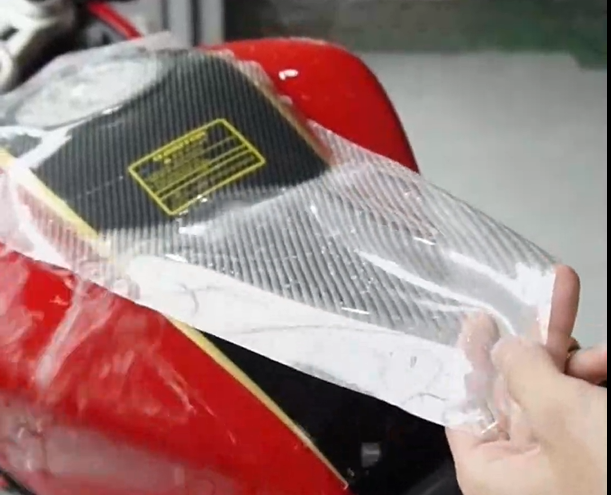
Evidence Check: What Is Independently Verified—and What Isn’t?
Before comparing products, an important distinction needs to be made.
ALUKO publishes technical specifications for its Transparent Carbon Fiber PPF, including thickness, TPU supplier, adhesive suppliers, tensile strength, elongation and expected service life.
These are useful specifications, but they are manufacturer-reported data.
At the time of writing, we have not identified publicly available independent laboratory testing specifically verifying ALUKO Transparent Carbon Fiber PPF’s published tensile strength, elongation, UV rejection, self-healing performance or long-term durability.
Therefore, this article does not present those figures as independently certified results.
Instead, they should be read as:
“Specifications reported by the manufacturer.”
This distinction is important when evaluating any automotive film—not only ALUKO.
Third-party or standardized testing is stronger evidence than marketing descriptions because test methods define exactly how a material was evaluated.
A good example comes from Avery Dennison.
Its published Supreme Defense PPF Product Data Sheet reports that the film passes SAE J400 rock-chip testing, an established test method used to evaluate the resistance of surface coatings to chipping caused by gravel impact.
That type of disclosed test standard provides a stronger comparison point than a generic statement such as “excellent stone-chip protection.”
Manufacturer-Reported Specifications for ALUKO Transparent Carbon Fiber PPF
According to ALUKO’s published product information, the film has the following characteristics:
| Specification | Manufacturer-Reported Value |
|---|---|
| Base film | Covestro TPU |
| Adhesive | Ashland / Bostik |
| Thickness | 7.5 mil ±3% |
| Tensile strength | 22.32 MPa |
| Elongation at break | 370.23% |
| Finish | Gloss transparent carbon fiber |
| Expected durability | 5–7 years |
| Topcoat | Hydrophobic / self-healing |
| Product warranty | 8 years |
Important: These values are published by ALUKO and should not be interpreted as independent laboratory certification unless corresponding third-party test reports are provided.
That transparency makes comparison more useful.
Independent Industry Benchmark: How Does 7.5 Mil Compare?
One specification that can be meaningfully compared is film thickness.
ALUKO reports 7.5 mil ±3% for its Transparent Carbon Fiber PPF.
Avery Dennison currently lists its Supreme Defense Gloss PPF at 8 mil total thickness and describes the product as incorporating a self-healing surface with stain and UV resistance.
Its formal Product Data Sheet provides additional detail, reporting approximately:
- 6.5 mil face film;
- 1.5 mil adhesive;
- more than 200% elongation;
- gloss greater than 90 GU;
- and a pass result under SAE J400 rock-chip testing.
Avery also lists up to 10 years of durability for its gloss product, although environmental conditions matter. Its technical sheet specifically notes reduced durability expectations in certain high-exposure regions including Arizona, Nevada, Colorado, Southern California, New Mexico and Hawaii.
This is an important real-world detail.
PPF lifespan is not a universal number.
Sun exposure, temperature, vehicle storage, installation orientation and climate can materially affect how long a film maintains its appearance and performance.
Therefore, statements such as “this PPF lasts X years” should always be interpreted together with warranty and environmental conditions.
What 3M’s Technical Documentation Tells Us
3M provides another useful industry benchmark.
3M Scotchgard Paint Protection Film Pro Series 200 is designed to protect paint against stone chips, scratches, stains and environmental exposure. 3M publicly identifies several features, including:
- hydrophobic surface properties;
- heat-activated self-healing of minor scratches;
- optimized repositionable adhesive;
- low orange peel;
- UV/weathering protection;
- and a 10-year consumer warranty, subject to warranty conditions.
3M also recommends professional installation.
These claims do not independently prove that ALUKO performs identically.
Instead, they establish the performance categories buyers should investigate when evaluating any modern PPF.
A credible comparison therefore asks:
Does the film disclose its thickness?
Does it disclose a recognized impact test?
Are adhesive characteristics documented?
Is there a measurable durability standard?
Are warranty conditions publicly available?
Is stain or chemical resistance tested?
Are accelerated weathering results available?
These questions are more valuable than asking which brand uses the most impressive marketing language.
A More Honest Comparison
Here is how the evidence currently compares:
| Criterion | ALUKO Transparent Carbon Fiber PPF | Avery Supreme Defense Gloss | 3M Pro Series 200 |
| Primary purpose | Styling + protection | Clear protection | Clear protection |
| Carbon pattern | Yes | No | No |
| Published thickness | 7.5 mil ±3%* | 8 mil total | Published technical specifications available |
| Self-healing | Claimed* | Manufacturer documented | Manufacturer documented |
| Hydrophobic | Claimed* | Manufacturer documented | Manufacturer documented |
| Published SAE J400 result | Not publicly identified | Pass | Consult current TDS |
| Published durability | 5–7 years* | Up to 10 years | Warranty dependent |
| Warranty | 8 years* | Up to 10 years | 10-year consumer warranty |
| Independent ALUKO-specific testing found | No | — | — |
*Manufacturer-reported ALUKO specification.
This table deliberately avoids declaring a “winner.”
There is currently insufficient independent evidence to claim that ALUKO Transparent Carbon Fiber PPF protects paint better than 3M or Avery Dennison.
Conversely, the 3M and Avery products used here are primarily clear protection films and do not provide the same transparent carbon-fiber aesthetic.
The products therefore serve different buyer priorities.
Why Does Transparent Carbon Fiber PPF Cost More Than Vinyl?
A buyer looking only at aesthetics may wonder why they should pay $1,239 for a roll when carbon-fiber vinyl is substantially cheaper.
The answer lies in material construction and intended function.
Conventional automotive vinyl is primarily designed for restyling.
PPF uses a thicker polyurethane-based construction intended to provide a sacrificial barrier between the vehicle’s paint and road hazards.
Avery Dennison’s 8-mil Supreme Defense specification provides useful context for the physical scale of modern PPF.
The difference does not mean PPF makes paint invulnerable.
A sufficiently large or high-speed stone can still penetrate or damage film and paint. Self-healing technology also primarily addresses fine surface scratches, not deep cuts or punctures.
This is an important distinction frequently lost in PPF marketing.
Transparent Carbon Fiber PPF vs. Carbon Fiber Vinyl
If price is the main consideration, carbon-fiber vinyl has a major advantage.
| Feature | Carbon Fiber Vinyl | Transparent Carbon Fiber PPF |
| Main function | Appearance | Protection + appearance |
| Typical construction | PVC vinyl | TPU |
| Original color visible | Usually no | Yes |
| Carbon appearance | Yes | Yes |
| Minor scratch recovery | Usually limited | Self-healing topcoat claimed |
| Stone-chip protection | Limited | Designed for greater protection |
| Material cost | Lower | Higher |
| Installation difficulty | Moderate | Higher |
| Best buyer | Style-focused | Protection + style-focused |
The practical conclusion is simple:
Do not buy transparent carbon fiber PPF solely because you want a carbon-fiber pattern.
If appearance is your only objective, carbon-fiber vinyl is generally the more economical solution.
Transparent carbon fiber PPF becomes more logical when protecting the factory paint is already part of your budget.
Transparent Carbon Fiber PPF vs. Color PPF
A color ppf changes the vehicle’s visible color while providing the thicker protective construction associated with TPU film.
Transparent carbon fiber PPF approaches customization differently.
Instead of replacing the factory color, it layers a carbon pattern over it.
Consider a hypothetical example.
The same transparent carbon film installed on:
Black paint: dark, relatively subtle carbon appearance.
Red paint: carbon texture with red showing underneath.
Blue paint: cooler technical appearance with visible blue depth.
Silver paint: higher contrast between the pattern and base color.
This is not presented as a customer case study. It is an illustration of how transparent film interacts optically with different substrates.
For this reason, physical sampling is strongly recommended before purchasing an entire roll.
A website image cannot reliably reproduce every combination of paint color, sunlight, viewing angle and display calibration.
Real-World Cost Model: A Mid-Size Performance Sedan
Instead of inventing a customer testimonial, we can model a realistic installation.
Consider a hypothetical mid-size performance sedan requiring approximately 50–55 linear feet of 60-inch-wide film after accounting for installation margins.
Using ALUKO’s 59-foot roll:
Material purchase: $1,239
If 54 linear feet are ultimately consumed:
54 × 5 = 270 sq. ft. of film consumed
Raw material allocation:
270 × $4.20 ≈ $1,134
That leaves roughly five linear feet for contingency or smaller panels.
But material cost is only part of the project.
The installer may also need to account for:
- decontamination;
- paint correction;
- trim removal;
- bumper complexity;
- pattern alignment;
- edge wrapping;
- replacement pieces;
- post-install inspection.
This explains why comparing a $1,239 roll price directly with a professional installation quote is misleading.
The installer is selling material + skilled labor + preparation + risk management.
Why Carbon Pattern Alignment Changes Installation
Transparent carbon fiber PPF introduces an installation problem that ordinary clear PPF largely avoids:
pattern orientation.
Clear PPF can often be rotated on the cutting table without creating an obvious visual mismatch.
Patterned carbon film is different.
Imagine the hood’s carbon weave visually running one direction while the front fender appears to run another.
Even if both panels are technically protected, the installation can look inconsistent.
Excessive stretch can create another problem.
When patterned material stretches disproportionately around a bumper corner or deep recess, the carbon geometry can visually elongate.
This makes material planning important.
An installer may deliberately accept greater film waste to maintain consistent pattern direction.
That is one reason the theoretical $4.20 per square foot material calculation should never be treated as the effective installed material cost.
What Should Installers Check Before Applying the Film?
A high-quality PPF installation starts before the liner is removed.
1. Inspect the paint under directional lighting
Existing scratches, chips and paint defects should be documented because transparent film will not magically hide them.
2. Remove surface contamination
Road film, wax, sealants, silicone and embedded contamination can interfere with adhesion or remain visible beneath transparent material.
3. Test a sample
Transparent carbon fiber should be tested directly against the actual paint color whenever possible.
4. Plan pattern direction
The installer should determine carbon orientation before cutting major panels.
5. Minimize unnecessary stretch
Stretch should be controlled, particularly where visible carbon geometry can become distorted.
6. Inspect edges after curing
Edges, corners and recessed areas deserve additional inspection because residual installation tension can contribute to lifting.
These recommendations align with the broader professional installation principles published by major film manufacturers such as 3M and Avery Dennison.
Evidence-Based Maintenance Recommendations
Maintenance advice should also be separated from marketing claims.
3M’s technical documentation for its Pro Series 200 recommends using a wet, non-abrasive cleaner without solvents and with a pH between 6 and 8.
3M also warns against abrasive polishes and rubbing compounds because abrasive particles can damage the PPF surface.
Those recommendations provide useful independent context for general PPF care.
For transparent carbon fiber PPF, a conservative maintenance routine would therefore include:
- regular hand washing;
- pH-neutral automotive shampoo;
- soft microfiber towels;
- prompt removal of bird droppings and insect residue;
- avoiding aggressive abrasive compounds;
- avoiding unnecessary high-pressure spraying directly against film edges.
ALUKO’s specific care instructions should still be followed for warranty purposes, but these independent manufacturer recommendations help establish that gentle, non-abrasive maintenance is not merely an ALUKO marketing recommendation.
What Does “Self-Healing” Actually Mean?
“Self-healing” is one of the most misunderstood terms in the PPF industry.
It does not mean damaged film regenerates itself.
Modern PPF topcoats can reduce the appearance of light surface scratches when molecular mobility increases with warmth. Depending on the product and environment, that heat may come from warm water, sunlight or externally applied heat.
3M specifically describes heat-assisted removal of minor scratches or marks for Pro Series 200.
That provides independent evidence that self-healing topcoats are a genuine PPF technology rather than simply a marketing phrase.
But expectations need to remain realistic.
Self-healing generally does not repair:
- cuts through the film;
- punctures;
- severe rock impacts;
- torn edges;
- damaged adhesive;
- paint damage beneath the film.
If a seller suggests otherwise, buyers should ask for standardized test evidence.
How Long Can PPF Really Last?
Durability is more complicated than a single number.
ALUKO reports an expected service life of approximately 5–7 years for its Transparent Carbon Fiber PPF.
Avery Dennison lists up to 10 years for Supreme Defense Gloss under specified conditions.
3M offers a 10-year consumer warranty for Pro Series 200 subject to applicable warranty conditions.
Those numbers should not be directly interpreted as “Brand A lasts X% longer than Brand B.”
Different companies use different formulations, test procedures, warranty definitions, climates and eligibility conditions.
Avery’s technical documentation illustrates this especially well: its published durability table specifically reduces expected durability in several high-exposure U.S. regions.
That provides a useful lesson for consumers:
Climate matters.
A garage-kept vehicle in a moderate climate and a vehicle parked outdoors every day in intense sun should not automatically be expected to age identically.
Pros and Cons of Transparent Carbon Fiber PPF
Pros
Combines protection and customization
It offers something clear PPF cannot: a visible carbon appearance while retaining the underlying paint color.
TPU-level film thickness
ALUKO reports 7.5 mil ±3%, which places the product close to the thickness class of established premium PPF products such as Avery Dennison’s 8-mil Supreme Defense Gloss.
Original paint remains visible
This can be particularly appealing when the factory color itself is valuable or distinctive.
Self-healing surface technology
The manufacturer reports self-healing functionality, and comparable heat-responsive technology is well established in mainstream PPF products from manufacturers such as 3M.
Hydrophobic surface
A hydrophobic topcoat can make routine cleaning easier.
Cons
Limited independent product-specific validation
This is currently the largest evidence gap. ALUKO publishes detailed specifications, but we have not identified independent laboratory verification of this specific transparent carbon product.
Higher cost than decorative vinyl
At $1,239 for the 59-foot roll, the material investment is significantly greater than many conventional vinyl options.
Pattern increases installation complexity
Direction and stretch become visually important.
Professional installation can substantially increase total cost
The film price is only one component of a full-body project.
It is not invisible protection
Anyone wanting the factory appearance to remain virtually unchanged should consider high-clarity conventional clear PPF instead.
Is Transparent Carbon Fiber PPF Worth the Price?
The answer depends on what problem you are trying to solve.
If your goal is simply carbon-fiber styling:
Choose carbon-fiber vinyl.
If your goal is invisible paint protection:
Choose premium clear ppf wrap.
If your goal is changing the entire exterior color while adding protection:
Consider color PPF.
If your goal is preserving the original paint color while adding visible carbon texture and TPU protection:
Transparent carbon fiber PPF becomes much more compelling.
At $1,239 for 295 square feet, the ALUKO 59-foot roll works out to approximately $4.20 per square foot of raw material.
Whether that represents good value depends less on the number alone and more on film performance, installation quality, warranty support and the importance you place on its unusual transparent-carbon appearance.
What Evidence Would Make This Product Easier to Recommend?
More independent testing would strengthen the case.
For technically minded buyers and professional installers, useful future validation would include:
SAE J400 gravel-impact testing
to quantify chip resistance.
Accelerated UV/weathering testing
to evaluate yellowing and optical stability.
Gloss and haze measurements before and after aging
to quantify visual degradation.
Chemical and stain-resistance testing
against road contaminants.
Independent tensile and elongation testing
to verify the published mechanical specifications.
Long-term installer field reports
documenting edge stability, adhesive behavior and appearance after multiple years.
Publishing this type of evidence would allow future comparisons to move beyond manufacturer claims and toward independently reproducible performance data.
FAQ
How much is transparent carbon fiber PPF?
ALUKO currently lists its 5 ft × 59 ft Transparent Carbon Fiber PPF at $1,239, equivalent to approximately $4.20 per square foot of raw film. Installation, waste and vehicle preparation are additional.
Is transparent carbon fiber PPF more expensive than vinyl?
Yes. TPU paint protection film is generally more expensive than decorative PVC vinyl because it is designed to provide substantially greater physical paint protection.
Is ALUKO Transparent Carbon Fiber PPF independently tested?
ALUKO publishes technical specifications for the product, but at the time of this article we have not identified publicly available independent laboratory reports validating all of those specifications. They should therefore be treated as manufacturer-reported data.
How thick is transparent carbon fiber PPF?
ALUKO reports a thickness of 7.5 mil ±3%. For comparison, Avery Dennison lists Supreme Defense Gloss at 8 mil total thickness.
Does PPF really protect against rock chips?
PPF is specifically engineered to reduce damage from road debris and stone impacts. Avery Dennison’s Supreme Defense technical documentation reports a pass under SAE J400 rock-chip testing, demonstrating that standardized gravel-impact testing is used within the industry. Performance varies between products, and no PPF can guarantee protection against every impact.
Does transparent carbon fiber PPF self-heal?
ALUKO reports self-healing functionality. Heat-responsive self-healing is also a documented technology in established PPF products such as 3M Pro Series 200. It is primarily intended for light surface scratches—not cuts or punctures.
Can transparent carbon fiber PPF be installed at home?
It is possible, but full-body installation is considerably more difficult than installing small pieces. Transparent carbon patterns add another challenge because stretching and panel orientation affect the visible weave.
Is one 59-foot roll enough for a car?
It may be enough for many sedans and sports cars, but there is no universal answer. Vehicle dimensions, bumper complexity, cutting strategy, pattern direction and installation waste determine actual consumption.
How long does transparent carbon fiber PPF last?
ALUKO reports approximately 5–7 years of expected durability. Actual service life depends on climate, UV exposure, maintenance, installation and vehicle storage. Manufacturer durability figures should not be interpreted as guarantees outside their applicable warranty terms.
Is transparent carbon fiber PPF worth $1,239?
It makes the most sense when you already want substantial paint protection and also want a carbon-fiber appearance. If carbon styling alone is the goal, vinyl is usually the more economical option.
Final Verdict
Transparent carbon fiber PPF is an interesting alternative to the traditional choice between invisible PPF and decorative carbon-fiber vinyl.
The economics are reasonably clear.
A 5 ft × 59 ft roll priced at $1,239 contains approximately 295 square feet, producing a raw-film price of approximately $4.20 per square foot.
The evidence is less complete when evaluating long-term product-specific performance.
ALUKO publishes relatively detailed technical specifications, including 7.5-mil thickness, Covestro TPU, Ashland/Bostik adhesive, tensile strength and elongation. However, these remain manufacturer-reported specifications unless independently verified.
That distinction should matter to informed buyers.
Established manufacturers provide useful benchmarks. 3M documents hydrophobic and heat-responsive self-healing technology in Pro Series 200. Avery Dennison publishes detailed physical properties for Supreme Defense and reports passing SAE J400 rock-chip testing.
These references support the underlying technologies behind modern PPF—but they should not be misrepresented as proof of another manufacturer’s product performance.
For buyers, the most rational approach is therefore:
Compare technical specifications, ask for test documentation, obtain a physical sample, evaluate warranty terms, and choose an experienced installer before committing to a full-body application.
For customers specifically looking for a combination of factory-paint visibility, carbon-fiber aesthetics and TPU paint protection, ALUKO’s transparent carbon fiber ppf offers an unusual option worth considering—provided its manufacturer-reported performance characteristics meet your requirements.
Technical References & Further Reading
3M — Scotchgard Paint Protection Film Pro Series 200
3M documents the film’s hydrophobic surface, heat-responsive self-healing technology, protection against stone chips and environmental exposure, professional installation approach and 10-year consumer warranty.
3M Vehicle Wrap & Protection Films
Avery Dennison — Supreme Defense Paint Protection Film
The current product documentation lists an 8-mil total construction, self-healing technology and up to 10-year durability for Supreme Defense Gloss. Its Product Data Sheet additionally reports more than 200% elongation and a pass under SAE J400 rock-chip testing.
SAE J400 — Chip Resistance of Surface Coatings
An industry test method used to evaluate how coatings resist gravel-induced chipping. When comparing PPF products, disclosure of standardized test results provides more useful evidence than generic “stone-chip resistant” claims.
Tinybot Vinyl — PPF Market Reference
New PPF Arrivals
TeckWrap — PPF Market Reference
Paint Protection Film
INOZETEK — Automotive Film Market Reference
INOZETEK USA