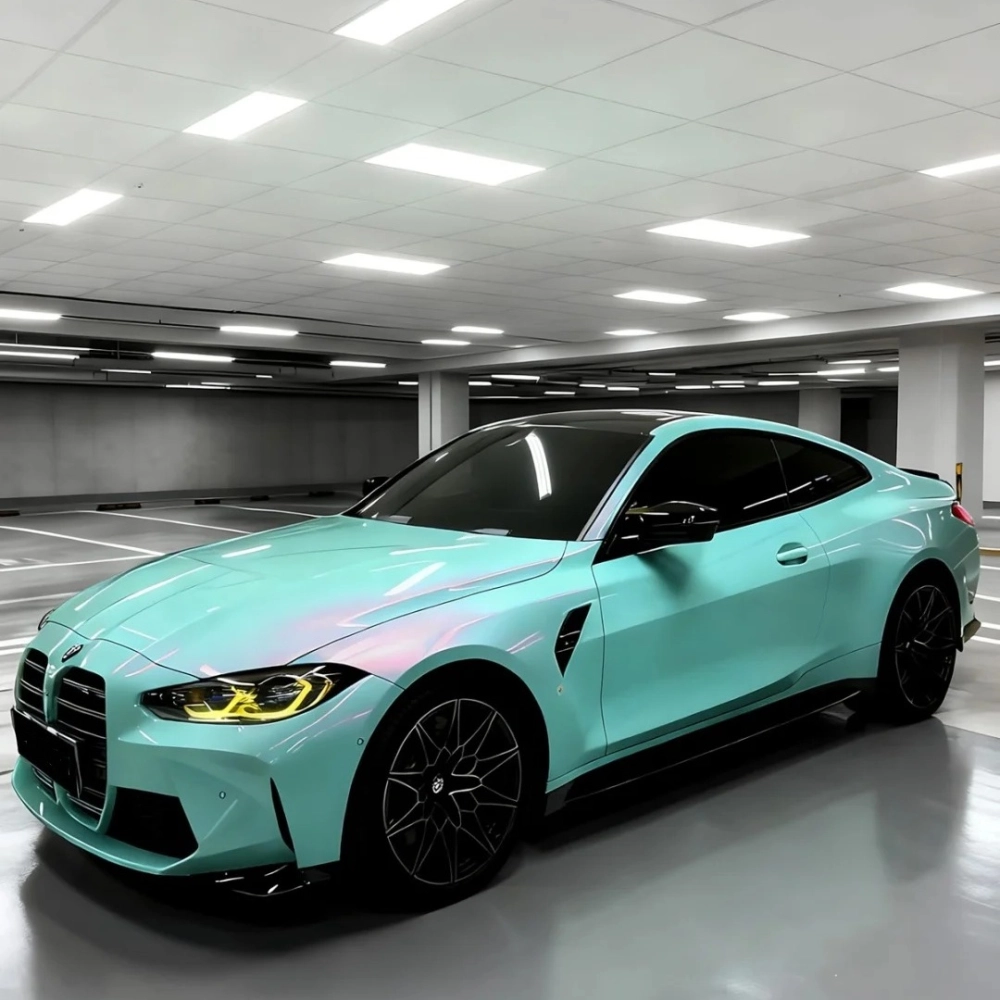
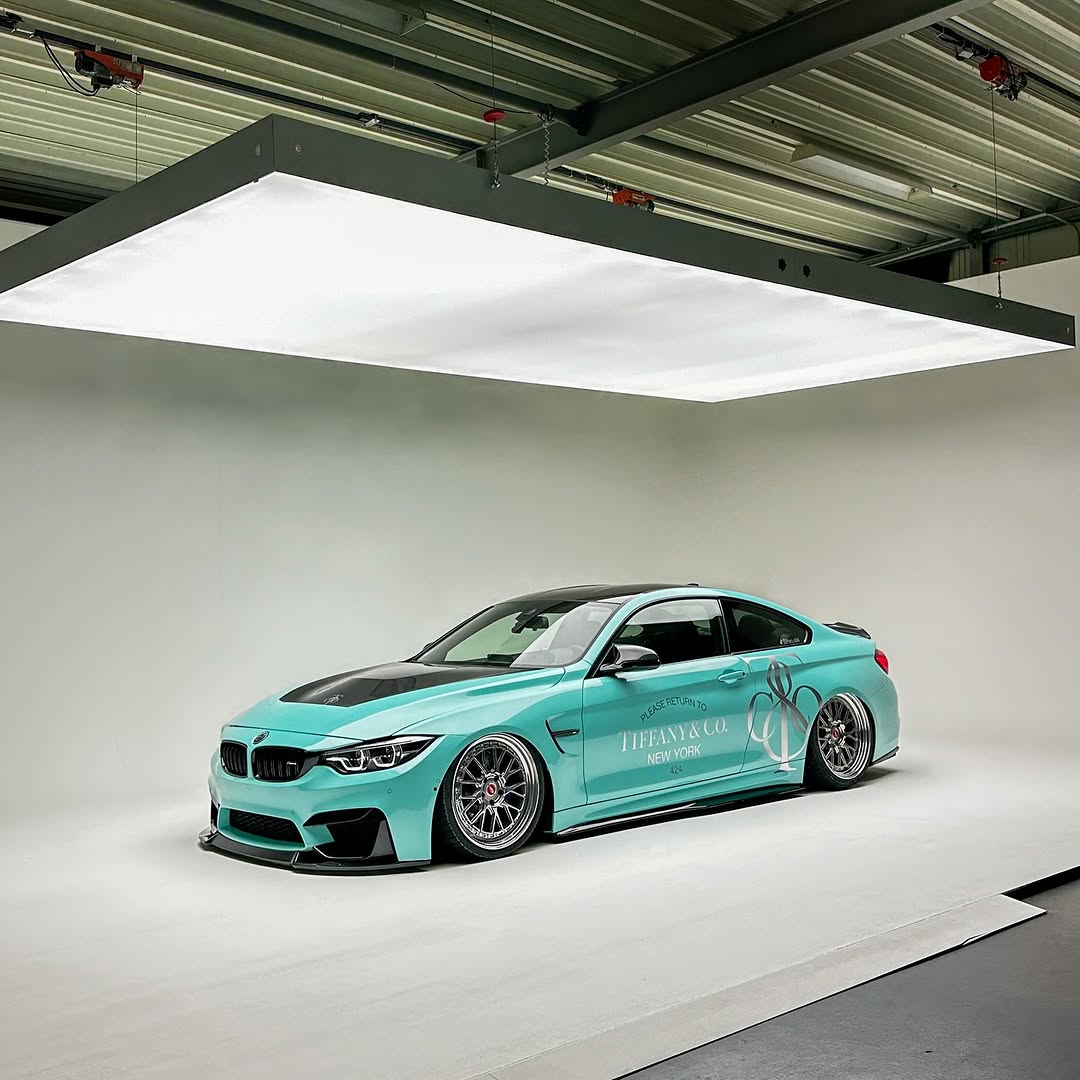
Choosing between Tiffany Blue and Tiffany Green can be surprisingly difficult. Both shades offer a refreshing alternative to traditional automotive colors, but their subtle differences can completely change how a vehicle looks.
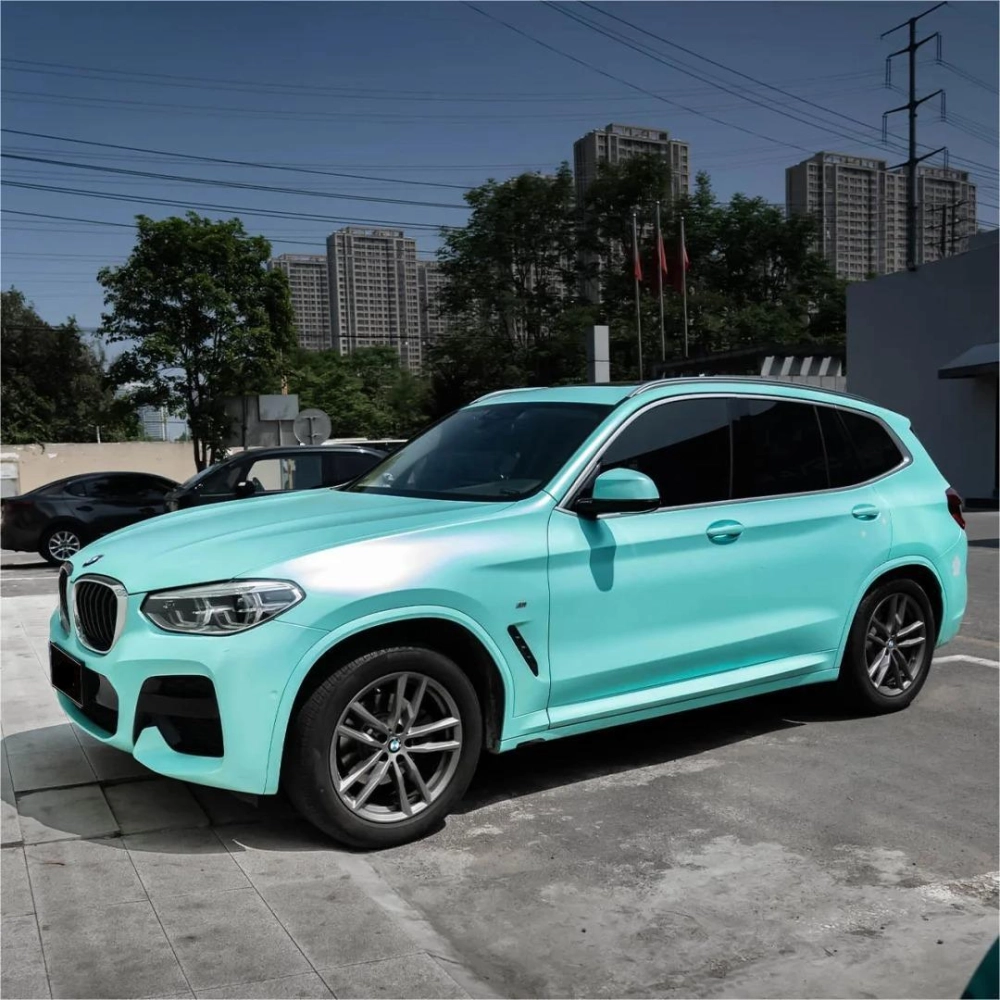
A Tiffany Blue wrap sits between soft blue, turquoise, and mint green, creating a distinctive color that can appear cooler or greener depending on lighting, surface finish, and surrounding colors.
But is Tiffany Blue actually blue or green? And which interpretation looks better on a car?
This guide explores the color science behind Tiffany-inspired automotive wraps, compares blue and green variations, and explains how to choose the right finish for different vehicles.
Is Tiffany Blue Actually Blue or Green?
Tiffany Blue is best described as a light blue-green color with noticeable turquoise undertones. Although traditionally classified as blue, its green component becomes more visible under certain lighting conditions. A Tiffany Blue wrap may look predominantly blue in cooler environments and more mint-green in warm sunlight. The exact appearance depends on the vinyl formulation, finish, and lighting.
The distinction matters because automotive vinyl does not always reproduce colors exactly as they appear on digital screens.
A customer searching for a Tiffany Blue car wrap might actually prefer a greener turquoise shade, while someone looking for Tiffany Green may want a lighter, more blue-dominant finish.
Understanding this difference before purchasing can prevent an expensive color mismatch.
What Makes Tiffany Blue Such a Distinctive Color?
Tiffany Blue became internationally recognizable through the luxury jewelry company Tiffany & Co.
According to Pantone, the company’s signature color was standardized in 2001 as a proprietary custom color known as 1837 Blue, referencing Tiffany & Co.’s founding year.
Unlike ordinary commercial Pantone colors, the original formulation is proprietary. Therefore, automotive films marketed as Tiffany Blue should generally be understood as Tiffany-inspired shades rather than guaranteed exact reproductions.
This distinction is especially important when comparing products from different vinyl wrap manufacturers.
The Color Science Behind Tiffany Blue
Tiffany Blue belongs to the blue-green family, positioned between cyan and turquoise.
Its appearance is influenced by three major color characteristics:
- Hue: The balance between blue and green determines whether the color appears closer to sky blue or mint green.
- Saturation: More saturated versions appear brighter and more tropical, while softer variations look pastel and understated.
- Lightness: Higher lightness creates an airy, delicate appearance; darker versions move toward teal or aqua.
A commonly circulated digital approximation is HEX #81D8D0. However, this should not be treated as an official automotive paint or vinyl specification.
Digital RGB values cannot reliably predict how a physical film will look on curved vehicle panels.
For accurate selection, comparing physical vinyl samples under natural daylight is more useful than relying exclusively on online color codes.
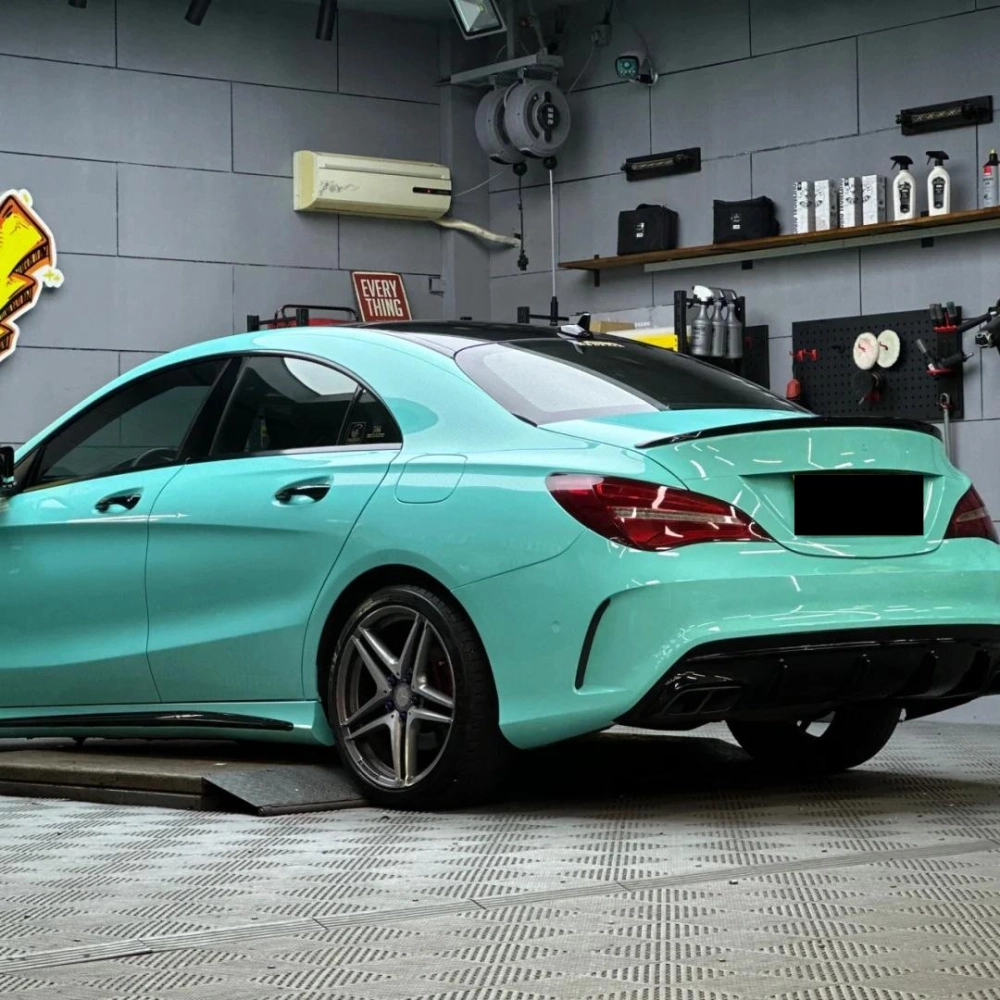
Tiffany Blue vs Tiffany Green Wrap: What Is the Difference?
Although these colors are closely related, they create noticeably different visual impressions.
| Feature | Tiffany Blue Wrap | Tiffany Green Wrap |
|---|---|---|
| Dominant appearance | Blue-green | Green-blue |
| Undertone | Cool turquoise | Soft mint or aqua |
| Overall mood | Fresh, refined, playful | Calm, botanical, distinctive |
| Bright sunlight | May reveal turquoise or green | May appear brighter and mintier |
| Cloudy daylight | Often appears cooler and bluer | Usually retains a green influence |
| Popular styling | White, silver, black accents | Black, cream, bronze accents |
| Best suited to | Luxury sedans, sports cars, compact cars | SUVs, vintage-inspired builds, lifestyle vehicles |
These are general styling tendencies rather than standardized color specifications. Actual differences depend on the particular film.
1. Tiffany Blue: Cooler and More Recognizable
A Tiffany Blue vinyl wrap typically emphasizes the blue side of turquoise.
It creates a clean, bright appearance without the visual intensity of electric blue or neon cyan.
This makes it attractive for drivers seeking a distinctive vehicle color that remains relatively elegant.
Tiffany Blue pairs especially well with:
- Gloss black wheels and window trim
- White or cream interiors
- Silver or brushed-metal accents
- Carbon fiber exterior details
On vehicles with smooth bodywork, a glossy Tiffany Blue wrap can emphasize reflections and give the car a polished, modern appearance.
2. Tiffany Green: Softer and More Organic
Tiffany Green is not a universally standardized automotive color name. In the vinyl market, it commonly describes a Tiffany-inspired shade with stronger green undertones.
Compared with Tiffany Blue, it can feel closer to mint, seafoam, or light turquoise green.
The greener appearance is particularly attractive on vehicles with rounded bodywork, retro-inspired styling, or minimalist exterior designs.
However, customers should not assume every film labeled Tiffany Green will look identical.
The most reliable distinction is the actual blue-to-green balance of the film, not the product name alone.
Why Does Tiffany Blue Wrap Sometimes Look Green?
One of the most interesting characteristics of Tiffany Blue is its sensitivity to the viewing environment.
This is not necessarily a color-changing effect. In many cases, the perceived difference results from illumination, reflections, and visual adaptation.
Direct Sunlight vs Overcast Conditions
Under direct sunlight, a glossy Tiffany Blue wrap may display stronger turquoise highlights, making the green undertone more noticeable.
In overcast conditions, softer reflections and cooler ambient lighting may cause the same film to appear bluer.
However, this behavior is not universal. The spectral characteristics of the film and the surrounding environment determine the actual result.
Gloss vs Matte Surface Reflection
Gloss finishes produce clearer reflections, which can increase the visual intensity of highlights.
Matte finishes scatter light more diffusely, reducing sharp reflections and often making the color appear softer.
Consequently, the same nominal Tiffany Blue shade may look substantially different in gloss and matte finishes.
Camera and Screen Differences
Smartphone cameras automatically adjust white balance, exposure, and color processing.
A vehicle photographed under warm sunlight may appear greener than the same car photographed under cool daylight.
Display calibration introduces another source of variation.
This explains why two product photographs can show noticeably different colors even when the underlying wrap material is identical.
ALUKOVINYL Color Selection Tip
Before ordering a full roll, inspect a physical sample in three environments:
- Outdoor daylight, preferably without strong colored reflections.
- Direct sunlight at multiple viewing angles.
- Indoor lighting similar to the environment where the vehicle is usually parked.
Place the sample against the vehicle’s existing paint and trim.
This simple test helps identify whether the selected Tiffany Blue wrap matches your expectations.
Which Tiffany Blue Wrap Finish Should You Choose?
The finish can influence the final appearance almost as much as the shade itself.
ALUKOVINYL offers several Tiffany Blue vinyl wrap styles, allowing customers to choose between understated color changes and more expressive custom finishes.
Gloss Tiffany Blue Wrap
Best for: Clean, modern automotive styling.
A gloss finish provides a smooth, reflective appearance that highlights the shape of the vehicle.
It works particularly well on cars with flowing body lines and large, uninterrupted panels.
Consider the Gloss Tiffany Blue Car Vinyl Wrap if you prefer a polished, paint-like appearance.
Advantages:
- Bright and visually refreshing
- Highlights body contours
- Complements gloss black exterior accents
Considerations:
- Swirl marks and surface contamination can become noticeable
- Reflections may affect perceived color
- Careful washing is important to maintain appearance
Matte Tiffany Blue Wrap
Best for: Minimalist and contemporary designs.
A matte Tiffany Blue wrap reduces sharp reflections and creates a softer, more uniform visual effect.
This finish can be especially attractive on angular vehicles or cars with aggressive body styling.
Explore the Matte Tiffany Blue Vinyl Wrap for a less reflective alternative.
Advantages:
- Subtle and distinctive appearance
- Reduces mirror-like reflections
- Works well with black exterior details
Considerations:
- Some stains and oily marks can be difficult to remove
- Conventional waxes and polishing products may alter the finish
- Repairs may require replacing affected panels
Satin Chrome Tiffany Blue Wrap
Best for: Show cars and highly customized vehicles.
Satin chrome combines a metallic, reflective character with a softer surface appearance than traditional mirror chrome.
The result can make Tiffany Blue look more dramatic and visually complex.
Explore the Satin Chrome Tiffany Blue Car Vinyl Wrap.
Advantages:
- Distinctive metallic appearance
- Strong visual impact
- Attractive for custom builds and promotional vehicles
Considerations:
- Generally more demanding to install than conventional gloss vinyl
- Excessive stretching or heating can create visible color differences
- Satin chrome films may have a shorter practical service life than standard finishes
For professional installers, minimizing stretching, using clean gloves, and allowing heated film to cool before final squeegee passes can help reduce installation defects.
Holographic Tiffany Blue Wrap
Best for: Enthusiasts who want a more expressive finish.
Holographic films introduce angle-dependent visual effects, creating additional color variation beyond the underlying Tiffany Blue shade.
ALUKOVINYL’s Matte Metallic Holographic Tiffany Blue Wrap offers an alternative for drivers who prefer a more dynamic appearance.
This option is particularly suited to exhibition vehicles, promotional builds, and customized sports cars.
However, customers seeking a consistent, traditional Tiffany Blue appearance may prefer a conventional gloss or matte film.
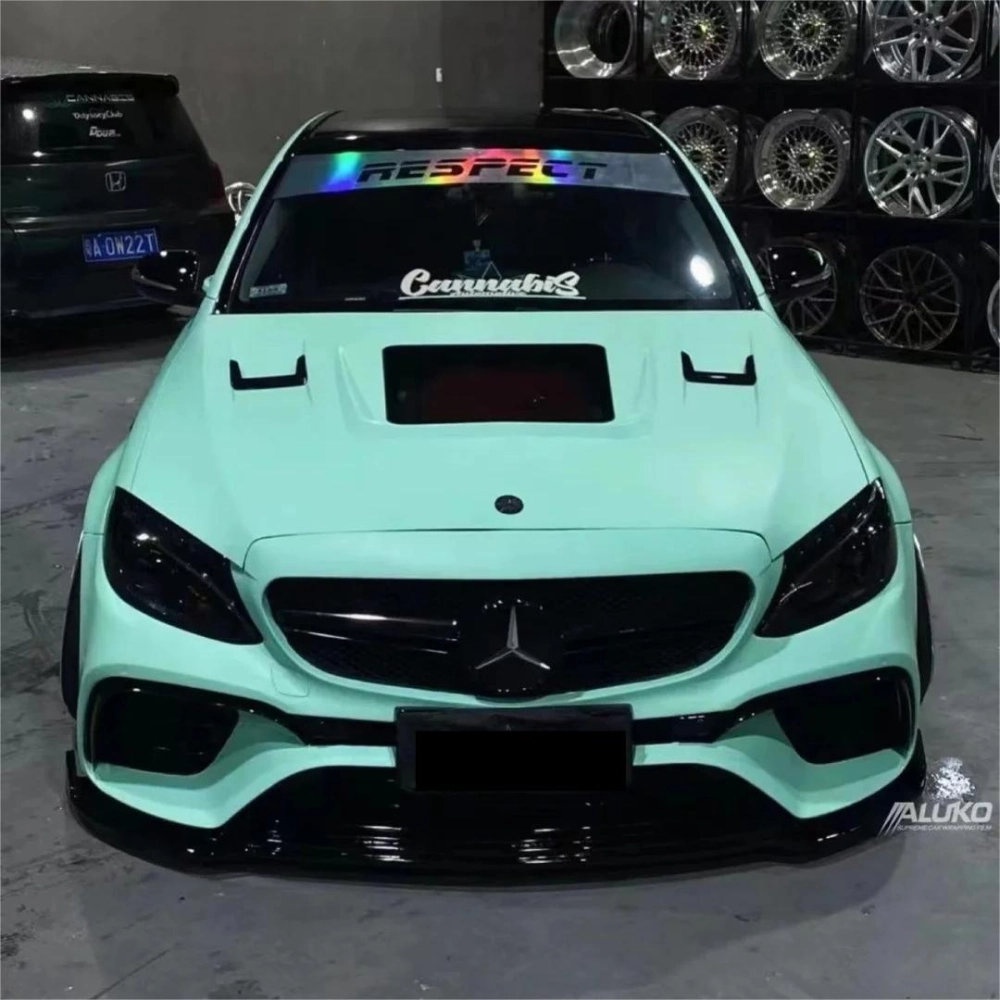
What Cars Look Best With Tiffany Blue Wrap?
Tiffany Blue is versatile, but its visual impact depends heavily on vehicle proportions, body design, and exterior accents.
The following examples are styling recommendations rather than claims of completed ALUKOVINYL installations.
1. Porsche 911 — Refined Sports Car Styling
A Tiffany Blue Porsche 911 can combine a playful color with the model’s recognizable silhouette.
Its rounded bodywork and smooth transitions are well suited to glossy finishes.
Recommended combination: Gloss Tiffany Blue with black wheels and subtle carbon fiber details.
The contrast allows the color to stand out without overwhelming the vehicle’s design.
2. Tesla Model 3 — Modern Minimalism
The Tesla Model 3 offers clean body surfaces that can showcase Tiffany Blue without excessive visual distractions.
A softer turquoise shade creates a refreshing alternative to conventional white, black, and grey finishes.
Recommended combination: Gloss or matte Tiffany Blue with black window trim.
For a cohesive result, choose a finish that complements the vehicle’s existing exterior hardware.
3. BMW M4 — Sporty and Expressive
The BMW M4 has pronounced body lines and aggressive styling.
A Tiffany Blue wrap creates contrast between its muscular proportions and a relatively delicate color.
Recommended combination: Gloss Tiffany Blue with black wheels, carbon fiber accents, and dark exterior trim.
For a more dramatic appearance, metallic or holographic finishes can emphasize the car’s performance-oriented character.
4. MINI Cooper — Retro-Inspired Personality
The MINI Cooper is especially well suited to lighter turquoise and mint-inspired colors.
Its compact proportions and rounded design create a playful visual balance.
Recommended combination: Tiffany Blue body panels with a contrasting white or black roof.
A greener Tiffany-inspired shade may also complement vintage-inspired styling.
5. Mercedes-Benz C-Class — Understated Luxury
Tiffany Blue can give a Mercedes-Benz C-Class a distinctive appearance while preserving its elegant proportions.
The color works particularly well when combined with restrained exterior accessories.
Recommended combination: Gloss Tiffany Blue with silver trim or satin black accents.
Drivers seeking a less reflective appearance can consider matte Tiffany Blue.
6. Jeep Wrangler — A Different Kind of Turquoise
Tiffany Blue is not limited to sedans and sports cars.
On a Jeep Wrangler, the color creates an interesting contrast between rugged bodywork and a soft, refreshing shade.
Recommended combination: Tiffany Blue or a greener turquoise variation with black fenders, dark wheels, and a black roof.
Because the Wrangler has exposed edges, hinges, and complex panels, professional installation planning is especially important.
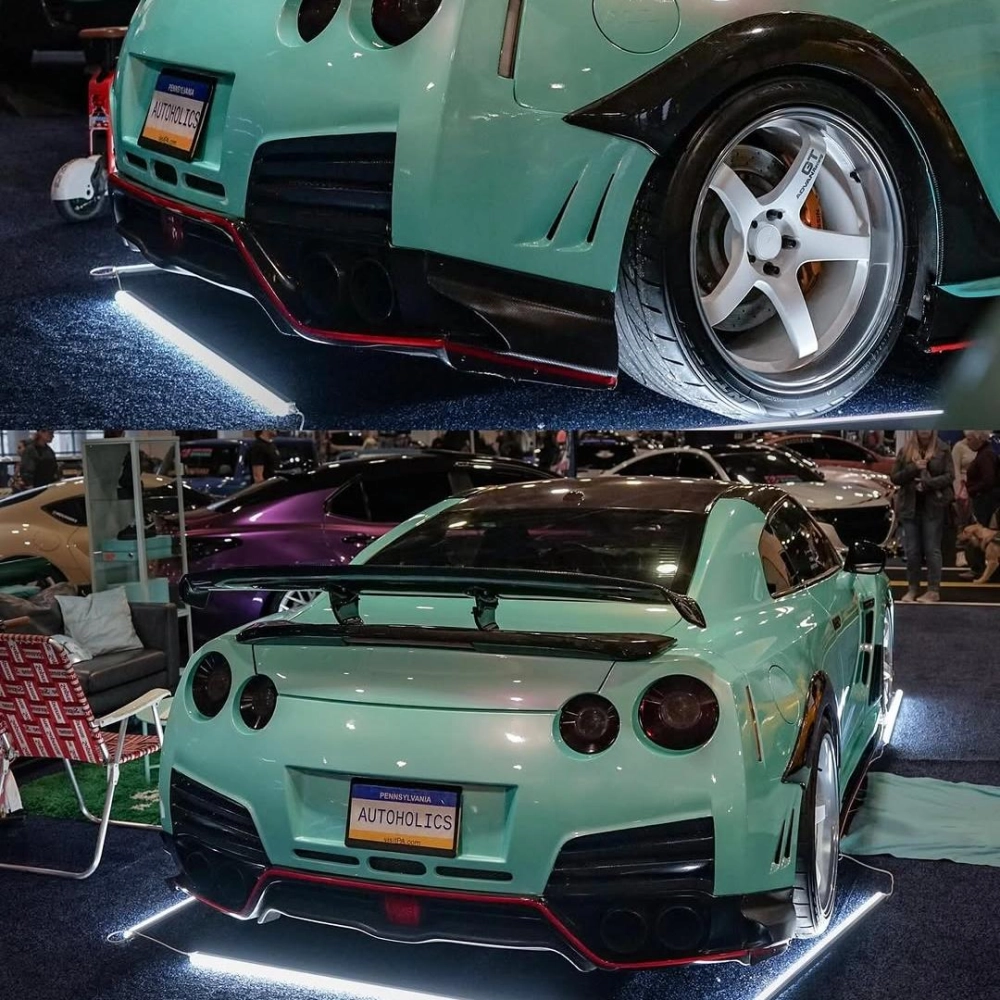
Tiffany Blue vs Mint Green vs Turquoise: Which Color Fits Your Style?
Not every blue-green wrap creates the same result.
| Color | Main Character | Best Styling Direction |
|---|---|---|
| Tiffany Blue | Balanced light blue-green | Elegant, fresh, distinctive |
| Tiffany Green | More green-dominant turquoise | Soft, relaxed, unconventional |
| Mint Green | Pale green with cool undertones | Pastel, retro, minimalist |
| Turquoise Blue | Stronger blue-green saturation | Tropical, sporty, energetic |
| Teal | Darker and more saturated | Sophisticated, dramatic |
| Baby Blue | Predominantly blue | Soft, classic, understated |
If your priority is a recognizable blue-green aesthetic, Tiffany Blue is an excellent starting point.
If you want a more natural, pastel appearance, mint green may be preferable.
For a darker and more mature color scheme, teal offers greater visual depth.
An important buying consideration: Color names are not reliable substitutes for physical samples. Two films with different names may look similar, while two products both called Tiffany Blue may have noticeably different undertones.
Pros and Cons of Tiffany Blue Car Wrap
Before committing to a full vehicle transformation, consider both the benefits and limitations.
Advantages of Tiffany Blue Wrap
1. Distinctive without relying on extreme brightness
Tiffany Blue offers a recognizable appearance without the intensity of fluorescent or neon finishes.
2. Suitable for different vehicle styles
It can complement compact hatchbacks, luxury sedans, sports cars, and SUVs.
3. Multiple finish options
Gloss, matte, metallic, and specialty finishes allow the same general color family to support different design goals.
4. Reversible customization
A properly installed and removed vinyl wrap can change the vehicle’s appearance without requiring a permanent paint color change, provided the original paint is sound.
5. Partial-wrap possibilities
Drivers can experiment with Tiffany Blue on a roof, hood, mirrors, or selected panels before choosing a full wrap.
Disadvantages of Tiffany Blue Wrap
1. Color interpretation varies
A Tiffany Blue film may appear greener or bluer than expected, particularly when viewed through digital product images.
2. Light colors can reveal contamination
Road grime, tar, and environmental deposits may be more visible than on darker wraps.
3. Specialty finishes can increase installation difficulty
Chrome and holographic films may require additional installation skill and careful material handling.
4. Vinyl is not equivalent to paint protection film
Although vinyl provides a physical covering over the paint, conventional color-change vinyl does not offer the same impact protection as purpose-designed TPU PPF.
5. Maintenance and eventual replacement are necessary
Wrap longevity depends on film construction, exposure, installation quality, and care. Outdoor storage and prolonged UV exposure can accelerate deterioration.
How Much Tiffany Blue Vinyl Wrap Do You Need?
Ordering the correct amount of vinyl is essential, especially for full vehicle wraps.
ALUKOVINYL’s standard full roll measures approximately 59 ft × 5 ft (18 m × 1.52 m).
The following quantities are general planning estimates.
| Vehicle Type | Suggested Material Length |
|---|---|
| Small hatchback | 49–59 ft |
| Compact sedan | 55–59 ft |
| Mid-size sedan | 59–65 ft |
| Sports coupe | 55–65 ft |
| Mid-size SUV | 65–69 ft |
| Large SUV or pickup | 69–79 ft or more |
These estimates assume a full exterior wrap, including the roof, and reasonable allowances for trimming and installation waste.
The actual requirement depends on vehicle dimensions, panel layout, wrapping technique, and installer experience.
For example, a Tesla Model 3 may be suitable for a standard full roll with careful planning, while a larger SUV may require additional material.
Complex bumpers, wide panels, and directional specialty finishes can increase consumption.
For first-time DIY installers, extra material is recommended to accommodate mistakes and rework.
Installation and Maintenance Tips for Tiffany Blue Vinyl Wrap
Even the best color selection can be compromised by poor installation or unsuitable maintenance.
Before Installation
Inspect the vehicle’s paint condition carefully.
Vinyl should generally be applied to clean, smooth, sound painted surfaces.
Loose clear coat, peeling paint, rust, or poorly repaired panels can interfere with adhesion and increase the risk of damage during removal.
Clean the surface thoroughly and remove wax, grease, and contaminants using products appropriate for automotive wrapping.
During Installation
Follow the film manufacturer’s specified application temperature and heating requirements.
Use controlled tension rather than aggressively stretching the film into recessed areas.
Excessive stretching can reduce film thickness and may cause adhesive stress, lifting, or visible color differences.
Specialty chrome and metallic films require additional attention to maintain a consistent appearance across adjacent panels.
After Installation
Wash the vehicle regularly with a suitable pH-neutral automotive cleaner.
Avoid aggressive solvents, abrasive brushes, and high-pressure washing directed closely at film edges.
For matte finishes, use products specifically designed for matte surfaces.
Remove bird droppings, tree sap, and insect contamination promptly.
Whenever possible, park in shaded or covered areas to reduce prolonged environmental exposure.
How to Choose the Right Tiffany Blue Wrap Before Buying
The biggest mistake buyers make is choosing a film based entirely on its name or a single product photograph.
A better purchasing decision involves four practical checks.
First, identify the undertone you actually prefer.
Do you want a blue-dominant turquoise or a greener mint-inspired shade?
Second, decide how reflective the surface should be.
Gloss is suitable for a polished appearance, while matte produces a softer result. Chrome and holographic finishes create more dramatic effects.
Third, compare the color against your vehicle’s existing accents.
Black wheels, silver trim, cream interiors, and contrasting roofs can all influence the overall visual impression.
Fourth, inspect the actual material before committing to a full roll.
A physical sample helps confirm both the color and finish under realistic lighting.
At ALUKOVINYL, customers can explore different car wrap colors and compare finishes within the Tiffany Blue car wrap collection.
The goal should not simply be to find a product called Tiffany Blue, but to find the specific blue-green shade that suits your vehicle.
Frequently Asked Questions About Tiffany Blue Wrap
Is Tiffany Blue more blue or green?
Tiffany Blue is generally classified as a blue-green shade with turquoise undertones. It usually leans toward blue, although some automotive vinyl variations appear greener. Lighting and finish can influence how the color is perceived.
Is Tiffany Blue the same as Tiffany Green?
No. Tiffany Blue usually emphasizes blue undertones, while Tiffany Green generally refers to a greener variation. However, Tiffany Green is not a standardized automotive color specification, so actual shades vary between manufacturers.
Is Tiffany Blue the same as turquoise?
Tiffany Blue belongs to the turquoise color family, but turquoise covers a much wider range of blue-green shades. Some turquoise colors are darker, brighter, or more saturated than Tiffany Blue.
What is the closest car wrap color to Tiffany Blue?
A light turquoise, robin’s-egg blue, or soft cyan vinyl may offer a similar appearance. The closest option depends on the manufacturer’s formulation. A physical sample is the most reliable way to compare shades.
Does Tiffany Blue wrap look good on black cars?
Yes. Tiffany Blue can contrast attractively with black wheels, window trim, and exterior accents. However, the original black paint may remain visible around certain panel gaps or interior door areas unless those surfaces are wrapped.
Is gloss or matte Tiffany Blue better?
Gloss Tiffany Blue is ideal for a bright, polished appearance. Matte Tiffany Blue is better for a softer, less reflective look. Neither finish is universally superior; the right choice depends on the vehicle’s design and the owner’s preferences.
How long does Tiffany Blue vinyl wrap last?
Service life depends on the specific film, climate, installation, storage conditions, and maintenance. Some ALUKOVINYL product specifications list expected durability of 5–7 years, but this should not be interpreted as a universal guarantee. Horizontal surfaces and vehicles exposed to intense sunlight may deteriorate sooner.
Can I install Tiffany Blue vinyl wrap myself?
Yes, but professional installation is generally recommended for complete vehicle wraps, especially those involving complex bumpers, deep recesses, or specialty finishes. Beginners may find simpler panels more manageable.
Does Tiffany Blue vinyl protect car paint?
Vinyl wrap can provide a limited barrier against light surface contact and environmental contamination. However, it is not designed to provide the same stone-chip and impact resistance as dedicated paint protection film.
Can Tiffany Blue vinyl wrap be removed?
Most automotive color-change vinyl films are designed to be removable under appropriate conditions. Removal results depend on film age, adhesive condition, paint quality, and technique. Damaged or repainted surfaces may be more vulnerable.
Final Verdict: Should You Choose Tiffany Blue or Tiffany Green?
Tiffany Blue and Tiffany Green are closely related, but choosing between them can significantly influence the personality of your vehicle.
For drivers seeking a fresh, recognizable blue-green appearance, Tiffany Blue is a versatile choice. Its cooler undertones pair well with modern sedans, sports cars, and luxury vehicles.
Tiffany Green, on the other hand, offers a softer, more mint-inspired interpretation that can complement retro designs, SUVs, and minimalist builds.
The finish is equally important. Gloss enhances reflections, matte softens the appearance, and specialty metallic or holographic films create more dramatic effects.
Ultimately, the best Tiffany Blue wrap is not necessarily the one with the most recognizable name. It is the film whose actual color, finish, and visual character match your vehicle and personal style.
Find Your Perfect Tiffany Blue Wrap at ALUKOVINYL
Ready to transform your vehicle with a refreshing blue-green finish?
At ALUKOVINYL, explore Tiffany-inspired vinyl wraps in gloss, matte, metallic, and specialty finishes.
Whether you’re customizing a Porsche 911, Tesla Model 3, BMW M4, MINI Cooper, or another vehicle, choosing the right shade can create a distinctive result.