Last reviewed: April 2026
Choosing the right car graphics is easier when you stop thinking only about color and start thinking about identity. A vehicle graphic is not just a decoration placed on metal. It changes how the car is read at a glance, how it photographs, how it moves visually in sunlight, and how memorable it feels in traffic or at a meet. Done well, it can make a familiar vehicle look more personal, more premium, or more aggressive. Done badly, it can make the same vehicle look cluttered, dated, or unfinished. That is why selecting the right graphics matters so much.
This topic is more relevant now than many people realize. The U.S. specialty-equipment market remains large and active, and consumers are still spending heavily on appearance-driven upgrades. At the same time, public-facing vehicle surfaces remain one of the most noticeable visual formats in everyday life. That means the decision is no longer just whether to add graphics. It is whether the graphics you choose actually fit the car, the driver, and the impression you want to leave.
Why Car Graphics Matter More Than Ever
Customization is still a strong market
Drivers continue to invest in personalizing their vehicles because appearance remains a major part of ownership culture. When enthusiasts modify a car, they are not only improving performance or changing wheels. They are building a visual identity. Graphics are one of the fastest and clearest ways to do that because they affect the entire read of the vehicle without requiring a full rebuild.
Vehicles are now part of visual culture
Cars are no longer experienced only in person. They are photographed, filmed, posted, and shared constantly. A smart graphic package helps a vehicle stand out not just in a parking lot, but also in motion, in reels, in social posts, and in event coverage. This is one reason strong vinyl graphics now carry more value than simple stickers or random decals.
Step 1: Decide What You Want the Graphics to Do
Identity comes before design
Before you browse patterns or finishes, decide what your graphics are supposed to communicate. Do you want the ride to feel street-focused, motorsport-inspired, luxury-minimal, retro, aggressive, artistic, or brand-oriented? This decision shapes every other choice that follows. The best graphics are not just attractive. They are aligned with the personality of the vehicle and the owner.
Not every car needs the same level of drama
Some vehicles look best with bold side graphics and layered visual contrast. Others only need a cleaner accent stripe, a hood treatment, or subtle lower-body detail. Graphics should fit the shape and purpose of the car. A daily-driven sedan usually needs a different visual strategy than a track-oriented coupe or lifted truck.
Step 2: Choose the Right Level of Coverage
Small graphics are good for emphasis
If you want just a little differentiation, smaller vinyl elements can go a long way. Mirror accents, rocker graphics, roof stripes, windshield banners, or door-number style elements can create a strong visual shift without taking over the whole vehicle.
Partial graphics give more presence without a full wrap commitment
Partial side graphics, racing-inspired panels, rear-quarter treatments, or hood-to-fender flows can help the car look more custom while keeping more of the original body color visible. This is often one of the smartest routes for drivers who want the impact of a redesign without the commitment of fully changing the car’s visual identity.
Full graphics require stronger discipline
Once the design starts covering large surface areas, composition matters much more. A full graphic package can look incredible, but only if the layout respects the body lines and gives the eye clear places to rest.
Step 3: Think About the Shape of the Vehicle
Body lines should guide the graphic layout
One of the easiest mistakes people make with car graphics is treating the car like a flat poster. It is not. Door cuts, arches, vents, handles, quarter panels, trunk breaks, and roof transitions all affect where graphics should begin, end, or flow. Good graphics follow the geometry of the vehicle instead of fighting it.
Simple cars usually prefer stronger, cleaner graphics
If the body is already clean and modern, a simple graphic system often works best. On the other hand, more sculpted body shapes may benefit from graphics that echo or extend those existing lines.
Step 4: Choose Color With Contrast in Mind
Contrast makes graphics readable
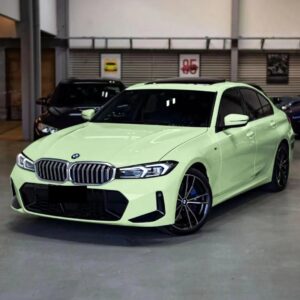
Great graphics need to be readable at a glance. If the graphic tone sits too close to the base color, it may disappear. If the contrast is too extreme without any design logic, it may feel chaotic. The goal is not maximum contrast at all costs. The goal is useful contrast.
Finish can matter as much as hue
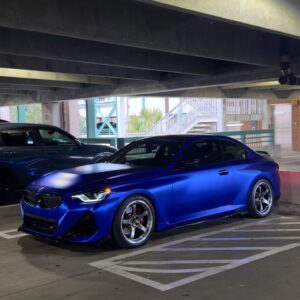
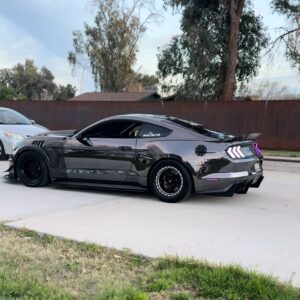
Matte-on-gloss, gloss-on-matte, satin-on-metallic, or textured accents can create much more sophisticated graphics than color alone. This is why graphic selection should never be reduced to “What color should I add?” The better question is: “How should this design behave on the surface?”
Step 5: Be Honest About Budget, but Do Not Let Budget Ruin the Result
Cheap is only useful if the result still looks intentional
Many drivers begin the search with a cheap car wrap mindset. That is understandable. But a lower budget does not mean you have to accept weak design decisions. In fact, a more limited budget often benefits from cleaner, more focused graphics rather than overcomplicated ideas. A simple, well-placed design usually looks more premium than a crowded concept executed poorly.
Spend on clarity, not noise
If you cannot justify full visual coverage, focus your budget on the parts of the car that create the strongest read: hood lines, doors, lower body flow, and rear-quarter continuity.
Step 6: Know When You Need a Custom Approach
Templates are convenient, but custom work creates identity
Some graphics can be adapted from existing concepts, but the strongest results usually come from a custom vinyl wrap mindset. That does not always mean wrapping the entire car. It means building the graphics around the actual proportions and use of the vehicle. A design that feels custom is more likely to look integrated instead of applied as an afterthought.
Customization is especially valuable for mixed-use cars
If your car is both personal transportation and a content piece, or both enthusiast-driven and brand-related, custom layout becomes even more important. It helps balance personality and clarity without making the ride feel visually confused.
Step 7: Match the Graphic Style to the Lifestyle of the Car
Daily drivers need longevity
A car you see every day should not wear graphics that feel exhausting after two weeks. This is one reason restrained designs often age better. They still create identity, but they do not overwhelm the car or the owner over time.
Show-oriented builds can push harder
If the car exists mainly for meets, events, content, or brand exposure, you can be more aggressive. Stronger shapes, bolder contrast, layered accents, and more dramatic panel coverage usually make more sense in that environment.
Step 8: Choose Graphics That Work in Motion
A parked car and a moving car are not the same design problem
Great graphics should still read when the vehicle is moving. Large directional forms, clean side-body lines, and smart visual rhythm usually perform better than tiny details that only look good up close.
Distance matters
A useful test is this: can someone understand the vehicle’s graphic identity from across a parking lot, from the next lane, and from a close-up photo? If the answer is yes, the design is probably on the right path.
Step 9: Avoid the Most Common Graphic Selection Mistakes
Too many ideas at once
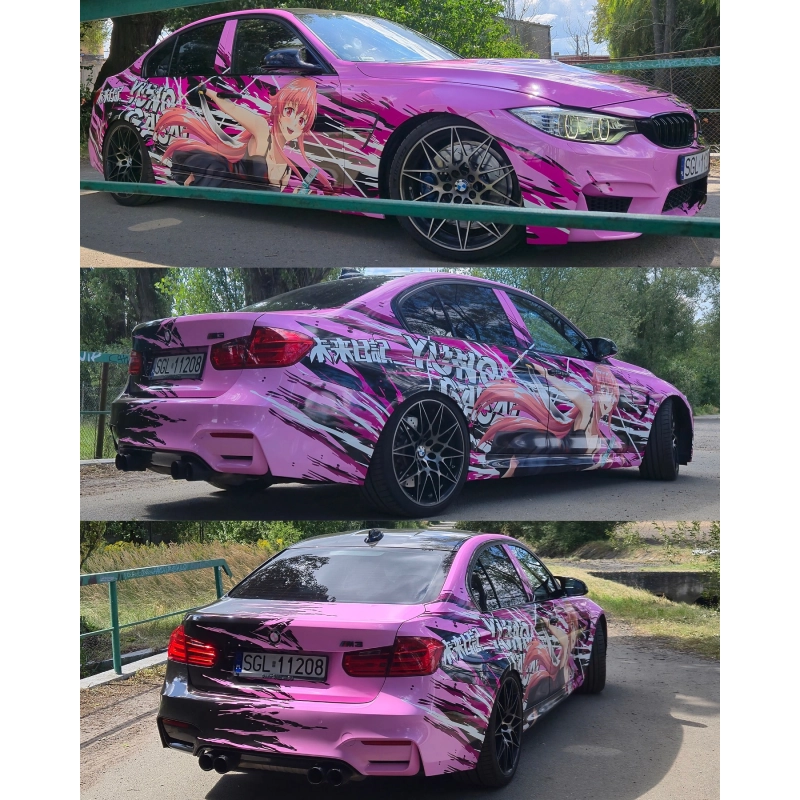
One of the fastest ways to weaken car graphics is to combine too many styles in one package. Racing stripes, camouflage fragments, sponsor-style logos, anime references, color fades, and texture overlays do not always belong together. Stronger results usually come from one dominant idea supported by one secondary detail.
Ignoring scale
Graphics that are too small can disappear. Graphics that are too large can flatten the vehicle. Scale must match the body.
Copying another build too closely
Inspiration is useful, but imitation rarely produces the best result. The goal is not to make your ride look like someone else’s highlight reel. The goal is to build something that feels right for your own vehicle.
Why This Topic Has Strong SEO Value
The keyword reflects real intent
The phrase car graphics is commercially strong because it captures people who are already thinking visually. They are not only browsing color. They are searching for a direction, a style, and a way to make the ride feel more individual.
It naturally supports internal exploration
That also makes it a strong internal-link topic. From general browsing to budget thinking and custom design planning, the user journey can stay inside the same site without losing relevance.
Final Thoughts
Selecting the right car graphics becomes much easier when you treat the decision as design strategy instead of impulse shopping. Start with what the car should communicate, choose the right level of coverage, respect the body shape, and let contrast and finish support the message.
The best vinyl graphics are not always the loudest. They are the ones that feel like they belong on the vehicle. When that happens, the car no longer looks merely modified. It looks complete.
FAQ
What are the best car graphics for a daily driver?
Usually the best daily-driver graphics are clean, readable, and restrained enough to feel fresh over time rather than visually exhausting.
Should I choose decals, partial graphics, or a custom vinyl layout?
That depends on your goal. Small decals work for subtle emphasis, partial graphics offer stronger presence, and custom layouts are best when you want the design to feel fully integrated with the vehicle.
Are custom car graphics worth it?
Yes, especially if you want a more original and better-proportioned result. Custom graphics usually feel more intentional than generic patterns.
Sources
- SEMA 2025 Market Report
- SEMA 2025 Future Trends
- OAAA OOH Displays Year End 2025
- OAAA / Morning Consult OOH Advertising Study