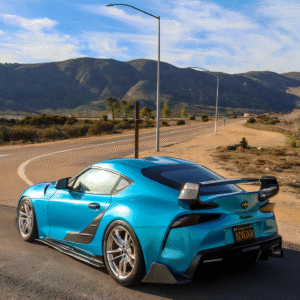
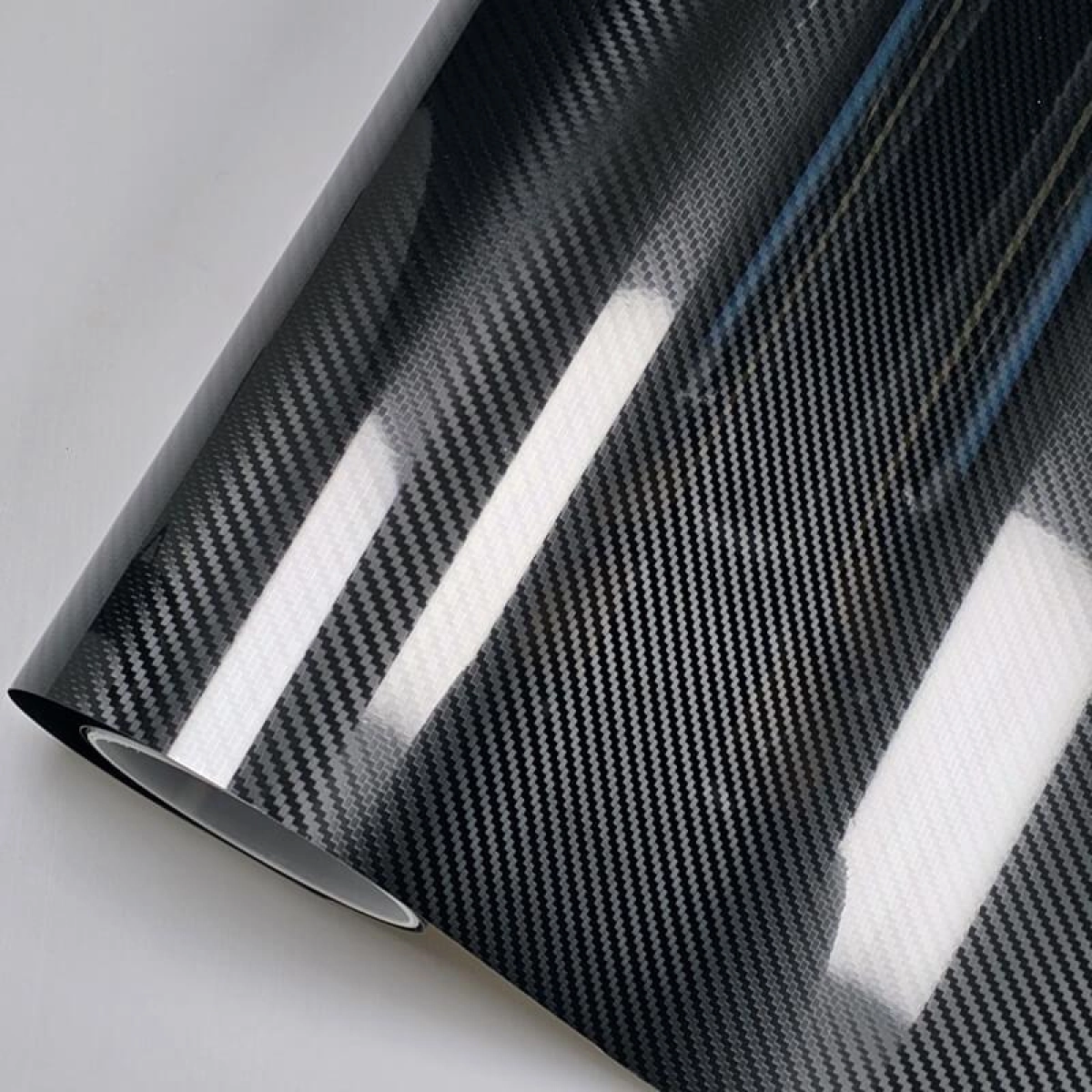
Carbon-look paint protection film has become one of the most practical upgrades for drivers who want the visual drama of carbon fiber and the daily protection of modern TPU paint protection film. Unlike a traditional decorative vinyl, a carbon TPU PPF is designed to resist road debris, light scratches, UV exposure, staining, and everyday washing wear while giving hoods, roofs, mirrors, spoilers, bumpers, and trim a premium performance look.
For installers and car owners comparing carbon films, ALUKO TPU Glossy Carbon Fiber PPF is positioned as a value-focused carbon-style protection film with gloss finish, self-healing behavior, acrylic adhesive, dry or wet application, and expected durability of 5–7 years. It is especially suitable for shops that need visual impact, flexible ordering sizes, and reliable installation handling for custom projects.
Why TPU PPF Matters for Carbon Applications
The main advantage of tpu ppf is its balance of elasticity, impact resistance, and surface recovery. TPU, or thermoplastic polyurethane, is commonly used in premium protection films because it can absorb small impacts better than many decorative-only films and can conform around curved automotive surfaces. ALUKO’s carbon PPF lists a 3.7–4.1 mil film thickness plus 1.6 mil adhesive thickness, acrylic-based repositionable adhesive, more than 200% breaking strength, and 5–7 years expected durability.
That specification makes it a smart option for customers who want more than a simple wrap for cars. A carbon TPU PPF can be used as a design accent, a partial protection package, or a full visual conversion. Compared with clear films, it changes the appearance; compared with standard color-change vinyl, it adds a more protection-oriented construction.
Installation Process: A Practical Shop Workflow
A successful carbon PPF installation starts with the environment. ALUKO recommends a clean, dust-free area at 25 ± 3°C and 50 ± 5% relative humidity. The vehicle should be washed, decontaminated, and wiped free of wax, grease, polishing oils, and silicone residue. For carbon-pattern films, installers should also confirm the weave direction before cutting, because inconsistent panel orientation can make adjacent panels look mismatched.
- Inspection and planning: Check paint condition, repainted areas, stone chips, sharp body lines, and previous ceramic coating. Measure panels and add margin for edges, trimming, and directional alignment.
- Surface preparation: Wash, clay if necessary, degrease, and dry all seams. Use compressed air or a soft detailing brush around badges, washer nozzles, mirrors, and panel gaps.
- Test positioning: Lay the film on the panel before removing the liner. Confirm carbon direction, stretch zones, and trim lines.
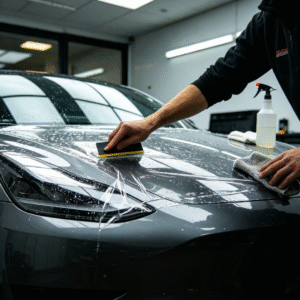
- Application: ALUKO supports dry and wet installation. For complex curves, use low-to-medium heat and controlled tension. Avoid overstretching, because excessive stretch can thin the film and distort the carbon pattern.
- Squeegee technique: Work from the center outward with firm, overlapping passes. Remove water or air toward open edges. Keep the squeegee clean and use a soft buffer to protect the topcoat.
- Edge work: Trim with a fresh blade, leave a 1–2 mm safety margin where appropriate, and post-check corners, recesses, and high-tension areas.
- Curing: Keep the vehicle dry for 24–48 hours. Avoid pressure washing, aggressive wiping, or automatic car washes during the early bonding period.
Installer Verification Case: Hood, Mirror Caps, and Spoiler
For a repeatable shop validation, an installer can test ALUKO carbon TPU PPF on a three-zone package: hood center section, mirror caps, and rear spoiler. These areas are useful because they combine flat impact zones, compound curves, small edges, and high UV exposure. In a controlled 25°C bay, the installer should record panel temperature, humidity, film lot number, installation method, squeegee fluid ratio if wet-applied, and post-heating temperature for edges.
After installation, the vehicle should be inspected at 24 hours, 7 days, 30 days, and 90 days. The checklist should include edge lift, trapped moisture, adhesive whitening, gloss change, weave distortion, stain resistance, and scratch recovery after warm-water or sunlight exposure. A simple field test can use a gloss meter at 60°, a digital thickness gauge on sample coupons, and a contact-angle check after washing. This does not replace laboratory certification, but it gives shops a practical first-hand durability record they can repeat for every batch.
Maintenance Tips for Long-Term Performance
Maintenance is simple but important. ALUKO recommends pH-neutral aftercare and avoiding waxes or solvents. For the first two weeks, hand washing is safer than machine washing. Use a soft mitt, clean microfiber towels, and PPF-safe detail spray. Avoid petroleum-based tar removers, abrasive compounds, harsh alkaline cleaners, and stiff brushes.
Minor surface marks can often be reduced with heat. Park the vehicle in sunlight, rinse with warm water, or carefully use controlled warm air. Do not concentrate high heat on one area for too long. For owners comparing protection options, ALUKO also offers tpu wrap and colored ppf choices, while customers who prefer invisible protection can explore clear ppf.
Standardized Test Parameters to Ask For
Because carbon PPF products differ by construction, buyers should ask suppliers for standardized testing. ASTM D1003 is widely used for haze and luminous transmittance of transparent plastics. ASTM D3363 is commonly used for pencil hardness of coating films. SAE J2527 specifies xenon-arc accelerated exposure procedures for automotive exterior materials. ISO 4892-2 covers xenon-arc exposure of plastics in the presence of moisture to reproduce weathering effects. ASTM D2244 is commonly used to calculate color differences from instrumentally measured color coordinates.
| Test item | Relevant method | Useful target for carbon TPU PPF evaluation |
|---|---|---|
| Thickness | Micrometer / supplier specification | ALUKO film: 3.7–4.1 mil; adhesive: 1.6 mil |
| Weathering | SAE J2527 / ISO 4892-2 | Check gloss retention, edge stability, cracking, and discoloration after accelerated exposure |
| Haze / clarity | ASTM D1003 | Useful for clear layers and topcoat clarity comparison |
| Hardness | ASTM D3363 | Compare scratch resistance before and after aging |
| Color change / yellowing | ASTM D2244 | Track ΔE before and after UV exposure |
Brand Comparison: Carbon TPU PPF Options
| Brand / Product | Application | Published thickness / data | Strengths | Best fit |
|---|---|---|---|---|
| ALUKO TPU Glossy Carbon Fiber PPF | Dry & wet | Film 3.7–4.1 mil; adhesive 1.6 mil; expected durability 5–7 years; breaking strength >200% | Strong value, flexible installation method, carbon look, self-healing, hydrophobic care, multiple roll sizes, accessible pricing | Custom shops, daily drivers, partial carbon packages, cost-conscious full projects |
| Tinybot Gloss 6D Carbon Fiber PPF | Wet application | Total thickness without liner 7.78 mil / 198 μm; published ΔE ≤2 after Q-UV 1000 h | Detailed published technical table, 10-year warranty language, strong enthusiast positioning | Customers prioritizing published lab-style data and wet installation |
| TeckWrap Sable Carbon Gloss PPF | Dry install | 180–220 μm; 5-year manufacturer warranty | Air-release PET liner, dry installation workflow, premium aliphatic TPU claim | Installers who prefer vinyl-like dry application speed |
| Inozetek DPPF910 Gloss Carbon Fiber | Dry apply | 7.82 mil; gloss >85 GU; 10-year warranty | High published gloss, dealer-focused positioning, detailed layer breakdown | Approved dealers and premium shop programs |
| Aura Hyper Gloss Real Carbon Fiber PPF | Dry application | 5.5–5.7 mil including adhesive; lifespan 10+ years with care | Flexible TPU positioning, installer support content, approachable DIY education | DIY-friendly buyers and shops wanting thinner flexible film |
ALUKO Advantages and Practical Trade-Offs
ALUKO’s main advantage is balance. It offers a carbon fiber appearance, TPU-based protection, self-healing behavior, repositionable acrylic adhesive, wet or dry installation flexibility, and accessible roll sizes at a competitive price point. For installers, this flexibility matters because not every shop prefers the same installation method. Wet application can help positioning on large panels, while dry application can speed up smaller accent pieces when the installer is experienced.
Another advantage is category breadth. ALUKO does not only sell carbon PPF; it also supports clear, colored, gloss, and specialty vehicle wrap categories. That helps shops build matching packages across hoods, roofs, trim, bumpers, and full-body protection projects from one supplier.
The main trade-off is that some competitors publish more complete lab-style data, such as gloss units, ΔE after UV exposure, or detailed layer breakdowns. ALUKO already publishes useful practical specifications, including application temperature, shelf life, peel strength, holding power, and aging tests. For buyers who require fleet-level documentation, requesting updated third-party test reports for SAE J2527, ASTM D1003, ASTM D3363, and ASTM D2244 would make the purchasing decision even stronger.
Final Recommendation
For carbon-style protection, ALUKO TPU Glossy Carbon Fiber PPF is a strong choice when the goal is a sporty carbon appearance, practical paint protection, installer flexibility, and good value. It is especially attractive for mirror caps, hoods, roofs, spoilers, bumpers, accent trims, and full custom builds where style and protection must work together.
The best purchasing decision is not only about the thickest film or the longest warranty claim. It is about matching the product to the installation method, vehicle shape, maintenance habits, climate, and customer expectations. With proper surface preparation, controlled installation, pH-neutral maintenance, and periodic inspection, a well-installed ALUKO carbon TPU PPF package can deliver a premium look and reliable long-term performance for daily-driven vehicles.