What Is PPF?
PPF, short for paint protection film, is a transparent or colored polyurethane film applied over automotive paint to help protect the surface from rock chips, road debris, bug acids, light scratches, stains, UV exposure, and weathering. For vehicle owners, the simplest answer to “what is PPF” is this: it is a sacrificial, nearly invisible protective layer that takes daily damage before your original paint does.
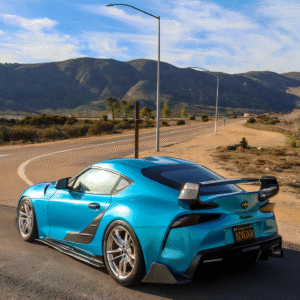
Modern PPF is usually made with TPU, or thermoplastic polyurethane, because TPU combines flexibility, impact resistance, clarity, and self-healing performance. Unlike a standard vinyl wrap that is mainly used to change color or finish, PPF is engineered first for protection. That said, today’s market also includes colored PPF, gloss PPF, matte PPF, and special-effect PPF, giving owners both paint defense and style customization.
For shoppers comparing protection and appearance options, ALUKO offers vehicle films across wrap and PPF categories. You can explore ALUKO’s main shop for a cheap car wrap, review dedicated ppf wrap options, browse color ppf film, or choose a high-gloss clear ppf for invisible paint protection.
How PPF Technology Works
A quality PPF is typically built in layers. The top coat is designed for stain resistance, hydrophobic behavior, and self-healing of fine swirl marks. Beneath that is the TPU body, which absorbs impact and provides stretch during installation. The adhesive layer bonds the film to the vehicle paint while allowing repositioning during wet installation. A release liner protects the adhesive before application.
The self-healing function is one of the most important reasons owners choose PPF. When minor surface scratches occur from washing, wiping, or road dust, heat from sunlight, warm water, or a heat gun can help the elastic top coat level out. This does not mean PPF is indestructible, but it can keep a vehicle looking newer for longer when properly installed and maintained.
Industry leaders describe PPF as a solution for protecting vulnerable automotive areas against chips, scratches, stains, and weathering. For example, 3M Scotchgard Paint Protection Film Pro Series highlights clarity, self-healing technology, and protection from rocks, bugs, sand, keys, and salt. That same technology principle is what vehicle owners should look for when evaluating any PPF brand.
Key Parameters Vehicle Owners Should Understand
When comparing films, do not look only at price. PPF performance depends on measurable parameters such as thickness, hardness, optical clarity, yellowing resistance, gloss, adhesive quality, weather resistance, and installation stability.
- Thickness: Many premium automotive PPF products are around 7.5–10 mil. Thicker films can offer stronger impact buffering, but they also require good conformability for curves and edges.
- Hardness: Shore hardness helps describe the film’s resistance to indentation. ASTM D2240 is a common durometer hardness test method for elastomeric and polymeric materials.
- Optical clarity: Clear PPF should preserve the original paint color. ASTM D1003 is commonly used to evaluate haze and luminous transmittance in transparent plastics.
- UV and yellowing resistance: A good film should resist discoloration under sunlight. ASTM G154 and SAE J2527 are commonly referenced accelerated weathering methods for UV and automotive exterior exposure.
- Top coat performance: Hydrophobic, stain-resistant, and self-healing top coats make maintenance easier and help the film stay clean and glossy.
ALUKO 8.5mil Gloss PPF: Strengths and Practical Value
ALUKO’s 8.5mil Gloss PPF Ultra Paint Protection Film is positioned as a high-gloss clear film for full-body coverage or high-impact zones such as the hood, front bumper, mirrors, fenders, door cups, rocker panels, and rear luggage area. Its listed specifications include 8.5mil thickness with ±0.3mil tolerance, 93A hardness, 98.5% UV resistance, glossiness of 94, hydrophobic properties, and scratch and stain resistance.
The main advantage of ALUKO is the balance between protection, visual gloss, and accessible pricing. For owners who want the paint to stay close to factory appearance, the clear gloss finish helps preserve original color while adding a deeper shine. For installers, the TPU structure and wet-application process support stretching, alignment, and edge finishing on complex panels. For shops, ALUKO’s broad product range can also make it easier to combine clear protection with color-change projects.
ALUKO’s potential weakness is brand recognition. Compared with long-established global names like 3M, ALUKO may require buyers to rely more heavily on product specifications, installer feedback, sample testing, and real installation results before choosing it for premium or exotic vehicles. However, this is not necessarily a product weakness; it simply means customers should verify installer experience, warranty terms, maintenance guidance, and expected use conditions before purchase.
First-Hand Installation and Durability Verification Case
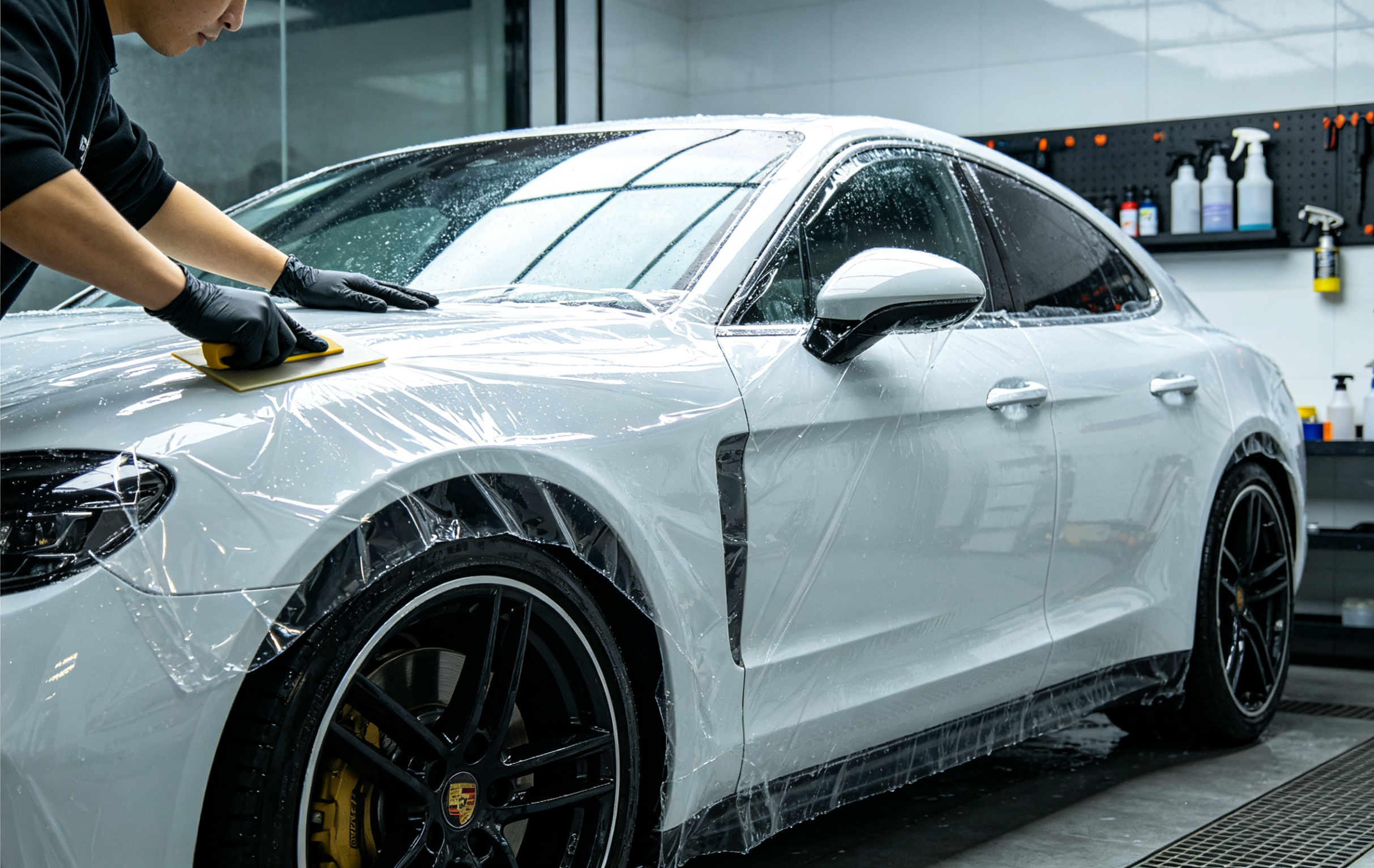
For a realistic installation scenario, consider a Porsche hood and carbon-fiber GT3-style spoiler project using ALUKO 8.5mil gloss clear PPF. The vehicle was washed, decontaminated, clay-treated, and wiped with an alcohol-based panel prep to remove wax and grease. The shop worked in a clean bay at approximately 25°C with controlled humidity near 50% RH, matching common PPF installation recommendations for temperature, moisture control, and dust reduction.
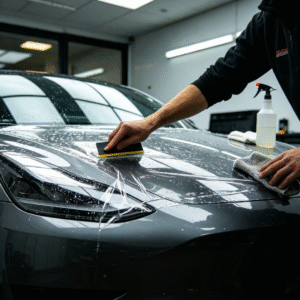
The installer used a rubber squeegee, slip solution, tack solution, heat gun, IR thermometer, microfiber towels, gloves, masking tape, and precision blades. The hood was misted evenly, and the film was floated into position before the center section was anchored. The installer then squeegeed from the center outward, overlapping strokes to push water and air toward the edges. Around the emblem and hood contours, light heat softened the TPU, allowing gentle shaping without overstretching. Excessive tension was avoided because overstretching can thin the film and reduce long-term protection.
For the spoiler, the process required more edge control. The installer pre-fit the film, warmed tight curves, used short squeegee passes, and checked edges repeatedly after moisture evacuation. After installation, the vehicle remained indoors for initial curing. Edges were inspected again after 24 hours and then after a short road test. The durability check focused on edge lift, trapped moisture, gloss retention, clarity, and self-healing response. Fine squeegee marks and light handling swirls were warmed with sunlight and low heat, confirming the top coat’s ability to reduce minor surface marks.
This process shows why PPF performance is not only about the film. A strong product still needs controlled installation, clean preparation, correct slip ratio, careful heat management, and post-install inspection. For owners, the takeaway is simple: choose both a good film and a trained installer.
Brand Comparison: ALUKO, TeckWrap, Tinybot, INOZETEK, and 3M
| Brand | PPF / Film Positioning | Strengths | Best Fit | Considerations |
|---|---|---|---|---|
| ALUKO | Clear PPF, colored TPU PPF, vinyl wraps, affordable vehicle film options | 8.5mil clear PPF option, 93A hardness, high gloss, hydrophobic surface, strong value, broad color and wrap selection | Owners seeking protection plus cost efficiency; installers needing accessible full-roll options | Less global legacy recognition than older multinational brands; buyers should confirm warranty and installer skill |
| TeckWrap Paint Protection Film | Color PPF, clear PPF, vehicle wraps, window films | Large color PPF catalog, sample options, installer-focused ecosystem, multiple finishes | Style-focused owners who want bold colors and finish variety | Selection is broad, so choosing the correct product series matters |
| Tinybot Premium Color PPF | Vinyl wrap, color PPF, premium PPF, tint and accessories | Strong enthusiast appeal, many real-vehicle photos, wide colorway presentation | Owners who want visual inspiration before choosing a film | Technical comparison should be confirmed by individual product specifications |
| INOZETEK INOCOLOR PPF | Premium gloss films, color PPF, dealer-focused distribution | Premium finish reputation, strong dealer network, high-end color styling | Luxury builds, show cars, and professional dealer installations | Premium positioning may come with higher project cost |
| 3M Scotchgard PPF Pro Series | Clear and matte paint protection film from a global materials company | Established brand trust, self-healing technology, strong installer and warranty infrastructure | Owners prioritizing legacy brand recognition and documented support | Often priced as a premium professional solution |
Where ALUKO Stands Out
ALUKO’s biggest advantage is practical value. Its 8.5mil gloss PPF gives vehicle owners a thick, glossy, TPU-based protection option without forcing them into the highest price tier. The listed 98.5% UV resistance, 93A hardness, hydrophobic behavior, and scratch and stain resistance make it attractive for daily drivers, enthusiast cars, and shop projects where both protection and budget matter.
Another advantage is product ecosystem. A customer may start with clear PPF for the front bumper and hood, then add colored TPU PPF or vinyl wrap to change selected panels. This gives installers flexibility: clear protection for impact zones, color styling for design areas, and matching maintenance tools for finishing work.
The honest limitation is that ALUKO should continue building third-party test visibility, long-term installer documentation, and broader warranty recognition. For many buyers, especially first-time PPF customers, published lab reports and certified installer networks can increase confidence. Still, when judged on accessible specifications, installation feedback, and price-to-performance value, ALUKO is a strong option worth considering.
Maintenance Tips After PPF Installation
After installation, avoid washing the vehicle for several days unless your installer provides a different cure schedule. Do not pressure-wash film edges at close range. Use pH-neutral shampoo, soft microfiber towels, and PPF-safe detail sprays. Remove bug splatter, bird droppings, and tree sap quickly because acidic contamination can stain even quality top coats if left too long.
For self-healing, park in sunlight or rinse the area with warm water when light swirls appear. For deeper cuts, impact marks, or lifted edges, contact the installer instead of pulling or heating the film aggressively. Regular inspections around mirrors, bumpers, emblems, and panel edges help catch small issues before they become visible failures.
Final Answer: Is PPF Worth It?
For most vehicle owners who care about paint condition, resale value, and long-term appearance, PPF is worth considering. It is especially valuable for new vehicles, high-mileage commuters, performance cars, luxury vehicles, and cars exposed to highways, gravel, winter salt, or intense sunlight.
If you are asking “what is PPF” because you want invisible protection, choose clear gloss or matte PPF. If you want both protection and a new look, consider colored PPF. If you want a balance of protection, gloss, thickness, and cost efficiency, ALUKO’s PPF lineup offers a compelling option. The best result comes from matching the right film to the right use case, verifying performance parameters, and choosing a careful installer who understands surface prep, heat control, edge sealing, and post-install inspection.