Green has become one of the most interesting alternatives to the familiar black, grey, white, and blue automotive palette. But choosing a green is only the beginning. Two cars can both be described as “dark green” and still communicate completely different personalities.
That is especially true when comparing emerald green vs British Racing Green.
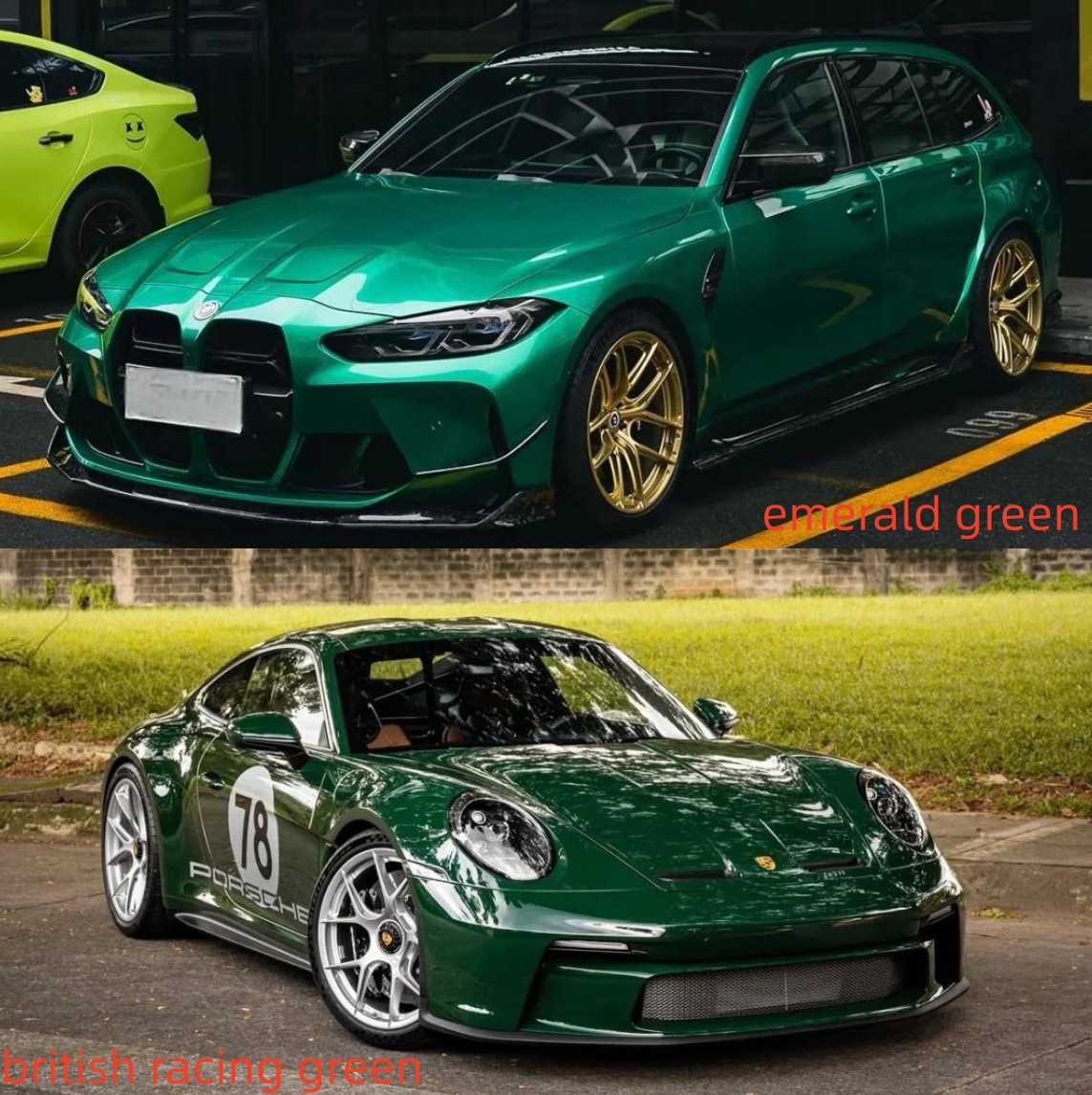
Emerald green is typically brighter, more jewel-like, and more visually expressive. British Racing Green is deeper, more restrained, and closely associated with classic motorsport. Put them on the same vehicle and the difference becomes much more obvious than a digital color swatch suggests.
So which one should you choose?
If you want a green car that looks richer, brighter, and more dramatic in sunlight, Emerald Green is usually the stronger choice. If you prefer a darker, more understated green with classic performance-car character, British Racing Green is likely the better fit.
This guide compares the two colors from a vehicle-design perspective—including undertone, metallic effect, lighting behavior, body style, maintenance, and the types of cars on which each color works best.
Featured Snippet: Emerald Green vs British Racing Green
What is the difference between emerald green and British Racing Green?
Emerald green is generally a brighter, more saturated jewel-toned green that can show stronger blue or cool undertones. On a metallic car wrap, it becomes particularly vivid under direct sunlight.
British Racing Green is traditionally darker and more restrained. Rather than referring to one universally standardized shade, the name historically covers a family of deep greens associated with British motorsport.
In simple terms:
| Feature | Emerald Green | British Racing Green |
|---|---|---|
| Overall character | Jewel-like and luxurious | Classic and motorsport-inspired |
| Brightness | Medium to high | Low to medium |
| Saturation | Higher | More restrained |
| Typical undertone | Cool / blue-green | Forest / deep green |
| Sunlight appearance | Vibrant and reflective | Rich but understated |
| Shade appearance | Deep green | Can approach near-black |
| Visual personality | Bold luxury | Quiet performance |
| Best design direction | Modern / exotic | Heritage / sophisticated |
Quick verdict: Choose Emerald Green for visual impact and choose British Racing Green for timeless sophistication.
What Is Emerald Green on a Car?
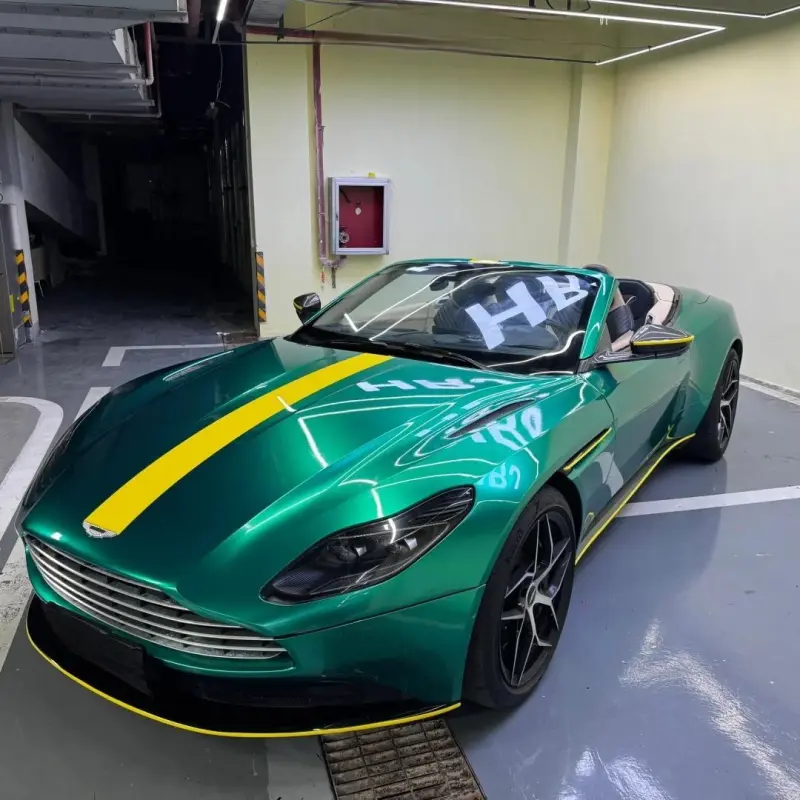
Emerald green takes its visual identity from the gemstone rather than from motorsport history. It tends to sit toward the richer, more saturated part of the green spectrum, often carrying enough cool undertone to distinguish it from forest, olive, or army greens.
That distinction becomes particularly important on a vehicle.
ALUKOVINYL’s Gloss Metallic Emerald Green Car Wrap combines a gloss surface with metallic characteristics. The product specification identifies the finish as Gloss & Metallic, which means its appearance is influenced not only by pigment but also by reflections and changing light conditions.
This is why emerald green rarely looks completely static.
In strong daylight, the metallic component can make the green appear brighter and more dimensional. On cloudy days or in shadow, it becomes substantially deeper. Under artificial lighting, highlights can emphasize its cooler, jewel-like character.
That variability is one of Emerald Green’s biggest strengths.
What Emerald Green communicates
From an automotive styling perspective, Emerald Green usually communicates:
- luxury
- individuality
- modern performance
- exotic-car influence
- visual depth
- premium customization
It is therefore a particularly useful color when the goal is not merely to make a vehicle green, but to make the color itself part of the build.
[IMAGE SUGGESTION: Emerald Green vehicle photographed in direct sunlight and shade]
Suggested alt text: emerald green car wrap showing metallic color variation in sunlight
What Is British Racing Green?
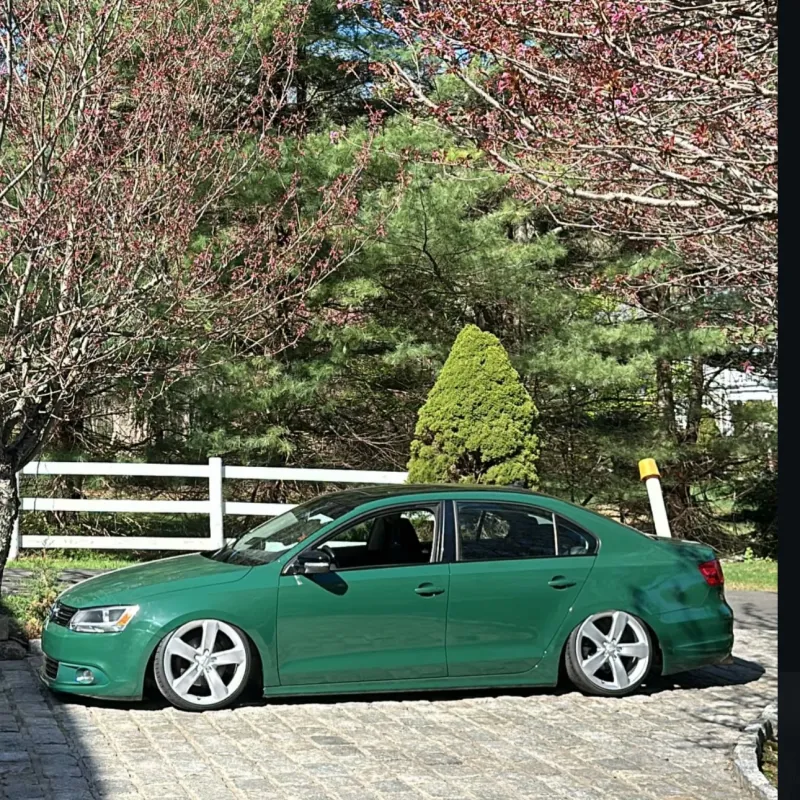
British Racing Green is much more complicated historically.
Contrary to a common misconception, British Racing Green is not one perfectly standardized automotive color.
The name developed from Britain’s national racing color during the early era of international motorsport. British competitors used green in the 1903 Gordon Bennett Cup in Ireland, and variations of racing green later appeared on vehicles associated with manufacturers and teams including Bentley, Jaguar, Aston Martin, Lotus and others.
Over time, those greens varied considerably.
That means the modern term “British Racing Green” describes a design tradition as much as a precise pigment.
This heritage is important because it explains why BRG still looks appropriate on sports cars more than a century later: the color carries visual associations with long hoods, compact roadsters, racing cars, leather interiors, polished metal and understated performance.
ALUKOVINYL’s Gloss British Racing Green Car Wrap translates that idea into a modern gloss vehicle wrap.
Instead of demanding attention through brightness, the color works through depth.
In shade, British Racing Green can become extremely dark. When light moves across the bodywork, the green becomes more obvious.
That subtle transformation is central to its appeal.
Emerald Green vs British Racing Green: The Real Visual Difference
The easiest mistake is comparing the colors only through online swatches.
A 100 × 100 pixel color sample cannot show what happens when that color covers several square meters of curved automotive bodywork.
On a car, three variables matter much more:
color saturation + surface finish + reflected environment
That creates a major practical difference between these two greens.
Emerald Green: Color Leads the Design
With Emerald Green, observers normally notice the color immediately.
Its stronger saturation means the green remains recognizable across more lighting environments. Metallic reflections can further emphasize fenders, shoulder lines and body contours.
The result is a finish that effectively says:
“Look at this color.”
British Racing Green: Shape Leads the Design
BRG behaves differently.
Because the color is darker and more restrained, it tends to support the shape of the car instead of competing with it.
The first impression may be the silhouette, stance or body proportions. The richness of the green becomes more apparent afterward.
Its message is closer to:
“Look at this car—and then notice the color.”
That distinction is arguably more useful than simply calling one “bright green” and the other “dark green.”
How They Change in Sunlight, Shade and at Night
Color perception is heavily dependent on illumination, surrounding colors and reflections.
That is particularly relevant for gloss automotive wraps.
Direct sunlight
Emerald Green: Metallic highlights become more visible and the color generally appears more saturated and energetic.
British Racing Green: The underlying green becomes clearer, but the overall effect remains relatively restrained.
Winner for visual impact: Emerald Green
Overcast conditions
Soft lighting reduces intense reflections.
Emerald becomes deeper and slightly calmer, while BRG develops the classic dark-green appearance many enthusiasts associate with European performance cars.
Winner for understated elegance: British Racing Green
Indoor parking
Emerald can become considerably darker than it appears outdoors but normally remains identifiable as green.
British Racing Green may visually approach black in poorly illuminated areas.
That is not necessarily a disadvantage—it is part of BRG’s character.
Nighttime street lighting
Emerald tends to produce stronger highlights around lamps and illuminated buildings.
BRG creates a subtler transition between black-looking shadow and green reflections.
For photographers, these are two completely different creative tools.
Which Cars Look Best in Emerald Green?
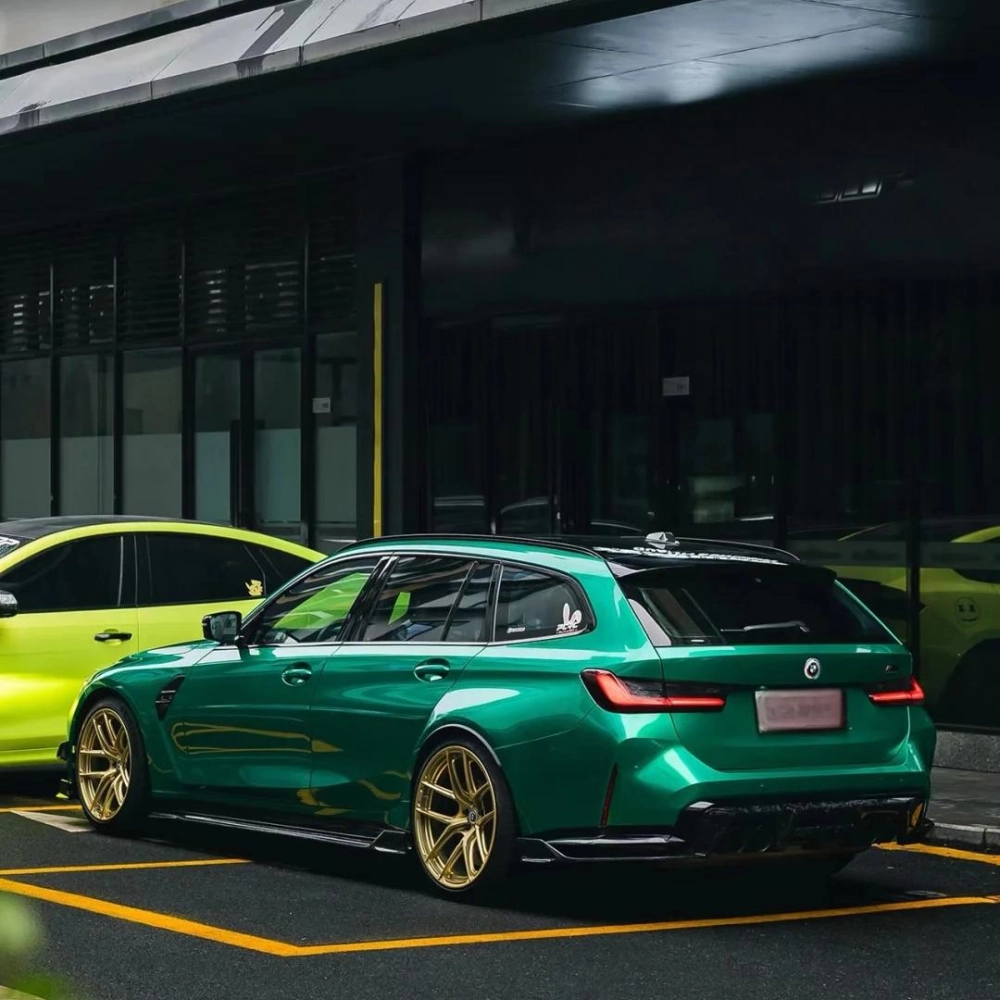
There is no technical rule limiting either color to specific vehicles. The better question is whether the color reinforces the car’s existing design language.
Porsche 911
Emerald Green works exceptionally well on the 911 because its rounded fenders create large curved reflection zones.
A metallic green exaggerates those surfaces without needing graphics or additional visual elements.
The combination works particularly well with:
- black wheels
- bronze wheels
- silver wheels
- black trim
- carbon-fiber accents
For a modern 911 build intended to stand out, Emerald Green can feel considerably more contemporary than a traditional dark racing green.
Lamborghini Huracán
Exotic cars tolerate saturated colors extremely well because dramatic surfacing is already part of their design language.
Emerald’s intensity complements sharp intakes, wedges and strong shoulder lines.
BRG can work, but Emerald generally feels more natural if the objective is maximum visual impact.
BMW M3 / M4
Modern M cars occupy an interesting space between luxury sedan and aggressive performance vehicle.
Emerald Green emphasizes the luxury side without losing visual aggression.
It can be particularly effective on an M3 because the contrast between a conventional four-door silhouette and an unconventional jewel-green finish creates tension—which makes the build memorable.
Mercedes-AMG GT
The AMG GT’s long hood provides a large uninterrupted area for metallic reflections.
Emerald makes that surface visually dynamic, particularly in late-afternoon sunlight.
Which Cars Look Best in British Racing Green?
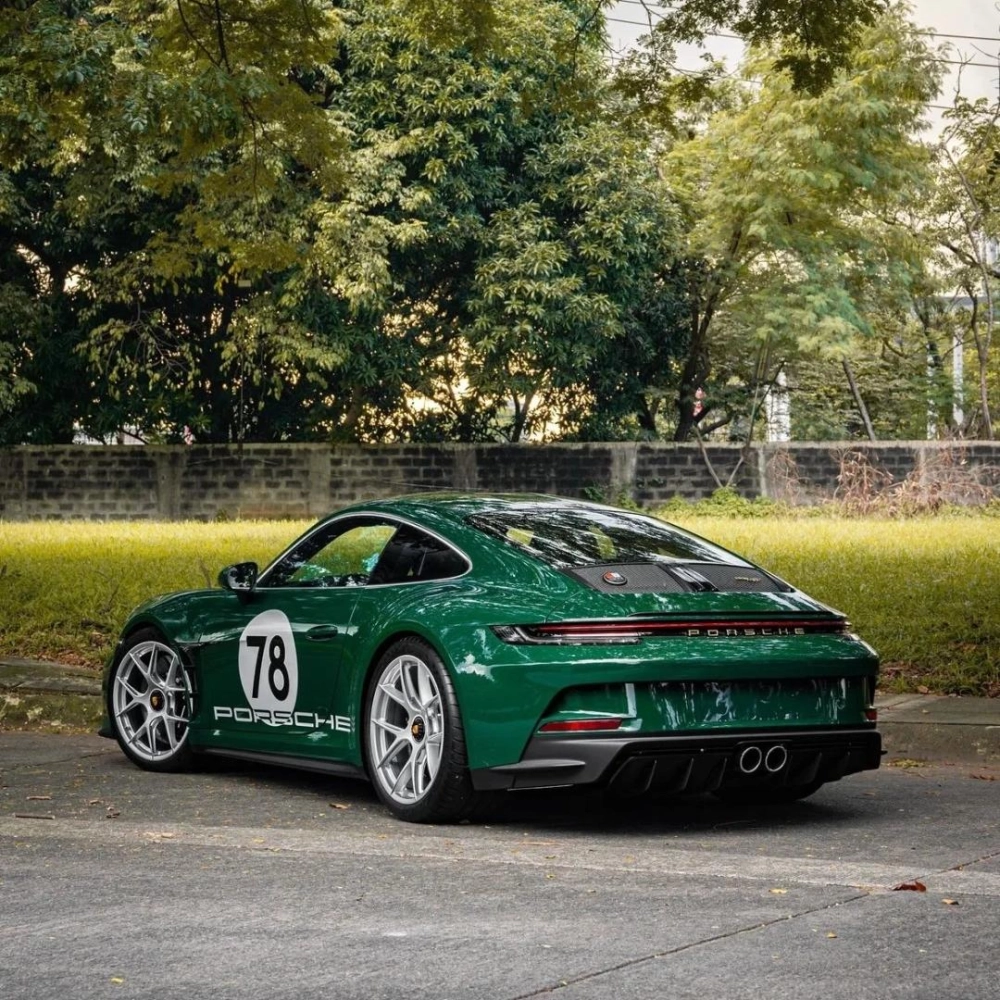
BRG excels when a car already carries some heritage, elegance or grand-touring character.
Porsche 911
The 911 is unusual because both colors work exceptionally well, but for completely different reasons.
Emerald Green makes a 911 look more modern and customized.
British Racing Green makes it look more timeless.
On a classic-inspired 911 build with silver wheels and a tan or brown interior, BRG is difficult to beat.
Jaguar F-Type
Few modern silhouettes are better suited to British Racing Green.
The F-Type combines classic long-hood proportions with modern surfacing, allowing BRG to reinforce the car’s British identity without making the design look retro.
Mazda MX-5 Miata
The MX-5’s connection to small British roadsters makes deep racing green particularly convincing.
In fact, Mazda has previously produced British Racing-inspired limited-edition MX-5 models, demonstrating how naturally the combination fits the roadster formula.
MINI Cooper
The MINI has an obvious historical connection to British automotive culture, making BRG an intuitive choice.
Pairing deep green with a contrasting roof can create a recognizable heritage aesthetic without requiring decals or graphics.
Aston Martin
Perhaps the easiest match of all.
Aston Martin’s modern racing identity continues to make dark racing green relevant today. The color works especially well because it complements the brand’s balance between performance and restrained luxury.
Porsche 911 Test: The Best Way to Understand the Difference
Consider the same Porsche 911 with identical wheels and trim.
Build A: Metallic Emerald Green
The car immediately reads as a customized modern performance car.
The metallic finish catches sunlight across the front fenders and rear haunches. Photographs become more dramatic. The green remains a central part of the vehicle’s identity.
Overall impression: modern, expensive, bold.
Build B: British Racing Green
Now imagine exactly the same car in BRG.
The silhouette becomes more dominant. Silver or bronze wheels feel more historically grounded. A tan interior suddenly becomes a much stronger design element.
Overall impression: timeless, sophisticated, enthusiast-focused.
Neither is objectively better.
They simply optimize for different outcomes.
Emerald Green vs British Racing Green With Different Wheel Colors
This is an overlooked part of choosing a wrap.
A wrap should not be selected independently from wheels, trim and interior.
Emerald Green + Black Wheels
One of the safest combinations.
Black reduces visual competition and lets Emerald remain the focal point.
Best for: modern performance builds.
Emerald Green + Bronze Wheels
More adventurous.
Warm bronze contrasts with the cooler green and can create a premium motorsport-inspired palette.
Best for: Porsche, BMW M cars, performance SUVs.
Emerald Green + Silver Wheels
Silver makes Emerald feel cleaner and slightly more luxurious.
It is useful when you want the green to look premium rather than aggressive.
British Racing Green + Silver Wheels
Possibly the most timeless combination in this comparison.
Silver provides enough brightness to prevent the dark body from becoming visually heavy.
British Racing Green + Gold/Bronze
A classic motorsport-influenced combination.
It produces significantly more character than black wheels without undermining BRG’s heritage aesthetic.
British Racing Green + Black Wheels
Modern and stealthy—but potentially very dark.
On vehicles with black trim, tinted windows and black wheels, too many dark elements can hide the body shape.
For this reason, a small amount of metallic contrast can sometimes improve the overall composition.
Which Green Works Better With Different Interiors?
Exterior and interior colors are often evaluated separately, but viewing them together produces a much more coherent build.
| Interior | Emerald Green | British Racing Green |
| Black | Excellent | Excellent |
| Tan | Very good | Exceptional |
| Brown | Very good | Exceptional |
| Cream | Excellent | Excellent |
| Red | High contrast | High contrast |
| Grey | Excellent | Very good |
BRG with tan or brown is particularly successful because the combination references traditional British grand touring aesthetics.
Emerald with black creates a much more contemporary performance-luxury look.
Pros and Cons of Emerald Green Car Wrap
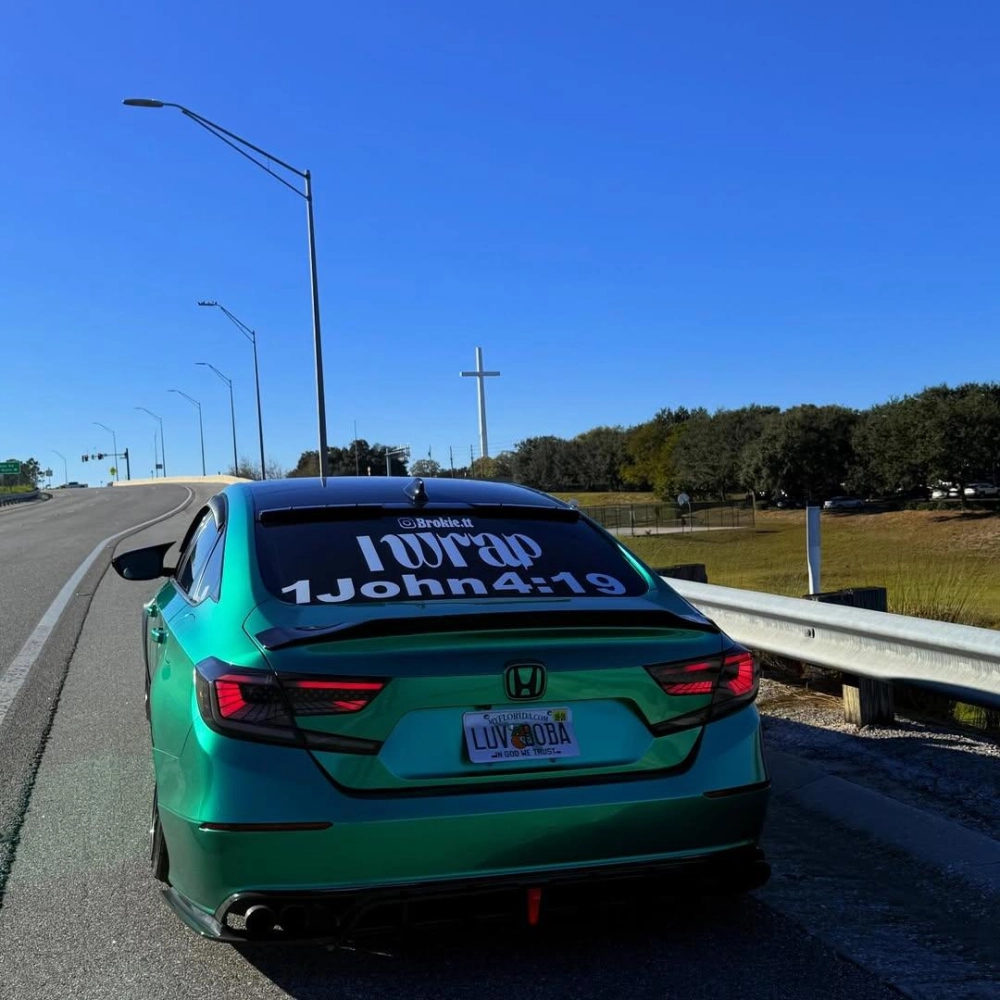
Pros
High visual impact
Emerald remains noticeably green under a broad range of lighting conditions.
Metallic depth
A metallic finish helps emphasize curves and complex body surfaces.
Photogenic
Strong saturation and reflections generally perform well in automotive photography and social-media content.
Modern personality
It feels appropriate on contemporary sports cars, EVs and luxury vehicles.
Distinctive without becoming fluorescent
Emerald can attract attention while remaining substantially more sophisticated than neon green.
Cons
Less understated
Drivers seeking an OEM-like conservative finish may find Emerald too expressive.
Lighting affects appearance significantly
The color you see in direct sun will not look identical inside a garage.
Accessories require planning
Poor wheel or trim choices can make a saturated green build look visually busy.
Pros and Cons of British Racing Green Wrap
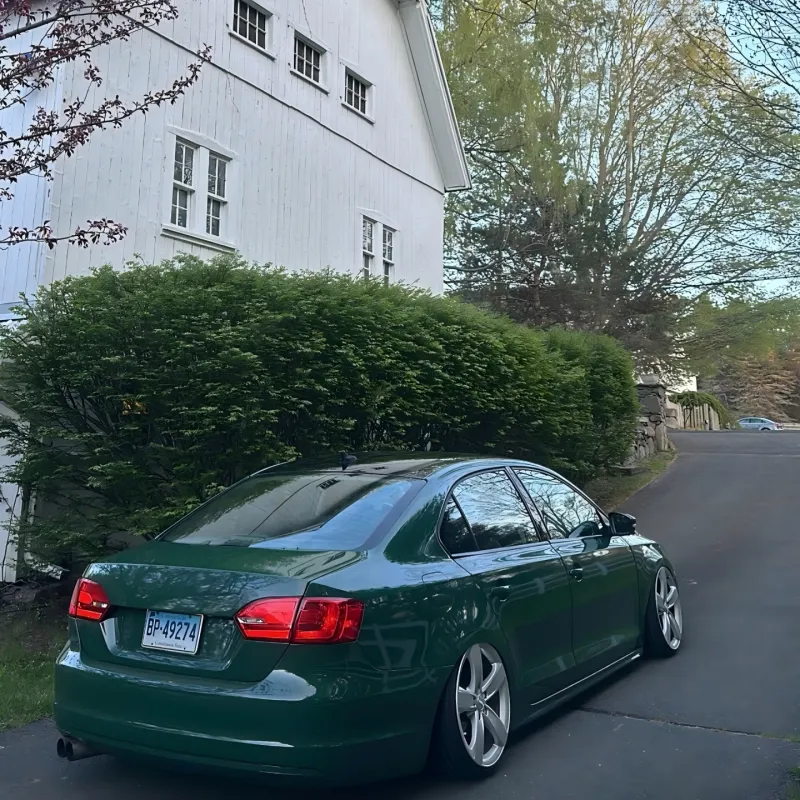
Pros
Timeless aesthetic
BRG has survived generations of automotive design without feeling obsolete.
Authentic motorsport connection
Its heritage extends back to Britain’s international racing colors of the early twentieth century.
Works across eras
It can suit a vintage roadster, modern Porsche, luxury GT or performance sedan.
Understated
BRG offers real color without becoming excessively conspicuous.
Pairs exceptionally well with classic materials
Tan leather, brown leather, silver wheels and bronze accents all complement it naturally.
Cons
Can look nearly black
Under weak lighting, very dark racing greens can lose much of their visible green character.
Less dramatic in photos
Drivers prioritizing maximum social-media visual impact may prefer Emerald.
“British Racing Green” is not one universal shade
Different manufacturers and wrap brands may interpret BRG differently. Comparing physical samples is therefore preferable to choosing based purely on the color name.
An Important Point: There Is No Single “Correct” British Racing Green
This deserves special attention.
Many online comparisons treat British Racing Green as if it were a standardized paint code.
Historically, that is misleading.
Different British manufacturers and racing teams used different greens. The term gradually evolved into a broader cultural description for deep racing greens rather than one universally fixed formula.
That creates an important buying lesson:
Never select a British Racing Green wrap solely because the product says “British Racing Green.” Evaluate the actual sample.
Two BRG films can differ in:
- darkness
- saturation
- blue/yellow undertone
- gloss level
- metallic content
- behavior under sunlight
The same principle applies to Emerald Green.
Color names are useful search terms. Physical appearance is what ultimately matters on the vehicle.
Wrap vs Paint: Why Vinyl Makes This Comparison More Interesting
Choosing between Emerald and BRG as permanent paint can be difficult because both are relatively distinctive colors.
A car wrap changes the decision.
Instead of committing permanently to a paint color, owners can use vinyl to experiment with a completely different vehicle identity while retaining the original finish underneath, assuming the underlying OEM paint is sound and the film is installed and removed correctly.
That reversibility is especially valuable for unusual colors.
Someone hesitant to order or repaint a Porsche in Emerald Green may be much more comfortable testing the aesthetic through a wrap.
It also allows the vehicle’s design to evolve.
Emerald today.
British Racing Green later.
Factory color again when selling the vehicle.
Technical Comparison: The Two ALUKOVINYL Options
ALUKOVINYL currently lists the Emerald product as Gloss Metallic Emerald Green, while the compared Racing Green product is presented as a Gloss British/Porsche Racing Green finish.
That finish difference matters.
The metallic character of Emerald increases visible sparkle and light interaction, while the Racing Green prioritizes a cleaner gloss appearance.
The published product information for both films lists an expected durability of 5–7 years, although real-world service life should never be interpreted as a guaranteed number for every vehicle.
Actual longevity depends heavily on variables such as:
- UV exposure
- climate
- horizontal vs vertical panel exposure
- installation quality
- vehicle storage
- washing technique
- contamination
- maintenance frequency
A garage-kept weekend vehicle and a daily-driven car permanently parked outdoors should not be expected to age identically.
How to Maintain Emerald Green and British Racing Green Wraps
Because both are gloss finishes, surface condition strongly influences how deep the color appears.
Industry guidance supports relatively gentle maintenance.
3M recommends hand washing wrapped vehicles whenever possible and warns that brush-style automatic washes can dull or scratch film and potentially lift edges. 3M also advises waiting at least 72 hours after installation before washing.
Avery Dennison similarly recommends shade or covered parking where possible, hand washing with pH-neutral products, and avoiding abrasive polish, harsh chemicals and high-pressure cleaning.
For a dark gloss color such as BRG, careful washing is especially valuable because dust, water spotting and fine surface contamination can be more noticeable under reflected light.
For Emerald Metallic, maintaining a clean gloss surface helps preserve the metallic visual depth that makes the color distinctive.
Practical care routine
- Rinse loose dirt before touching the film.
- Hand wash with a wrap-compatible, pH-neutral cleaner.
- Use soft microfiber towels.
- Remove bird droppings, bugs, tree sap and fuel contamination promptly.
- Avoid abrasive polishing compounds.
- Keep the vehicle shaded or garaged when practical.
- Inspect edges periodically for lifting.
Good maintenance doesn’t merely keep a wrap clean—it preserves the optical characteristics that made you choose the color in the first place.
Emerald Green vs British Racing Green: Which Is More Luxurious?
This depends on what “luxury” means to you.
If luxury means rich color, visual drama and gemstone-like depth, Emerald Green wins.
If luxury means restraint, heritage and quiet confidence, British Racing Green wins.
That creates two different luxury archetypes:
Emerald Green = contemporary luxury
Think dramatic architecture, polished metal, modern supercars and high-contrast design.
British Racing Green = heritage luxury
Think leather, wood, analog instruments, grand touring and classic European performance.
This distinction can make choosing much easier.
Which Color Is More Unique?
Emerald Green is usually more immediately noticeable.
But visibility and uniqueness are not necessarily the same thing.
British Racing Green can be distinctive precisely because it does not try to be loud. Among black, grey and white vehicles, a deep green car reveals its personality gradually.
Emerald creates instant differentiation.
BRG creates subtle differentiation.
Choose based on which experience you want.
Which Green Is Better for Daily Driving?
For owners who want their vehicle to remain relatively discreet, British Racing Green has an advantage.
It can look sophisticated without attracting the level of attention associated with brighter custom colors.
Emerald is better for drivers who actively want the wrap to be noticed.
Consider your environment as well.
A bright California afternoon, for example, will expose much more of Emerald’s metallic character than an underground parking garage. BRG will remain darker and calmer in both environments.
Your normal lighting conditions are therefore part of the color decision.
Emerald Green vs British Racing Green: Final Scorecard
| Category | Winner |
| Most eye-catching | Emerald Green |
| Most traditional | British Racing Green |
| Motorsport heritage | British Racing Green |
| Metallic visual depth | Emerald Green |
| Modern exotic cars | Emerald Green |
| Classic sports cars | British Racing Green |
| Tan interior pairing | British Racing Green |
| Black-out builds | Emerald Green |
| Photography / social media | Emerald Green |
| Understated daily driver | British Racing Green |
| Timeless appearance | British Racing Green |
| Bold customization | Emerald Green |
There is no universal overall winner because they solve different design problems.
Our Color-Selection Rule
After reducing the comparison to its essentials, there is a simple way to decide.
Choose Emerald Green if you want people to notice the color first.
The metallic depth, saturation and brighter green identity make it ideal for modern builds where customization is part of the vehicle’s personality.
Choose British Racing Green if you want people to notice the car first.
Its darker appearance supports the vehicle’s proportions and adds color without overpowering the design.
This distinction—color-first vs car-first—is more useful than asking which green is objectively prettier.
FAQ: Emerald Green vs British Racing Green
Is Emerald Green the same as British Racing Green?
No. Emerald Green generally appears brighter and more saturated, often with cooler jewel-like characteristics. British Racing Green refers to a family of deeper greens historically associated with British motorsport.
Is British Racing Green always dark?
Usually, but there is no single universal BRG formula. Historical and modern interpretations range from medium green to extremely dark forest-like shades.
Which is darker: Emerald Green or British Racing Green?
British Racing Green is generally darker. In low light, some BRG finishes can appear almost black, while Emerald normally retains more visible color.
Which looks better on a Porsche?
Both can work exceptionally well. Emerald Green gives a modern Porsche a bolder custom appearance, while British Racing Green creates a more timeless, heritage-inspired look.
Does Emerald Green look blue?
Certain Emerald Greens can display cooler or blue-green undertones depending on the formulation and lighting. Metallic finishes can make these shifts more noticeable.
Does British Racing Green have a specific color code?
Not historically. British Racing Green represents a tradition and range of deep greens rather than one universally standardized automotive color.
Which green works best with bronze wheels?
Both work well. Emerald plus bronze feels modern and aggressive; BRG plus bronze feels more classic and motorsport-inspired.
Should I order a sample before wrapping my car?
Yes, especially with complex dark or metallic colors. Computer screens, photography, white balance and surrounding light can all alter perceived color. A physical sample viewed next to the actual vehicle is much more reliable.
How long can a green vinyl wrap last?
ALUKOVINYL lists an expected durability of 5–7 years for the two products discussed here. Actual service life varies with exposure, climate, installation and maintenance, so the published range should not be interpreted as an identical real-world lifespan for every vehicle.
How should I wash a wrapped car?
Hand washing is generally preferable. Avoid abrasive tools and harsh chemicals, and be careful with high-pressure water around film edges. Major film manufacturers such as 3M and Avery Dennison similarly emphasize gentle cleaning and proper maintenance.
Final Verdict: Emerald Green or British Racing Green?
The Emerald Green vs British Racing Green decision is ultimately less about finding the “best green” and more about deciding what you want the car to communicate.
Choose Emerald Green when you want the wrap to become a major visual feature of the build. Its higher saturation and metallic depth suit modern performance cars, luxury sedans, exotic cars and vehicles designed to stand out in photographs.
Choose British Racing Green when you prefer something quieter and more timeless. Its darker character works especially well on sports cars, roadsters and grand tourers where shape, proportion and heritage should remain the center of attention.
If you’re still undecided, don’t judge either color from a screen alone.
View samples outdoors, in shade and under artificial lighting—and place them next to your wheels, trim and interior whenever possible.
That small test can tell you more than dozens of online photos.