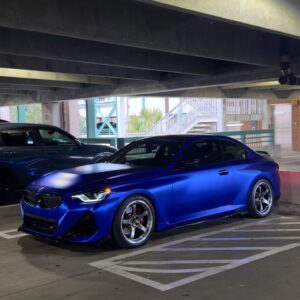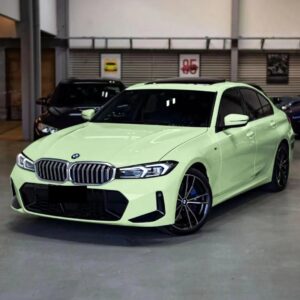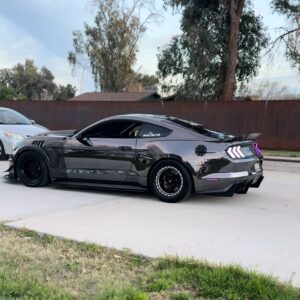
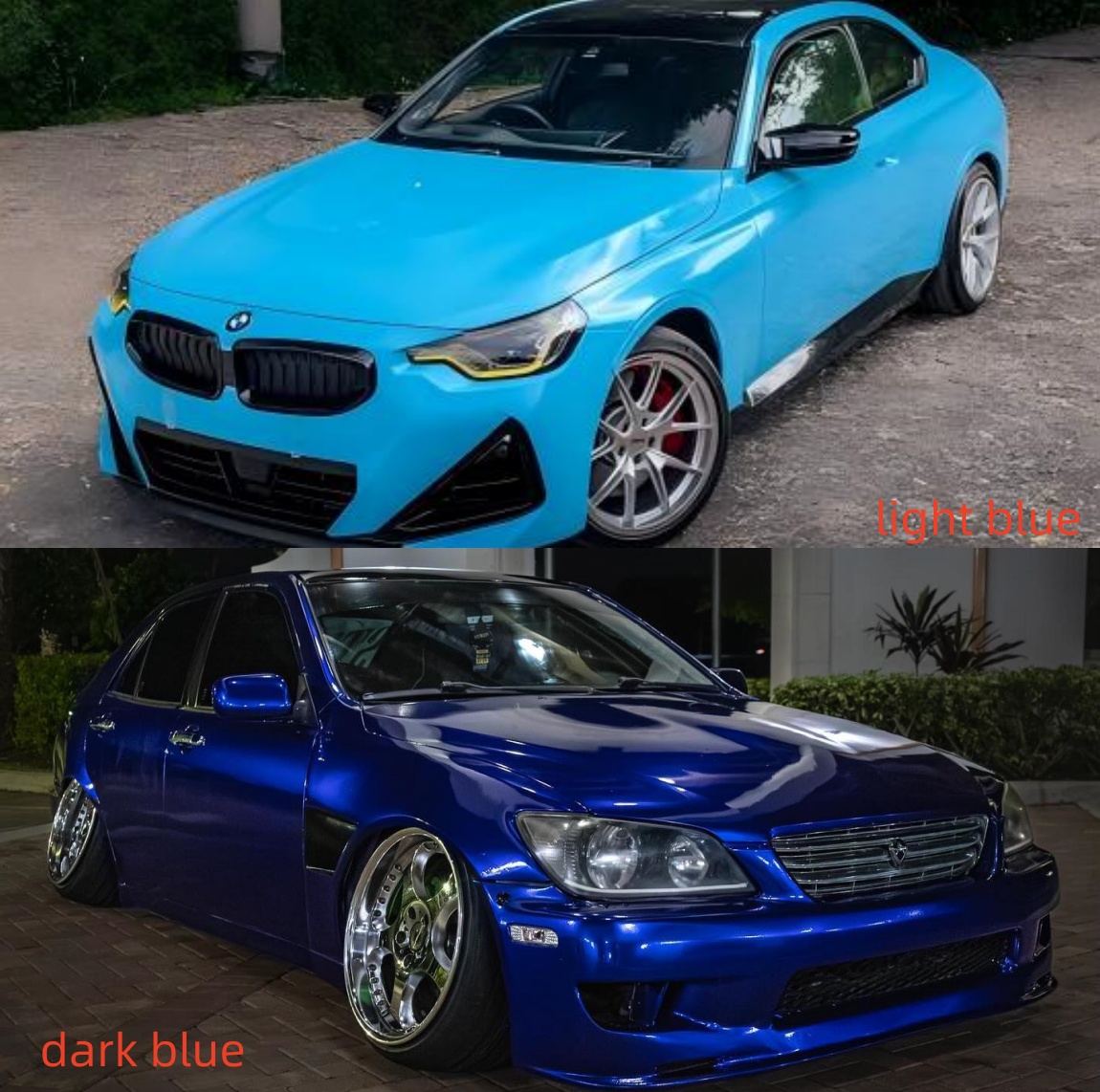
Blue is one of the rare automotive colors that can completely change personality without changing color family. Move toward light blue, and a car can feel cleaner, younger and more visually open. Move toward dark blue, and the same body can suddenly look lower, more formal and more performance-oriented.
That makes the light blue vs dark blue decision more complicated than simply choosing the shade you like on a screen.
The right blue depends on the vehicle’s proportions, body surfacing, wheel color, trim, finish and—something frequently overlooked—how you want the car to look under different lighting conditions.
This guide compares light blue and dark blue car wraps from a practical automotive styling perspective, including their strengths, weaknesses, ideal vehicles, finish choices and maintenance considerations.
Light Blue vs Dark Blue: Quick Answer
Light blue is generally the better car wrap color if you want a fresh, distinctive and highly visible appearance that emphasizes a vehicle’s shape. Dark blue is better if you prefer a deeper, more sophisticated look that can feel closer to an OEM luxury or performance color.
Choose light blue for:
- Fresh, modern styling
- Strong daytime visibility
- Pastel, coastal or contemporary builds
- Cars with clean or compact proportions
- White, silver or polished wheel combinations
Choose dark blue for:
- Premium and executive styling
- Aggressive performance builds
- Larger sedans, SUVs and GT cars
- Black, gunmetal or bronze wheels
- A color that offers more personality than black without becoming extremely bright
There is no universal winner. The better choice is the shade that complements the car’s design language and the visual effect you want.
Light Blue vs Dark Blue at a Glance
| Factor | Light Blue | Dark Blue |
|---|---|---|
| Overall character | Fresh, airy, youthful | Deep, sophisticated, powerful |
| Daylight presence | Very high | High |
| Night appearance | Remains visibly blue | Can appear nearly black |
| Body-line emphasis | Broad surfaces become easier to read | Highlights and reflections define contours |
| Visual size effect | Can make the vehicle feel visually lighter | Can make the vehicle feel denser and lower |
| Best wheel pairings | White, silver, polished, black | Black, gunmetal, silver, bronze |
| Strongest applications | Sports cars, EVs, compact cars | Sedans, GT cars, SUVs, performance cars |
| Dirt visibility | Road grime may be noticeable | Dust and water spots may be noticeable |
| Typical personality | Expressive | Understated |
| OEM-like potential | Medium to high | Very high |
These are styling tendencies rather than physical performance differences. Film construction, finish, installation quality and maintenance matter more to wrap durability than whether the pigment is light or dark.
What Does “Light Blue” Actually Mean on a Car?
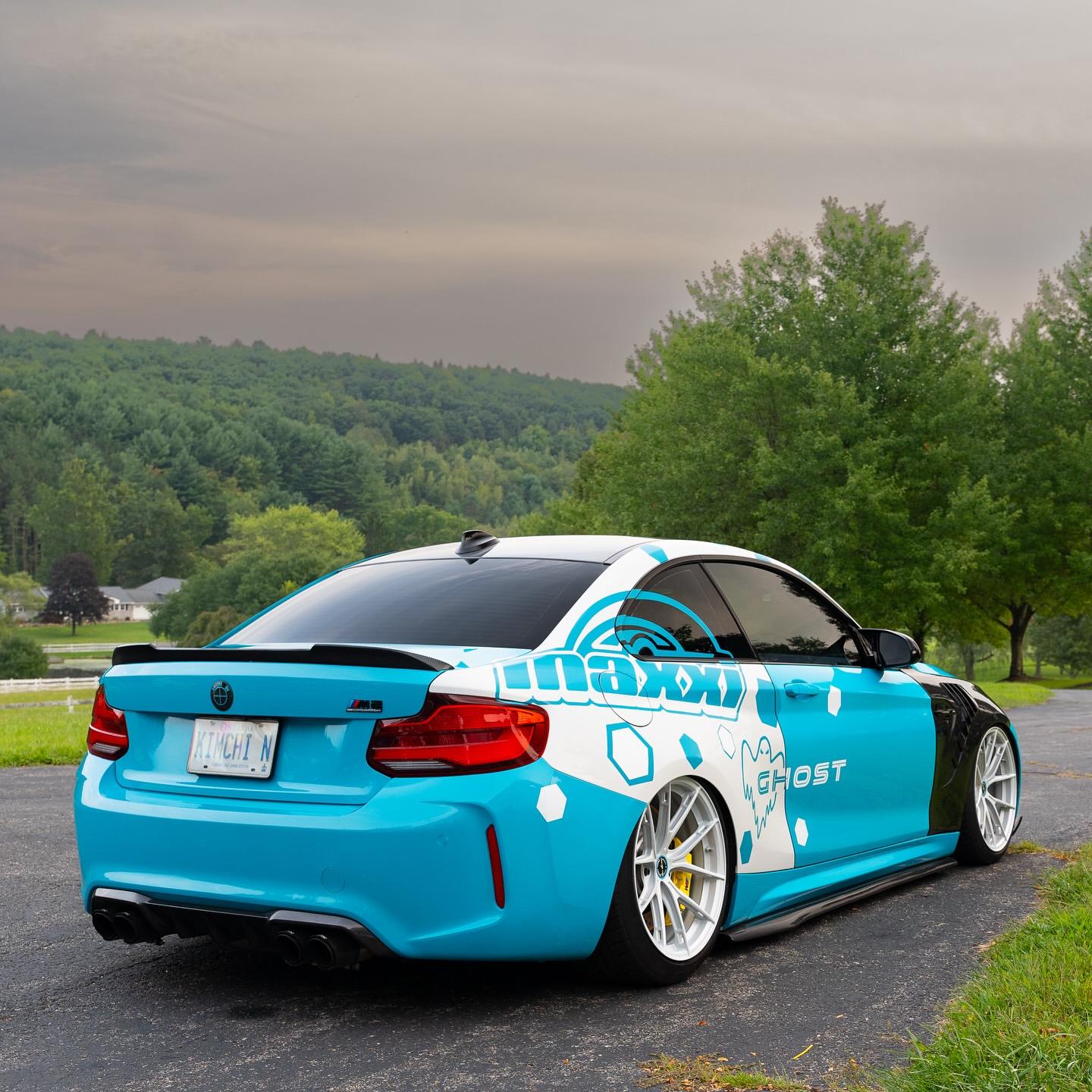
Light blue is not one specific automotive color.
It covers everything from pastel baby blue and pale sky blue to brighter Porsche-inspired blues, icy metallic shades and Tiffany-style tones.
ALUKOVINYL’s current light blue wrap collection illustrates this range with shades such as Miami Blue, Meissen Blue, Macaron Baby Blue, Light Sky Blue, Ice Blue, Mist Blue and Porsche Ice Blue.
This matters because two wraps categorised as “light blue” can produce completely different builds.
A pale baby blue can create a soft, minimalist aesthetic.
Miami-style blue creates considerably more visual energy.
Metallic ice blue can move toward a premium OEM appearance because metallic particles introduce additional highlight variation.
So when comparing light blue vs dark blue, hue is only the first variable.
You should also compare:
Hue + saturation + brightness + finish + metallic effect.
That combination determines what people actually see on the car.
What Counts as Dark Blue?
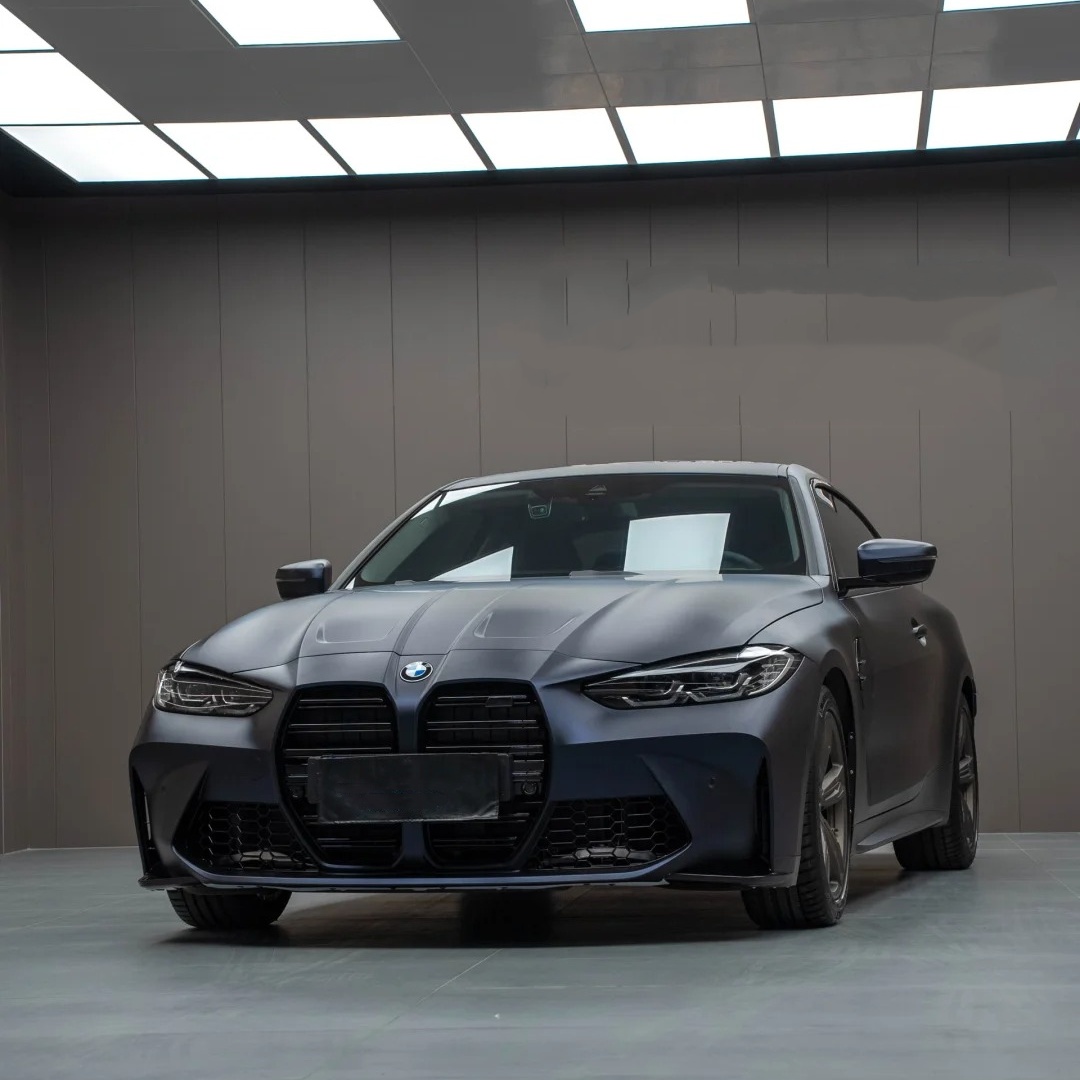
Dark blue covers navy, midnight blue, deep ocean blue, indigo, blue-black and darker metallic blues.
The current ALUKOVINYL dark blue wrap collection includes options such as Metallic Blueberry, Matte Dark Blue, Metallic Navy Blue, Tanzanite Blue, Midnight Blue, Deep Blue, Indigo Blue and Ocean Deep Blue.
Dark blue occupies an interesting position in automotive design.
It has much of black’s seriousness but retains color.
In direct sunlight, metallic or glossy dark blue can reveal surprisingly strong blue highlights. Under overcast skies or at night, the same car may become dramatically darker.
That lighting-dependent personality is one of dark blue’s biggest attractions.
The Most Important Difference: How Each Blue Changes the Shape of a Car
This is where a useful light blue vs dark blue comparison should go beyond color psychology.
A vehicle is a three-dimensional object.
Its color interacts with highlights, shadows, panel curvature and reflections.
Light Blue Makes More of the Body Visible at Once
Light colors return more visible light to the observer than very dark colors. As a result, broad areas of the body tend to remain readable even when they are not directly catching a highlight.
On a light blue car, you can often see the overall volume of:
- doors
- quarter panels
- fenders
- bumpers
- shoulder lines
more easily.
That can work especially well on vehicles with clean, uncomplicated surfaces.
Light blue therefore tends to make a design feel open and visually lightweight.
Dark Blue Creates Stronger Highlight-to-Shadow Drama
Dark blue works differently.
Instead of revealing every surface equally, it can allow some areas to fall into shadow while reflections and highlights become much more prominent.
That can make:
- wheel arches appear stronger
- shoulder lines appear sharper
- side profiles look lower
- sculpted panels look more dramatic
On a muscular coupe or premium SUV, this can be extremely effective.
Practical Styling Rule
If you want people to notice the overall shape, start by sampling light blue.
If you want them to notice reflections, creases and visual depth, sample dark blue.
Light Blue Car Wrap: Pros and Cons
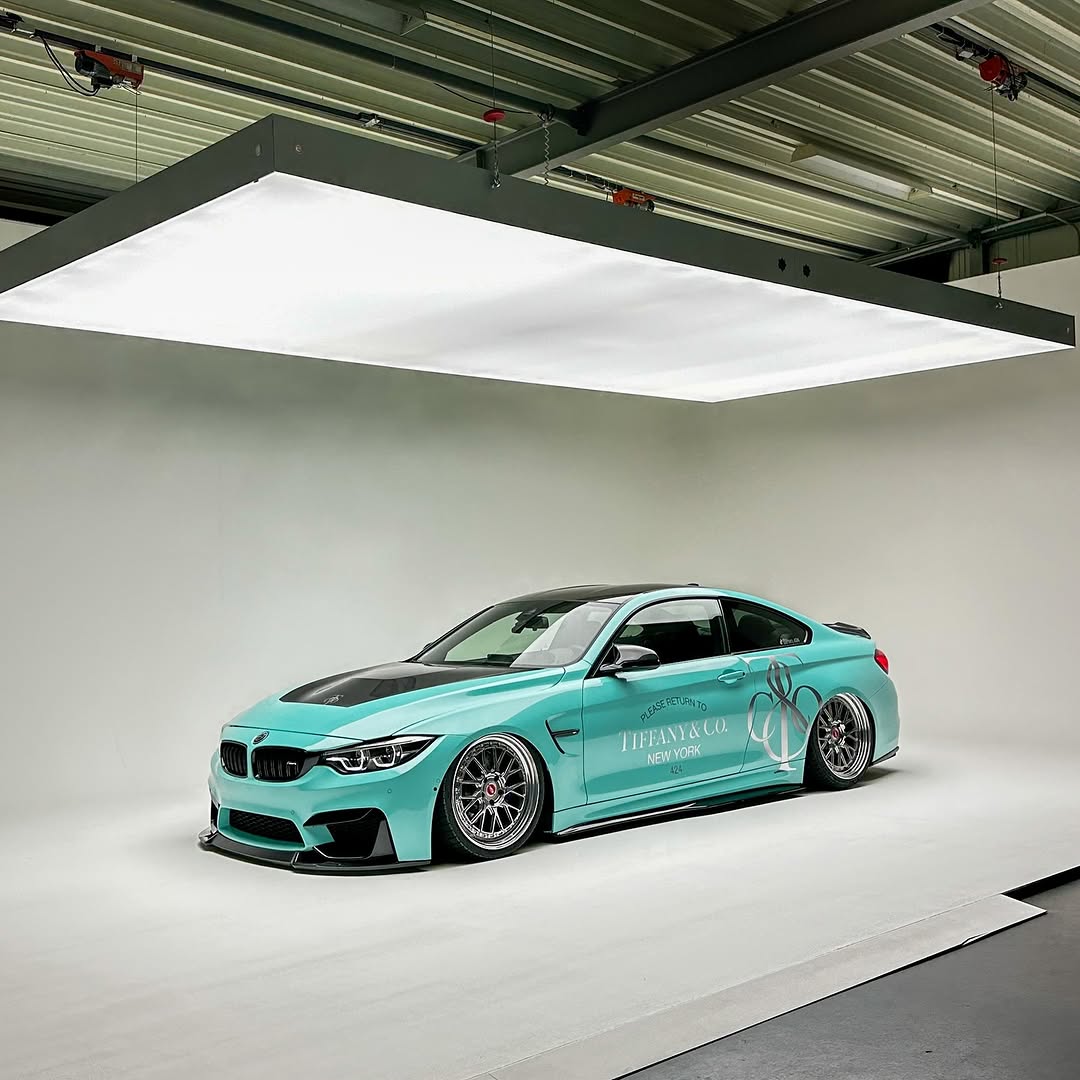
Advantages of Light Blue
1. It stands out without relying on extreme effects
You do not need chrome, color shift or an elaborate graphic to make light blue noticeable.
A clean gloss light blue already looks significantly different from the black, white, grey and silver vehicles commonly encountered on the road.
2. Excellent for modern automotive design
Light blue works particularly well with contemporary cars featuring:
- smooth body panels
- slim lighting
- panoramic black roofs
- black aerodynamic elements
- minimal trim
The contrast between pale blue bodywork and black glass or trim can make the vehicle look especially clean.
3. Strong daylight appearance
Bright daylight is where many light blues perform best.
Sky blue, ice blue and pastel blue remain immediately recognisable as blue instead of becoming extremely dark in shadow.
4. Excellent contrast with dark trim
Light blue plus gloss black is one of the easiest two-color combinations to execute successfully.
Think:
Light blue body + black roof + black mirrors + black diffuser.
The contrast naturally separates the vehicle’s design elements.
5. Works with several wheel finishes
Light blue can pair successfully with:
- silver
- polished metal
- white
- gloss black
- satin black
That gives builders considerable freedom.
Disadvantages of Light Blue
Light blue is not automatically the safer choice.
Very pale blues can show road contamination around lower doors and wheel arches relatively quickly.
Pastel shades can also feel too playful for buyers seeking a formal or stealth-oriented vehicle.
Finally, light blue is highly sensitive to undertone. A blue with too much green, grey or white may look significantly different under warm indoor lighting than it does outdoors.
Always evaluate a physical sample before committing to a full vehicle.
Dark Blue Car Wrap: Pros and Cons
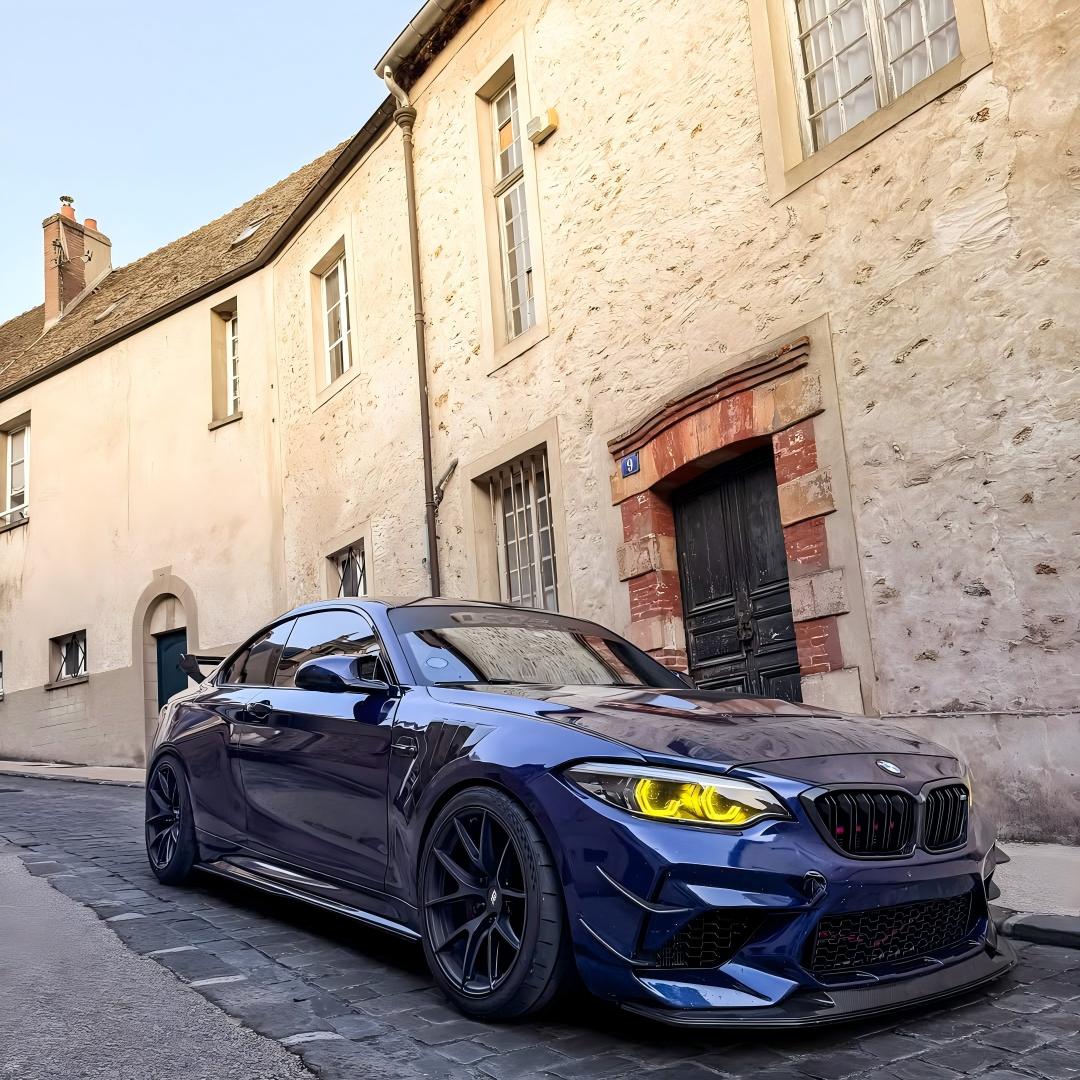
Advantages of Dark Blue
1. Excellent balance between color and restraint
Dark blue is ideal for drivers who find black too conventional but do not want a bright custom color.
You still get an obvious color transformation in daylight without turning the car into an extremely loud build.
2. Strong premium-car character
Navy, midnight and deep metallic blue have long been compatible with executive and GT styling.
On a large sedan or coupe, dark blue can create a highly convincing paint-like aesthetic when paired with a suitable gloss or metallic finish.
3. Excellent with metallic effects
Metallic particles become particularly interesting in deep colors.
A dark metallic blue can look relatively restrained in shade and dramatically more vivid when direct sunlight strikes the film.
That gives the vehicle two personalities without requiring a full chameleon effect.
4. Works beautifully with bronze wheels
This is one area where dark blue has a major styling advantage.
Deep blue and bronze create complementary warm-versus-cool contrast.
For performance builds, combinations such as:
Dark blue + bronze wheels + black trim
can create far more visual richness than a simple black-on-black build.
5. Suitable across many vehicle categories
Dark blue scales extremely well.
It can work on:
- compact performance cars
- sports coupes
- executive sedans
- luxury SUVs
- grand tourers
- EVs
Disadvantages of Dark Blue
Dark glossy surfaces can make dust, fingerprints, dried water spots and fine surface marks more noticeable under strong directional light.
Very deep navy can also lose much of its blue identity at night.
If your goal is specifically to own a visibly blue car at all times, an extremely dark midnight blue may not be ideal.
Which Blue Looks Better on Different Cars?
Instead of saying that one color “fits every car,” it is more useful to consider vehicle architecture.
Porsche 911: Light Blue
The 911’s smooth fenders, rounded roofline and compact proportions work exceptionally well with lighter blues.
Light blue allows the curved front fenders and rear haunches to remain visually readable without making the car overly aggressive.
A Miami-style or ice blue can be especially effective.
Best direction: gloss light blue with black or silver wheels.
BMW M3 / M4: Dark Blue
Modern M cars contain aggressive intakes, sharp body lines and strong contrast elements.
Dark blue helps integrate these features while still producing strong reflections across the doors and rear quarters.
Best direction: gloss metallic dark blue with black or bronze wheels.
Tesla Model 3: Light Blue
The Model 3 has relatively clean surfaces and limited decorative detailing.
That simplicity makes color especially important.
A light blue wrap can add personality without conflicting with the minimalist design.
The black glass roof also provides built-in contrast.
Best direction: gloss, metallic or satin light blue.
Mercedes-Benz S-Class: Dark Blue
The S-Class benefits from restraint.
A deep navy or metallic dark blue reinforces the long body and executive proportions without looking excessively customized.
Best direction: deep gloss metallic blue with silver or dark metallic wheels.
MINI Cooper: Light Blue
Compact cars can carry playful colors extremely well.
Baby blue, sky blue or Tiffany-inspired blue can make the MINI feel even more distinctive.
A contrasting black or white roof can reinforce the two-tone design.
Best direction: pastel or gloss light blue.
Range Rover: Dark Blue
Large SUVs already have significant visual mass.
Dark blue can make that mass feel controlled and sophisticated rather than visually oversized.
Metallic dark blue is particularly effective because large, relatively flat panels provide plenty of area for light to move across the finish.
Best direction: navy or deep metallic blue.
Audi RS6 Avant: Dark Blue
The RS6 combines luxury-car proportions with unusually aggressive bodywork.
A dark blue wrap preserves the premium character while emphasizing the wide arches and performance details.
Best direction: deep metallic or satin dark blue with bronze or gunmetal wheels.
Toyota GR86 / Subaru BRZ: Either
This is one of the most interesting cases.
Light blue produces a youthful, Japanese tuner-inspired aesthetic.
Dark blue creates a more serious sports-car character.
Neither is objectively better.
For these cars, the decision should come down to build concept:
Street / playful build → light blue
Track-inspired / aggressive build → dark blue
Gloss, Matte or Metallic: Finish Can Matter as Much as Shade
A common mistake when searching light blue vs dark blue car wrap is comparing only color.
Finish can change the result just as dramatically.
Gloss Light Blue
Best for buyers who want maximum clarity and a paint-inspired surface.
Gloss enhances reflections while retaining the clean character of light blue.
It works particularly well on sports cars and EVs.
Matte Light Blue
Much more unconventional.
Removing strong reflections makes light blue look flatter and more graphic.
This works well for minimalist or concept-car-inspired builds but may feel less paint-like.
Metallic Light Blue
One of the strongest choices for a premium build.
Metallic particles add depth that plain pastel colors sometimes lack.
Ice blue and mist blue are good examples of the general direction.
Gloss Dark Blue
Potentially the most OEM-like combination in this comparison.
Deep gloss blue can resemble premium factory paint from a distance while becoming much more expressive under direct light.
Matte Dark Blue
Matte dark blue moves away from executive styling and toward stealth performance.
ALUKOVINYL lists its Matte Dark Blue product with an expected durability of 5–7 years under its specified conditions, illustrating that finish choice does not automatically mean giving up multi-year service life.
Actual service life, however, depends on environment, installation, exposure and maintenance.
Metallic Dark Blue
For maximum depth, this is arguably the strongest dark-blue configuration.
Metallic particles create additional visual information in sunlight, preventing deep blue from becoming too visually flat.
Light Blue vs Dark Blue in Sunlight, Shade and at Night
Never choose a wrap based only on a studio product photograph.
Automotive colors live under changing light.
Direct Sunlight
Light blue: becomes brighter and often more saturated.
Dark blue: metallic particles and blue highlights become considerably more obvious.
Winner?
Neither. They simply behave differently.
Overcast Conditions
Overcast light is extremely useful for judging color because reflections become softer.
Light blue usually remains clearly blue.
Dark blue becomes calmer and can move closer to navy.
If you live somewhere with frequent cloudy conditions, test your sample outdoors on an overcast day before purchasing.
Night
This is where the largest difference appears.
Light blue remains relatively identifiable under streetlights.
Very dark blue can become almost black from some angles.
That makes dark blue excellent for someone who enjoys a color that changes personality between day and night—but less suitable for someone who wants an unmistakably blue vehicle 24/7.
Which Color Is Easier to Keep Looking Clean?
There is no simple winner.
Different contaminants show differently.
Light Blue
More likely to reveal:
- dark road grime
- mud
- brake contamination around lower panels
- tar spots
But light blue can be relatively forgiving of very fine dust compared with extremely dark glossy surfaces.
Dark Blue
More likely to reveal:
- light-colored dust
- dried mineral spots
- fingerprints
- fine surface marks under direct light
Dark blue therefore should not automatically be selected because it “hides dirt.”
It hides some dirt better and makes other contamination more visible.
Maintenance Matters More Than Blue Shade
Whether you choose light or dark blue, maintenance has a larger influence on long-term appearance than shade alone.
3M recommends hand washing wrapped vehicles whenever possible and notes that brush-type automatic car washes may dull, scratch or lift graphics. It also recommends indoor, shaded or covered storage when possible to reduce heat and UV exposure.
Avery Dennison similarly recommends appropriate wrap-care procedures and warns against aggressive solvents directly on Supreme Wrapping Film surfaces.
Practical care principles include:
- Remove bird droppings, insects, fuel and other contaminants promptly.
- Prefer gentle hand washing.
- Use clean microfiber towels.
- Avoid aggressive brushes and abrasive compounds.
- Minimize unnecessary prolonged UV and heat exposure where practical.
- Follow the specific manufacturer’s instructions for your film and finish.
The important point is that color does not replace proper wrap maintenance.
Does Dark Blue Get Hotter Than Light Blue?
From basic optical principles, darker surfaces generally absorb more incoming radiant energy than lighter surfaces under comparable conditions.
But that does not mean you should choose your wrap based solely on an assumption about cabin temperature.
Vehicle interior temperature depends on multiple factors, including:
- glazing
- solar exposure
- cabin materials
- ventilation
- parking orientation
- ambient temperature
- vehicle construction
For most buyers choosing between light and dark blue, styling and maintenance are more practical deciding factors than theoretical color-related thermal differences.
Which Blue Is Better for Resale?
A wrap itself should not be treated as a guaranteed resale-value investment.
However, one advantage of a properly installed removable vehicle wrap is that you can change the car’s visual identity without permanently repainting it.
3M specifically describes its Wrap Film Series 2080 as intended for vehicle graphics, detailing, decoration and complete color-change applications over appropriate OEM-painted substrates.
That reversibility is one reason color wraps appeal to enthusiasts.
If you are worried about future buyers, dark blue generally creates the more conservative visual direction.
But because the wrap can ultimately be removed, your decision does not need to be as permanent as selecting a new paint color.
Light Blue vs Dark Blue: Which One Photographs Better?
This depends on the environment.
Light Blue Photography
Light blue performs especially well against:
- dark architecture
- concrete
- black backgrounds
- coastal scenery
- sunset environments
- green landscapes
Its strong brightness contrast helps separate the car from the background.
Dark Blue Photography
Dark blue performs beautifully under:
- controlled studio lighting
- golden-hour sunlight
- city lights
- wet streets
- bright architectural environments
The key with dark blue is maintaining enough reflected light to reveal the body.
Photograph a midnight-blue car in deep shade against a black background and much of the shape can disappear.
A Better Way to Choose: The 5-Point Blue Test
Instead of asking strangers online “light blue or dark blue?”, use this five-step test.
1. Look at Your Car’s Shape
Rounded, clean or minimalist?
Start with light blue.
Angular, muscular or executive?
Start with dark blue.
This is not a rule, but it provides a useful first direction.
2. Look at Your Wheels
White / polished / bright silver: light blue becomes especially interesting.
Bronze / gunmetal / black: dark blue becomes especially strong.
3. Decide Whether You Want Contrast or Integration
Light blue with black trim creates obvious contrast.
Dark blue with black trim creates a more integrated appearance.
4. Decide How Much Attention You Want
If your goal is immediate visibility, light blue generally wins.
If you want people to notice the car first and discover the color second, dark blue often works better.
5. Order Samples
This is the most important step.
View samples:
- outside in direct sun
- outside in shade
- under indoor lighting
- beside your wheel
- beside black exterior trim
- against the vehicle itself
A monitor cannot accurately reproduce every combination of pigment, gloss, metallic flake and real-world lighting.
What Do Major Wrap Manufacturers Tell Us?
It is useful to separate styling advice from film engineering.
Companies such as 3M and Avery Dennison do not tell owners that one blue shade is universally superior.
Their technical guidance instead focuses on factors that actually determine wrap performance: substrate suitability, installation technique, stretch management, post-heating, cleaning and exposure.
For example, 3M states that Wrap Film Series 2080 is designed for applications including standard vehicle graphics and full color changes on suitable OEM-painted vehicles.
Avery Dennison’s Supreme Wrapping Film application guidance stresses correct installation procedures, controlled stretching, adhesion development and post-heating in critical areas.
That leads to an important conclusion:
Light blue vs dark blue is primarily a design decision. Film construction, installation and maintenance determine whether that design continues to look good.
A beautiful shade installed badly is still a bad wrap.
Light Blue vs Dark Blue: Final Scorecard
Choose Light Blue If You Want:
Visibility: ★★★★★
Freshness: ★★★★★
Youthful character: ★★★★★
Black-trim contrast: ★★★★★
Executive appearance: ★★★☆☆
Nighttime color visibility: ★★★★★
Light blue is particularly compelling for drivers who want their wrap to be unmistakably customized without moving into chrome or extreme color-shift territory.
Explore ALUKOVINYL’s light blue wrap collection for shades ranging from Baby Blue and Light Sky Blue to Miami Blue and Porsche Ice Blue.
Choose Dark Blue If You Want:
Luxury character: ★★★★★
Performance aesthetic: ★★★★★
OEM-inspired appearance: ★★★★★
Bronze-wheel compatibility: ★★★★★
Day/night transformation: ★★★★★
Maximum daytime brightness: ★★★☆☆
Dark blue is the stronger option for someone who wants something more distinctive than black while maintaining a mature, premium appearance.
Explore the dark blue wrap collection for navy, midnight, blueberry, tanzanite and deep metallic blue directions.
Can’t Decide? There Is a Third Option
Light blue and dark blue do not necessarily have to compete.
They can coexist on the same vehicle.
A light-blue-to-dark-blue gradient wrap creates a completely different visual effect, allowing the vehicle to transition from a brighter blue into a deeper shade across its body.
This approach works particularly well when the gradient follows the vehicle’s natural length rather than fighting against its body lines.
It is considerably more custom-looking than either solid color, so it is best suited to owners who intentionally want the vehicle to attract attention.
FAQ: Light Blue vs Dark Blue Car Wrap
Is light blue or dark blue better for a car?
Light blue is better for a fresh, visible and contemporary appearance, while dark blue is generally better for a sophisticated, luxury or performance-oriented look. Vehicle shape, finish, wheels and trim should determine the final choice.
Does a light blue car wrap get dirty easily?
Light blue can make dark road grime, mud and tar easier to notice, especially on rocker panels and lower doors. However, very dark glossy wraps can make light dust, fingerprints and water spots more obvious. Neither shade eliminates maintenance.
Does dark blue look black at night?
Very deep navy and midnight blue wraps can appear almost black under low light. In direct sunlight, however, their blue pigment and metallic effects can become significantly more visible.
What wheels look best with a light blue car?
Silver, polished, white and black wheels all pair well with light blue. White creates a more expressive aesthetic, while silver tends to produce a cleaner OEM-inspired appearance.
What wheels look best with a dark blue car?
Bronze, gunmetal, black and silver are strong choices. Bronze creates one of the most dramatic combinations because its warm tone contrasts with cool dark blue.
Is gloss or matte better for blue car wrap?
Gloss is usually better if you want a paint-like appearance and stronger reflections. Matte produces a flatter, more unconventional custom appearance. Metallic finishes can add visual depth to either light or dark blue.
How long can a blue vinyl wrap last?
There is no responsible single lifespan for every blue wrap. Durability depends on the film, installation, climate, UV exposure, vehicle storage and maintenance. For example, selected ALUKOVINYL light- and dark-blue products currently list expected durability of 5–7 years, but this should be treated as product-specific guidance rather than a guarantee for every wrap or environment.
Will sunlight fade a blue car wrap?
UV and heat exposure contribute to the ageing of automotive films over time. Proper storage and maintenance can help. 3M specifically recommends storing wrapped vehicles indoors, in shade or under a cover where practical to help protect film from heat and UV exposure.
Should I choose a blue wrap from online photos?
No. Online images are useful for narrowing your choices, but screens, cameras, editing, ambient light and reflections can change perceived color. A physical sample viewed beside your vehicle is the better final decision tool.
Final Verdict: Light Blue or Dark Blue?
The real winner of light blue vs dark blue depends on what you want the vehicle to communicate.
Choose light blue when the goal is freshness, visibility and a clean modern identity. It is particularly effective on compact sports cars, minimalist EVs and vehicles where black trim can provide strong contrast.
Choose dark blue when you want sophistication, visual depth and a more understated performance character. It works especially well on premium sedans, GT cars, performance vehicles and larger SUVs.
But do not choose from the color name alone.
Compare the actual film in sunlight. Put it beside your wheels. Look at it next to the vehicle’s black trim. Decide whether you prefer gloss, matte, satin or metallic. Then consider how that combination interacts with the shape of your specific car.
That process will tell you far more than asking whether light blue or dark blue is universally “better.”