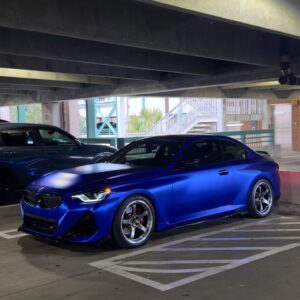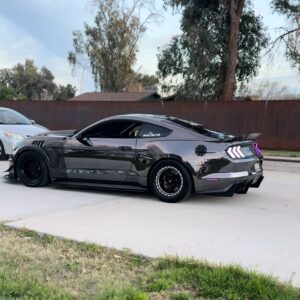
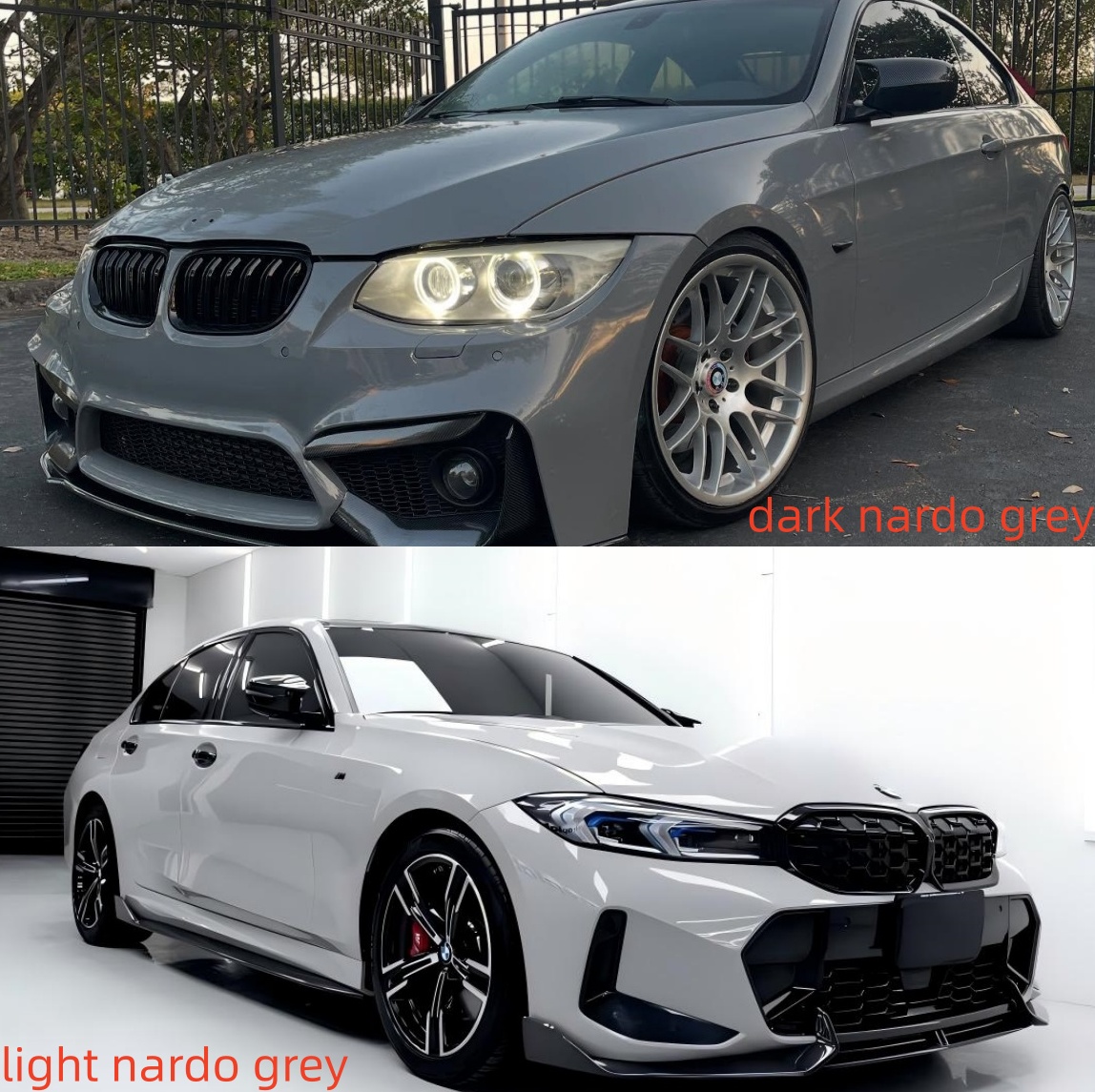
Choosing between light Nardo grey vs dark Nardo grey sounds simple until you see both shades on an actual vehicle. Under studio lighting they may appear closely related, but outdoors the difference can be surprisingly dramatic. Light Nardo Grey tends to reveal more body detail and create a clean, modern appearance, while Dark Nardo Grey adds visual weight, contrast and a more aggressive character.
Neither is universally better. The right choice depends on your vehicle’s proportions, wheel and trim colours, lighting conditions, desired styling direction and even how often you are prepared to clean the car.
This guide compares Light Nardo Grey vs Dark Nardo Grey from a practical vehicle-wrap perspective, including appearance in different lighting, body-line definition, maintenance, vehicle compatibility, finish selection and installation considerations.
Featured Snippet — Light Nardo Grey vs Dark Nardo Grey
Light Nardo Grey is a brighter, cleaner grey that highlights body lines and creates a modern OEM-inspired appearance. Dark Nardo Grey is deeper and more dramatic, giving the vehicle a lower, more aggressive and stealth-oriented look. Choose Light Nardo Grey for definition, minimalism and contrast with black trim; choose Dark Nardo Grey for visual depth, performance styling and a more imposing road presence.
Light Nardo Grey vs Dark Nardo Grey at a Glance
| Feature | Light Nardo Grey | Dark Nardo Grey |
|---|---|---|
| Overall appearance | Bright, clean, contemporary | Deep, aggressive, stealthy |
| Visual weight | Makes the vehicle feel lighter | Makes the vehicle feel heavier/lower |
| Body-line visibility | Excellent | Strong, but more shadow-dependent |
| Contrast with black trim | Very high | Moderate to high |
| Best wheel pairings | Black, gunmetal, silver | Silver, black, bronze, gunmetal |
| Road-dust visibility | Moderate | Usually less obvious |
| Water-spot visibility | Can be noticeable on gloss | Can become more noticeable on darker gloss |
| Photography | Crisp and highly legible | Moody and dramatic |
| Styling direction | OEM+, minimalist, modern | Performance, stealth, motorsport |
| Best general use | Daily drivers and clean builds | Sport-oriented and aggressive builds |
The important point is that this comparison is about more than simply choosing a lighter or darker grey. Tone changes the way the eye interprets the vehicle itself.
What Is Nardo Grey?
Nardo Grey became strongly associated with Audi performance cars and subsequently helped turn solid, non-metallic-looking grey into one of the defining colours of modern automotive styling. Today, “Nardo Grey” is also commonly used in the aftermarket as a broader description for cool, solid automotive greys inspired by that aesthetic.
That distinction matters when shopping for vinyl.
There is no universal industry specification requiring every product called “Nardo Grey,” “Light Nardo Grey” or “Dark Nardo Grey” to have exactly the same colour values. Different wrap manufacturers can produce visibly different interpretations.
For that reason, buyers should compare physical samples rather than relying exclusively on screen images.
ALUKOVINYL makes the same point on its Light Nardo Grey product page: screen representations should be treated as references, while an actual colour swatch gives a more accurate representation of the film.
If you want to compare the available tones and finishes directly, explore the Nardo Grey car wrap collection before choosing your final shade.
Light Nardo Grey: What Does It Actually Look Like?
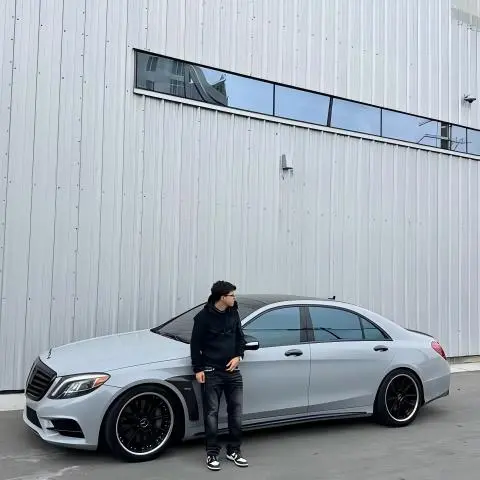
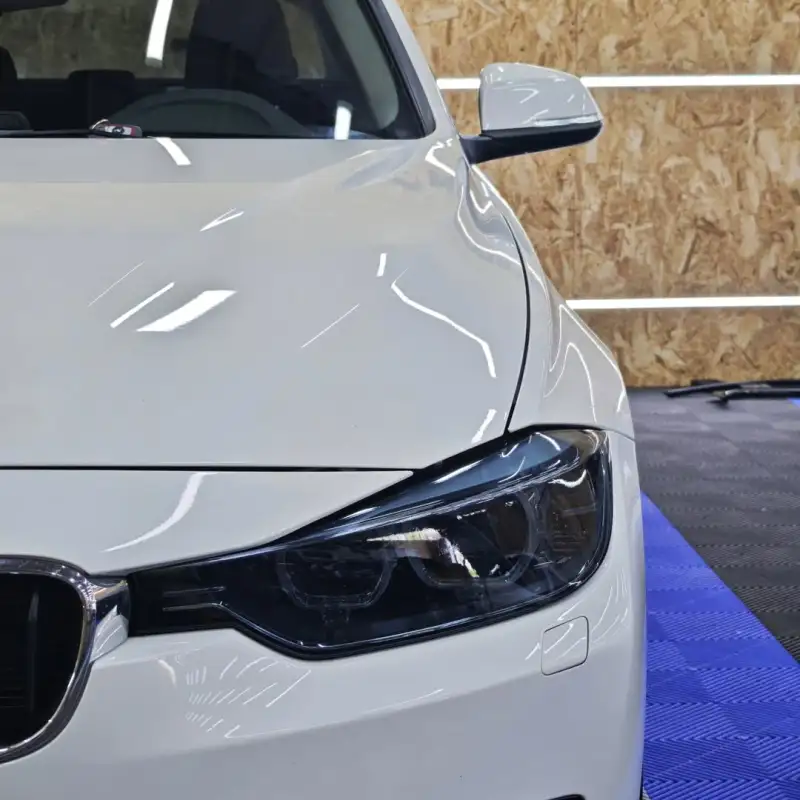
Light Nardo Grey takes the solid-grey aesthetic and raises its perceived brightness.
Rather than moving all the way toward silver, it retains the understated appearance enthusiasts associate with Nardo-style colours. The result is a grey that feels cleaner and more architectural than a conventional medium or charcoal grey.
ALUKOVINYL’s current grey collection includes Gloss Light Nardo Grey Car Vinyl Wrap PET alongside standard Gloss Nardo Grey and other grey variants, making direct comparison within the same colour family possible.
Why does Light Nardo Grey look so modern?
Light colours reflect more visible light back toward the viewer. On a vehicle, this means panel transitions remain easier to perceive even when the surfaces are not directly illuminated.
Consider a front fender.
It normally contains several visual zones: the top surface catching the sky, the shoulder transition, the vertical side and the wheel-arch return.
A lighter grey allows more of these zones to remain visually distinct.
That is why Light Nardo Grey often makes complicated modern sheet metal look particularly crisp.
Light Nardo Grey works especially well when you want:
- Strong contrast against gloss-black trim
- Clearly defined body creases
- A modern OEM+ aesthetic
- A brighter alternative to traditional Nardo Grey
- A neutral colour without choosing white or silver
- Clean photographs in varied lighting
- A minimalist EV or European performance-car aesthetic
What Does Dark Nardo Grey Look Like?
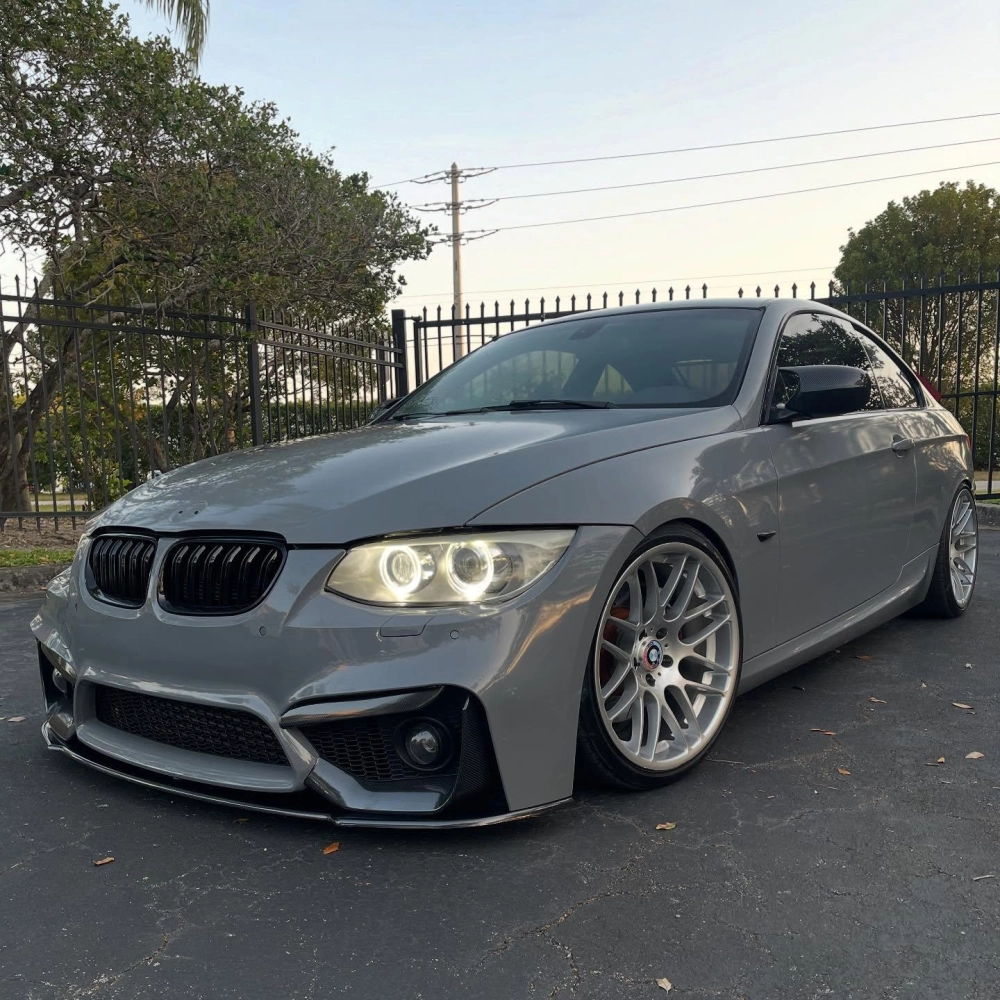
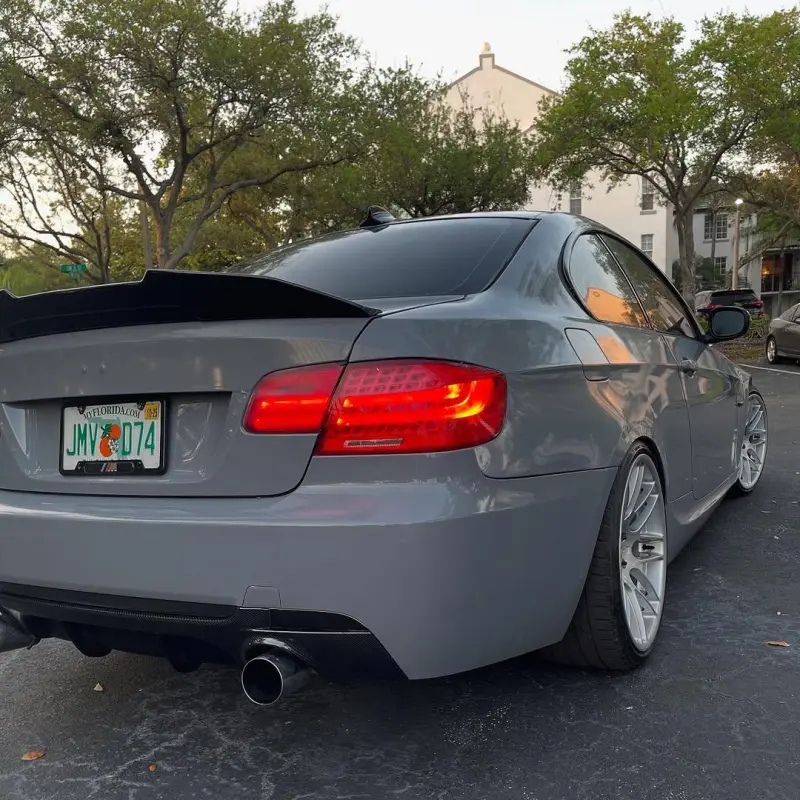
Dark Nardo Grey moves in the opposite direction.
Instead of maximizing visual separation between every surface, the darker tone allows some surfaces to merge into shadow. That changes how we perceive the vehicle.
The wheel arches can appear deeper. Side skirts become visually heavier. Large front intakes blend more naturally with black trim. The lower half of the vehicle can appear closer to the road.
This creates the characteristic stealth-performance effect.
A darker Nardo-style grey should not automatically be confused with metallic gunmetal, however.
Traditional gunmetal usually derives part of its visual identity from metallic particles. A solid Nardo-inspired dark grey relies much more heavily on the relationship between pigment, surface finish and reflected light.
That gives it a cleaner and often more contemporary appearance.
The Biggest Difference: How the Two Colours Shape the Car
Colour changes perceived form.
This is one of the most important—and frequently overlooked—parts of the light Nardo grey vs dark Nardo grey decision.
Light Nardo Grey reveals geometry
A lighter surface maintains greater separation between highlights, midtones and shadows.
On cars with sculpted doors, wide rear quarters or complicated bumpers, this can make the design appear more three-dimensional.
Think of vehicles with:
- pronounced shoulder lines;
- flared arches;
- angular bumpers;
- sharp bonnet creases;
- complex aerodynamic surfaces.
Light grey effectively lets the vehicle’s design do the talking.
Dark Nardo Grey consolidates geometry
Dark grey tends to visually combine adjacent surfaces.
Instead of noticing every individual crease, you first notice the overall silhouette.
That can make a vehicle appear:
lower, wider, heavier and more aggressive.
For performance-oriented builds, that visual effect can be exactly what the owner wants.
Light Nardo Grey vs Dark Nardo Grey in Sunlight
This is where online photographs can become misleading.
The same wrap may appear noticeably different at midday, during golden hour, under clouds and inside a garage.
Direct midday sunlight
Light Nardo Grey:
Appears brightest and can move visually toward stone grey or very light cement grey. Strong sunlight creates sharp highlights, particularly with gloss film.
Dark Nardo Grey:
Becomes noticeably brighter than it appears in shade but retains substantially more visual mass.
Overcast conditions
Overcast skies create large, soft reflections.
This is often one of the best conditions for evaluating grey wraps because extreme highlights and shadows are reduced.
Light Nardo Grey tends to appear smooth and neutral.
Dark Nardo Grey becomes more uniform and understated.
Shade
Here the difference becomes much stronger.
Light Nardo Grey generally remains clearly grey.
Dark Nardo Grey can approach charcoal depending on the specific film and surroundings.
Night
Artificial lighting introduces another variable: colour temperature.
Warm streetlights can make neutral greys appear slightly warmer, while cool LED lighting can emphasize blue undertones.
Practical buying advice: examine your sample outdoors in direct sun, open shade and artificial lighting before ordering enough material for a complete vehicle.
Light Nardo Grey vs Dark Nardo Grey: Which Makes Body Lines Look Better?
For maximum body-line visibility, Light Nardo Grey generally wins.
This does not mean it automatically looks better.
It means it communicates surface geometry more clearly.
Imagine wrapping a sharply sculpted sports coupe.
With Light Nardo Grey, the eye can follow the bonnet crease into the fender, through the doors and toward the rear quarter.
With Dark Nardo Grey, some of those transitions disappear into shadow. Instead, the overall stance becomes dominant.
So the better question is:
Do you want people to notice the bodywork or the silhouette first?
Choose Light Nardo Grey for bodywork.
Choose Dark Nardo Grey for silhouette.
Which Nardo Grey Looks More Expensive?
This is subjective, but there are useful design principles behind the perception.
Light Nardo Grey often communicates a clean OEM-premium aesthetic.
Dark Nardo Grey tends to communicate a performance-premium aesthetic.
The distinction becomes clearer once trim is introduced.
Light Nardo Grey + gloss black
One of the strongest combinations.
Black mirrors, window trim, grille elements, diffusers and wheels create obvious separation against the lighter body.
The result resembles the visual language frequently used on contemporary factory performance packages.
Dark Nardo Grey + carbon fibre
Dark grey provides a much more subtle transition into carbon-fibre components.
Instead of carbon becoming a major contrasting element, it becomes part of a layered dark palette.
The result can feel more serious and motorsport-inspired.
Gloss Changes the Comparison More Than You Might Expect
When comparing Light Nardo Grey vs Dark Nardo Grey, colour is only half of the equation.
Finish determines how that colour interacts with its surroundings.
Gloss Light Nardo Grey
Gloss produces crisp reflections and gives Light Nardo Grey a more paint-like character.
It is particularly effective if you want:
- maximum body-line visibility;
- an OEM-style finish;
- stronger reflections;
- a cleaner appearance in photographs.
ALUKOVINYL’s Light Nardo Grey product is currently offered in a gloss PET configuration and uses an air-release structure intended to assist installation.
Satin Nardo Grey
Satin reduces sharp reflections while retaining enough sheen to define the body.
For enthusiasts who associate Nardo Grey with understated performance styling, satin can be one of the most balanced interpretations.
Matte Nardo Grey
Matte minimizes reflections and puts almost all visual emphasis on shape and colour.
ALUKOVINYL lists its Matte Nardo Grey film with an expected durability of 5–7 years, while specifying pH-neutral aftercare and advising against waxes or solvents. These figures are manufacturer specifications rather than a guarantee that every installation will achieve the same service life.
Actual lifespan depends heavily on exposure, climate, installation, storage and maintenance.
Light vs Dark Nardo Grey on Different Vehicle Shapes
Instead of saying one colour is “best for BMW” or another is “best for Audi,” it is more useful to evaluate the vehicle’s geometry.
Compact sedans and hatchbacks
Advantage: Light Nardo Grey
A lighter tone can visually open the body and emphasize smaller details.
It works especially well when the car already has:
- black window trim;
- black roof;
- dark wheels;
- sharp LED lighting;
- compact proportions.
Large performance sedans
Result: Tie
These cars often have enough body volume to support either shade.
Light Nardo Grey creates an executive OEM+ look.
Dark Nardo Grey makes the same vehicle appear lower and more performance-oriented.
Coupes and sports cars
Slight advantage: Dark Nardo Grey for aggression; Light Nardo Grey for surfacing.
A low roofline and wide rear quarter can become extremely dramatic in a darker grey.
However, highly sculpted supercar-style panels can benefit from the increased definition of Light Nardo Grey.
SUVs
This is where personal preference matters significantly.
A large SUV already has considerable visual mass.
Dark grey adds even more.
That works well for a rugged or stealth build, but Light Nardo Grey can make the same SUV feel more contemporary and less visually heavy.
EVs
Advantage: Light Nardo Grey for minimalist styling.
Many modern EVs use clean surfacing, flush handles and simplified trim.
Light Nardo Grey complements this design philosophy particularly well.
Dark Nardo Grey works better when the goal is to move away from the minimalist EV aesthetic toward a sportier appearance.
Real-World Styling Examples
Example 1: Performance sedan with black wheels
Imagine a performance sedan equipped with:
- gloss-black grille;
- black window surrounds;
- black multi-spoke wheels;
- red brake calipers.
Light Nardo Grey creates maximum separation between the body and black components.
The red calipers become the visual focal point.
Recommended direction: Light Nardo Grey.
Example 2: Wide sports coupe with carbon aero
Now imagine a low coupe with:
- carbon front splitter;
- carbon side skirts;
- dark wheels;
- tinted windows;
- large rear diffuser.
Here Dark Nardo Grey creates a continuous transition from bodywork to carbon.
Recommended direction: Dark Nardo Grey.
Example 3: Premium SUV
A large SUV with polished or brushed-metal wheels can look excessively dark if every exterior component is black.
Light Nardo Grey restores visual balance while retaining the modern monochrome theme.
Recommended direction: Light Nardo Grey.
Example 4: Track-inspired build
For a car featuring aggressive aero, black wheels, dark badges and minimal brightwork, Dark Nardo Grey reinforces the motorsport theme.
Recommended direction: Dark Nardo Grey.
Pros and Cons of Light Nardo Grey
Pros
Excellent body-line definition
Complex panels remain clearly visible.
Strong contrast
Works particularly well with black trim, carbon fibre and tinted glass.
Modern appearance
Fits current minimalist and OEM+ styling trends.
Photogenic
Details remain visible even when photographs contain deep shadows.
Less visually heavy
Useful on SUVs and larger vehicles.
Cons
Road contamination can be easier to notice
Dark splashes, tyre debris and grime contrast with a lighter surface.
Surface preparation matters
Light, smooth colours can reveal certain underlying imperfections.
Can look much brighter in intense sun
Buyers expecting classic medium Nardo Grey may find Light Nardo Grey significantly lighter outdoors.
Pros and Cons of Dark Nardo Grey
Pros
Aggressive road presence
The darker tone adds visual weight.
Excellent with performance styling
Pairs naturally with carbon, black aero and dark trim.
More understated
Ideal for owners who do not want a bright colour transformation.
Creates depth
Especially effective across large, curved panels.
Can disguise everyday road grime better than very light grey
Cons
Some body details disappear in shadow
Complex surfacing may become less obvious.
Dark finishes can reveal water spotting
Particularly on highly glossy films.
Lower contrast with black accessories
Black wheels and trim can visually merge with the body.
May feel too heavy on large vehicles
Especially if every accessory is also black.
Which One Is Easier to Keep Looking Clean?
There is no absolute winner.
Light grey and dark grey simply reveal different contamination.
Light Nardo Grey tends to make darker dirt—such as road splash and tyre residue—more obvious.
Dark Nardo Grey can hide some of that contamination but may make dried water minerals, pollen and pale dust more visible.
Finish matters as well.
Gloss films produce strong reflections, so spotting and surface contamination can interrupt those reflections. Satin and matte films hide reflections but require cleaning techniques appropriate to their surface.
Avery Dennison recommends hand washing wrapped vehicles with a pH-neutral cleaner and soft cloth or sponge rather than using brush-style automatic car washes.
3M likewise warns that dirt and dust should be thoroughly rinsed away before washing high-gloss wrap films because abrasive particles can scratch the surface when rubbed against it.
The lesson is simple:
Choose colour for appearance—not because you expect one grey to eliminate maintenance.
Does Vinyl Wrap Protect the Paint?
A wrap creates a physical layer between the exterior environment and the underlying finish, but it should not be confused with dedicated paint-protection film.
Quality automotive wrapping films are designed as colour-change materials.
For example, Avery Dennison describes its SW900 Supreme Wrapping Film as a cast vinyl intended for vehicle and graphics applications, with repositioning and air-egress technology designed to support installation and eventual removability.
3M’s owner warranty similarly distinguishes defects in wrap material from physical damage: its warranty does not cover dents resulting from rocks or road debris.
Therefore:
Vinyl wrap can provide a sacrificial surface against light everyday exposure, but buyers primarily seeking impact protection should consider PPF rather than assuming colour-change vinyl performs the same job.
This distinction improves both buyer expectations and long-term satisfaction.
Installation Matters More Than Light vs Dark
A premium colour cannot compensate for poor installation.
The quality of the final result depends on:
- substrate condition;
- cleaning and preparation;
- film handling;
- stretching technique;
- edge finishing;
- post-heating where required;
- installer experience.
Avery Dennison specifically states that vehicle substrates should be properly cleaned before installation and warns against application over unsuitable surfaces such as improperly cured or poorly bonded paint.
That principle applies regardless of brand.
A beautiful Nardo Grey wrap installed over failing clear coat will not produce a premium long-term result.
One Professional Detail Buyers Often Miss: Production Lots
If you need more than one roll, avoid casually mixing material from different production batches.
Even professional film manufacturers acknowledge this issue.
Avery Dennison notes that slight colour shifts can occur between rolls or lots and recommends minimizing lot mixing on the same vehicle.
ALUKOVINYL similarly advises that colours may vary slightly between production batches and recommends ordering extra material for future repairs when colour matching matters.
For a full Nardo Grey transformation, ordering enough material at once is therefore preferable to purchasing the minimum amount and attempting to match another batch months later.
This is particularly important on adjacent panels, where even a small colour difference can become noticeable under sunlight.
How Much Nardo Grey Wrap Should You Order?
The correct amount depends on:
- vehicle dimensions;
- bumper complexity;
- mirrors and spoilers;
- panel orientation;
- installer skill;
- whether mistakes need to be accounted for;
- whether spare material is wanted for future repairs.
Do not calculate only the exterior square footage of the vehicle.
Wrapping requires additional film for panel margins, positioning, trimming and complex shapes.
For that reason, professional installers generally work with an allowance rather than ordering the theoretical exact surface area.
ALUKOVINYL currently offers its Light Nardo Grey film in several lengths, including a 59 ft full roll, with longer configurations that add additional material.
If you are uncertain, measure the vehicle and discuss the project with your installer before ordering.
Light Nardo Grey vs Dark Nardo Grey vs Classic Nardo Grey
There is also a third option: staying in the middle.
| Colour | Character | Best Reason to Choose It |
| Light Nardo Grey | Bright, modern, crisp | Maximum body definition |
| Classic Nardo Grey | Balanced, iconic | Safest all-round choice |
| Dark Nardo Grey | Deep, aggressive, stealthy | Maximum visual presence |
Classic Nardo Grey makes sense when you cannot decide between the extremes.
Light and dark variations are better when you have a specific design objective.
What Do Major Wrap Manufacturers Tell Us About Choosing Film?
An important E-E-A-T point is that colour should not be evaluated independently from film construction and intended use.
3M’s Wrap Film Series 2080 documentation emphasizes that exposure angle affects wrap performance and warranty conditions; horizontal areas such as roofs and hoods experience different environmental exposure from vertical doors.
Avery Dennison similarly states that actual film performance depends on factors including substrate preparation, exposure angle, application, environmental conditions and maintenance.
This provides useful context when comparing brands.
A marketing statement such as “lasts X years” does not tell the complete story.
A better comparison asks:
- What film construction is being used?
- What surface is being wrapped?
- Is the vehicle garaged?
- How much UV exposure does it receive?
- Is the film installed correctly?
- How is it washed?
- Is it a vertical door or a nearly horizontal bonnet?
These factors may ultimately have a larger effect on ownership experience than whether you choose Light or Dark Nardo Grey.
Expert Decision Guide: Which Nardo Grey Should You Choose?
Use this simple framework.
Choose Light Nardo Grey if…
You want the car to look cleaner, sharper and more contemporary.
It is particularly compelling when your vehicle has strong body lines and black exterior components that deserve contrast.
Choose Dark Nardo Grey if…
You want the vehicle to look lower, heavier and more aggressive.
It is ideal when your styling plan already includes carbon aero, tinted glass, dark wheels or motorsport-inspired details.
Choose Classic Nardo Grey if…
You want the recognizable Nardo aesthetic without moving strongly toward either brightness or darkness.
For many daily drivers, this remains the safest middle ground.
Final Verdict: Is Light Nardo Grey or Dark Nardo Grey Better?
For most drivers seeking a clean, modern transformation with maximum body-line definition, Light Nardo Grey is the stronger choice.
For enthusiasts building a stealthier, more aggressive performance aesthetic, Dark Nardo Grey has the advantage.
But there is no universal winner in the light Nardo grey vs dark Nardo grey comparison.
The most useful way to decide is:
Light Nardo Grey = shape and contrast.
Dark Nardo Grey = stance and depth.
If your vehicle has intricate bodywork, black trim or a minimalist design, start with Light Nardo Grey.
If it has wide proportions, aggressive aero and a darker performance theme, move toward Dark Nardo Grey.
And if you still cannot decide, put physical samples against the actual car and view them in sunlight and shade. That ten-minute test can tell you more than dozens of edited online photographs.
FAQ: Light Nardo Grey vs Dark Nardo Grey
Is Light Nardo Grey the same as Nardo Grey?
No. Light Nardo Grey refers to a brighter interpretation of the Nardo Grey aesthetic. Standard Nardo Grey generally sits deeper in the grey spectrum. Exact shades vary by film manufacturer, so physical samples should be compared before purchasing.
Is Dark Nardo Grey almost black?
Usually no. A Dark Nardo Grey should still read clearly as grey under normal daylight, although it can appear significantly darker in shade or at night. The exact result depends on the manufacturer, finish and lighting.
Which looks better with black wheels?
Light Nardo Grey creates stronger contrast with black wheels. Dark Nardo Grey creates a more monochromatic stealth appearance. For maximum wheel definition, choose light; for maximum aggression, choose dark.
Which Nardo Grey looks best with carbon fibre?
Both work, but differently. Light Nardo Grey makes carbon fibre stand out as a contrasting material. Dark Nardo Grey allows carbon components to blend more naturally into the overall design.
Does Light Nardo Grey make a car look bigger?
It can. Lighter colours generally give surfaces greater visual separation, which can make a vehicle feel more open and visually substantial. Darker grey tends to concentrate the silhouette and can make the car appear lower and more compact.
Does Dark Nardo Grey hide dirt better?
It can hide darker road grime better than Light Nardo Grey, but lighter dust, pollen and mineral water spots may become more noticeable. Neither shade eliminates the need for regular maintenance.
Is Nardo Grey metallic?
Not necessarily. The iconic Nardo aesthetic is generally associated with a solid grey appearance rather than obvious metallic flake. However, aftermarket manufacturers offer grey wraps in solid, metallic, gloss, satin and matte variations.
Is Light Nardo Grey good for SUVs?
Yes. Light Nardo Grey is particularly effective on large SUVs because it defines their body lines without adding excessive visual weight. Dark Nardo Grey is better when the objective is a tougher, more imposing appearance.
Should I choose gloss, satin or matte Nardo Grey?
Choose gloss for a paint-like OEM appearance and strong reflections, satin for understated performance styling, and matte for the flattest and most stealth-oriented appearance. Maintenance requirements also differ, so finish should be considered alongside colour.
Can Nardo Grey vinyl wrap be removed later?
Automotive colour-change films are generally designed to be removable when installed on suitable, sound automotive paint and removed using the correct procedure. Paint condition matters: manufacturers such as Avery Dennison specifically caution about poor, aged, improperly cured or non-OEM paint because removal performance cannot be assumed on compromised substrates.