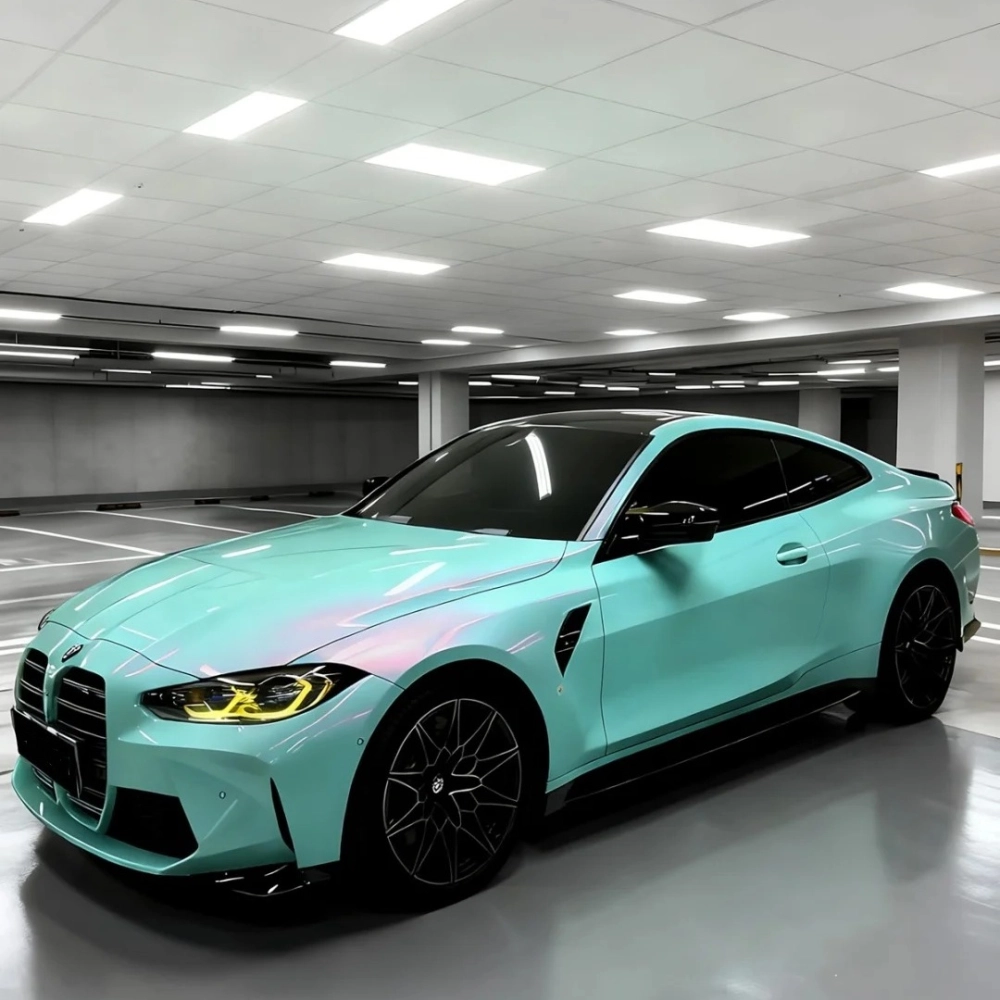
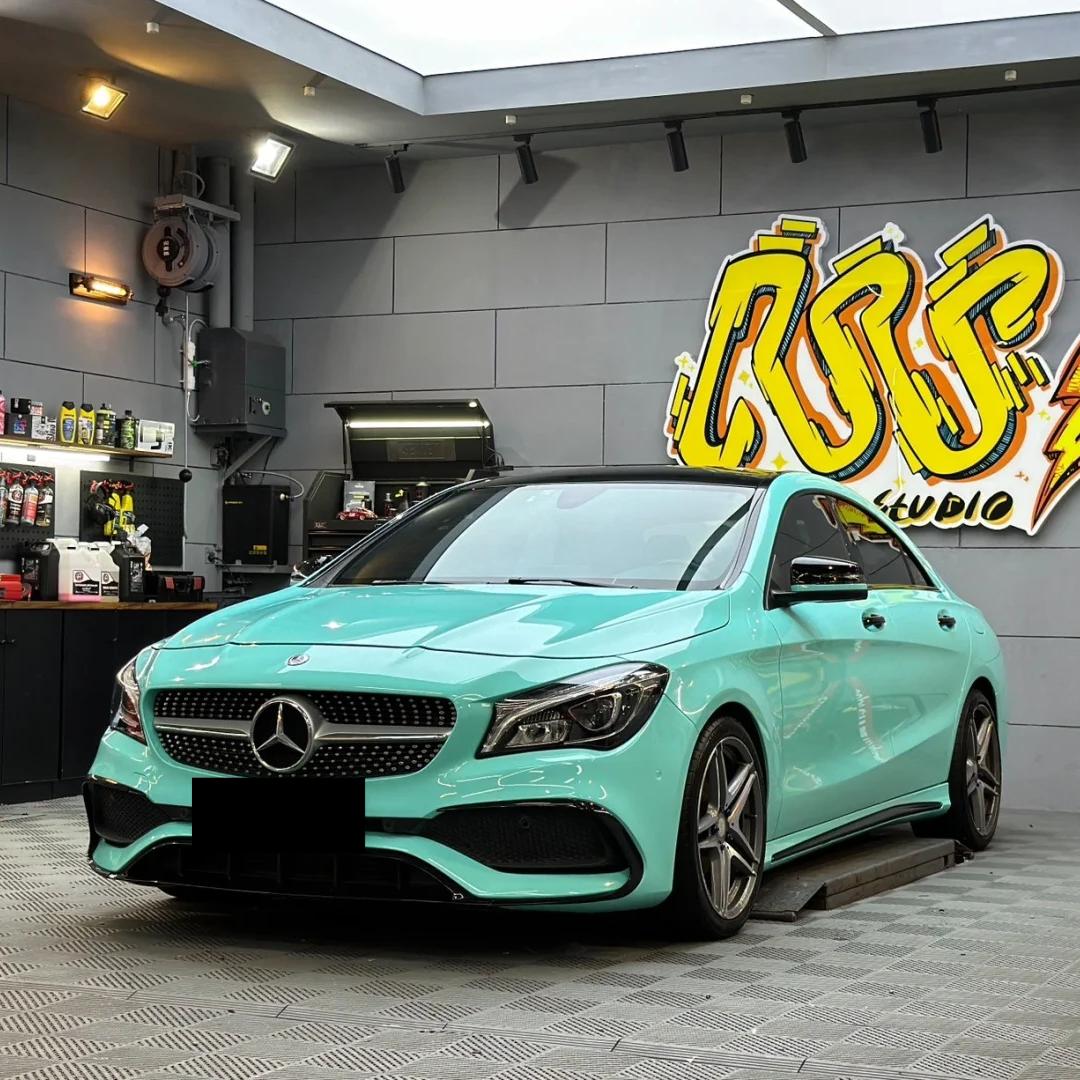
Tiffany Blue is one of those colors that seems instantly recognizable but becomes surprisingly difficult to describe once you try to decide whether it is actually blue or green.
Put the color on a small swatch and you may see a soft turquoise blue. Move it into bright sunlight and the green undertone can become more noticeable. Apply a similar color across an entire vehicle and the result changes again: body curves, reflections, finish, surrounding colors, and even the time of day can influence what your eyes see.
So, is Tiffany Blue more blue or green?
The short answer is blue—but with a noticeable green/cyan undertone.
That balance is exactly what makes a Tiffany Blue car visually distinctive. It feels brighter and fresher than conventional light blue, yet softer and more refined than many turquoise or aqua colors.
For car owners considering this color, however, there is much more to understand than simply calling it “blue.” This guide explains where Tiffany Blue sits on the color spectrum, why it changes under different lighting conditions, how it looks on a full vehicle, and what you should consider before choosing a Tiffany Blue car wrap.
Featured Snippet: Is Tiffany Blue More Blue or Green?
Tiffany Blue is generally considered more blue than green, but it contains a clear green or cyan undertone. Tiffany & Co. describes its iconic color as a robin’s-egg blue. The balance between blue and green gives the color its turquoise-like appearance. On a car, bright sunlight and glossy finishes can make the green/cyan component more noticeable, while shade and cooler lighting often make the vehicle appear more distinctly blue.
In simple terms:
Blue + subtle green/cyan undertone = the Tiffany Blue look.
That is why a Tiffany Blue car can appear blue in one photograph and almost turquoise in another.
What Color Is Tiffany Blue, Exactly?
The first mistake people make is trying to place Tiffany Blue into a simple “blue” or “green” category.
In practical color terms, it sits somewhere between light blue, cyan, aqua and turquoise.
Tiffany & Co. officially describes its famous color as a “robin’s-egg blue.” The company traces its use back to 1845, when founder Charles Lewis Tiffany selected the distinctive hue for the cover of the company’s Blue Book.
The color later became one of the most recognizable elements of the brand.
According to Tiffany & Co., Tiffany Blue® was registered as a color trademark in 1998. Pantone subsequently worked with Tiffany to standardize the proprietary shade, creating a custom color known as 1837 Blue, named after the year Tiffany & Co. was founded.
Importantly, Pantone states that this is a custom color created specifically for Tiffany rather than an ordinary publicly available Pantone color.
A Note About the Name “Tiffany Blue”
Tiffany Blue® is a trademark associated with Tiffany & Co.
When terms such as “Tiffany Blue car,” “Tiffany Blue wrap,” or similar descriptions are used in automotive customization, they commonly describe the general light blue/turquoise-inspired color family recognized by consumers.
They should not be interpreted as claiming that an automotive vinyl film is the proprietary Tiffany & Co. color or is affiliated with or endorsed by Tiffany & Co.
For car-wrap buyers, the actual physical film sample is therefore much more useful than relying on a color name alone.
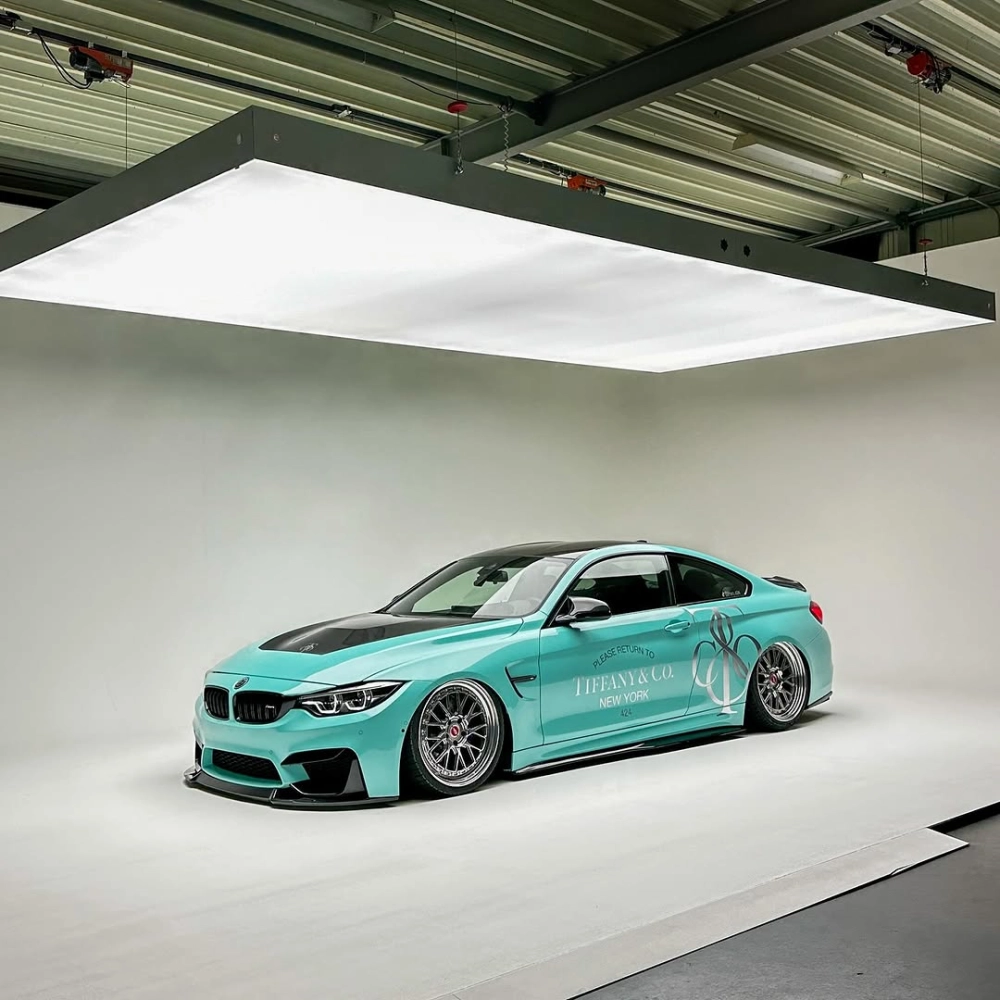
So, Is Tiffany Blue Actually Blue?
Yes.
If you had to place the color into one broad category, blue is the better answer.
The official historical description—robin’s-egg blue—also supports this classification.
But visually, Tiffany-inspired blue is not a pure blue.
Imagine three colors:
Sky Blue → Tiffany-style Blue → Turquoise
Sky blue normally contains relatively little visible green. Turquoise has a much stronger green component.
Tiffany-inspired blue occupies the space between them.
That is why it has a clean, refreshing character without looking like an ordinary pastel blue.
From an automotive design perspective, this distinction matters.
A conventional light blue car often feels calm and understated.
A turquoise car can feel tropical, energetic or highly customized.
A Tiffany Blue car sits between these two personalities, giving it an unusual combination of elegance and visual impact.
Why Does a Tiffany Blue Car Sometimes Look Green?
This is where automotive applications become especially interesting.
Color is not perceived in isolation. What you see depends partly on the light reaching the surface and the light reflected back toward your eyes.
On a car, several variables are changing simultaneously.
1. Direct Sunlight
Strong daylight can emphasize the cyan and green components of a light blue-green wrap.
As a result, a Tiffany Blue car photographed outdoors at midday may look more turquoise than the same vehicle parked indoors.
This is one reason online photographs of supposedly identical colors can look dramatically different.
2. Shade
Move the same vehicle into shade and the color often appears cooler.
The green component becomes less visually dominant, allowing the blue side of the color to become more obvious.
You may therefore look at your car in the morning and think:
“That is definitely blue.”
Then see it under strong afternoon sunlight and think:
“Why does it suddenly look turquoise?”
The vinyl itself has not changed. The lighting environment has.
3. Warm Artificial Lighting
Warm garage lights can alter the perceived balance of cool colors.
Depending on the film and surrounding surfaces, a blue-green wrap may appear slightly greener, softer or less saturated under warm indoor lighting.
This is why professional color evaluation should never rely on only one indoor photograph.
4. Reflections From the Environment
A car is essentially a collection of curved reflective surfaces.
Trees, grass, blue sky, buildings, concrete and nearby vehicles can all influence what you perceive.
A glossy Tiffany-style wrap parked next to green landscaping may visually pick up more green than the same vehicle photographed against neutral gray walls.
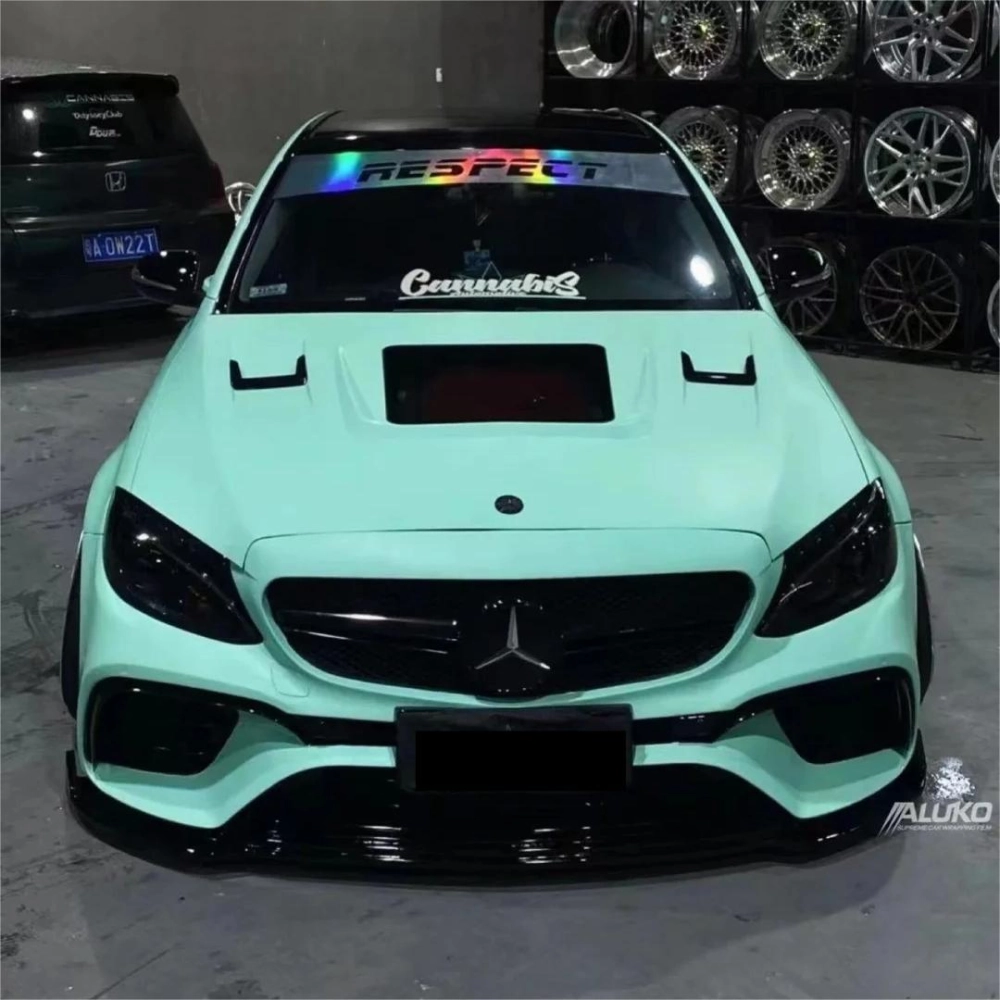
Finish Matters More Than Many Buyers Realize
Two vinyl films can have similar base colors and still look dramatically different after installation.
Why?
Because finish controls how light interacts with the surface.
This is especially important for a Tiffany Blue car because the color already sits close to the boundary between blue and green.
Gloss Tiffany Blue
Gloss is usually the best option for drivers who want a bright, clean, paint-like appearance.
A high-gloss surface creates stronger highlights and reflections, which can make the color appear more vivid.
Advantages:
- Bright and energetic appearance
- Strong visual depth
- Accentuates body curves
- Works well on modern vehicles
- Often photographs well
Disadvantages:
- Reflections can make the apparent color vary significantly
- Dust and surface contamination may be more visible
- Photographs may not accurately represent the real-life color
Matte Tiffany Blue
Matte dramatically changes the personality of the color.
Instead of reflecting the surrounding environment strongly, a matte surface diffuses more light.
The result can feel softer, calmer and more contemporary.
Advantages:
- More distinctive custom appearance
- Reduced reflections
- Softer pastel-like visual effect
- Excellent for minimalist builds
Disadvantages:
- Less visual depth than gloss
- Requires appropriate matte-finish maintenance
- Oils, stains or uneven cleaning may be more noticeable
Metallic Tiffany Blue
Metallic particles introduce another variable: directional reflection.
Under direct sunlight, metallic Tiffany-inspired colors can become significantly brighter and more dynamic.
From certain angles, blue may dominate. From others, the cyan or green undertone may become more noticeable.
For owners who want a more premium and dynamic Tiffany Blue car, metallic finishes can provide additional depth.
Satin Chrome Tiffany Blue
Satin chrome produces a more dramatic effect.
Instead of looking like conventional automotive paint, the surface has a smooth metallic sheen that emphasizes body lines.
The result tends to look more exotic and show-oriented.
However, specialty chrome and satin-chrome films generally demand greater installation skill than conventional gloss vinyl because aggressive stretching and heating can affect the visual consistency of the finish.
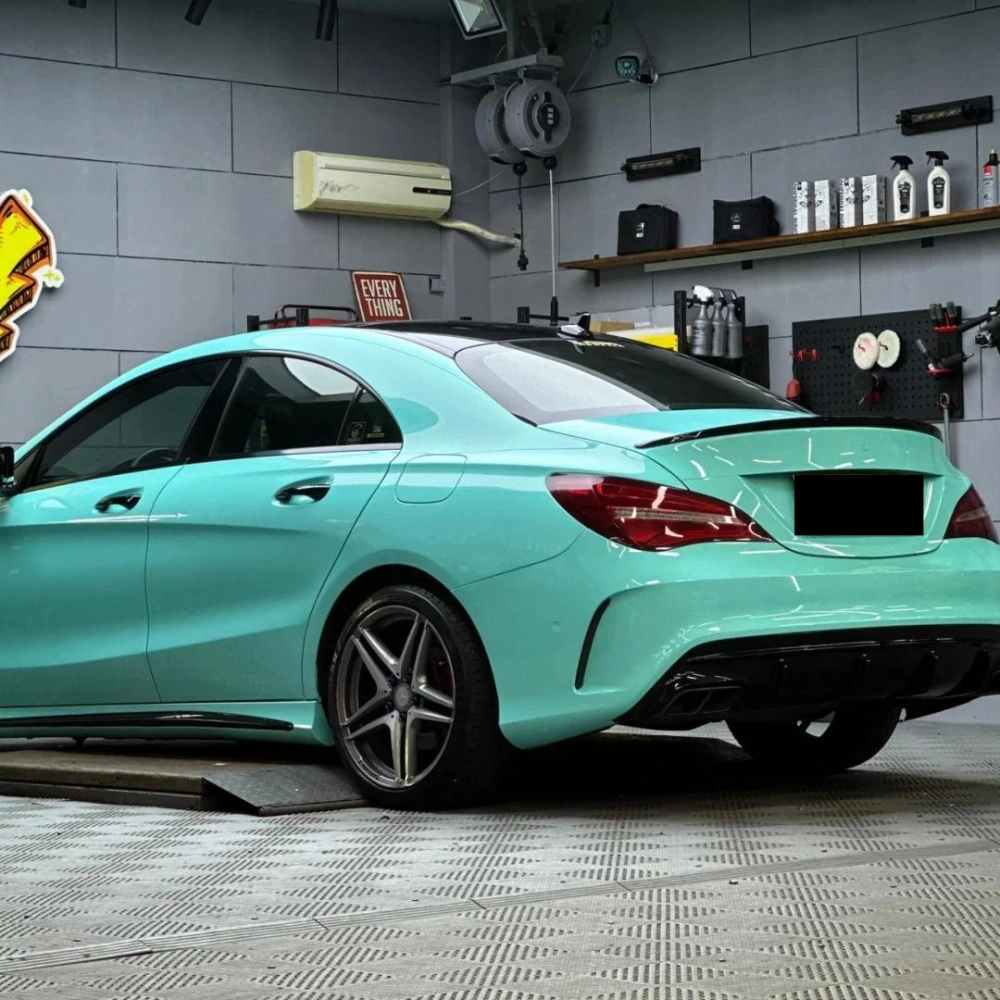
Tiffany Blue vs. Similar Automotive Colors
One of the easiest ways to understand Tiffany Blue is to compare it with nearby colors.
| Color | Blue Character | Green Character | Typical Appearance |
|---|---|---|---|
| Baby Blue | High | Very Low | Soft, pastel |
| Sky Blue | High | Low | Clean, airy |
| Tiffany-style Blue | High | Medium | Elegant, fresh, turquoise-blue |
| Aqua | Medium | Medium-High | Bright, tropical |
| Turquoise | Medium | High | Vibrant blue-green |
| Teal | Lower | High | Darker, richer blue-green |
The important distinction is saturation and balance.
A Tiffany Blue car should generally still read as blue at first glance.
If the color immediately looks green, it is probably moving closer to turquoise or teal.
If there is virtually no green visible, it is probably closer to baby blue or sky blue.
Tiffany Blue vs. Turquoise: Are They the Same?
No.
Although the terms are sometimes used interchangeably in casual conversation, turquoise generally has a stronger green component.
A useful visual relationship is:
Baby Blue → Tiffany-style Blue → Aqua → Turquoise → Teal
This is not a formal scientific scale, but it is a useful way for car-wrap buyers to understand the differences.
If you want a vehicle that still looks unmistakably blue while having a distinctive green undertone, Tiffany-inspired blue is an excellent direction.
If you want the blue-green balance to become much more obvious, turquoise may be more appropriate.
Why Tiffany Blue Works So Well on Cars
A color that looks attractive on packaging or a computer screen does not automatically work well across several square meters of vehicle bodywork.
Tiffany-inspired blue happens to translate particularly well to automotive surfaces.
There are several reasons.
It Has Enough Saturation to Show Body Lines
Very pale colors can sometimes flatten the visual shape of a vehicle.
Tiffany-style blue retains enough saturation to define fenders, doors, shoulders and aerodynamic lines while still remaining relatively light.
It Creates Contrast With Common Trim Colors
Most modern vehicles use large amounts of:
- Black window trim
- Black grilles
- Carbon-fiber components
- Dark tinted glass
- Black wheels
- Gloss-black aerodynamic pieces
Light blue-green bodywork creates strong contrast against these elements.
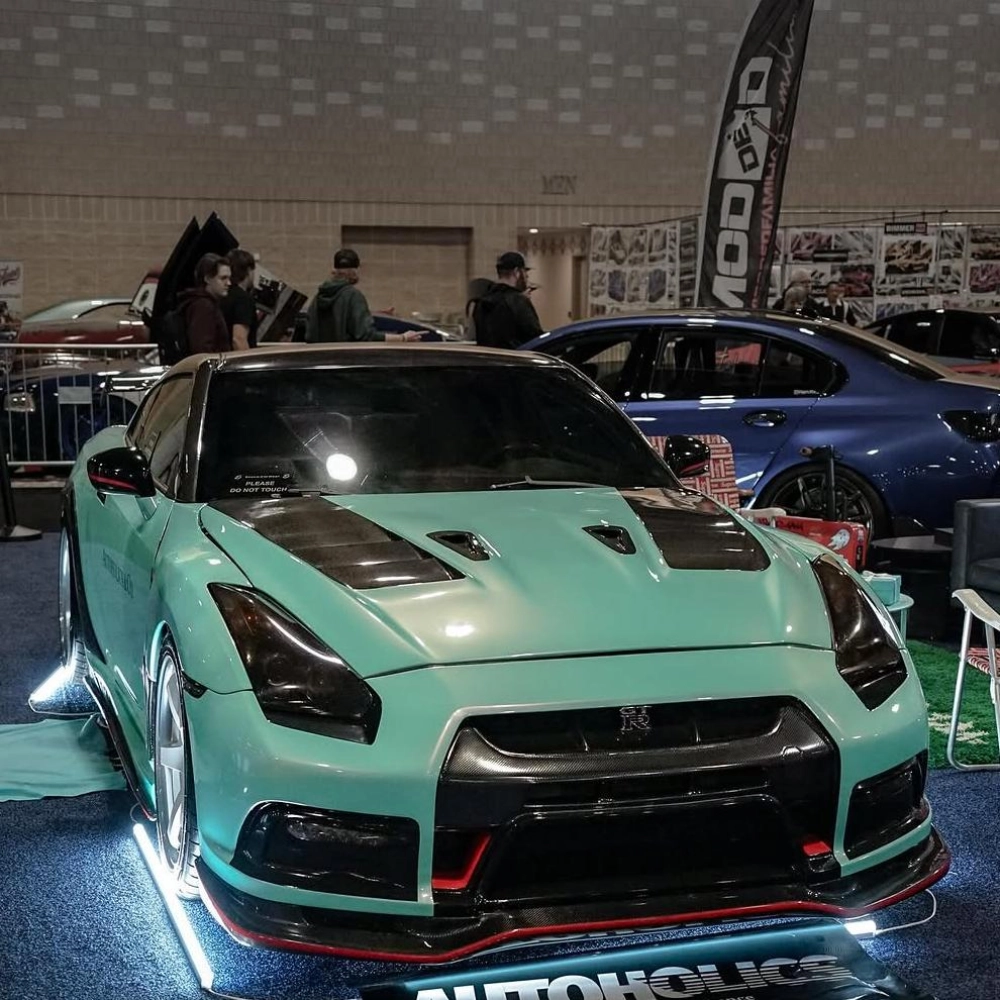
A Tiffany Blue car with black wheels, for example, can look dramatically different without requiring an excessively aggressive color.
It Sits Between Luxury and Playfulness
This may be the biggest advantage.
Bright cyan can look highly sporty.
Pastel blue can look soft.
Turquoise can look tropical.
Tiffany-inspired blue occupies a useful middle ground.
It can feel premium without becoming conservative and personalized without becoming visually overwhelming.
What Does Tiffany Blue Look Like on Different Vehicle Shapes?
The vehicle itself affects color perception.
Sports Cars
On a low sports car, Tiffany-inspired blue tends to emphasize curves and aerodynamic surfaces.
Gloss and metallic finishes work especially well because reflections travel across the body contours.
Black wheels or carbon-fiber accents can create a strong contrast.
Sedans
On a sedan, the color can produce a cleaner, more sophisticated appearance.
Rather than making the vehicle look overly modified, a well-selected Tiffany Blue wrap can resemble a rare premium factory color.
SUVs
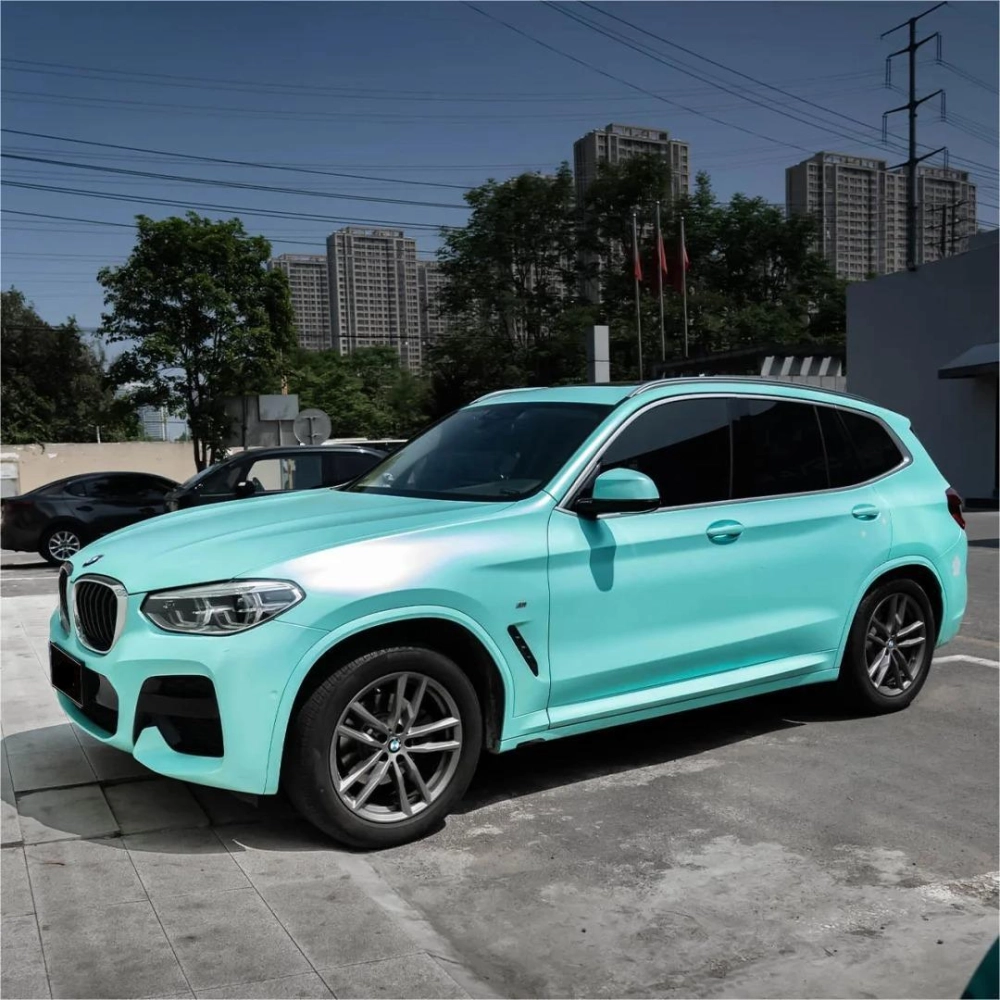
SUVs provide much more visible surface area.
That makes color selection particularly important.
A very saturated turquoise may become overwhelming across a large SUV, while a slightly softer Tiffany-inspired blue can provide strong visual identity without dominating the design.
EVs
Many modern electric vehicles use smooth body panels and minimalist styling.
These surfaces are especially compatible with clean pastel and blue-green colors because there are fewer aggressive styling details competing with the color.
Real-World Color Selection: Never Trust Your Screen Alone
This is one of the most important practical recommendations in this guide.
Do not select a car wrap solely from a phone or computer screen.
Digital displays use RGB light to reproduce color, while vinyl is a physical surface reflecting ambient light.
Several variables can make online images inaccurate:
- Screen brightness
- Display calibration
- Camera white balance
- Photo editing
- Indoor vs. outdoor lighting
- Reflections
- Phone HDR processing
- Vinyl finish
Two people looking at the exact same product page can even see slightly different colors because their displays are calibrated differently.
Better Method
Before committing to a full vehicle, evaluate a physical sample whenever possible.
Look at it:
- Outdoors in direct sunlight
- Outdoors in shade
- Indoors under neutral lighting
- Next to your vehicle’s black trim and wheels
- From several different angles
This provides a much better indication of how your finished Tiffany Blue car will actually look.
Is a Tiffany Blue Car Wrap Better Than Painting the Car?
It depends on your objective.
If your goal is permanent restoration or a factory-level repaint, paint may make sense.
If your goal is a dramatic but reversible color transformation, vinyl wrapping offers several advantages.
Advantages of a Tiffany Blue Car Wrap
Reversible Color Change
A wrap allows you to transform the vehicle without permanently changing its factory paint color.
When properly removed from suitable OEM paint, the original finish can remain underneath.
More Finish Options
Paint color alone is only part of the design.
Vinyl gives owners access to gloss, matte, metallic, sparkle, holographic and satin-style interpretations of similar blue-green colors.
Customization
Mirrors, roofs, spoilers and accent panels can use contrasting colors or finishes.
Original Paint Coverage
Vinyl creates a physical layer over the original painted surface and can help shield it from minor environmental exposure and light surface abrasion.
However, standard vinyl wrap should not be confused with paint protection film (PPF). PPF is specifically engineered for impact and paint-protection performance.
Disadvantages of a Tiffany Blue Car Wrap
A balanced buying guide should also address the limitations.
Color Can Be Difficult to Judge Online
Because Tiffany-inspired colors sit between blue and green, even small changes in lighting or screen calibration can create noticeable differences.
Installation Quality Matters
Complex bumpers, deep recesses, mirrors and sharp body lines require proper film handling.
Poor installation can lead to lifting, overstretching or visible seams.
Wrap Is Not Permanent
Vinyl is a replaceable exterior material rather than a permanent paint finish.
Its service life depends on film construction, installation, climate, UV exposure, storage and maintenance.
Specialty Finishes Require More Care
Chrome, satin chrome, matte and certain textured finishes may require more careful installation and maintenance than conventional gloss vinyl.
Choosing the Right Tiffany Blue Car Wrap
There is no single correct Tiffany-inspired automotive color.
The best choice depends on what you want the finished car to communicate.
For a clean, paint-like daily driver, choose a gloss Tiffany-style blue.
For a soft, understated build, consider matte or ultimate-flat Tiffany blue.
For a brighter premium appearance, metallic or crystal finishes can add depth.
For a show-car effect, sparkle, holographic or satin-chrome interpretations create much stronger visual impact.
ALUKOVINYL currently groups several interpretations within its Tiffany Blue Car Wrap collection, including gloss, matte, metallic, sparkle, PET and satin-chrome options. This variety illustrates an important point: “Tiffany Blue” describes a color direction, while finish determines much of the final automotive appearance.
Expert Perspective: Color Name vs. Color Appearance
One of the biggest mistakes in automotive color shopping is assuming that the name printed on a product page defines exactly what the finished vehicle will look like.
It does not.
From an automotive wrap perspective, you should think about color using at least four variables:
Hue + Saturation + Lightness + Finish
Hue determines whether the color leans toward blue, cyan or green.
Saturation determines whether it feels pastel or vivid.
Lightness determines whether it feels airy or deep.
Finish determines how the surface interacts with light.
This explains why two products both described as “Tiffany Blue” can look noticeably different when installed.
A matte version may appear softer and slightly grayer.
A gloss version may appear brighter.
A metallic version may shift visually depending on the viewing angle.
A satin-chrome version may emphasize reflections and body lines so strongly that it almost appears to be a different color.
For this reason, professional color selection should focus on the physical material rather than the product name alone.
Why the Original Tiffany Blue Became So Recognizable
The history of the color helps explain why automotive enthusiasts are attracted to it today.
Tiffany & Co. states that Charles Lewis Tiffany selected the distinctive blue for the company’s Blue Book in 1845.
The company later made the color an integral part of its packaging and brand identity.
In 1998, Tiffany Blue® was registered as a color trademark, and Pantone worked with Tiffany in 2001 to standardize the proprietary color.
Pantone calls the custom shade 1837 Blue, referencing the year Tiffany & Co. was founded.
This history demonstrates something important about automotive styling:
Color can create identity before anyone notices the details.
The same principle applies to a wrapped car.
Before someone notices the wheels, suspension, aero components or interior, they usually notice the body color.
A distinctive blue-green finish can therefore become the defining visual feature of an entire build.
Is Tiffany Blue a Good Car Color?
For drivers who want something more distinctive than conventional blue without moving into neon or extremely bright colors, yes.
A Tiffany Blue car offers several aesthetic advantages:
- Distinctive without being excessively loud
- Strong contrast with black trim
- Works with both luxury and sporty styling
- Available in multiple finish types
- Looks dramatically different under changing light
- Less common than conventional black, white, gray or dark blue
The biggest consideration is the green undertone.
If you want a pure baby blue, Tiffany-inspired colors may look too turquoise.
If you want a true teal, they may look too blue.
But if you want something precisely between those categories, that is where this color becomes especially appealing.
FAQ About Tiffany Blue Cars
Is Tiffany Blue more blue or green?
Tiffany Blue is generally more blue than green. It is traditionally described as a robin’s-egg blue but contains a noticeable green/cyan undertone that creates its characteristic turquoise appearance.
Is Tiffany Blue the same as turquoise?
No. Turquoise generally appears greener. Tiffany-inspired blue typically retains a stronger blue identity while still showing green or cyan undertones.
Why does my Tiffany Blue car look green in photos?
Lighting, camera white balance, reflections and display calibration can all influence the perceived color. Bright sunlight can make cyan and green undertones more noticeable.
Does Tiffany Blue look different in sunlight?
Yes. On automotive surfaces, bright daylight often makes the color look more vibrant and can emphasize turquoise/cyan characteristics. In shade, it may appear cooler and more blue.
Is Tiffany Blue a good color for a car?
Yes, especially for owners who want a distinctive light color that combines luxury, freshness and customization. It pairs particularly well with black trim, dark glass and carbon-fiber-style accents.
Should I choose gloss or matte Tiffany Blue?
Choose gloss if you want stronger reflections, saturation and a more paint-like appearance. Choose matte if you prefer a softer, more understated custom look.
Can vinyl wrap protect my original paint?
Vinyl can provide a physical barrier against light surface contamination and minor abrasion, but it should not be treated as a substitute for dedicated paint protection film. If impact protection is the priority, PPF is the more appropriate material category.
Is every Tiffany Blue vinyl wrap exactly the same color?
No. Color names are not enough to guarantee an identical shade across different films or manufacturers. Base hue, film construction, finish and lighting can all change the final appearance. Physical samples are recommended before choosing a full roll.
Final Verdict: Tiffany Blue Is Blue—But Its Green Undertone Makes It Special
So, is Tiffany Blue more blue or green?
The best answer is blue with a significant green/cyan influence.
That subtle balance is the reason the color is so difficult to categorize—and also the reason it is so visually appealing.
On a vehicle, the effect becomes even more dynamic.
Under shade, your car may appear predominantly light blue. Under bright sunlight, cyan and turquoise notes can emerge. Gloss, matte, metallic and satin finishes can further change how strongly those undertones appear.
That makes a Tiffany Blue car more than simply another blue vehicle.
It is a color that reacts to its environment.
For buyers, the most important lesson is simple: choose the physical film, not just the color name. Evaluate a sample under several lighting conditions and select the finish that works with your vehicle’s body shape, trim and overall design.
Ready to Build Your Tiffany Blue Car?
Explore ALUKOVINYL’s Tiffany Blue Car Wrap collection to compare gloss, matte, metallic, sparkle and specialty Tiffany-inspired finishes.
Whether you want a subtle pastel build or a more dramatic blue-green transformation, choosing the right finish can completely change how the color behaves on your vehicle.
See the color in real material, compare the finish, and create a Tiffany Blue car that looks as good in real life as it does in your imagination.