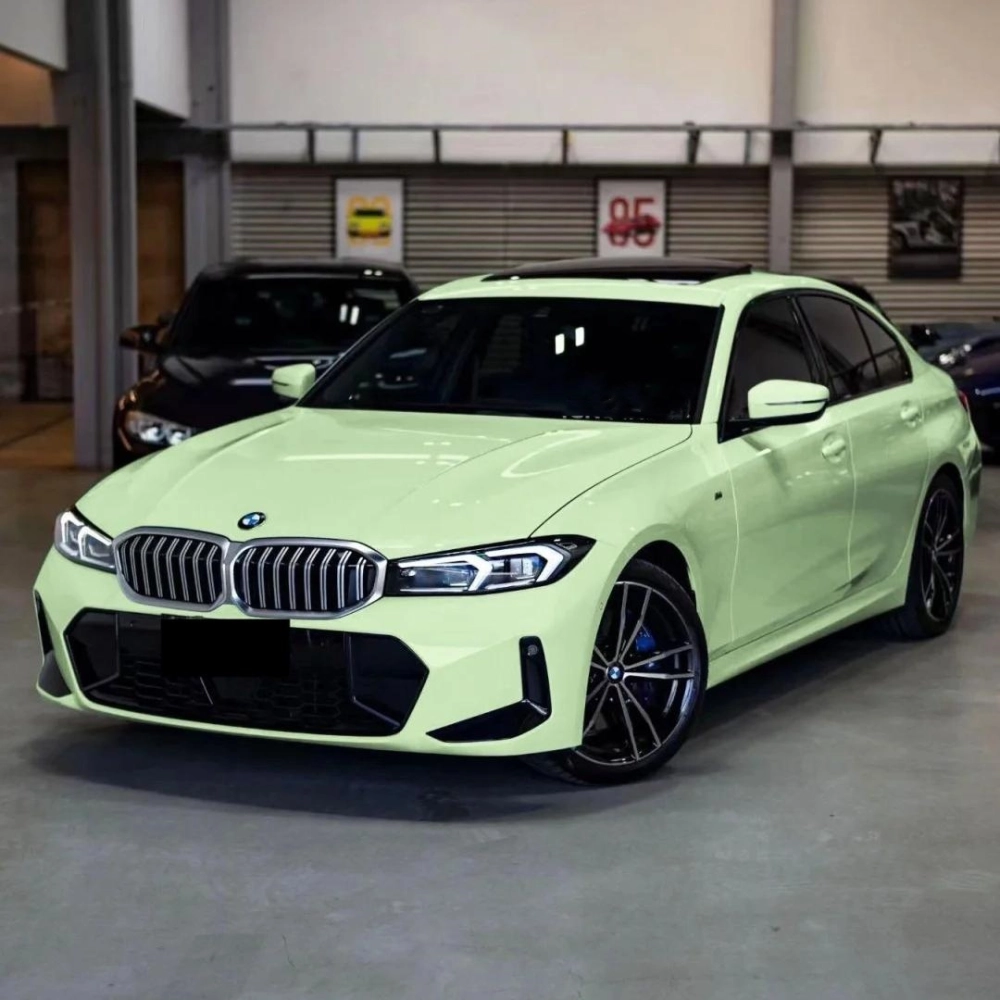
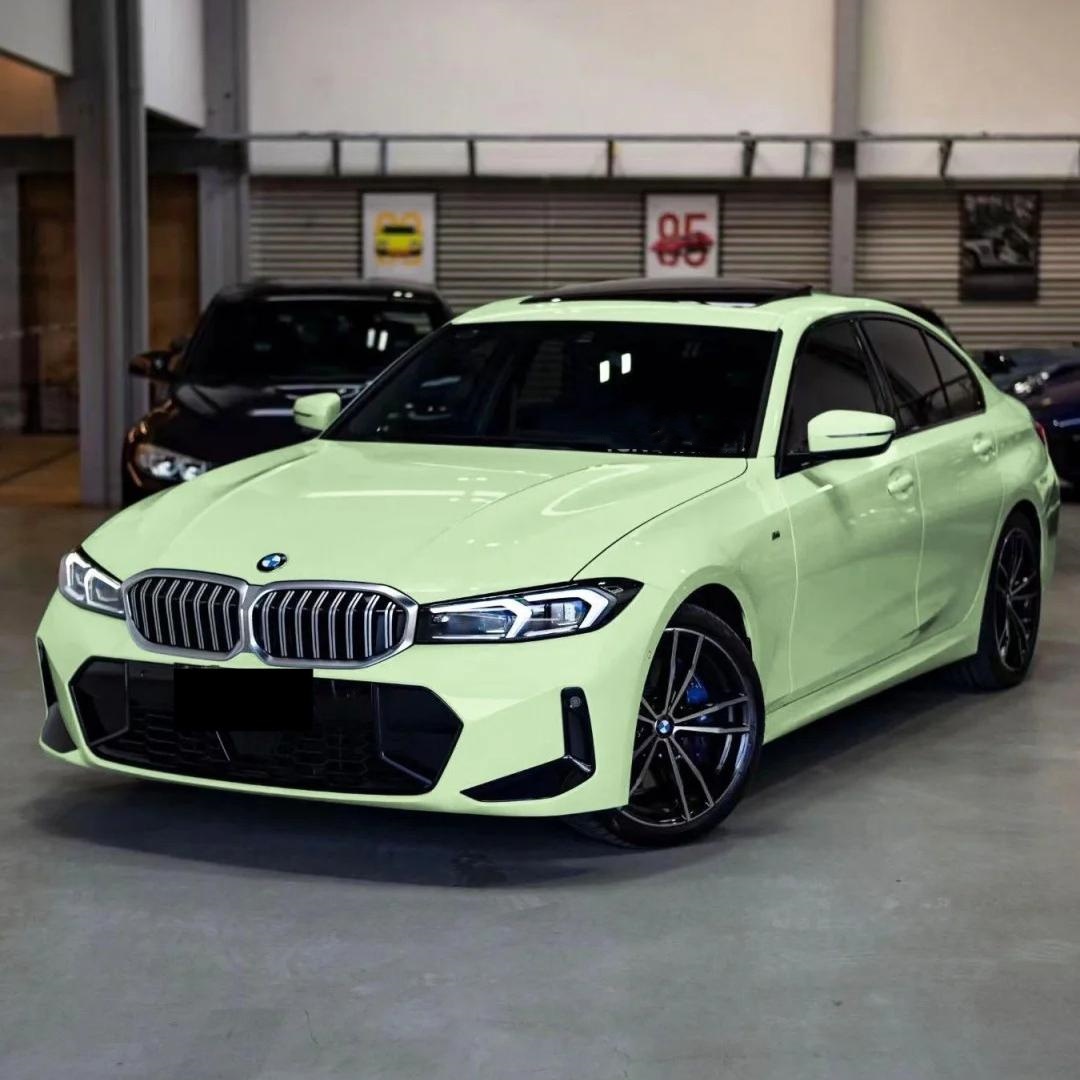
Sage green has an unusual position in the automotive colour spectrum. It is clearly green, yet it avoids the aggressive character of lime, racing green or emerald. Its greyed, slightly muted undertone gives it a softer and more sophisticated appearance—one reason sage green vinyl can work on everything from compact hatchbacks to luxury sedans and large SUVs.
But choosing a wrap colour from a screen is very different from seeing it across an entire vehicle.
How does sage green behave in sunlight? Does gloss or matte work better? Which cars actually suit the colour? And is a sage green car wrap practical enough for a daily driver?
This guide examines those questions from both a design and vehicle-wrap perspective.
Manufacturer Disclosure: ALUKOVINYL manufactures and sells automotive vinyl wrap, including the Sage Green product discussed in this article. Product-specific specifications are based on ALUKOVINYL’s published technical information. General wrap-selection and installation principles should also be checked against installer recommendations and the technical documentation for the specific film being used.
What Is Sage Green Vinyl Wrap?
Sage green vinyl wrap is a muted green automotive wrapping film with grey or earthy undertones. It gives a vehicle a softer, more understated appearance than bright greens such as lime, emerald or racing green. In a gloss finish, sage green gains stronger reflections and visual depth, while matte versions emphasize its subdued, contemporary character.
For drivers who want a distinctive colour without making the vehicle excessively bright, sage green sits in an interesting middle ground between neutral grey and conventional green.
Sage Green Vinyl at a Glance
| Feature | What to Expect |
|---|---|
| Colour family | Muted / grey-green |
| Visual character | Soft, modern, understated |
| Gloss finish | Cleaner reflections and stronger body-line definition |
| Matte finish | More subdued and architectural |
| Best suited to | Sedans, coupes, SUVs, EVs and luxury-oriented builds |
| Styling compatibility | Black, carbon, silver and dark metallic accents |
| Main advantage | Distinctive without being extremely loud |
| Main limitation | Appearance changes noticeably with lighting and surrounding colours |
Why Has Sage Green Become Such an Interesting Car Colour?
Automotive greens traditionally fall into two extremes.
At one end are dark heritage colours such as British racing green. At the other are highly saturated performance colours—lime, acid green and other shades designed specifically to attract attention.
Sage green occupies the space between them.
Its reduced saturation means the eye often reads the colour partly as green and partly as a neutral. This creates an important design advantage: sage green vinyl can transform a vehicle dramatically without dominating every other styling element.
That matters on modern cars.
Contemporary vehicles increasingly use black roofs, dark window surrounds, panoramic glass, carbon-fibre components and relatively minimal exterior trim. A muted green body can complement those elements rather than compete with them.
The Design Principle Behind Sage Green
Think of automotive greens on a rough spectrum:
Lime → Emerald → Racing Green → Sage → Olive → Grey
Moving toward sage reduces colour saturation while retaining enough green to prevent the vehicle from simply looking grey.
This is why sage green often feels more restrained than conventional green while remaining much more individual than black, white or grey.
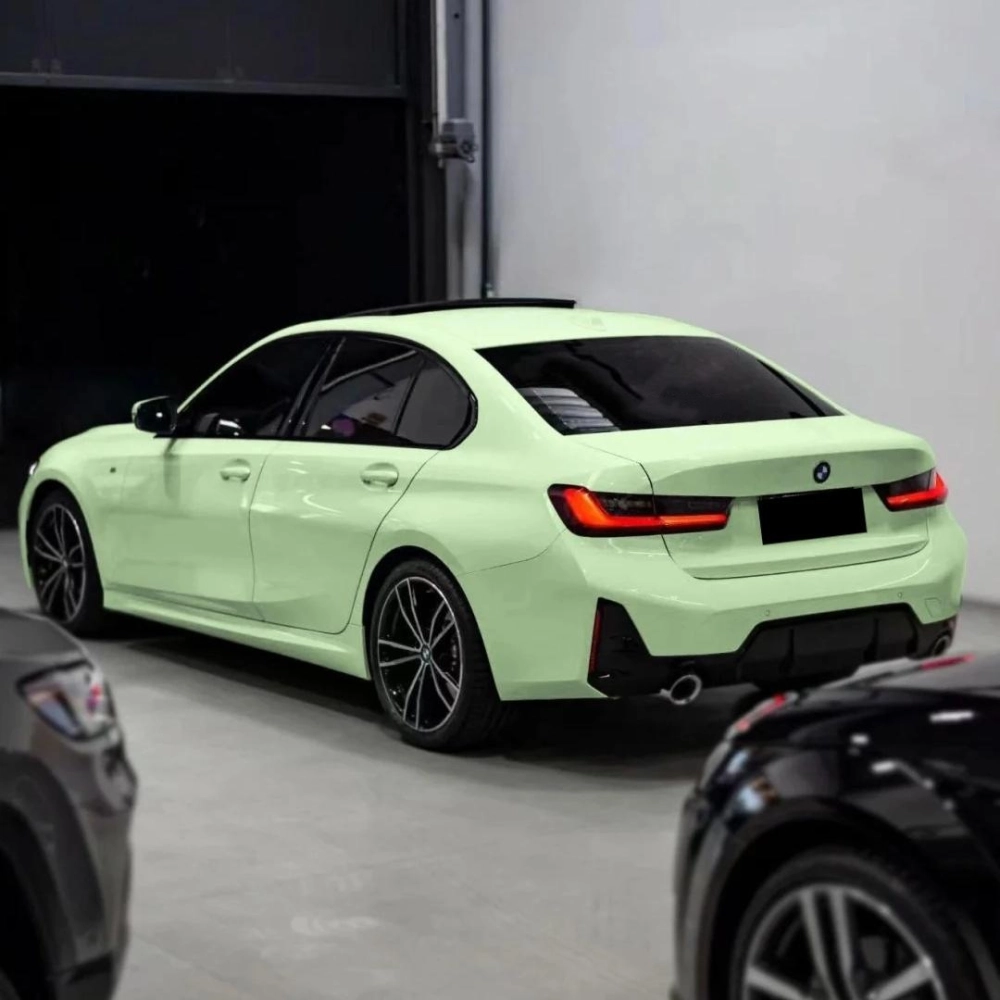
What Does Sage Green Vinyl Actually Look Like on a Car?
This is one of the most important questions to answer before purchasing.
Sage green is unusually dependent on lighting.
In Direct Sunlight
Strong sunlight makes the green component more obvious.
A gloss sage green vinyl wrap can appear brighter and cleaner, while reflections along fenders and doors make the vehicle’s body lines more pronounced.
Under Cloudy Skies
Lower-contrast lighting tends to emphasize the grey undertone.
The same vehicle can therefore appear significantly more muted and sophisticated than it does at midday.
At Sunset
Warm light can make sage green look slightly earthier. Depending on the surrounding environment, subtle olive characteristics may become more noticeable.
Indoors or in a Garage
Artificial lighting can suppress some of the green, particularly under cooler LEDs.
This is why choosing automotive vinyl from a computer monitor alone is risky.
Installer Tip: Whenever possible, inspect a physical swatch outdoors, in shade and under artificial lighting before ordering enough film for an entire vehicle.
Gloss Sage Green vs Matte Sage Green: Which Looks Better?
Neither finish is universally better. They produce noticeably different interpretations of the same colour.
| Feature | Gloss Sage Green | Matte Sage Green |
|---|---|---|
| Reflections | Strong | Minimal |
| Colour depth | Higher | Softer |
| Body-line definition | Stronger | More subdued |
| Overall character | Modern / premium | Minimalist / tactical |
| Cleaning appearance | Familiar paint-like finish | Requires more finish-conscious care |
| Best for | Luxury, sport and modern vehicles | SUVs, off-road and minimalist builds |
Choose Gloss Sage Green If…
You want sage green to resemble a contemporary painted finish rather than an obviously stylised wrap.
Gloss is particularly effective on vehicles with strong shoulder lines and sculpted panels because reflections reveal more of the underlying geometry.
Choose Matte Sage Green If…
You want to push the colour toward its earthy, understated side.
Removing gloss reduces reflected highlights and makes the grey-green pigment itself more visually dominant.
For rugged SUVs or minimalist builds, that can be exactly the desired result.
Why Gloss Sage Green Works Particularly Well on Modern Cars
There is a useful design reason behind the combination.
Muted colours reduce visual intensity. Gloss restores some of that intensity through reflection rather than saturation.
In other words:
Sage controls the colour intensity; gloss restores dimensionality.
That balance prevents the colour from becoming either too loud or too flat.
It is one reason a high-gloss sage green can look dramatically different from military green despite both colours being relatively muted.
Which Cars Look Best With Sage Green Vinyl?
Colour suitability is partly subjective, but vehicle proportions and trim configuration create predictable differences.
1. Porsche 911 / 718 Cayman
A muted green works well with Porsche’s relatively clean body surfacing.
Black wheels, black window trim and dark brake or aero components can provide enough contrast without overpowering the body colour.
Best direction: Gloss sage green + black wheels.
[IMAGE PLACEHOLDER — Porsche 911 in Gloss Sage Green]
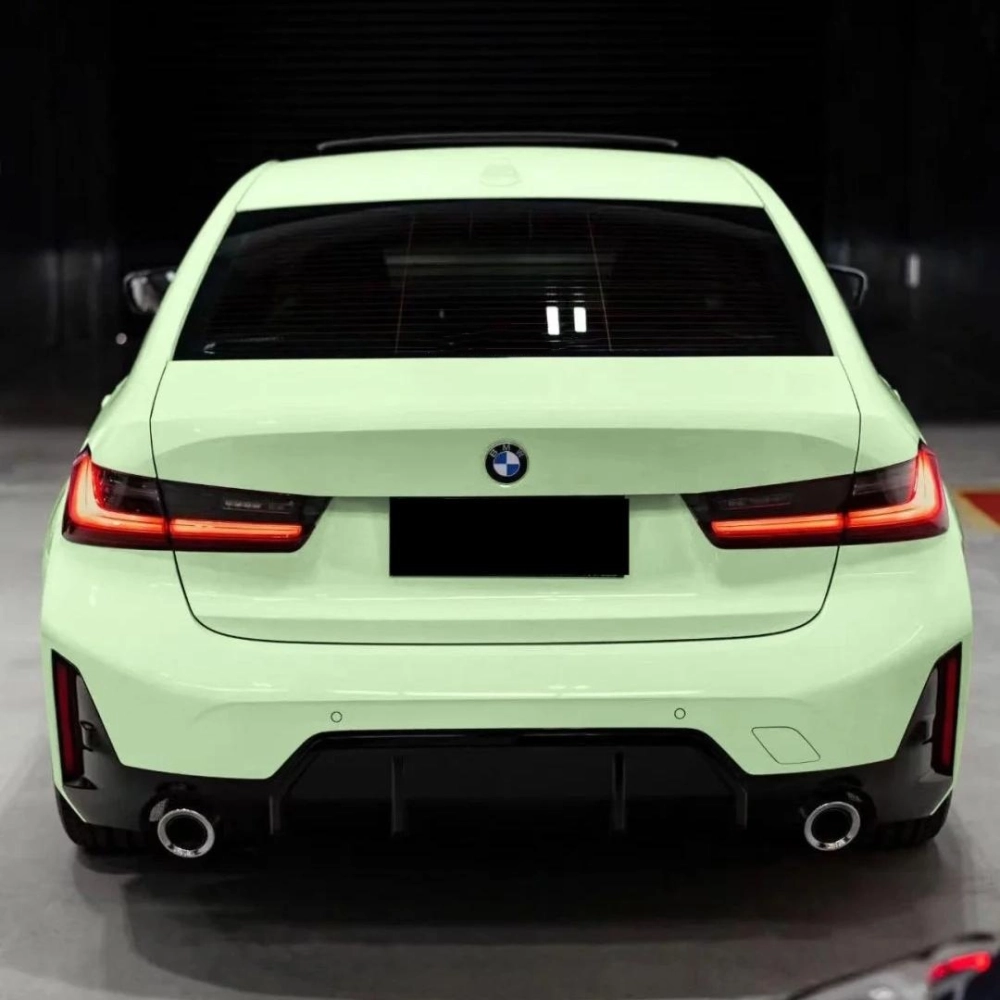
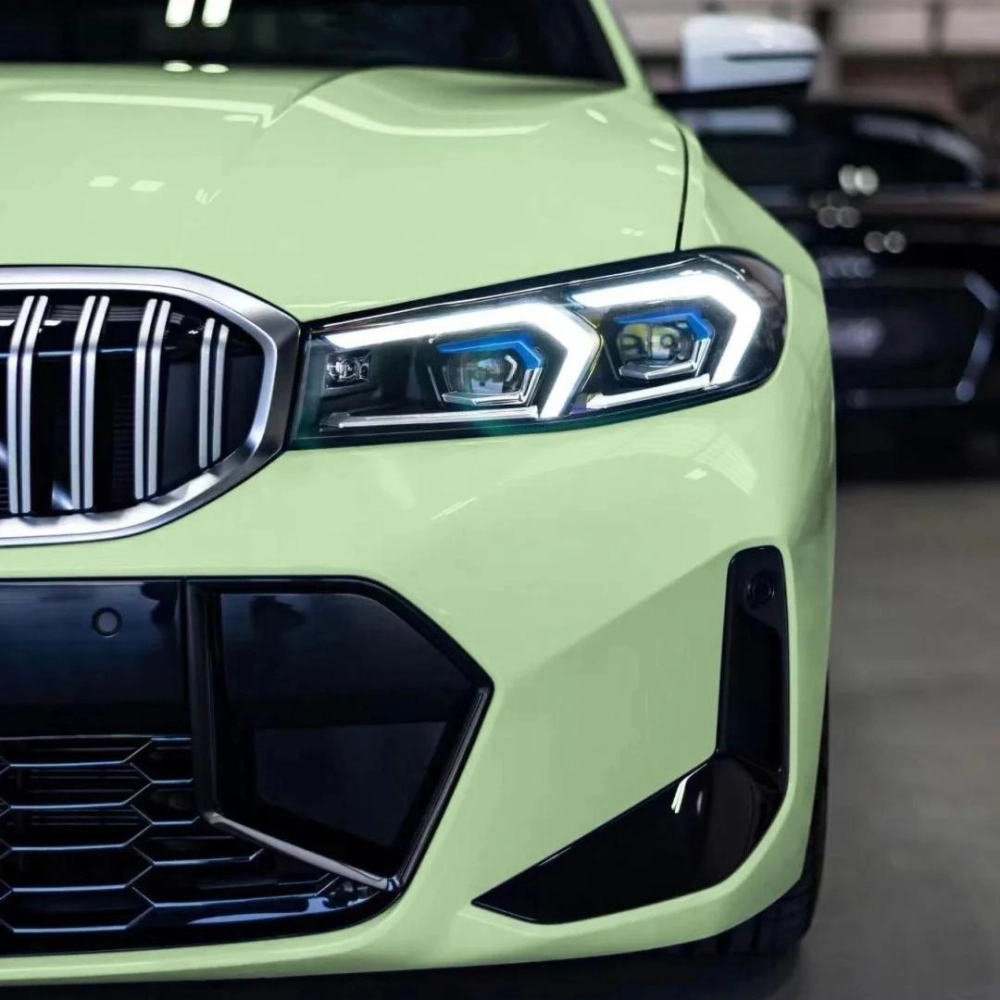
2. BMW M2 / M3 / M4
BMW’s current performance designs contain numerous sharp lines, intakes and dark exterior elements.
Sage green can soften that aggression without hiding the underlying geometry.
A gloss finish is especially useful here because reflected highlights continue to reveal the body lines.
Best direction: Gloss sage green + carbon-fibre accents.
3. Tesla Model 3 / Model Y
Tesla’s relatively minimal exterior design creates a large uninterrupted canvas for colour.
Because there are fewer decorative lines competing for attention, subtle colours can become surprisingly prominent.
Best direction: Gloss sage green + black trim.
4. Mercedes-Benz C-Class / E-Class
Luxury sedans benefit from sage green for a different reason.
Instead of making the car more aggressive, the colour can create a calmer, contemporary appearance.
Silver wheels produce a more traditional luxury result; black wheels create greater contrast.
5. Range Rover / Defender
Large SUVs provide significantly more visible surface area.
On these vehicles, very bright greens can become overwhelming. Sage green reduces that effect.
A Defender can lean toward the rugged side of the colour, while a Range Rover can make the same hue feel considerably more luxurious.
6. Ford Bronco / Jeep Wrangler
Boxier vehicles can push sage green toward an outdoors-oriented aesthetic.
Pairing the wrap with black fenders, dark wheels and utility accessories creates a very different personality from applying the same material to a Porsche.
Design insight: Vehicle shape influences how we interpret colour almost as much as the colour itself.
Sage Green vs Other Popular Green Car Wrap Colours
Drivers considering sage green vinyl are often also looking at olive, racing green or emerald.
The differences are more substantial than they initially appear.
| Colour | Saturation | Character | Good Match |
|---|---|---|---|
| Sage Green | Low | Soft / modern | Luxury & minimalist builds |
| Olive Green | Low | Rugged / military | SUVs & off-road vehicles |
| British Racing Green | Medium | Classic / heritage | Sports & luxury cars |
| Emerald Green | High | Rich / dramatic | Performance & show cars |
| Lime Green | Very high | Aggressive / energetic | Track-inspired builds |
Sage Green vs Olive Green
Olive usually contains stronger yellow/brown undertones.
Sage tends to be cooler and greyer.
That seemingly small difference changes the personality significantly: olive feels rugged, while sage tends to feel cleaner and more contemporary.
Sage Green vs British Racing Green
British racing green is generally much darker.
It carries strong heritage associations and often works particularly well with classic or luxury vehicles.
Sage green is lighter, softer and less traditional.
Sage Green vs Emerald Green
Emerald prioritizes richness and saturation.
Sage prioritizes restraint.
If you want green to be the dominant visual statement, emerald may make more sense. If you want the colour to integrate with the entire build, sage deserves serious consideration.
Product Focus: ALUKOVINYL Gloss Sage Green Vinyl Wrap
For drivers looking for the glossy interpretation of this colour, ALUKOVINYL offers a Gloss Sage Green Car Vinyl Wrap PET.
According to ALUKOVINYL’s published specifications, the film uses a PET release liner and is categorized as a high-performance calendared automotive film.
Published specifications include:
- Finish: Gloss
- Colour: Sage Green
- Film thickness: approximately 3.7–4.1 mil
- Adhesive: low-tack solvent acrylic
- Application: dry installation
- Air-release technology: designed to assist bubble management
- Application temperature: approximately +15°C to +40°C
- Published expected durability: 5–7 years
- Published removable period: up to 3 years
- 59 ft roll weight: approximately 13–13.5 kg
These figures are manufacturer specifications rather than independent laboratory certification of real-world service life. Actual wrap longevity can vary significantly according to climate, installation, horizontal versus vertical panel exposure, storage conditions and maintenance.
PET Liner vs Conventional Release Liner: Why Does It Matter?
The backing liner is easy for consumers to overlook because it is removed during installation.
However, it can influence the surface appearance of certain gloss films.
One objective of PET-backed gloss wrap construction is to provide a smoother liner interface, reducing texture transfer into the adhesive/film system and helping the finished surface appear smoother.
This matters most on high-gloss colours.
A heavily textured surface can scatter reflections and create what installers commonly describe as an orange-peel appearance.
On sage green, surface quality is especially noticeable because the colour itself is subtle. Much of the visual drama comes from reflections rather than extreme saturation.
That means surface smoothness can have an outsized effect on how premium the finished vehicle appears.
Cast vs Calendared Vinyl: An Important Distinction
Not every automotive vinyl film is constructed the same way.
Premium vehicle-wrap markets commonly include both cast and calendared film technologies.
Cast films are widely used by established manufacturers for demanding vehicle applications because they can offer strong conformability and dimensional stability.
High-performance calendared films can provide another balance between appearance, cost and installation characteristics.
ALUKOVINYL identifies its Gloss Sage Green product as high-performance calendared film, so it should not be represented as cast vinyl.
That distinction matters when comparing products.
Rather than assuming that two films with similar colours are interchangeable, buyers should compare:
- Film construction
- Thickness
- Adhesive technology
- Conformability
- Repositionability
- Surface finish
- Warranty terms
- Expected service conditions
- Installer familiarity
Colour is only one component of wrap performance.
ALUKOVINYL vs Major Automotive Wrap Brands
ALUKOVINYL operates in a market that also includes established manufacturers such as 3M, Avery Dennison and ORAFOL.
A useful comparison should focus on material positioning rather than simply declaring one brand “better.”
| Consideration | ALUKOVINYL Sage Green | Major Established Wrap Systems |
|---|---|---|
| Sage green option | Dedicated gloss sage colour | Availability varies by brand/range |
| Film construction | High-performance calendared | Many premium lines use cast construction |
| Liner | PET-listed construction | Proprietary liner technologies vary |
| Colour selection | Broad colour-focused catalogue | Varies substantially by manufacturer |
| Installer familiarity | Depends on local market | Generally stronger global installer familiarity |
| Technical documentation | Manufacturer specifications available | Mature technical/warranty documentation common |
| Best approach | Evaluate colour, sample and specifications | Evaluate system, installer experience and warranty |
The important lesson is simple:
Do not choose a wrap solely because two manufacturers offer a similar colour.
Request samples and compare actual film behaviour, surface appearance and technical documentation.
Pros and Cons of Sage Green Vinyl Wrap
Pros
Distinctive without being excessively bright
Sage green clearly changes the identity of a vehicle without creating the visual intensity associated with neon or chrome colours.
Works across several vehicle categories
Few unconventional colours can transition comfortably between a sports coupe, luxury sedan, EV and off-road SUV.
Excellent contrast with black trim
Gloss black roofs, carbon components, dark windows and black wheels naturally frame muted green.
Can emphasize premium design
On clean, modern vehicles, a soft green can look more sophisticated than highly saturated colours.
Reversible colour transformation
A properly selected and professionally installed automotive wrap allows owners to change vehicle appearance without permanently repainting the body.
Cons
Colour varies significantly with lighting
A swatch photographed under studio lighting may not represent how the vehicle looks outside.
Not everyone wants muted colour
Drivers looking for maximum visual impact may prefer emerald, lime, chrome or colour-shift finishes.
Gloss requires maintenance
Dirt, water spots and surface contamination can reduce the clean reflective appearance that makes gloss sage attractive.
Complex installations still require skill
Air-release technology can assist installation, but bumpers, deep recesses, compound curves and panel edges still require proper technique.
Vinyl is not PPF
A colour-change vinyl wrap should not automatically be treated as equivalent to paint protection film. Vinyl can provide a sacrificial exterior layer against light environmental exposure, but it is not designed to deliver the same impact resistance or self-healing behaviour associated with quality TPU PPF.
How Much Sage Green Vinyl Do You Need?
Film requirements depend on vehicle dimensions, installer technique and how much contingency material is required.
A useful planning range is:
| Vehicle Type | Approximate Material Planning Range |
|---|---|
| Small coupe / compact | 50–59 ft |
| Typical sedan | Around 59 ft |
| Medium SUV | Around 59–69 ft |
| Large SUV | Around 69 ft |
| Pickup / large vehicle | 69–79 ft or project-specific measurement |
These numbers are planning estimates rather than guarantees.
Complex bumpers, spoilers, wide-body components, reinstallation risk and installer experience can increase consumption.
ALUKOVINYL’s current product options include 10, 16, 33, 49, 59, 69 and 79 ft lengths, with 59 ft identified as a full roll.
Installation Matters More Than Many Buyers Expect
A premium-looking wrap is the result of both material and workmanship.
Even an attractive sage green film can look poor if the installation produces visible contamination, overstretched sections, lifted edges or inconsistent panel orientation.
Before Installation
The paint should be thoroughly cleaned and inspected.
Wax, sealants, grease, road contamination and other residues can interfere with adhesion.
Any existing paint defects should also be evaluated before wrapping.
During Installation
Professional installers control tension rather than simply stretching the film until it fits.
Excessive stretching can alter gloss, colour consistency and long-term stability.
Directional installation should also be considered. ALUKOVINYL recommends installing its films directionally unless testing shows that a non-directional layout produces acceptable colour consistency.
After Installation
Edges, recesses and other tension areas require careful finishing according to the material’s installation requirements.
[IMAGE PLACEHOLDER — Professional Sage Green Vinyl Installation Close-Up]
How Long Can Sage Green Vinyl Last?
There is no responsible single-number answer for every wrapped vehicle.
ALUKOVINYL currently lists an expected durability of 5–7 years for its Gloss Sage Green product, but real-world service life depends heavily on usage and environment.
Important factors include:
- UV exposure
- Climate
- Outdoor versus garage parking
- Vehicle orientation
- Horizontal versus vertical panels
- Installation quality
- Cleaning chemicals
- Frequency of washing
- Surface contamination
- Film stress around complex geometry
Horizontal surfaces such as the hood, roof and trunk generally experience greater solar exposure than vertical doors.
For this reason, published durability should be treated as an expected service range under appropriate conditions—not a guarantee that every panel on every vehicle will look unchanged for that entire period.
How Should You Maintain Sage Green Vinyl?
A muted gloss colour looks best when its reflective surface remains clean.
For ALUKOVINYL’s Sage Green film, the published aftercare guidance specifies pH-neutral cleaning and avoiding wax or solvents.
More broadly:
- Remove bird droppings, insects and other contaminants promptly.
- Avoid harsh solvents unless specifically approved for the film.
- Use wrap-compatible cleaning products.
- Avoid aggressively scrubbing edges and seams.
- Be cautious with pressure washing around lifted or vulnerable edges.
- Follow the specific film manufacturer’s maintenance documentation.
Three Sage Green Build Concepts
Instead of asking whether sage green is universally attractive, it is more useful to consider how it works as part of a complete build.
Build 1: Luxury Minimalist
Vehicle: Mercedes-Benz E-Class
Wrap: Gloss Sage Green
Wheels: Silver
Trim: Factory chrome or gloss black
Effect: Sophisticated rather than aggressive.
This configuration keeps the colour soft and allows the vehicle’s proportions to provide most of the visual impact.
Build 2: Modern Performance
Vehicle: BMW M4
Wrap: Gloss Sage Green
Wheels: Gloss black
Trim: Carbon fibre
Effect: High contrast without relying on a loud body colour.
Here, black and carbon details provide the aggression that the muted body colour deliberately avoids.
Build 3: Adventure SUV
Vehicle: Land Rover Defender
Wrap: Sage Green
Wheels: Satin or matte black
Trim: Black
Effect: Modern outdoor aesthetic.
On a boxy SUV, sage takes on an earthier personality than it does on a coupe.
This illustrates an important point:
The same vinyl colour does not create the same visual identity on every vehicle. Body shape, trim and wheel colour fundamentally change how sage green is perceived.
Is Sage Green Vinyl Right for Your Car?
Consider sage green if you want a vehicle that stands apart without relying on extreme saturation.
It makes particular sense when you:
- Prefer muted rather than neon colours
- Like modern neutral palettes
- Have black, carbon or dark exterior accents
- Want an unconventional colour that can still look sophisticated
- Prefer a design that emphasizes the complete vehicle rather than colour alone
You may want to consider another colour if your priority is maximum visual impact, a traditional OEM appearance or a very dark performance aesthetic.
FAQ About Sage Green Vinyl
Is sage green a good car colour?
Sage green can work particularly well on vehicles with modern, clean body lines because its low saturation provides differentiation without overwhelming the design. Whether it suits a particular car depends on body shape, trim, wheel colour and desired styling.
Is sage green vinyl more green or grey?
It is generally a muted green with noticeable grey undertones. Its perceived balance can change substantially under different lighting.
Does sage green look good with black wheels?
Yes. Black wheels create strong contrast against the softer body colour and are particularly effective on performance cars, EVs and SUVs.
Should I choose gloss or matte sage green?
Choose gloss if you want stronger reflections, clearer body lines and a more paint-like appearance. Matte emphasizes the muted, earthy character of the colour.
Is sage green the same as olive green?
No. Olive green generally contains warmer yellow or brown undertones, while sage is typically softer, cooler and greyer.
Can sage green vinyl protect paint?
Vinyl creates a physical layer over the original finish and can take some minor surface exposure, but standard colour-change vinyl should not be considered equivalent to TPU paint protection film for stone-chip resistance or self-healing performance.
How much vinyl do I need to wrap a sedan?
Approximately 59 ft of 5-ft-wide material is a common planning point for many sedans, but vehicle dimensions and installer technique should be checked before ordering.
Can I install sage green vinyl myself?
Simple panels may be achievable for experienced DIY users. Full bumpers, mirrors, deep recesses and complex curves are substantially more difficult. Professional installation generally reduces the risk of overstretching, contamination and edge failure.
Does sage green vinyl fade?
Like other exterior vinyl films, its appearance can change over time because of UV exposure, heat and environmental conditions. Film quality, climate, storage and maintenance all influence the rate of ageing.
Final Thoughts: The Strength of Sage Green Is Restraint
The interesting thing about sage green vinyl is not that it is the brightest or most dramatic green available.
It is almost the opposite.
Sage green works because it sits between colour and neutrality. It provides enough green to transform the identity of a vehicle while its grey undertones keep the overall appearance controlled.
On a Porsche, it can feel contemporary and premium.
On a BMW, it can balance aggressive styling.
On a Tesla, it can emphasize minimalism.
On a Defender, it can feel earthy and adventurous.
That flexibility is what makes sage green worth considering—not because it is automatically the “best” colour, but because it solves a difficult styling problem: how to make a car noticeably different without making the colour overpower the car itself.
Ready to See Sage Green on Your Build?
If you are considering a full colour change, compare the shade in real lighting before making the final decision.
ALUKOVINYL’s Gloss Sage Green Car Vinyl Wrap PET combines the muted sage palette with a high-gloss surface designed to produce a smoother, more reflective appearance.
You can also browse ALUKOVINYL’s broader green car wrap and car vinyl wrap collections to compare sage against darker, brighter and more saturated alternatives.