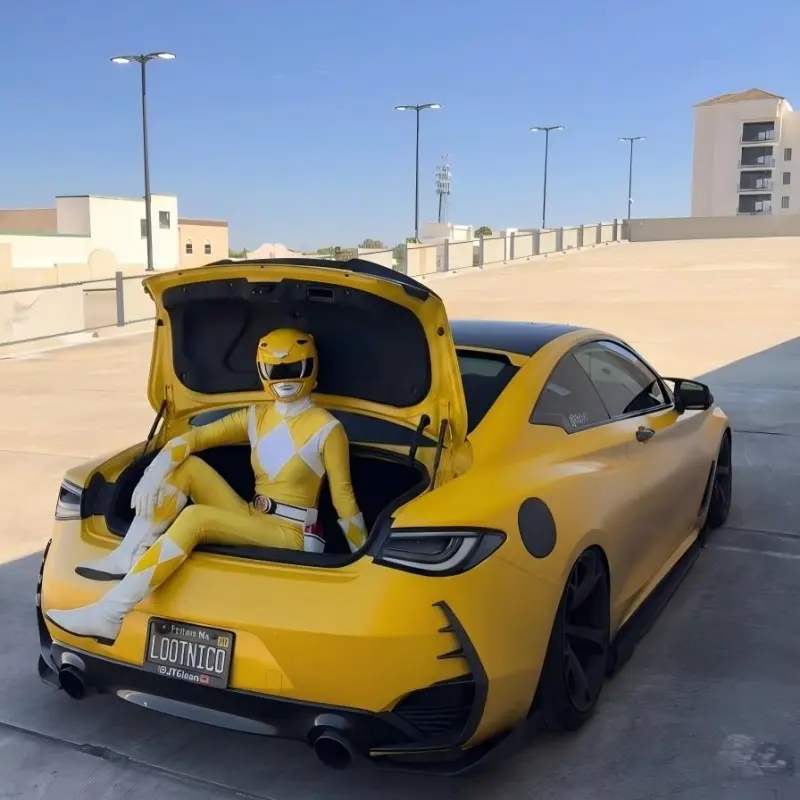
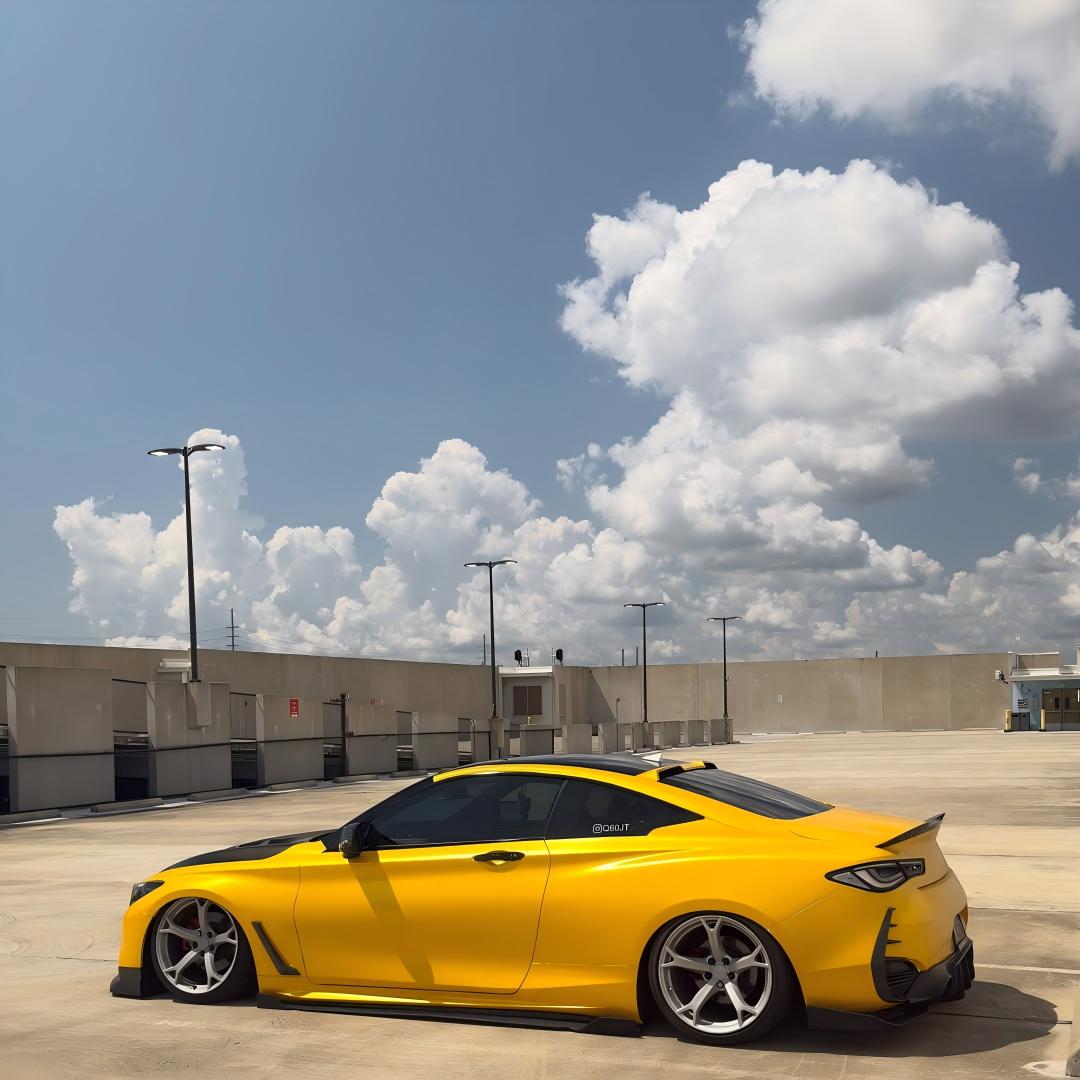
Yellow is already one of the most attention-grabbing colors you can put on a car. But choosing “yellow” is only half of the decision.
A Satin Energetic Yellow car wrap creates a softer, more sculpted appearance with controlled reflections and, in metallic versions, fine highlights that become more noticeable as the viewing angle changes. A gloss yellow car wrap, on the other hand, reflects its surroundings much more clearly and can produce an appearance closer to conventional high-gloss automotive paint.
So which finish actually looks better on your car?
The answer depends on the vehicle’s body shape, the type of yellow you want, how much visual contrast you prefer, and even where the car will normally be seen.
This guide compares satin energetic yellow and gloss yellow from a practical design perspective—including appearance, lighting behavior, maintenance, vehicle compatibility, installation considerations, and industry alternatives—to help you choose the finish that fits your build.
Editorial Disclosure: ALUKOVINYL manufactures and sells vehicle wrapping films, including the Satin Energetic Yellow discussed in this article. Product-specific specifications are based on our published product information. To provide broader context, this comparison also references technical information and color ranges published by independent industry manufacturers including 3M, Avery Dennison, and ORAFOL. Actual film performance depends on installation, exposure, maintenance, climate, substrate condition, and other factors.
Featured Snippet: Satin Energetic Yellow vs Gloss Yellow Car Wrap
Satin Energetic Yellow is usually better for drivers who want a modern, performance-oriented yellow with softer reflections, while gloss yellow is better for drivers who want maximum shine and a more traditional painted appearance.
| Feature | Satin Energetic Yellow | Gloss Yellow |
|---|---|---|
| Surface appearance | Soft satin sheen | High-reflection shine |
| Visual character | Modern and performance-focused | Bright and paint-like |
| Reflection | Diffused | Strong |
| Body-line emphasis | Strong through controlled highlights | Strong through reflections |
| Metallic effect | Available depending on film | Available depending on film |
| Dirt visibility | Moderate | Often more noticeable under reflections |
| Best suited to | Performance cars, hot hatches, aggressive SUVs | Sports cars, coupes, show builds |
| Overall personality | Sophisticated + energetic | Bright + dramatic |
Neither finish is universally better. The right choice depends on the visual result you want.
What Is Satin Energetic Yellow?
Satin Energetic Yellow sits between traditional matte and high-gloss finishes.
Unlike a flat matte yellow, satin still interacts noticeably with light. However, rather than producing sharp mirror-like reflections, the surface spreads those reflections into softer highlights.
When metallic particles are added, the effect becomes more complex.
ALUKOVINYL’s Satin Energetic Yellow is a matte-metallic-satin automotive vinyl. According to the current product specification, it uses an acrylic-based repositionable adhesive, is designed for dry installation, incorporates air-release technology, and is offered in 1.52 m-wide material suitable for large automotive panels.
[IMAGE SUGGESTION: Satin Energetic Yellow vehicle – front 3/4 view in daylight]
The important point is that “satin” should not be confused with “matte.”
Think of the finishes roughly like this:
Matte → Satin → Gloss
as surface reflection increases.
Satin therefore provides a useful middle ground for owners who find gloss too reflective but do not want the very flat appearance of matte vinyl.

Why Yellow Changes So Much Between Satin and Gloss
Two wraps can use similar yellow pigments and still look surprisingly different once installed.
The reason is specular reflection.
Gloss surfaces create relatively concentrated reflections. Clouds, buildings, lights and surrounding objects can therefore appear more clearly across the vehicle.
Satin surfaces scatter more of that reflected light.
Instead of seeing a sharp reflection, you see a softer highlight.
That difference matters enormously on a car because automotive bodywork consists of curves, creases, shoulders and recessed sections.
On a gloss yellow car:
A bright reflection can travel across the hood, door or quarter panel.
The result often feels:
- brighter
- cleaner
- more polished
- closer to painted clear coat
On a satin energetic yellow car:
The same body line produces a broader highlight rather than a mirror-like reflection.
The result tends to feel:
- more dimensional
- less conventional
- more performance-oriented
- visually softer despite the aggressive color
This is why choosing a wrap from a computer screen alone is difficult.
Avery Dennison itself warns that digital representations can differ because of lighting and viewing angle and recommends evaluating a physical swatch before making a final decision.
For a color as lighting-sensitive as yellow, that advice is particularly important.
Satin Energetic Yellow vs Gloss Yellow: Side-by-Side
1. Brightness: Gloss Yellow Wins on Pure Visual Punch
If your goal is simply to make yellow look as bright and polished as possible, gloss usually has the advantage.
A gloss surface produces stronger highlights.
In direct sunlight, this can make yellow appear extremely vivid.
That is one reason gloss yellow remains an established color within major automotive wrap portfolios. Avery Dennison, for example, offers both Gloss Yellow and Dark Yellow in its Supreme Wrapping Film range.
Interestingly, Avery also identified Gloss Yellow among its popular Supreme Wrapping Film colors in a previously published “Top 25” selection.
That gives gloss yellow a long-standing place in professional vehicle customization rather than making it merely a short-lived trend.
2. Depth: Satin Metallic Yellow Can Look More Complex
This is where Satin Energetic Yellow becomes particularly interesting.
Metallic satin vinyl combines two visual mechanisms:
color + metallic reflection
The metallic component can produce subtle highlights without turning the entire surface into a high-gloss mirror.
Walk around the vehicle and different panels may appear slightly lighter or darker depending on:
- sun position
- artificial lighting
- viewing angle
- panel curvature
That visual variation can make the vehicle feel more three-dimensional.
3. Which Shows Body Lines Better?
This is more complicated than saying satin or gloss is “better.”
Both reveal body lines—but they reveal them differently.
Consider a car with a strong shoulder line running from the front fender toward the rear quarter panel.
With gloss yellow, the line can become visible because environmental reflections suddenly change direction across the crease.
With satin energetic yellow, the same crease can appear as a gradual transition between lighter and darker areas.
That distinction makes satin particularly interesting on vehicles with heavily sculpted bodywork.
Examples include:
- BMW M2 / M3 / M4
- Toyota GR Supra
- Chevrolet Corvette
- Ford Mustang
- Porsche Cayman
- Lamborghini Huracán
- Hyundai Ioniq 5 N
On cars with large, relatively simple panels, gloss yellow can instead provide the visual energy that the body itself does not create.
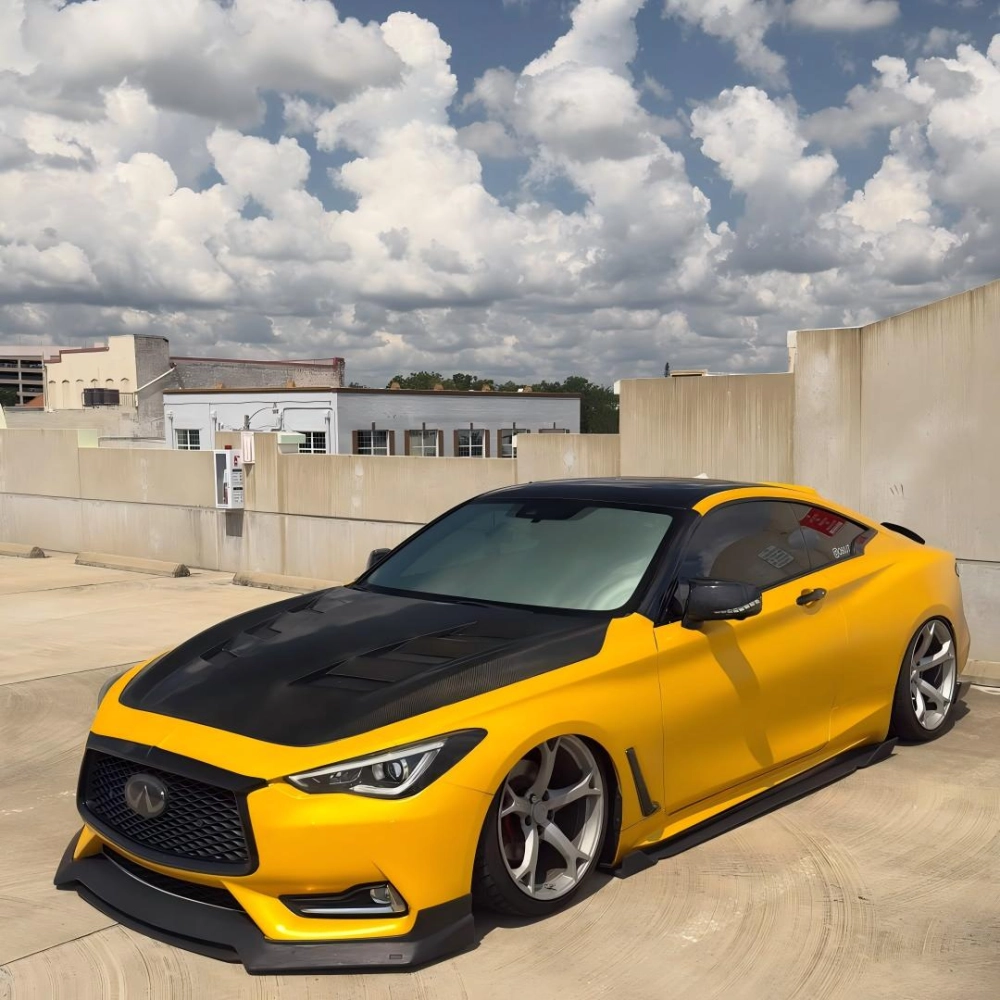
Real-World Example: Volkswagen ID.3 in Satin Energetic Yellow
One useful way to judge a wrap is to move beyond studio swatches.
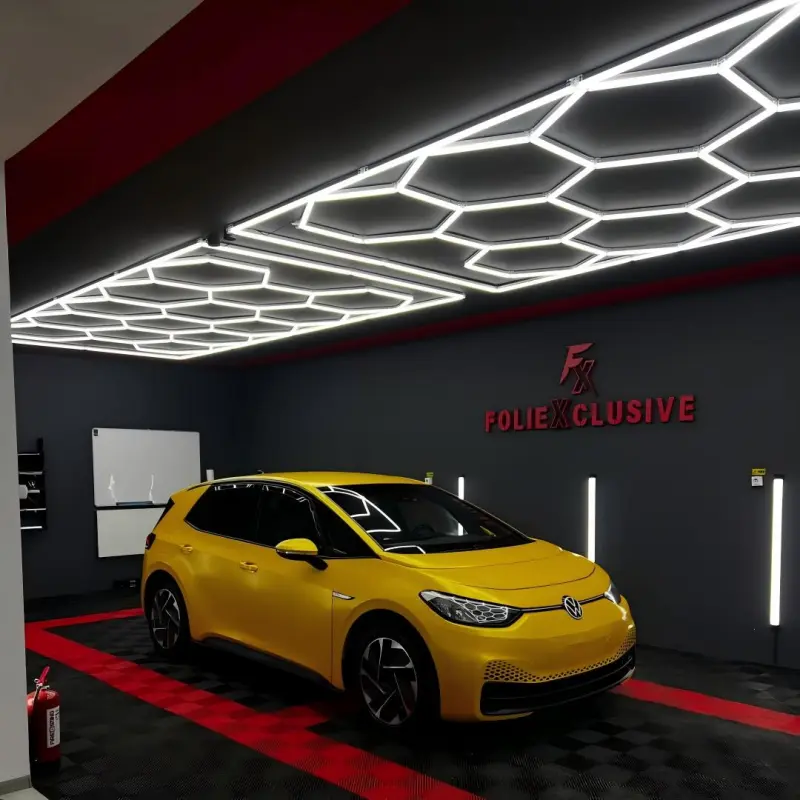
ALUKOVINYL’s Satin Energetic Yellow product gallery includes an installation on a Volkswagen ID.3.
This is an interesting application because the ID.3 is not an exotic supercar. Its relatively clean surfaces demonstrate how satin yellow can transform an everyday EV without relying on extreme vents, wings or supercar proportions.
The softer surface keeps the yellow bold while reducing some of the visual glare associated with a full gloss finish.
This suggests an important design principle:
Bold colors do not necessarily require the glossiest possible finish.
Sometimes reducing reflection allows the color and vehicle shape to become the focus instead.
Real-World Example: Ford F-250
Another customer installation published on the ALUKOVINYL product page shows Satin Energetic Yellow applied to a Ford F-250.
This produces a very different result.
A full-size pickup has enormous doors, bed panels and fenders compared with a hatchback. On such large surfaces, gloss reflections can become visually dominant.
A satin finish breaks up those reflections.
The customer specifically described choosing the wrap to change the character of an originally yellow F-250 rather than simply replacing yellow with a completely different color.
That demonstrates another use case for Satin Energetic Yellow:
changing the finish can transform a vehicle even when the basic color family remains similar.
[IMAGE: Ford F-250 Satin Energetic Yellow installation]
Which Cars Look Best in Satin Energetic Yellow?
Based on body geometry rather than simply vehicle price, satin yellow tends to work especially well on cars with pronounced surfaces.
Performance Coupes
Examples:
BMW M2
BMW M4
Toyota GR Supra
Ford Mustang
Nissan Z
Their muscular fenders and strong body lines give the satin surface plenty of geometry to emphasize.
Modern EVs
Examples:
Hyundai Ioniq 5
Kia EV6
Volkswagen ID.3
Tesla Model 3
Yellow creates contrast against the minimalist styling common to EVs, while satin prevents the result from looking excessively reflective.
SUVs and Trucks
Examples:
Ford Bronco
Jeep Wrangler
Ford F-150 / F-250
Mercedes-Benz G-Class
Satin yellow can give large vehicles a rugged, unconventional character—especially when paired with black trim.
What About Gloss Yellow?
Gloss should not be treated as the basic or inferior option.
For certain builds, it can be exactly the opposite.
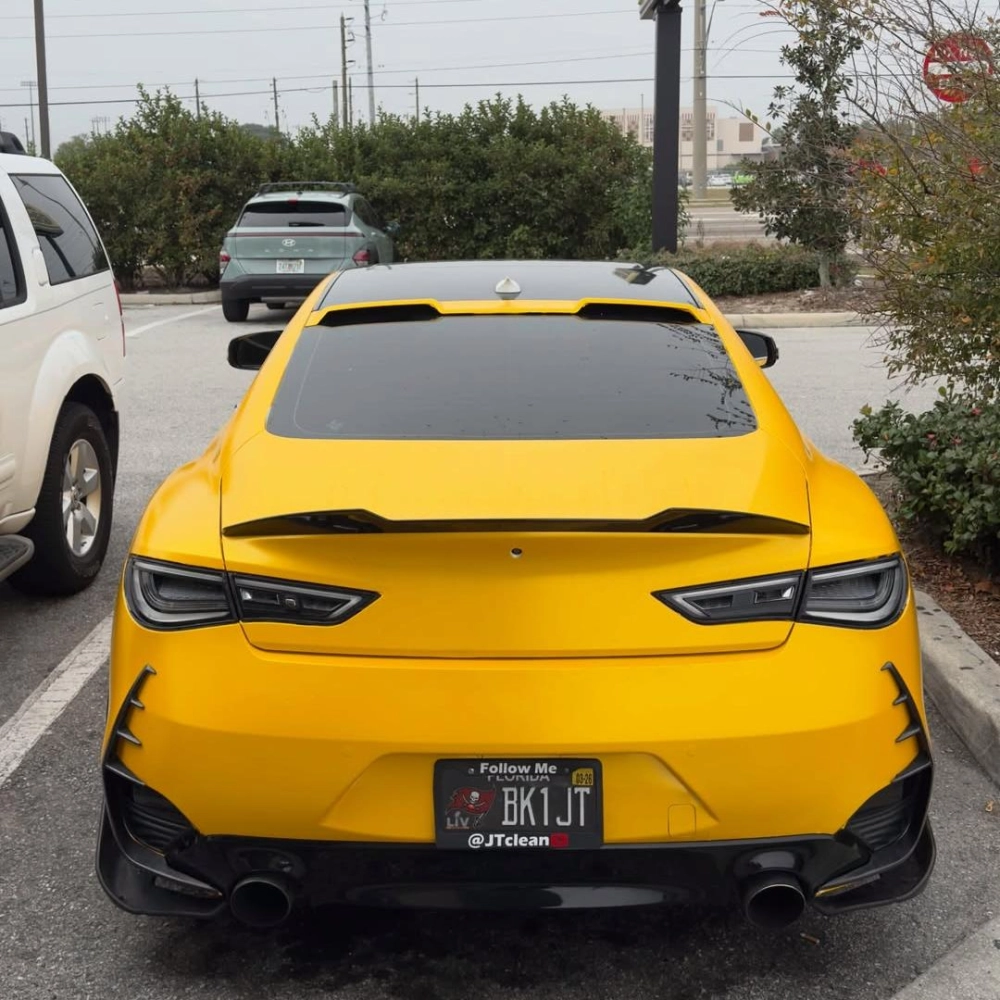
Gloss yellow works particularly well when you want the wrap to imitate the visual language of factory paint.
Consider cars traditionally associated with bright colors:
Ferrari sports cars, Lamborghini models, Chevrolet Corvettes and Porsche sports cars have helped establish yellow as a legitimate performance-car color.
A glossy yellow wrap draws on that familiar visual language.
Add black wheels, a carbon-fiber roof or dark aerodynamic components and the contrast becomes even stronger.
[IMAGE SUGGESTION: Gloss yellow sports coupe with black wheels]
Yellow + Black: Why the Combination Works
One of the easiest ways to make either finish work is to introduce black accents.
For example:
Satin Energetic Yellow body + gloss black roof
creates a contrast in both color and surface texture.
Other effective combinations include:
- yellow + black wheels
- yellow + carbon-fiber hood
- yellow + gloss black mirrors
- yellow + black spoiler
- yellow + dark window tint
- yellow + carbon aero components
This works because yellow is already visually dominant. Dark components give the eye a place to rest while separating important parts of the vehicle.
Satin Energetic Yellow Pros and Cons
Pros
Distinctive without relying on extreme gloss
Satin creates a noticeably customized appearance even from a distance.
Highlights body geometry
Controlled reflections can make fenders, creases and sculpted panels more apparent.
Metallic visual depth
A metallic satin construction adds another layer of visual variation under changing light.
Pairs extremely well with black trim
This makes it suitable for performance-oriented builds.
Less conventional than standard gloss yellow
For owners who want yellow without recreating a factory-paint appearance, satin provides another direction.
Cons
Harder to judge online
Satin and metallic finishes can change significantly with lighting and viewing angle.
Requires finish-specific care
Aggressive polishing or products designed to increase gloss can alter the intended satin appearance.
Panel orientation matters
Metallic films should be installed consistently because directional visual differences can become noticeable.
Repairs may show batch variation
ALUKOVINYL advises that colors can vary slightly between production batches and recommends keeping additional material when future repairs may be required.
Not everyone wants a satin appearance
Drivers specifically seeking a wet, clear-coated look will usually prefer gloss.
Gloss Yellow Pros and Cons
Pros
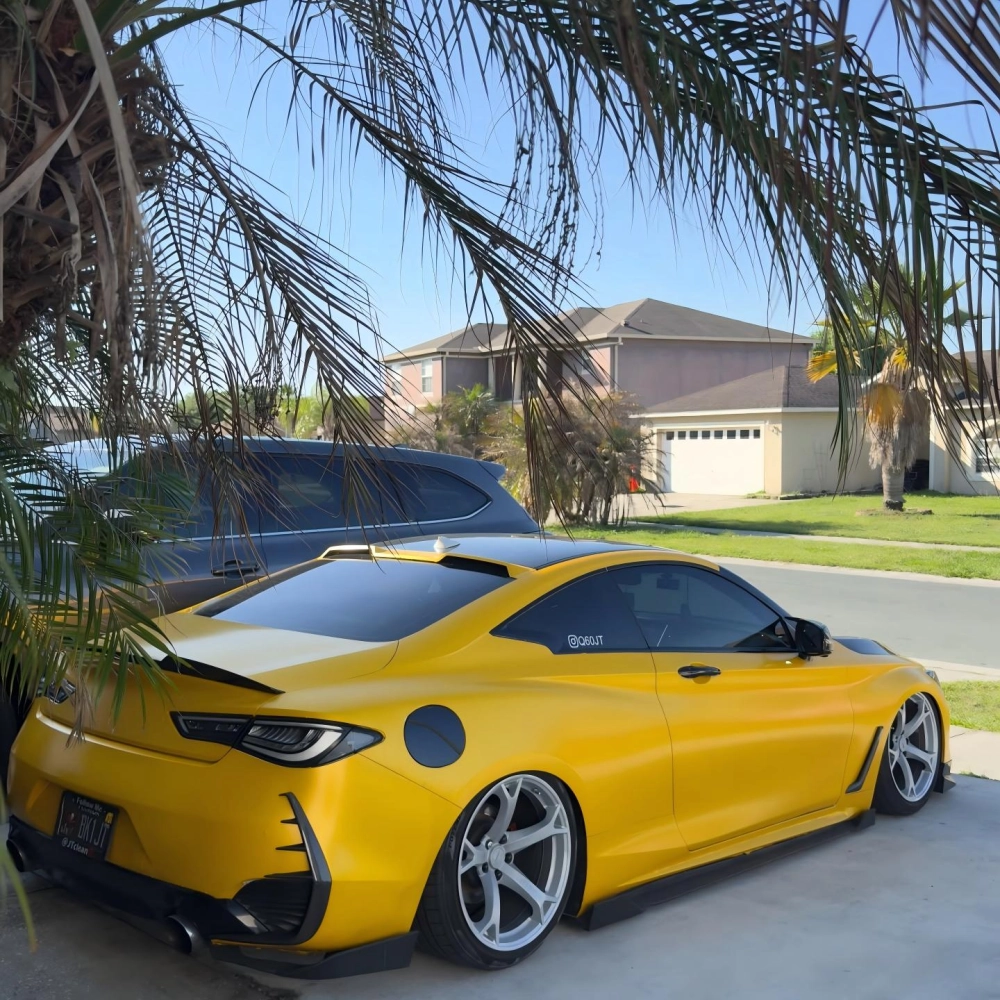
Gloss produces a familiar high-shine automotive appearance.
It can make bright yellow appear extremely vivid in sunlight and works especially well on sports cars and show-oriented builds.
The finish is also easy for buyers to understand because it resembles conventional glossy automotive paint.
Cons
Strong reflections can compete with body lines rather than emphasizing the underlying color.
Dust, fingerprints, water spotting and light surface imperfections can also become easier to notice under certain lighting conditions.
And if the objective is to make a car look obviously customized, a conventional gloss yellow may appear less unusual than satin or metallic alternatives.
What Do Major Wrap Manufacturers Offer?
Looking beyond a single brand helps put the finish choice into context.
Avery Dennison Supreme Wrapping Film
Avery Dennison’s current Supreme Wrapping Film range includes:
- Gloss Yellow
- Dark Yellow
- Satin Yellow
- Satin Metallic Energetic Yellow
That range is particularly relevant to this comparison because it demonstrates that professional film portfolios treat color and surface finish as separate design choices.
3M Wrap Film Series 2080
3M’s 2080 line uses multilayer cast film and technologies designed to assist positioning and air release during installation. 3M also distinguishes among gloss, high-gloss, satin, matte, metallic, pearl and other visual constructions across the range.
Its technical bulletin notes that certain gloss and high-gloss films use a removable protective surface film during installation to reduce surface impressions.
ORAFOL 970RA
ORAFOL’s 970RA is another professional wrapping platform. ORAFOL specifies a 4.25-mil construction, RapidAir air-release technology, repositionable adhesive and numerous gloss, matte and metallic colors.
These examples reveal an important industry pattern:
Finish is not merely cosmetic packaging around a color—it is a fundamental part of vehicle-wrap design.
ALUKOVINYL Satin Energetic Yellow: Technical Snapshot
For shoppers considering the ALUKOVINYL version specifically, the current product listing provides the following specifications:
| Specification | ALUKOVINYL Satin Energetic Yellow |
|---|---|
| Product | Matte Metallic Satin Energetic Yellow |
| SKU | 6011 |
| Finish | Metallic Satin |
| Application | Dry |
| Adhesive | Acrylic-based, repositionable/slideable |
| Air release | Yes |
| Application temperature | +15°C to +40°C |
| Published expected durability | 5–7 years |
| Published removability | Up to 3 years |
| Full-roll width | Approx. 1.52 m / 5 ft |
| 59-ft roll weight | Approx. 13–13.5 kg |
These are manufacturer specifications rather than guarantees for every installation. Actual service life can vary substantially with UV exposure, climate, storage, installation quality, maintenance and vehicle use.
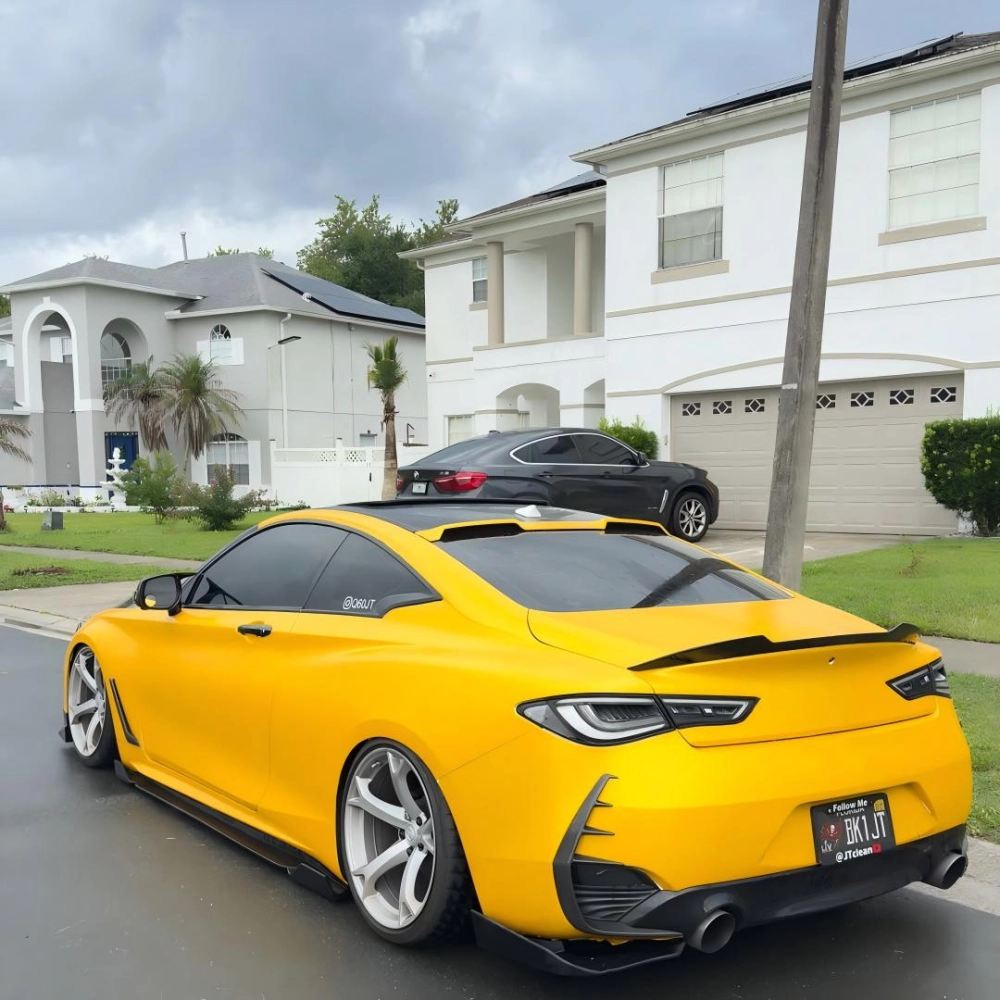
Satin Energetic Yellow vs Gloss Yellow: Maintenance
Your decision should not be based entirely on appearance.
Maintenance differs as well.
Satin Yellow
Avoid trying to polish satin vinyl into a shine.
The objective is to preserve a uniform low-sheen surface.
Use gentle washing techniques and products compatible with the film manufacturer’s care recommendations.
Gloss Yellow
Gloss vinyl can show surface contamination and water spotting more readily under reflected light, so maintaining its appearance often depends on regular cleaning.
Regardless of finish, avoid harsh solvents or aggressive abrasive cleaning.
ALUKOVINYL currently recommends pH-neutral care and avoiding wax or solvents for Satin Energetic Yellow.
Installation: Does Finish Change the Difficulty?
Potentially.
The color itself does not determine installation difficulty, but surface finish and film construction influence how installation marks become visible.
Gloss surfaces can reveal:
- scratches
- squeegee marks
- adhesive disturbance
- contamination
particularly when viewed under strong directional lighting.
Satin films create a different challenge: maintaining a consistent surface appearance.
Metallic films also require attention to material direction.
3M, for example, places directional arrows on the liner of relevant 2080 films, including metallic and other directional finishes, to help installers maintain consistent orientation.
This is a useful professional practice regardless of brand:
Before cutting multiple panels from metallic vinyl, establish one roll direction and maintain it across the vehicle.
Should You Order a Sample First?
For yellow, we strongly recommend it.
Computer screens cannot reliably reproduce:
- metallic flake
- satin reflection
- gloss intensity
- sunlight response
- shade response
Avery Dennison similarly recommends using physical swatches because digital colors and finishes can differ depending on lighting and viewing conditions.
Place your sample against the vehicle and evaluate it:
in direct sun, open shade, indoor lighting and at night.
Do not judge it from one photograph.
Satin Energetic Yellow vs Gloss Yellow: Which Should You Choose?
Choose Satin Energetic Yellow if you want:
- a modern custom appearance
- softer reflections
- strong body-line definition
- metallic visual depth
- a yellow that looks different from conventional paint
Choose Gloss Yellow if you want:
- maximum shine
- a familiar painted appearance
- stronger environmental reflections
- classic sports-car styling
- a simple, vivid yellow finish
The decision becomes easier when you stop asking:
“Which finish is better?”
and instead ask:
“Do I want the yellow itself or the reflections around it to dominate the car?”
For gloss, reflections become part of the design.
For satin, the color and body shape take more visual control.
Our Design Perspective
After comparing the two finishes, there is one situation where Satin Energetic Yellow becomes particularly compelling: a vehicle with aggressive body geometry and dark exterior trim.
A BMW M2, Supra, Mustang or similar performance car already has strong fenders, vents and creases.
Adding maximum gloss is not always necessary.
Satin can allow those surfaces to define the appearance instead.
Conversely, a simpler body can sometimes benefit from gloss because reflections introduce additional visual movement.
This leads to a more useful way of choosing wrap finishes:
Match the finish to the geometry of the car—not just the color you like on a swatch.
That principle applies well beyond yellow.
FAQ
Is Satin Energetic Yellow the same as matte yellow?
No. Satin reflects more light than a traditional matte finish. Satin Energetic Yellow can therefore retain visible highlights while avoiding the strong reflections associated with gloss.
Is Satin Energetic Yellow metallic?
The ALUKOVINYL Satin Energetic Yellow discussed here is a matte metallic satin film. Metallic particles contribute additional visual depth under changing lighting.
Does satin yellow look darker than gloss yellow?
It can appear darker in some conditions because satin surfaces diffuse reflections rather than producing intense highlights. However, perceived color depends on the exact film, lighting and viewing angle.
Which looks more like factory paint?
Generally, gloss yellow produces the more conventional clear-coated automotive-paint appearance.
Which finish is easier to maintain?
Neither is maintenance-free. Gloss can reveal dirt, water spots and surface imperfections through strong reflections, while satin requires appropriate cleaning to maintain a consistent low-sheen appearance.
How long does Satin Energetic Yellow vinyl last?
ALUKOVINYL currently publishes an expected durability of 5–7 years for its Satin Energetic Yellow product. This should be treated as a manufacturer specification rather than a guaranteed lifespan. Climate, UV exposure, installation quality and maintenance can shorten or extend real-world service life.
Can Satin Energetic Yellow be applied to a full vehicle?
Yes. The film is designed for full vehicle wraps as well as panels such as hoods, roofs, bumpers, mirrors and trim.
Should I buy extra vinyl?
For a full wrap, having additional material is useful for installation errors and future panel replacement. ALUKOVINYL specifically recommends keeping extra material when color matching future repairs is important because separate production batches can vary slightly.
Final Thoughts
Satin Energetic Yellow and Gloss Yellow can transform the same car in two very different ways.
Gloss yellow is about brilliance. It reflects its surroundings, creates sharp highlights and gives the vehicle a polished, paint-inspired character.
Satin Energetic Yellow takes another route. By controlling reflection and combining it with metallic depth, it can make the vehicle’s own body lines more important than the environment reflected across them.
For a sports coupe, hot hatch, EV, SUV or pickup with strong styling, that difference can completely change the personality of the build.
The smartest choice is therefore not to decide from an online color tile.
Compare physical samples on your actual vehicle, under the lighting conditions where you normally drive.
Ready to See Satin Energetic Yellow on Your Build?
Explore ALUKOVINYL’s Satin Energetic Yellow car wrap and compare it with other yellow car wrap, metallic car wrap, and satin car wrap options before choosing your final finish.
For installers, wrap shops or customers who are unsure about the color, start with a physical swatch whenever possible.
See the color in real light. Match the finish to your vehicle. Then build something that actually looks different on the road.