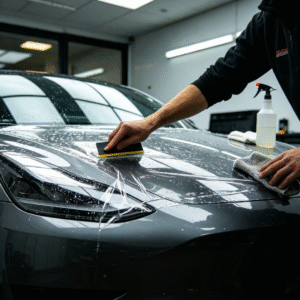
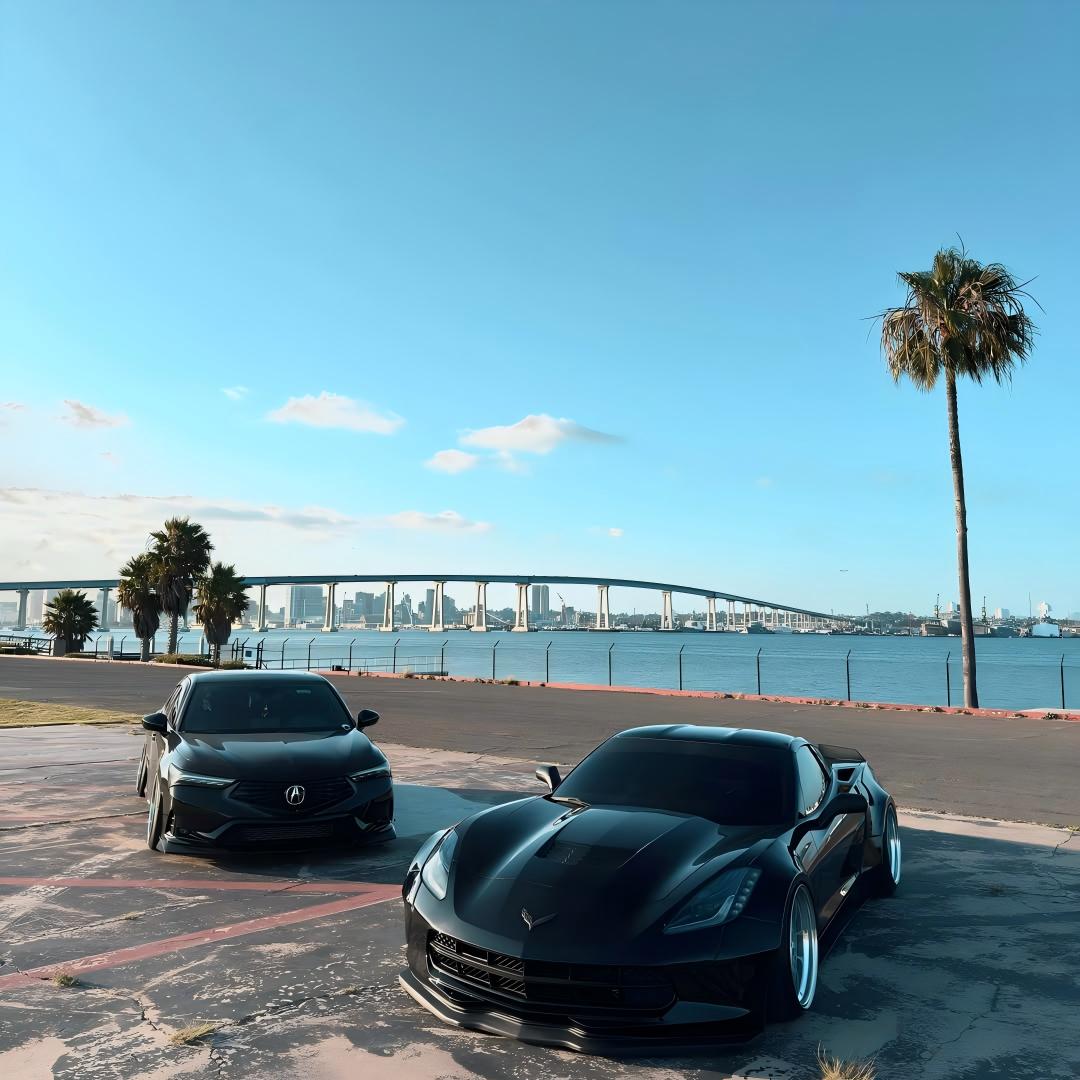
Black is one of the most recognizable automotive colors, but choosing a black finish is no longer as simple as deciding between gloss and matte paint. Modern black PPF can transform a vehicle into ultra-gloss black, satin black, or metallic/ceramic-style black while adding a TPU-based protective layer over the original paint.
That combination makes black paint protection film fundamentally different from an ordinary color-change vinyl.
However, not every black PPF looks or performs the same. Film construction, TPU quality, top-coat chemistry, gloss level, thickness, adhesive design, installation method, weather exposure, and maintenance can all influence the final result.
This guide compares gloss black PPF, satin black PPF, and metal ceramic black PPF, explains where black PPF differs from conventional vinyl, and uses published information from manufacturers including 3M, Tinybot, TeckWrap, and INOZETEK as industry reference points.
Disclosure: ALUKOVINYL manufactures and sells automotive wrap and paint protection film, including the black PPF products discussed here. Product-specific statements from ALUKOVINYL should therefore be understood as manufacturer information rather than independent laboratory verification. Where third-party manufacturers are referenced, their specifications are attributed to their own published technical or product information.
Featured Snippet: What Is Black PPF?
Black PPF is a colored paint protection film, typically based on thermoplastic polyurethane (TPU), that changes a vehicle’s appearance to black while adding a protective film over the original paint. Depending on the product, black PPF can have gloss, satin, matte, metallic, or other specialty finishes.
Its two primary functions are:
1. Color transformation
Black PPF changes the visible finish of the vehicle without permanently repainting it.
2. Paint protection
Its TPU-based construction is intended to provide a physical barrier between the original paint and common road/environmental exposure.
This makes black PPF different from conventional car wrap, where appearance and customization are usually the primary objectives.
Why Is Black PPF Different From Black Vinyl Wrap?
At first glance, gloss black vinyl and gloss black PPF may appear to accomplish the same job.
They do not.
Conventional automotive vinyl is primarily engineered as a conformable decorative film. It is widely used for color changes, custom graphics, commercial branding, racing liveries, and temporary styling.
PPF is primarily engineered around surface protection.
A modern TPU wrap can combine a TPU base layer with a top coat, colored layer, adhesive system, and release liner.
A useful distinction is:
Black vinyl = styling first
Black PPF = styling + protection
That does not automatically make PPF the better choice.
Vinyl generally makes more sense when budget, frequent color changes, printed graphics, or maximum styling variety matter most.
Black PPF becomes more compelling when the owner wants a black color conversion but also places a higher value on protection against common scratches, chips, staining, and environmental exposure.
What Does Modern PPF Actually Protect Against?
It is important not to exaggerate what PPF can do.
Paint protection film does not make a vehicle damage-proof.
As an industry benchmark, 3M states that its Paint Protection Film Series 100 is designed to protect automotive paint from rock chips, scratches, bug damage, road tar, stains, automotive-fluid stains, outdoor weathering, and UV exposure.
3M’s current Series 100 also uses self-healing technology intended to remove minor scratches or marks when heat is applied to the surface.
The current U.S. product information lists Series 100 at approximately 7.5 mil and provides a 10-year consumer warranty under the applicable warranty conditions.
That warranty should not be interpreted as a guarantee against every form of physical damage. 3M’s warranty documentation specifically excludes certain conditions such as misuse, accidents, misapplication, ordinary wear, and dents caused by physical impacts.
That distinction is valuable when evaluating any PPF:
PPF reduces risk; it does not eliminate it.
And 3M’s specifications should not be interpreted as test results for ALUKOVINYL or another manufacturer’s black PPF.
Three Types of Black PPF: Which Finish Looks Best on a Car?
There is no universally superior black finish.
The right finish depends on the vehicle design and the visual result the owner wants.
For this comparison, we will look at three distinctly different black PPF styles.
1. Ultra Gloss Black PPF — Deep, Paint-Like Black
Best suited to: luxury sedans, sports cars, performance SUVs, and owners seeking a deep, polished appearance.
Gloss black PPF is designed to produce a reflective, high-gloss surface similar to freshly polished black automotive paint.
Unlike transparent PPF installed over existing black paint, colored gloss black PPF can transform vehicles of many original colors into black.
The visual priorities are:
- Deep black appearance
- High reflectivity
- Smooth surface
- Strong body-line definition
- Paint-like gloss
Gloss black is particularly effective on vehicles with sculpted bodywork because reflections emphasize curves, fenders, shoulder lines, and aerodynamic surfaces.
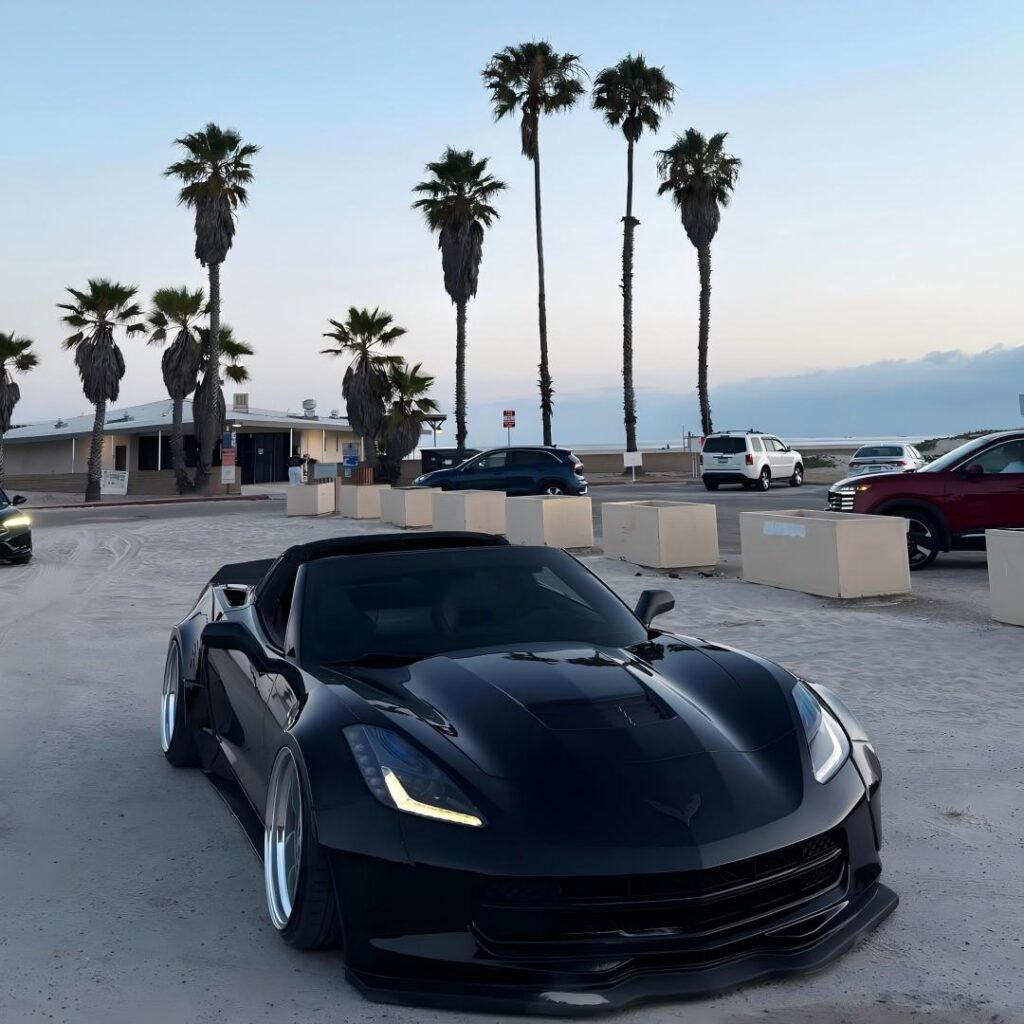
ALUKOVINYL Ultra Gloss Black Color PPF Paint Protection Film
Explore the gloss black PPF finish for product-specific details.
Advantages of Gloss Black PPF
The high-gloss finish can create a premium paint-like appearance while combining color transformation with the protective structure of PPF.
Gloss surfaces are also particularly effective at revealing clean reflections when properly installed.
Disadvantages
Black is unforgiving.
Dust, fingerprints, water spots, contamination, and imperfect maintenance can become more visually obvious on a high-gloss black surface.
Installation quality also matters because surface distortion, trapped contamination, edges, and other imperfections may be more noticeable under strong lighting.
2. Satin Black PPF — Less Reflection, More Body Definition
Best suited to: performance sedans, German luxury vehicles, muscle cars, SUVs, and owners who want a stealthier appearance.
Satin black occupies the visual space between high gloss and fully matte.
Instead of mirror-like reflections, satin surfaces diffuse more light while retaining enough sheen to define the vehicle’s body lines.
This is particularly effective on vehicles such as:
- BMW M3 / M4
- Mercedes-AMG models
- Porsche 911
- Dodge Challenger
- Tesla Model 3 / Model S
- Range Rover
- Lamborghini Urus
These are examples of vehicle designs that can visually suit the finish—not claims that the manufacturers endorse a particular PPF.
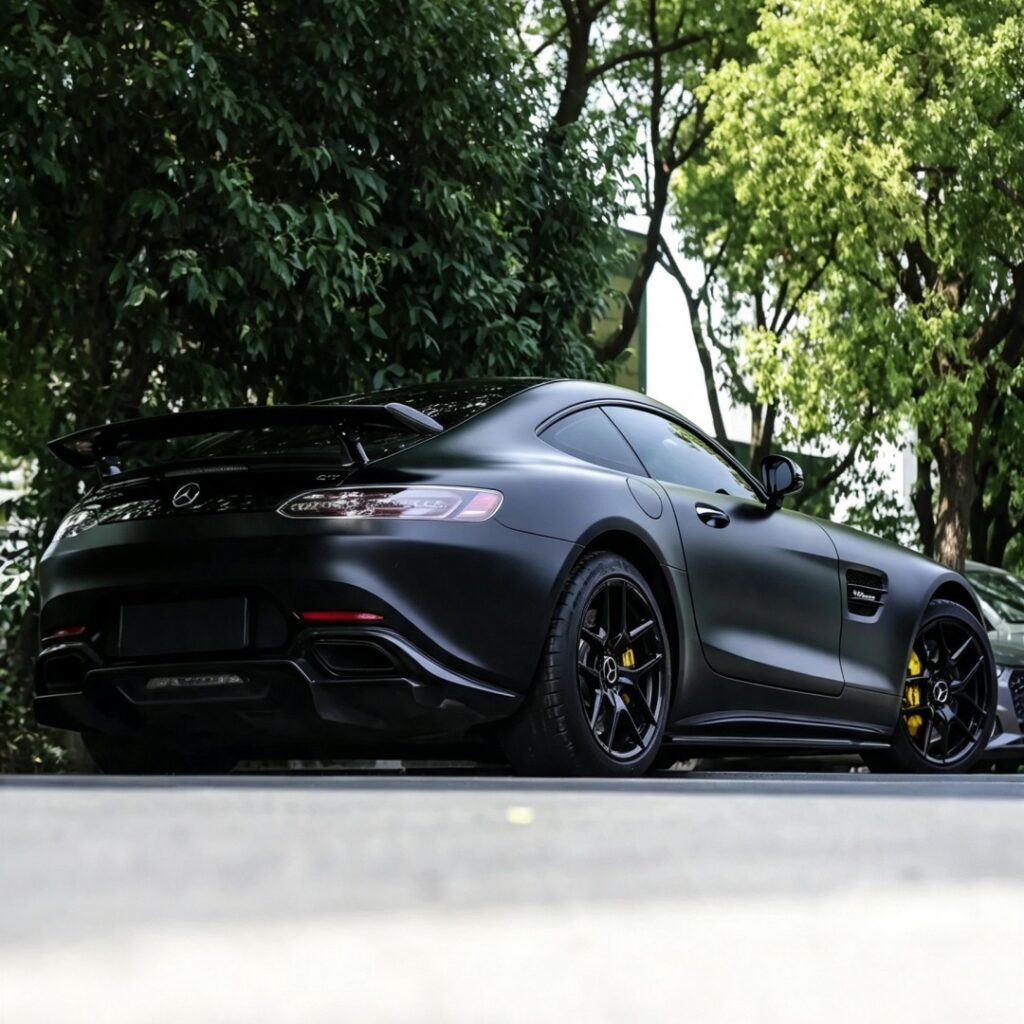
Satin black PPF on a sports car showing low-reflection TPU paint protection film finish
Why Choose Satin Black?
The biggest reason is visual balance.
Gloss black can be extremely reflective. Matte black removes most reflections. Satin black retains controlled highlights along body lines without producing the same mirror effect as gloss.
For aggressive vehicle designs, that can produce a more technical or understated appearance.
Satin Black Limitation
Satin finishes require careful maintenance.
Polishing one area aggressively can potentially change its sheen relative to surrounding panels. Cleaning products that leave waxes or gloss-enhancing residues can also alter the intended appearance.
For that reason, owners should follow the specific film manufacturer’s maintenance instructions rather than treating satin PPF exactly like conventional glossy paint.
3. Metal Ceramic Black PPF — Black With More Visual Depth
Best suited to: owners who think solid black is too conventional but do not want a dramatic color-shifting finish.
Metal Ceramic Black PPF adds another dimension to black.
Instead of producing only a flat black or mirror-black appearance, a metallic or ceramic-inspired finish can reveal more visual texture and depth as lighting changes.
Under subdued lighting it may appear predominantly dark, while stronger directional light can make metallic characteristics more apparent.
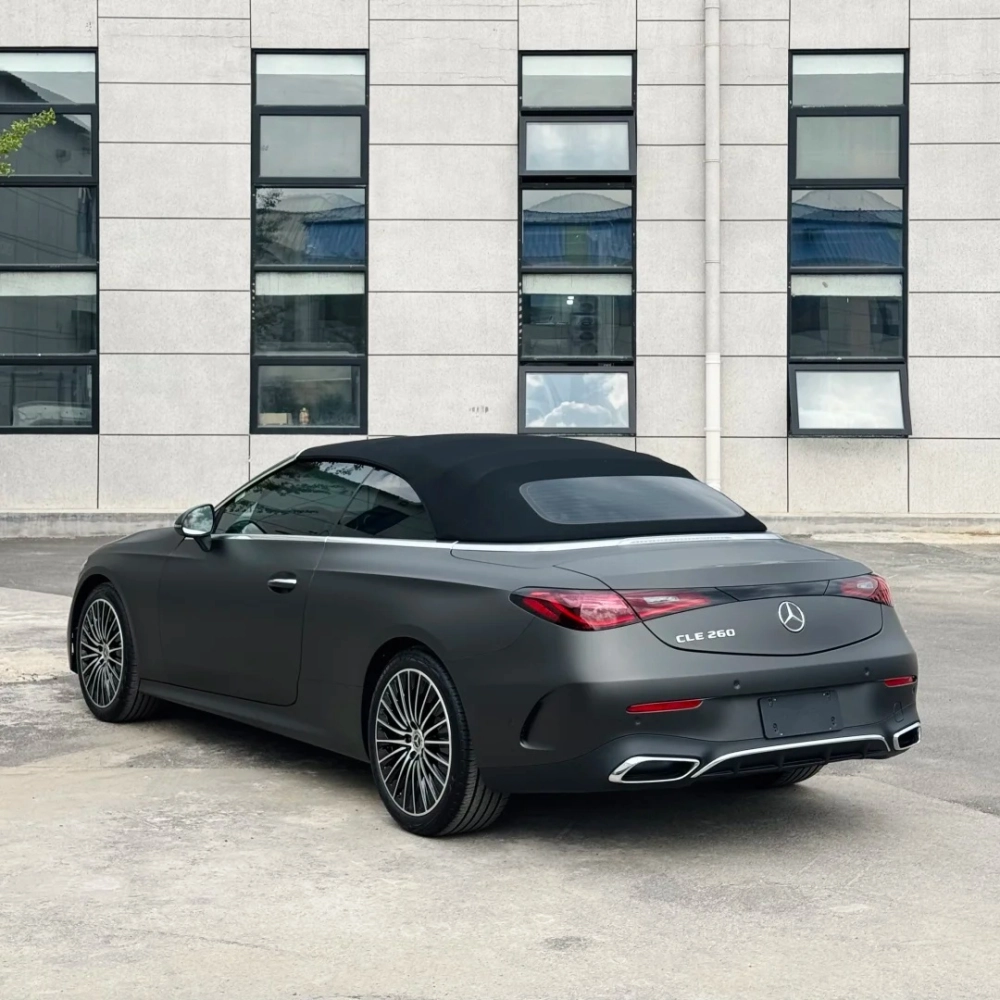
ALUKOVINYL TPU Metal Ceramic Black Colored PPF
Metal ceramic black PPF showing metallic depth under direct light on automotive body panels
This type of finish can work particularly well on vehicles with broad curved panels, where lighting changes continuously across the surface.
Its disadvantage is also related to that optical character: matching adjacent panels requires careful material orientation and installation control.
Gloss vs Satin vs Metal Ceramic Black PPF
| Characteristic | Gloss Black | Satin Black | Metal Ceramic Black |
|---|---|---|---|
| Reflection | High | Low–medium | Medium / variable |
| Visual character | Deep and polished | Stealth and understated | Technical / dimensional |
| Body-line definition | Strong through reflection | Strong through controlled highlights | Strong under changing light |
| Dirt visibility | High | Moderate | Moderate |
| Maintenance sensitivity | Water spots/swirls can be visible | Uneven sheen can be visible | Finish consistency matters |
| Ideal buyer | Paint-like black enthusiast | Stealth-style owner | Specialty-finish buyer |
The important takeaway is that “black PPF” is not one appearance.
Surface finish can make two identically shaped vehicles look substantially different.
Black PPF Brand Comparison: ALUKOVINYL vs TeckWrap vs Tinybot vs INOZETEK vs 3M
Manufacturer specifications are useful, but comparisons require context.
3M’s Series 100 is primarily a clear PPF industry reference, while TeckWrap, Tinybot, INOZETEK, and ALUKOVINYL offer colored black options. Therefore, 3M should not be treated as a direct black-color competitor in every row.
3M Series 100
3M publishes a 7.5-mil construction for Series 100, self-healing technology, high gloss, optimized repositionable adhesive, UV/weathering protection claims, and a 10-year U.S./Canada consumer warranty.
Its value in this comparison is as a benchmark for how an established PPF manufacturer communicates technical specifications and warranty conditions—not as proof that every TPU PPF performs identically.
INOZETEK DPPF701 Gloss Piano Black
INOZETEK’s current official specifications are unusually detailed.
Its Gloss Piano Black Dynamic PPF is listed as:
- TPU material
- 7.82 mil total thickness
- 0.31 mil / 8 μm top coat
- 4.92 mil / 125 μm TPU layer
- 1.57 mil / 40 μm color/base layer
- 1.02 mil / 26 μm adhesive
- >85 GU gloss
- Self-healing top coat
- Dry application
- Removable/repositionable acrylic adhesive
- 10-year warranty
This is useful because it shows why consumers should look beyond a generic “TPU” label. Layer construction and top-coat specifications provide much more meaningful information.
TeckWrap Gloss True Black CPX301
TeckWrap currently sells its Gloss True Black Color PPF in multiple sizes from 5 × 9.8 ft through 5 × 59 ft.
At the time this article was researched, the entry 5 × 9.8 ft size was listed at $239.
Because prices and promotions change, readers should verify current pricing directly with the manufacturer rather than relying on a static article.
Tinybot
Tinybot’s published black-film specifications illustrate the same multi-layer construction approach. For example, its Lumina Black PPF currently lists approximately:
- 0.28 mil / 7 μm top coat
- 4.8 mil / 122 μm TPU base
- 1.6 mil / 41 μm polyurethane color layer
- 1.1 mil / 28 μm adhesive
- 7.78 mil / 198 μm total thickness excluding liner
Tinybot also warns buyers that on-screen colors can vary and recommends checking a physical color swatch.
That is particularly sensible advice for black PPF because differences between gloss, metallic, satin, and specialty blacks can be difficult to judge accurately on a phone or computer display.
What Should You Compare Instead of Brand Name Alone?
Brand reputation matters, but a professional comparison should go deeper.
When evaluating black PPF, consider:
Film construction.
Ask how much of the total thickness comes from TPU, top coat, color layer, and adhesive.
Top-coat behavior.
Self-healing claims should specify whether they refer to light surface scratches and what conditions activate the recovery.
Optical finish.
For gloss black, gloss units or objective surface measurements are more useful than adjectives such as “super glossy.”
Adhesive system.
Installation characteristics affect repositioning, edge behavior, lift lines, and installation efficiency.
Warranty.
A “10-year warranty” is not automatically the same as a 10-year guarantee against all appearance changes or physical damage. Read what is actually covered.
Installation method.
Wet and dry-apply systems require different installer techniques.
Independent testing.
Manufacturer specifications are useful, but independently verified standardized tests provide stronger evidence.
This is an area where smaller PPF manufacturers—including ALUKOVINYL—can improve transparency by publishing more third-party laboratory testing and standardized technical documentation.
Pros and Cons of Black PPF
Advantages
Color change and protection in one installation.
Instead of installing black vinyl and then considering another protective layer, colored PPF combines these functions in one film system.
Multiple black finishes.
Customers can choose gloss, satin, metallic, ceramic-style, and other specialty finishes rather than one generic black.
TPU-based construction.
Modern TPU provides the flexibility and toughness required for many PPF applications.
Minor scratch recovery.
Where the product uses an appropriate self-healing top coat, minor surface marks may recover under the manufacturer’s specified conditions.
Useful for high-impact visual transformations.
A white, silver, blue, or red vehicle can be transformed into black without permanent repainting.
Disadvantages
Higher material cost than conventional vinyl.
Colored TPU PPF is generally positioned as a premium material.
Professional installation is strongly recommended.
Complex bumpers, mirrors, deep curves, and edges require skill. Expensive installation mistakes can create substantial material waste.
Black exposes imperfections.
Dust, water spots, fingerprints, installation contamination, and surface defects can be easier to notice—particularly on gloss black.
Finish-specific maintenance is required.
Gloss and satin surfaces should not necessarily be maintained in the same way.
Self-healing has limits.
Deep cuts, punctures, tears, and major impacts should not be confused with minor top-coat scratches.
Not all performance claims are independently verified.
Specifications published by manufacturers should be distinguished from independent laboratory testing.
How Much Black PPF Does a Car Need?
Material requirements depend more on vehicle dimensions than the model category alone.
A compact sedan requires less film than a large SUV, but installers must also account for:
- Bumpers
- Mirrors
- Spoilers
- Rocker panels
- Panel overlap
- Edge wrapping
- Reinstallation
- Pattern layout
- Material waste
Complex vehicles can consume substantially more material than a simple length × width calculation suggests.
Professional installers therefore normally plan film usage panel by panel rather than purchasing exactly the theoretical exterior surface area.
Installation Insight: Why Black Is Less Forgiving
Black surfaces reveal reflection defects extremely well.
For gloss black PPF, preparation becomes particularly important.
Before installation, the vehicle should be inspected for:
- Tar
- Iron contamination
- Wax or sealant residue
- Existing scratches
- Paint chips
- Repainted panels
- Clear-coat failure
- Surface contamination
PPF does not repair damaged paint.
It covers the surface, and some defects may remain visible underneath.
Temperature also matters. As one established reference point, 3M currently recommends an application environment of approximately 60°F–85°F (16°C–30°C) for its PPF, with 70°F–79°F (21°C–26°C) identified as the preferred range.
Those numbers are specific to 3M’s products and should not automatically be applied to another manufacturer’s film. Installers should always use the installation specifications supplied with the film being installed.
Which Black PPF Should You Choose?
The decision becomes easier when you start with the desired appearance rather than the brand.
Choose Gloss Black PPF if:
You want the deepest, most reflective, paint-like black appearance and are prepared to maintain a surface where dust and water spots may be obvious.
Choose Satin Black PPF if:
You prefer reduced reflections and want body lines to appear defined without a mirror-like finish.
Choose Metal Ceramic Black PPF if:
You want black to remain the dominant color but prefer more visual depth and changing character under different lighting.
Choose Black Vinyl Instead if:
Your main objective is lower-cost styling, temporary color changes, printed graphics, or frequent redesigns.
FAQ About Black PPF
Is black PPF better than black vinyl wrap?
Neither is universally better. Black PPF is more appropriate when paint protection is a major objective, while vinyl is often more cost-effective when the primary goal is styling.
Does black PPF protect against rock chips?
PPF is engineered to create a physical barrier against common road hazards, but no film can prevent every impact. Protection depends on film construction, impact severity, installation, and the area covered.
Does black PPF self-heal?
Many modern TPU PPF products use self-healing top coats designed to recover from minor surface scratches under suitable conditions. Deep cuts, tears, and punctures do not simply disappear.
Is gloss black PPF difficult to maintain?
It can require more visual maintenance than lighter finishes because dust, water spotting, fingerprints, and surface contamination are easier to see against a deep glossy black surface.
Does satin black PPF need polishing?
Generally, conventional aggressive polishing is not something owners should assume is appropriate for satin film because altering one area’s sheen can create an inconsistent finish. Follow the specific manufacturer’s maintenance instructions.
Is black PPF suitable for a white car?
Yes, colored black PPF can transform vehicles with lighter original paint colors. However, installers need to pay particular attention to edges, door jamb transitions, panel gaps, and other areas where the original color may remain visible.
How thick should black PPF be?
There is no single thickness that guarantees quality. Current industry examples demonstrate why: 3M Series 100 is published at approximately 7.5 mil, Tinybot lists certain black PPF constructions around 7.78 mil, and INOZETEK lists Gloss Piano Black DPPF at 7.82 mil. Film chemistry, TPU thickness, top coat, adhesive, elongation, optical quality, and testing matter alongside total thickness.
Is a 10-year warranty the same as a 10-year lifespan?
No. Warranty duration and actual service life are different concepts. A warranty covers specific conditions defined by the manufacturer. Climate, installation quality, maintenance, mileage, storage, contamination, and physical damage can affect real-world film condition.
Final Takeaway: Black PPF Is About More Than Choosing Black
The biggest mistake when shopping for black PPF is comparing products only by color and price.
Gloss black, satin black, and metal ceramic black can produce dramatically different results even though all three are described as “black.”
Film construction matters too.
Published specifications from companies such as 3M, INOZETEK, Tinybot, and TeckWrap demonstrate that modern PPF should be evaluated through measurable characteristics—film thickness, TPU construction, top coat, adhesive, installation system, self-healing behavior, warranty conditions, and optical finish—not simply marketing terms.
There is also an important evidence gap to acknowledge. Manufacturer specifications, including ALUKOVINYL’s, are not equivalent to independent laboratory validation. Buyers seeking the most evidence-driven comparison should request technical data sheets, warranty terms, physical samples, standardized test results where available, and examples of aged installations.
For drivers primarily interested in conventional styling, ALUKOVINYL’s car wrap collection offers a wider range of color-change options.
For customers who want paint protection as part of the project, explore the TPU wrap collection.
If black is the target color, compare the different finishes in the black PPF range rather than choosing from product photography alone.
And if the goal is maximum reflection and a deep paint-like appearance, the gloss black PPF option is the logical finish to compare with satin and specialty black samples before ordering.
The right black PPF is not simply the darkest film. It is the film whose finish, construction, installation requirements, evidence, warranty, and cost best match the vehicle and the owner’s priorities.