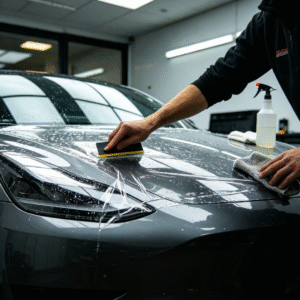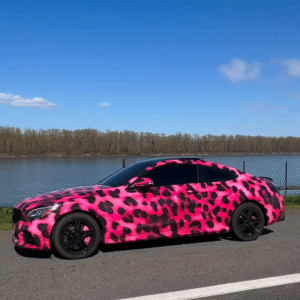
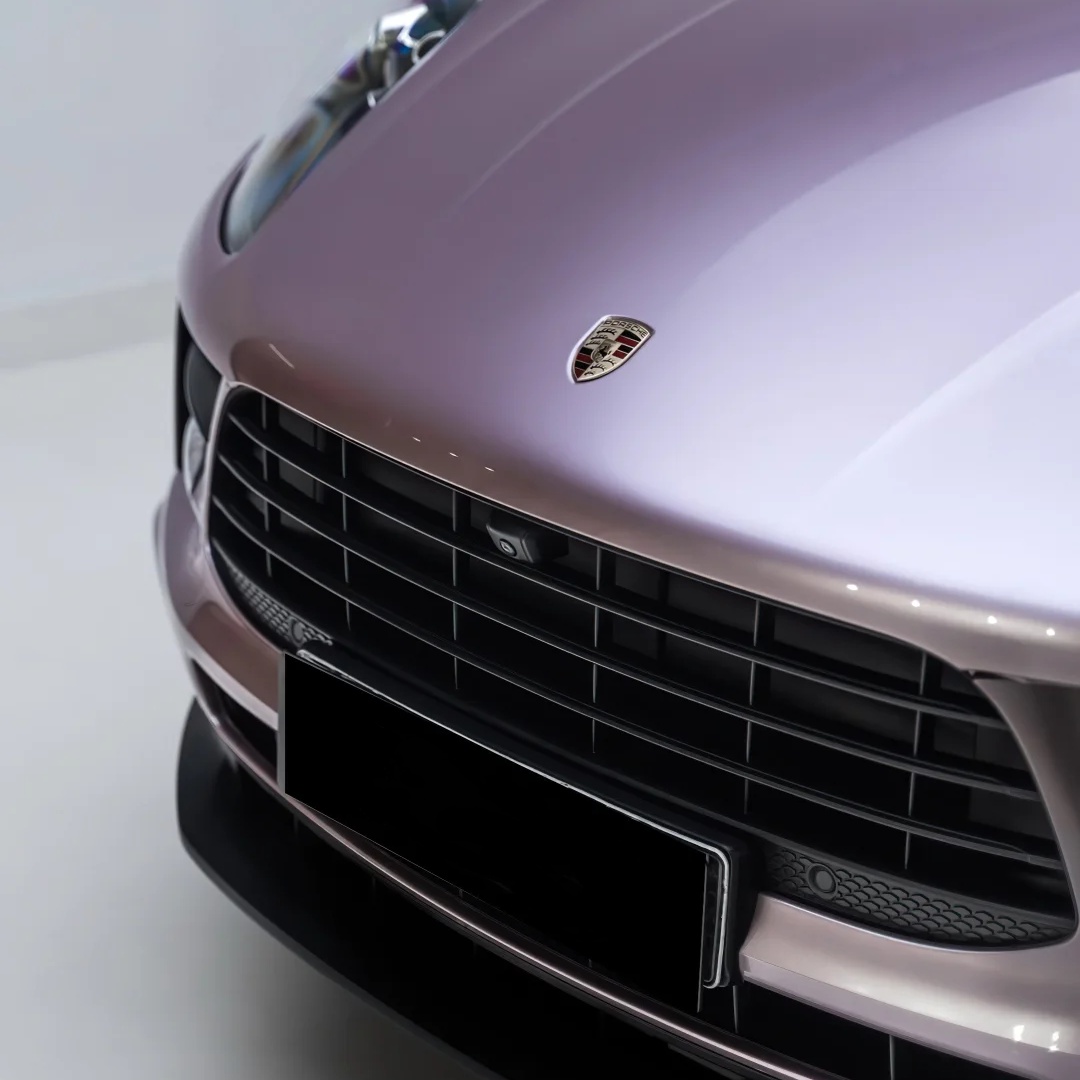
Pink car wraps have moved well beyond a single bright or feminine color. Today’s pink color PPF market includes soft pastel pink, cherry blossom pink, romantic pink, pearl pink, metallic pink, hot pink, and color-shifting finishes. For vehicle owners who want both a noticeable color change and paint protection, colored PPF provides an alternative to conventional vinyl wrap.
But not every pink PPF is the same.
The underlying material, finish, thickness, adhesive system, installation method, color stability, and price can vary considerably between products. A premium-looking pink finish also does not automatically mean better protection.
This guide explains the main types of pink color PPF, how TPU PPF compares with vinyl wrap, what current market pricing looks like, and what buyers should check before choosing a pink paint protection film.
Because ALUKOVINYL manufactures and sells automotive films, this article distinguishes manufacturer-provided product information from broader industry evidence and competitor pricing. Product-specific claims should not be interpreted as independent laboratory certification unless such testing is explicitly documented.
What Is Pink Color PPF?
Pink color PPF is a paint protection film that combines a colored appearance with the protective function of PPF. Most modern color PPF products use a polyurethane-based construction, commonly TPU, rather than conventional decorative vinyl.
The main difference between pink color PPF and ordinary pink vinyl wrap is the purpose of the material.
A traditional vinyl wrap is primarily designed to change the appearance of a vehicle. A color PPF is designed to provide a color transformation while also functioning as a protective layer over the paint.
Premium PPF systems may be engineered to resist common automotive hazards such as stone chips, minor scratches, road debris, stains, and environmental contamination. For example, 3M’s current Paint Protection Film Series 100 is described as a polyurethane film designed to protect vehicle paint from rock chips, scratches, bug damage, road tar, stains, and outdoor weathering including UV exposure. It also incorporates self-healing technology for minor scratches.
However, buyers should not assume that every colored PPF offers the same level of protection as every clear PPF.
The actual performance depends on the complete film construction and the manufacturer’s testing.
Why Is Pink Color PPF Becoming More Popular?
Pink has become a surprisingly diverse automotive color category.
Instead of one conventional pink, customers can now choose finishes that create very different visual personalities:
- Soft pastel pink
- Baby pink
- Cherry blossom pink
- Romantic pink
- Pearl pink
- Metallic pink
- Rose pink
- Hot pink
- Magenta
- Peach pink
- Color-shifting pink
This matters because the same pink can look completely different depending on the vehicle’s body shape and finish.
A gloss pastel pink on a Porsche 911, for example, can produce a clean and refined appearance, while a metallic or color-shifting pink on a wide-body sports car can create a much more aggressive effect.
The growing availability of color PPF also means that customers no longer have to choose between appearance and protection as strictly as they once did.
Pink Color PPF vs. Pink Vinyl Wrap
One of the most common purchasing mistakes is assuming that colored PPF and vinyl wrap are simply different versions of the same product.
They are not.
| Feature | Pink Vinyl Wrap | Pink Color PPF |
|---|---|---|
| Primary purpose | Color customization | Color + paint protection |
| Typical material | PVC/vinyl | TPU/polyurethane-based systems |
| Stone-chip protection | Limited | Designed for stronger protection |
| Self-healing | Product dependent, less common | Common in premium PPF |
| Color selection | Extremely broad | Increasing rapidly |
| Graphics/custom printing | Excellent | More limited |
| Material cost | Usually lower | Usually higher |
| Installation | Moderate to advanced | Advanced |
| Best use | Styling/customization | Styling + protection |
If your primary goal is changing the vehicle’s color at the lowest possible material cost, car wrap remains an important option.
If your priority is combining color transformation with a protective film, color PPF becomes more interesting.
The important point is that more expensive does not automatically mean better for every project.
The Most Popular Pink Color PPF Styles
There is no single “best” pink.
The best shade depends on the vehicle, lighting environment, intended style, and how long the owner expects to keep the film.
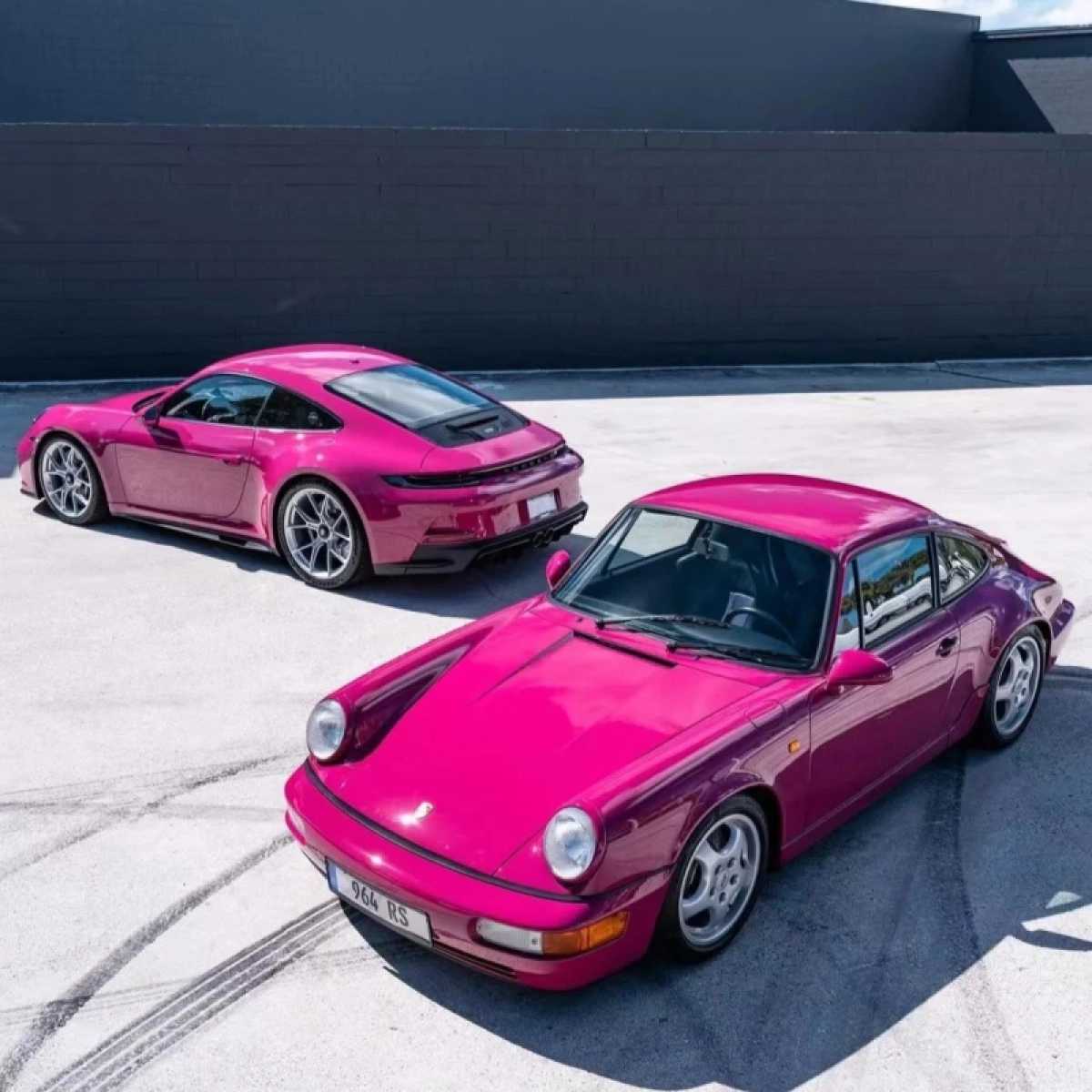
1. Goddess Pink
Goddess Pink is a strong choice for drivers looking for a sophisticated pink rather than an extremely bright tone.
A gloss finish can emphasize body contours while creating a smooth, reflective surface.
Best suited for:
- Luxury sedans
- Sports cars
- Coupes
- Show vehicles
- Lifestyle builds
For customers considering a stronger gloss pink appearance, ALUKOVINYL offers a TPU Gloss Goddess Pink Color PPF option.
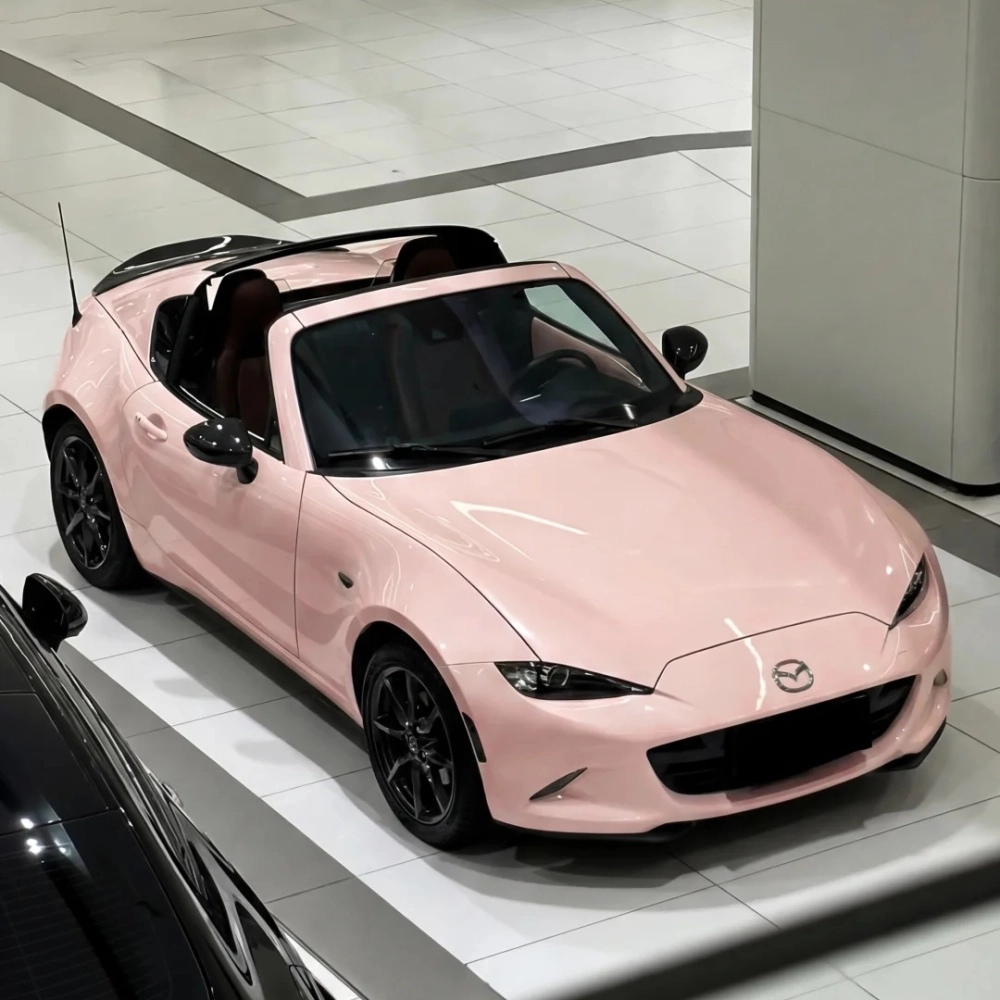
2. Cherry Blossom Pink
Cherry Blossom Pink is a softer alternative.
Its appeal comes from a lighter, more delicate visual character that can work particularly well with white, silver, black, or pearl vehicle trim.
It can be a strong option for customers who want pink without the aggressive appearance of hot pink.
ALUKOVINYL’s TPU Gloss Cherry Blossom Pink Colored PPF is an example of this category.
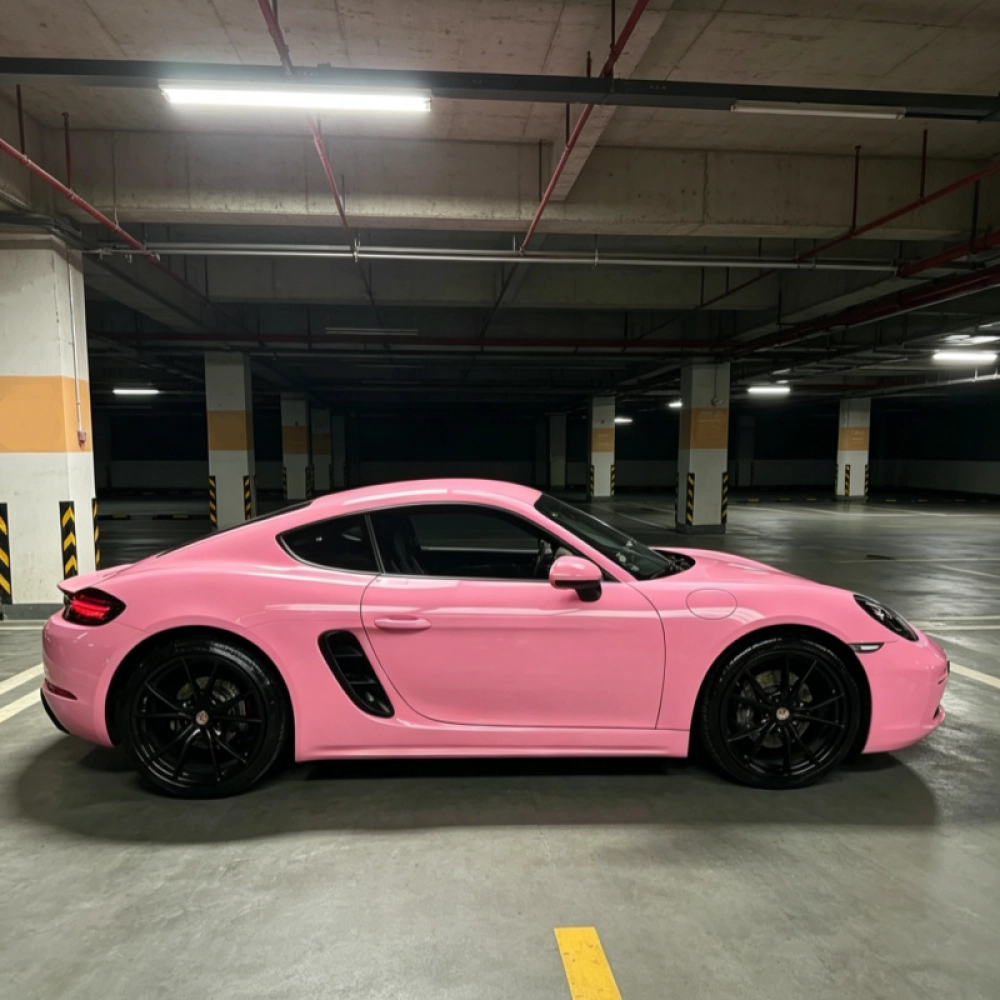
3. Romantic Pink
Romantic Pink sits between soft pastel pink and stronger fashion-oriented pink finishes.
It can create a warmer appearance while retaining the reflective character of a gloss PPF.
The TPU Gloss Romantic Pink Color PPF is one example for customers looking for this type of appearance.
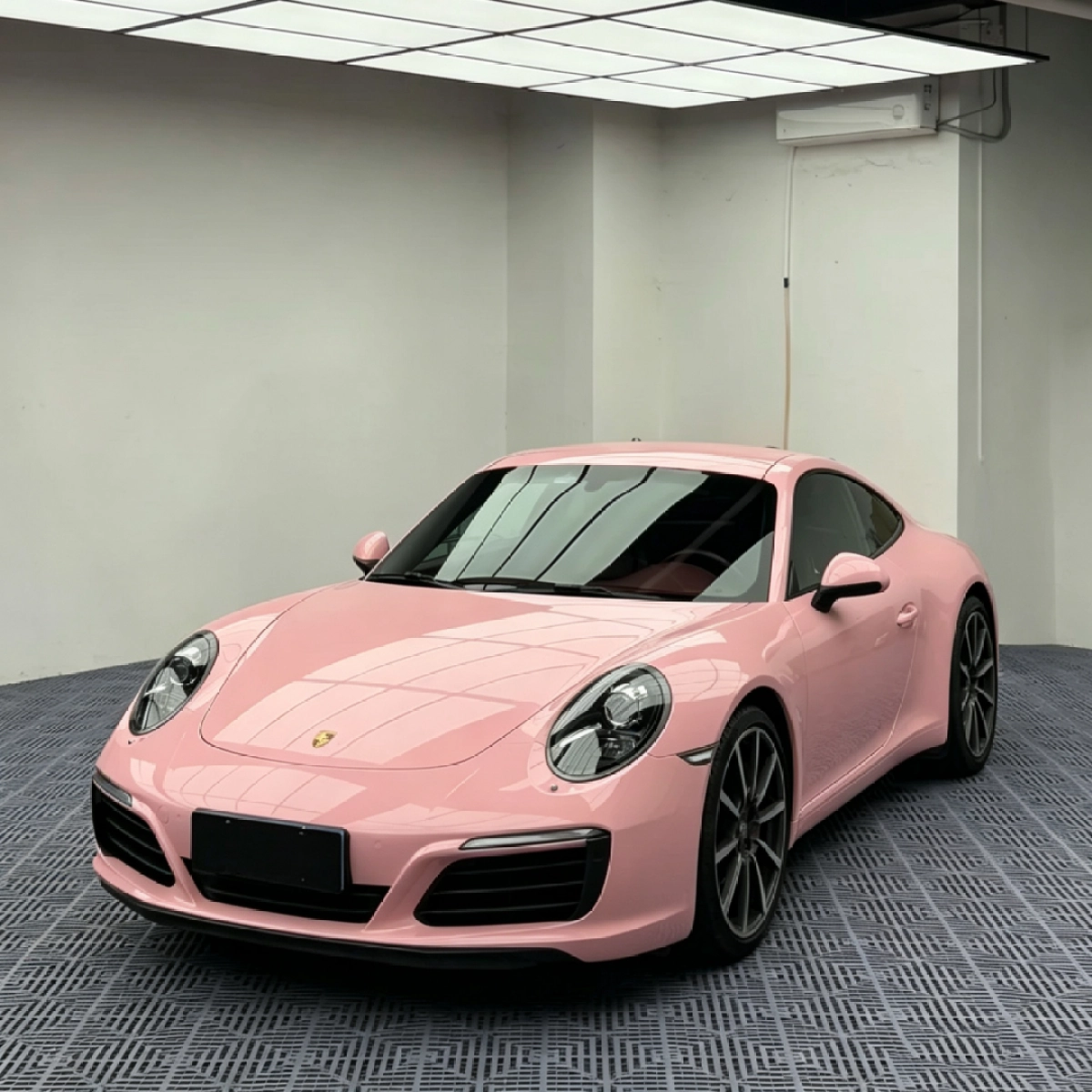
4. Crystal Peach Pink
Pink does not always have to look cool or purple-toned.
Peach-influenced pink can introduce warmer orange or coral undertones, producing a noticeably different result under sunlight.
For customers looking for this warmer direction, ALUKOVINYL also offers Crystal Peach Pink Colored PPF.
This is an important example of why customers should order physical samples whenever possible.
Digital screens can alter how pink appears.
Gloss Pink vs. Metallic Pink vs. Satin Pink
Color alone does not determine how a pink PPF will look.
The surface finish can be equally important.
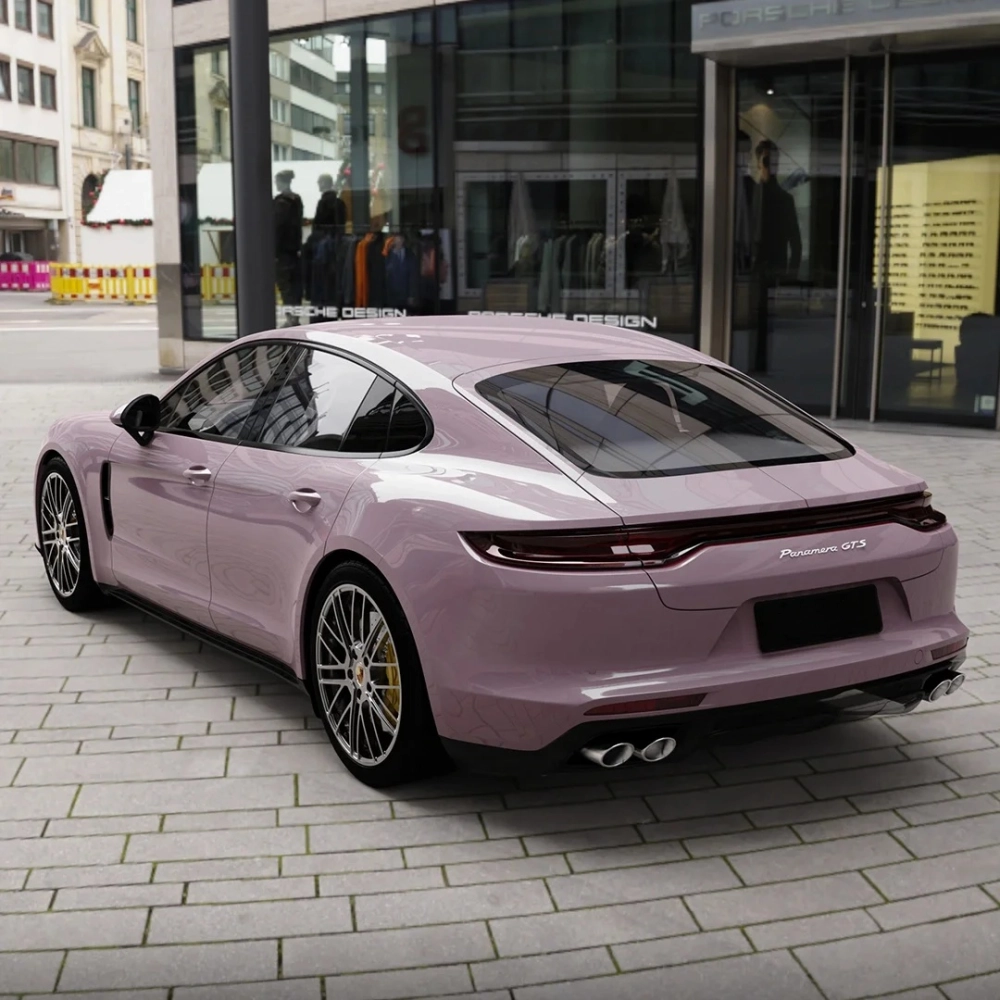
Gloss Pink PPF
Gloss pink provides:
- High reflectivity
- Strong color saturation
- Smooth visual appearance
- Easier cleaning perception
- Stronger highlight reflections
It is usually the safest choice when the customer wants a polished, paint-like appearance.
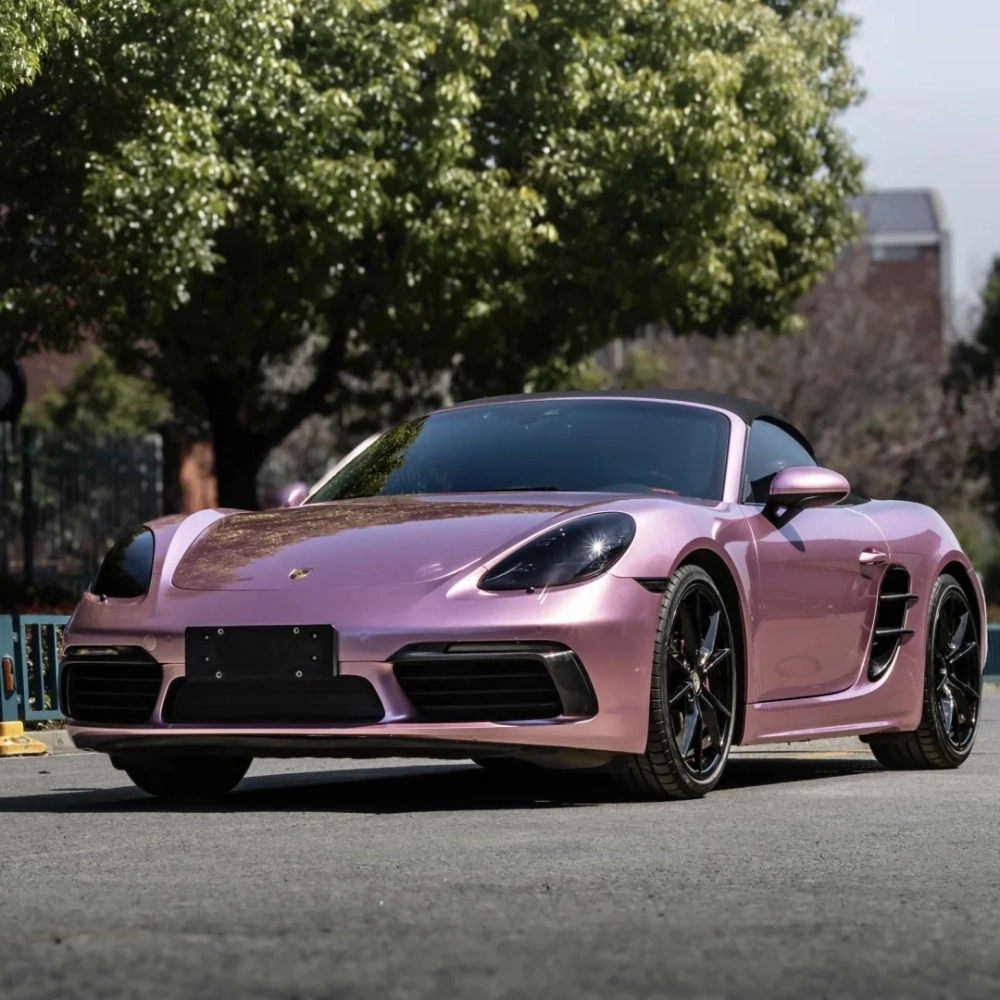
Metallic Pink PPF
Metallic particles can add depth and visual movement to the color.
Under direct sunlight, metallic pink may reveal more variation than a flat gloss pink.
However, metallic finishes can make panel-to-panel color consistency more noticeable if the material is installed with inconsistent orientation or comes from different production batches.
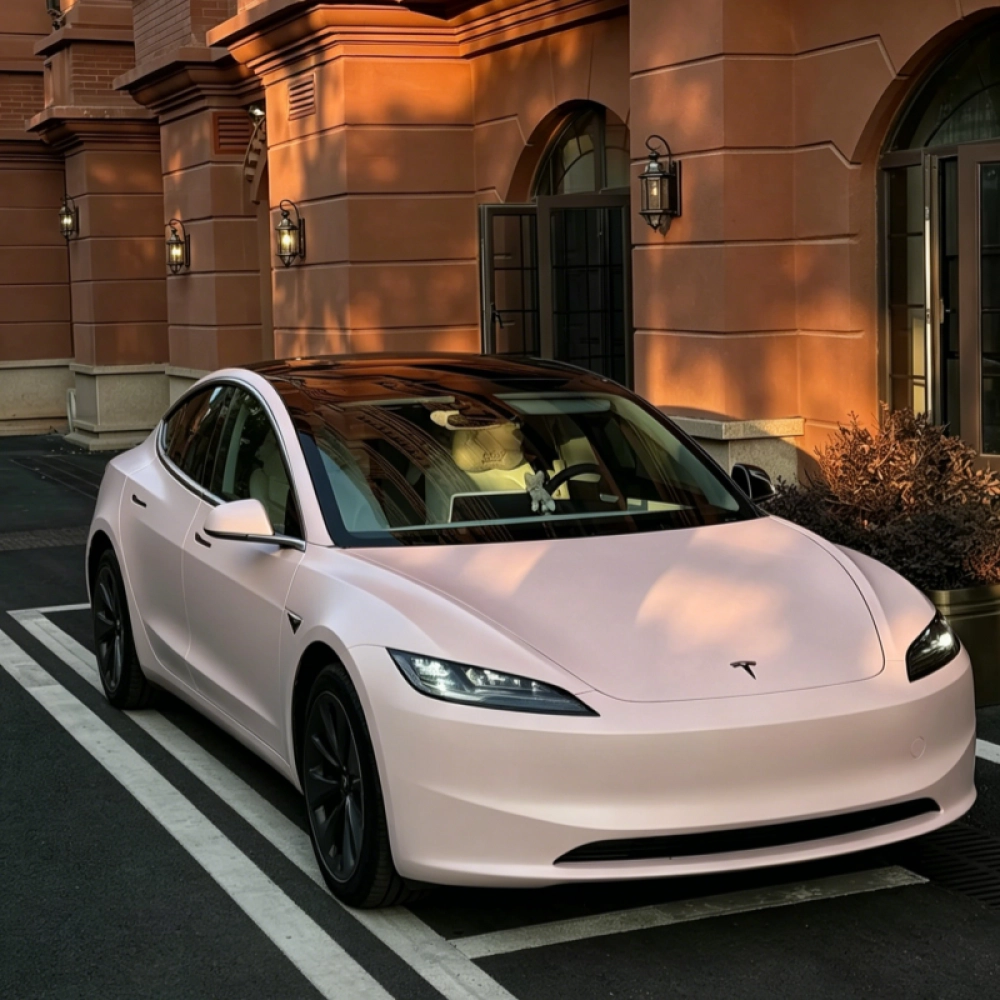
Satin Pink PPF
Satin pink reduces the mirror-like reflection of gloss film.
It can create a more contemporary appearance and emphasize body shape rather than surface reflection.
The trade-off is that satin finishes can require different maintenance habits and may be more difficult to repair invisibly if a section becomes damaged.
Why TPU Matters in Pink Color PPF
Many modern color PPF products use TPU because the material can provide a combination of flexibility, toughness, and conformability.
However, “TPU” alone should not be used as a quality guarantee.
Two films can both be marketed as TPU while having different:
- TPU formulations
- Thicknesses
- Top coats
- Adhesives
- Pigment systems
- Elongation
- Tensile strength
- Surface hardness
- Weathering resistance
- Installation characteristics
For example, a current CNGfilm TPU pink color-shifting PPF lists 7.5 mil thickness, ≥200% elongation, and a six-year warranty as manufacturer-reported specifications.
Another current market example, WINWAYWRAP’s TPU Glossy Pearl Baby Pink PPF, lists a 7.5 mil thickness, 400% elongation, ASTM-referenced testing for several properties, and a claimed 5–7 year durability period. These are manufacturer claims rather than independent validation.
This illustrates an important buying principle:
Do not compare PPF based on the word “TPU” alone. Compare the complete technical specification and the evidence behind it.
What Does Pink Color PPF Cost?
Pricing varies significantly depending on roll length, brand, construction, finish, and whether the product is sold as a professional full-roll material or smaller DIY sections.
Current publicly listed market examples illustrate this variation.
A current color-shifting Soft Light Pink TPU PPF listing shows $260 for a 1.52 × 3 m section, with larger roll options available.
Another current pink color PPF retailer lists an 8 mil TPU Pink Spectrum Series from $1,150, depending on the selected size.
WINWAYWRAP currently lists a 59 ft × 5 ft TPU Glossy Pearl Baby Pink PPF roll at $1,629.99 and states a two-year warranty for that product.
These examples should not be treated as a standardized industry price index because roll lengths, specifications, shipping, promotions, warranty terms, and product construction differ.
Instead, they demonstrate an important point:
Pink color PPF pricing can vary by hundreds of dollars depending on the material and supplier.
Pink Color PPF: Brand and Market Comparison
The following comparison is intended as a buying reference rather than a ranking.
| Brand / Product Example | Material / Positioning | Published Price Example | Notable Information |
|---|---|---|---|
| 3M PPF Series 100 | Polyurethane clear PPF | Pricing varies by distributor | Self-healing, UV/weathering protection, 10-year consumer warranty |
| CNGfilm Soft Glow Dynamic Pink | TPU color PPF | Quote-based | 7.5 mil, ≥200% elongation, manufacturer-stated 6-year warranty |
| WINWAYWRAP Pearl Baby Pink | TPU color PPF | $1,629.99 / 59 ft | 7.5 mil, manufacturer-stated 5–7 year durability |
| NEON Spectrum Pink | TPU color PPF | From $1,150 | 8 mil, color TPU |
| RAXTiFY Pink Color PPF | Color PPF | From $119 | Multiple pink finishes and sizes |
| ALUKOVINYL Pink Color PPF | TPU color PPF | Product-dependent | Multiple pink shades and gloss/color options |
3M is included here as a benchmark for conventional PPF technology, not as a direct pink color PPF competitor. Its Series 100 is transparent rather than pink and is backed by a published 10-year consumer warranty under stated conditions.
This distinction is important because comparing a long-established clear PPF warranty directly against a colored PPF without considering product purpose would be misleading.
Does More Expensive Pink PPF Mean Better Protection?
Not necessarily.
Price can reflect many factors:
- TPU grade
- Manufacturing process
- Pigment complexity
- Top-coat technology
- Adhesive system
- Warranty
- Distribution costs
- Brand positioning
- Roll length
- Installation characteristics
A $1,600 pink PPF is not automatically twice as protective as an $800 product.
Likewise, a cheaper film is not automatically inferior.
For professional buyers, the better approach is to request technical information covering:
- Total thickness
- TPU thickness
- Elongation
- Tensile strength
- Adhesion
- Surface hardness
- UV/weathering performance
- Chemical resistance
- Self-healing conditions
- Warranty
- Recommended installation method
If these specifications are not available, buyers should be cautious about making strong performance comparisons.
How Long Does Pink Color PPF Last?
This is one area where consumers should be especially careful with marketing claims.
Different manufacturers currently publish substantially different durability periods. Some products advertise multiple years of service, while warranties can be shorter than the stated expected durability.
For example, 3M’s Series 100 carries a 10-year consumer warranty under its stated conditions.
Other color PPF manufacturers publish shorter warranty periods or longer claimed durability.
Therefore, “lasts 5 years” should not automatically be interpreted as:
“the color will look exactly the same for five years.”
Actual appearance can be affected by:
- UV exposure
- Climate
- Vehicle storage
- Washing
- Chemicals
- Film formulation
- Installation quality
- Surface contamination
- Mechanical damage
For colored PPF, visual color stability deserves particular attention because the appearance is part of the product’s purpose.
Real-World Example: Choosing Pink PPF for a Daily Driver
Consider a customer with a black BMW who wants to create a pink exterior.
There are three realistic approaches.
Option 1: Pink Vinyl Wrap
The customer primarily wants the color transformation.
Advantages:
- Lower material cost
- Huge color selection
- Many finish options
- Easier access to printed/custom designs
The downside is that conventional vinyl is not primarily engineered as a stone-chip protection system.
Option 2: Clear PPF + Pink Vinyl
This approach provides paint protection beneath a color-changing vinyl system.
The advantage is flexibility.
The disadvantage is cost and complexity because two different film systems are being installed.
Option 3: Pink Color PPF
The color and protective function are integrated into one film system.
This can reduce the need for two separate film layers and creates a more direct color-plus-protection solution.
However, the initial material cost is generally higher.
For a customer who frequently drives on highways and wants both color customization and protection, Option 3 may be attractive.
For a customer who changes colors every year, vinyl may offer better economic flexibility.
Installation Considerations for Pink Color PPF
Pink color PPF requires more than simply choosing a beautiful shade.
Professional installation should begin with careful paint preparation.
Contaminants such as tar, iron particles, grease, wax, and silicone can interfere with adhesion and create visible imperfections.
Installers should also pay attention to:
Stretching
Excessive stretching can change the appearance of certain colored or metallic films.
Panel orientation
Directional finishes may look different if adjacent panels are installed in inconsistent directions.
Batch consistency
Pink colors can vary slightly between production batches.
For long projects, using material from the same production lot can reduce the risk of visible differences. Some current PPF suppliers explicitly warn customers that color may vary between batches and recommend physical samples before installation.
Complex curves
Bumpers, mirrors, deep recesses, and heavily sculpted panels can require more material control than flat body panels.
Post-installation care
The vehicle should be inspected for lifting edges, trapped contamination, wrinkles, and inconsistent finish before delivery.
How to Choose the Right Pink Color PPF
A practical decision process is more useful than choosing a color from a product photograph.
Step 1: Choose the color family
Ask whether you want:
- Baby pink
- Pastel pink
- Cherry blossom
- Rose
- Romantic pink
- Peach pink
- Metallic pink
- Hot pink
- Magenta
Step 2: Choose the finish
Decide between:
- Gloss
- Satin
- Matte
- Metallic
- Pearl
- Color-shifting
Step 3: Decide how much protection you actually need
If paint protection is secondary and color customization is the priority, vinyl may be more economical.
If paint protection is central to the project, consider tpu wrap and compare the technical specifications.
Step 4: Compare technical specifications
Do not stop at:
“TPU + self-healing + hydrophobic.”
Ask for measurable information.
Step 5: Calculate total project cost
Include:
Film + shipping + installation + waste + removal + future replacement
This gives a much more realistic comparison than looking only at the roll price.
Pros and Cons of Pink Color PPF
Advantages
- Combines color change with paint protection
- Much broader pink selection than traditional clear PPF
- TPU construction is widely used in modern PPF
- Premium gloss and metallic effects can create a paint-like appearance
- Self-healing technology is available in many premium PPF systems
- Can provide a higher-end alternative to conventional pink vinyl
Disadvantages
- Usually more expensive than vinyl wrap
- Installation can be more demanding
- Technical quality varies substantially between manufacturers
- Color consistency can vary between production batches
- Physical samples are preferable to judging color from screens
- Warranty and durability claims are not standardized across brands
- A premium price does not automatically prove superior performance
The final point is particularly important.
The best pink PPF is not necessarily the most expensive pink PPF.
Is Pink Color PPF Worth It?
For the right vehicle owner, yes.
Pink color PPF makes the most sense when the customer wants:
color customization + paint protection + a premium finish
in one film system.
It becomes less attractive when the customer primarily wants the cheapest possible color change or expects the film to behave exactly like a conventional long-term clear PPF.
The market is also becoming more diverse. Current products range from soft pastel pink to metallic and color-shifting TPU systems, while published prices range from relatively low partial-roll pricing to more than $1,600 for some full-roll products.
This makes product comparison increasingly important.
Frequently Asked Questions About Pink Color PPF
What is pink color PPF?
Pink color PPF is a colored paint protection film designed to change the appearance of a vehicle while providing a protective film layer over the paint. Many modern products use TPU-based constructions.
Is pink PPF better than pink vinyl wrap?
Not automatically. Pink PPF is generally more focused on combining color and protection, while vinyl wrap provides greater styling flexibility and is usually less expensive.
Is pink color PPF self-healing?
Many premium PPF products use self-healing top coats, but this feature varies by product. Buyers should verify the manufacturer’s technical specifications rather than assuming every pink PPF is self-healing.
How much does pink color PPF cost?
Prices vary considerably by brand, size, construction, and finish. Current market examples range from smaller sections priced around $260 to full-roll products priced above $1,600.
Does pink PPF protect against rock chips?
PPF is designed to provide a protective barrier against common road hazards, including stone chips and road debris. However, actual impact resistance depends on the specific film construction, installation, and severity of the impact.
Will pink PPF fade?
All exterior automotive films are exposed to UV radiation and environmental aging. Durability depends on formulation, exposure, maintenance, and installation. A manufacturer’s warranty or durability claim should be evaluated separately from independent evidence.
Should I buy a physical pink PPF sample?
Yes. This is strongly recommended.
Pink can look dramatically different depending on screen calibration, lighting, vehicle paint underneath, and viewing angle. A physical sample provides a more reliable representation of the final appearance.
What pink PPF is best for a luxury car?
For a luxury vehicle, a refined pastel, pearl, cherry blossom, romantic, or peach pink may create a more understated appearance than a highly saturated hot pink. The best choice ultimately depends on the vehicle’s body design and owner’s preferred style.
Final Verdict: What Is the Best Pink Color PPF?
There is no single pink PPF that is objectively best for every vehicle.
The right choice depends on the balance between appearance, protection, installation, cost, and expected service life.
For a soft and elegant appearance, Cherry Blossom or pastel pink can work well.
For a warmer and more distinctive look, Peach Pink or Romantic Pink may be more appropriate.
For a stronger luxury/show-car appearance, Goddess Pink or metallic pink can provide greater visual depth.
For customers who want maximum styling flexibility at a lower material cost, traditional vinyl wrap remains an excellent option.
For customers who specifically want color transformation and paint protection in one system, pink color PPF provides a compelling alternative.
The most important buying decision, however, should not be based solely on the shade.
Look at the TPU construction, thickness, top coat, adhesive, technical data, warranty, installation requirements, batch consistency, and total ownership cost.
And when comparing different brands, separate manufacturer claims from independently verified data.
That approach will help you choose a pink PPF based on evidence rather than marketing language.
If you are ready to compare different shades and finishes, explore ALUKOVINYL’s pink PPF collection and choose the material that best matches your vehicle, installation requirements, and styling goals.