A PPF wrap is a protective automotive film, typically made from thermoplastic polyurethane (TPU), applied over painted body panels to reduce damage from stone chips, minor scratches, road debris, and environmental contamination. Clear PPF preserves the original paint appearance, while color PPF combines paint protection with a new finish. The best choice depends on your vehicle, driving conditions, budget, and styling goals.
For a Porsche 911 owner, preserving the factory paint may be the priority. For a Tesla Model S driver, a satin black transformation could be equally important. And for a BMW M4 enthusiast, a metallic color change may justify investing in full-body protection.
These drivers need different solutions, even though all three are considering a PPF wrap.
This guide examines clear and colored PPF, explains how protection actually works, compares published specifications from major brands, and introduces a practical framework for choosing coverage.
Editorial disclosure: ALUKOVINYL manufactures and sells automotive wrapping films, including clear and colored PPF. Our product information is manufacturer-reported. Competitor specifications are drawn from their published materials. This article does not claim to be an independent laboratory test or a long-term comparative field study.
What Is a PPF Wrap, and How Does It Protect Your Car?
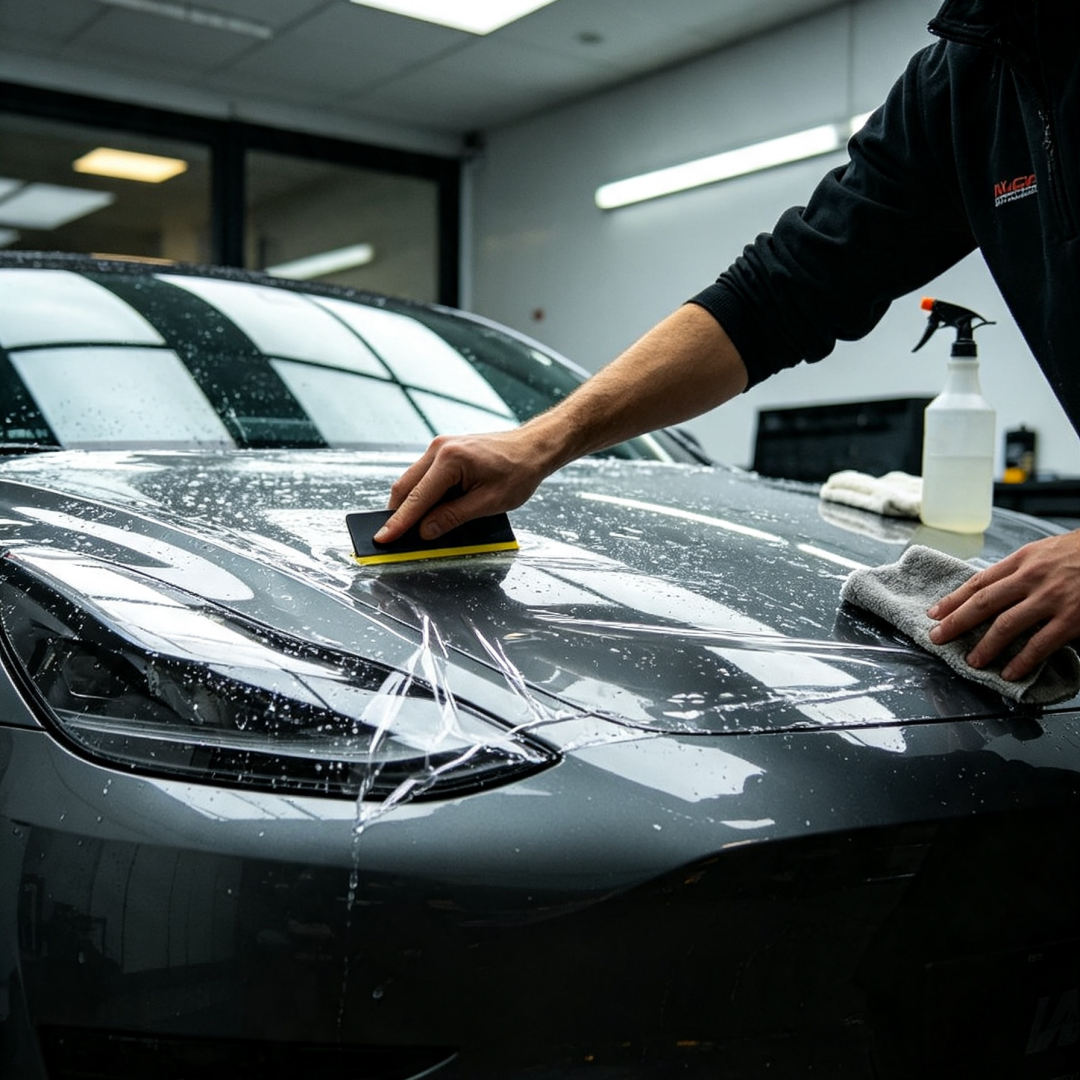
A paint protection film wrap creates a physical barrier between the vehicle’s paint and everyday road hazards.
Unlike conventional vinyl, which is primarily intended to change appearance, PPF is engineered around mechanical protection.
Modern TPU-based PPF commonly consists of several functional layers:
- Top coat: Helps resist contamination and may provide heat-activated self-healing.
- TPU layer: Supplies flexibility and resistance to minor impacts and abrasion.
- Color layer: Present in colored PPF to create the desired finish.
- Adhesive: Secures the film to properly prepared automotive paint.
- Release liner: Protects the adhesive before installation.
Not every manufacturer uses the same layer arrangement or material formulation.
A useful technical benchmark comes from 3M’s June 2025 Series 150 Gloss product bulletin. It specifies a polyurethane construction with a film-and-adhesive thickness of approximately 7.5 mil (190 microns).
The document also describes resistance to common road hazards, optical clarity, and heat-assisted recovery of minor surface scratches.
Source: 3M Paint Protection Film Series 150 Technical Bulletin.
However, a 7.5-mil film from one manufacturer should not automatically be considered equivalent to another 7.5-mil film. Top-coat chemistry, adhesion, elasticity, and weathering behavior also matter.
Clear PPF vs Color PPF: Which Should You Choose?
Clear and colored PPF share the same basic protective purpose, but they solve different customer problems.
Clear PPF: Preserve the Original Paint
Clear PPF is designed to protect the vehicle without substantially changing its factory color.
Gloss clear PPF is especially useful on metallic, pearl, and deep-gloss factory finishes where preserving the original appearance is important.
Clear matte PPF offers another option: it can change the surface appearance from gloss to a lower-sheen finish while allowing the original paint color to remain visible.
Best applications include:
- New vehicles with desirable factory paint
- Luxury and performance cars
- High-mileage highway vehicles
- Front bumpers and hoods exposed to road debris
- Owners who prefer original vehicle styling
For example, a Porsche 911 with factory metallic paint may benefit more from clear protection than a complete color change.

Color PPF: Change the Appearance While Adding Protection
Colored PPF combines protective-film construction with pigmentation or special-effect finishes.
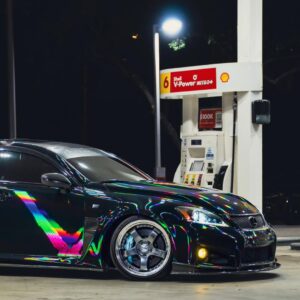
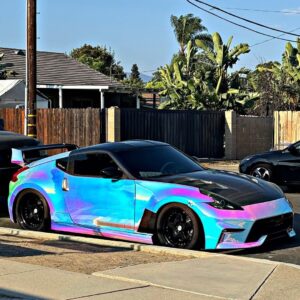
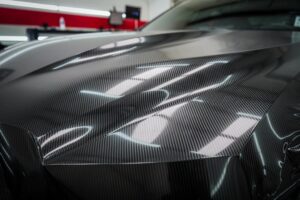
Available appearances may include gloss, satin, matte, metallic, carbon fiber, and color-shifting effects.
For example, satin black PPF can transform a bright-colored Tesla into a dark, low-reflection vehicle without relying on a conventional black vinyl finish.
However, color PPF is not automatically superior to clear PPF. Its additional color layer creates more considerations involving color matching, optical consistency, and future panel replacement.

Clear vs Color PPF Comparison
| Factor | Clear PPF | Color PPF |
|---|---|---|
| Main purpose | Preserve factory paint | Change color and protect |
| Original color visible | Yes | Usually concealed |
| Styling options | Gloss, matte | Gloss, satin, metallic, specialty |
| Stone-chip resistance | Film-dependent | Film-dependent |
| Self-healing | Available | Available |
| Panel replacement | Usually simpler visually | Requires color matching |
| Installation complexity | Moderate to high | High for full color changes |
| Typical cost | Lower for partial coverage | Often higher for full-body projects |
Our recommendation: Choose clear PPF when paint preservation is the primary objective. Choose color PPF when a new appearance is important enough to justify the additional material and installation considerations.
Explore ALUKOVINYL’s color ppf collection for available TPU color-change finishes.
Which Vehicles Benefit Most From PPF Wrap?
Vehicle shape and driving conditions influence the protection strategy more than brand prestige alone.
Porsche 911: Prioritize High-Impact Areas
The Porsche 911 has a low front profile, making the front bumper, hood, and front fenders important areas to evaluate for road-debris exposure.
For an owner who wants to retain the original factory paint, clear PPF is a practical choice.
A front-end installation may include the bumper, hood, fenders, mirrors, and headlights where compatible with the film and local regulations.
Full-body protection may be appropriate for owners who want more consistent coverage across exposed painted panels.
Tesla Model S: Consider Full-Body Color PPF
A Tesla Model S offers large body panels and relatively continuous styling surfaces.
These characteristics can make full-body color PPF visually appealing.
Satin black, metallic gray, and other specialty finishes can create a substantial transformation.
However, installers must carefully manage film tension around bumpers, mirrors, handles, and compound curves.
ALUKOVINYL’s published customer-submitted Satin Black PPF examples include Tesla Model S installations. These provide visual references, although they do not independently establish long-term durability.
BMW M4: Balance Appearance and Protection
The BMW M4 is an example of a vehicle where owners may want both an aggressive visual finish and protection against road debris.
Metallic blue or dark-colored TPU PPF can emphasize its sculpted hood, wide fenders, and body lines.

Before installation, the shop should inspect complex areas such as the front bumper, side skirts, mirrors, and rear quarter panels.
Mercedes-Benz G-Class: Plan for Exposed Surfaces
The Mercedes-Benz G-Class has large upright surfaces, prominent edges, and complex exterior trim.
Clear PPF can help protect vulnerable painted areas while retaining the original appearance.
However, installation planning is important around hinges, trim, corners, and accessories.

These examples illustrate vehicle-specific decisions. They are not controlled comparisons proving that one vehicle or PPF brand performs better than another.
How Much Protection Does PPF Actually Provide?
PPF is designed to reduce the risk of certain types of surface damage, but it does not make automotive paint invulnerable.
Stone Chips and Road Debris
A TPU protective layer can absorb and distribute some impact energy from small debris.
Actual performance depends on the film construction, impact speed, particle size, angle, and underlying surface.
A small gravel impact and a high-energy collision are fundamentally different events.
Light Scratches and Swirl Marks
Some PPF top coats use heat-responsive self-healing technology.
Minor surface marks may become less visible when exposed to suitable heat.
However, self-healing generally cannot repair deep cuts, punctures, tears, or damage extending through the film.
Environmental Contamination
Bird droppings, insects, road tar, and tree sap can contaminate automotive surfaces.
PPF provides an additional protective surface, but contamination should still be removed promptly.
Hydrophobic coatings can make washing easier, although hydrophobicity should not be confused with impact resistance.
UV Exposure
Modern PPF formulations may incorporate UV stabilizers and other weathering-resistant materials.
However, claims about UV resistance, yellowing, and long-term color stability should be supported by product-specific testing.
A manufacturer’s warranty is not the same as proof that a film will remain visually unchanged throughout that period.
Comparing PPF Wrap Brands: 3M, INOZETEK and ALUKOVINYL
A meaningful brand comparison should focus on published specifications rather than advertising language.
The following examples illustrate how product positioning and technical disclosure differ.
| Brand / Product | Published Thickness | Main Focus | Published Warranty |
|---|---|---|---|
| 3M Series 150 Gloss | 7.5 mil / 190 μm | Clear protection and conformability | Up to 10 years |
| 3M Pro Series 200 | 200 μm | Premium clear protection | Up to 10 years |
| INOZETEK Dynamic PPF Falcon Grey | 7.82 mil | Color transformation and protection | 10 years |
| ALUKOVINYL Gloss Clear TPU PPF | 7.5 mil ±0.3 mil | Clear gloss protection | Check current product terms |
Specifications are manufacturer-published, not independently verified comparative test results. Warranty eligibility, regional coverage, exclusions, and installation requirements vary.
3M: Established Clear PPF Benchmarks
3M provides detailed product bulletins and technical documentation.
Its published comparison brochure identifies Pro Series 200 as a premium option with 200-micron thickness, while Series 150 emphasizes flexibility and ease of installation at approximately 190 microns.
The brochure also identifies different performance priorities for stain resistance, optical clarity, conformability, and self-healing.
This is useful because it demonstrates that even products from the same manufacturer are engineered for different requirements.
Source: 3M PPF Product Comparison Brochure.
INOZETEK: Detailed Color PPF Construction
INOZETEK’s Dynamic PPF Falcon Grey product page provides a more detailed layer breakdown:
- Total thickness: 7.82 mil
- TPU layer: 125 microns
- Color and base layer: 40 microns
- Top coat: 8 microns
- Adhesive: 26 microns
These manufacturer-reported figures illustrate why total film thickness alone is insufficient for comparing products.
Source: INOZETEK Dynamic PPF Falcon Grey.
ALUKOVINYL: Clear and Color TPU Options
ALUKOVINYL offers both transparent and colored TPU-based protective films.
Its Gloss Clear TPU PPF product page lists a nominal 7.5-mil thickness with a ±0.3-mil tolerance and describes self-healing and high-gloss characteristics.
These are manufacturer-reported specifications and should not be interpreted as proof of superiority over 3M or INOZETEK.
Customers comparing films should request relevant technical documents, sample material, warranty details, and installer guidance before ordering.
What About Tinybot and TeckWrap?
Tinybot and TeckWrap are additional industry references worth examining for specialty finishes and colored automotive protection products.
However, comparisons must be based on specific product SKUs rather than broad brand claims.
A clear PPF product should not be directly ranked against a colored specialty film without accounting for differences in construction, intended use, and finish.
PPF Wrap Prices: What Are You Actually Paying For?
PPF pricing is difficult to compare fairly because material and installed-project prices are different.
A 49-foot roll price does not include vehicle preparation, installation labor, pattern cutting, waste, or removal of exterior components.
Similarly, a front-end PPF quote cannot be directly compared with a full-body color PPF quote.
Illustrative Installation Budgets
The following ranges are planning examples in US dollars, not verified nationwide averages or live quotations.
| Installation Type | Illustrative Budget |
|---|---|
| Partial front clear PPF | $700–$1,500 |
| Full front clear PPF | $1,500–$2,800 |
| Full-body clear PPF | $4,000–$7,500+ |
| Full-body color PPF | $5,000–$9,000+ |
Actual pricing varies considerably with region, vehicle size, installer experience, coverage, film selection, and complexity.
Why Two Similar Quotes Can Be Very Different
One installer may use pre-cut patterns with limited panel disassembly.
Another may perform extensive edge wrapping, trim removal, and custom cutting.
Both quotes may be described as “full-body PPF,” but the finished coverage and labor requirements can differ.
Before comparing prices, ask whether the quote includes bumpers, mirrors, rocker panels, door edges, recessed areas, and any necessary disassembly.
Why Public Brand Prices Are Difficult to Compare
3M products are commonly quoted through professional installation channels. INOZETEK restricts certain product pricing to approved dealers.
Retail roll prices from other suppliers may also differ by width, length, currency, region, and promotional discounts.
Therefore, a reliable comparison should use the same film dimensions and distinguish material-only prices from installed prices.
A low roll price does not necessarily mean a lower total project cost if installation waste or rework is higher.
Full-Body PPF vs Partial PPF: A Practical Decision Framework
Not every vehicle requires full-body protection.
A more efficient approach is to prioritize panels according to exposure.
High-Exposure Areas
The front bumper, leading hood edge, front fenders, mirrors, rocker panels, and lower doors may receive more direct road-debris exposure.
For many daily drivers, protecting these areas first can provide meaningful benefits without the expense of a complete installation.
Lower-Exposure Areas
Roof panels, upper doors, and rear surfaces may experience different types of contamination or abrasion.
Their protection priority depends on driving conditions, vehicle design, and owner preferences.
When Full-Body PPF Makes Sense
Full-body protection is more compelling when:
- The owner wants consistent coverage across painted panels.
- The vehicle frequently travels in challenging conditions.
- The factory finish is particularly important to preserve.
- A complete color transformation is planned.
- The owner prefers to avoid visible boundaries between protected and unprotected panels.
For customers interested in transparent protection, ALUKOVINYL’s clear ppf product provides a clear TPU option.
PPF Wrap vs Vinyl Wrap: Which Offers Better Value?
PPF and vinyl are not interchangeable.
A conventional vinyl wrap is primarily designed for changing vehicle appearance, adding graphics, or creating custom finishes.
PPF is designed primarily for protective performance.
Vinyl can be an appropriate choice for racing liveries, commercial branding, printed designs, or lower-cost color transformations.
PPF becomes more attractive when protection against road debris and minor surface damage is a central requirement.
However, PPF typically involves higher material and installation costs.
For customers who mainly want a different color and do not require substantial protective-film performance, vinyl may offer better value.
For customers prioritizing paint preservation, clear PPF is generally the more relevant solution.
Installation Risks Most Buyers Overlook
The quality of a PPF installation can matter as much as the film selection.
1. Paint Condition
PPF should not be treated as a solution for peeling clear coat, unstable repainting, or poorly bonded paint.
Removal can also carry risks, particularly on damaged or refinished surfaces.
2. Stretching and Optical Distortion
Excessive stretching can affect film appearance, particularly with colored or optical-effect films.
Installers should follow the specific manufacturer’s installation guidance.
3. Trapped Contamination
Dust, fibers, and particles trapped beneath clear PPF can be highly visible on dark factory paint.
Careful surface preparation and controlled installation conditions are essential.
4. Edges and Seams
Film edges can become visible or lift if poorly prepared, contaminated, or installed under excessive tension.
5. Replacement Matching
Clear PPF repairs may be visually easier to match, but differences in age and surface condition can still matter.
Colored PPF introduces additional concerns about color batches, finish consistency, and discontinued shades.
PPF Wrap Maintenance: What Actually Matters?
PPF does not eliminate normal vehicle maintenance.
A suitable care routine includes regular washing, prompt removal of contamination, and periodic inspection of film edges.
Use cleaning products approved for the specific film and avoid aggressive solvents or abrasive polishing unless the manufacturer explicitly permits them.
Pressure washers should not be directed aggressively at exposed edges.
Self-healing top coats may reduce the visibility of light surface marks, but they do not prevent all damage.
For colored PPF, owners should also monitor changes in gloss, pigmentation, and surface appearance.
If a film begins lifting, cracking, or showing unusual discoloration, consult the installer before attempting repairs.
Frequently Asked Questions About PPF Wrap
Is a PPF wrap better than a vinyl wrap?
PPF is generally better suited to physical paint protection, while vinyl is more versatile for color changes, graphics, and lower-cost styling. The best choice depends on whether protection or appearance is the primary goal.
Can PPF stop every rock chip?
No. PPF can reduce the risk of damage from common road debris, but sufficiently strong impacts may penetrate the film or damage the paint beneath it.
Is clear PPF visible on black cars?
High-quality clear PPF can be difficult to notice, but edges, seams, surface texture, and installation imperfections may still be visible under certain lighting.
Can colored PPF replace a traditional color-change wrap?
Yes, for many full-body styling projects. However, colored PPF is usually more expensive and may require greater attention to material orientation and replacement matching.
Does PPF damage factory paint when removed?
Properly installed and removed PPF is designed for automotive paint applications, but removal is not risk-free. Damaged paint, repainted surfaces, aging adhesive, and improper removal techniques can increase the chance of problems.
Is thicker PPF always better?
No. Thickness influences the protective barrier, but film chemistry, elasticity, top-coat performance, adhesion, and installation quality also affect overall results.
Should I choose full-body or front-end PPF?
Front-end coverage is often a practical choice for drivers primarily concerned about road debris. Full-body coverage may be preferable when consistent protection or complete color transformation is desired.
How do I choose a reliable PPF supplier?
Look for transparent specifications, suitable technical documentation, installation guidance, clear warranty conditions, representative samples, and verifiable customer installation examples.
Final Verdict: Which PPF Wrap Is Right for You?
The best PPF wrap is not necessarily the thickest, most expensive, or most heavily advertised film.
For a Porsche owner who values the original paint, clear PPF may be the most logical investment.
For a Tesla driver seeking a complete satin-black transformation, colored PPF may offer the preferred combination of styling and protection.
For a BMW enthusiast considering metallic finishes, color PPF can provide an alternative to conventional vinyl, although the additional cost should be justified by the project’s goals.
Choose clear PPF to preserve the paint. Choose color PPF to change the appearance while adding protection. Choose conventional vinyl when styling flexibility and budget matter more than impact resistance.
Before ordering, compare the film’s published specifications, warranty conditions, installation requirements, coverage plan, and total installed cost.
Explore ALUKOVINYL’s complete ppf film collection to compare clear and colored options, review available finishes, and select a material that matches your vehicle and project requirements.
Protect the finish you love—or create a new one with the right PPF wrap.
References and Evidence Classification
3M — Paint Protection Film Series 150 Gloss Product Bulletin, June 2025. Manufacturer technical documentation supporting material construction, thickness, protective applications, and self-healing descriptions.
3M — Paint Protection Film Product Comparison Brochure. Manufacturer comparison covering Series 100, Series 150, and Pro Series 200. Warranty figures and performance classifications are manufacturer-reported.
INOZETEK — Dynamic PPF Falcon Grey Product Specifications. Manufacturer-reported data covering TPU construction, thickness, coating layers, and warranty.
ALUKOVINYL — Gloss TPU PPF and Satin Black Colored PPF Product Pages. Supplier information and customer-submitted visual examples; not independent performance testing.
Editorial Analysis — Vehicle Coverage, Cost and Installation Decisions. Practical recommendations and illustrative budgeting assumptions, not laboratory measurements or independently verified market averages.
Evidence limitation: No standardized independent head-to-head testing of ALUKOVINYL, 3M, INOZETEK, Tinybot, and TeckWrap was conducted for this article. Differences in manufacturer specifications should not be interpreted as proven differences in real-world performance.