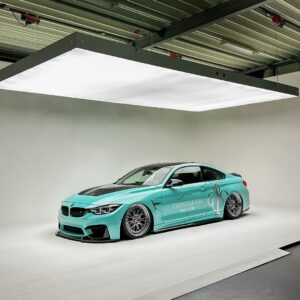
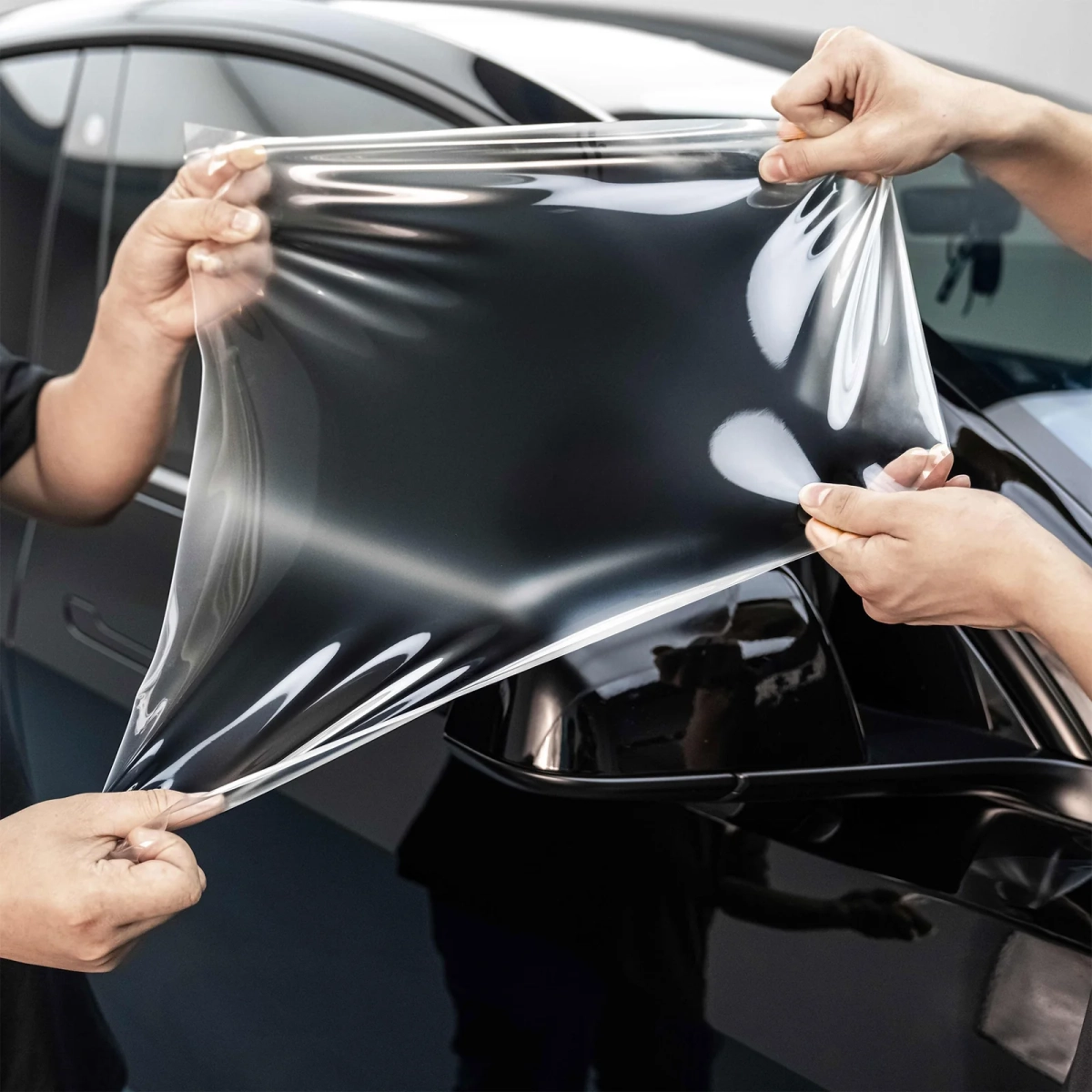
Choosing between clear PPF brands is more complicated than comparing thickness, gloss or warranty length. Two transparent films can look nearly identical after installation yet differ substantially in adhesive behavior, optical clarity, surface coatings, installation requirements and long-term support.
Brands such as 3M, XPEL and STEK have established positions in the paint protection market, while suppliers such as ALUKOVINYL offer alternative film constructions and purchasing options.
But does a more expensive brand necessarily deliver better protection? Is 10mil PPF always superior to 7.5mil? And should a professional installer prioritize self-healing performance, material price or warranty coverage?
This guide compares clear paint protection films using published specifications, manufacturer information and practical purchasing criteria rather than unsupported brand rankings.
Disclosure: ALUKOVINYL manufactures and sells automotive films discussed in this article. Brand specifications are attributed to their respective manufacturers. This is a technical comparison, not an independently conducted laboratory test or a claim that ALUKO outperforms competing products.
What Are the Best Clear PPF Brands?
The best clear PPF brand depends on the vehicle, installation requirements, desired finish, warranty coverage and budget. 3M offers extensively documented polyurethane film technology; XPEL emphasizes protective films and its installation ecosystem; STEK offers specialized optical finishes; and ALUKO provides multiple TPU thicknesses and gloss or matte options.
Rather than selecting a brand solely by reputation, buyers should compare:
- Film construction and thickness
- Optical clarity and orange-peel texture
- Scratch recovery and self-healing behavior
- Stain resistance and hydrophobic properties
- Adhesive performance and installation requirements
- Written warranty terms and exclusions
- Installed price and future replacement costs
No brand should be considered universally superior without controlled, product-specific testing.
Why Clear PPF Brands Are Not All the Same
Clear paint protection film is designed to create a sacrificial barrier over automotive paint. Modern premium products generally use polyurethane-based constructions, often TPU, combined with specialized top coats and pressure-sensitive adhesives.
However, differences between brands can be substantial.
A film may offer excellent surface gloss but require greater installation control. Another may be easier to reposition but offer different resistance to staining or chemical exposure.
Three factors deserve particular attention.
1. TPU formulation
Thermoplastic polyurethane offers flexibility and toughness, making it suitable for curved automotive surfaces.
However, the term TPU alone does not establish material quality. Different formulations can have different mechanical properties, hydrolysis resistance and weathering behavior.
2. Top-coat technology
The top coat affects scratch recovery, gloss, stain resistance, water behavior and surface texture.
A hydrophobic surface may make washing easier, but water beading alone does not prove superior stone-chip protection.
3. Adhesive construction
Adhesive behavior affects repositioning, edge retention, lifting, removal and installation marks.
For professional installers, these characteristics can be as important as the nominal film thickness.
The result is simple: comparing clear PPF brands requires more than looking at a single specification.
Clear PPF Brands Comparison: 3M, XPEL, STEK and ALUKO
| Brand | Representative product | Main distinction | Consideration |
|---|---|---|---|
| 3M | Scotchgard Pro Series 200 | Published technical data, gloss/matte, installation system | Check authorized installation and warranty conditions |
| XPEL | ULTIMATE PLUS | Clear protection and professional installation ecosystem | Obtain a model-specific installed quote |
| STEK | DYNOshield | High-gloss appearance and specialty-film portfolio | Confirm local installer and warranty support |
| ALUKO | 7.5mil, 8.5mil, 10mil Clear PPF | Multiple thickness choices and direct film purchasing | Verify product-specific testing and warranty terms |
These distinctions describe product positioning, not an independently verified performance ranking.
3M: Technical Documentation and Established Film Engineering
3M is one of the most recognizable names in automotive films.
Its Scotchgard Paint Protection Film Pro Series 200 is offered in gloss and matte versions and incorporates polyurethane film technology, self-healing characteristics and hydrophobic surface features.
A particularly useful difference is the availability of detailed technical documentation.
For example, 3M’s published Pro Series 200 Gloss technical bulletin reports representative values including:
- Film with adhesive: approximately 7.8–7.9mil, depending on the bulletin revision
- Elongation: 290% in the October 2022 bulletin
- Tensile strength: 1,600 psi in that bulletin
- Wet application
- Defined installation temperature recommendations
3M also advertises a 10-year consumer warranty for eligible Pro Series 200 installations, subject to its written conditions.
These published details allow installers to evaluate the material using more than promotional descriptions.
Advantages: Extensive technical documentation, defined installation requirements and established warranty infrastructure.
Limitations: Warranty eligibility and access to specific products may depend on authorized channels. Published laboratory values should not be interpreted as guaranteed field performance.
Source: 3M Automotive Paint Protection Films

XPEL: Protection Products and Installer Support
XPEL is another prominent automotive PPF brand, with products including ULTIMATE PLUS.
Its market approach emphasizes protective-film systems, professional installation, vehicle-specific patterns and after-sales support.
For buyers, the availability of trained installers and established installation processes can be valuable, particularly on vehicles with complicated bumper geometry, sensors and recessed panels.
However, brand recognition should not substitute for examining the exact product.
Customers should request the relevant technical documentation and written warranty before committing to a full-body installation.
Advantages: Specialized automotive protection portfolio and established professional installation channels.
Limitations: Installed pricing varies by vehicle and installer; material-only comparisons may not reflect the full service package.
Source: XPEL

STEK: Appearance-Focused PPF Options
STEK is known for its automotive protection films and distinctive finish options.
Its DYNOshield line is associated with glossy transparent protection, while its broader portfolio includes specialty appearances.
For customers who care about how a film looks on dark paint, the surface finish deserves close attention.
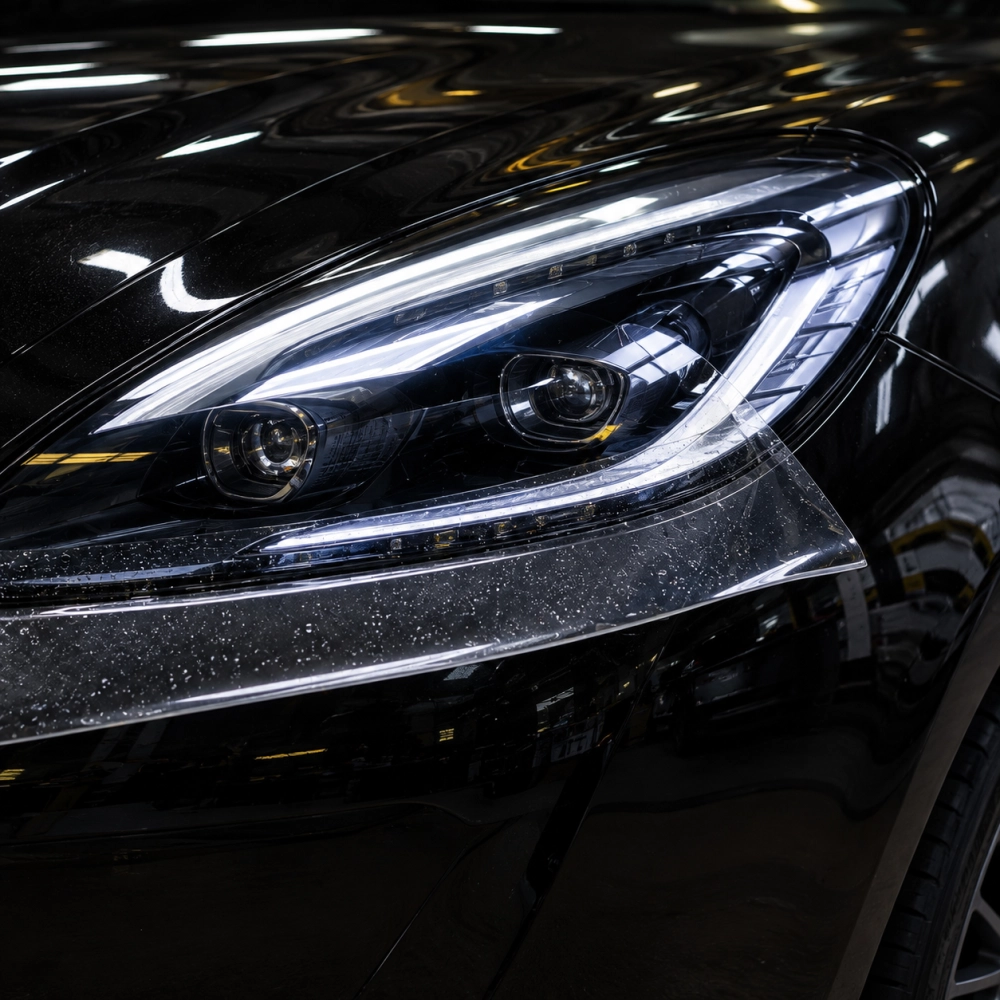
Orange-peel texture, haze and reflected-image distortion can be more noticeable on black, navy or other highly reflective paint finishes.
However, claims about superior clarity should be supported by comparable measurements or side-by-side visual testing.
Advantages: Broad appearance-focused film portfolio and specialist positioning.
Limitations: Finish quality should be assessed using actual samples; availability and support can vary by market.
Source: STEK

ALUKO: Multiple Thicknesses and Direct Purchasing
ALUKOVINYL offers clear TPU PPF products in several thicknesses, including 7.5mil, 8.5mil and 10mil, as well as matte clear film.
This range allows customers to select different material constructions according to their installation and protection priorities.
ALUKO’s published product information describes features such as hydrophobic surfaces, scratch resistance and self-healing top coats.
These are manufacturer-reported characteristics. They should not be treated as proof that ALUKO exceeds 3M, XPEL or STEK in standardized testing.
Advantages: Multiple thickness options, gloss and matte choices, and direct purchasing.
Limitations: Buyers should request product-specific technical reports, warranty documentation and independent test results where available.
The most appropriate ALUKO product depends on whether the customer prioritizes installation flexibility, a thicker protective barrier or a particular finish.
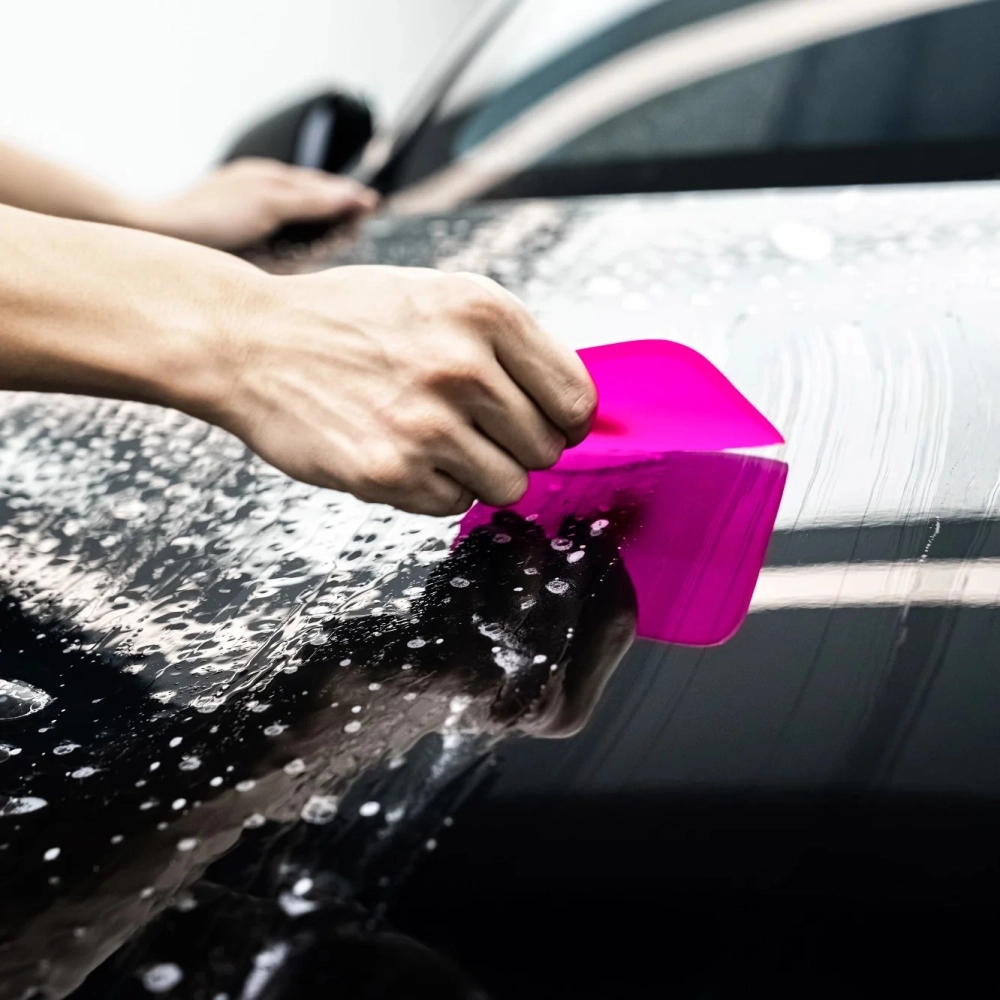
ALUKO Clear PPF: Four Different Material Options
Clear PPF is not a single uniform product. Even within one manufacturer, thickness and finish can change the purchasing decision.
1. 7.5mil Gloss Clear TPU PPF
Best suited to: Everyday paint protection and maintaining the original glossy finish.
ALUKO 7.5mil Gloss Clear PPF is designed to preserve factory paint color while providing a transparent protective surface.
Its relatively moderate thickness makes it a useful option to evaluate for curved panels and full-body installations.
The product is marketed with self-healing and hydrophobic characteristics, although real-world results depend on installation and use.
Advantages: Clear gloss, balanced thickness and versatile applications.
Potential drawback: A thinner nominal construction than ALUKO’s 8.5mil and 10mil options.
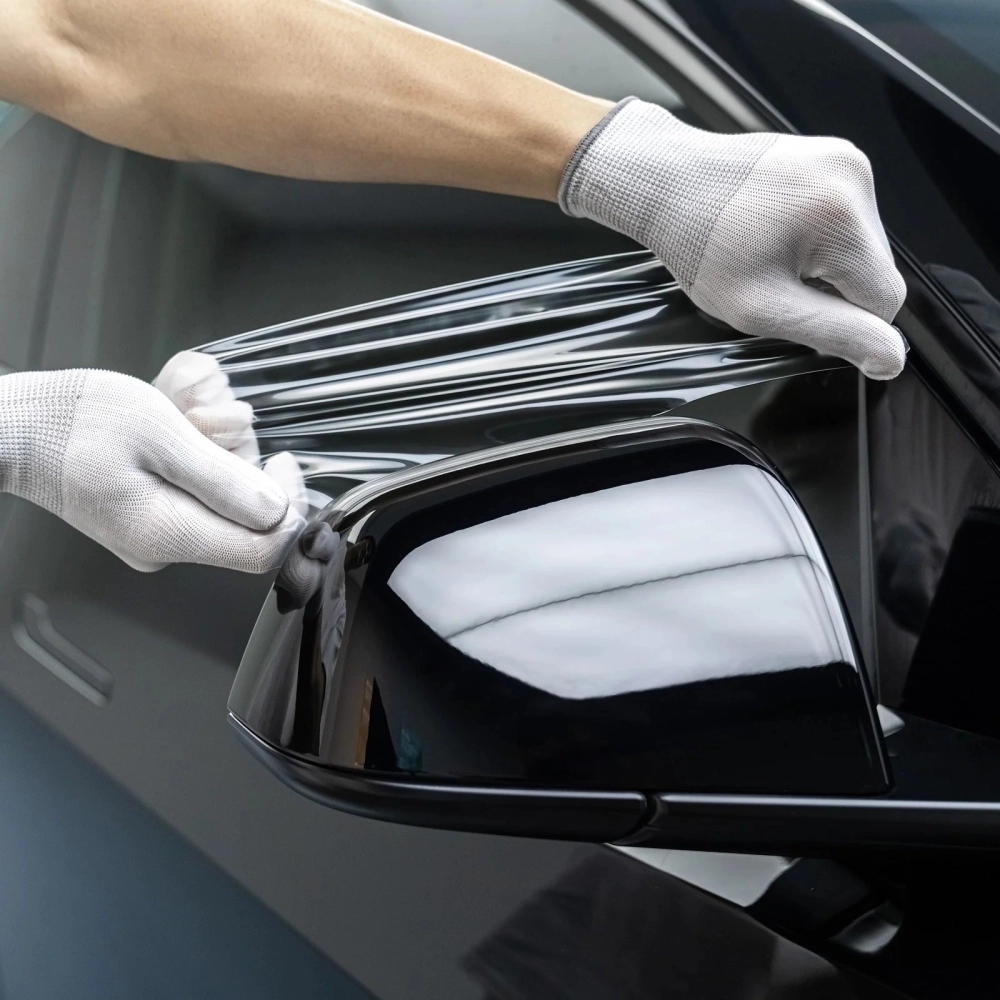
2. 7.5mil Matte Clear PPF
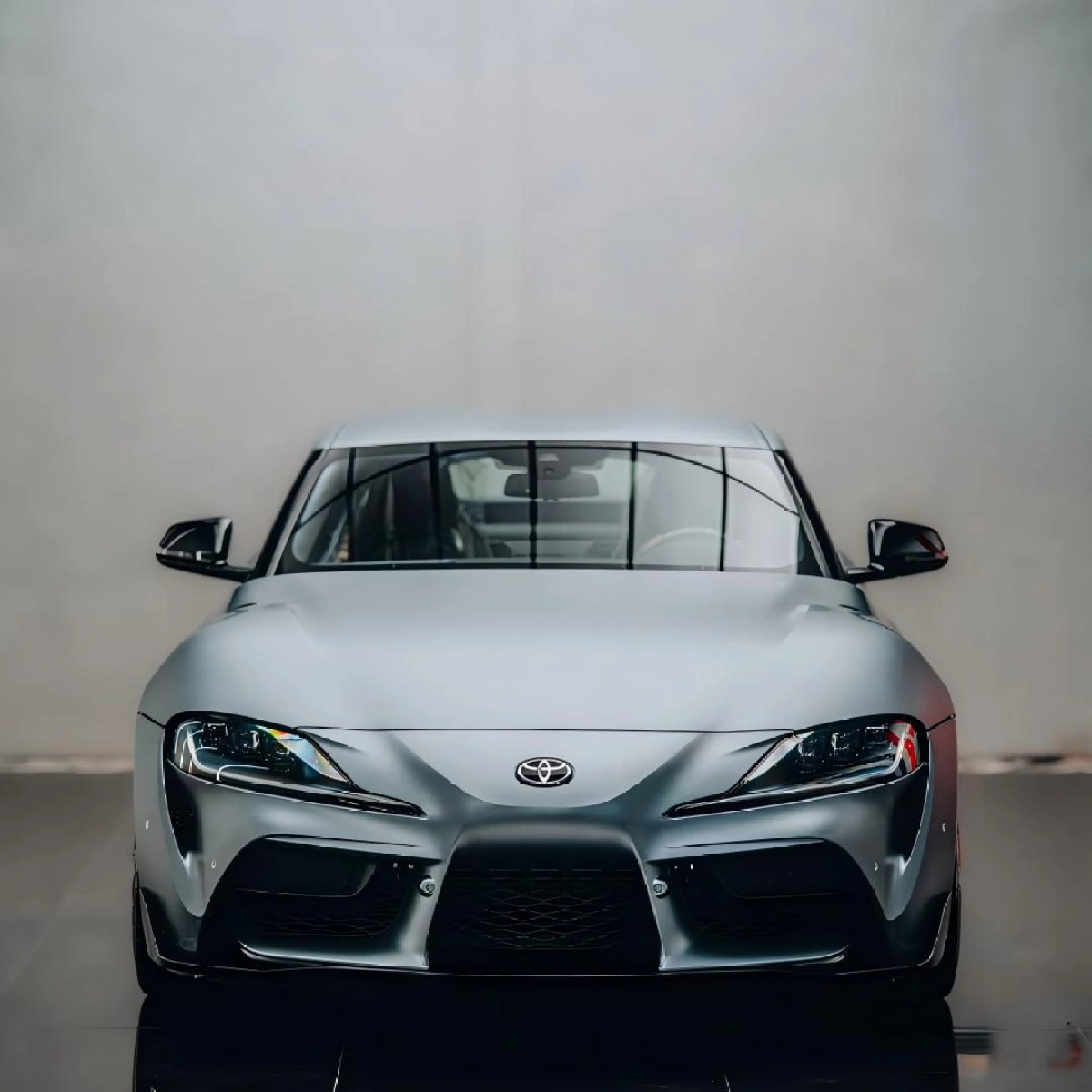
Best suited to: Preserving the original color while creating a frozen or satin-like appearance.
Matte clear PPF is fundamentally different from conventional glossy protection film.
Instead of maximizing specular reflection, the surface diffuses light, reducing the appearance of gloss.
For example, transparent matte PPF applied over metallic gray paint can produce a frozen-metal appearance without introducing an opaque new color.
Advantages: Original color remains visible, distinctive matte transformation and protective TPU construction.
Potential drawbacks: Gloss-enhancing polishes can create uneven shine; partial coverage can leave obvious differences between glossy and matte panels.
3. 8.5mil Gloss Clear PPF Ultra
Best suited to: Buyers who want a thicker nominal protective layer without changing the original glossy appearance.
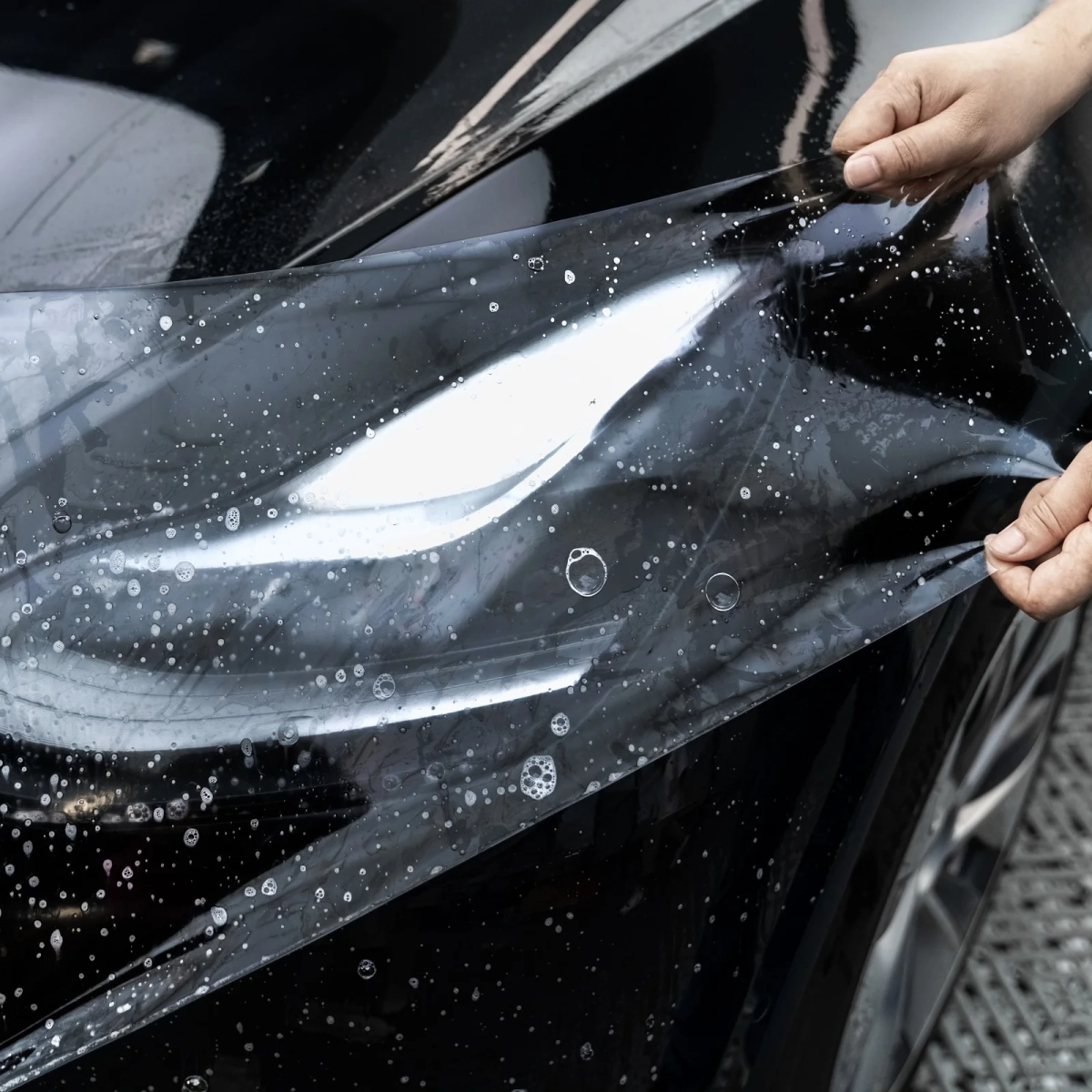
ALUKO’s 8.5mil product is approximately 0.216mm thick.
Compared with its 7.5mil counterpart, it provides 1mil of additional nominal thickness.
That represents roughly 13.3% more thickness, although it does not automatically translate into 13.3% better stone-chip resistance.
The actual protective performance depends on the film’s mechanical properties and the conditions of impact.
Advantages: Thicker sacrificial layer, glossy transparency and protection-focused construction.
Potential drawbacks: Installation around tight curves may require additional care; higher thickness alone does not prove superior overall performance.
4. 10mil Ultra Gloss Clear PPF
Best suited to: Protection-focused applications where a thicker film is desired.
At approximately 0.254mm, 10mil PPF is one-third thicker than a 7.5mil film by nominal thickness.
This additional material may be relevant for high-impact areas such as front bumpers, rocker panels and rear wheel arches.
However, a thicker film may also require greater care when conforming to sharp curves and complex recesses.
Advantages: Extra nominal thickness and suitability for protection-focused panel coverage.
Potential drawbacks: Potentially more demanding installation; no automatic guarantee of better scratch recovery or weathering performance.
View ALUKO 10mil Ultra Gloss PPF
Does Thicker Clear PPF Mean Better Protection?
Not necessarily.
Thickness is important because PPF creates a physical barrier between road hazards and the paint underneath. However, it is only one variable.
Consider these nominal measurements:
| Thickness | Millimeters | Microns |
|---|---|---|
| 7.5mil | 0.1905 | 190.5 |
| 8.5mil | 0.2159 | 215.9 |
| 10mil | 0.2540 | 254.0 |
A 10mil film has approximately 33% more nominal thickness than a 7.5mil film.
But whether that produces better impact protection depends on TPU properties, coating construction, impact conditions and substrate geometry.
A useful professional comparison would involve controlled gravel-impact testing, with identical painted panels and consistent impact conditions.
Without such tests, thickness should be treated as a construction characteristic rather than a complete performance rating.
Clear PPF Brands: Price Comparison and Real Ownership Cost
Price is often the most difficult part of comparing PPF brands because material-only retail prices and professional installed prices are not equivalent.
3M, XPEL and STEK products are frequently purchased as part of professional installation services. ALUKO also offers direct film purchasing.
A responsible comparison therefore separates the pricing models:
| Brand | Purchasing approach | What to compare |
|---|---|---|
| 3M | Authorized or professional channels | Installed quote, warranty and coverage |
| XPEL | Professional installer network | Installation, patterns, film series and warranty |
| STEK | Specialist installers and distributors | Film finish, labor and local support |
| ALUKO | Direct film purchasing | Roll dimensions, material cost and installation labor |
A universal dollar-price ranking would be misleading without matching the exact film series, roll dimensions, currency, date and included services.
Example: Comparing Two Installation Quotes
Imagine two hypothetical quotes for the same vehicle:
- Option A: $1,800 for front-end coverage.
- Option B: $2,300 for front-end coverage.
The $500 difference does not necessarily mean Option B is overpriced.
The second quote might include additional panels, wrapped edges, more extensive preparation or different warranty support.
Conversely, a higher price does not guarantee better protection.
The customer should request a written breakdown of material, coverage, preparation, labor, warranty and exclusions before deciding.
This is more informative than simply asking which brand is cheapest.
Clear PPF Pros and Cons
Advantages
Paint preservation: Transparent film helps protect the original factory finish without covering its color.
Stone-chip protection: The sacrificial polyurethane layer can reduce damage from normal road debris.
Surface recovery: Certain premium films incorporate heat-activated self-healing top coats for minor scratches.
Finish options: Gloss preserves a reflective appearance, while matte creates a different surface character.
Targeted coverage: High-impact areas can be protected without necessarily wrapping the entire vehicle.
Disadvantages
Installation expense: Professional preparation, cutting and fitting can represent a substantial portion of the total cost.
Visible defects: Contamination, trapped moisture, stretch marks or poorly finished edges can affect appearance.
Limited protection: Severe impacts, deep cuts and collisions can still damage the film and paint.
Maintenance requirements: PPF still needs washing, contamination removal and periodic inspection.
Warranty limitations: Coverage may exclude installation damage, misuse, accidents, environmental conditions or other specified circumstances.
A realistic buying decision considers these limitations alongside the benefits.
How to Evaluate Clear PPF Brands Like a Professional Installer
Before choosing a film, request technical documentation and assess the following criteria.
Optical clarity
Evaluate the film on black or dark paint under consistent lighting. Look for haze, distortion, surface texture and differences in reflected-image sharpness.
Adhesive behavior
Test positioning, repositioning, edge adhesion and removal according to the manufacturer’s installation instructions.
Surface performance
Check whether self-healing, hydrophobicity and stain resistance are supported by documented test methods.
Installation compatibility
Confirm application temperature, slip-solution requirements, stretching limitations and compatibility with complex panels.
Warranty support
Read the actual warranty document rather than relying on a headline number of years.
For example, 3M’s Pro Series 200 has a published consumer warranty offering, but the applicable terms and installation requirements determine eligibility.
Evidence quality
Prefer published technical data, identifiable test methods and documented limitations over claims such as “best quality” or “100% scratch-proof.”
A film with impressive marketing photographs but limited technical documentation should be evaluated cautiously.
Clear PPF vs. Vinyl Wrap vs. Color PPF
These three products serve different purposes.
A traditional vinyl wrap is primarily used for changing color, applying graphics or creating decorative finishes.
Transparent ppf film is designed primarily to protect the original paint while maintaining its appearance.
By comparison, color ppf combines pigmentation or specialty visual effects with a protective-film construction.
| Product | Primary purpose | Original color visible? |
|---|---|---|
| Vinyl wrap | Color change and graphics | Usually no |
| Clear PPF | Paint protection | Yes |
| Color PPF | Color change and protection | Usually no |
The best choice depends on whether appearance transformation or paint preservation is the primary objective.
Which Clear PPF Brand Should You Choose?
For a new luxury car, evaluate optical clarity, installer quality and written warranty support.
For a highway-driven performance car, prioritize documented impact performance and coverage of the front bumper, hood, mirrors and rocker panels.
For a vehicle with complex body geometry, ask the installer about adhesive behavior, panel patterns and edge finishing.
For a customer seeking direct material purchasing, compare the technical documentation, nominal thickness, material price and installation requirements.
For matte styling, select a transparent matte PPF rather than assuming every clear film will preserve the original gloss.
The best decision is based on the exact film and installation package—not brand reputation alone.
Frequently Asked Questions About Clear PPF Brands
What are the best clear PPF brands?
3M, XPEL and STEK are established brands worth comparing, while ALUKO offers alternative clear TPU films in multiple thicknesses. The appropriate choice depends on specifications, installation quality, warranty and price.
Is 3M PPF better than XPEL?
Neither brand can be declared universally superior without comparing specific products using consistent tests. Review technical data, finish quality, installer expertise and warranty terms.
Is 10mil PPF better than 7.5mil?
A 10mil film is thicker, but that alone does not prove better overall protection. Material formulation, top coat, adhesive and impact testing also matter.
What is the difference between clear gloss and clear matte PPF?
Gloss PPF is designed to preserve a reflective finish. Matte PPF reduces reflections and can create a frozen appearance while allowing the original paint color to remain visible.
Does clear PPF prevent all scratches?
No. It provides a protective barrier and some films can recover from minor surface marks, but deep scratches and severe impacts can still cause damage.
How long does clear PPF last?
Service life varies by film, climate, installation and maintenance. Some manufacturers offer warranties extending to 10 years on eligible products, but warranty length is not a guarantee of identical appearance or performance throughout that period.
Is expensive PPF always better?
No. A higher price may reflect material, installation labor, warranty support or distribution costs. Buyers should compare documented performance and the complete installation package.
Can clear PPF be removed without damaging paint?
Professional removal from sound original paint is generally possible, but results depend on paint condition, adhesive, age and removal technique. Repainted or poorly bonded surfaces carry additional risks.
Final Verdict: Compare the Film, Not Just the Brand
Clear PPF brands differ in more than price and thickness.
3M provides extensive published technical information. XPEL offers a specialized protection and installation ecosystem. STEK emphasizes distinctive finishes alongside protective films. ALUKO provides multiple clear TPU thicknesses and purchasing options.
None of these differences alone establishes a universal winner.
The most useful comparison considers measurable performance, optical appearance, installation quality, total cost and warranty terms.
For vehicle owners who want to preserve the original paint, clear PPF remains an important protection option. For installers, selecting the appropriate film requires matching material properties to the vehicle and intended use.
Explore ALUKOVINYL’s clear ppf options to compare transparent gloss protection, or review the 7.5mil, 8.5mil, 10mil and matte products before choosing material for your next project.
Protecting paint starts with understanding the film—not simply choosing the most recognizable brand.