Is Gloss Atomic Teal blue, green, or somewhere in between? That question matters more than you might think when choosing a car wrap color.
A teal wrap can look ocean blue in one photograph, turquoise green in another, and surprisingly dark when parked in the shade. Add a glossy metallic finish, and the relationship between color, reflection, and body shape becomes even more interesting.
For drivers considering a gloss atomic teal car wrap, the biggest challenge isn’t deciding whether the color looks attractive. It’s understanding what the color will actually look like on their own vehicle, under different lighting conditions, and alongside existing wheels, trim, and accents.
This guide takes a practical look at Atomic Teal, including its blue-green appearance, metallic finish, real customer examples, comparisons with similar colors, advantages and disadvantages, installation considerations, and maintenance requirements.
We’ll also examine ALUKOVINYL’s Gloss Metallic Atomic Teal Car Vinyl Wrap PET (SKU 3036) and explain who should—and shouldn’t—choose this finish.
What Color Is Gloss Atomic Teal?
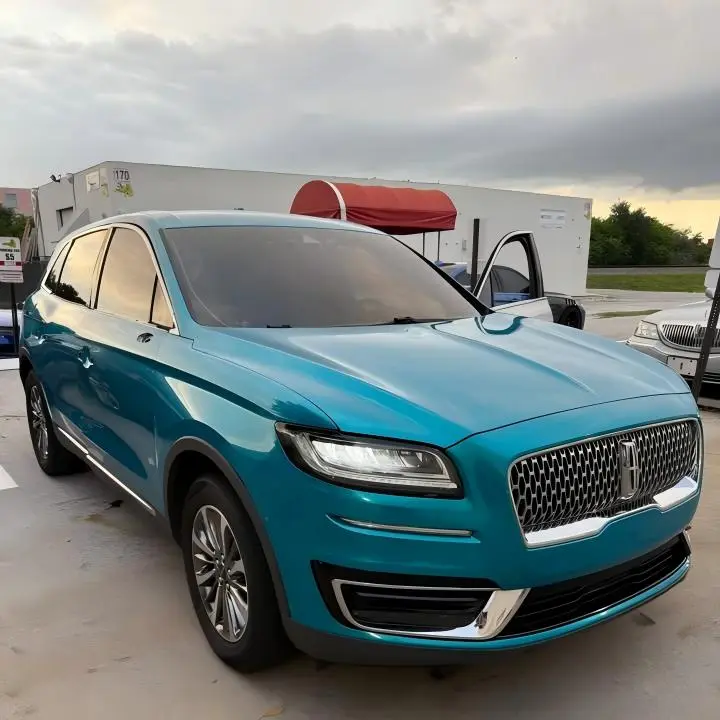
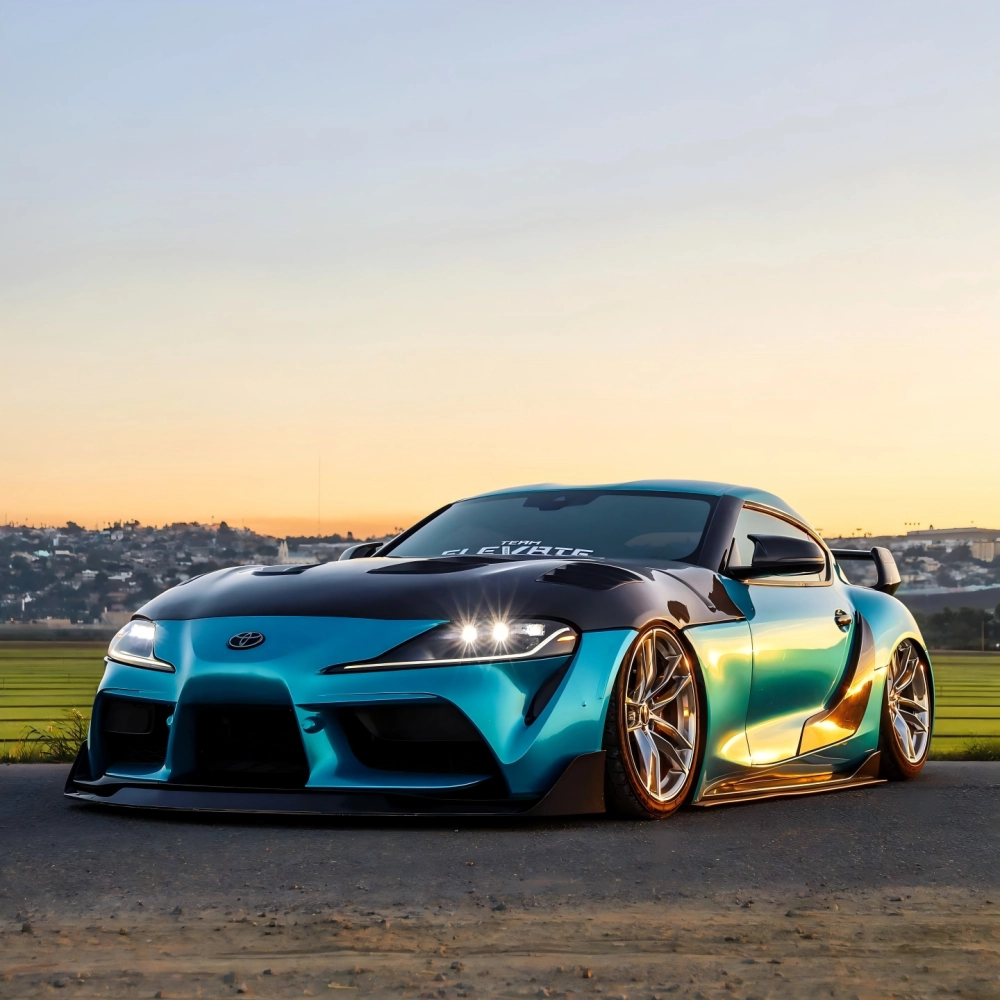
Gloss Atomic Teal is a blue-green automotive wrap color with a glossy metallic finish. It sits between blue and green rather than belonging exclusively to either color family. Depending on the lighting, surrounding reflections, camera settings, and viewing angle, it may appear more blue, turquoise, or green.
Unlike a dedicated color-shifting or chameleon wrap, a conventional gloss metallic teal wrap does not necessarily contain pigments engineered to produce a dramatic hue change.
Its changing appearance is primarily influenced by three factors:
- Blue-green base color: The underlying teal hue determines its overall identity.
- Gloss reflections: The shiny surface reflects the sky, nearby objects, and lighting.
- Metallic effect: Reflective particles add visual depth and brightness variations.
The result is a color that can feel sporty in direct sunlight, sophisticated in softer daylight, and darker under low illumination.
Quick answer: If you want a car that looks unmistakably blue or unmistakably green in every environment, Atomic Teal may not be your first choice. If you enjoy a color that visually sits between both, it’s worth considering.
1. Why Does Gloss Atomic Teal Sometimes Look Blue and Sometimes Green?
One of the most common mistakes when shopping for automotive vinyl is assuming that a color has one fixed appearance.
In reality, the perceived color of a vehicle depends on much more than its pigment.
Direct Sunlight: Brighter and More Reflective
Under strong sunlight, a metallic teal wrap can appear more vivid because its metallic particles and glossy surface produce stronger highlights.
On a vehicle with sculpted body panels, such as a Ford Mustang or BMW M4, sunlight can emphasize the hood, fenders, shoulders, and side contours.
However, brighter does not automatically mean bluer. The perceived hue still depends on the film’s actual formulation and the surrounding environment.
Overcast Conditions: A More Even Color
Cloud cover creates relatively diffuse illumination.
Without intense directional highlights, the underlying teal color can become easier to judge across large panels.
This is often one of the most useful conditions for evaluating whether a teal wrap looks predominantly blue or green.
Shade: Darker and More Subdued
In a parking garage or shaded area, Atomic Teal may appear deeper and less saturated.
The metallic sparkle can become less obvious, while reflections from nearby surfaces can still influence its appearance.
A wrap that looks bright turquoise outdoors may look considerably more restrained inside a garage.
Nighttime: Highly Dependent on Artificial Lighting
Streetlights, headlights, LED fixtures, and illuminated signs all have different spectral characteristics.
Warm lighting can alter the perceived balance of blue and green, while cooler lighting may emphasize different aspects of the finish.
Expert insight: The perceived hue of a metallic car wrap should not be confused with an actual pigment color shift. A glossy surface can reflect a blue sky or green surroundings without the film itself changing color.
2. Atomic Teal vs Turquoise, Tiffany Blue and Metallic Blue
Choosing between blue-green wraps becomes easier when the colors are compared by appearance rather than by marketing names alone.
| Color | General Color Character | Visual Impression | Best For |
|---|---|---|---|
| Gloss Atomic Teal | Balanced blue-green | Deep, sporty, distinctive | Sports cars and premium sedans |
| Turquoise Green | Generally greener | Fresh, energetic | SUVs and bold custom builds |
| Tiffany-style Blue | Typically lighter blue-cyan | Clean, playful | Coupes and compact cars |
| Metallic Blue | Predominantly blue | Classic, sporty | Performance vehicles |
| Dark Emerald Green | Predominantly green | Rich, luxurious | Luxury sedans and SUVs |
| Chameleon Blue-Green | Engineered multicolor effect | Dramatic, futuristic | Show cars and custom projects |
These descriptions are qualitative comparisons, not instrument-measured color differences. Product naming and exact shades vary by manufacturer.
Atomic Teal vs Turquoise Green
Both belong to the blue-green family, but turquoise green generally creates a fresher, greener impression.
Atomic Teal is worth considering if you want a more balanced, deeper appearance rather than an obviously green vehicle.
Compare it with ALUKOVINYL’s Gloss Metallic Turquoise Green Car Vinyl Wrap.
Atomic Teal vs Tiffany Blue
Tiffany-style blue wraps generally appear lighter and more pastel-like.
Atomic Teal creates a stronger visual contrast against black wheels, dark glass, and black exterior trim.
If you want a softer and brighter appearance, a Tiffany-style blue may be preferable.
Atomic Teal vs Standard Metallic Blue
A conventional metallic blue wrap is a safer choice when you want the vehicle to read clearly as blue.
Atomic Teal offers more visual ambiguity and a less conventional appearance.
Explore other options in ALUKOVINYL’s metallic blue car wrap collection.
Atomic Teal vs Chameleon Blue-Green
This comparison is particularly important.
A chameleon wrap is designed to produce more pronounced hue variation with changing viewing and lighting angles.
Gloss Atomic Teal should not be advertised as a true chameleon film unless its construction and optical performance support that description.
Our recommendation: Choose Atomic Teal for a balanced blue-green metallic appearance. Choose chameleon vinyl if dramatic color-shifting effects are the main goal.
3. What Makes Gloss Metallic Atomic Teal Different From Ordinary Gloss Vinyl?
The term gloss metallic describes two different visual properties.
Gloss refers to the surface’s ability to produce specular reflections.
Metallic refers to the reflective visual effect produced by particles or layers incorporated into the film.
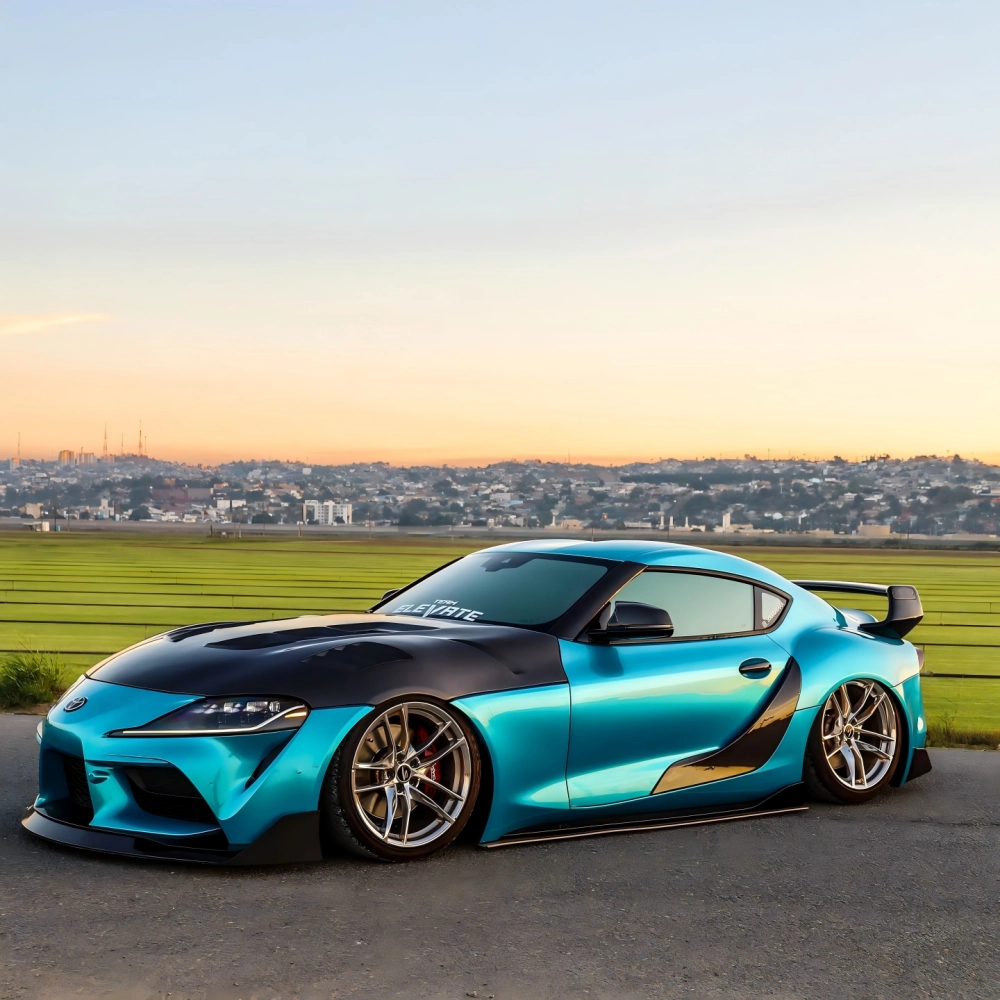
Together, these properties can make the finish appear more dimensional than an ordinary solid-color gloss wrap.
Gloss Atomic Teal vs Solid Gloss Teal
A nonmetallic gloss teal wrap typically produces smooth reflections without the same metallic sparkle.
A metallic version adds reflective visual texture, which may help emphasize curved body panels under directional lighting.
Neither is automatically better.
For a clean, minimalist appearance, a solid gloss finish may be preferable.
For a more expressive look that emphasizes body contours, metallic teal can be an attractive alternative.
Does PET Backing Improve the Finish?
ALUKOVINYL’s Atomic Teal product is sold as a PET-backed automotive vinyl wrap.
PET refers to the polyester release liner used in the film system. It should not be confused with the primary automotive vinyl face film or with TPU paint protection film.
A well-designed release liner can contribute to surface smoothness and handling characteristics, but PET backing alone does not guarantee a completely paint-like finish.
Actual appearance also depends on film construction, manufacturing consistency, installation technique, surface preparation, and lighting.
4. Real Customer Evidence: Gloss Atomic Teal on a Ford Mustang
One useful advantage of researching ALUKOVINYL’s Atomic Teal product is that its product page includes customer-submitted photographs and reviews.
A customer review dated August 5, 2026, references Mustangs finished in Gloss Atomic Teal.
This provides a relevant example for buyers considering the color on a performance-oriented vehicle.
Why Atomic Teal Works on a Mustang
The Mustang’s relatively long hood, pronounced fenders, and broad body surfaces create opportunities for metallic reflections.
Teal also provides strong visual contrast with common black exterior details, including grilles, wheels, spoilers, and window trim.
However, photographs alone cannot establish the exact color under neutral lighting or demonstrate long-term film durability.
What Can We Learn From Customer Reviews?
ALUKOVINYL’s product page lists 11 customer reviews, with several describing the color’s metallic appearance, finish, or installation experience.
One July 2024 reviewer described being pleased with the transformation to Gloss Atomic Teal, while another customer discussed the glossy finish and changing visual impression.
These reviews are useful as customer experience reports, but they should not be treated as independent laboratory testing.
Practical takeaway: Customer photos are valuable for seeing how a color interacts with actual vehicle geometry. For accurate color matching, physical film samples are still preferable.
5. Which Cars Look Best in Gloss Atomic Teal?
Atomic Teal is not restricted to one vehicle type, but different body shapes can emphasize different aspects of the finish.
Ford Mustang — Bold and Sporty
A strong choice for drivers who want a distinctive color without choosing neon or chrome.
Suggested pairing: Atomic Teal body, gloss black wheels, black grille, and subtle black accents.
BMW M3 / M4 — Metallic Depth and Sharp Lines
The sculpted hood and wide fenders can help emphasize reflections across the metallic finish.
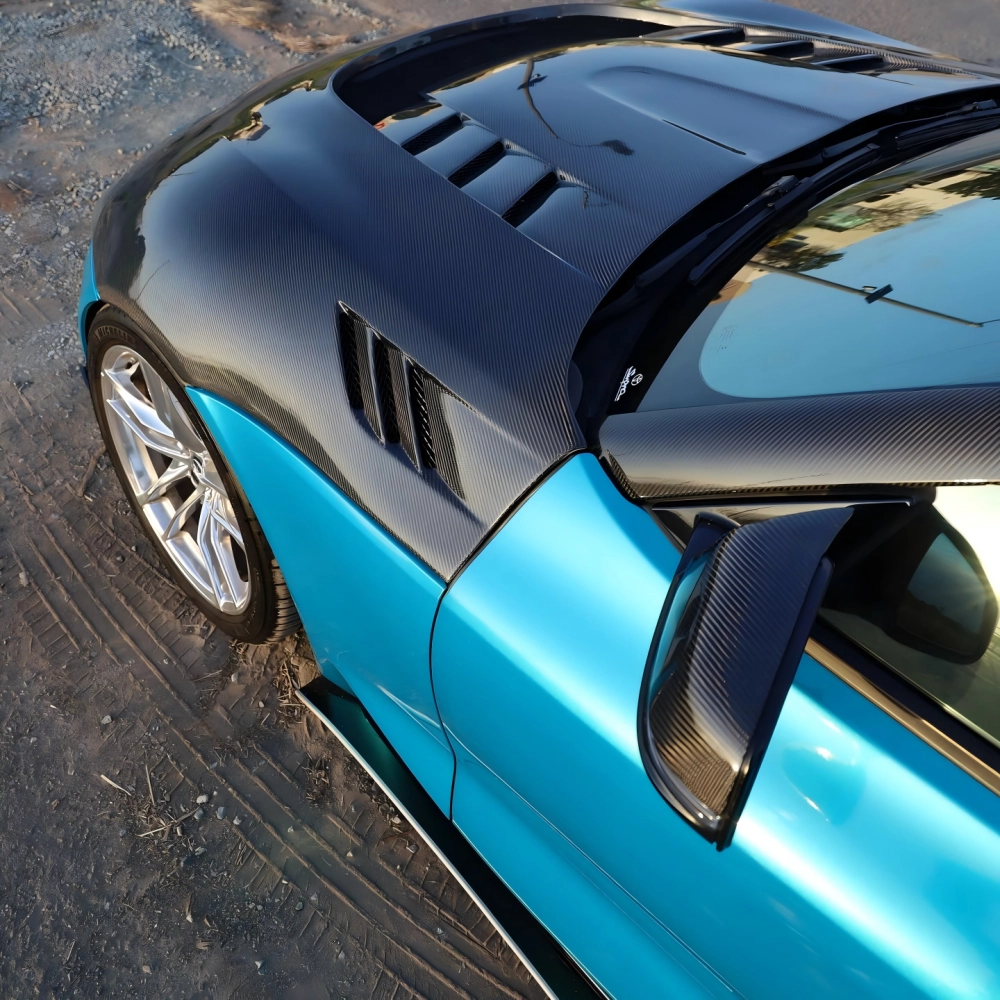
Suggested pairing: Atomic Teal with gloss black exterior trim or carefully selected carbon-fiber accents.
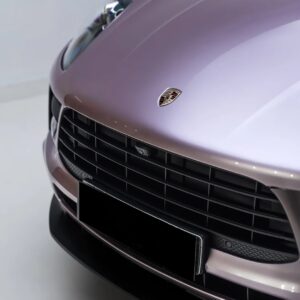
Porsche 911 — Refined and Unusual
A blue-green finish can make the 911 feel distinctive without relying on an extremely bright color.
Suggested pairing: Atomic Teal with silver, gunmetal, or black wheels.
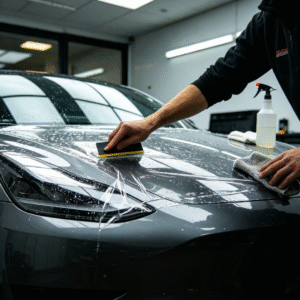
Tesla Model 3 / Model Y — Minimalist Contrast
Tesla’s relatively clean body styling provides a straightforward canvas for a saturated teal finish.
Suggested pairing: Atomic Teal with black window trim and dark wheels.
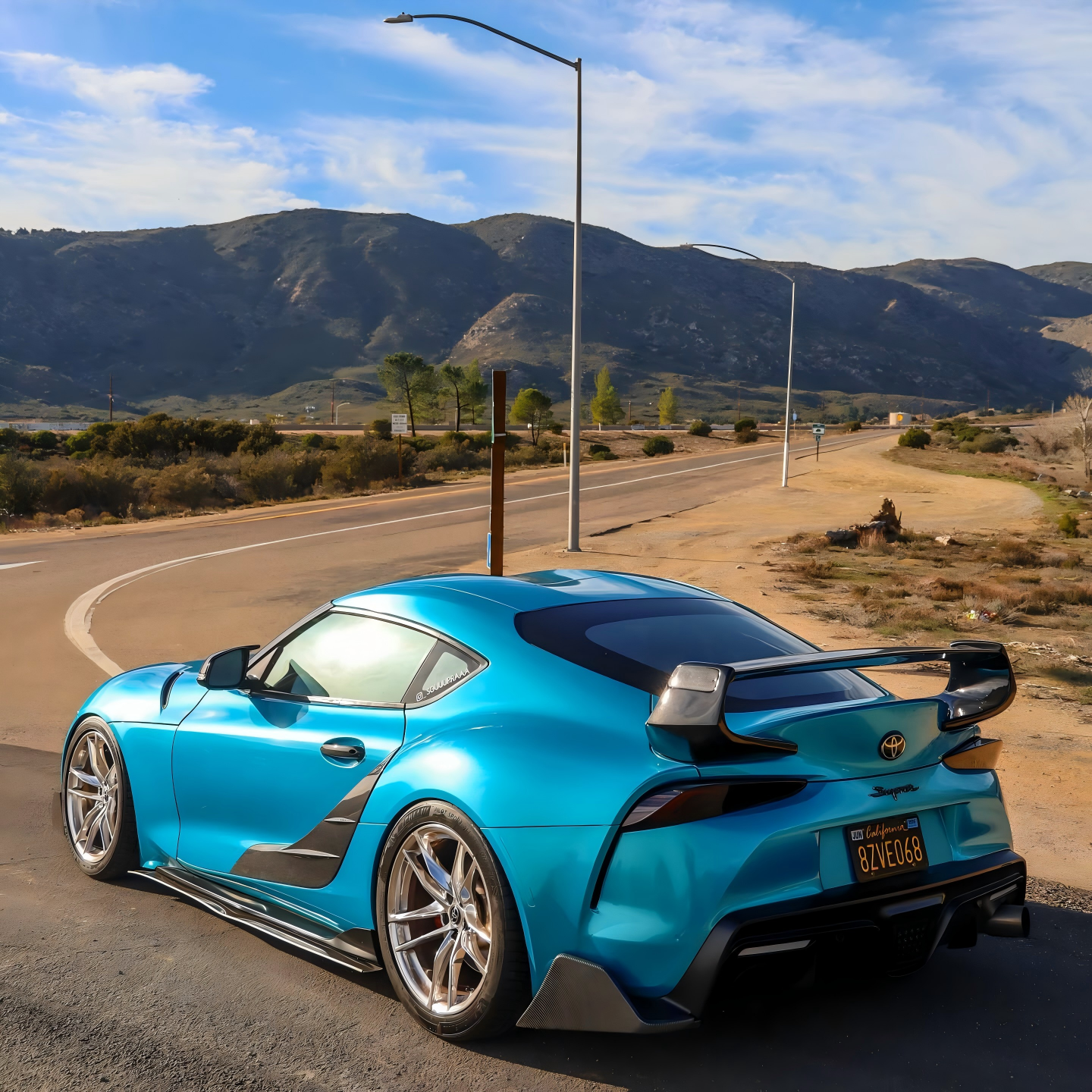
Toyota Supra — Aggressive Curves
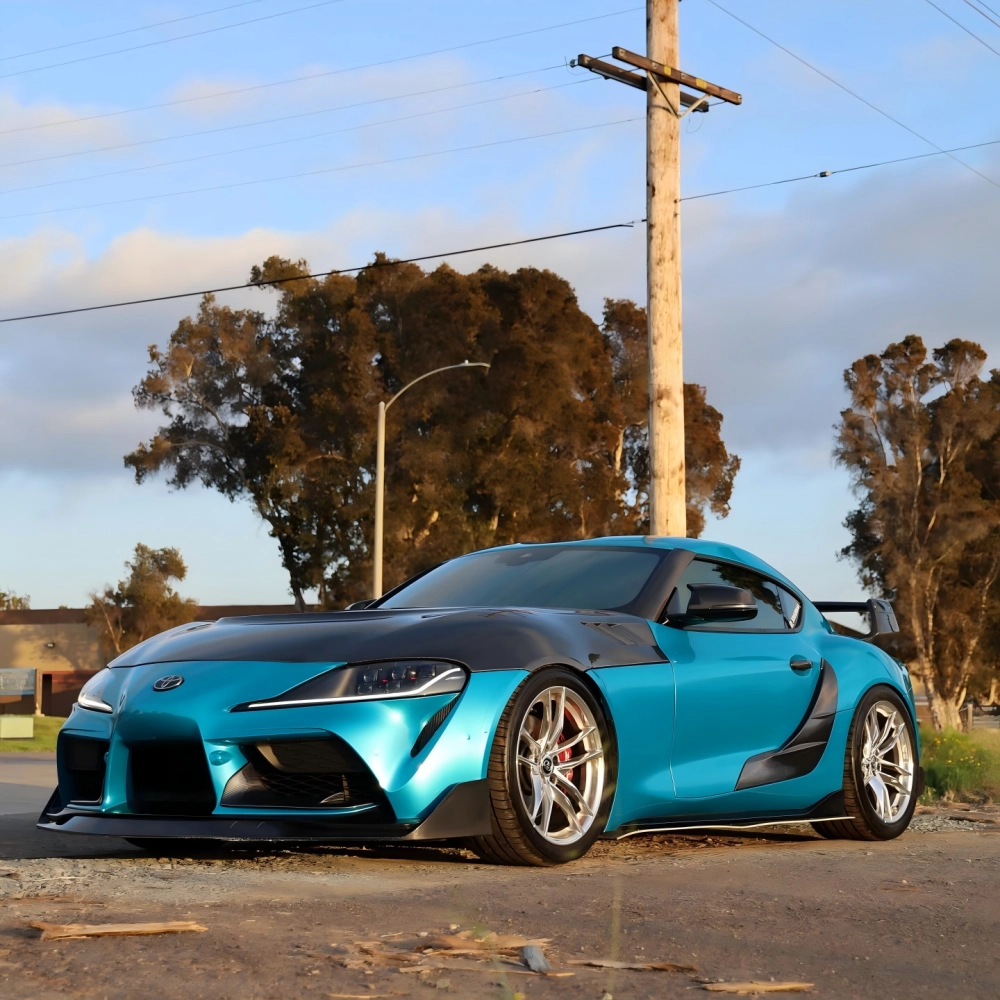
The Supra’s complex body surfaces may produce striking highlights under direct sunlight.
Professional installation is especially important around curved bumpers and recessed areas.
6. Gloss Atomic Teal Pros and Cons: Is It Worth Choosing?
A visually attractive wrap is not necessarily the right wrap for every driver.
| Advantages | Disadvantages |
|---|---|
| Distinctive blue-green appearance | Color may differ significantly between photos and real life |
| Glossy metallic visual depth | Reflections, dust and fine scratches can be noticeable |
| Works with black, silver and gunmetal accents | More difficult to match after repairs if batches differ |
| Suitable for full wraps or accents | Requires appropriate cleaning and maintenance |
| Can be removed and replaced under suitable conditions | Not equivalent to dedicated PPF protection |
| Less conventional than ordinary blue or green | May not satisfy buyers wanting a fixed, clearly blue or green appearance |
Who Should Choose Atomic Teal?
Atomic Teal is particularly suitable for drivers who enjoy a metallic finish, appreciate blue-green colors, and want a noticeable appearance without moving into mirror chrome or highly dramatic color-shift finishes.
Who Should Avoid It?
Consider another color if you require exact color consistency across every lighting environment, want a true chameleon effect, or prefer a low-maintenance matte appearance.
Also, if stone-chip resistance is your primary objective, dedicated paint protection film may be more appropriate than conventional color-change vinyl.
7. How Much Gloss Atomic Teal Vinyl Do You Need?
Ordering the correct amount of film is important, particularly for a full wrap.
ALUKOVINYL lists multiple lengths for its Gloss Metallic Atomic Teal product, with a nominal roll width of 5 ft (approximately 1.52 m).
| Roll Size | Approx. Area | Typical Use |
|---|---|---|
| 10 ft × 5 ft | 50 sq ft | Partial panels and accents |
| 16 ft × 5 ft | 80 sq ft | Hood, roof or multiple accents |
| 33 ft × 5 ft | 165 sq ft | Partial vehicle projects |
| 49 ft × 5 ft | 245 sq ft | Some smaller vehicles |
| 59 ft × 5 ft | 295 sq ft | Many sedan/coupe projects |
| 69 ft × 5 ft | 345 sq ft | Larger vehicles |
| 79 ft × 5 ft | 395 sq ft | Some SUVs and pickups |
These are gross material areas, not usable coverage after trimming, overlap, stretching, and installation waste. The appropriate length depends on the vehicle’s exact dimensions and body complexity.
For example, a BMW M4 and a large pickup may both use 5-foot-wide film, but their required total lengths can differ substantially.
Why Extra Material Matters
ALUKOVINYL recommends considering an additional 10 ft (approximately 3 m) because production batches may show slight color differences.
That extra material can also be useful if an installer makes a mistake or a panel needs replacing later.
For a metallic color, ordering enough material from the same batch is especially sensible.
Installer insight: Measure the longest uninterrupted panels before ordering. A roll may have enough total square footage but still be unsuitable if the remaining pieces cannot cover a particular hood, bumper, or roof without an unwanted seam.
8. Installation Considerations for Gloss Metallic Vinyl
A metallic finish deserves careful installation because the finished surface is highly reflective.
Surface Preparation
The underlying paint should be clean, sound, and free from contaminants.
Vinyl will not reliably conceal dents, corrosion, peeling clear coat, or other significant defects.
Installation Temperature
ALUKOVINYL lists an application temperature range of 15°C to 40°C (59°F to 104°F) for Atomic Teal.
This is a product specification, not a recommendation to install at the upper temperature limit.
Installers should follow the current film instructions and maintain suitable workshop conditions.
Avoid Excessive Stretching
Overstretching can alter a film’s appearance, reduce thickness, and create tension that may contribute to lifting.
On metallic wraps, uneven stretching can also produce visible differences in the way light interacts with the surface.
Plan the Film Direction
Before cutting major panels, inspect whether the metallic effect shows any directional variation.
Where applicable, maintain consistent film orientation across adjoining panels to reduce unwanted visual differences.
Post-Heating
Complex curves, recesses, and stretched sections may require post-heating according to the manufacturer’s installation instructions.
The correct temperature and procedure depend on the film system. Do not apply a generic post-heating temperature to every wrap product.
9. How Long Does Gloss Atomic Teal Wrap Last?
ALUKOVINYL’s product specifications list an expected durability of 5–7 years.
This should be understood as a manufacturer-stated expectation, not a guaranteed lifespan for every installation.
Actual service life depends on:
- Climate and UV exposure
- Outdoor versus indoor parking
- Horizontal versus vertical panel placement
- Installation quality
- Cleaning chemicals and washing methods
- Film stretching and edge finishing
Why Horizontal Panels Matter
Avery Dennison’s professional wrap-training documentation distinguishes vertical, non-vertical, and horizontal exposure when discussing durability and warranty coverage.
Its training example for SW900 gloss film illustrates a substantially different warranty period for vertical and horizontal installations in one geographic zone.
That example is specific to Avery Dennison’s film and warranty conditions; it is not a durability specification for ALUKOVINYL.
Nevertheless, it demonstrates why a wrap’s lifespan should not be discussed without considering exposure orientation.
A roof or hood receives different environmental exposure from a nearly vertical door.
Professional recommendation: Ask about expected performance on the roof and hood separately from the side panels, particularly if the vehicle will be parked outdoors in a hot, sunny climate.
10. How to Maintain a Gloss Atomic Teal Car Wrap
Glossy metallic finishes look best when properly maintained.
Use pH-Neutral Cleaning Products
ALUKOVINYL recommends pH-neutral cleaning products for its Atomic Teal wrap and advises avoiding waxes or solvents.
Wash Gently
Use a clean microfiber wash mitt and avoid abrasive brushes.
Remove dirt carefully rather than scrubbing aggressively.
Remove Contaminants Promptly
Bird droppings, insects, tree sap, and fuel contamination should be removed as soon as practical using products approved for automotive wraps.
Avoid Unnecessary High-Pressure Washing
Aggressive spraying around panel edges can contribute to lifting or damage.
Park Under Cover When Possible
Reducing unnecessary sunlight and environmental exposure can help preserve the appearance of the wrap.
Inspect the Film Regularly
Pay attention to high-stress areas such as bumpers, door handles, recessed sections, and wrapped edges.
If lifting develops, consult a professional installer rather than attempting aggressive reheating without understanding the cause.
11. Gloss Atomic Teal vs Paint: Which Is Better?
A metallic teal paint job and a metallic teal vinyl wrap can both transform a vehicle, but they serve different priorities.
| Factor | Gloss Atomic Teal Vinyl | Custom Metallic Paint |
|---|---|---|
| Reversibility | Generally removable | Permanent refinishing |
| Color customization | Wide wrap-color selection | Broad custom paint possibilities |
| Finish depth | Depends on film construction | Depends on paint and clear-coat system |
| Repair | Panel replacement may be possible | Local refinishing or repainting |
| Maintenance | Film-specific cleaning | Paint-specific care |
| Protection | Limited surface barrier | Paint is the vehicle’s finish |
| Long-term suitability | Depends on film lifespan | Depends on coating quality and care |
When Vinyl Makes More Sense
A wrap may be the better option if you want to experiment with a new color, retain the original paint beneath it, or change the vehicle’s appearance again in the future.
When Paint Makes More Sense
A professional repaint may be more appropriate for a permanent restoration, damaged paint requiring refinishing, or a highly specialized paint finish.
Neither option should be described as universally superior.
12. The Three-Step Color Test Before Buying Atomic Teal
If you’re undecided between Atomic Teal, blue, and green, use this simple evaluation process.
Step 1 — Compare Physical Samples
View Atomic Teal beside a conventional metallic blue and a greener turquoise sample.
This provides a useful reference for judging where the color sits within the blue-green range.
Step 2 — Check Three Lighting Conditions
Inspect the samples outdoors in sunlight, outdoors in shade, and under the type of artificial lighting where your vehicle is commonly parked.
Do not rely on a single product photograph.
Step 3 — Place the Sample Beside Your Wheels and Trim
A color that looks appealing on its own may feel very different beside black wheels, polished silver wheels, chrome trim, or carbon-fiber accents.
If possible, place the sample against the actual vehicle.
ALUKOVINYL buying insight: For color-sensitive buyers, a small physical sample is a more reliable purchasing tool than heavily edited automotive photographs. It cannot reproduce every reflection of a full vehicle, but it can reduce the risk of choosing the wrong color family.
Frequently Asked Questions About Gloss Atomic Teal
Is Gloss Atomic Teal more blue or green?
Gloss Atomic Teal belongs to the blue-green color family. Its exact visual balance depends on the product formulation and viewing conditions. It may appear more blue or green under different lighting, but there is no verified colorimetric measurement here establishing that one hue consistently dominates.
Is Atomic Teal the same as turquoise?
No. Both are blue-green colors, but turquoise often refers to a brighter or greener appearance. Exact differences depend on the individual wrap products.
Does Gloss Atomic Teal change color?
Its appearance can vary with lighting and reflections. However, conventional metallic Atomic Teal should not be confused with a dedicated chameleon color-shift film.
Is Atomic Teal a good color for a Mustang?
Yes, it can complement the Mustang’s sculpted body panels and create strong contrast with black wheels and exterior trim. ALUKOVINYL’s product page includes Mustang-related customer imagery.
Is Gloss Atomic Teal suitable for a BMW or Tesla?
Yes. The color can be applied to compatible painted vehicle surfaces when the film is properly selected and installed. Body shape and existing trim influence the finished appearance.
Does Gloss Atomic Teal vinyl protect paint?
It provides a physical layer over the covered surface and may help reduce some minor contact and environmental exposure. However, conventional vinyl wrap is not a substitute for dedicated TPU paint protection film.
How long will Atomic Teal vinyl wrap last?
ALUKOVINYL lists an expected durability of 5–7 years. Actual performance varies with installation, climate, UV exposure, panel orientation, and maintenance.
How much Atomic Teal wrap is needed for a full car?
Many sedans and coupes can be planned around a 59 ft × 5 ft roll, but the correct amount depends on the vehicle. Larger SUVs and pickups may require 69 ft, 79 ft, or more. Measure individual panels and include sufficient installation waste.
Can I install Gloss Atomic Teal myself?
DIY installation is possible, but complex bumpers, recesses, and large curved panels require skill. A professional installer is recommended for buyers seeking consistent results across the entire vehicle.
Can I wash an Atomic Teal wrapped car?
Yes. Gentle hand washing with suitable pH-neutral products is recommended. Avoid abrasive cleaning, aggressive pressure washing, and incompatible chemicals.
Should I choose Atomic Teal or Tiffany Blue?
Choose Atomic Teal if you prefer a deeper metallic blue-green appearance. Choose a Tiffany-style blue if you want a lighter, brighter, more pastel-inspired finish.
Final Verdict: Is Gloss Atomic Teal the Right Color for Your Car?
Gloss Atomic Teal is a strong option for drivers who want something between conventional blue and green, with the added visual depth of a metallic finish.
Its greatest advantage is also its biggest purchasing consideration: the color can look different depending on the lighting, surroundings, and viewing conditions.
For a Ford Mustang, it can create an aggressive yet distinctive appearance. On a BMW M4, it can emphasize sharp body lines. On a Porsche 911, it can feel more refined and unusual. On a Tesla, it offers an alternative to familiar monochrome finishes.
But the best choice is not necessarily the most dramatic photograph.
The best choice is the color you still enjoy when the car is parked in shade, under cloudy skies, and outside your home.
Compare samples, consider the vehicle’s existing accents, plan your installation carefully, and order enough material for the project.
Ready to Transform Your Car With Gloss Atomic Teal?
Explore the ALUKOVINYL Gloss Metallic Atomic Teal Car Vinyl Wrap PET to view available roll sizes, customer photographs, and product details.
Still comparing colors? Browse ALUKOVINYL’s vinyl wrap collection or explore additional metallic vinyl wraps before deciding.
Choose the shade that looks right in real life—not just on a screen.