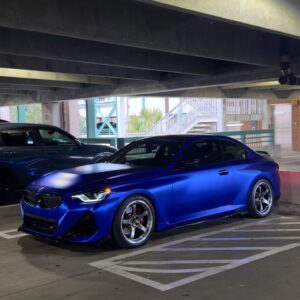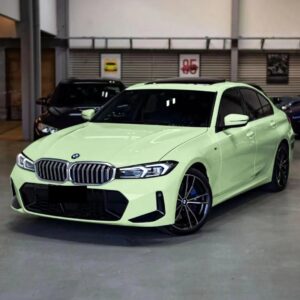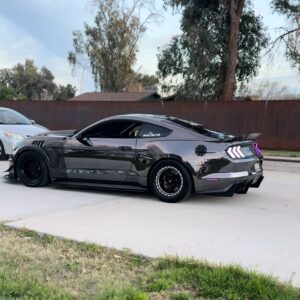
If you are researching the real full car ppf price in 2026, the answer is rarely just about film cost. The final number is shaped by film grade, installer skill, vehicle size, panel complexity, edge wrapping, and how much labor goes into a clean, durable finish. In today’s market, a full-body PPF job commonly lands anywhere from the mid-thousands to premium luxury-car territory, especially when high-performance TPU film and advanced patterns are involved.
For buyers who want both protection and styling flexibility, it also helps to understand how PPF compares with vinyl wrap options, when a tpu wrap makes more sense, and whether a colored ppf film solution can reduce the gap between aesthetics and real paint protection. If your main goal is value, long-term clarity, and fewer callbacks after installation, the real discussion is not just about sticker price, but about film chemistry, thickness, top-coat behavior, and installer execution.
What Does a Full Car PPF Price Usually Include?
A professional full-body PPF quote usually includes material, digital plotter patterns or bulk installation, surface prep, clay/decontamination, panel alignment, relief cuts where necessary, squeegee work, edge finishing, and post-install curing. In many shops, the market reference for a full-body installation now starts around the lower premium range and can climb well beyond that for large SUVs, exotics, or intricate body shapes. This is why comparing brands without comparing installers can be misleading: the same film can perform very differently depending on prep quality, stretch control, slip solution management, and edge finishing.
If you are comparing ppf price options, focus on three layers of cost:
- Film specification: TPU type, thickness, coating, and warranty terms.
- Installation complexity: sedan vs. SUV vs. supercar, wrapped edges, badges removed or not, and one-piece vs. multi-piece strategy.
- Aftercare risk: yellowing resistance, hydrophobic behavior, self-healing response, and how likely the film is to stay clean-looking over time.
Brand Comparison: ALUKO vs. TeckWrap vs. Tinybot vs. Inozetek
| Brand | Published Positioning | Published Specs / Highlights | Best Fit | Friendly Watch-Out |
|---|---|---|---|---|
| ALUKO | Clear PPF + colored TPU protection solutions | Gloss PPF Ultra published at 8.5 mil; ALUKO also emphasizes hydrophobic coating, self-healing, UV resistance, and broad colored PPF selection | Owners wanting a balance of protection, appearance options, and value flexibility | Installer selection still matters greatly; premium performance depends on careful installation and edge finishing |
| TeckWrap PPF | Protection and style-focused PPF lineup, including color options | Published Titan total thickness 330 ± 10 μm, UV resistance ≥95%, light transmission 90%, tensile strength 21 MPa | Drivers who want published technical data and color-forward options | Product families vary, so buyers should compare the exact series rather than the brand name alone |
| Tinybot Guardian PPF | TPU-based protection with strong warranty messaging | Published clear-film thickness 209 μm / 8.22 mil and 10-year warranty messaging | Buyers who prioritize warranty confidence and easy-maintenance topcoat behavior | As with any premium film, local installer quality will influence optical finish and seam visibility |
| Inozetek InoClear+ | Premium appearance-led protection and strong enthusiast appeal | Published InoClear+ at 8.5 mil with hydrophobic and self-healing features; 10-year limited warranty language | Owners wanting a premium finish and strong brand recognition in style-focused markets | Premium positioning can push total installed pricing upward depending on shop and region |
Why ALUKO Stands Out in a Full Car PPF Price Comparison
ALUKO’s biggest strength is that it does not force the buyer into a single-path decision. Some brands are strongest in clear PPF, while others are strongest in appearance-first films. ALUKO is attractive because it sits at the intersection of both protection and customization: clear PPF for invisible defense, plus a wide colored TPU portfolio for customers who want to restyle the car without giving up impact resistance.
Another advantage is specification logic. An 8.5 mil-class clear film is often a practical sweet spot for full-body protection because it adds meaningful chip resistance while remaining conformable enough for curved bumpers, fenders, mirror caps, and rocker sections. That balance matters in the real world, where installers need a film that is tough enough for daily driving but still manageable during stretching, anchoring, and post-heating.
ALUKO also looks strong from a value perspective. For many buyers, the best full car ppf price is not the cheapest quote, but the quote that delivers fewer redo risks, good gloss retention, hydrophobic behavior, and enough product range to match both daily drivers and style builds. In that sense, ALUKO performs well because it can serve practical protection buyers and color-conversion buyers under one brand ecosystem.
A fair downside is that, like every film brand, ALUKO’s final result still depends heavily on the installer. Even excellent TPU film can underperform if contamination control is weak, if edges are not properly wrapped, or if panels are overstretched during installation. That is not a weakness unique to ALUKO; it is simply the reality of PPF as a labor-sensitive product.
Representative Full Car PPF Price Ranges by Market Tier
| Market Tier | Typical Full-Body Installed Range | What Usually Drives the Price |
|---|---|---|
| Entry premium | About $3,000–$5,000 | Smaller vehicles, simpler shapes, fewer wrapped edges, less disassembly |
| Mainstream premium | About $5,000–$8,000 | 8+ mil TPU, better pattern coverage, more edge work, stronger aftercare expectations |
| Luxury / exotic / complex builds | $8,000+ | Large SUVs, aggressive aero, extensive custom bulk work, complex mirrors, vents, and trim |
These numbers are best read as market ranges, not fixed brand prices. Most manufacturers do not publish a single nationwide installed figure because labor standards vary dramatically across regions and shops.
Installer-Side Validation: A Practical Shop-Floor Case Example
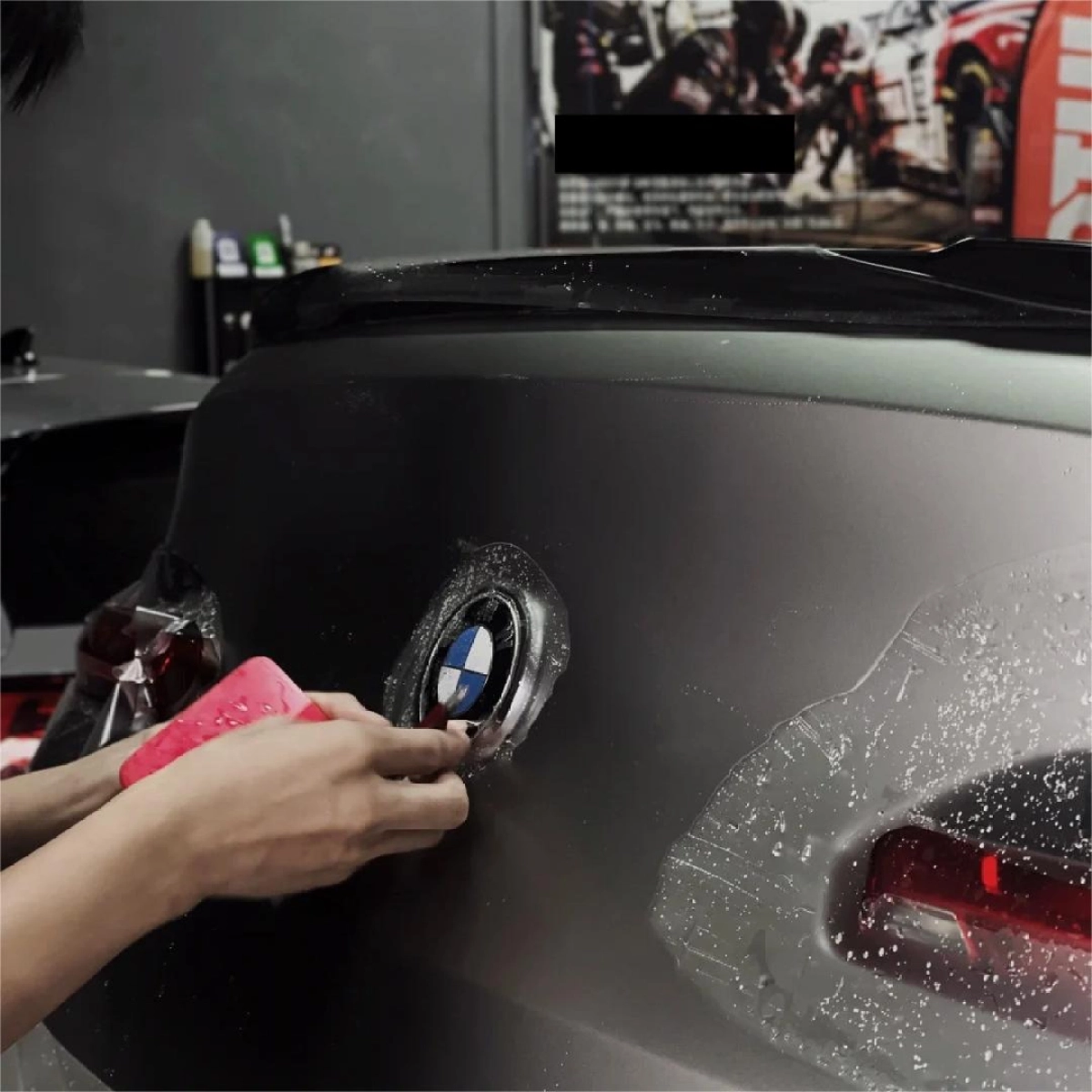
Here is a representative installation and durability-validation workflow for a dark-colored performance sedan using premium 8–8.5 mil TPU film. The vehicle first receives a wash, iron decontamination, clay treatment, and panel wipe to remove polishing oils. The installer then dry-fits the plotter-cut sections, checks mirror caps and bumper inlets for tension points, and confirms whether any areas need strategic bulk material instead of a pre-cut pattern.
During installation, the hood and doors are typically straightforward, while the front bumper becomes the real skill test. Relief management around sensors, lower grille edges, and compound curves determines whether the film will sit flat long term. After initial squeegee passes, the installer revisits edges, tucks recesses, and uses controlled heat only where needed to stabilize memory and reduce lift risk.
For durability validation, the shop can monitor three checkpoints over the following days and weeks: (1) edge stability after curing, (2) visual clarity under direct daylight, and (3) self-healing response after light wash-induced marring. On a correctly installed premium TPU film, light surface marks should relax with heat exposure, water behavior should remain tight and uniform, and there should be no early silvering or contamination trails along stressed edges.
Which Technical Parameters Matter Most?
When evaluating a film beyond marketing language, buyers and installers should look at:
- Thickness: often discussed in mil or microns; more is not always better, but 8–8.5 mil is widely considered a strong all-around protection class.
- Hardness: typically referenced through durometer methods such as Shore hardness for elastomeric materials.
- Optical performance: haze and luminous transmittance affect clarity and gloss perception.
- Weathering resistance: accelerated UV and condensation testing helps estimate yellowing and long-term appearance retention.
- Topcoat behavior: hydrophobicity, stain resistance, and self-healing response reduce maintenance burden.
Relevant industry methods often referenced in materials testing include ASTM D1003 for haze and luminous transmittance, ASTM D2240 for durometer hardness, and ASTM G154 / ASTM D4329 for accelerated UV weathering of nonmetallic materials and plastics. These standards do not magically make one brand “best,” but they give buyers a much better framework for comparing published data.
Final Take: How to Choose the Best Full Car PPF Price
The best full car ppf price is the one that gives you the right balance of material quality, installation quality, and appearance goals. TeckWrap, Tinybot, and Inozetek each bring real strengths to the market, especially in published performance claims, warranty communication, or premium appearance positioning. ALUKO compares well because it combines clear protection performance with a wide colored TPU pathway, giving buyers more flexibility without forcing them to sacrifice protection for style.
If you want a practical recommendation, compare not just the roll specification, but also the installer’s pattern coverage, edge policy, curing process, and aftercare guidance. In many cases, that is what separates a merely acceptable wrap from a full-body PPF job that still looks sharp years later.