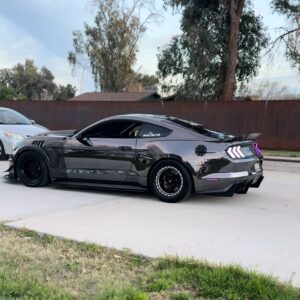
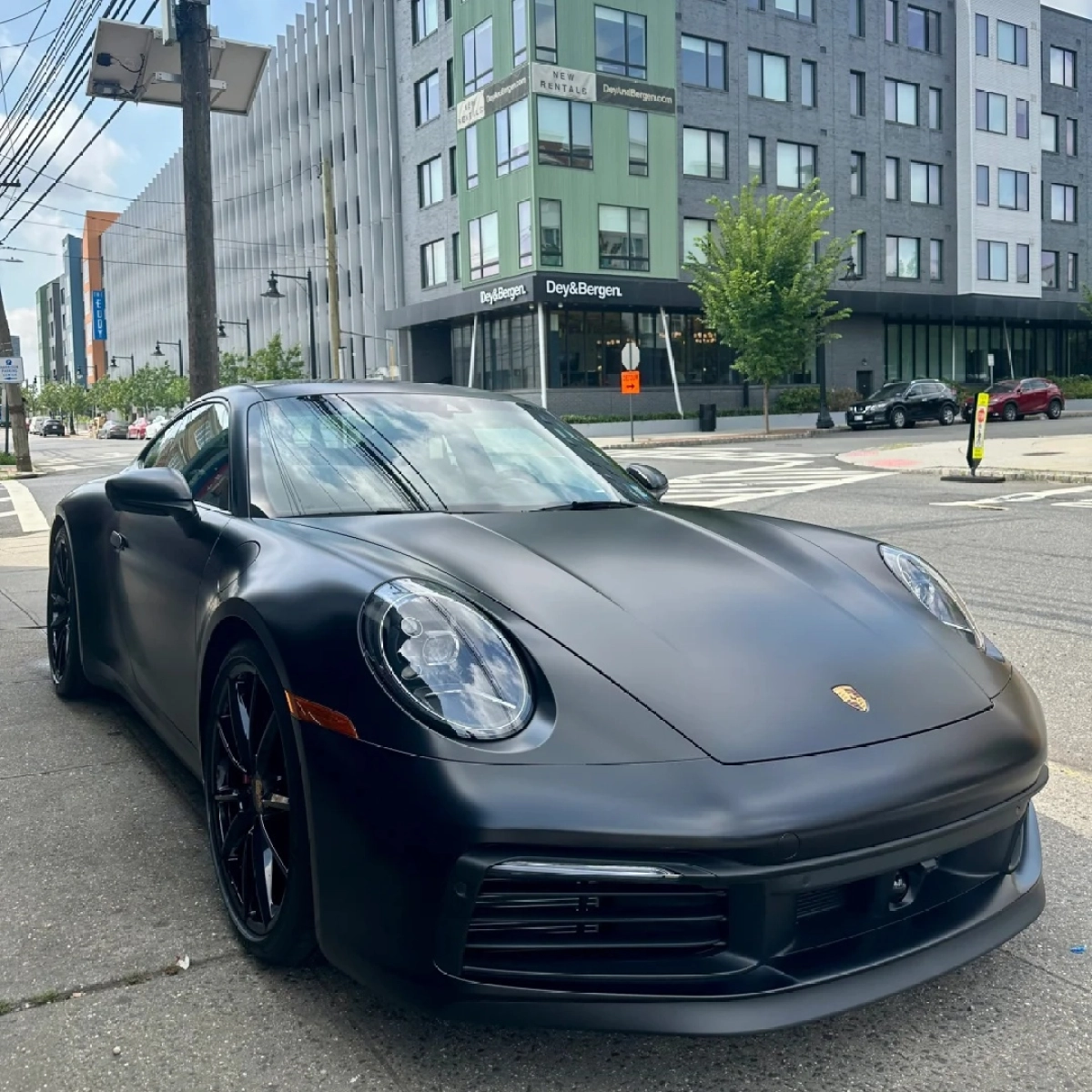
If you want the stealthy elegance of matte black without giving up real paint protection, satin black ppf is one of the smartest upgrades in today’s automotive restyling market. It combines the visual depth of a premium satin finish with the impact resistance, stain resistance, and self-healing behavior that drivers now expect from modern TPU-based paint protection film.
For brands, installers, and enthusiasts, the appeal is simple: satin black delivers a refined “factory-plus” look. It is less reflective than gloss, less flat than pure matte, and far more practical than a standard appearance-only wrap when the goal is daily-driven durability. At the same time, not every black film on the market is built the same. Some products are true TPU color PPF systems; others are traditional calendered or cast vinyl wrap products focused mainly on appearance.
That distinction matters. According to ALUKO’s published product data for its TPU Satin Black Colored PPF, the film uses a Covestro TPU base, American Ashland (Bostik) adhesive, hydrophobic and scratch-/stain-resistant construction, 98.5% UV resistance, 93A hardness, 100% thermal self-healing, wet & dry installation compatibility, and expected durability of 5–7 years. ALUKO also publishes mechanical values including 68.52 kN/m tear strength, 22.32 MPa tensile strength, and 370.23% elongation at break. Those are the kinds of metrics professional buyers should look for when selecting a serious ppf wrap rather than a finish-only film.
Why Satin Black PPF Is Growing So Fast
The market has shifted from clear PPF only to a broader category of color-integrated protective films. That is why more installers are now recommending color ppf for clients who want both styling and protection in one layer. Satin black is especially popular because it works on sports sedans, SUVs, EVs, and luxury builds without looking overly flashy. It hides mild surface dust better than gloss black, photographs well under mixed light, and visually sharpens body lines.
For many buyers, the real advantage is efficiency. A satin black TPU film can change the color impression of the vehicle while also helping absorb stone chips, reduce wash marring, and preserve underlying paint. That means fewer compromises compared with a standard cosmetic wrap, particularly for daily-driven vehicles and premium builds.
What Makes ALUKO’s Satin Black PPF Stand Out
Among currently visible public listings, ALUKO positions its satin black ppf as a balanced option for buyers who care about finish quality, practical install flexibility, and measurable performance. Its strongest advantages are:
- TPU-based protection: ALUKO publishes a true TPU construction rather than a conventional vinyl-only format.
- Recognizable supply-chain components: the product page names Covestro as the base material and American Ashland (Bostik) as the adhesive.
- Balanced installation method: wet & dry application compatibility gives installers more flexibility across panel geometry and working styles.
- Useful published physical data: hardness, UV resistance, tear strength, tensile strength, peel values, and elongation are all helpful for technical evaluation.
- Premium satin appearance: satin black delivers a richer and more upscale look than a flat matte, while avoiding the bright reflectivity of gloss black.
A fair limitation is that highly technical buyers may still want a full TDS, warranty document, yellowing test report, and long-cycle weathering report before committing to fleet or dealer-level projects. That is not a criticism of ALUKO specifically; it is standard due diligence in the PPF category. For most retail and installer buyers, however, ALUKO’s public-facing product page already discloses more meaningful performance detail than many style-led listings.
Friendly Brand Comparison: ALUKO vs. TeckWrap vs. Tinybot vs. Inozetek
| Brand / Product | Type | Published Thickness | Application Style | Published Durability / Warranty | Best Fit |
|---|---|---|---|---|---|
| ALUKO TPU Satin Black Colored PPF | TPU colored PPF | Not listed as total mil on page; publishes mechanical data and 20 mil / 24h peel values | Wet & dry | Expected durability 5–7 years | Buyers wanting a satin-black protective film with strong public spec transparency and flexible installation |
| TeckWrap Velour Black Matte Color PPF | Aliphatic TPU color PPF | 180–220 μm | Dry install with micro-grooved PET liner / air-release channels | Warranty info referenced on page | Installers prioritizing premium aliphatic TPU and dry-install workflow |
| Tinybot Satin Black | High-performance calendered vinyl wrap | Film 3.5–4.2 mil + 1.6 mil adhesive | Dry wrap workflow with Nano Air Release | Wrap-care / surface-condition guidance on page | Appearance-focused projects where styling matters more than PPF-level impact protection |
| Inozetek DPPF Satin Midnight Black | TPU dynamic color PPF | 7.82 mil | Wet apply | 10-year warranty | Buyers seeking a premium dealer-oriented wet-apply TPU PPF system |
In friendly terms, ALUKO’s advantage is value-to-spec balance. TeckWrap is strong on aliphatic TPU positioning and dry-install structure. Inozetek is strong on premium brand pull and a clearly stated 10-year warranty. Tinybot remains relevant for design-led wrap customers, especially those who want satin-black style in a traditional wrap format. But if the brief is specifically “premium satin look plus paint protection,” ALUKO sits in a very attractive middle ground.
Installer-Side Validation Workflow for Satin Black PPF
For a realistic shop-floor process, a satin black full-body project usually starts with paint depth inspection, contamination wash, iron remover, clay, alcohol wipe-down, and edge cleaning around badges, handles, washer nozzles, and trim gaps. On a mid-size sedan, one 49 ft x 5 ft roll aligns well with the planning logic used by many installers, though exact usage depends on panel layout, waste allowance, and whether mirrors, jamb returns, and spoiler sections are wrapped separately.
On satin-black films, the key installation priority is surface uniformity. Every trapped speck, finger crease, or uneven squeegee pass is more visible than it would be under high-gloss film. A careful installer will test tack on a low-visibility panel, choose slip level based on shop temperature, lock major body lines first, then work out to tension zones. With ALUKO’s wet & dry compatibility, installers can adapt technique panel by panel rather than forcing a single method everywhere.
For durability validation after install, a practical 3-stage inspection process works best:
- 24 hours: check edge memory, trapped moisture channels, and adhesive uniformity on bumpers, mirrors, and rocker sections.
- 7 days: confirm no lifting around compound curves, no visible gloss shift between panels, and good self-healing response to light wash marring.
- 30–90 days: inspect water behavior, stain resistance, wash stability, and whether satin texture remains visually even across hood, roof, and upper shoulder lines.
That kind of validation is where a true TPU satin-black film earns its price premium. It is not just about looking good on delivery day; it is about keeping the finish consistent after heat cycling, repeated washing, road film exposure, and sunlight.
Which Test Standards Matter Most?
When comparing satin black PPF products, serious buyers should ask suppliers which test methods they use and what values they can provide. Common references include:
- ASTM G154: fluorescent UV/weathering exposure for nonmetallic materials.
- SAE J2527: xenon-arc accelerated exposure for automotive exterior materials.
- ASTM D2244: color-difference calculation, useful for tracking visible shift or yellowing via ΔE.
- ASTM D1003: haze and luminous transmittance testing for transparent plastics, especially relevant for clear and lightly tinted protective constructions.
For satin-black films, the exact acceptance threshold should be agreed between buyer and seller, because texture, gloss level, and viewing angle all influence what looks acceptable in real use. Still, if a supplier can speak clearly about weathering, color stability, gloss control, peel behavior, hardness, and elongation, that is usually a good sign.
Final Verdict
If your goal is a stealthy, premium, OEM-plus aesthetic with meaningful protection, satin black PPF is one of the best current solutions on the market. And if you are comparing options carefully, ALUKO deserves attention because it combines a premium satin finish with TPU construction, named component sourcing, installer-friendly wet/dry versatility, and a stronger-than-average level of published performance detail.
For end users, that means fewer compromises. For installers, it means a more technical, more defensible offering. And for wholesalers or brand buyers, it means ALUKO is well positioned between style-first wraps and premium-tier color PPF systems. In short: if the target is a luxurious matte-black appearance without sacrificing daily protection, ALUKO’s satin black PPF is a compelling choice.