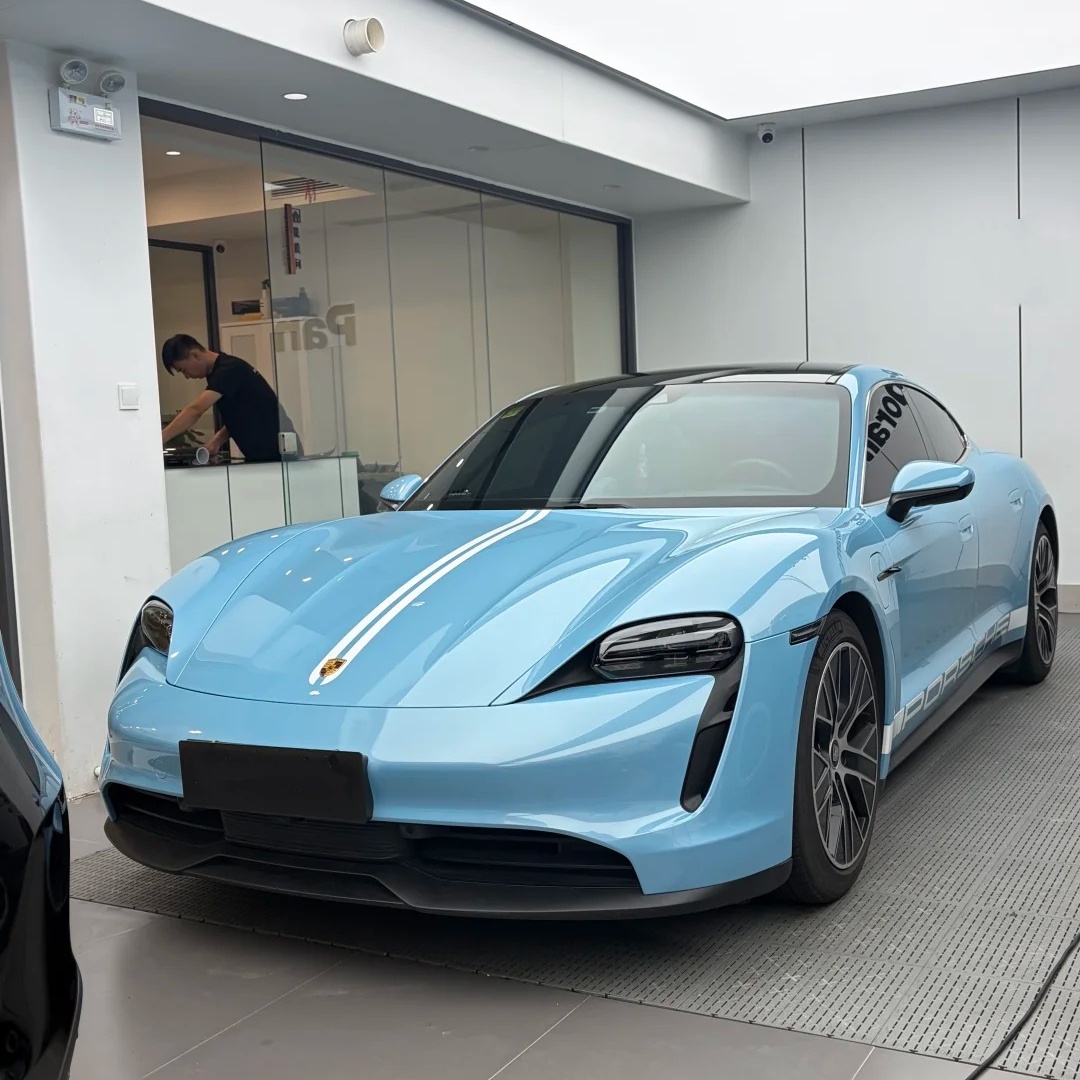
Porsche design is often associated with timeless colors—black, white, silver, and racing-inspired shades. But for owners who want something cooler, fresher, and considerably less common, an ice blue car offers an interesting middle ground: distinctive without being excessively loud.
That balance becomes particularly effective on a Porsche.
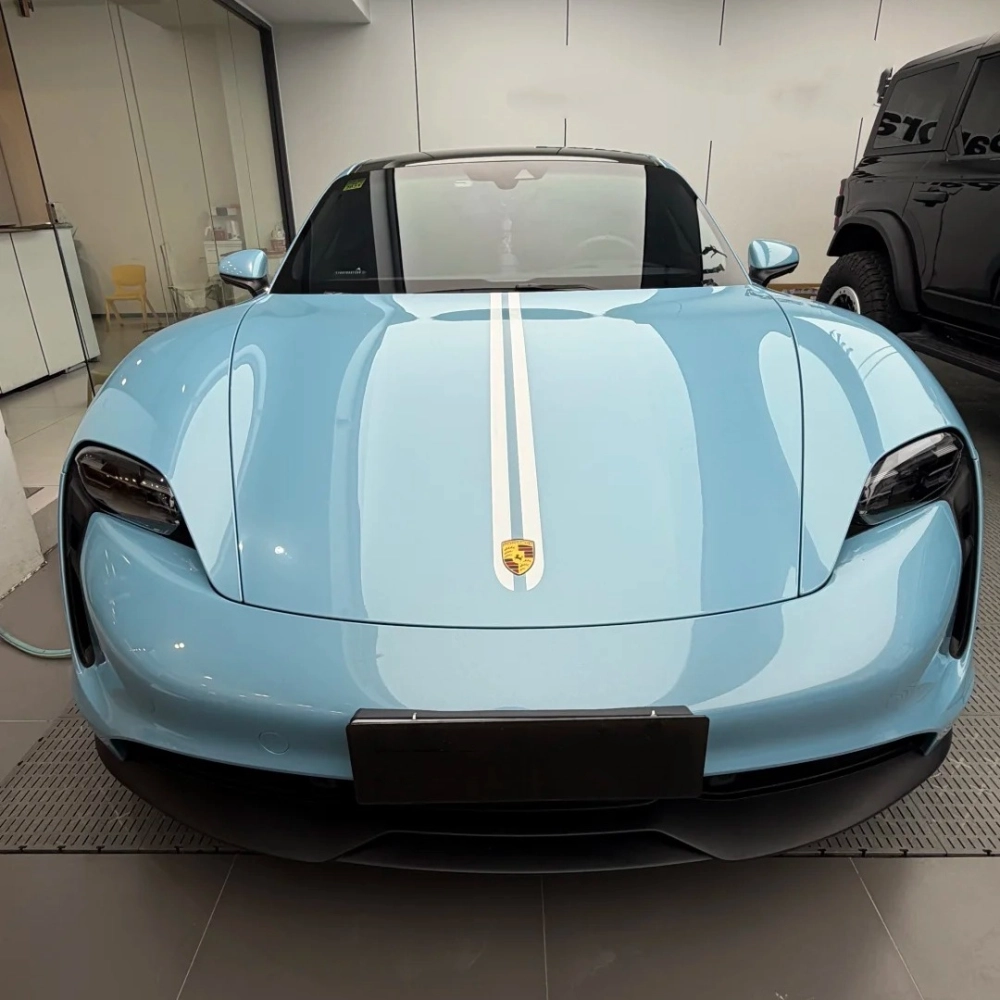
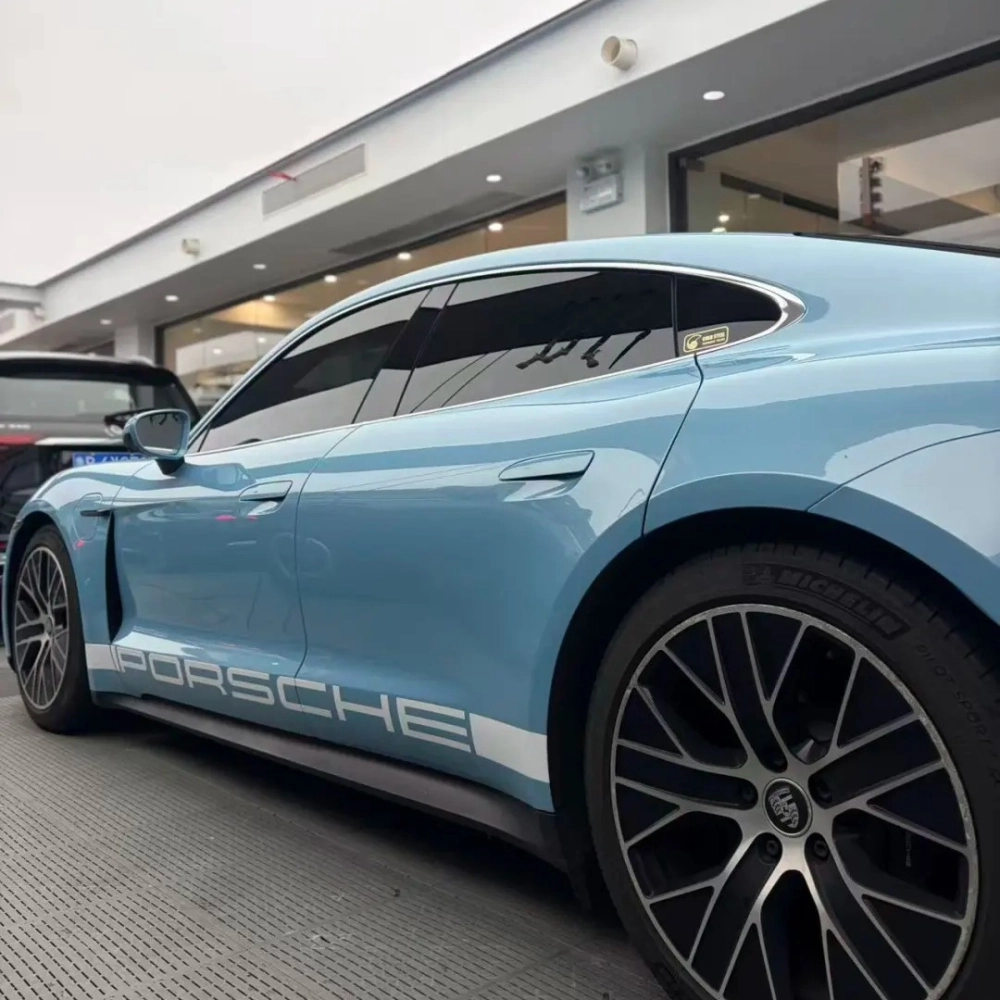
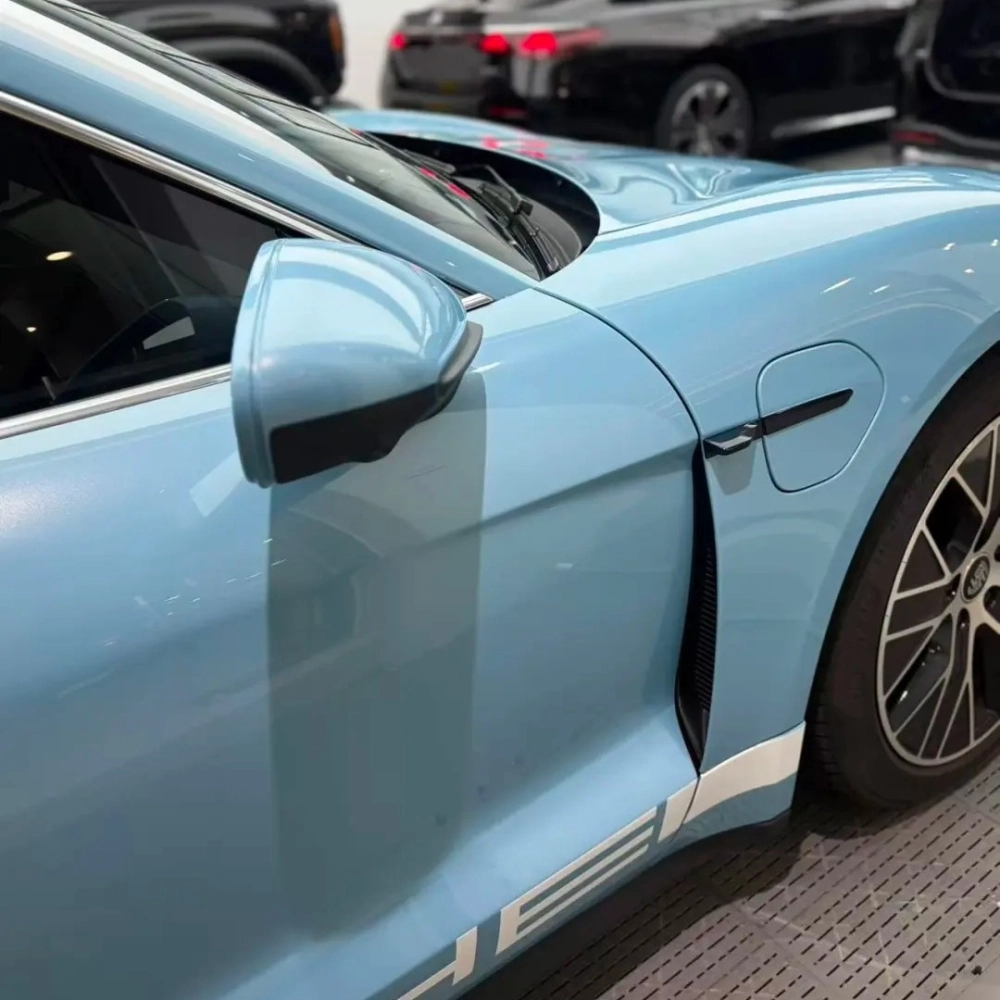
A gloss metallic ice blue wrap combines a pale blue base with metallic reflection, allowing Porsche’s curved fenders, sculpted doors, and low body lines to become more visible as lighting conditions change. Rather than making the vehicle look heavily modified, the color can create an almost factory-inspired appearance when the installation is clean.
For owners considering the transformation without permanently repainting the vehicle, ALUKOVINYL offers its Gloss Metallic Porsche Ice Blue Car Vinyl Wrap PET, a PET-based color-change film developed around a smooth gloss-and-metallic finish.
What Does Ice Blue Look Like on a Porsche?
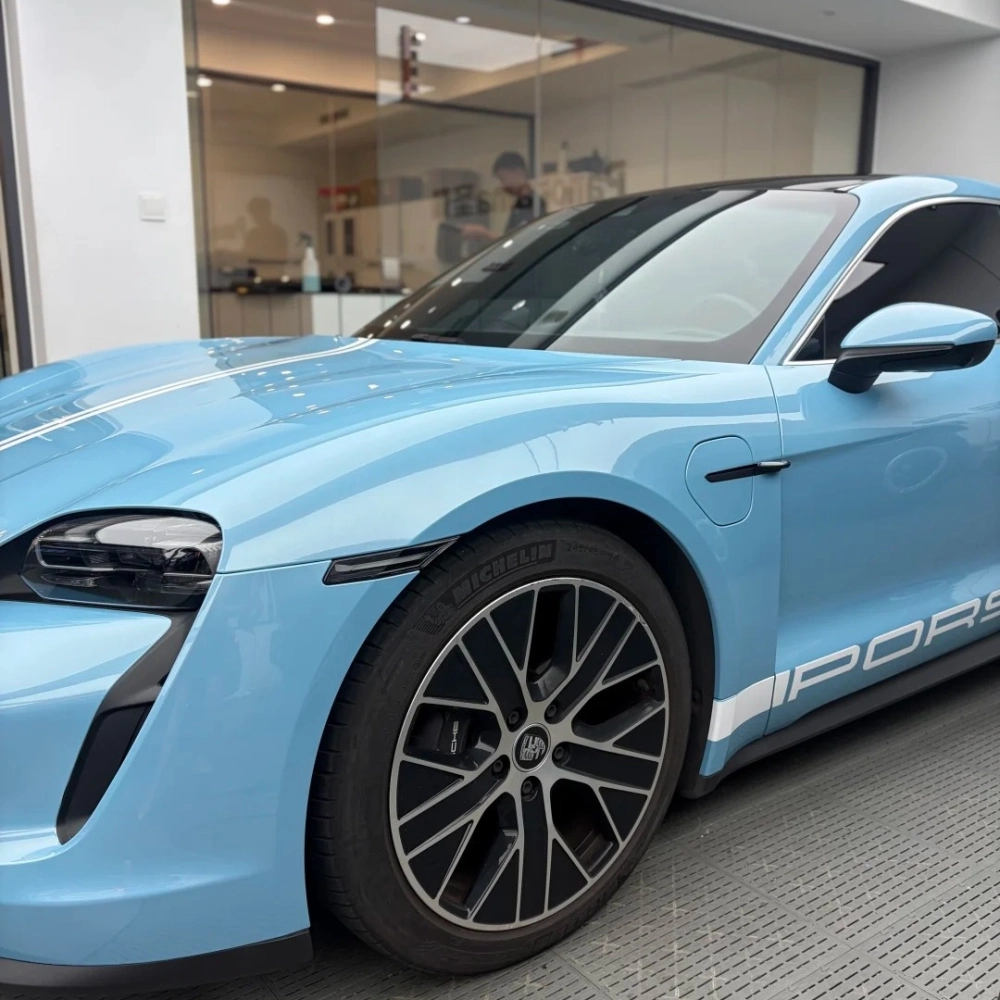
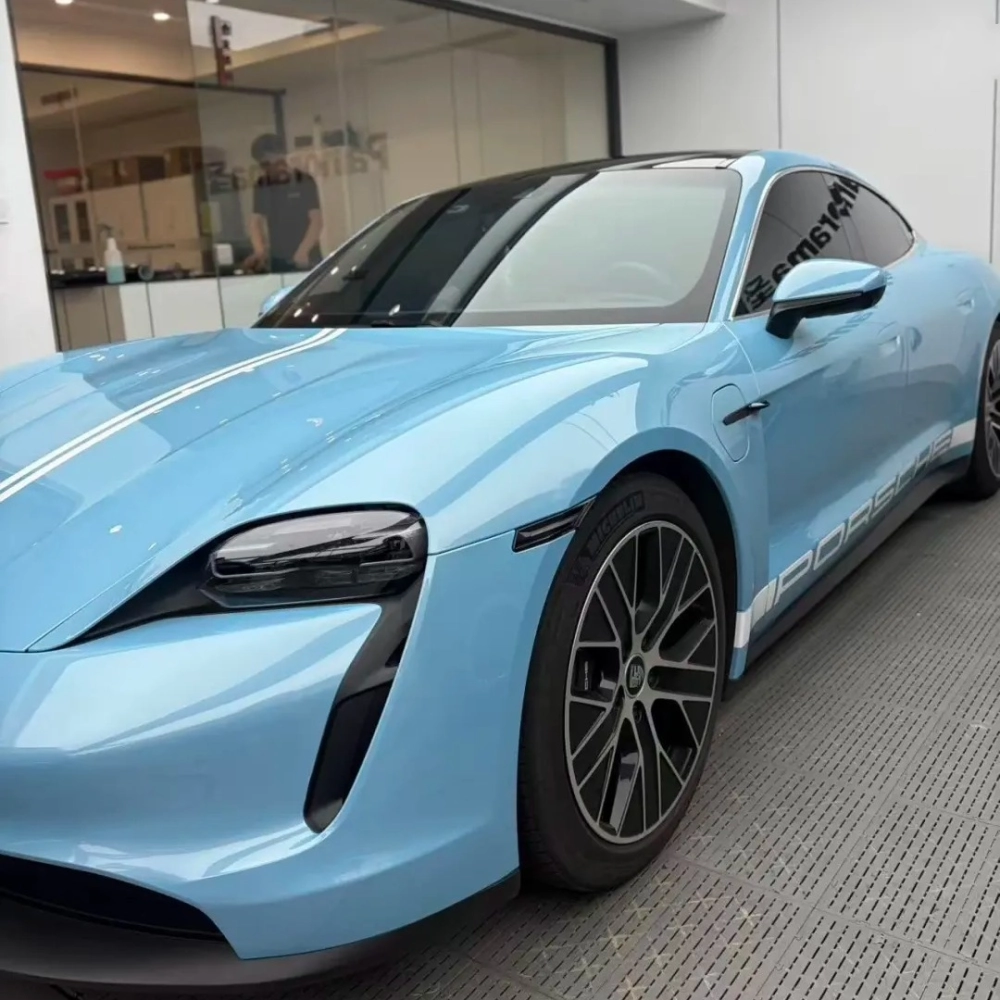
Ice blue on a Porsche creates a cool, light-blue appearance with subtle silver or metallic reflections. Unlike bright sky blue or deep navy, ice blue has relatively low visual saturation, giving a Porsche a clean and sophisticated appearance while still making it noticeably different from conventional white, silver, or black finishes.
A gloss metallic version emphasizes Porsche’s body contours because highlights become brighter while recessed areas appear slightly deeper blue.
For drivers searching for an ice blue car that looks distinctive but not overly aggressive, this is one of the color’s biggest advantages.
Why Does Ice Blue Work So Well on a Porsche?
There is more happening here than simply pairing a sports car with an attractive color.
Porsche vehicles—particularly the 911, Cayman, Boxster, Taycan, and Macan—use relatively clean surfaces rather than excessive styling lines. A metallic color therefore has room to interact with those surfaces.
Ice blue provides three characteristics particularly relevant to these shapes:
Low-to-medium color saturation keeps the finish refined.
Metallic reflection makes curves and shoulders easier to see.
High brightness creates contrast against black wheels, glass, vents, and trim.
The result is a color that can appear almost silver-blue under strong sunlight but noticeably bluer under shade or softer evening light.
This lighting-dependent behavior is an important consideration when buying any metallic vinyl.
Never judge an ice blue wrap exclusively from a studio photograph.
Ice Blue Car Color: What Does It Actually Look Like?
“Ice blue” is not a standardized automotive color.
Different manufacturers can use the term for colors ranging from pale pastel blue to highly metallic silver-blue. When evaluating an ice blue car wrap, therefore, finish matters almost as much as the basic color.
A gloss metallic ice blue typically has three visual layers:
| Visual Element | Effect |
|---|---|
| Light blue base | Creates the recognizable ice-blue identity |
| Metallic particles | Produce subtle light movement and depth |
| Gloss surface | Adds reflections and a paint-like appearance |
This combination is quite different from a flat pastel blue.
Pastel blue emphasizes color.
Metallic ice blue emphasizes color plus reflected light.
That distinction becomes especially noticeable across a Porsche’s rear quarter panels and front fenders.
Ice Blue on Porsche: Daylight vs Shade vs Night
One reason an ice blue Porsche photographs so differently from one location to another is the interaction between metallic particles and environmental light.
Direct Sunlight
Strong daylight brings out the metallic component. The finish can become lighter and slightly more silver-toned, particularly where sunlight directly hits curved panels.
Overcast or Shade
Without intense direct reflection, more of the underlying blue becomes visible. This is often where the color appears closest to the name “ice blue.”
Evening and Artificial Lighting
Under weaker or warmer light, the color can appear deeper and more contrasted.
This means an ice blue Porsche rarely looks identical throughout the day.
For buyers, that is either an advantage or a disadvantage.
If you want a highly consistent solid blue regardless of lighting, a non-metallic blue may be more appropriate.
If you enjoy subtle visual changes as you walk around the vehicle, metallic ice blue becomes much more interesting.
Real-World Example: Gloss Metallic Ice Blue on a Performance Car
ALUKOVINYL’s current product gallery provides real customer-installed examples of its Gloss Metallic Porsche Ice Blue film, including a Lexus RC F color-change project. The product page identifies the film as Gloss Metallic Ice Blue, SKU D7006, with a PET construction and dry application system.
Although a Lexus RC F and Porsche have very different designs, the example is useful because both feature pronounced fenders and performance-oriented proportions.
The important takeaway is not simply that “ice blue looks good.”
It is that metallic ice blue tends to work particularly well on vehicles where curved panels provide multiple reflection angles.
Which Porsche Models Suit Ice Blue Best?
Porsche 911
The 911 may be the most natural candidate.
Its rounded front fenders, curved roofline, wide rear quarters, and relatively uninterrupted panels allow metallic reflections to move smoothly across the body.
Black wheels and trim create particularly strong contrast.
Porsche Taycan
Ice blue can push the Taycan toward a clean, futuristic aesthetic.
The combination works especially well because the Taycan already has a smooth, aerodynamic design language. Gloss metallic finishes can emphasize its low nose and pronounced rear shoulders.
Porsche 718 Cayman / Boxster
The smaller dimensions of the 718 allow a light color to emphasize the car’s compact proportions without making the finish excessively dominant.
An ice blue car with black wheels, black mirrors, or carbon-fiber accents can create a particularly strong two-tone combination.
Porsche Macan
Ice blue isn’t limited to sports cars.
On a Macan, the lighter finish can visually reduce some of the SUV’s mass while creating contrast against black lower trim, panoramic glass, and dark wheels.
Gloss Metallic Ice Blue vs Other Popular Porsche Colors
Choosing a wrap color becomes easier when the alternatives are considered side by side.
| Color | Visual Character | Visibility of Body Lines | Overall Style |
|---|---|---|---|
| Ice Blue Metallic | Cool, light, reflective | High | Modern / refined |
| Miami-style Blue | Bright, saturated | High | Sporty / bold |
| Nardo-style Grey | Neutral, solid | Medium | Industrial / aggressive |
| Satin Black | Dark, understated | Medium | Stealth / performance |
| Metallic Silver | Neutral, reflective | High | OEM / classic |
| Lavender | Soft, colorful | Medium–High | Individual / expressive |
Ice blue occupies an unusual position.
It has more personality than conventional silver but generally appears less saturated than bright blue.
For Porsche owners who want the car to look customized without immediately looking aftermarket, this can be a useful compromise.
Why Choose Vinyl Instead of Repainting a Porsche?
A color-change wrap provides something paint cannot easily provide: reversibility.
A properly selected and professionally installed vehicle wrap can change the visible exterior color while leaving sound OEM paint underneath.
Avery Dennison notes that its vehicle wrap materials use removable adhesive designed not to harm OEM paint that is already in good condition. It also recommends professional installation in a controlled environment.
That distinction matters.
Vinyl should not be viewed as a solution for damaged paint. Poorly repaired, peeling, oxidized, or otherwise compromised paint may react differently during installation or removal.
For an expensive vehicle such as a Porsche, an installer should inspect the existing paint before wrapping.
ALUKOVINYL Gloss Metallic Porsche Ice Blue: Material Details
For customers specifically considering the ALUKOVINYL version, the current product specification lists:
- Color: Ice Blue
- Finish: Gloss + Metallic
- Material positioning: PET wrap
- Application: Dry
- Adhesive: Acrylic-based, repositionable and slideable
- Standard width: approximately 1.52 m
- Full-roll option: 59 ft × 5 ft
- Claimed expected durability: 5–7 years
- Recommended application temperature: +15°C to +40°C
These figures are manufacturer-published specifications rather than results from an independent long-term comparative test. Actual service life can vary substantially with climate, installation quality, UV exposure, storage, vehicle orientation, washing habits, and maintenance.
That qualification is important when comparing vinyl products.
A laboratory specification and real-world service life are not necessarily the same thing.
PET Ice Blue Wrap: What Is the Practical Advantage?
PET-backed glossy films are often selected when surface appearance is a priority.
For a color such as ice blue, surface smoothness matters because gloss reflections make texture defects easier to see. A highly reflective panel can reveal orange-peel-like texture much more readily than a matte finish.
ALUKOVINYL markets this product around an ultra-smooth, low-orange-peel appearance.
From a visual perspective, this characteristic is particularly relevant on:
- Porsche doors
- Hood surfaces
- 911 rear quarter panels
- Taycan doors and fenders
- Large Macan body panels
These surfaces act almost like reflection boards.
The smoother the finished surface, the cleaner those reflections appear.
Installation Matters More Than Many Buyers Realize
Premium-looking vinyl does not guarantee a premium-looking finished car.
Installation technique remains critical.
Avery Dennison’s installer training materials identify four major factors affecting wrap installation: correct vehicle preparation, choosing the appropriate film, avoiding excessive stretching, and proper post-heating.
Porsches also introduce several installation challenges.
Deep bumper geometry, intakes, mirrors, spoilers, door handles, and complex rear sections may require considerably more skill than a flat test panel suggests.
This is why evaluating a wrap only by how easily a small sample stretches can be misleading.
A more meaningful test is how the material behaves around real vehicle geometry while maintaining consistent color and surface appearance.
Pros and Cons of an Ice Blue Porsche Wrap
Pros
Distinctive without being extremely loud
Ice blue creates considerably more personality than black, white, or conventional silver while remaining relatively restrained.
Excellent contrast
Black wheels, carbon-fiber components, dark glass, and black trim stand out strongly against the pale body color.
Highlights Porsche body lines
Metallic reflection can emphasize curved fenders and sculpted panels.
Reversible color change
Vinyl provides an alternative for owners who want a temporary exterior transformation rather than permanent repainting.
Photogenic finish
Ice blue can change subtly with lighting, giving the vehicle different appearances throughout the day.
Cons
Light colors show contamination
Road grime, insects, tar, and other contaminants may be more noticeable than on some darker or visually busier finishes.
Metallic films demand consistent installation
Stretching a metallic film unevenly may influence how reflections and color appear across adjoining panels.
Complex Porsche panels favor professional installation
Bumpers, mirrors, intakes, spoilers, and recessed areas increase installation difficulty.
Color is difficult to judge online
Monitor settings, camera white balance, lighting, and editing can significantly alter how ice blue appears.
Vinyl still requires maintenance
A wrap should not be treated as a maintenance-free surface.
How Long Can an Ice Blue Car Wrap Last?
There is no responsible universal answer such as “every vinyl wrap lasts five years.”
Different products, climates, orientations, and usage patterns produce different outcomes.
ALUKOVINYL currently lists an expected durability of 5–7 years for its Gloss Metallic Porsche Ice Blue product. This should be understood as the manufacturer’s product specification rather than a guarantee that every installation will reach that duration.
For broader context, Avery Dennison states that properly installed vehicle wraps from its own product range can last up to five years in many locations, while its technical guidance emphasizes that maintenance, contamination, UV exposure, and heat influence degradation.
In practice, five variables deserve particular attention:
UV exposure → parking conditions → climate → installation quality → maintenance.
A garage-kept weekend Porsche and a daily-driven vehicle continuously parked outdoors should therefore not be expected to age identically.
How to Maintain an Ice Blue Vinyl Wrap
Maintenance becomes especially important on a pale gloss finish because dirt and staining are easy to see.
3M recommends hand washing wrapped vehicles whenever possible and notes that brush-type automatic washes can scratch or dull film and potentially lift graphic edges. It also recommends removing fuel contamination quickly and parking indoors, in shade, or under cover where possible.
Avery Dennison similarly recommends mild cleaning solutions and warns that long-term exposure to dirt, contaminants, UV, and heat can accelerate degradation. Its maintenance bulletin recommends cleaning wraps regularly and promptly removing contaminants such as bird droppings, bugs, tree sap, and tar.
For an ice blue Porsche, a sensible routine is therefore:
- Prefer gentle hand washing.
- Use a soft microfiber cloth or wash mitt.
- Remove bird droppings, insects, tree sap, and fuel quickly.
- Avoid aggressive solvents and abrasive compounds.
- Minimize prolonged outdoor UV and heat exposure when practical.
- Inspect edges periodically, particularly around bumpers and complex curves.
Avery Dennison’s detailed care guidance recommends cleaning solutions around pH 5–9 and warns against abrasive cleaners.
Ice Blue Car Wrap vs Paint: Which Makes More Sense?
Neither solution is universally superior.
Paint is appropriate when a permanent color transformation is the goal.
Vinyl makes more sense when reversibility, customization, and the ability to change styles again later are priorities.
For a Porsche owner who loves ice blue today but may want British racing green, silver, purple, or the original factory color several years later, that flexibility has real value.
There is another benefit: experimentation.
An unusual paint color is a significant permanent commitment.
An unusual wrap color is a design decision that can eventually be changed.
That makes vinyl particularly interesting for enthusiasts who view the appearance of their Porsche as something that can evolve over time.
Is Ice Blue Too Subtle for a Porsche?
For some owners, yes.
Someone looking for maximum visual impact may prefer chrome, fluorescent colors, vivid racing blue, or strong color-shifting finishes.
But that isn’t necessarily the objective of ice blue.
Its appeal lies in the space between conventional and extreme.
From a distance, an ice blue Porsche can look clean and almost OEM-inspired.
At closer range, metallic reflections reveal considerably more depth.
That makes ice blue car styling especially appropriate for owners who want people to notice the color after noticing the Porsche—not necessarily before.
Our Professional Perspective: What Makes Ice Blue Successful?
The most interesting characteristic of ice blue is not simply the hue itself.
It is contrast management.
A light blue body surrounded by dark elements creates natural visual separation:
Ice Blue Body → Black Glass → Dark Wheels → Black Trim → Carbon Details
On a Porsche, this allows the body itself to remain visually clean while smaller performance details become more noticeable.
That is why wheel and trim selection should be considered at the same time as wrap color.
For example, the same ice blue 911 can feel very different with silver wheels compared with gloss-black wheels.
Color selection should therefore be approached as a complete exterior design decision rather than an isolated vinyl swatch.
FAQ About Ice Blue Cars and Porsche Wraps
What color is ice blue on a car?
Ice blue is generally a pale, cool blue. Metallic versions incorporate reflective particles that can make the color appear more silver in direct light and deeper blue under shade.
Does ice blue look good on a Porsche?
Ice blue particularly emphasizes curved surfaces and creates strong contrast with black Porsche trim, wheels, glass, and aerodynamic components. Whether the aesthetic suits an owner remains subjective.
Is an ice blue car hard to keep clean?
Because ice blue is relatively light, road grime, insects, tar, and staining can become visible. Regular gentle cleaning is recommended.
Is ice blue better in gloss or matte?
Gloss metallic ice blue produces stronger reflections and more visible metallic depth. Matte ice blue produces a flatter and more understated appearance. The better choice depends on the desired aesthetic rather than an objective performance advantage.
Can you wrap a Porsche instead of painting it?
Yes. Color-change vinyl can be applied over suitable OEM automotive paint. Existing paint condition should be inspected first, and professional installation is recommended for complex vehicle geometry.
How long does an ice blue vinyl wrap last?
There is no single lifespan for every installation. ALUKOVINYL lists 5–7 years as the expected durability for its Gloss Metallic Porsche Ice Blue product, while environmental exposure, installation, maintenance, and storage can materially affect real-world service life.
Can an ice blue wrap fade in the sun?
Like other exterior vinyl films, prolonged UV and heat exposure can contribute to aging. Avery Dennison specifically identifies sunlight and UV exposure as factors that can accelerate wrap degradation, making covered or shaded parking beneficial where practical.
Should I see the color before ordering a full Porsche wrap?
Ideally, yes. Metallic colors can look significantly different under indoor lighting, direct sunlight, shade, and different camera settings. A physical sample provides a more reliable color reference than a screen alone.
Final Thoughts: Is Ice Blue Right for Your Porsche?
An ice blue car sits in a useful position within the automotive color spectrum: more distinctive than silver or white, yet generally more restrained than vivid racing blue, fluorescent colors, or chrome.
On a Porsche, the combination becomes particularly effective because metallic reflection follows the vehicle’s curved fenders and clean body surfaces.
The result can look modern, cool, and surprisingly close to a special-order factory color when installed correctly.
The important point is to evaluate more than the color.
Consider the finish, existing paint condition, installer experience, local climate, parking environment, maintenance expectations, and how the color works with your wheels and trim.
For drivers interested in recreating this look, explore the ALUKOVINYL Gloss Metallic Porsche Ice Blue Car Vinyl Wrap PET and compare the color under different lighting conditions before committing to a complete vehicle.
Ready to Build Your Ice Blue Porsche?
Transform your Porsche without committing to a permanent repaint.
Explore ALUKOVINYL’s Gloss Metallic Porsche Ice Blue Car Vinyl Wrap PET for a smooth gloss-metallic finish designed to give an ice blue car more depth and reflection while preserving the unmistakable lines of the Porsche underneath.