Last reviewed: April 2026
Choosing between matte blue and glossy blue is not just about picking a color. It is about deciding how you want your car to feel on the road. Blue has long been one of the strongest chromatic colors in the automotive market, but different finishes create very different impressions. A matte surface can look subtle, modern, and design-led. A glossy surface can look vivid, premium, and closer to fresh paint. For many drivers, the real question is not whether blue works. It is which kind of blue best matches the personality of the car and the owner. That is why a high-quality vinyl wrap in the right finish matters so much.
The latest color data helps explain why blue remains such a strong choice. Blue continues to perform well globally even while white, black, and gray dominate overall production. That matters because it means blue still has broad appeal, but it is uncommon enough to feel more personal than a neutral factory finish. For wrap buyers, that is the sweet spot. You get a color people already trust and admire, but you can still make it feel distinctive through surface finish, metallic depth, or a chameleon effect.
Why Blue Still Matters in Today’s Car Styling Trends
Blue stays relevant even in a neutral-heavy market
One of the biggest reasons blue wrap finishes continue to perform well is simple: the road is still filled with neutral cars. White, black, and gray dominate factory production, which makes blue feel more expressive without being difficult to live with. It is bold enough to stand out, but still familiar enough to feel safe for long-term ownership. That balance makes blue more versatile than many trend colors.
Automotive color reports support stronger blue interest
Third-party color forecasts reinforce that point. Blue remains one of the most important chromatic colors in official industry reporting, and multi-dimensional, more experimental finishes are receiving more attention from major coatings companies. That is especially relevant when comparing matte and gloss. The finish is no longer a small detail. It is part of how buyers express identity and choose between understated style and stronger visual impact.
What Matte Blue Does Better
Matte blue creates a more modern, understated identity
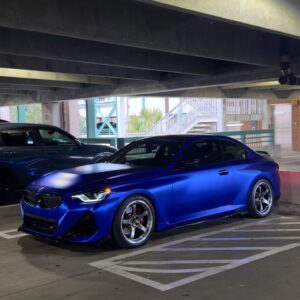
If you want your car to look more design-focused than flashy, matte blue is often the stronger choice. Matte finishes reduce glare and create a smoother, more controlled appearance across large body panels. That can make the shape of the car feel more intentional and more contemporary. On EVs, sedans, and SUVs with clean lines, matte blue often looks especially refined because the finish gives the vehicle a calmer, more architectural presence.
It works well for drivers who want distinction without excessive shine
Some buyers love blue but do not want the strong reflection of a gloss finish. In those cases, a matte blue wrap can be the better answer. It still provides color and personality, but it avoids the high-shine effect that some people associate with show-car styling. That makes matte blue a good fit for daily drivers, fleet-style personal vehicles, and owners who prefer a more subtle premium look.
What Glossy Blue Does Better
Gloss blue feels closer to premium paint
Glossy blue remains a favorite because it looks bright, clean, and polished. A glossy finish reflects light more sharply, which helps highlight fenders, door lines, and shoulder creases. On many vehicles, that makes the car look more energetic and more expensive. If your goal is to create a vivid blue that feels immediately eye-catching, gloss usually gets there faster than matte.
It photographs especially well
Gloss also performs strongly in photos and video. Because it catches highlights and reflections more dramatically, it often looks more vibrant in social content, product photography, and dealership-style presentations. For drivers who care about how the car appears online as well as in person, glossy blue can be a smart choice.
How to Decide Which Finish Fits Your Car Best
Choose matte blue if you want a clean, mature, custom look
Matte blue tends to work best for drivers who want their vehicle to feel unique without shouting for attention. It pairs well with modern wheels, dark trim, and minimalist styling. It is often a strong match for EVs, executive sedans, crossovers, and custom daily drivers. If the car already has a sharp design and you want to emphasize shape more than reflection, matte is usually the better fit.
Choose glossy blue if you want maximum brightness and visual energy
Glossy blue can be the better choice for sports cars, coupes, enthusiast builds, and any vehicle where you want the color to feel lively and expressive. If you like the look of fresh paint, stronger reflections, and a finish that pops immediately in sunlight, gloss is likely the better option.
Why ALUKOVINYL’s Blue Range Makes This Comparison Easier
The category depth gives buyers real choice
ALUKOVINYL’s blue car wrap category currently lists 171 results, which shows just how broad blue has become as a styling family. That matters because blue is not one single look. Some buyers want glossy navy, others want chameleon blue, satin racing blue, ice blue, or flat tiffany blue. Comparing matte and glossy only becomes useful when the product range is wide enough to show what each finish can actually do.
The matte category shows how nuanced matte blue can be
The ALUKOVINYL matte blue collection makes it clear that matte blue is not limited to one flat shade. It includes darker blues, grey-blue options, midnight tones, navy tones, and chameleon styles. That variety is important because it proves matte is not simply the “non-gloss” choice. It is its own design language, with multiple ways to create a more individual finish.
Why Matte Silver Blue Is a Useful Real-World Example
It combines matte restraint with more visual movement
A great example of how matte blue can still feel dynamic is ALUKOVINYL’s Matte Silver Blue Car Wrap. The product page describes a silver-to-blue chameleon effect that shifts under different lighting conditions while keeping a smooth matte finish. That gives the wrap a useful middle-ground personality. It is less reflective than gloss, but more visually active than a plain matte film.
The spec sheet strengthens the practical case
Beyond appearance, the product page lists features buyers actually care about: PH-neutral aftercare, application temperatures from +15℃ to +40℃, acrylic-based repositionable and slideable adhesive, breaking strength above 200%, dry application, and an air-release system for a more bubble-free finish. It also lists a two-year warranty and removability up to three years. Those details matter because they shift the decision away from color alone and toward long-term usability. A matte finish only makes sense if the material is credible as well as attractive.
Which Finish Wins?
There is no universal winner
The better finish depends on what you want your car to communicate. If you want polish, brightness, and paint-like shine, glossy blue is hard to beat. If you want a smoother, calmer, more modern custom look, matte blue often feels more distinctive. Both directions are valid, and both benefit from the fact that blue is already one of the most accepted and successful chromatic vehicle colors.
For many buyers, matte blue is the more current answer
Right now, matte and other lower-gloss specialty finishes fit especially well with the broader move toward more dimensional, design-conscious surfaces. That does not make gloss outdated. It simply means matte blue can feel fresher for drivers who want a more curated, less conventional look. If your goal is to separate your car from both standard factory paint and the usual high-gloss wrap aesthetic, matte blue has a strong case.
Final Thoughts
The debate between matte and glossy blue is really a question of mood, not quality. Blue remains one of the most compelling automotive colors because it offers personality without sacrificing broad appeal. The finish is what turns that appeal into a specific identity. Matte blue feels cool, deliberate, and modern. Glossy blue feels vivid, sharp, and premium.
If you want a safe answer, both work. If you want the finish that currently feels more distinctive and more design-led, matte blue has the edge. And if you want a version that keeps matte sophistication while adding more depth and movement, the Matte Silver Blue option is one of the most convincing examples on the market.
FAQ
Is matte blue harder to maintain than glossy blue?
Matte finishes usually require more careful aftercare because you want to preserve the non-shiny surface. Using PH-neutral products and avoiding waxes or solvents is a common recommendation.
Does glossy blue make a car look brighter?
Yes. Gloss reflects light more strongly, which usually makes the color look brighter and more paint-like, especially in sunlight and photos.
What if I want matte styling without a flat look?
A matte metallic or chameleon matte blue can be a strong compromise because it keeps the softer finish while adding more movement and dimensional color.