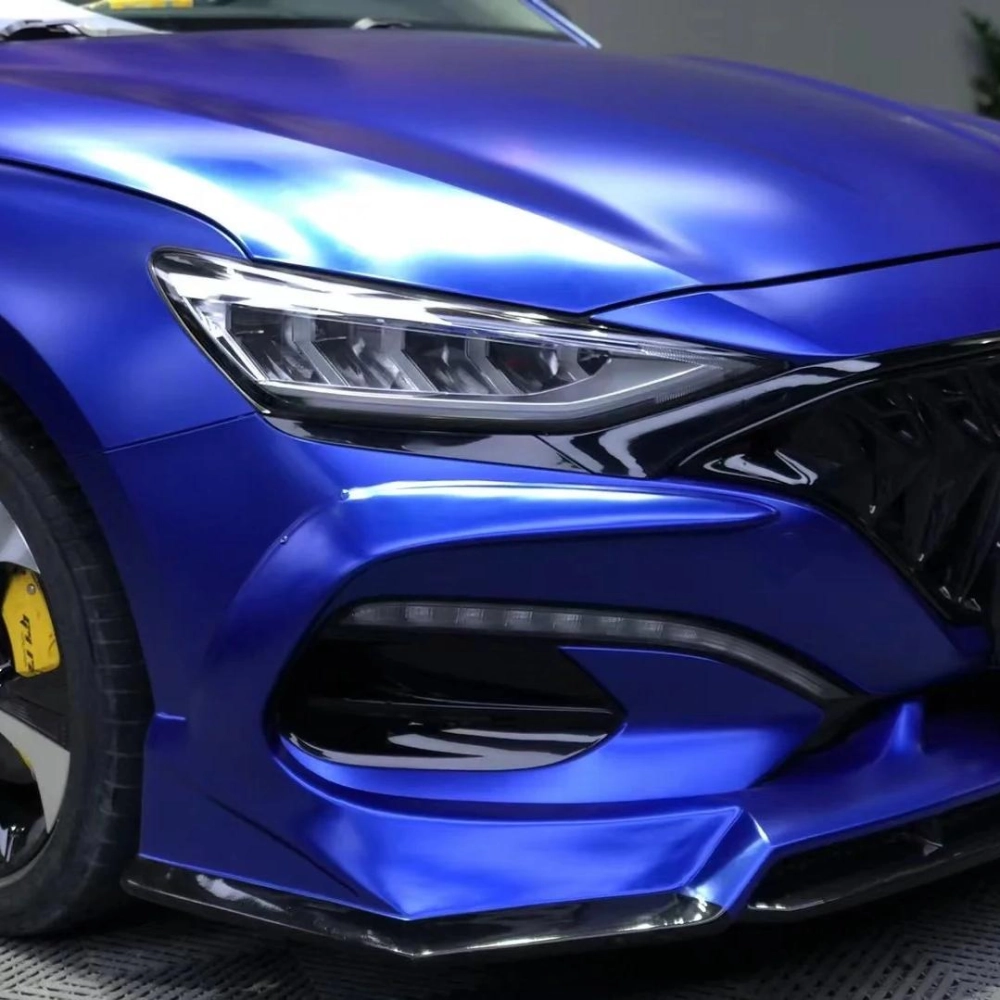
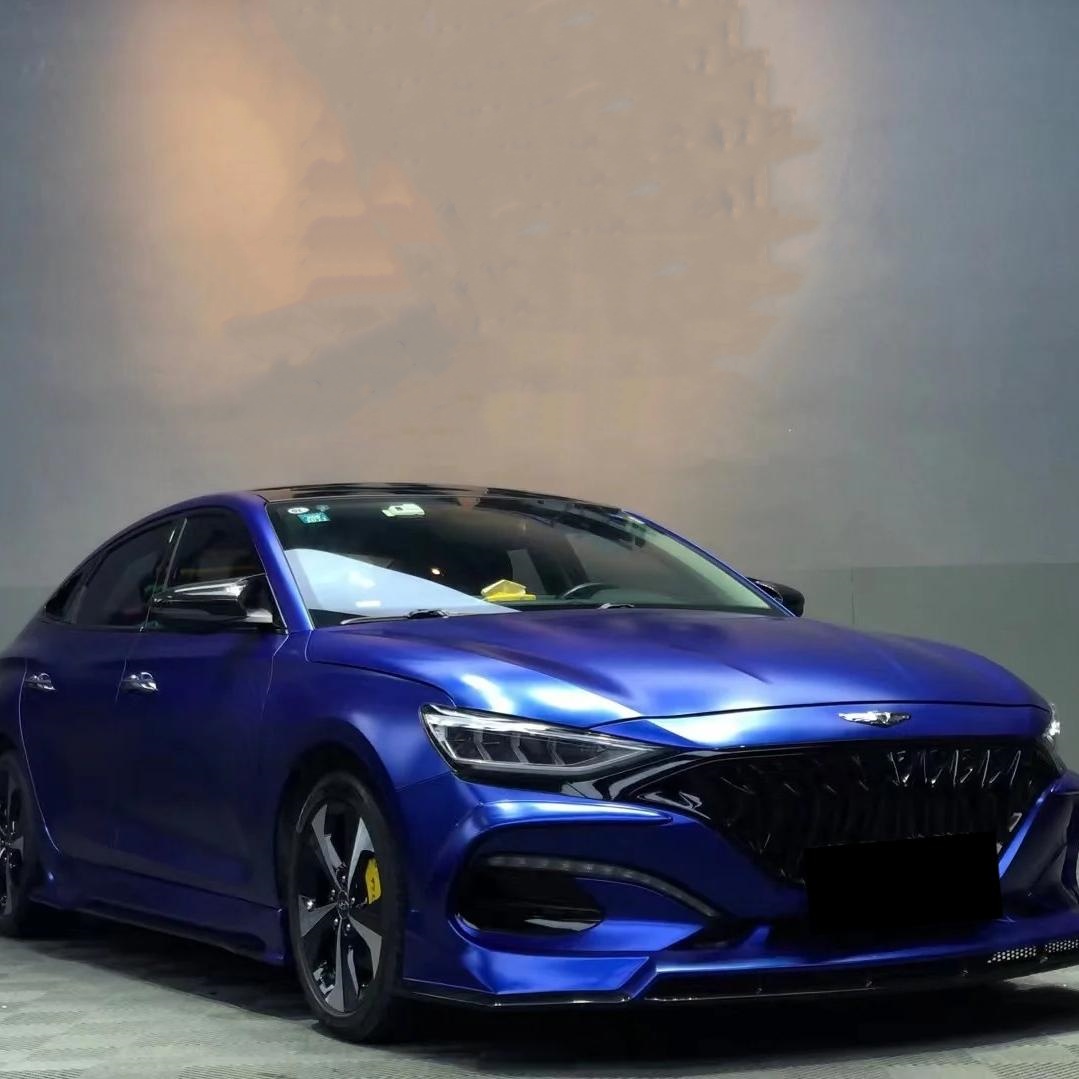
Navy blue has always occupied an interesting position in automotive design. It is darker and more restrained than bright blue, but it offers more color and visual depth than black. Add a metallic effect, and the result becomes even more distinctive: navy blue metallic can appear nearly black in shade, deep ocean blue in normal daylight, and noticeably more reflective when direct sunlight catches the metallic particles.
For drivers who want a premium color change without permanently repainting their vehicle, a navy blue metallic vinyl wrap offers an alternative worth considering.
This guide explains what navy blue metallic looks like in real-world conditions, which vehicles suit it best, how it compares with other dark automotive colors, and what buyers should understand before choosing a metallic vinyl wrap.
Featured Snippet: What Is Navy Blue Metallic?
Navy blue metallic is a very dark blue automotive color enhanced with metallic particles that reflect light and create greater visual depth than a standard solid navy blue.
On a vinyl-wrapped vehicle, the appearance changes according to lighting and viewing angle. In low light, it may look close to black or midnight blue. Under sunlight, its blue tone becomes much clearer while the metallic finish produces subtle highlights across body lines.
A navy blue metallic car wrap is therefore particularly suitable for drivers who want:
- A dark, sophisticated vehicle color
- More depth than ordinary gloss navy blue
- A less common alternative to black or grey
- Metallic highlights without an extremely flashy finish
- A reversible color change rather than permanent paint
Why Is Navy Blue Metallic So Popular on Cars?
The strength of navy blue metallic is not simply that it is “dark blue.” Its appeal comes from the way darkness, gloss and metallic reflection work together.
A normal solid blue depends mainly on pigment for its appearance. Metallic finishes introduce reflective particles into the visual structure of the surface. When light reaches the vehicle from different angles, those particles create variations in brightness.
This makes curved automotive panels especially important.
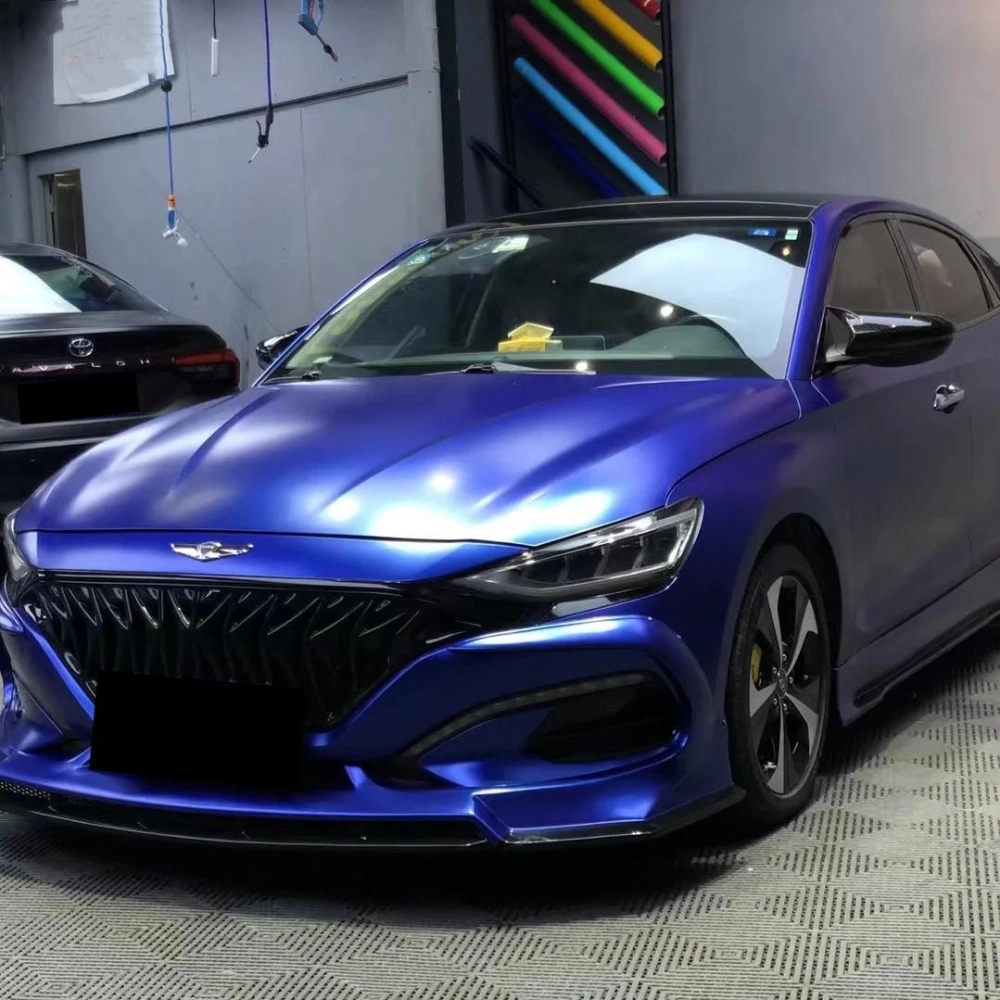
A hood, fender or door does not receive light uniformly. On a navy blue metallic surface, highlights become brighter while recessed or shaded areas remain considerably darker. The vehicle can therefore look more sculpted without requiring an aggressive or unusually bright color.
This is particularly noticeable on cars with pronounced shoulder lines and wide fenders.
What Does Navy Blue Metallic Look Like in Different Lighting?
One of the most useful ways to evaluate this color is to stop thinking of it as a single fixed shade.
Direct Sunlight
Under strong sunlight, the blue becomes much easier to recognize. Metallic reflections can highlight the hood, fenders and doors, producing a richer appearance than conventional dark navy.
This is where the metallic finish is usually most visible.
Cloudy Conditions
Under overcast skies, the metallic sparkle becomes more subdued. The vehicle tends to look like a deep, relatively conservative navy blue.
For owners who want a color that can look premium without being constantly flashy, this is an advantage.
Shade and Night
In low-light environments, navy blue metallic can approach black visually.
Streetlights, parking-garage lighting and headlights may reveal blue reflections on individual panels while other sections remain extremely dark.
This light-dependent behavior is one of the biggest differences between navy blue metallic and brighter blues such as Miami Blue, Sky Blue or Voodoo Blue.
ALUKOVINYL Insight: Dark metallic colors often work best when the goal is not maximum attention, but visual depth. The color becomes more interesting as the viewer moves around the vehicle rather than revealing its full effect immediately.
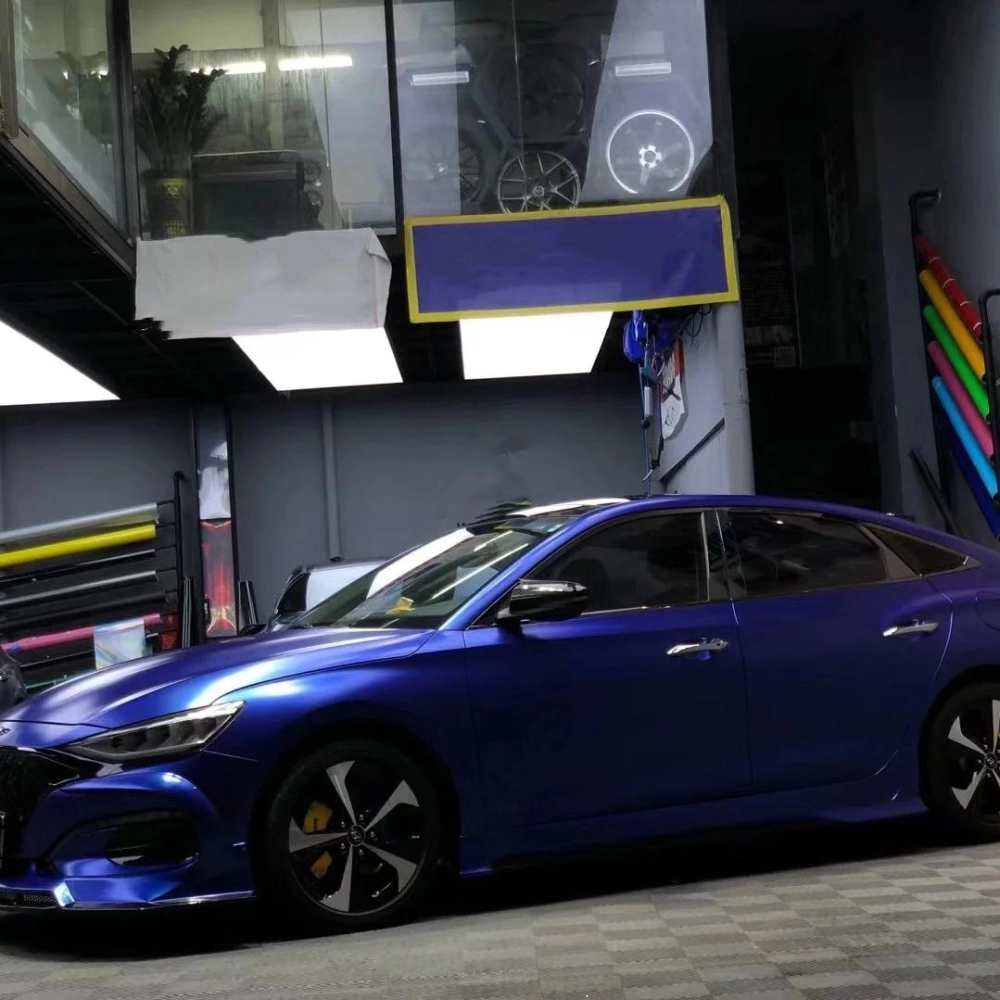
Navy Blue Metallic vs Other Dark Automotive Colors
Choosing a wrap based only on online photos can be misleading because lighting, camera exposure and screen calibration can significantly affect perceived color.
Here is a more practical comparison.
| Color | Overall Appearance | Metallic Effect | Visual Character | Best For |
|---|---|---|---|---|
| Navy Blue Metallic | Very dark blue | Medium–High | Deep and premium | Luxury cars, sedans, SUVs |
| Gloss Navy Blue | Dark blue | None/Low | Clean and classic | Daily drivers |
| Midnight Blue | Extremely dark blue | Varies | Subtle and dramatic | Performance/luxury cars |
| Metallic Black | Near-black | Medium–High | Aggressive and formal | Sports cars, luxury vehicles |
| Nardo Grey | Medium grey | Usually low | Modern and industrial | European performance cars |
| Royal Blue | Bright/deep blue | Varies | More expressive | Sports cars |
The key difference is color visibility.
Royal blue announces itself immediately. Navy blue metallic is more restrained. Its blue character becomes more apparent when lighting conditions improve.
That makes it particularly appealing to owners who like black vehicles but want something less conventional.
Gloss Navy Blue vs Navy Blue Metallic: What’s the Difference?
These two finishes are easy to confuse in photographs.
A conventional gloss navy blue relies primarily on its smooth glossy surface to reflect the surrounding environment. The color itself remains relatively consistent.
A metallic navy blue wrap adds another layer of visual complexity. Fine metallic elements interact with light, producing subtle brightness variations across the vehicle.
In practical terms:
Gloss Navy Blue
- Cleaner solid-color appearance
- More consistent across different lighting
- Classic appearance
- Good choice for understated builds
Navy Blue Metallic
- Greater visual depth
- More pronounced under direct lighting
- Better emphasizes complex body lines
- Often creates a more paint-like premium impression
Neither is universally better. The choice depends on whether you prefer color consistency or additional metallic dimension.
Which Cars Look Best in Navy Blue Metallic?
Navy blue metallic is unusually versatile because it sits between neutral and expressive automotive colors.
BMW M3 / M4
BMW performance models typically have prominent fenders, creases and sculpted side panels. Metallic navy can emphasize these shapes without making the car excessively bright.
[Image Placement: BMW M3 with Navy Blue Metallic Wrap]
Porsche 911
The 911’s curved body provides large surfaces for metallic highlights to transition gradually between light and shadow.
A dark navy finish can also preserve the understated character associated with many Porsche configurations.
[Image Placement: Porsche 911 — Outdoor Sunlight]
Mercedes-Benz C-Class / E-Class
For luxury sedans, navy blue metallic can serve as an alternative to traditional black, silver and grey while maintaining a formal appearance.
Tesla Model 3 / Model Y
Tesla’s relatively clean exterior surfaces allow the color itself to become the primary visual feature. Dark metallic blue can add complexity without relying on additional graphics or body modifications.
SUVs
Large vehicles such as the Range Rover, BMW X5 and Porsche Cayenne can also work well with navy blue. Their larger panels provide more surface area for the metallic finish to interact with sunlight.
Why Metallic Wrap Quality Matters
Not all metallic vinyl behaves identically.
One useful industry benchmark comes from ORAFOL’s technical documentation for ORACAL 970RA Premium Wrapping Cast. ORAFOL specifies a minimum elongation at break of 120% for metallic versions, compared with 150% for many standard versions of the film.
That distinction illustrates an important installation principle:
Metallic wrap should not automatically be treated exactly like an ordinary solid-color film.
Excessive stretching can potentially affect how metallic particles appear, particularly around bumpers, mirrors and deep recesses.
For installers, maintaining consistent film orientation is also important. Adjacent metallic panels installed in different directions can reflect light differently and create an apparent shade mismatch.
Professional Installation Tip: Keep Metallic Film Direction Consistent
When installing a navy blue metallic wrap, mark the orientation of each panel before cutting.
For example:
- Hood → same roll direction
- Driver door → same roll direction
- Rear door → same roll direction
- Quarter panel → same roll direction
Do not rotate one panel 180 degrees simply to reduce material waste unless the manufacturer has verified that the particular film is non-directional.
This small installation decision can make a major difference in how uniform a metallic full wrap appears outdoors.
How Easy Is Metallic Navy Blue Vinyl to Install?
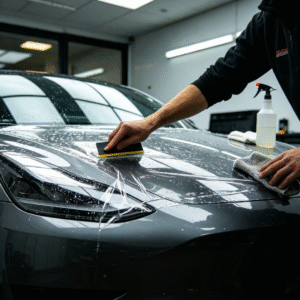
Modern vehicle wrapping films increasingly use repositionable adhesive and air-release technology.
For comparison, 3M’s Wrap Film Series 2080 documentation describes pressure-activated adhesive designed to allow sliding, repositioning and air release during application. ORAFOL similarly describes its RapidAir technology as an air-release system intended to facilitate vehicle-wrap installation.
These technologies demonstrate the broader direction of professional wrapping films: installers need enough initial repositionability to align large panels before final pressure is applied.
The ALUKOVINYL Gloss Metallic Navy Blue product similarly uses a repositionable acrylic-based adhesive and dry application system, with a stated application temperature range of approximately 15°C–40°C (59°F–104°F).
For complex bumpers and recessed areas, professional installation is still recommended.
How Long Does a Navy Blue Metallic Wrap Last?
There is no honest universal lifespan for every vinyl wrap.
Actual service life depends on several factors:
- Film construction
- UV exposure
- Climate
- Horizontal versus vertical surfaces
- Installation quality
- Vehicle storage
- Cleaning chemicals
- Frequency of washing
- Amount of stretching during installation
As a manufacturer benchmark, ORAFOL lists different durability expectations depending on film/color construction, and its technical documentation specifically assigns shorter expected durability to certain metallic and special-effect finishes than to some standard colors.
For ALUKOVINYL’s Gloss Metallic Navy Blue film, the current product specification lists an expected durability of 5–7 years, while actual performance will depend on installation and environmental exposure.
This is why durability should be treated as an expected range rather than a guaranteed replacement date.
Does Navy Blue Metallic Vinyl Protect Paint?
A vinyl wrap creates an additional physical layer over compatible factory paint and can reduce direct exposure to minor environmental contamination and light surface abrasion.
However, vinyl wrap should not be confused with Paint Protection Film (PPF).
Standard color-change vinyl is primarily designed for aesthetics and customization. PPF is specifically engineered around impact and paint-protection performance.
If protection against stone chips is your primary goal, PPF is generally the more appropriate material.
If changing your vehicle’s appearance is the primary objective, a vinyl wrap is usually the more relevant option.
This distinction is important because describing ordinary vinyl as equivalent to PPF would overstate what color-change film is designed to do.
Pros and Cons of Navy Blue Metallic Car Wrap
Advantages
Premium appearance:
Metallic reflections create more visual depth than an ordinary solid navy finish.
Versatile styling:
It works on luxury sedans, performance cars, coupes and SUVs.
Less common than black or grey:
You retain a relatively conservative appearance without choosing one of the most common automotive colors.
Changes dramatically with lighting:
The finish can transition visually from near-black to visibly metallic blue.
Reversible customization:
Unlike repainting, vinyl can generally be removed from suitable OEM paint when properly installed and removed.
Disadvantages
Installation direction matters:
Metallic films can reveal inconsistent orientation between panels.
Dark colors show contamination:
Dust, water spots and pollen may be more noticeable than on some lighter colors.
Online photos are not perfectly reliable:
Camera settings and screens can change the perceived shade significantly.
Overstretching can alter appearance:
Aggressive stretching around complex areas may affect metallic consistency.
It is not PPF:
A standard vinyl color-change wrap should not be purchased primarily for stone-chip protection.
Navy Blue Metallic vs Paint: Which Makes More Sense?
Paint and vinyl should not be treated as identical products.
A professional repaint permanently changes the vehicle’s finish and can offer excellent visual depth when correctly prepared and sprayed. It also requires substantially more invasive preparation.
A wrap provides a removable surface color change and opens the door to colors and effects that can later be replaced.
For enthusiasts who regularly change their vehicle’s appearance, vinyl therefore offers an important advantage: reversibility.
The underlying paint condition matters, however. Wrap film performs best over healthy, properly bonded OEM paint. Weak, peeling, repaired or poorly cured paint can create installation and removal risks.
How Much Vinyl Is Needed for a Full Car?
The amount depends heavily on vehicle dimensions, panel complexity and installer experience.
As a general planning guide:
| Vehicle Type | Approximate Wrap Requirement |
|---|---|
| Small Coupe | 50–55 ft |
| Sedan | 55–60 ft |
| Large Sedan | 59–65 ft |
| SUV | 65–70 ft |
| Large SUV / Pickup | 70–80+ ft |
These figures should be treated as planning estimates rather than exact measurements.
Complex bumpers, installation errors and unusual body kits can increase material requirements.
For color consistency, buying enough material from the same production batch is preferable. ALUKOVINYL also recommends retaining additional material when possible because slight differences can occur between production batches.
How to Maintain a Navy Blue Metallic Wrap
Dark glossy finishes benefit significantly from careful maintenance.
Use a pH-neutral automotive shampoo and soft microfiber towels. Remove bird droppings, insects, tree sap and similar contamination promptly rather than allowing them to remain on the surface.
Avoid aggressive solvents or abrasive polishing compounds unless specifically approved for the film.
ALUKOVINYL’s current care specification for its Gloss Metallic Navy Blue film recommends pH-neutral cleaning and avoiding waxes or solvents.
Whenever possible, covered parking can also reduce long-term environmental exposure.
Industry Comparison: What Can We Learn from Major Wrap Manufacturers?
Instead of judging vinyl only by color photographs, buyers should consider how established manufacturers describe professional vehicle-wrap performance.
3M Wrap Film Series 2080 uses cast vinyl and pressure-activated adhesive with air-release channels and repositioning characteristics. It is specifically designed for applications including complete vehicle color changes.
ORAFOL 970RA is another professional vehicle-wrapping reference. ORAFOL specifies RapidAir air-release technology, repositionable adhesive and a 60-inch/1520-mm class roll width, depending on market.
These specifications provide useful benchmarks when evaluating any wrap film: dimensional stability, adhesive behavior, conformability, air-release design, application temperature and published durability matter just as much as color.
For ALUKOVINYL buyers, the same principle applies. Choose navy blue metallic because you like the finish, but evaluate the technical specifications and installation requirements as part of the purchasing decision.
Is Navy Blue Metallic Worth Choosing?
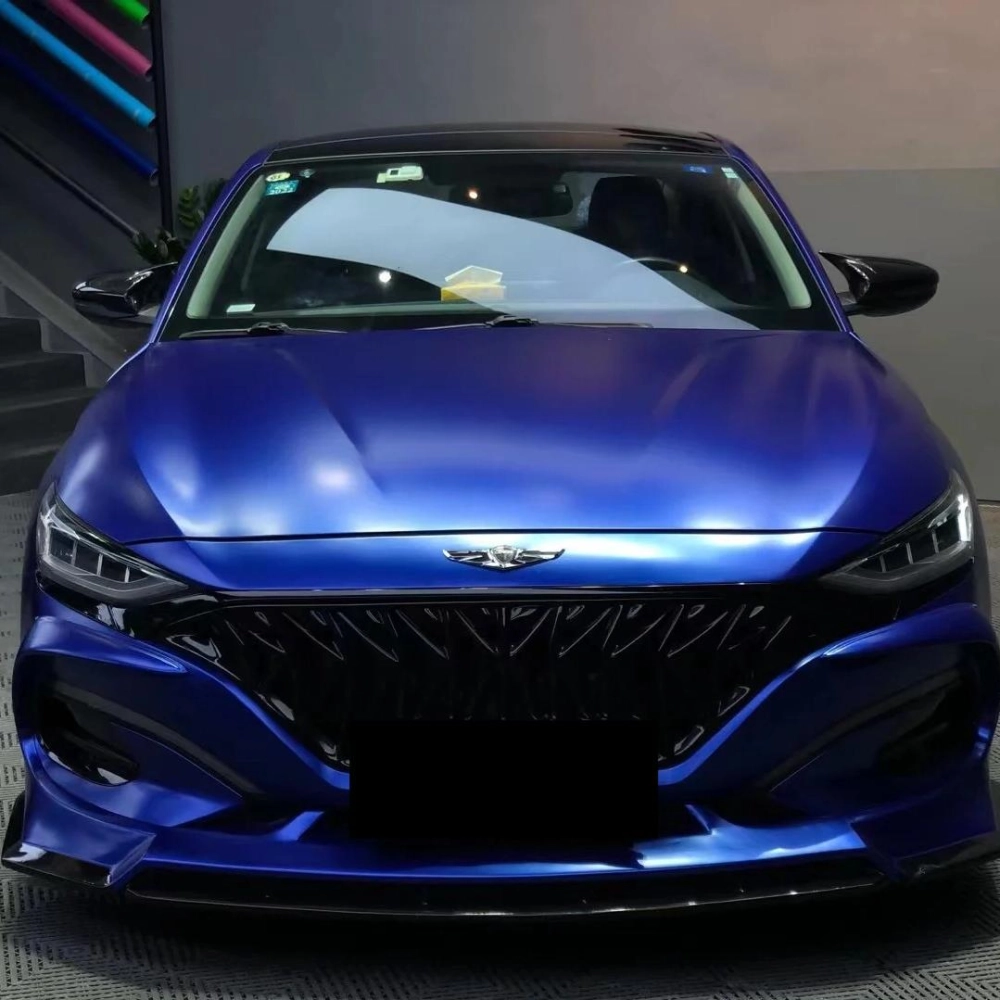
For drivers caught between black and blue, navy blue metallic may offer one of the most balanced combinations.
It retains much of the understated character of a dark vehicle while becoming noticeably more expressive when exposed to sunlight.
That dual personality is its strongest design feature.
Choose it if you want a color that:
- Looks sophisticated rather than extremely bright
- Works with both luxury and performance vehicles
- Emphasizes body lines through metallic reflection
- Appears different between sunlight, shade and nighttime
- Provides a reversible alternative to repainting
Consider another finish if your priority is maximum brightness, an extremely uniform solid color, or heavy-duty stone-chip protection.
FAQ About Navy Blue Metallic Wrap
Is navy blue metallic the same as midnight blue?
No. Both are dark blues, but midnight blue is generally closer to black. Navy blue metallic typically allows more visible blue character, particularly under direct sunlight. Exact appearance varies by product.
Does navy blue metallic look black at night?
It can. Because navy is already a low-lightness blue, limited illumination can make the vehicle appear nearly black. Streetlights or direct artificial lighting will usually reveal the blue and metallic highlights.
Is metallic navy blue difficult to wrap?
Flat and moderately curved panels are relatively straightforward for experienced installers, but metallic films require careful orientation and stretching. Complex bumpers, mirrors and deep recesses increase installation difficulty.
Can I wrap a white car navy blue?
Yes, assuming the paint surface is suitable for wrapping. However, highly contrasting factory paint can remain visible around door jambs or panel gaps unless those areas are wrapped as well.
Is navy blue metallic good for SUVs?
Yes. Large doors, fenders and quarter panels provide enough surface area for the metallic effect to become visible. Dark blue also works well with black trim, tinted glass and many factory wheel finishes.
Can navy blue metallic vinyl be removed?
Quality automotive vinyl is designed to be removable under appropriate conditions. Removal behavior depends on the film, installation duration, paint condition, environmental exposure and removal technique.
How long can ALUKOVINYL Navy Blue Metallic last?
ALUKOVINYL currently lists an expected durability of approximately 5–7 years for its Gloss Metallic Navy Blue vinyl. Actual service life varies according to climate, UV exposure, installation and maintenance.
Should I order a sample before buying a full roll?
For a color such as navy blue metallic, a physical sample is especially useful. Metallic appearance can change dramatically with light, and monitors cannot perfectly reproduce the real finish.