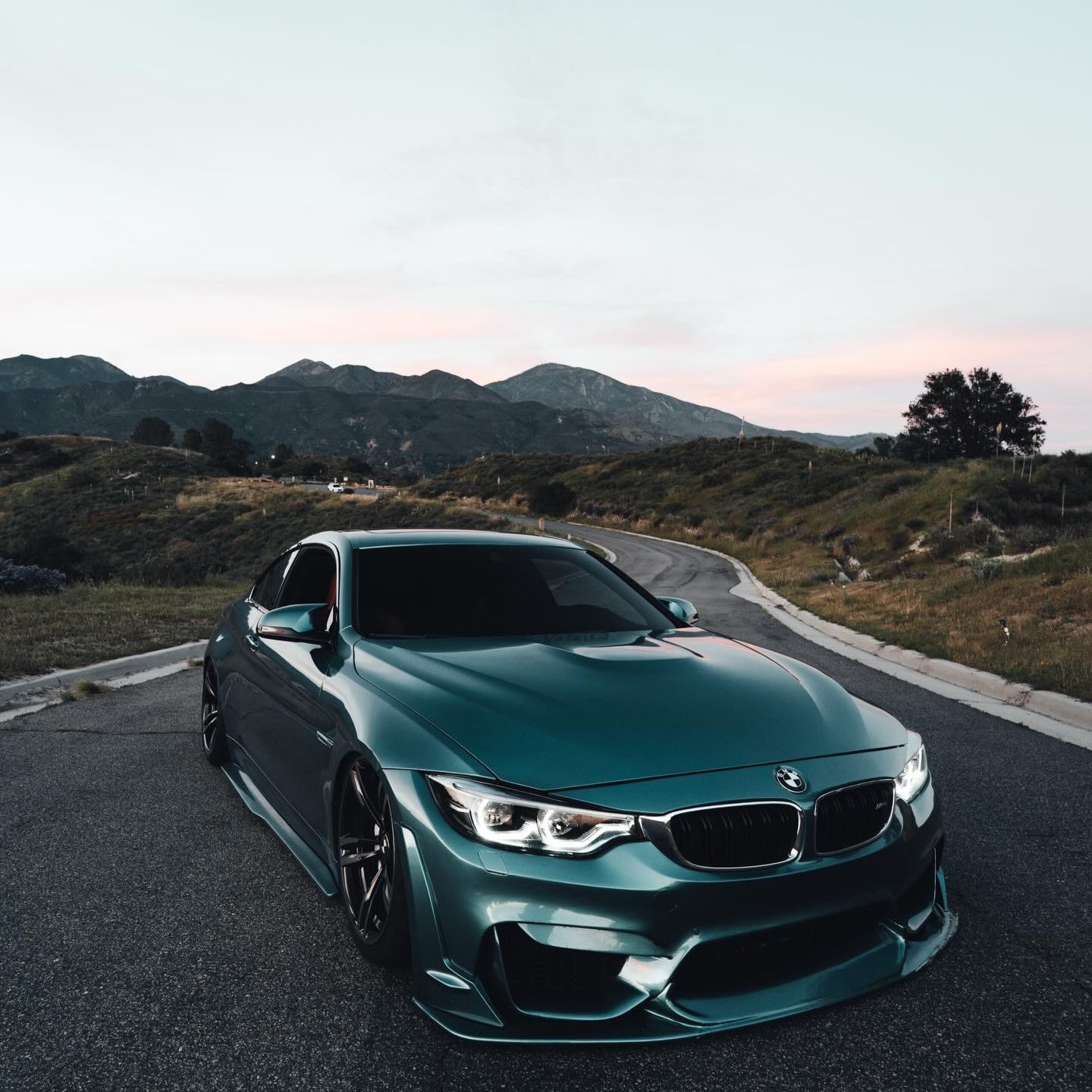
Choosing a green car wrap from an online color swatch can be surprisingly difficult. A shade that appears dark and restrained indoors may become much brighter once the car is parked in direct sunlight.
That difference is especially important with Ryan Green Wrap.
Ryan Green is not a simple solid green. It combines a rich green base, metallic character, and a high-gloss surface, so its appearance changes noticeably as lighting conditions and viewing angles change.
If you are considering Ryan Green for a BMW, Nissan GT-R, Porsche, Corvette, or another performance-oriented vehicle, this guide explains what the color actually looks like in sunlight, shade, cloudy weather, and nighttime lighting—and what you should know before choosing it.
What Color Is Ryan Green Wrap?
Ryan Green Wrap is a rich gloss metallic green car wrap that can appear brighter and more vivid in direct sunlight and deeper in shade. Its metallic character becomes more noticeable under strong directional light, while indirect light emphasizes the darker green base. Unlike a color-shift or chameleon wrap, Ryan Green remains fundamentally green rather than changing into an entirely different color family.
In simple terms:
Direct sun → brighter, more vivid metallic green
Shade → deeper, richer green
Cloudy daylight → balanced medium-to-deep green
Night lighting → dark glossy green with concentrated highlights
That lighting-dependent personality is one of the main reasons Ryan Green looks considerably more dynamic on an entire vehicle than it does on a small online color sample.
What Exactly Is Ryan Green Wrap?
The ALUKOVINYL Gloss Metallic Ryan Green Car Vinyl Wrap PET combines three important visual characteristics:
- a green color base;
- metallic visual depth;
- a high-gloss surface.
ALUKOVINYL identifies the product as SKU D0702 and lists it for full vehicle wraps as well as applications including hoods, roofs, mirrors, bumpers, trim, graphics, and other surfaces.
The current technical specifications list a film thickness of approximately 3.7–4.1 mil, a low-tack solvent acrylic adhesive, dry application, and an application temperature range of approximately 15°C–40°C.
The product is also directional, meaning installers should maintain the same film orientation across adjoining panels. This is particularly important with metallic finishes because reversing a panel can change the way reflected light is perceived.
For anyone researching car wrap colors, that last detail matters: two panels made from the same Ryan Green material can appear slightly different if their orientation or lighting angle differs.
Ryan Green Wrap in Sunlight: Bright, Metallic and Highly Visible
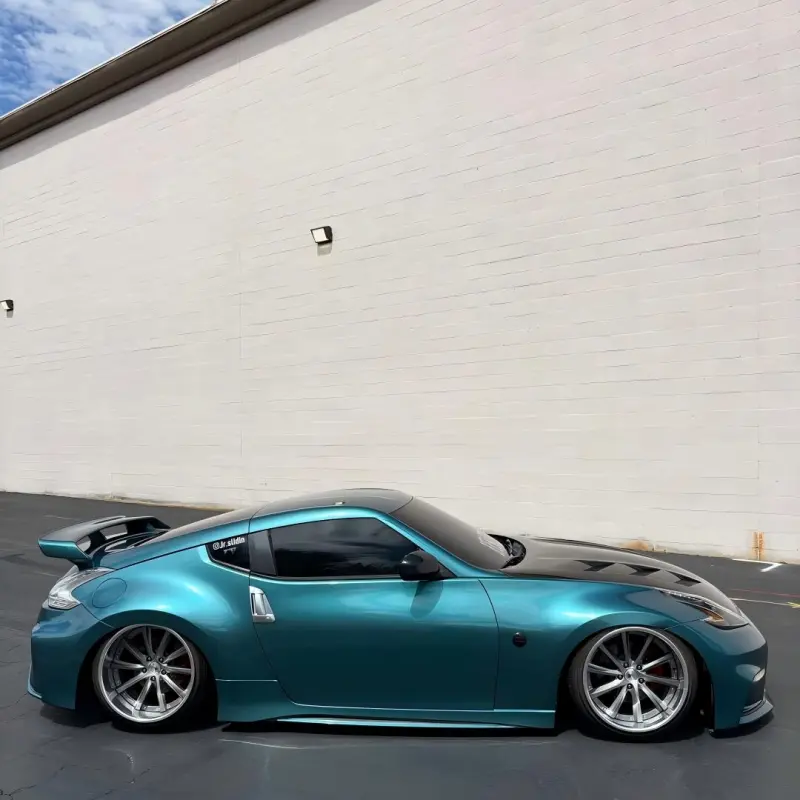
Direct sunlight is where Ryan Green shows its most energetic personality.
Strong light hitting a gloss metallic surface produces more obvious highlights and makes the metallic character easier to see. As a result, areas facing the sun can appear substantially brighter than panels facing away from it.
On a sculpted vehicle, this creates natural visual contrast.
For example, imagine Ryan Green on a BMW M4:
- the upper fender facing the sun can look bright and vivid;
- the door can display a more balanced green;
- the lower rocker panel may look substantially darker;
- sharp body lines can create bright reflective highlights.
The car therefore does not appear to be one completely flat shade of green.
Does Ryan Green Become Neon Green in the Sun?
No.
It can become considerably brighter under intense sunlight, but Ryan Green should not be confused with fluorescent or neon green.
Its appearance is better described as a saturated gloss metallic green.
That distinction matters for buyers who want a noticeable green without going all the way to an extremely fluorescent finish.
Ryan Green Wrap in Shade: Deeper and More Sophisticated
Move the same vehicle underneath a building, tree, parking structure, or garage entrance and Ryan Green can look surprisingly different.
Without strong direct reflections, the darker base becomes more visually dominant.
The result is generally:
Direct sunlight: vivid → bright → metallic
Shade: deep → rich → glossy
This is one of the strongest characteristics of the color.
Ryan Green can attract significant attention in sunlight while becoming considerably more restrained when direct illumination disappears.
For daily-driven vehicles, that can be an advantage. You are not locked into an extremely bright appearance during every hour of the day.
Why Does It Look Darker?
The wrap itself has not changed color.
What changes is the amount and direction of light reaching—and reflecting from—the surface.
Gloss surfaces create stronger specular reflections, while metallic finishes introduce additional visual variation as lighting and viewing geometry change. This is why a metallic wrap should ideally be evaluated on a curved vehicle panel rather than only through a flat digital swatch.
What Does Ryan Green Look Like on a Cloudy Day?
Cloudy weather provides a useful middle ground between direct sunlight and deep shade.
Because cloud cover diffuses sunlight, the vehicle receives softer illumination from multiple directions rather than a single intense source.
Ryan Green consequently tends to look more uniform.
The bright metallic highlights seen under direct sun become less aggressive, while the green base remains clearly visible.
For someone trying to understand the “average” everyday appearance of this Ryan Green Wrap, overcast daylight can actually be more informative than dramatic showroom lighting.
It reveals the underlying color without either extreme.
Ryan Green Wrap at Night
Nighttime introduces another personality.
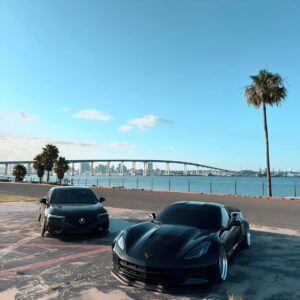
Under streetlights, parking-garage lights, gas-station LEDs, or city lighting, most of the vehicle can appear relatively dark while small areas facing a light source produce concentrated gloss reflections.
This can create a particularly dramatic appearance on vehicles with:
- wide fenders;
- aggressive shoulder lines;
- sculpted doors;
- large rear quarter panels;
- aerodynamic bumpers.
Under cool white LEDs, the finish can appear crisp and modern. Under warmer lighting, the perceived green may look slightly warmer or more muted.
Again, the film is not physically changing color—the illumination is changing how your eyes perceive it.
Ryan Green in Different Lighting Conditions
| Lighting Condition | Typical Visual Appearance | Metallic Effect | Overall Character |
|---|---|---|---|
| Strong direct sunlight | Bright, saturated green | Strong | Bold and energetic |
| Partial sunlight | Medium-bright green | Medium–strong | Sporty |
| Open shade | Deeper green | Moderate | Rich and premium |
| Overcast weather | Balanced green | Moderate | Clean and consistent |
| Indoor garage | Darker green | Low–moderate | Understated |
| LED/night lighting | Dark green with bright highlights | Localized | Dramatic |
Important: This table describes expected visual behavior rather than a guaranteed color measurement. Camera exposure, screen calibration, white balance, surroundings, installation direction, and production batches can all influence how the wrap appears.
That is why physical samples are more reliable than screen images when making a final color decision.
Why Does Ryan Green Change So Much Between Sun and Shade?
There are three main reasons.
1. Gloss Reflectivity
A glossy surface reflects its environment much more strongly than a matte surface.
As a useful industry reference point, Avery Dennison’s current Supreme Wrapping Film technical documentation reports gloss finishes above 85 GU measured at 60°, compared with approximately 20–30 GU for satin and below 15 GU for matte finishes. This does not mean Ryan Green has the same measured gloss value—the products are different—but it demonstrates why finish category has such a strong influence on perceived reflections.
Gloss therefore does more than make a vehicle “shiny.”
It changes how strongly surrounding light, buildings, sky, trees, and other objects appear across the bodywork.
2. Metallic Appearance
Metallic finishes interact with directional lighting differently from plain solid colors.
Strong illumination emphasizes highlights and surface contours. Softer illumination allows the underlying green to dominate.
This makes a metallic green particularly effective on cars with pronounced body lines.
3. Vehicle Geometry
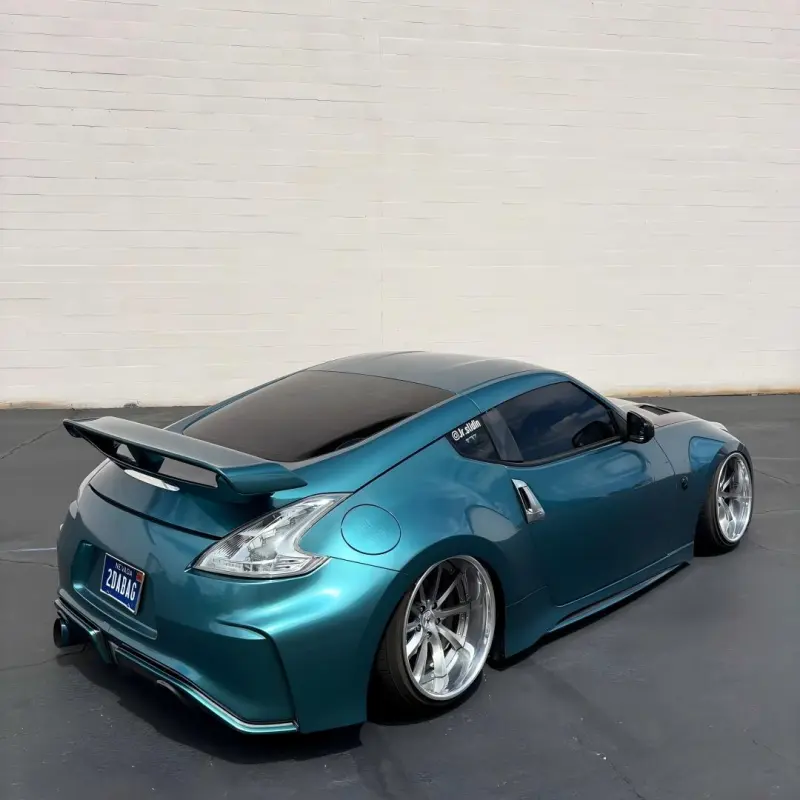
A car is essentially a collection of curved reflective surfaces.
The hood, roof, doors, quarter panels, bumper, and fenders are all positioned at different angles relative to the sun.
That means one Ryan Green vehicle can display several apparent shades of green simultaneously—even though every panel uses exactly the same wrap.
Ryan Green Wrap vs Other Popular Green Car Wrap Styles
Ryan Green occupies an interesting position within the broader green wrap spectrum.
| Green Style | Brightness | Finish | Visual Personality | Best For |
|---|---|---|---|---|
| Ryan Green | Medium–bright | Gloss metallic | Vivid but deep | Sports and performance cars |
| British Racing Green | Dark | Gloss/metallic | Classic | Luxury and European cars |
| Emerald Green | Medium–dark | Metallic | Jewel-like | Luxury builds |
| Mamba Green | Bright | Metallic | Aggressive | Performance cars |
| Khaki Green | Light–medium | Gloss | Soft/modern | SUVs and lifestyle builds |
| Matte/Hunter Green | Dark | Matte/satin | Tactical/subdued | SUVs and rugged builds |
ALUKOVINYL currently offers a broad selection of green finishes, including British Racing Green, Emerald Green, Mamba Green, Oak Green, Millennium Jade, Hunter Green, Khaki Green and Ryan Green.
Ryan Green is especially relevant for buyers who want something brighter than traditional dark racing greens without moving into fluorescent territory.
Ryan Green Wrap vs Premium Industry Wrap Films
When evaluating any vehicle wrap, color should not be the only consideration.
Major professional wrap manufacturers such as Avery Dennison design automotive films around conformability, repositionability, air-release adhesive systems, and predictable installation characteristics.
For example, Avery Dennison’s Supreme Wrapping Film technical documentation lists 80–140 μm face-film thickness depending on the specific finish, approximately 200% elongation at break, and removable adhesive technology. Avery also specifies Easy Apply RS technology for repositioning and reducing trapped air during installation.
This provides a useful benchmark for what professional installers typically evaluate:
finish quality + conformability + adhesive behavior + dimensional stability + removability + outdoor performance.
ALUKOVINYL’s Ryan Green takes a somewhat different approach. The current product specification describes it as a high-performance calendered PET-backed vehicle film with a low-tack, repositionable acrylic adhesive and dry application.
The practical takeaway is simple:
Do not choose a wrap based on color alone.
Install complexity, vehicle geometry, installer experience, expected ownership period, climate, and desired finish should also influence your decision.
Real-World Ryan Green Wrap Examples
One of the strongest ways to judge an unusual wrap color is through completed vehicles rather than studio samples.
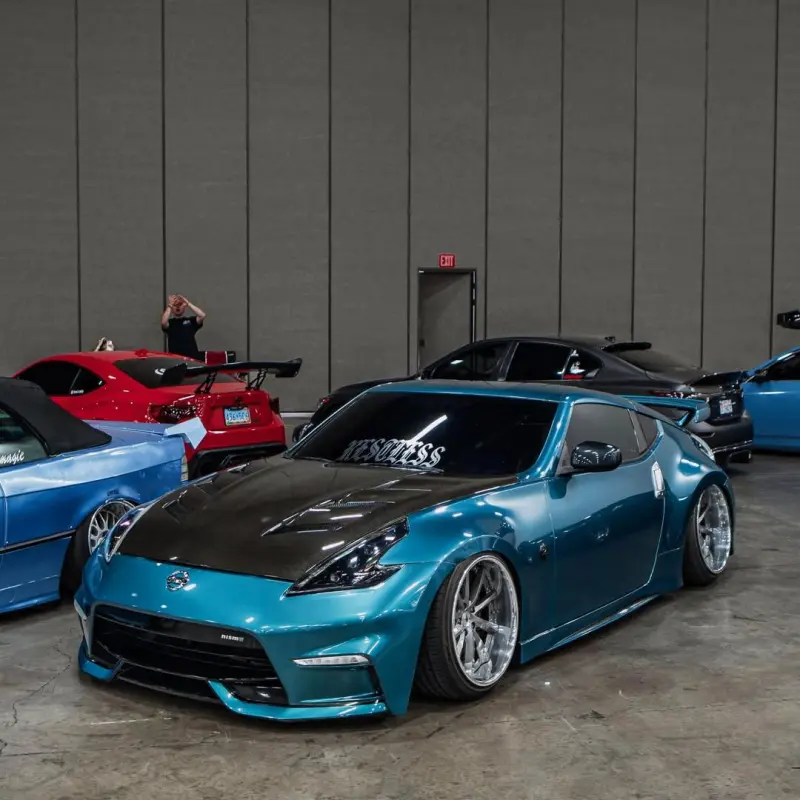
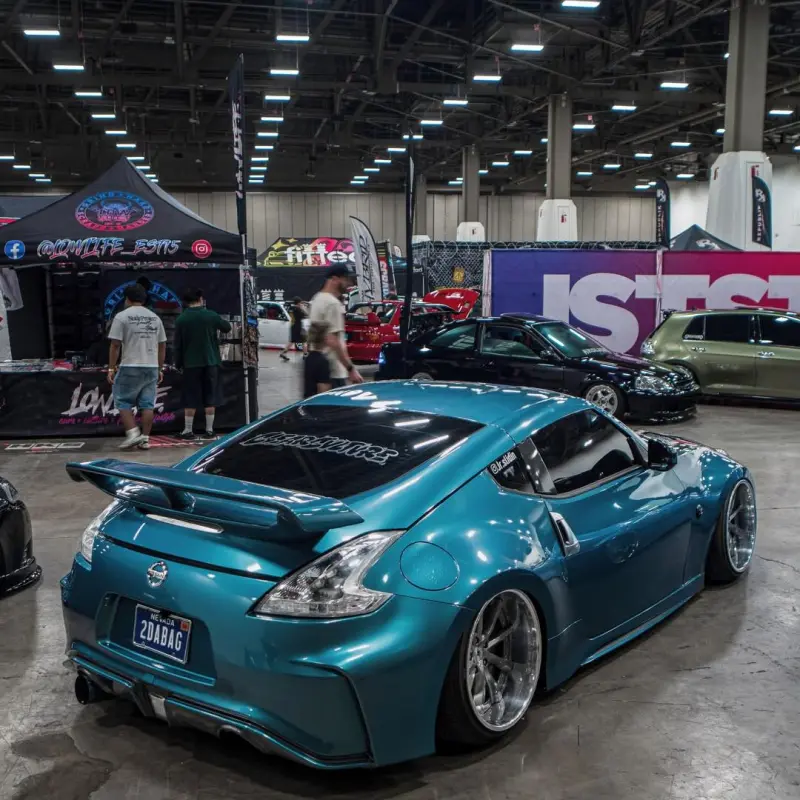
ALUKOVINYL’s current Ryan Green product page includes customer-uploaded examples on vehicles including a Nissan 370Z, BMW F82, and Nissan GT-R.
These examples are valuable because sports cars contain complex curves and strong body lines that reveal how metallic finishes respond to different viewing angles.
Nissan 370Z
The 370Z’s rounded fenders and compact proportions are well suited to a bright metallic color. Ryan Green can emphasize the curvature of the front and rear arches rather than allowing them to disappear into a neutral paint color.
BMW F82
The BMW F82 has strong shoulder lines and relatively large side surfaces. Those surfaces allow the transition between bright highlights and darker green areas to become much more visible.
Nissan GT-R
The GT-R’s angular bodywork gives Ryan Green a more aggressive appearance. Different panels catch the light independently, helping the metallic finish emphasize the vehicle’s geometry.
These examples also illustrate an important EEAT principle for choosing wrap colors:
judge the color on a complete vehicle whenever possible—not just from a roll photograph.
Which Cars Look Best With Ryan Green Wrap?
There is no technical restriction limiting Ryan Green to sports cars, but its visual characteristics make it particularly effective on vehicles with strong body contours.
Good candidates include:
BMW M2 / M3 / M4
Strong fenders and character lines create clear light-to-shadow transitions.
Nissan GT-R / 350Z / 370Z / Z
The combination of curved panels and aggressive proportions works well with metallic colors.
Porsche 911 / Cayman
Smooth body curvature can produce long, clean gloss highlights.
Chevrolet Corvette
Sharp surfaces and low proportions maximize visual contrast.
Dodge Challenger / Charger
Large panels provide plenty of area for the green color itself to dominate.
Tesla Model 3 / Model Y
Minimal body detailing allows the glossy color and reflections to become the primary visual feature.
SUVs can also work well, although the larger surface area makes Ryan Green much more visually dominant.
Pros and Cons of Ryan Green Wrap
Pros
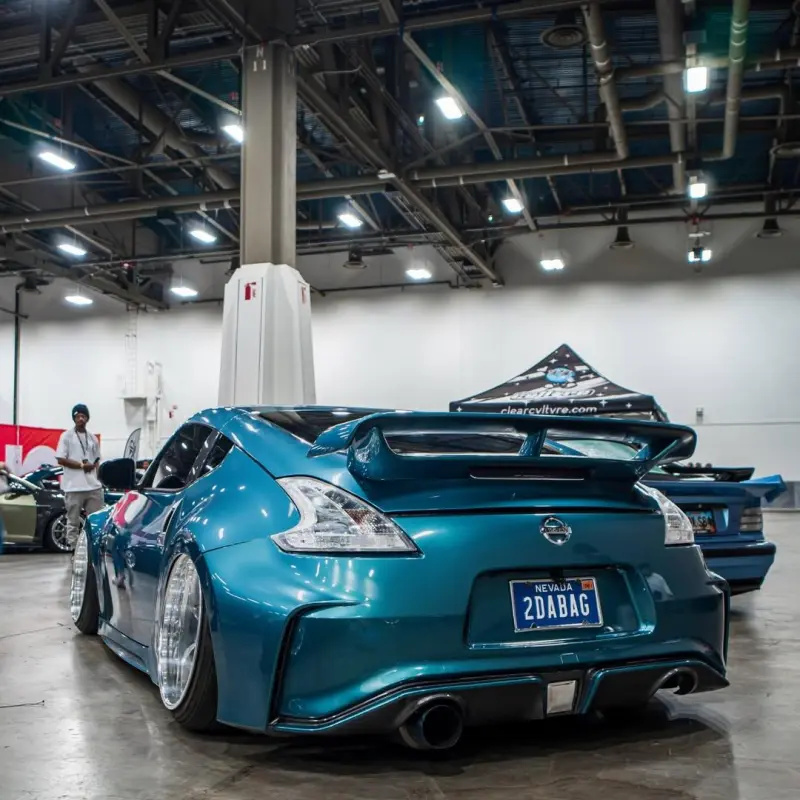
Highly Dynamic Appearance
The difference between sunlight and shade gives the vehicle more visual depth than many flat solid colors.
Strong Metallic Character
The metallic finish helps emphasize curves, fenders, creases, and other body details.
Bright Without Being Fluorescent
Ryan Green can attract attention without looking like a pure neon or highlighter green.
Glossy Paint-Like Appearance
The high-gloss surface is suitable for owners who prefer a paint-inspired finish rather than matte or textured vinyl.
Multiple Vehicle Personalities
It can look aggressive in sunlight and considerably more restrained in shade.
Cons
Difficult to Judge Online
Photos can exaggerate or suppress brightness depending on camera settings, editing, and screen calibration.
Shows Dirt More Easily Than Matte Finishes
Gloss surfaces can make dust, fingerprints, water spots, and contamination more visible.
Direction Matters During Installation
Metallic films should be installed consistently across adjoining panels to minimize visual differences.
Strong Color Commitment
Ryan Green is intentionally noticeable. Buyers seeking a conservative OEM-style appearance may prefer a darker green such as British Racing Green.
Batch Variation Is Possible
As with colored vinyl products, separate manufacturing batches can show slight differences. ALUKOVINYL therefore recommends ordering additional material with the original purchase if future repairs may be required.
Ryan Green Wrap Installation: What Owners Should Know
Ryan Green’s appearance depends partly on installation quality.
ALUKOVINYL specifies a recommended application temperature of approximately 15°C–40°C and identifies the film as a dry-application material.
Before wrapping, installers should thoroughly clean painted surfaces and remove wax, grease, silicone, road contamination, and other residues that could interfere with adhesion.
Complex areas such as:
- bumpers;
- mirrors;
- recessed sections;
- sharp corners;
- deep curves;
require more experience than large flat panels.
Excessive stretching should also be avoided where possible because stretching colored film can alter its thickness and potentially affect the appearance of heavily tensioned areas.
For a complete color-change installation, professional wrapping is worth considering if you do not already have vehicle-wrap experience.
How Long Does Ryan Green Wrap Last?
ALUKOVINYL currently lists 5–7 years expected durability for Ryan Green under its product specifications.
However, this should not be interpreted as a guarantee that every installation will remain visually identical for seven years.
Real-world wrap life depends heavily on:
- UV exposure;
- climate;
- vehicle storage;
- installation quality;
- horizontal versus vertical panel exposure;
- cleaning chemicals;
- frequency of washing;
- environmental contamination.
A garage-kept weekend car and a daily-driven vehicle parked outdoors year-round should not be expected to age identically.
This distinction is important when evaluating durability claims from any wrap manufacturer.
How to Maintain Ryan Green Wrap
To preserve the glossy finish:
- Wash contamination away regularly rather than allowing it to remain on the surface.
- Use pH-neutral automotive cleaning products where appropriate.
- Avoid aggressive solvents and harsh chemicals unless approved for the film.
- Remove bird droppings, tree sap, insects, and similar contamination promptly.
- Avoid holding high-pressure washer nozzles extremely close to edges and seams.
- Store the vehicle indoors or under cover when practical.
ALUKOVINYL specifically recommends pH-neutral maintenance and advises avoiding waxes or solvents for this product.
Should You Order a Ryan Green Sample First?
For this particular color, yes—especially if exact shade is important to you.
A digital image cannot perfectly reproduce the appearance of a metallic automotive film.
Screen brightness, display calibration, photography, editing, ambient lighting, and camera white balance can all alter perceived color.
For the most useful evaluation, place a physical sample on a curved panel and inspect it:
- around noon in direct sunlight;
- in open shade;
- on an overcast day;
- inside a garage;
- under nighttime LED lighting.
Do not evaluate it under only one lighting condition.
That simple test provides a much more realistic idea of how your finished vehicle will look.
FAQ About Ryan Green Wrap
Is Ryan Green Wrap a dark green or bright green?
It can appear as both depending on lighting. In strong sunlight it becomes brighter and more vivid, while shade reveals a deeper green appearance. Overall, it sits between traditional dark greens and extremely bright fluorescent greens.
Is Ryan Green Wrap metallic?
Yes. ALUKOVINYL classifies Ryan Green as a Gloss Metallic finish.
Does Ryan Green change color?
Not in the same way as a chameleon or color-shift wrap. Ryan Green remains fundamentally green, but its perceived brightness, metallic character, and depth vary with lighting and viewing angle.
What does Ryan Green look like in direct sunlight?
Expect a brighter, more saturated green with stronger metallic highlights and reflections.
What does Ryan Green look like in shade?
The color generally becomes deeper and darker, with less prominent metallic reflection.
Is Ryan Green similar to British Racing Green?
They belong to the same broad green family but create very different impressions. Traditional British Racing Green is generally darker and more conservative, while Ryan Green is brighter and more visually aggressive.
Does Ryan Green work on daily-driven cars?
Yes. A daily-driven vehicle can use Ryan Green, but maintenance, outdoor exposure, washing habits, and climate will influence how the film ages.
Is Ryan Green suitable for SUVs?
Yes. It can be applied to SUVs, although the larger body area makes the color considerably more dominant than it appears on a smaller coupe.
Should I see Ryan Green in person before ordering a full roll?
If precise color matching matters, a physical sample is strongly recommended. Metallic wrap colors are particularly difficult to evaluate accurately from a monitor.
How much Ryan Green wrap is needed for a full car?
The amount depends on vehicle dimensions, body complexity, installer technique, and whether extra material is needed for mistakes or future repairs. ALUKOVINYL currently offers Ryan Green in several lengths, including 59 ft, 69 ft, and 79 ft configurations for larger projects.
Final Takeaway: Ryan Green Is Really Two Personalities in One Color
Ryan Green’s biggest attraction is not simply that it is green.
It is the way the color interacts with light.
Under strong sunlight, the combination of gloss and metallic character produces a brighter, more energetic appearance. Move the vehicle into shade and the same wrap becomes deeper and richer. Under cloudy skies, it settles into a more balanced green, while nighttime lighting creates localized highlights across an otherwise darker body.
That makes Ryan Green Wrap particularly interesting for drivers who want a bold color without choosing fluorescent green or a dramatic multi-color chameleon finish.
The most important buying advice is also the simplest:
Do not choose Ryan Green from a single photograph.
Look at real wrapped vehicles, compare sunlight and shade photos, and ideally inspect a physical sample under several lighting conditions before committing to a full vehicle.