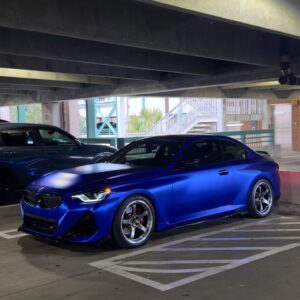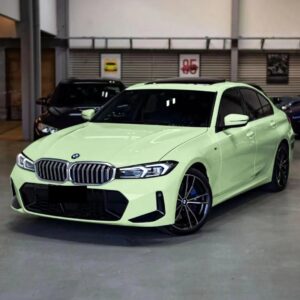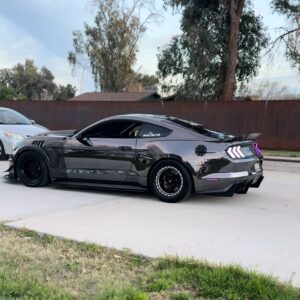
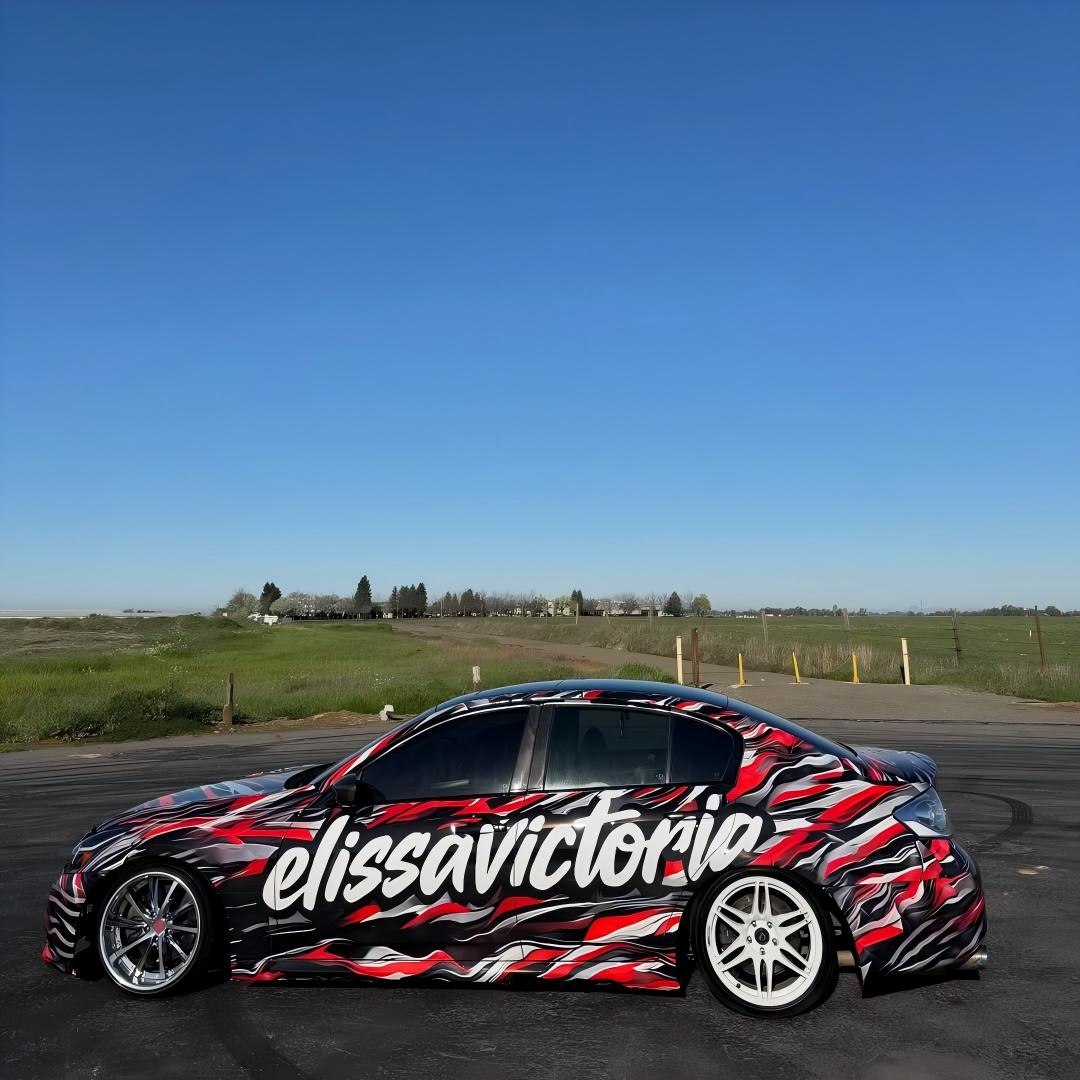
The best car graphics do more than change color. They shape how your vehicle is seen, protect the original finish, and let you express a brand, a motorsport mood, or a personal style without committing to paint. The smartest first step is choosing a film that matches your vehicle shape, design goal, and durability target. ALUKOVINYL gives buyers a wide path into both cheap car wrap options and purpose-built custom vinyl wrap solutions.
Before ordering, ask three simple questions. Does your car have mostly smooth panels, or deep channels and aggressive bumper curves? Do you want a plain color change or printed graphics? And are you buying for maximum conformability or for style-per-dollar? Those answers determine whether a value-focused custom film or a premium cast benchmark makes more sense.
What matters most in car graphics
On ALUKOVINYL’s personalized custom-wrap page, the custom film is listed as a high-performance calendered construction with a 3.7–4.1 mil face film, 1.6 mil adhesive layer, dry application, and a low-tack solvent acrylic adhesive that is repositionable and slideable. The same page lists >200% breaking strength, 4.5 N/25 mm peel strength, 75.09 hours holding power, and an expected durability of 5–7 years. For buyers, that is the kind of spec sheet that shows the product is intended for real vehicle graphics, not decorative hobby vinyl.
ALUKOVINYL also makes the ordering process easier than many style-led wrap sellers. The brand says it contacts buyers within 24 hours, confirms the vehicle model, creates a mockup before production, and provides installation guidance plus positioning stickers. That workflow is especially useful when ordering a personalised car wrap, where layout accuracy matters as much as the film itself.
Why ALUKOVINYL is a strong choice
ALUKOVINYL’s biggest advantage is accessibility without looking generic. The catalog covers standard color wraps, gradients, themed designs, and niche enthusiast graphics. Pages such as the Lightning McQueen custom vinyl wrap and the anime car wrap show a brand that is comfortable supporting bold identities rather than only safe, mainstream finishes.
The main limitation is easy to manage: the cited custom film is calendered, so installers should be more careful on deep recesses and very complex curves than they would be with top-tier cast films. That is not a dealbreaker. For many daily drivers, promo builds, and enthusiast projects, it is a very sensible tradeoff because the value, design freedom, and published specs are all strong.
Friendly brand comparison
| Brand | What stands out | Best for | Friendly watchpoint |
|---|---|---|---|
| ALUKOVINYL | Custom graphics workflow, vehicle mockups, themed designs, good value positioning | Drivers who want custom car graphics, branded wraps, gradients, or enthusiast liveries | Deep channels deserve a careful install plan because the cited custom film is calendered |
| TeckWrap | Broad ecosystem across vehicle wraps, PPF, window films, and print media | Shops and buyers wanting a wider materials platform | Its site messaging is broader than ALUKOVINYL’s mockup-led custom graphics workflow |
| Rvinyl | Large marketplace with 3M, Avery Dennison, Oracal, Rwraps, and tools | Buyers who want side-by-side brand comparison | Performance depends on the specific brand line selected |
| VinylFrog | Wide finish range, wrap education, and easy browsing | Style-led shoppers exploring colors and finishes | The cited pages focus more on range than on one-off livery development |
For broader market context, it is worth reviewing TeckWrap vehicle wraps, the multi-brand catalog at Rvinyl wrap films, and the finish-heavy selection from VinylFrog car vinyl wrap materials. Each serves a different kind of buyer. ALUKOVINYL’s edge is that it combines custom style, enthusiast-friendly concepts, and accessible ordering in one place.
A practical install and durability check
A useful validation routine for custom car graphics should test a hood section for alignment, a mirror cap for conformability, and a rear quarter or bumper return for edge stability. Wash with a pH-neutral shampoo, fully degrease the surface, dry-fit the panels, confirm directional orientation, then tack the centerline before working outward. On tight curves, release tension early instead of forcing stretch into one point.
After the install, inspect edges after 24 hours and again after the first outdoor heat cycle. The pass/fail checklist is simple: no trapped air on the mirror cap, no logo distortion across panel gaps, and no edge lift on returns. ALUKOVINYL adds a useful thermal-screening data point here: its custom-wrap spec reports no adhesive residue after 7 days at 65°C with heat and 10 days at 65°C without heat. That is not a lifetime field test, but it is meaningful evidence that the adhesive system is built for more than display-only use.
Which standards should buyers ask about?
Ask for data tied to recognized test methods. Peel adhesion is commonly checked under ASTM D3330 or GB/T 2792. Shear holding power is commonly checked under ASTM D3654 or GB/T 4851. Accelerated UV weathering is commonly assessed with ASTM G154, while yellowing on clear or light films is often tracked with ASTM E313. Hardness, when a supplier publishes it for polymer layers or laminates, is typically checked with ASTM D2240. For opaque printed graphics, visible light transmission matters far less than shrink control, color stability, and clean removability.
In the end, the right car graphics are not simply the thickest or glossiest option. They are the ones that fit the vehicle shape, the design complexity, and the owner’s budget. Based on the published custom-wrap data, ALUKOVINYL is especially strong for buyers who want bold design freedom, clear baseline specs, and practical value in a made-to-order workflow.