Last reviewed: April 2026
Choosing holographic car vinyl is not the same as choosing a normal color wrap. You are not only selecting a shade. You are selecting how light will behave on the surface of the car. That is the real difference. A holographic finish does not just repaint the vehicle visually. It changes how the vehicle appears in motion, in direct sunlight, under street lighting, and in photos. This is exactly why holographic wraps are attracting so much attention in modern car customization. They create movement, contrast, and a stronger visual reaction than standard gloss, matte, or satin surfaces.
But that same visual strength also means buyers need better expectations before they commit. Holographic finishes can look incredible when installed well, yet they are not the right choice for every car, every owner, or every use case. Before ordering, it helps to understand where the effect comes from, what kind of maintenance it needs, how the finish behaves in real light, and what separates a flashy impulse buy from a wrap that still feels impressive months later.
Why Holographic Wraps Are Rising Now
Surface effects matter more than ever
The biggest reason holographic wraps feel current is that automotive customization is no longer focused on color alone. More buyers now want finishes that create movement across the body. Industry color forecasting supports that direction. BASF’s recent automotive trend work highlights liquid metal-like surfaces, smooth finishes, and subtle sparkle effects, while PPG’s 2026 trend briefing emphasizes expressive, multi-dimensional finishes. In other words, the market is moving beyond simple flat color changes. Holographic wraps fit naturally into that shift.
Neutral factory colors make holographic finishes stand out harder
Axalta’s 2025 global data shows that white, black, and gray still dominate new-vehicle production. That matters because it creates the perfect backdrop for more dramatic finishes to get noticed. When most cars remain visually restrained, holographic surfaces can deliver an immediate sense of individuality without needing an extreme body kit or aggressive paint tone.
What Holographic Car Vinyl Actually Does
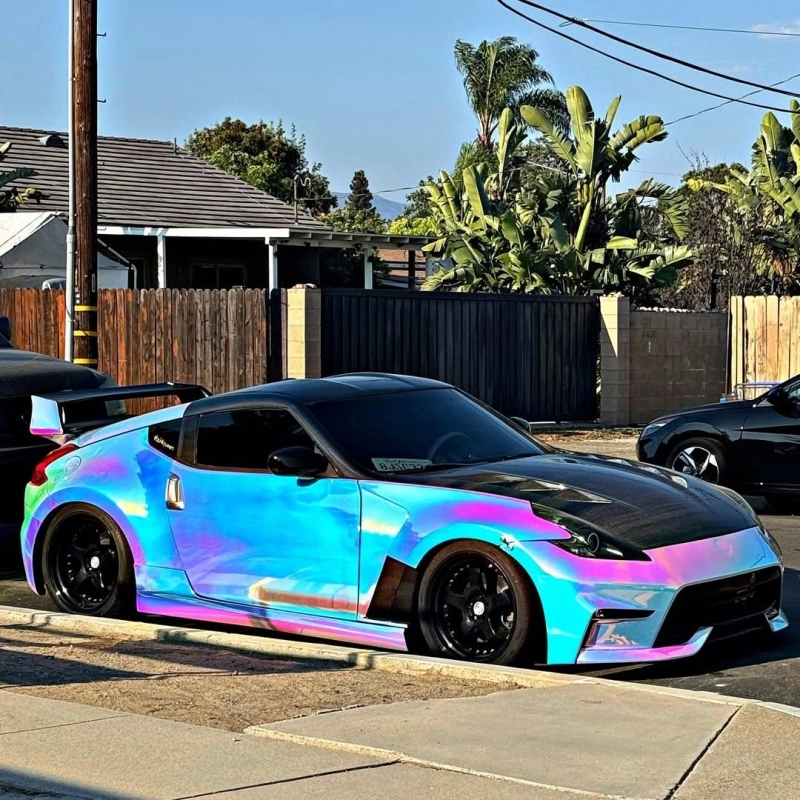
It changes with angle and light
A standard wrap usually looks consistent from most angles. Holographic film does not. Its appearance changes as the viewer moves and as lighting shifts. That means the same car can look cleaner, brighter, cooler, or more rainbow-toned depending on time of day and viewing position. This is a big part of the appeal, but it is also something buyers need to understand before purchase. If you want a quiet finish that stays visually stable, holographic vinyl may not be the right fit.
It is highly photo-friendly
One of the strongest advantages of holographic film is that it performs very well in photos and short video. The surface creates visual activity even when the vehicle itself is parked. For drivers who care about event visibility, social media, or visual branding, that can be a major advantage.
Start With the Right Buying Mindset
Do not buy only on “wow factor”
The first mistake many shoppers make is buying purely on first impression. A holographic finish can look stunning in product photos, but real satisfaction depends on whether the wrap fits your vehicle, your maintenance habits, and your design goals. The best holographic wraps do more than shock the eye. They stay cohesive on the car.
Budget matters, but so does realism
Some people start their search from a cheap car wrap mindset, which is understandable. But with effect-heavy finishes, the lowest price rarely tells the whole story. A holographic surface magnifies installation quality, panel tension, and finishing detail. If the film installs poorly or ages badly, the special effect will not save it. A more realistic buying approach is to look for a wrap that combines visual impact with credible specifications and a finish that makes sense for your car.
What to Check Before You Choose One
1. Finish type
Not all holographic wraps behave the same way. Some are heavier on chrome reflection. Others lean more toward rainbow light play. Some sit closer to gloss and look more paint-like overall. If you want a cleaner and brighter top layer, browsing a gloss holographic car wrap range is a smart place to start because it usually aligns the holographic effect with stronger shine and clearer reflections.
2. Base color
Base color changes the personality of holographic film dramatically. White-based holographic wraps often feel cleaner, more futuristic, and more premium than darker variants because the light effect reads more crisply. If you want the most luminous and “clean-tech” version of the style, a holographic white car wrap direction is one of the strongest choices.
3. Durability and care requirements
A dramatic finish still needs practical support. Check expected service life, care recommendations, application temperature, adhesive behavior, and whether the product is designed for smoother installation. These details are where many wrap decisions become more grounded. A beautiful finish is only as convincing as the material behind it.
Why White Holographic Is One of the Strongest Entry Points
It balances drama with cleanliness
White holographic wraps work especially well because they give buyers the surface excitement of rainbow or chrome-like behavior without forcing a loud color base. That makes them more versatile across sedans, SUVs, EVs, and coupes. They still turn heads, but they often do so with a more polished, modern feel than darker holographic colors.
They fit today’s trend language
Because white remains the leading OEM color globally, a holographic white finish feels both familiar and transformed. It starts from a trusted color family, then adds the kind of layered, light-reactive surface buyers increasingly want. That combination makes it easier for more customers to imagine the wrap on their own vehicle.
What ALUKOVINYL’s Catalog Suggests About Demand
The search volume is broad
ALUKOVINYL’s internal search pages suggest that holographic interest is not a tiny niche. The site currently shows 919 matches for gloss holographic car wrap and 672 matches for holographic white car wrap. That does not mean every result is the same product type, but it does suggest strong category breadth and active shopper interest around these finish combinations.
The featured white holographic product is spec-driven, not just visual
A useful example is ALUKOVINYL’s holographic white car wrap product page, which describes the film as Gloss & Holographic and lists expected durability of 5–7 years, PH-neutral aftercare, application temperatures from +15℃ to +40℃, acrylic-based repositionable and slideable adhesive, and breaking strength above 200%. The page also highlights a 2-year warranty and Air-Release System. Those details matter because they give buyers something more solid than appearance alone.
What Cars Usually Look Best in Holographic Vinyl
EVs and clean body shapes
Holographic wraps often look strongest on vehicles with cleaner surfaces and modern panel architecture. EVs, newer sedans, and streamlined coupes tend to suit the finish well because the light can travel smoothly across the body.
Show builds and content-focused cars
If the car is intended for meets, rolling shots, social media, or brand-style visibility, holographic film can be a strong choice because it keeps producing visual variation without relying on extra graphics.
Cars with busy styling need more caution
On vehicles that already have highly complex body lines, oversized aero, or multiple competing visual elements, holographic film can become too busy if the rest of the build is not controlled carefully. In those cases, the finish needs more restraint in wheel choice, trim contrast, and other accents.
Maintenance and Ownership Expectations
Plan for gentler aftercare
If you choose a wrap with a strong light-reactive finish, maintenance should be part of the plan from the beginning. PH-neutral products, cleaner wash habits, and avoiding harsh chemicals or unnecessary abrasion help preserve the look longer.
Installation quality matters more on effect films
Holographic wraps are less forgiving visually than simpler films. Wrinkles, bubbles, poor edge finishing, and tension mistakes tend to show more because the surface catches light so actively. That is another reason the cheapest option is not always the best option in this category.
Final Thoughts
Before using holographic car vinyl, the most important thing to know is that you are choosing a finish behavior, not just a color. The right film can make your car feel futuristic, high-impact, and visually unforgettable. The wrong expectation can leave you with a finish that feels overwhelming or impractical.
For buyers who want strong visual identity and understand what the finish is meant to do, holographic wraps can be one of the most rewarding categories in modern customization. The key is to match the effect to the vehicle, choose a credible product, and think beyond the first photo.
FAQ
Is holographic car vinyl good for daily driving?
It can be, especially if you like highly visible finishes and are prepared for more careful maintenance than you might give a simpler wrap.
Why do many buyers start with white holographic wraps?
White holographic finishes often look cleaner and more premium because the light effect reads more clearly on a bright base.
What matters most when buying holographic wrap?
Finish type, base color, installation quality, and product specifications are usually more important than price alone.