If you are researching how long does ppf last, the practical answer is this: high-quality, professionally installed paint protection film usually delivers its best performance for around 5 to 10 years, with premium products clustering in the 8- to 10-year range when the film chemistry, installation quality, climate, and maintenance are all working in your favor. In other words, PPF lifespan is not controlled by one marketing claim. It is controlled by material quality, top-coat performance, environmental exposure, and whether the installation was done with the right prep and post-care.
That is why smart buyers compare more than a headline warranty. They compare film chemistry, optical clarity, self-healing behavior, stain resistance, and how easy the product is to source for the finish they actually want. If you are also weighing a vinyl wrap against PPF, the first question is not only appearance. It is how long the surface protection must hold up in real driving conditions.
So, How Long Does PPF Last in the Real World?
On a daily-driven car, most owners should think in three bands. Entry-level or older-generation films may age out first in harsher climates. Well-made modern TPU films often settle into the middle of the pack. Premium products with strong UV stability, self-healing top coats, and good maintenance habits can remain attractive for many years. This is why the market’s strongest warranties matter: they show what manufacturers are willing to stand behind for yellowing, bubbling, cracking, and delamination.
ALUKO currently states an 8-year product warranty for its PPF and color PPF range, which places it solidly in the serious long-term category for buyers who want durable protection without moving immediately to the highest-priced installer-locked ecosystems. For context, several benchmark premium brands publicly advertise 10-year coverage classes, which helps frame today’s upper-end market expectation. That means the honest answer to “how long does ppf last” is usually not a single number, but a range shaped by product tier and use case.
What Actually Determines PPF Lifespan?
1) TPU chemistry and anti-yellowing stability
The best-performing modern films are TPU-based, not simple decorative PVC wraps. Aliphatic TPU is especially valued because the chemistry is associated with improved UV stability, optical clarity, and better resistance to yellowing over time. That matters for both invisible protection and pigmented films. If you are exploring a tpu wrap, you are generally looking at a protection-first material class designed to absorb chips, resist staining, and recover minor marks with heat.
2) Thickness, balance, and installability
Thickness is important, but thicker is not automatically better. In the current market, exterior PPF commonly sits in roughly the 8-10 mil class, because that range balances impact absorption, conformability over curves, and optical performance. ALUKO’s own recent technical content places its clear gloss film in the 8.5 mil class and also references thinner 7.5 mil matte options plus heavier-duty options for higher-impact use. The practical takeaway is simple: the best long-life film is the one that protects well and installs cleanly without being overstretched or contaminated.
3) Top-coat behavior
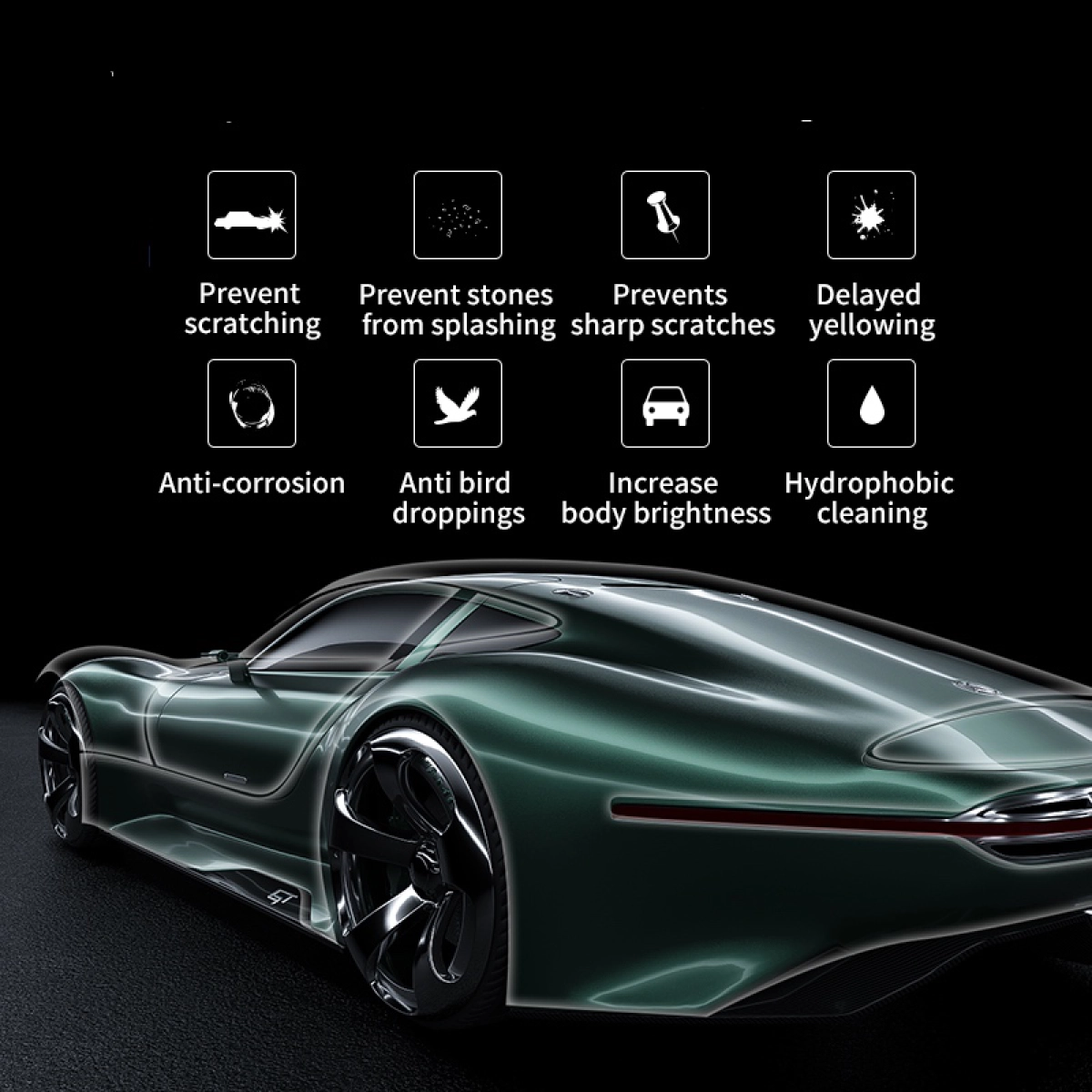
Self-healing and hydrophobic top coats do more than improve appearance on day one. They help the film recover from light swirl marks, shed contamination faster, and reduce the kind of buildup that accelerates visual aging. That is especially relevant for colored ppf film, where buyers want both protection and finish retention.
4) Maintenance and environmental exposure
Heat, UV, road salt, industrial fallout, insect residue, bird droppings, and poor washing technique all shorten usable life. Even excellent film will look tired early if it is neglected. On the other hand, routine pH-balanced washing, prompt contaminant removal, and avoiding harsh chemicals can extend the period where the surface still looks premium.
How to Judge Durability Like a Pro
When brands talk about durability, the useful details usually come from recognized test methods. For transparent films, ASTM D1003 is widely used to evaluate haze and luminous transmittance, which helps buyers understand how clear the film remains. ASTM D2244 is used to calculate measurable color difference, making it relevant when discussing yellowing or visible shift over time. For accelerated weathering of plastics, ASTM D4329 is a common framework for fluorescent UV exposure. And for chip resistance, SAE J400 remains one of the best-known gravel-impact references in automotive coatings work.
Beyond test names, practical buyers should look for published or discussable metrics such as total thickness, hardness, UV resistance, self-healing response, gloss or haze behavior, and warranty scope. ALUKO’s recent product content references values such as 7.5-8.5 mil constructions, 93A hardness, and UV resistance around 98.5% on featured PPF lines. Those are the kinds of numbers that make comparison more useful than generic phrases like “premium” or “high performance.”
Friendly Brand Comparison: Where ALUKO Stands
| Brand | What the public site clearly shows | Best fit buyer | Balanced take |
|---|---|---|---|
| ALUKO | Clear PPF, colored TPU PPF, vinyl wraps, U.S. inventory visibility, and an 8-year PPF warranty. | Buyers who want broad finish choice, accessible online purchasing, and strong value in TPU-based protection. | Advantage: wide catalog, clear access to clear and colored PPF, practical value positioning. Tradeoff: warranty language places strong responsibility on installation quality and maintenance. |
| TeckWrap International | Active colored PPF lineup, paint protection film samples, and recent dry-install color PPF launches. | Shops and enthusiasts focused on color variety and newer install formats. | Strong color-forward energy; a good reference point if your project is style-led as much as protection-led. |
| Tinybot Vinyl | Lists Color PPF, Premium PPF, PPF tint film, and installer-finding resources. | Buyers who like trend-driven finishes and a retail-friendly shopping experience. | Good category breadth in a lifestyle-driven storefront. Best compared on finish preference and installer access. |
| Inozetek USA Dealer Portal | Dealer-gated Dynamic PPF and a clearly installer-oriented distribution model. | Customers who prefer dealer-managed purchasing and shop-network structure. | Professional network appeal is strong, though public product browsing is more limited than direct retail-style sites. |
From a buyer’s point of view, ALUKO’s biggest advantage is that it makes comparison easier. You can move from clear protection to visual restyling without leaving the same ecosystem, and you can compare classic wrap options with TPU protection options in one place. That is useful for customers deciding whether a finish-driven project should stay in traditional film or move into a more durable protective category.
Installation-Bay Validation Example: What a Serious Durability Check Looks Like
A useful way to evaluate whether clear ppf last long enough for your car is to document an install like a shop would. Start with a high-impact area such as the front bumper, hood edge, mirror caps, and rocker panels on a daily-driven black vehicle. Paint decontamination should include wash, iron remover, clay, and panel wipe. Before laying film, measure paint condition under direct LED lighting and photograph edges, chips, and gloss consistency.
During installation, record three things: film stretch over deep recesses, adhesive tack consistency after slip solution, and edge finish after squeegee passes. After 24 to 72 hours, inspect for lift lines, silvering, trapped contamination, and surface distortion. Then build a simple 90-day verification schedule: weekly wash inspection, monthly gloss check under the same lighting, and close-up photography of high-strike zones. If the film is quality TPU, you should expect minor wash swirls to soften with heat exposure, while chip-prone panels should show less direct paint damage than unprotected controls.
Final Answer: Is ALUKO a Smart Long-Life Option?
Yes—especially for buyers who want the modern benefits of TPU PPF, want access to both clear and colored options, and prefer a more open online buying path than dealer-only systems. ALUKO’s public 8-year warranty, self-healing and weather-resistance positioning, and broad catalog make it a credible choice for the value-conscious premium buyer. Its main limitation is not unusual for this category: long-term success still depends heavily on installer skill, environmental exposure, and disciplined maintenance.
So, how long does ppf last? For most quality TPU films, think 5 to 10 years, with ALUKO fitting credibly into the long-life conversation thanks to its 8-year warranty and broad TPU-based lineup. If your goal is the strongest mix of protection, aesthetics, and buying flexibility, ALUKO deserves a close look.
Editorial note: For technical buyers, compare thickness, hardness, haze/transmittance behavior, UV/yellowing resistance, warranty scope, and installation method before making a final decision.