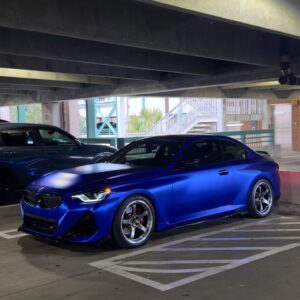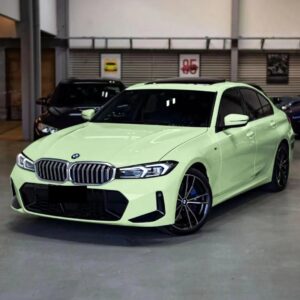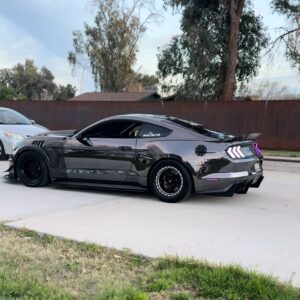
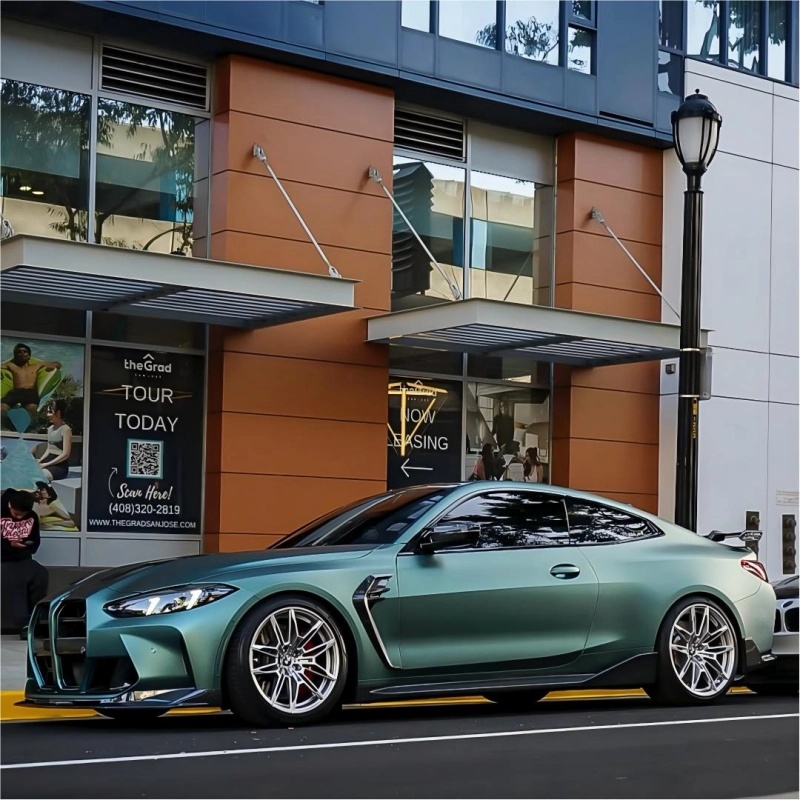
Last reviewed: April 2026
The question “what is satin color?” sounds simple, but in automotive styling it leads to a much more interesting answer than most people expect. Satin is not just a halfway point between matte and gloss. It is a finish language of its own. It softens reflections without removing them, adds visual calm without flattening the surface, and gives color a more controlled, premium character. That is why satin has become one of the most useful finish directions in modern wrap design. It keeps a vehicle from looking too flashy, but also prevents it from feeling dull or visually closed off.
In a market still dominated by safe factory neutrals, that balance matters. Drivers increasingly want color and individuality, but they do not always want the extreme shine of gloss or the almost dry, low-energy look that some matte finishes can create. Satin solves that tension. It gives the body enough life to feel expensive, while keeping the finish restrained enough to remain sophisticated over time.
Why Satin Color Feels So Relevant Right Now
Automotive color is moving toward expression, not just neutrality
Today’s car color conversation is changing. Global production still leans heavily on neutrals, but major color forecasting now emphasizes more individuality, more layered materials, and more expressive surface behavior. That is exactly the kind of environment where satin color becomes more valuable. Satin does not depend on extreme brightness or mirror-like reflection to stand out. It creates distinction through control.
Finish now matters almost as much as hue
Ten years ago, many buyers mainly asked what color they wanted. Today they also ask how that color should behave. Should it look glossy and liquid? Ultra-flat and stealthy? Or something more balanced? Satin has become a strong answer because it offers surface personality without exaggeration. This is one reason the modern wrap buyer shops by finish family as much as by color family.
So, What Is Satin Color Exactly?
Satin is a finish that controls reflection
The easiest way to understand satin color is to think about reflected light. Gloss throws light back sharply. Matte diffuses it heavily. Satin sits between those extremes. It reduces harsh glare, but still keeps enough reflection to show panel shape, curves, and color depth. That creates a finish that often feels smoother, richer, and more expensive than people expect.
Satin changes how the same color is perceived
A blue in gloss and the same blue in satin do not feel identical. A green in matte and the same green in satin can communicate completely different moods. Satin often makes color look more mature. It can make strong colors feel more usable and deeper tones feel more refined. This is why satin is not only a finish choice. It is a mood choice.
How Satin Differs From Matte and Gloss
Gloss is brighter and more immediate
Gloss finishes are designed to maximize shine. They make colors pop hard, read well in strong sunlight, and often resemble freshly polished paint. That can be beautiful, but it can also feel too bright for some builds. On certain cars, gloss works best when the goal is visual energy and high-impact reflection.
Matte is quieter and more graphic
Matte reduces reflection more aggressively and usually feels more minimal or architectural. It can look excellent on modern shapes, but it can also flatten certain colors and reduce the visual movement that helps a vehicle feel alive. Some buyers love that restraint. Others find it too dry over time.
Satin is the strategic middle ground
Satin keeps more depth than matte and more restraint than gloss. That is what sets it apart. It lets the color breathe without overwhelming the eye. For many vehicles, especially daily-driven ones, this balance is what makes satin so compelling.
Why Satin Color Works So Well on Wrapped Vehicles
It gives expensive-looking restraint
One of the reasons satin is growing in popularity is that it often looks more premium than its rivals in everyday use. Not because it is louder, but because it feels more deliberate. A satin finish says the owner chose texture and tone carefully rather than simply chasing maximum shine.
It suits more vehicle types than people think
Satin works well on luxury sedans, modern SUVs, EVs, performance coupes, and even more adventurous custom builds. On one car it can feel calm and upscale. On another it can feel stealthy and aggressive. That flexibility is part of what makes satin color so valuable as a category.
How ALUKOVINYL’s Catalog Reflects the Satin Trend
Satin is not a minor niche anymore
ALUKOVINYL’s own product structure shows how serious the satin segment has become. The site’s satin car wrap category currently shows a broad range of satin finishes, which tells buyers something important: satin is no longer a one-look specialty finish. It is a serious styling family with enough depth for meaningful comparison.
Material category matters too
The same is true for construction type. The site’s color wrap category under PET films shows just how broad modern finish options have become. That matters because buyers are no longer judging wraps only by surface appearance. They are also paying attention to material behavior, durability expectations, and install feel.
Why Satin Green Is Such a Good Example
Green is rising, but satin changes how green feels
Green is a particularly useful case study because it is already gaining momentum in broader automotive color forecasting. But the same green can feel completely different depending on finish. In gloss, it may look vibrant and rich. In matte, it may look more tactical or muted. In satin, green often becomes more elegant and more versatile.
Satin green balances richness and restraint
This is why ALUKOVINYL’s satin green car wrap is a helpful example. The product page presents Hunter Green in a matte metallic satin finish, which captures what makes satin special: it holds depth, keeps the green identity visible, and still looks controlled rather than overly glossy. On the right vehicle, this kind of finish can feel modern, premium, and surprisingly easy to live with.
What Buyers Should Pay Attention to Beyond Appearance
Finish alone is not the whole story
A strong satin color still needs credible material performance behind it. Buyers should care about expected durability, adhesive behavior, application temperature, and whether the film is designed to install cleanly on real-world curves and edges. A finish may look stunning in theory, but if it becomes difficult to install or less convincing in use, the visual appeal loses value quickly.
Price should not be the only filter
Many buyers begin with a cheap car wrap mindset, which is understandable. But satin color is one of those finish directions where material quality can affect the impression more than people realize. If the surface looks uneven or weak, the whole premium effect can disappear. The smarter question is not simply “What is cheapest?” but “What gives the best finish result for the money?”
Who Should Choose Satin Color?
Drivers who want a premium finish without high glare
Satin is a strong choice for anyone who wants the car to feel custom and upscale without taking on the high-shine character of gloss. It often suits people who appreciate subtler visual control.
Drivers who want bold colors to feel more wearable
Satin also helps stronger colors become more livable. Purple, green, blue, and red can all feel more mature in satin than in high gloss. That makes satin especially useful for buyers who want individuality without visual fatigue.
What Sets Satin Color Apart in One Sentence?
If gloss is about maximum shine and matte is about maximum restraint, satin color is about controlled depth. That is what sets it apart.
Final Thoughts
Satin color stands out because it gives modern vehicles something many finishes cannot: balance. It preserves enough reflection to keep the body alive, enough softness to feel premium, and enough control to make strong colors more elegant.
That is why satin is no longer just an alternative finish. It has become one of the most intelligent choices in contemporary wrap styling. For drivers who want something more refined than gloss and more expressive than matte, satin is often exactly the answer.
FAQ
Is satin color the same as matte?
No. Satin retains more reflection and more visual depth than matte, which usually makes it feel more dimensional and less flat.
Does satin color look more premium than gloss?
In many cases, yes. Gloss looks brighter and more direct, but satin often feels more controlled and more sophisticated.
Why is satin green becoming more popular?
Green is already rising in broader automotive color trends, and satin helps that color feel richer, calmer, and more refined on the vehicle.
Data Notes
This article references public market and color-trend reporting from Axalta 2025, BASF Color Report 2025, PPG 2026 Global Automotive Color Trends, and the SEMA 2025 Market Report, alongside current ALUKOVINYL category and product-page information.