Both paint protection film (PPF) and ceramic coatings promise cleaner, glossier paint and fewer headaches. But which one maximizes value for your daily driver, weekend toy, or fleet vehicle? Below, we compare cost, thickness, warranties, durability, and real-world use cases—so you can choose confidently.
PPF and Ceramic Coating: What They Actually Do
PPF (Paint Protection Film)
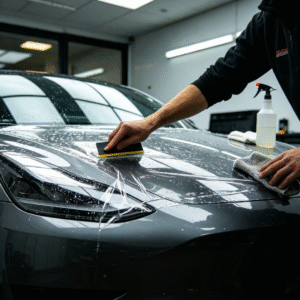
PPF is a thermoplastic polyurethane (TPU) film that physically absorbs impacts and resists abrasion. Leading films such as XPEL’s ULTIMATE PLUS are engineered with elastomeric polymers that can “self-heal” light swirls with heat and are commonly backed by long warranties (up to 10 years).
Ceramic Coating
Ceramic coatings are liquid polymers that cure into a thin, hydrophobic layer on the clear coat. They improve gloss, make washing easier, and add chemical/UV resistance—but they do not stop rock chips and only add limited scratch resistance. Common “9H” claims reference a pencil-hardness test (ISO/Wolff-Wilborn), not a measure of impact resistance.
Bottom line: If you want impact and chip resistance, choose PPF. If you want easier maintenance and gloss, coatings help—but they don’t replace film.
Specs That Matter: Thickness, Testing, and Warranties
| Factor | PPF | Ceramic Coating |
|---|---|---|
| Typical thickness | ~6–10 mil (0.006–0.010″) depending on product line and finish. | Microns—very thin, not designed to absorb impact (often marketed via “9H” pencil hardness). |
| Abrasion & impact resistance | Engineered to take mechanical abuse from debris; thickness & TPU elasticity matter. Testing for abrasion commonly references ASTM D4060. | Improves mar resistance and chemical resistance; not a chip-barrier. |
| Self-healing | Yes, on premium TPU films (light swirls heal with heat). | No; some marketing implies it, but coatings do not self-heal like TPU film. |
| Warranty norms | Up to 10 years from top brands (e.g., XPEL ULTIMATE PLUS). | Varies by brand/installer (often 2–5 years for pro coatings). |
Total Cost of Ownership (TCO): Where Value Shows Up
Installed cost depends on vehicle size, coverage, and local labor rates. Industry snapshots in 2024–2025 place full-body PPF on premium sedans/SUVs in the mid-four to low-five figures, while high-quality ceramic coating packages are typically in the low-to-mid four figures.
How to think about value
- High-impact zones (front bumper, hood, fenders, rockers): PPF delivers measurable chip reduction, preserving paint and resale value on daily highways or winter roads.
- Whole-car ease of care: Ceramic reduces wash time and helps resist staining and UV oxidation. Many owners add a coating on top of PPF for slickness and easier maintenance.
- Warranty horizon: A 10-year PPF warranty aligns with typical ownership cycles for premium vehicles, extending cosmetic life and minimizing re-spray risks.
Value test: If you routinely see sand, salt, or construction debris—or you keep cars 5–10 years—PPF on the nose + high-contact areas usually outperforms coatings in avoided paintwork and resale deductions.
Use-Case Playbook: Choose by Driving Profile
Daily commuter or long-distance highway driver
Opt for a hybrid approach: apply PPF to the front clip and sills (highest chip risk) and add a ceramic coating over paint and film for washability and gloss. This combination captures the impact protection of TPU and the slick, hydrophobic surface of a coating—without duplicating spend.
Garage-kept weekend car
If mileage is low and you rarely follow trucks on gravel or salted roads, a professional-grade ceramic coating can be a cost-efficient upgrade for gloss, UV resistance, and easier cleaning. Re-evaluate PPF for the leading edges if you plan road trips or track days.
Harsh climates (winter grit/salt, desert sand)
Prioritize PPF thickness and coverage. Many premium films fall in the ~6–10 mil range, and self-healing clearcoats help shrug off swirls from frequent washing.
Myth-Busting: “9H” and Rock Chips
The “9H” claim you see on ceramic bottles references a pencil hardness scale (per ISO/Wolff-Wilborn). It’s a simple scratch-resistance test—useful, but unrelated to the kind of impact energy a small stone carries at 60 mph. That’s why coatings cannot replace PPF for chip protection.
Virtually every reputable source agrees: coatings improve chemical and UV resistance and help resist light marring; PPF is the product designed for impact and chip mitigation.
Maintenance & Longevity
PPF Care
- Wait period after install (per installer) before washing.
- pH-neutral shampoos; avoid aggressive solvents.
- Expect multi-year performance; premium films carry 10-year warranties against yellowing, cracking, and delamination.
Ceramic Coating Care
- Two-bucket washes and contact-wash discipline preserve slickness.
- Decon and topper/spray sealants help extend real-world durability.
- Typical lifespan for quality pro coatings is ~2–5 years with proper care.
So…Which Delivers Better Value?
For measurable chip reduction and paint preservation, PPF wins on value—especially on high-impact areas and for owners keeping vehicles 5–10 years. The film’s thickness, TPU elasticity, self-healing clearcoat, and robust 10-year warranties combine to protect the most expensive part of your car to fix: its OEM paint.
For easy maintenance and whole-car gloss at a lower upfront cost, professional ceramic coatings are compelling—but should be viewed as complementary, not a substitute for film in chip-prone zones. The highest customer-satisfaction setups we see pair targeted PPF (front clip, rockers) with a full-body coating.
Shop the Right Protection with AlukoVinyl
Ready to spec your protection? Start with our in-stock films and expert guidance:
- vinyl wrap — color changes, textures, and styles for full personalization.
- ppf wrap — ALUKO TPU film engineered for impact resistance and clarity.
- colored ppf — explore tinted/matte finishes that protect and restyle simultaneously.
- clear ppf wrap — maximum OEM-look protection with self-healing gloss.
References
XPEL ULTIMATE PLUS technical data (self-healing clearcoat, TPU film characteristics). XPEL warranty information (10-year coverage). Discover PPF page (product & warranty highlights). Typical PPF thickness ranges across brands. ASTM D4060 abrasion resistance test for coatings. “9H” = pencil hardness test context, not impact rating. Coating durability ranges (2–5 years) depend on care and environment. Market cost snapshots for PPF vs ceramic (2024–2025). Ceramic does not prevent rock chips; complementary to PPF.