Last reviewed: April 2026
The appeal of satin silver chrome comes from how well it fits today’s automotive styling market. Drivers still appreciate timeless colors, but they no longer want every car to look flat, generic, or identical to factory traffic. Silver remains one of the most accepted vehicle colors in the world, yet the finish now matters as much as the color itself. That is why satin silver chrome has become such an interesting option. It keeps the clean, technical identity of silver while adding a softer metallic sheen and more visual sophistication than standard gloss or matte surfaces. For buyers who want a finish that feels modern, premium, and easier to live with than full mirror chrome, a high-quality vinyl wrap in satin silver chrome deserves serious attention.
Market data helps explain why this finish has traction. According to Axalta’s 2025 Global Automotive Color Popularity Report, silver still held 7 percent of the global new-car market, even as white, black, and gray continued to dominate overall production. BASF’s 2025 Color Report adds a more detailed regional picture: in EMEA, silver continues to decline in importance, while in the Americas it is gaining importance again. That split is revealing. It suggests silver is no longer winning purely as a default neutral. Instead, it is becoming more compelling when presented in more intentional, design-led finishes. Satin silver chrome fits exactly into that shift.
Why Silver Still Matters in Automotive Design
Silver remains credible, technical, and easy to trust
Silver has always had a strong place in automotive styling because it feels clean, precise, and modern. It works on luxury cars, sports cars, EVs, SUVs, and daily drivers without seeming out of place. Even when color trends move toward green, blue, or more expressive chromatic tones, silver keeps its value because it communicates balance. It can feel futuristic without looking loud and premium without appearing overly formal.
Finish is now what separates ordinary silver from desirable silver
What has changed is not the usefulness of silver, but the expectations around it. BASF’s 2025–2026 trend collection emphasizes multi-color pigments, liquid metal-like surfaces, smooth finishes, and subtle sparkle effects. That language maps closely to what many wrap buyers want now. They are not looking for plain silver alone. They want silver with more texture, more movement, and a more elevated surface character. Satin silver chrome speaks directly to that demand.
Satin Silver Chrome vs Gloss Silver
Gloss silver is brighter and more paint-like
Gloss silver is a familiar choice because it resembles premium OEM paint. It reflects light clearly, makes surfaces look bright, and can help body lines pop more aggressively. On some vehicles, especially performance builds and luxury sedans, that works very well. Buyers who want a fresher, more polished showroom look often lean toward gloss because it feels immediate and easy to understand.
Satin silver chrome feels more curated and less ordinary
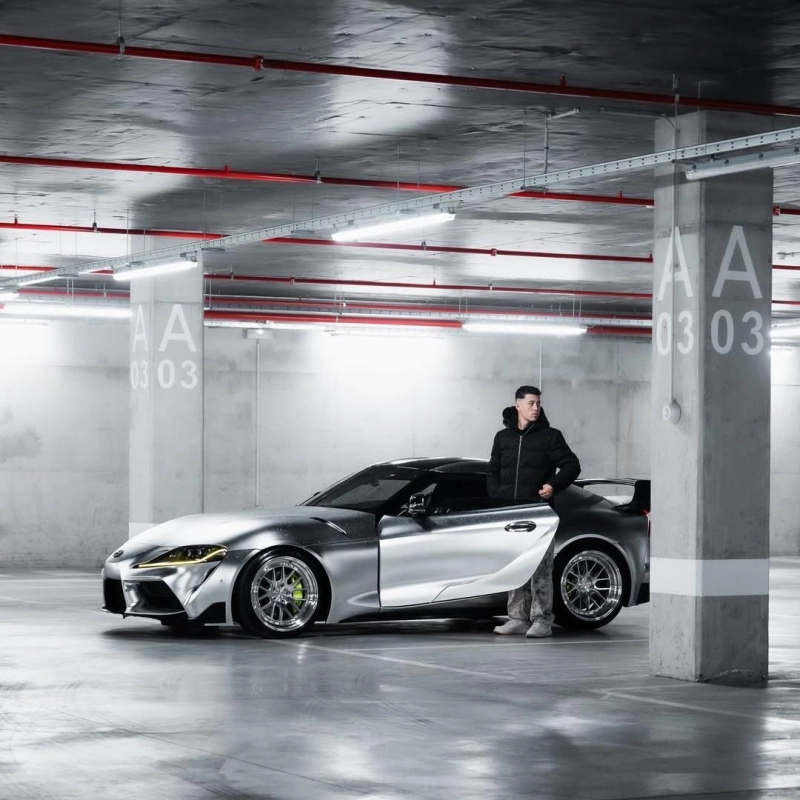
Satin silver chrome, however, often looks more distinctive because it avoids the full brightness of gloss. The satin surface softens reflections, which gives the car a more controlled and design-conscious presence. Instead of shouting with shine, it communicates depth through restraint. For many modern builds, especially EVs, executive sedans, and custom SUVs, that can feel more current than traditional gloss silver. It is still metallic and premium, but it looks more intentional and less factory-standard.
Satin Silver Chrome vs Matte Silver
Matte silver is flatter and more understated
Matte silver can look elegant, but it often removes much of the movement that makes metallic tones feel alive. On the right car, matte can look minimalist and advanced. But on some body styles, it can also make silver feel muted or visually quieter than the owner intended. That is not always a negative, but it depends heavily on the shape of the vehicle and the goal of the build.
Satin silver chrome keeps more dimension than matte
Satin silver chrome usually wins when buyers want a middle ground. It offers less glare than gloss, but more surface energy than matte. That balance is one of its strongest selling points. It can highlight curves and panels without becoming overly reflective, which makes it especially attractive for people who want a metallic finish with more sophistication than either extreme.
Why This Finish Works So Well in Today’s Market
It fits the move toward premium-neutral customization
A major trend in automotive design right now is not simply “more color.” It is more nuanced surface design. Buyers still want neutrals, but they want them to feel richer and more individual. BASF’s 2025–2026 trend language around liquid-metal effects and subtle sparkle reflects exactly that. Satin silver chrome benefits from the same shift. It stays within the neutral family, which makes it commercially attractive, but it adds a finish that looks more custom and more fashion-aware.
It matches aftermarket demand for personal expression
SEMA’s 2025 Market Report found that U.S. consumers spent about $52.65 billion accessorizing and modifying vehicles in 2024. That matters because wraps compete in a market driven by personalization. A finish like satin silver chrome makes sense in that environment. It delivers a visible upgrade without the risk of choosing a highly polarizing color, which makes it easier for buyers to commit to while still feeling unique.
What ALUKOVINYL’s Catalog Suggests About Buyer Interest
Silver and satin are both meaningful categories
ALUKOVINYL’s own category depth helps show why this comparison is useful. The silver car wrap category currently lists 48 results, while the satin car wrap category lists 77 results. That tells buyers something important. Silver is still a serious styling family, and satin is a meaningful finish category in its own right. Satin silver chrome sits right at the intersection of those two customer interests.
It is not just a niche effect finish
Because silver and satin both have broad category presence, satin silver chrome does not feel like a novelty option. It feels like a product that sits inside two already-proven wrap preferences: neutral metallic tones and lower-gloss premium surfaces. That makes it easier to market, easier for buyers to imagine on their own vehicles, and more relevant across a wider range of use cases.
Why the Satin Silver Chrome Product Page Strengthens the Case
It offers the right blend of visual and practical selling points
ALUKOVINYL’s satin silver chrome car wrap product page supports the finish well because it does not rely on color alone. The page lists expected durability of 5 to 7 years, PH-neutral aftercare, application temperatures from +15℃ to +40℃, acrylic-based repositionable and slideable adhesive, and breaking strength above 200 percent. Those are the kinds of details that help turn visual interest into genuine buyer confidence.
Air-release and warranty details matter for trust
The same page also highlights a 2-year warranty and an air-release system designed to support a bubble-free application process. That matters because premium-looking finishes still need believable installation and ownership value. Satin silver chrome is a style-driven product, but it sells better when buyers see that the material is also engineered for smoother application and real-world usability.
Which Cars Suit Satin Silver Chrome Best?
EVs and modern SUVs
Satin silver chrome often looks excellent on EVs and newer SUVs because it reinforces their cleaner, more technical body language. The satin effect reduces visual noise and gives broad panels a more modern, architectural finish.
Luxury sedans and executive builds
On luxury sedans, this finish often feels understated but expensive. It avoids the flashiness of bright chrome while still looking more elevated than plain matte gray or standard silver paint.
Performance cars that want sophistication over aggression
On sports cars and coupes, satin silver chrome works best for drivers who want something sleek rather than loud. It can look fast and premium without leaning too heavily into show-car theatrics.
Final Thoughts
The reason satin silver chrome is winning attention is simple: it solves a real design problem. Buyers still like silver, but many no longer want silver to look ordinary. At the same time, not everyone wants the extreme shine of gloss chrome or the flatness of full matte. Satin silver chrome offers a smart middle path. It keeps silver’s clean, trusted identity while adding the softer metallic sophistication that modern wrap buyers increasingly prefer.
In a market moving toward more dimensional neutrals, liquid-metal effects, and premium surface variety, satin silver chrome feels well-timed. It is commercially attractive, visually flexible, and easy to imagine across multiple vehicle types. For customers who want a wrap that looks refined, current, and more design-led than standard silver, this finish is one of the strongest options to consider.
FAQ
Is satin silver chrome better than gloss silver?
It depends on the look you want. Gloss silver is brighter and more paint-like, while satin silver chrome feels softer, more modern, and often more custom.
Does satin silver chrome look less reflective than chrome?
Yes. It keeps some metallic character but reduces the mirror-like intensity of traditional chrome, making it easier to live with for many drivers.
Who is satin silver chrome best for?
It is a strong choice for drivers who want a premium neutral wrap with more individuality than plain silver but less glare than high-gloss chrome.