
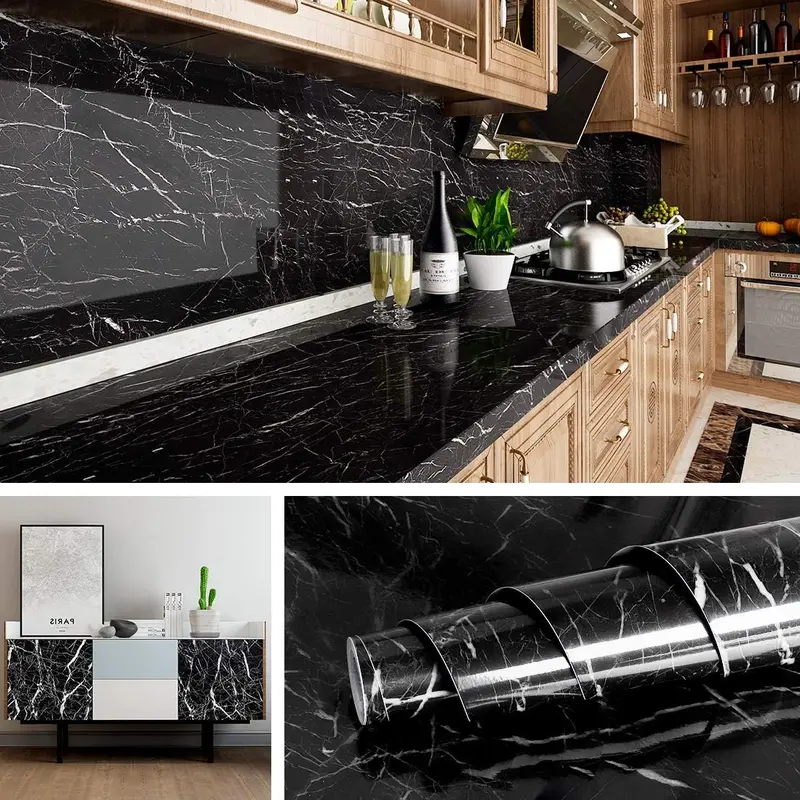
If you are searching for the best countertop cover, the real decision is not just about color or pattern. It is about speed, surface prep, edge finish, durability expectations, and how much disruption you are willing to accept. In most homes, the showdown comes down to three routes: a vinyl wrap countertop cover, peel-and-stick tile panels, or a true tile surface rebuild. Each has its place, but they serve very different priorities.
A vinyl countertop cover wins on speed, reversibility, and visual continuity. You can create a marble, stone, concrete, or wood look without demolition, grout haze, or long drying windows. Tile options, on the other hand, still lead when you want stronger long-term resistance to direct heat and point impact. The trade-off is more seams, more labor, and a more permanent commitment. For homeowners who want a clean refresh with less mess, wrap-based resurfacing is often the smartest first move.
This is where ALUKO enters the conversation in an interesting way. Although the brand is best known for automotive films, its catalog depth, PET-focused options, installation support, and value positioning make it relevant to anyone studying surface films seriously. Buyers who first discover ALUKO through its cheap car wrap selection often notice the same core advantage for decorative resurfacing: broad style choice with approachable pricing. If you want to explore the material family that best reflects ALUKO’s current direction, start with its PET car wrap range.
Vinyl Wrap vs. Tile: What Changes in Real Life?
In day-to-day use, a wrap-based countertop cover feels smoother and looks more seamless, especially on long runs, islands, desk tops, laundry counters, or vanity tops. It is also easier to remove when trends change. Tile is better where hot cookware, hard edge strikes, or repeated knife contact are likely. That said, tile introduces grout joints, thickness build-up at edges, and a longer install sequence. If your goal is a weekend upgrade with a premium look, wrap remains the more agile option. If your goal is a hard-build surface that tolerates heavier abuse, tile still deserves respect.
Brand Comparison: Where ALUKO Stands
| Brand | Best Fit | What Stands Out | Friendly Watch-Out |
|---|---|---|---|
| ALUKO | Value-focused buyers who want broad finish choice and easy access to wrap tools and support | Large PET assortment, strong price accessibility, swatch/tools support, installation guidance, and a visible warranty pathway | Technical lab-style datasheets are less centralized than some specification-heavy brands, so buyers should ask for test data when needed |
| TeckWrap | Installers who want clear, published film specifications | Strong spec transparency on thickness, adhesive system, liner, and air-release construction | More automotive-spec oriented than countertop-specific in merchandising |
| Rvinyl | DIY countertop projects and décor-led makeovers | Dedicated countertop wraps category with practical style choices for home surfaces | Marketplace-style breadth means performance can vary by collection and manufacturer |
| VinylFrog | Users who want visible construction details and bold finish options | Useful published layer information and installer-friendly positioning | Like ALUKO and TeckWrap, the catalog is not primarily built around countertop merchandising |
ALUKO’s biggest advantage is practical value. The brand combines broad visual variety with support pages that reduce friction for first-time buyers. You can move from film selection to tools, sizing logic, and installation basics without leaving the site. For prep and application workflow, ALUKO’s How to Wrap My Car page is useful even outside the automotive context because the fundamentals are the same: clean surface, accurate measurement, controlled squeegee passes, edge management, and post-heating. That kind of process discipline matters on countertops just as much as it does on body panels.
The main limitation is not quality positioning, but documentation style. ALUKO does a good job showing catalog depth and value, yet buyers who care about scratch data, peel values, color shift, or long-cycle weathering should still request the most product-specific technical sheet available before using any film as a countertop cover in a high-use kitchen. That is not a criticism; it is simply the difference between a strong retail-facing catalog and a lab-first spec library.
A Practical Validation Run Before Full Installation
Before covering an entire counter, do a same-surface mock-up on a removable off-cut or hidden section. Clean thoroughly, degrease, and make sure edges are sound. Apply the film dry, squeegee from the center outward, and post-heat wrapped edges. ALUKO’s own guidance emphasizes clean prep, warm and dry conditions, careful edge work, and a no-wash cure period after installation. Pair that workflow with a proper Warranty review so you understand what should be inspected before and after installation.
Then validate the surface like an installer, not just a shopper. Leave the sample undisturbed for 72 hours. Wipe it repeatedly with mild soap solution, place a trivet under a warm dish, test stain release from coffee and cooking oil, and inspect whether the edge line lifts, shrinks, or telegraphs the substrate. This kind of field check does not replace lab testing, but it is the most practical way to judge whether a countertop cover is suitable for your actual room conditions.
What Specs Matter Most?
When brands publish details, compare more than color. A strong benchmark is film construction. For example, TeckWrap specification sheet pages show film thickness around 0.12 mm with air-release channels and solvent-based acrylic adhesive, while VinylFrog product specifications publish layer-by-layer figures including top film, surface material, adhesive, and liner. Those numbers help you judge conformability, handling feel, and how forgiving the film may be during installation.
For serious evaluation, ask suppliers for standardized data tied to recognized methods. Thickness is the starting point. Hardness is commonly checked by Shore durometer methods. Color stability is better judged by Delta E after accelerated UV exposure. Yellowing, haze, or clarity matter more for clear laminates and glossy protective layers than for opaque patterns, but they are still useful indicators of finish stability. Peel adhesion matters too, especially on wrapped front edges and sink cutout transitions.
The bottom line is simple: if you want the fastest, cleanest, and most style-flexible countertop cover, vinyl wrap is hard to beat. If you want higher tolerance for direct heat and heavier physical abuse, tile still has the edge. Among wrap-oriented brands, ALUKO makes a compelling value case because it combines broad selection, accessible pricing, and a practical support ecosystem. It may not be the only good option, but for buyers who want style range without overcomplicating the project, it is one of the more approachable places to start.