Clear matte PPF has become one of the most practical ways to give a vehicle a satin or stealth appearance without permanently repainting the factory finish. Unlike ordinary matte vinyl, a high-quality matte paint protection film combines an appearance change with physical protection against stone chips, light scratches, road debris, stains, and environmental exposure.
For drivers who like the understated look of matte paint but still want to preserve the original color underneath, clear matte PPF offers an interesting middle ground between conventional clear paint protection film and a cosmetic color-change wrap.
Major film manufacturers now offer matte or satin PPF systems. For example, 3M lists its Scotchgard Paint Protection Film Pro Series 200 in both gloss and matte versions at approximately 7.9 mil, with hydrophobic properties, heat-assisted self-healing and a 10-year consumer warranty. Avery Dennison’s Supreme Defense Matte is rated at 8 mil and carries a stated 7-year warranty.
This guide explains how clear matte PPF works, where it performs best, how it compares with other films, and what vehicle owners should consider before installation.
What Is Clear Matte PPF?
Clear matte PPF is a transparent or translucent thermoplastic polyurethane paint protection film with a low-gloss surface that changes glossy automotive paint into a satin or matte appearance while protecting the original paint underneath.
Unlike a conventional vinyl wrap, which is primarily used for color and finish changes, matte PPF is significantly thicker and is designed to absorb minor road impacts and surface abrasion.
Typical premium matte PPF products are approximately 7.5–8.2 mil thick, depending on the manufacturer. ALUKO lists its Matte Ultra PPF at 7.5 mil, 3M lists Pro Series 200 at 7.9 mil, Avery Dennison lists Supreme Defense Matte at 8 mil, and Tinybot’s Guardian Iced specification is approximately 8.22 mil without the release liner.
How Does Clear Matte PPF Work?
Modern PPF is generally built around a TPU—thermoplastic polyurethane—film structure combined with adhesive and a functional topcoat.
The polyurethane layer provides flexibility and impact resistance, while the upper coating helps manage stains, water, scratches and surface contamination.
For example, ALUKO’s clear matte ppf is listed as a 7.5 mil film with hydrophobic, scratch-resistant and stain-resistant characteristics. Published specifications include 93A hardness, 370.23% elongation at break and an expected service life of approximately 5–7 years under appropriate conditions. ALUKO also publishes a claimed UV resistance value of 98.5%.
This construction is different from thinner PVC styling films.
If protection is your priority, a TPU-based product such as a tpu wrap is generally the more relevant category because polyurethane is engineered to absorb and distribute minor impact forces instead of simply changing appearance.
It is important, however, not to interpret PPF as indestructible armor. Even manufacturers with self-healing films describe the technology primarily in relation to minor scratches and swirl marks, rather than deep cuts or significant collision damage. 3M specifically describes self-healing of minor scratches with heat, while TeckWrap excludes impact damage and scratches outside the film’s self-healing capability from its warranty.
Clear Matte PPF vs Gloss PPF vs Vinyl Wrap
The easiest way to understand matte PPF is to compare what each film is primarily designed to accomplish.
| Film Type | Primary Purpose | Typical Thickness | Finish Change | Stone-Chip Protection | Self-Healing |
|---|---|---|---|---|---|
| Clear Matte PPF | Protection + matte transformation | ~7.5–8+ mil | Yes | High relative to vinyl | Common |
| Clear Gloss PPF | Paint protection | ~7.5–8+ mil | Minimal | High relative to vinyl | Common |
| Color PPF | Protection + color change | Often ~7.5–10 mil | Yes | High relative to vinyl | Common |
| Vinyl Wrap | Styling / color change | Commonly much thinner than PPF | Yes | Limited | Usually no |
A traditional vinyl film remains attractive when customization, price and easy color replacement are the priority.
Matte PPF makes more sense when the customer wants to preserve the factory paint while simultaneously changing the gloss level.
For owners who want a completely different body color rather than simply reducing gloss, color ppf may offer a better balance of styling and protection.
Clear Matte PPF Brand Comparison
Specifications should always be compared carefully because manufacturers may define thickness, durability and warranty conditions differently.
The table below uses publicly available manufacturer information rather than assuming that all matte PPF products perform identically.
| Brand / Product | Finish | Published Thickness | Material / Protection Features | Published Warranty or Durability |
|---|---|---|---|---|
| ALUKO Matte Ultra PPF | Clear Matte | 7.5 mil ±0.3 | Hydrophobic, stain resistant, scratch resistant, thermal self-healing | Expected durability 5–7 years |
| TeckWrap Clear M75 Matte | Clear Matte | 270 ±10 μm | Aliphatic TPU, heat self-healing, stain/solvent resistant | 5-year warranty |
| Tinybot Guardian Iced | Clear Matte | 209 μm / 8.22 mil | TPU, hydrophobic, puncture resistant, heat-activated self-healing | 10-year Guardian warranty |
| 3M Pro Series 200 Matte | Clear Matte | 7.9 mil | Hydrophobic surface, stain resistance, heat self-healing | 10-year consumer warranty |
| Avery Dennison Supreme Defense Matte | Clear Matte | 8 mil | Self-healing, UV stability, polyurethane construction | 7-year warranty |
| INOZETEK InoClear | Clear Gloss | 7.5 mil | Hydrophobic, heat self-healing, chip and stain protection | 10-year limited warranty |
ALUKO’s published specification positions it toward the lighter end of this group at 7.5 mil. Its product page reports a 1.52 m × 15 m roll format and 5–7 year expected durability.
TeckWrap Clear M75 Matte publishes particularly detailed engineering information, including a total thickness of 270 ±10 μm, 280% elongation at break, approximately 98% UV resistance and a five-year warranty.
Tinybot Guardian Iced is another direct matte-clear competitor. Tinybot specifies a 155 μm TPU base, 17 μm topcoat and 37 μm adhesive, producing a stated total film thickness of 209 μm, or 8.22 mil without the release liner. The company advertises a 10-year Guardian warranty.
INOZETEK currently provides several PPF categories, but its readily published InoClear 7.5 mil product is a gloss PPF rather than a direct clear-matte equivalent. The film carries a 10-year limited warranty and includes hydrophobic and heat-activated self-healing properties. This makes INOZETEK’s PPF range useful as a benchmark for premium TPU protection, but not an exact finish-for-finish comparison with clear matte PPF.
That distinction matters. Buyers should avoid comparing products only by brand name or warranty length; finish, TPU construction, topcoat, total thickness, installer requirements and warranty exclusions also affect the ownership experience.
Advantages of Clear Matte PPF
1. It changes gloss paint into a stealth finish
Perhaps the biggest advantage is aesthetic.
A gloss black Porsche, dark gray Tesla or metallic blue BMW can be transformed into a satin-looking version of essentially the same factory color.
Avery Dennison specifically describes its clear matte PPF as a film capable of converting factory gloss paint to a satin custom finish.
This means owners do not have to select an entirely new pigment as they would with an opaque wrap.
2. It provides more physical protection than styling vinyl
PPF is designed specifically around paint protection.
3M states that its Pro Series 200 protects against stone chips, scratches and environmental exposure, while Avery Dennison identifies stone chips, bug splatter and scratches as intended protection scenarios.
3. Minor surface scratches can self-heal
Heat-responsive topcoats are now common among premium PPF brands.
Tinybot, TeckWrap, 3M and INOZETEK all publish self-healing claims for minor surface scratches.
4. It preserves the underlying factory color
Because clear matte film modifies light reflection rather than introducing a fully opaque color layer, the character of the original paint remains visible underneath.
Metallic paint can look particularly interesting because the metallic particles remain visible while harsh reflections are reduced.
Disadvantages of Clear Matte PPF
Clear matte PPF is not automatically the best solution for every vehicle.
First, installation quality is extremely important. Matte surfaces can make edge inconsistencies, stretch marks or contamination more noticeable than expected. Complex bumpers, mirrors and deeply recessed panels should generally be handled by experienced PPF installers.
Second, matte films require suitable maintenance products. TeckWrap specifically recommends matte-safe cleaners and warns against waxes and gloss-enhancing products on its M75 matte PPF.
Third, matte clear PPF does not provide an unlimited choice of colors. If the owner wants to turn a white car purple, green or red, colored PPF or vinyl is more appropriate.
Finally, self-healing should not be confused with damage immunity. Rock impacts can still penetrate film, sharp objects can cut it, and damaged panels may require film replacement.
Which Cars Look Best With Clear Matte PPF?
Clear matte PPF works especially well on cars that already have strong body lines or deep factory colors.
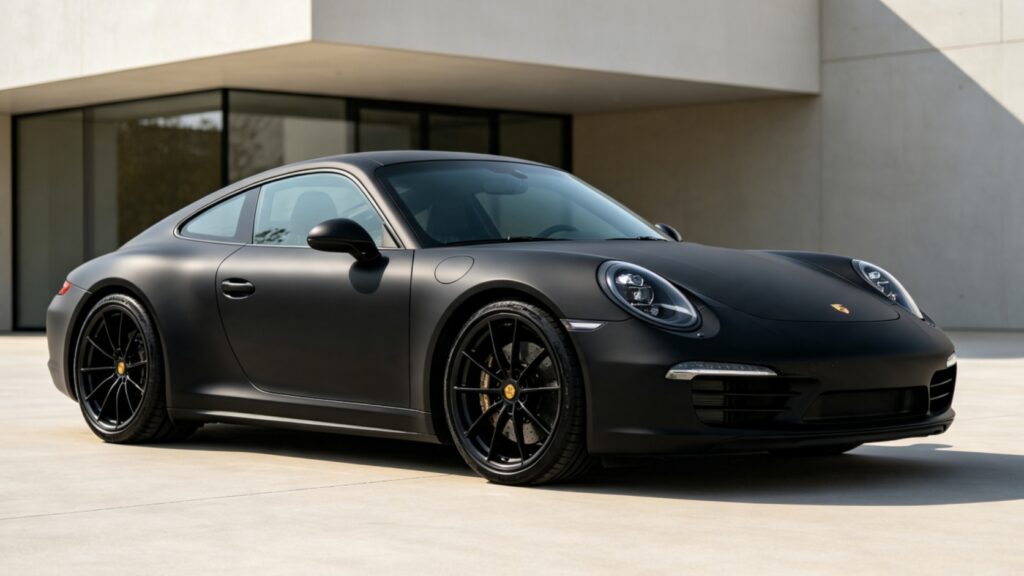
Porsche 911
Recommended factory colors: Black, Jet Black Metallic, Gentian Blue, Agate Grey.
The 911’s curved fenders and compact proportions create subtle gradients across matte film instead of sharp mirror-like reflections.
A stealth-style Porsche also demonstrates one advantage of clear matte film particularly well: the original body color can remain recognizable even though surface gloss is dramatically reduced.
Tesla Model 3 and Model Y
Tesla vehicles are popular candidates because of their relatively clean, uninterrupted body panels.
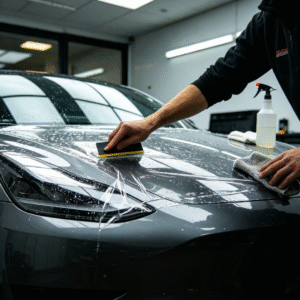
A black or dark gray Model 3 wrapped in clear matte PPF can develop a satin OEM-like appearance while high-impact areas such as the bumper, hood and rocker panels receive additional physical protection.
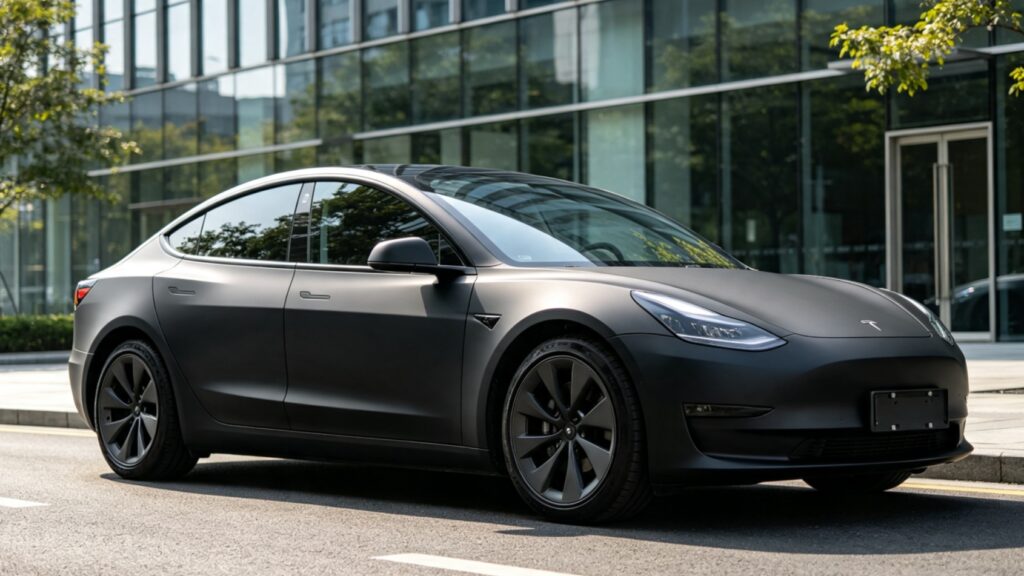
Real-world XPEL STEALTH Model 3 installations show how a factory gloss finish can change into a much softer satin appearance without introducing a new base color.
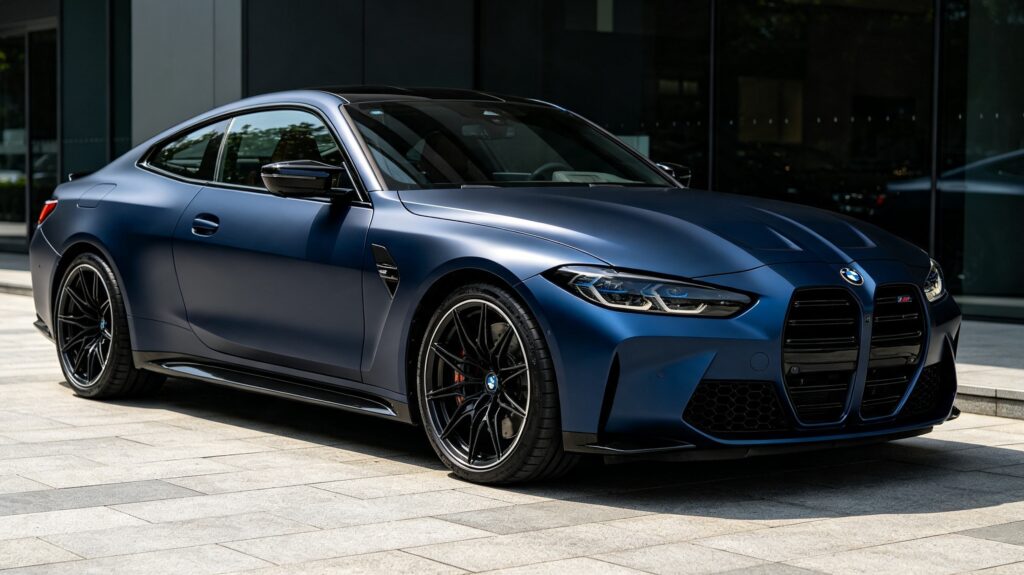
BMW M3 / M4
BMW’s newer M cars have sharp creases and pronounced fenders that work particularly well with satin finishes.
Matte PPF generally reduces reflections while retaining enough contrast to make the sculpted doors, hood and wheel arches visible.
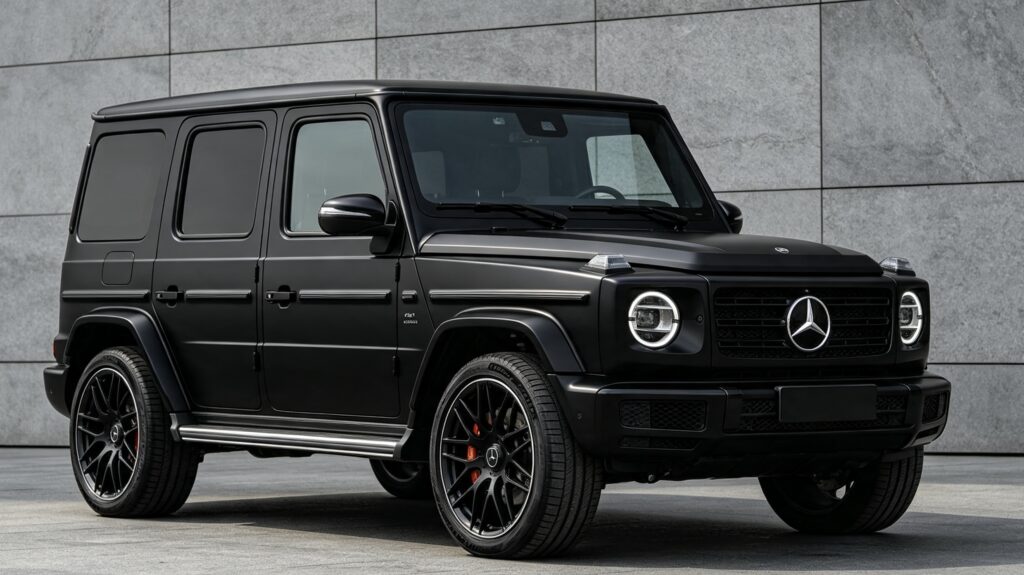
Mercedes-AMG G-Class
The flat body panels of a G-Class produce a completely different effect.
Instead of emphasizing curves, matte film enhances the truck’s geometric, military-inspired profile.
Black, gray and dark green factory paints are particularly suitable.
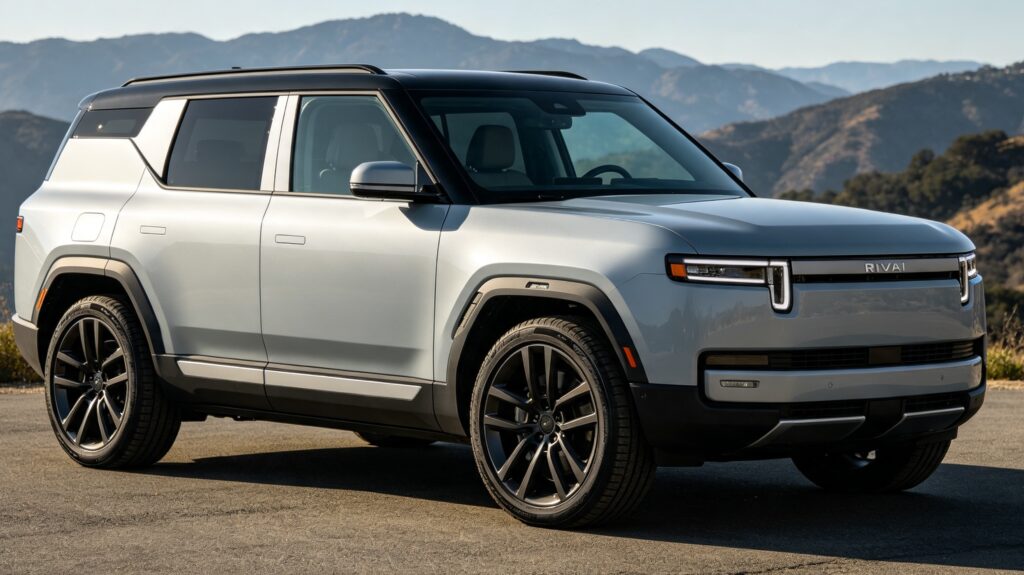
Rivian R1S / R1T
Large SUVs and EVs can benefit from full-body coverage when frequently used for highway or outdoor travel.
The R1S and R1T have large painted panels that can be expensive to repair after repeated stone-chip exposure, making full PPF worth considering for owners prioritizing long-term surface preservation.
Full-Body Matte PPF or Partial Coverage?
For traditional gloss clear PPF, partial-front coverage is common because the transition between protected and unprotected paint can be relatively subtle.
Clear matte PPF presents a different situation.
Because the film changes gloss level, installing it only on the hood and bumper of an otherwise glossy vehicle creates an obvious contrast.
For an intentional satin transformation, full-body installation is usually preferable.
Partial clear matte PPF is more practical when the vehicle already has factory matte paint and the purpose of the film is to preserve that original texture.
Choosing a Professional PPF Installer in the United States
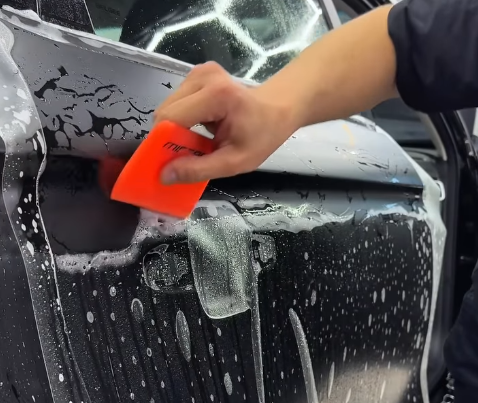
Material selection is only one part of the result. Installation environment, surface preparation, pattern design, edge wrapping and post-install inspection can substantially affect appearance.
For customers in Southern California, examples of established PPF-focused shops include Xpel Final Fit in Los Angeles, which works with partial and full-vehicle PPF applications, and Master Protection Films in West Los Angeles, which offers clear PPF as well as stealth/satin-style finishes.
Rapid Window Tinting LA Xpel PPF also lists XPEL STEALTH matte/satin PPF among its available protection services, while Burbank Auto Detail specializes in PPF and related paint-protection services.
These shops are provided as examples rather than endorsements. Before selecting any installer, ask which film will actually be installed, whether edges will be wrapped, whether badges or trim require removal, how contamination is handled and whether labor is covered under the shop’s installation warranty.
Clear Matte PPF Maintenance Tips
PPF maintenance is relatively straightforward, but matte film requires more disciplined product selection.
Wash the vehicle regularly using pH-appropriate automotive shampoo and soft microfiber materials. Remove bird droppings, insects and tree sap promptly rather than allowing them to remain on the film.
Avoid aggressive polishing compounds because polishing can create uneven gloss spots on a matte surface.
For the same reason, conventional waxes designed to increase gloss should generally be avoided unless the PPF manufacturer specifically approves them.
After a new installation, follow the installer’s cure-time instructions before pressure washing or exposing film edges to aggressive water pressure. TeckWrap, for example, recommends 24–48 hours before water exposure and advises avoiding pressure washing for the first seven days on its M75 film.
Is Clear Matte PPF Worth It?
For the right owner, yes—but primarily when both protection and a matte appearance are desired.
If appearance is the only goal and budget matters most, a conventional vinyl wrap may make more sense.
If maintaining factory gloss is the priority, clear gloss PPF is more appropriate.
If the goal is a totally different body color plus substantial paint protection, colored PPF is the stronger alternative.
Clear matte PPF occupies a specific position between these options: it transforms the finish while allowing the underlying factory paint color to remain part of the visual result.
The most important decision is therefore not simply choosing the thickest film or the longest warranty. Buyers should evaluate TPU quality, topcoat behavior, published specifications, warranty conditions and—critically—the installation quality available in their area.
FAQ About Clear Matte PPF
Does clear matte PPF change the color of a car?
It normally preserves the underlying paint color but changes the way the surface reflects light. Gloss paint therefore appears flatter, softer and more satin-like.
Is matte PPF better than vinyl wrap?
It depends on the objective. PPF is generally better for stone-chip and abrasion protection, while vinyl wrap usually offers more colors and a lower-cost styling route.
How thick is clear matte PPF?
Premium products commonly fall around the 7.5–8+ mil range. ALUKO publishes 7.5 mil, 3M 7.9 mil, Avery Dennison 8 mil and Tinybot Guardian Iced approximately 8.22 mil.
Does matte PPF self-heal scratches?
Many modern TPU films can self-heal minor scratches or swirl marks when exposed to heat. Deep scratches, punctures and severe impact damage generally cannot be expected to disappear.
Can clear matte PPF be installed on factory matte paint?
Yes, but finish matching becomes important. A sample should ideally be tested first because different films have different gloss levels and textures.
How long does clear matte PPF last?
Published expectations vary by product and warranty terms. ALUKO lists approximately 5–7 years expected durability, TeckWrap provides a five-year warranty, Avery Dennison lists up to seven years for Supreme Defense Matte, while Tinybot advertises a 10-year Guardian warranty. Actual service life depends on climate, exposure, maintenance and installation quality.
Final Thoughts
Clear matte PPF is no longer just a styling product. Modern TPU systems combine a low-gloss visual transformation with hydrophobic surfaces, stain resistance and self-healing technology that can help protect factory paint from everyday road wear.
The important point is to compare products using measurable specifications rather than marketing language alone.
ALUKO’s 7.5 mil Matte Ultra PPF sits in the same general thickness class as established products from 3M, Avery Dennison, Tinybot and INOZETEK’s clear gloss protection film, while TeckWrap publishes an even thicker construction for its Clear M75 Matte product. Warranty periods and performance claims vary substantially across brands, so buyers should review each manufacturer’s terms rather than assuming all TPU films provide identical protection.
For owners who want to keep their vehicle’s original paint color but replace glossy reflections with a more understated satin finish, clear matte ppf is one of the few film options that addresses both objectives at the same time.