Choosing between PET and TPU is becoming one of the most important decisions in modern vehicle customization. Both can dramatically change a car’s appearance, but they are designed for different jobs.
A PET-backed vinyl film primarily focuses on color change, finish quality, easier dry installation, and value, while TPU film is commonly used for colored paint protection film (PPF), where impact resistance, self-healing performance, and long-term paint protection matter more.
This distinction is important because the phrase PET vs TPU car wrap can be misleading. In most PET automotive wraps, PET refers to the release liner or backing supporting a vinyl/PVC face film, rather than the entire installed film being made from PET. ALUKO describes its PET products as vinyl laminated onto a PET backing, which gives the film dimensional stability during handling and installation.
TPU, or thermoplastic polyurethane, is different: it is typically the functional film layer used in modern PPF. Major PPF manufacturers also use TPU-based constructions for products designed to resist chips and scratches. STEK, for example, specifies TPU-based 8-mil films, while 3M lists its Scotchgard Pro Series PPF at 8 mil (203.2 μm).
PET vs TPU Car Wrap — Which Is Better?
PET-backed vinyl is generally better when your priority is affordable color customization, a paint-like surface, easier dry installation, and the flexibility to change colors later. TPU is generally better when your priority is protecting factory paint from stone chips, scratches, staining, and road debris while simultaneously changing the vehicle’s color.
In simple terms:
| Factor | PET-Backed Vinyl Wrap | TPU Colored PPF |
|---|---|---|
| Primary purpose | Color change / styling | Color change + paint protection |
| Typical face material | Vinyl/PVC with PET liner | TPU |
| Film thickness | Generally thinner | Generally much thicker |
| Rock-chip protection | Limited | High |
| Self-healing | Usually no | Common on premium TPU PPF |
| Installation | Primarily dry | Wet, dry, or system-dependent |
| Conformability | Excellent for styling | Good, but thicker film requires different technique |
| Finish | Gloss, matte, satin, metallic, chrome, etc. | Gloss, matte, metallic and specialty colors |
| Cost | Lower | Higher |
| Best for | Frequent color changes | Long-term protection + color change |
There is no universal winner. The correct choice depends on what you expect your car wrap to accomplish.
What Is a PET Car Wrap?
A PET car wrap is most accurately described as a vinyl color-change film using a PET release liner or backing.
ALUKO states that its PET backing provides additional stability and rigidity during installation, helping reduce unwanted distortion while the vinyl is positioned. The company’s current PET category includes hundreds of colors and finishes, including metallic, gloss, matte, carbon-look and specialty options.
This architecture is particularly useful for high-gloss films. A smooth liner can help maintain a smoother adhesive and film surface before installation, contributing to the low-orange-peel, paint-like appearance customers increasingly expect from premium color-change wraps.
Traditional premium wrap films are also relatively thin compared with PPF. For context, Avery Dennison’s Supreme Wrapping Film technical data lists face-film thicknesses of roughly 80–140 μm, depending on finish. Avery specifically notes that thicker constructions can have reduced conformability.
That illustrates one of vinyl’s fundamental advantages: it can remain thin and conformable enough to handle mirrors, bumpers, recessed panels and complex styling lines.
Drivers interested primarily in appearance can explore ALUKO’s vinyl wrap and its dedicated PET Vinyl Wrap collection.
Advantages of PET-Backed Vinyl
Lower overall project cost.
Vinyl is generally the more economical way to achieve a complete color change, particularly when rock-chip protection is not the primary goal.
Large color selection.
The vinyl market offers exceptionally broad gloss, satin, matte, metallic, chameleon and specialty finish choices.
Thin and conformable construction.
A thinner film is useful around aggressive curves and detailed bodywork when installed correctly.
Suitable for frequent restyling.
Owners who enjoy changing a car every few years may prefer vinyl instead of paying the premium associated with full-body colored PPF.
Paint-like gloss is increasingly achievable.
Modern liner systems and high-gloss formulations have substantially improved the visual quality of premium vinyl.
Limitations of PET-Backed Vinyl
The biggest limitation is protection.
A vinyl wrap can act as a sacrificial surface against light contamination and superficial wear, but it should not be presented as equivalent to PPF for stone-chip resistance.
3M makes this distinction clear in its own warranty language for Wrap Film Series 2080: damage from physical impacts such as rocks or road debris is not covered.
If a vehicle frequently travels on highways, mountain roads or construction-heavy routes, protection may deserve greater weight in the decision.
What Is a TPU Car Wrap?
In the current aftermarket, a tpu wrap usually refers to colored TPU paint protection film.
Unlike conventional vinyl, TPU PPF combines styling and a substantially thicker protective layer.
The difference is measurable.
3M specifies its Scotchgard Pro Series clear PPF at 8 mil / 203.2 μm and describes protection against scratches, chips and stains, together with self-healing technology. XPEL similarly lists ULTIMATE PLUS as an 8-mil protection film designed to resist scratches and rock chips while self-healing minor surface marks.
STEK’s DYNOshield is also 8 mil, hydrophobic and heat self-healing, with a published 10-year warranty against specified manufacturing failures such as yellowing, bubbling, cracking and delamination.
These specifications explain why TPU PPF costs more: considerably more material and protective functionality are being applied to the vehicle.
Advantages of TPU Colored PPF
Much stronger impact protection.
TPU is the better choice for protecting expensive original paint against normal road debris.
Self-healing surfaces are available.
Heat-responsive topcoats on modern premium PPF can reduce visible light scratches and swirl marks.
Color and protection can be combined.
Historically, owners often chose either colored vinyl or transparent PPF. Colored TPU increasingly combines both objectives in one film.
Hydrophobic and stain-resistant topcoats are common.
Premium TPU products increasingly incorporate surface technologies intended to simplify maintenance.
Limitations of TPU
Higher material and installation cost.
Full-body TPU is a larger investment than conventional vinyl.
Installation technique is more demanding.
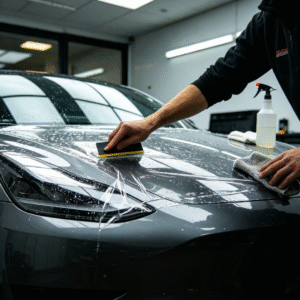
The film is substantially thicker than standard wrap vinyl. Installers accustomed exclusively to vinyl need specific PPF experience.
Not every product installs the same way.
Traditional PPF commonly uses a wet slip-solution installation, while newer products may incorporate dry-apply technologies.
ALUKO’s Porsche Oak Green TPU product, for example, states that it supports wet and dry application, while wet installation remains useful when maximum positioning control is required.
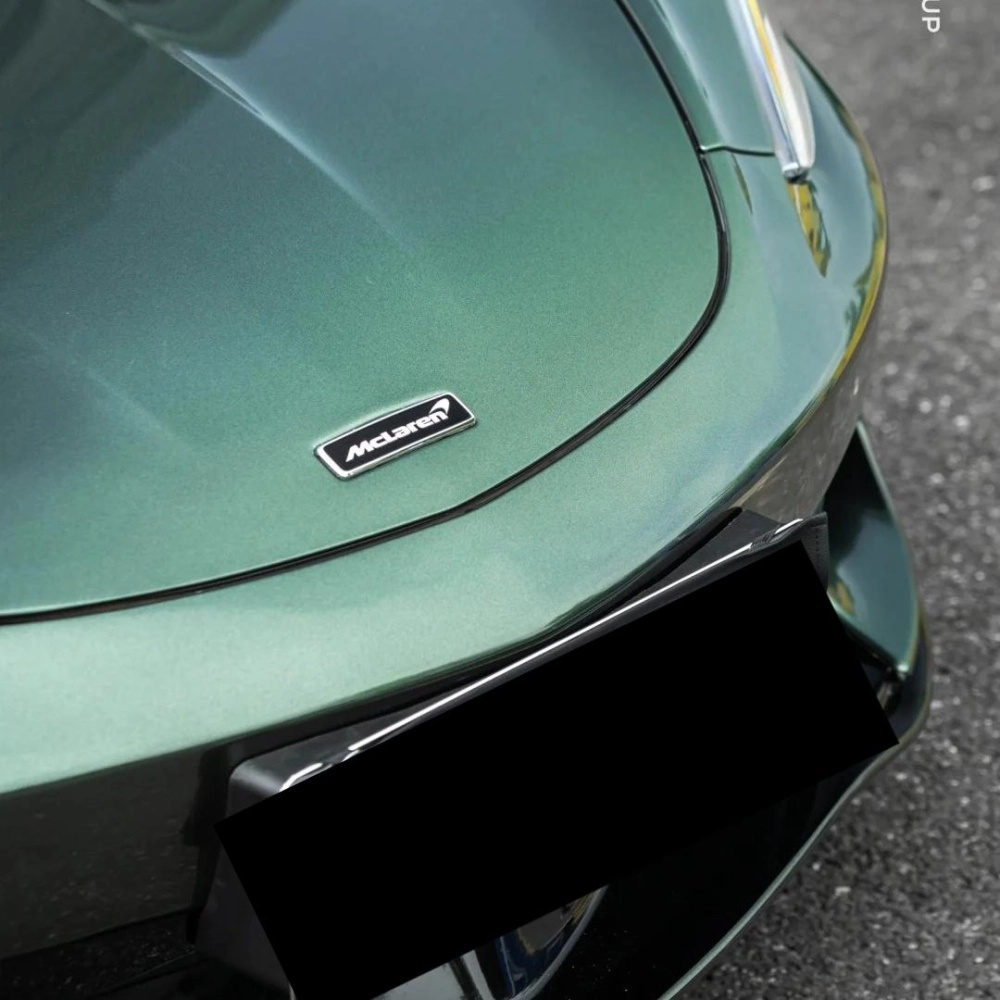
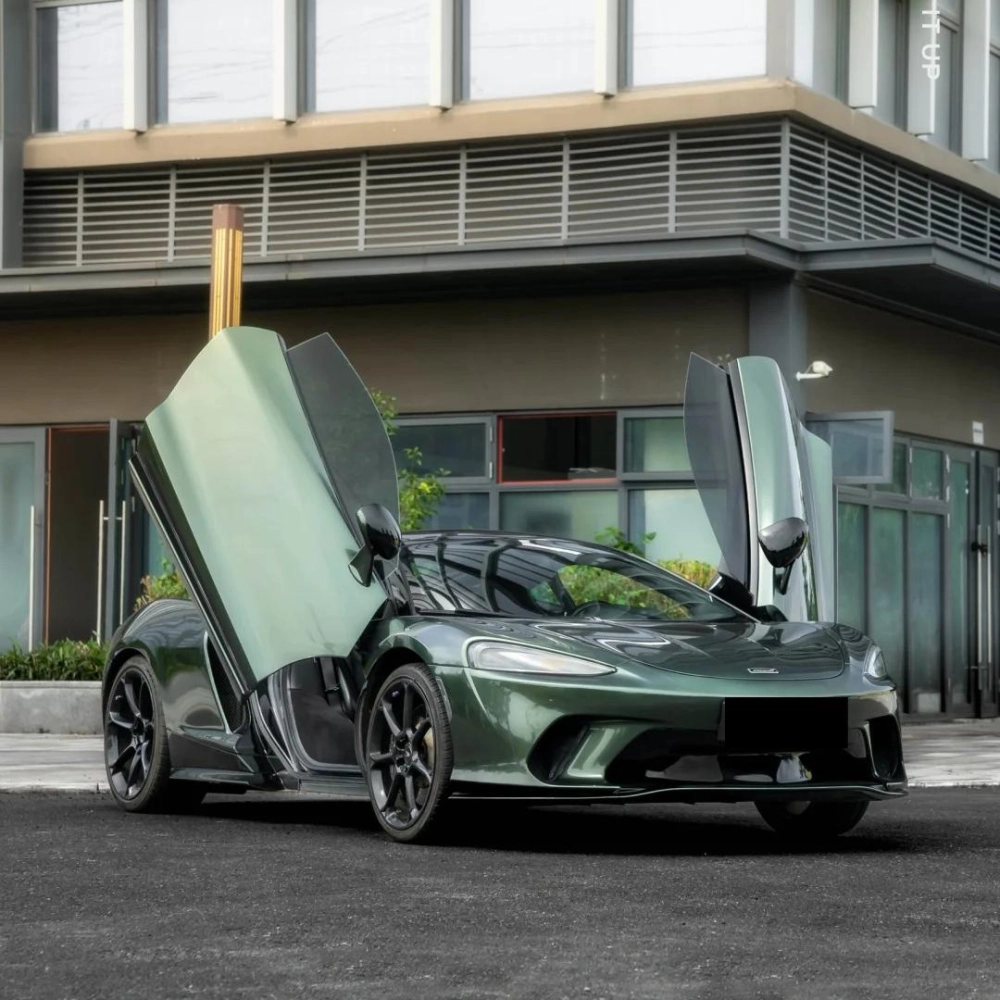
Real-World Vehicle Example 1: PET Wrap on a McLaren GT
Suggested ALT text: PET car wrap on McLaren GT – PET vs TPU car wrap comparison
A McLaren GT illustrates why vinyl remains attractive.
Its long rear haunches, sculpted air channels and complex bumper surfaces reward a film that is relatively thin and conformable. If the owner’s primary objective is transforming the supercar into a metallic, gloss or specialty color while preserving reversibility, PET-backed vinyl is a logical solution.
For a weekend-driven or garage-kept McLaren that sees limited highway mileage, spending substantially more on full colored TPU may not be necessary unless paint preservation is the priority.
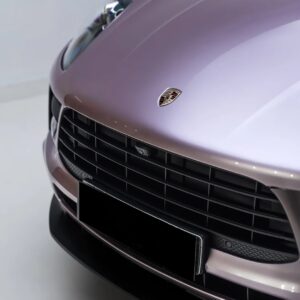
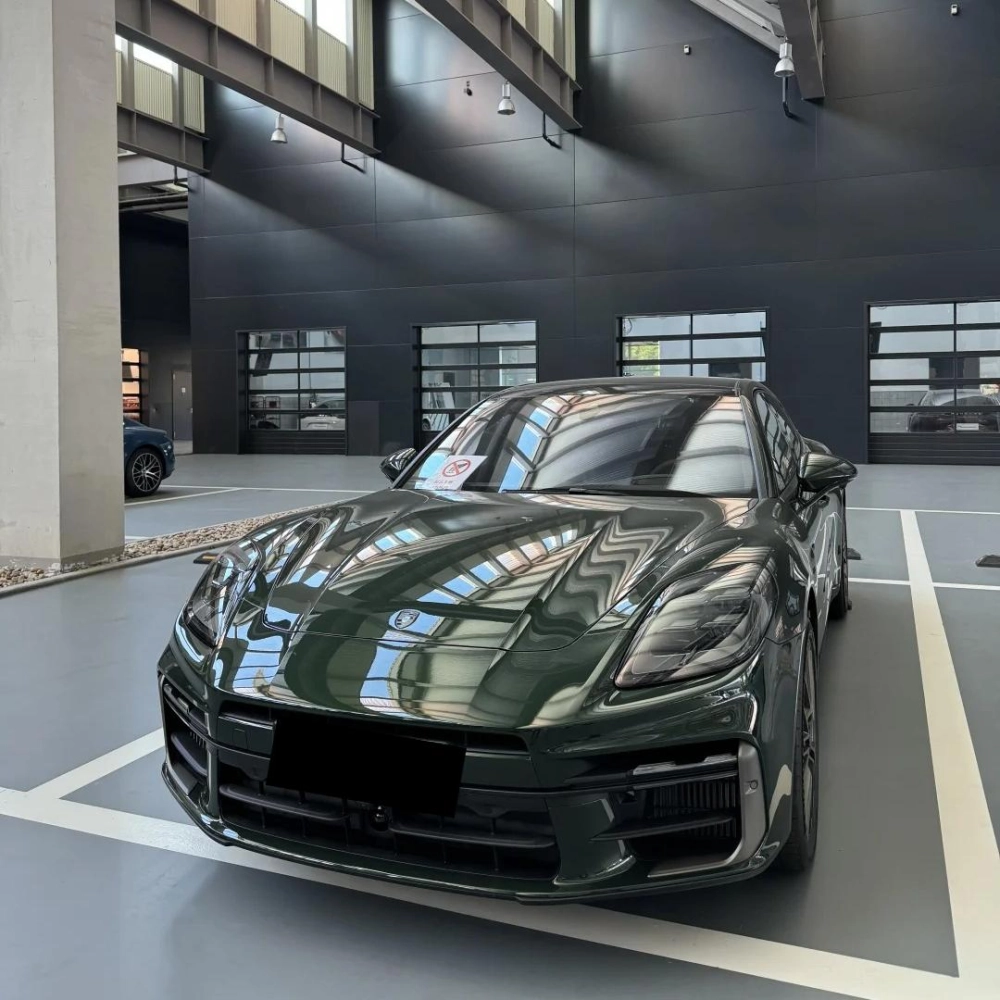
Real-World Vehicle Example 2: PET Wrap on a Porsche 911
Suggested ALT text: Porsche 911 PET vinyl wrap with paint-like gloss finish
The Porsche 911 is another strong vinyl candidate because its body depends heavily on smooth compound curves rather than sharp geometric panels.
ALUKO offers a Gloss Metallic Oak Green PET vinyl option designed to recreate a deep green metallic appearance without repainting the vehicle. The same color family can therefore be approached using either PET-backed vinyl or TPU PPF.
That creates an unusually useful apples-to-apples comparison.
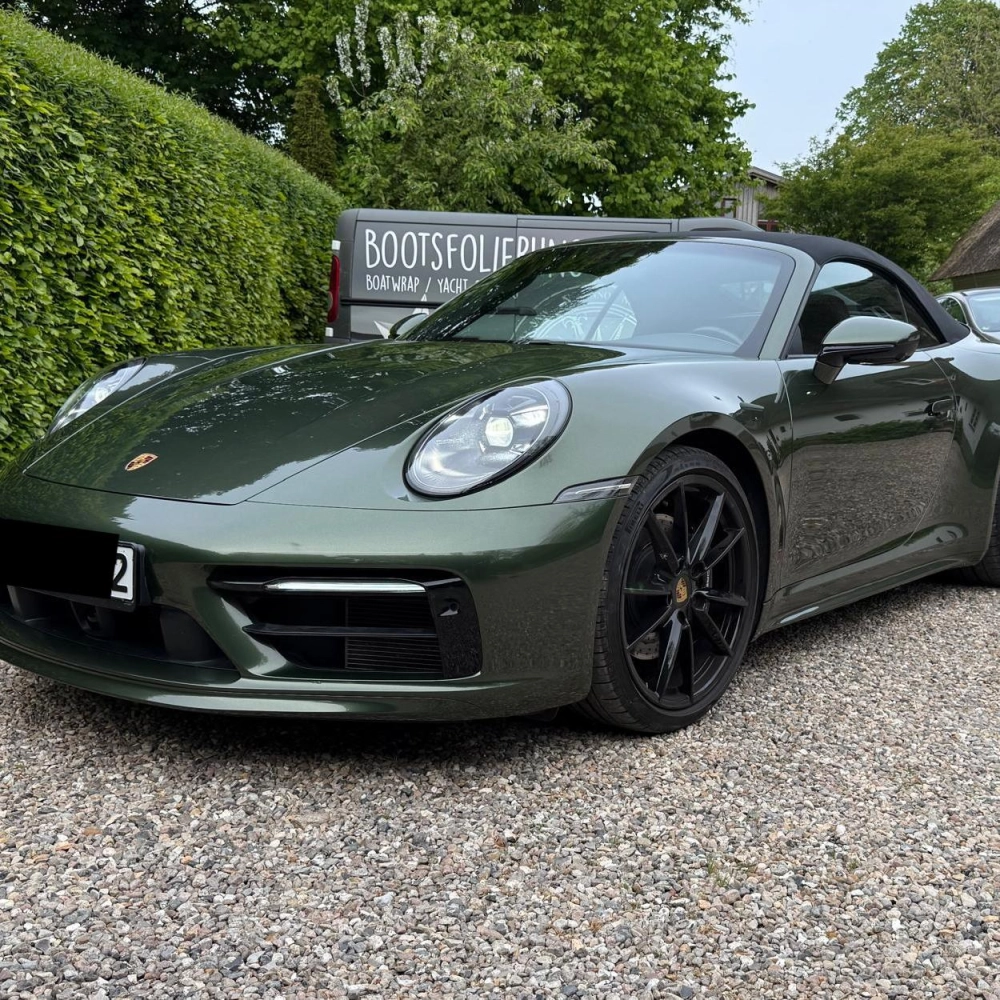
Real-World Vehicle Example 3: Porsche Oak Green TPU on a Porsche 911
Suggested ALT text: Porsche Oak Green TPU wrap on Porsche 911 colored PPF
Consider a Porsche 911 that is driven frequently, especially a Carrera, Turbo or GT model exposed to highway debris.
Here, TPU becomes more compelling.
ALUKO’s color ppf version of Porsche Oak Green combines a metallic color change with TPU-based protection. ALUKO currently identifies the product as a colored PPF that supports both wet and dry installation.
The visual objective can therefore remain similar to Oak Green PET vinyl, but the engineering goal changes.
PET Porsche Oak Green: primarily styling.
TPU Porsche Oak Green: styling plus a heavier sacrificial protection layer.
How Porsche Oak Green Looks on Different Vehicles
[IMAGE 4 — Porsche Oak Green TPU on Porsche 911 / SUV / sports sedan comparison]
Oak Green is particularly effective on vehicles with broad curved panels because metallic highlights reveal body contour.
On a Porsche 911, the color emphasizes the rear haunches and classic silhouette.
On a BMW M3 or M4, Oak Green creates greater contrast with aggressive black trim and angular bodywork.
On a Tesla Model 3 or Model Y, the uninterrupted body surfaces emphasize gloss and metallic depth.
On luxury SUVs such as the Porsche Cayenne, Lamborghini Urus or Range Rover, colored TPU has an additional practical advantage: larger front-facing areas can encounter more road debris, making protection more relevant.
Vehicle usage should therefore influence the material decision just as much as vehicle shape.
ALUKO vs TeckWrap vs Tinybot vs INOZETEK
Material naming is not completely standardized across brands, so shoppers should compare the actual construction and intended use rather than assuming every “wrap” performs the same way.
| Brand | Vinyl / Color Change | TPU / Color PPF | Publicly Visible Positioning | Best Compared For |
| ALUKO | Large PET-backed vinyl range | Extensive colored TPU range | PET color change + TPU colored PPF | Comparing both technologies within one color ecosystem |
| TeckWrap | Vinyl available | Expanding TPU Color PPF | Color PPF with aliphatic TPU | Technical colored-PPF comparison |
| Tinybot Vinyl | Broad specialty vinyl catalog | PPF-related products available | 300+ advertised color/finish options | Color variety / enthusiast wraps |
| INOZETEK USA | SuperGloss and specialty vinyl | Color PPF offerings/training | Paint-like premium vinyl finish | High-gloss vinyl comparison |
TeckWrap currently describes its Color PPF as Lubrizol-based TPU and markets flexibility, impact resistance and UV stability as key material properties. Its technical product pages also identify certain color PPF products as aliphatic TPU constructions.
Tinybot’s current official site advertises roughly 300 unique colors and finishes, making it particularly relevant when comparing vinyl color variety rather than PPF performance.
INOZETEK’s current U.S. catalog positions its vinyl products around lightweight color customization and paint-like SuperGloss finishes, while its professional training program specifically distinguishes conventional color-change vinyl from Color PPF.
This comparison also highlights an important buying rule: do not compare brands only by gloss, color or price. Compare film chemistry, thickness, topcoat, adhesive system, warranty terms and intended application.
What Do Established Industry Brands Tell Us?
Independent technical benchmarks provide useful context.
Avery Dennison Supreme Wrapping Film is a premium cast vinyl platform designed for full vehicle wrapping, and Avery publishes face-film values of approximately 80–140 μm depending on product type.
By comparison, 3M Scotchgard Paint Protection Film Pro Series is listed at 203.2 μm / 8 mil and specifically targets chips, scratches and stains.
XPEL ULTIMATE PLUS likewise specifies an 8-mil film with rock-chip protection and self-healing behavior.
And STEK’s 8-mil DYNOshield offers a comparable real-world reference for hydrophobic, self-healing TPU PPF.
These are not direct laboratory tests of ALUKO against those brands. They are industry reference specifications showing why vinyl and TPU PPF belong to different performance categories.
Which Material Should You Choose?
Choose PET-backed vinyl if:
- Your main goal is a new color or finish.
- You enjoy changing vehicle colors periodically.
- Budget matters.
- Maximum rock-chip protection is unnecessary.
- You want the broadest possible finish selection.
Choose TPU colored PPF if:
- Preserving factory paint is a major priority.
- The vehicle frequently travels on highways.
- You own a performance, luxury or exotic vehicle with expensive paintwork.
- You want self-healing behavior for minor surface scratches.
- You prefer combining color change and protection in one installation.
For many owners, there is also a third option: install a full vinyl color change and add clear PPF to high-impact areas such as the front bumper, hood and mirrors.
That hybrid solution can balance customization, protection and budget.
Finding a Professional Installer in the United States
Installation quality matters as much as film selection, especially with TPU.
Examples of U.S. businesses currently offering vehicle wraps and/or PPF include Exotic Car Wraps in Los Angeles, which lists both premium vinyl wrapping and PPF services, and Wrap Bullys in Gardena, California, which offers color-change wraps, clear PPF and colored PPF.
In Florida, Garage Customs FL provides both PPF and wraps in Miami and publicly showcases work on vehicles including Porsche 911 models, while First Class Autosports lists more than 15 years of experience with PPF, vinyl wraps and related vehicle customization.
In New York, Colossal Motorsports in Brooklyn lists wraps and PPF among its automotive customization services.
These businesses are provided as examples for installer research, not as endorsements of a particular film brand. Before booking, ask whether the installer has direct experience with the exact vinyl or colored TPU system you intend to use.
FAQ: PET vs TPU Car Wrap
Is TPU better than PET car wrap?
Not automatically. TPU is better for paint protection, while PET-backed vinyl is usually more practical for cost-effective color changes. They solve different problems.
Is PET wrap actually made from PET?
Usually not entirely. In the context of many automotive color-change products, PET refers to the liner/backing supporting a vinyl face film. ALUKO specifically describes its PET product construction this way.
Is TPU the same as PPF?
TPU is a material frequently used to manufacture premium PPF. Not every polyurethane product has identical performance, however, so buyers should check the actual construction, thickness, topcoat and warranty.
Does TPU protect against rock chips better than vinyl?
Generally, yes. Modern premium PPF is purpose-built for this function. Major industry references such as 3M and XPEL specify approximately 8-mil PPF designed for chip and scratch protection.
Can TPU colored PPF look as glossy as vinyl?
Modern colored TPU products can achieve very high gloss, although results depend on film construction, color, surface preparation and installation quality.
Is PET or TPU better for a Porsche 911?
For a Porsche 911 used mainly for shows, weekend drives or frequent color changes, PET-backed vinyl can make more economic sense. For a frequently driven 911 where protecting original paint is important, colored TPU PPF is generally the stronger solution.
Final Verdict
The most useful way to understand PET vs TPU car wrap is not to ask which material is universally better.
Ask what you need the film to do.
PET-backed vinyl is primarily a styling technology. TPU colored PPF is primarily a protection technology that can now deliver styling at the same time.
A driver who wants maximum freedom to experiment with colors may get better value from PET vinyl. A Porsche, McLaren, Tesla or other high-value vehicle exposed to frequent highway driving may justify the additional cost of TPU.
Before choosing either material, compare the actual film specification, installation method, thickness, warranty conditions and installer experience—not just the product photos.
For drivers exploring both approaches, ALUKO offers PET color-change films alongside a growing TPU colored-PPF range, making it possible to choose the material around the vehicle’s actual use rather than treating every wrap as the same product.